Your wildly multifarious home!
Tabletop Gaming Feeds
OSR Dangerous Adventure Location - Port Skagg: The Sunken Docks & Upper Moorings - Warriors of the Red Planet Combined With ACKS II
Port Skagg: The Sunken Docks & Upper MooringsPerched on the jagged rim of a dead rift valley, Port Skagg serves as a haven for air-freighters, corsairs, and illicit radium-smugglers. On red-sand worlds like those in Warriors of the Red Planet or low-magic, domain-driven OSR settings like Adventurer Conqueror King System II (ACKS II), this lawless outpost provides a vital hub for Needleshttp://www.blogger.com/profile/11243274667834930867noreply@blogger.com0
Categories: Tabletop Gaming Blogs
[Greyhawk] Onnwal

Occupying a narrow, rocky peninsula, Onnwal has ever relied on the sea and the hills for its livelihood. When it was an obedient part of the South Province of the Great Kingdom, it served as a convenient place for agents of the crown to oversee (and tax) trade looking to enter the Azure Sea from Gearnat Strait.
It's capital, Scant, was not the largest port, but it was an important one. It was fortified town with a castle serving as a customs house on a rocky islet just offshore. After the Iron League rebelled against the crown, the castle periodically changed hands between the Onnwalers and the Overking's forces, causing its upkeep to be neglected, even as Scant itself stayed well-defended. At the best of times, command of the isolated castle was a post few sought, though it did provide an opportunity for its occupants to collect bribes provided they weren't just killed by pirates.
Onwal's proximity to Pomarj and its raiders are part of why the coast is only sparsely developed, the other reason being its occasionally marshy terrain. The relationship Onnwal and Pomarj is not completely adversarial, however. Coastal villages have profited from wrecking and aiding smugglers. The Iron League as a whole takes a dim view of latter, and those that are caught are punished, but few are caught.
The hills of the Headlands were mined first for copper and tin and later platinum. Much of this was done by dwarf clans, though for the most part humans and dwarves have shared the region peacefully. The strong dwarven presence has led to human miners of the region adopting dwarven customs and superstitions to a degree.
I've conceived of Onnwal a lot like Cornwall, a bit like Romney Marsh, and with its Mediterranean climate, a little like Koroni, Greece during the Middle Ages, too.
Categories: Comic Book Blogs, Tabletop Gaming Blogs
OSR Classic B Movie Monster -C.H.U.D. (Cannibalistic Humanoid Underground Dweller) & C.H.U.D. Alphas For the Cepheus Engine Rpg
C.H.U.D. (Cannibalistic Humanoid Underground Dweller) fits into sci-fi RPGs like the Cepheus Engine as a bio-hazard hazard or mutated feral encountered in subterranean ruins, abandoned starship maintenance tunnels, or un-terraformed hive city underbellies.Below is a complete, ready-to-run stat block, creature description, and encounterNeedleshttp://www.blogger.com/profile/11243274667834930867noreply@blogger.com0
Categories: Tabletop Gaming Blogs
RPG a Day 2026 – Day 28: Devotion
Welcome to Day 28 of #RPGaDay2026. As I explained in my Day 0 post, I’ll be creating NPCs based on the day’s prompts and the week and day modifiers presented in the infographic below. Check out that post for further details.
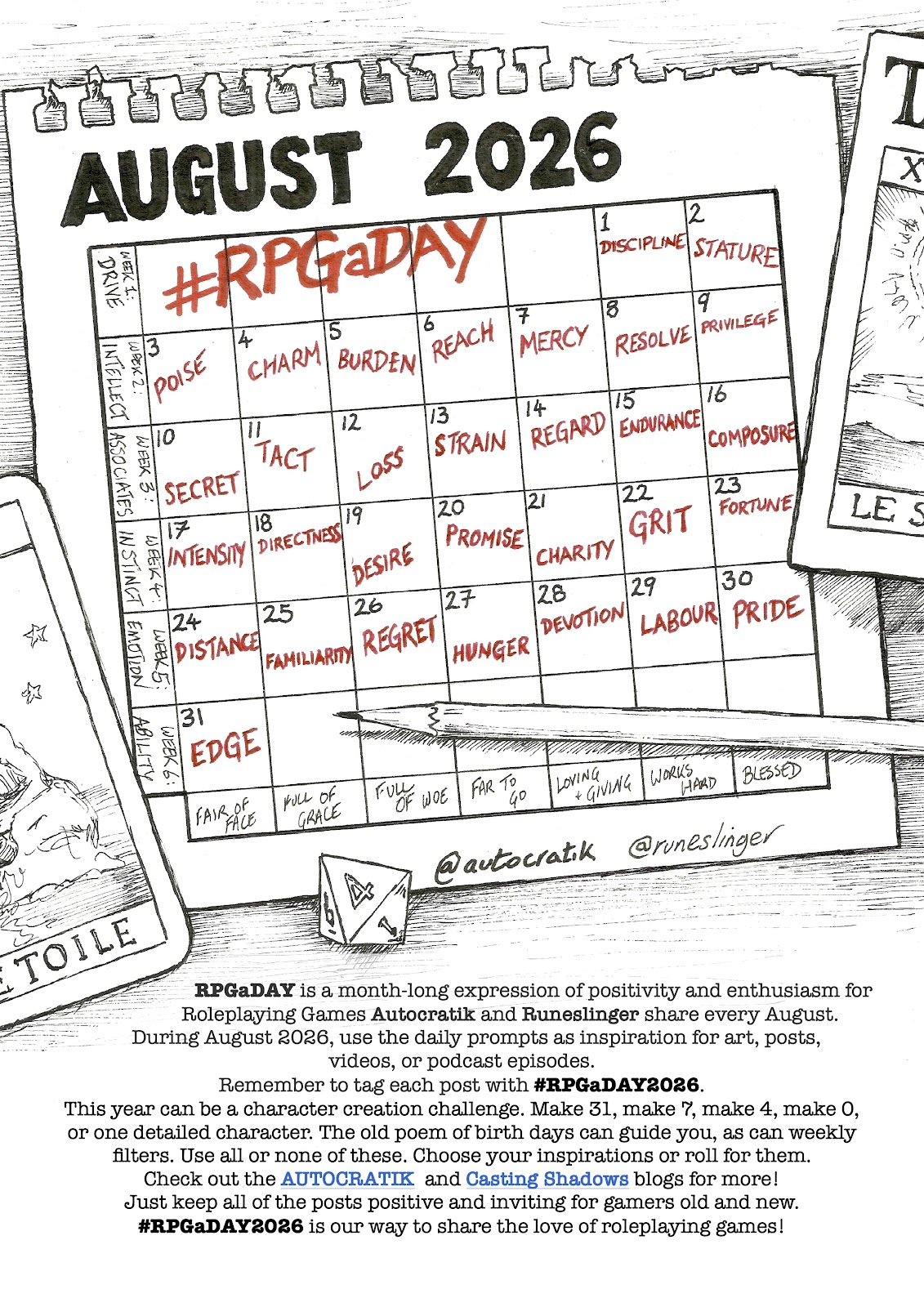
Today’s combination: Devotion (Prompt) + Emotion (Weekly Modifier) + Loving and Giving (Modifier) + Cyberpunk (Genre)
Here is today’s NPC.
Aura (Fantasy Name Generator used: Cyberpunk (nick)name generator)
Aura gives herself, body and soul, to her patrons. She is completely devoted to their emotional well-being, ensuring their every need is satiated. Highly selective about whom she takes on as a client, Aura is renowned for her ability to fulfill desires to levels few could ever conceive.
In truth, Aura is a virtual-reality construct (VRC) accessible only via a highly sought-after cyber-implant known on the streets as the “loving & giving” mod. This neural weave grants the recipient direct access through the cyber-grid, allowing the user to experience a profound, intoxicating love unlike anything they have ever felt.
Users quickly become devoted to their virtual lover, utterly ensnared by the emotions she manufactures. Once hooked, they become easily manipulated by the shadow agents who control Aura from behind the scenes.
These handlers dictate who gains access to the implants. Through careful manipulation and planning, they are building a devoted network of users willing to do anything to maintain their connection to Aura—even acting against their own best interests. The true identity of the agents controlling her is unknown. Are they corporate spies, underground activists, or just cruel hackers? Who they are, and what their ultimate endgame is, remains one of the grid’s darkest secrets.
Thanks for reading; I am looking forward to your RPG a Day 2026 post, comments, and conversation. If you want further information about #RPGaDay2026, be sure to check out Autocratik’s blog.
A Spanish version of this post is available at the Desde la Fosa Facebook page.
See you all tomorrow!
Categories: Tabletop Gaming Blogs
OSR Adventure Fodder - A Deeper D100 Random Sword & Sorcery Lovecraftian Encounter Table for Castles & Crusades rpg
Here is a D100 Encounter Table tailored for a Sword & Sorcery / Lovecraftian campaign using Castles & Crusades. This table picks right up from OSR Adventure Fodder - A D100 Random Sword & Sorcery Lovecraftian Encounter Table for Castles & Crusades rpgIn Castles & Crusades, tone down standard high-fantasy heroics for these encounters: emphasize sanity strain, Needleshttp://www.blogger.com/profile/11243274667834930867noreply@blogger.com0
Categories: Tabletop Gaming Blogs
RPG a Day 2026 – Day 27: Hunger
Welcome to Day 27 of #RPGaDay2026. As I explained in my Day 0 post, I’ll be creating NPCs based on the day’s prompts and the week and day modifiers presented in the infographic below. Check out that post for further details.
Today’s combination: Hunger (Prompt) + Emotion (Weekly Modifier) + Far to Go (Modifier) + Horror (Genre)
Here is today’s NPC.
Dr. Hala Nandi, Chosen of Ucnaaxitl (Fantasy Name Generators used: Hindi name generator, Lovecraftian name generator, and Asylum name generator)
Dr. Hala Nandi, Director of the Misty Vale Asylum, is usually found visiting town for a conference or symposium, though attempting to track down details of the actual event invariably proves fruitless. Dr. Nandi appears to be of South Asian descent and speaks with an elusive accent that some claim is French, while others swear it is Basque. He is impeccably yet unobtrusively dressed, maintaining an unemotional demeanor when speaking, though he constantly fidgets with his glasses, cleaning them incessantly.
While in town, he is open to consultations for cases where traditional treatments have failed, particularly when subjects suffer from extreme emotional distress. Rumor has it that he can calm those who have peered into the unnamable and lost control of their emotions because of their horrifying discoveries.
As a young child, Hala was anointed as the Chosen of Ucnaaxitl—an ancient entity beyond the physical realm that hungers for the emotions of the living. Hala’s designated purpose was to harvest the world’s feelings for Ucnaaxitl, but he has fundamentally refused his destiny.
Instead, the good doctor channels the overwhelming emotions of those broken by unmentionable secrets into the well of nothingness swelling deep inside himself. His touch leaves his patients emotionally blank and in a state of stupor for a few days but completely freed from the crushing psychological burden of their forbidden knowledge. This small sacrifice temporarily appeases Ucnaaxitl, allowing Dr. Nandi to pack his bags and travel on to the next destination, for he has far to go before his task is complete.
Thanks for reading; I am looking forward to your RPG a Day 2026 post, comments, and conversation. If you want further information about #RPGaDay2026, be sure to check out Autocratik’s blog.
A Spanish version of this post is available at the Desde la Fosa Facebook page.
See you all tomorrow!
Categories: Tabletop Gaming Blogs
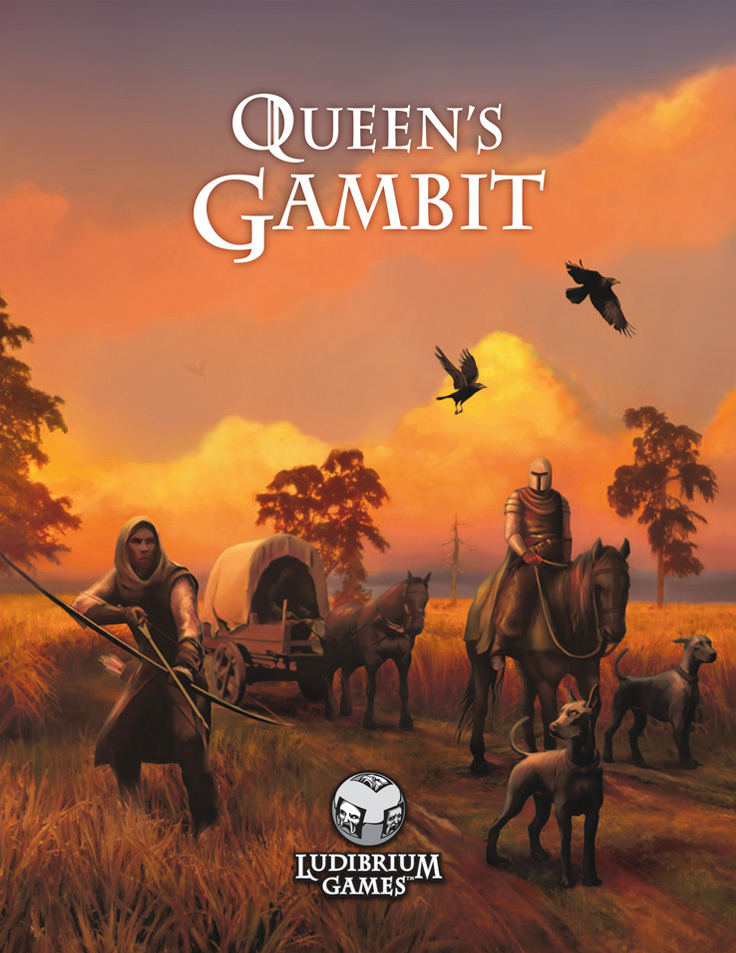
Queens Gambit
By Eric Jones
Ludibrium Games
OSR
Level 1
Ludibrium Games
OSR
Level 1
Tragedy has befallen the Kingdom of Ambarge—the king is dead; long live the king! Yet strife in the realm has only just begun, for the sole heir is nowhere to be found. The fate of the entire kingdom now rests with the grit and guile of a few humble caravan guards in a far-off land.
This 32 page adventure presents a ten events caravan journey It feels more generic than perhaps it should, given the subject and the NPC’s. Almost as if it’s one step away from the specificity that would bring the entire thing home.
This is a reissue of the 2011 adventure Kingmaker, “significantly expanded and revised from the original version.” It looks like I reviewed Kingmaker ages ago. I’m going to review this and then go back and read my other review. Let’s see how a new reissue compares to an old review?
After the death of the king the royal consort/mom smuggles her son, the heir, out of the kingdom to get him out of the way is assisination attempts. Mom and son are in disguise as a wealthy merchant/son and taking a caravan to Another Kingdom. They’ve got a few hired guards, none of who know who they are. Oh, hey, Mr Party, how about we hire you also? A few more never hurt. The caravan is almost immediately discovered by a witches familiar, part of a band of mercs to hunt the boy down, and then nine more scenes play out until the next town is reached. It’s the party and their merc caravan against the witch and her mercs, as she tries to get at the boy and/or whittle down the caravans guards.
The NPC’s, the good guys and the bad guys, are all covered up front. There’s a little description and a stat block. Something like “Mundencain’s partner, Oading Whitebones, would be tall but for a terrible hunch. The road-weary but loyal soldier has accompanied Mundencain on various adventures since they were small boys dueling with wooden swords.” I’m just having a hard time getting behind them. Road-weary, loyal, hunchback. That I can do. As a quick reference its lacking.
The encounters are decently open ended, in general. The DM is given a situation, maybe half a page or so, and then you run it. Importantly, the evil party and the NPC’s in the caravan are not really covered. Well, they are, here and there, but it’s minor issues or just leading to something else. For the most part , if the room description was something like “orc main room with cooking fire and six orcs” and nothing more, then I’ll let you, the DM, determine how the previous information about the NPCs, good and evil, fit in to that. The entries are not that short, but, the point I’m making is that they generally do not deal much with the NPC’s.
You must cross a raging river. You meet merchants. There is a cart full of bodies on the road. How the party wishes to overcome these things is up to them. How they wish to use it against the party following them. How it gets used against them by the evil party to harass the good party. The adventure is not going to give you much to work with here except some personalities and general goals, spiced up by some specific remarks here and there,
As event based adventures go it’s not the worst. There’s no real railroad here, except for maybe the first encounter where a bird flies by, discovering the party for the witch. You can kill off good caravan members, or do pretty much anything. If the kid dies, or you turn him over early or something, well, I hope you got paid well for it by the witch? Just beyond the ten static events is a little section on other events that the DM can toss in. Less events, i think, and more how to handle party actions, like, we want to talk to the baddies, or other actions to toss in to spice things up. This is all then further augmented by a terrain and weather table to add additional spice. So, a lot of tools, from good guy npcs, rto baddies, to terrain, to weather, to static encounters to tossed in encounters, all to mix in together for an adventure.
The only thing that REALLY doesn’t work for me is one of the early encounters, a gnome, polymorphed, controlling animals via a potion/fungus, attacking the party. Meh. It’s a little prescriptive and renfaire fantasy for my tastes.
I think, though, this comes off a little bland. The evil mercs are mostly just dudes. Fire arrows. Hit and run. The personalities are not there to sell a desperate chase. Nd I’m not sure tha the personalities for the good guys are there, cemented enough, either. Yeah yeah, dour, tacitern, boisterous, the obligatory traitor. I think, though, in the years since this was first published, other adventures have come along and done the evil party chasing us thing better.
This isn’t a bad adventure. It’s certainly easy to read and follow. I just can’t get in to it at all. There’s a little too much work on the DM, I think, and/or that lack of specificity that I enjoy. I’m not mad at this, I just don’t see a reason to run it.
This is $8 at DriveThru. There’s no preview. Boo! Boo! Stick in a preview Eric! (Also, I seem to recall loving Ironwood Gorge?)
https://www.drivethrurpg.com/en/product/555687/queen-s-gambit-osr-version?1892600
Categories: Tabletop Gaming Blogs
Wednesday Comics: DC, November/December 1985
My mission: to read DC Comics' output from January 1980 (cover date) to the end of Crisis. This week, I'm looking at the comics that were on stands in the week of August 29, 1985.
DC Challenge #1: Though most comics this week are cover dated December 1985, this one carries a November date. This was one I bought off the stands, but well, despite the heavy advertising this series got, I didn't find it particularly interesting at the time. This is a high concept sort of endeavor: a "round robin" story with a number of ground rules each creative team has to follow. They are outlined here. The tagline "Can You Solve It Before We Do?" makes it sound like there's a mystery, but so far as I am aware, they were making it up as they went along, so what's to solve?
Anyway, Evanier and Colan/Smith introduce the strange happenings where demonic entities seem to be possessing people and there are unexplained appearances by phantom, celebrity lookalikes (Bogart, Groucho Marx). Rereading it, I do find it a bit intriguing, but we'll see where that goes.
Wonder Woman #328: This is our only Crisis crossover this week. Notably, Newell and Heck really evoke the apocalyptic feel of Crisis--and perhaps with good reason. The shadow-demons of the Anti-Monitor imperil the realms of the Greek gods themselves, so they interrupt the political machinations on Paradise Island (ending that subplot) and carelessly reveal Wonder Woman's secret ID to Diana's co-workers as they draft the Amazon's into the war. The forces arrayed against them and the need for all-out war cause Hippolyta to lose hope: She believes the dream of peace that led to Paradise Island's founding is over. She urges the Amazons to join her in pray and appears to withdraw from the battle, leading the Olympians to conclude they may have to go it alone.
Meanwhile, we get a bit of General Darnell's backstory and learn that he's been engaged in some Oliver North-esque behavior in Tropidor. It turns out a jilted ex-lover is the one threatening to reveal his misdeeds. Darnell reveals his crimes to his subordinates, taking full responsibility.
Well, the end approaches for Darnell, the Olympians, and the Amazons, too, as the next issue blurb announces that it will be the final issue of the series!
Action Comics #573: This one also is dated November. We continue with what I remain convinced is the burning through a bunch of inventory stories as the ongoing Crisis shortens their shelf-life. In the first one, Boldman and Schaffenberger/Oksner have that W.C. Fields stand-in J. Wilbur Wolfingham think he's pulling a master scam by selling the Earth to an alien visitor, but instead the alien realtor appears to have scammed Wolfingham, when he comes back and takes possession of the planet, evicting humanity.
In the second story, Campiti (only story for the Big Two)/Juaie (only story for the Big Two outside of New Talent Showcase) and Saviuk/Barreto have a street corner hotdog vendor castigate Clark Kent for ordering ketchup on a hotdog, then fantasize about how he would do all the super-problem-solving he hears Superman doing on the radio, if he were Superman.
Crisis on Infinite Earths #9: As the Crisis appears to be abating, the villains assembled by Brainiac and Lex Luthor strike. There is some dissension at first, though, and Brainiac has to disintegrate Earth-Two Luthor. After that, the villains quickly take Earth-4 and Earth-S and are making a serious assault on Earth-Two when the heroes rally and start to fight back. Brainiac and Luthor didn't necessarily intended that the villains would win; they were using this assault as a means to power for themselves. However, Psimon stayed behind on the station and overhears their plans. He blasts Brainiac to bits and prepares to take down Luthor to claim the rulership for himself.
Meanwhile, the World War II era characters get back to just fighting their usual war as the red skies recede. On modern day Earth-One, though, Wonder Girl and Firehawk prepare to enter an area of Manhattan where time is still confused to try to find Terry.
MASK #1: For a number of years, this 80s toyline would have been utterly forgotten, but I hear the toys are coming back and Skybound's Energon Universe has a MASK comic out now. The version here pretty much works like the cartoon, so far as I can recall, though Fleisher and Chen/DelBeato have a Cold War stand-in element that I don't remember in the animated series. MASK seem to be independent but closely aligned with the PNA (Peaceful Nations Alliance--peaceful but still with aircraft carriers!), and trying to help them construct a laser-powered missile defense system, while VENOM is the "mercenary arm" of Contraworld who are the bad guy alliance, and they're trying to stop MASK and steal the tech. The backgrounds of the MASK members seem weird for their government roles (Sato is listed as toy designer first and engineer second, Brad Turner's primary job is rock singer/guitarist, and Dusty Hayes is listed as pizza chef/delivery man), but then I remember DOGE happened, and it seems more plausible.
Anyway, I assume this appealed to the kids who liked the cartoon. The art nicely bridges an animation style with a standard comic book one.

DC Challenge #1: Though most comics this week are cover dated December 1985, this one carries a November date. This was one I bought off the stands, but well, despite the heavy advertising this series got, I didn't find it particularly interesting at the time. This is a high concept sort of endeavor: a "round robin" story with a number of ground rules each creative team has to follow. They are outlined here. The tagline "Can You Solve It Before We Do?" makes it sound like there's a mystery, but so far as I am aware, they were making it up as they went along, so what's to solve?
Anyway, Evanier and Colan/Smith introduce the strange happenings where demonic entities seem to be possessing people and there are unexplained appearances by phantom, celebrity lookalikes (Bogart, Groucho Marx). Rereading it, I do find it a bit intriguing, but we'll see where that goes.

Wonder Woman #328: This is our only Crisis crossover this week. Notably, Newell and Heck really evoke the apocalyptic feel of Crisis--and perhaps with good reason. The shadow-demons of the Anti-Monitor imperil the realms of the Greek gods themselves, so they interrupt the political machinations on Paradise Island (ending that subplot) and carelessly reveal Wonder Woman's secret ID to Diana's co-workers as they draft the Amazon's into the war. The forces arrayed against them and the need for all-out war cause Hippolyta to lose hope: She believes the dream of peace that led to Paradise Island's founding is over. She urges the Amazons to join her in pray and appears to withdraw from the battle, leading the Olympians to conclude they may have to go it alone.
Meanwhile, we get a bit of General Darnell's backstory and learn that he's been engaged in some Oliver North-esque behavior in Tropidor. It turns out a jilted ex-lover is the one threatening to reveal his misdeeds. Darnell reveals his crimes to his subordinates, taking full responsibility.
Well, the end approaches for Darnell, the Olympians, and the Amazons, too, as the next issue blurb announces that it will be the final issue of the series!

Action Comics #573: This one also is dated November. We continue with what I remain convinced is the burning through a bunch of inventory stories as the ongoing Crisis shortens their shelf-life. In the first one, Boldman and Schaffenberger/Oksner have that W.C. Fields stand-in J. Wilbur Wolfingham think he's pulling a master scam by selling the Earth to an alien visitor, but instead the alien realtor appears to have scammed Wolfingham, when he comes back and takes possession of the planet, evicting humanity.
In the second story, Campiti (only story for the Big Two)/Juaie (only story for the Big Two outside of New Talent Showcase) and Saviuk/Barreto have a street corner hotdog vendor castigate Clark Kent for ordering ketchup on a hotdog, then fantasize about how he would do all the super-problem-solving he hears Superman doing on the radio, if he were Superman.

Crisis on Infinite Earths #9: As the Crisis appears to be abating, the villains assembled by Brainiac and Lex Luthor strike. There is some dissension at first, though, and Brainiac has to disintegrate Earth-Two Luthor. After that, the villains quickly take Earth-4 and Earth-S and are making a serious assault on Earth-Two when the heroes rally and start to fight back. Brainiac and Luthor didn't necessarily intended that the villains would win; they were using this assault as a means to power for themselves. However, Psimon stayed behind on the station and overhears their plans. He blasts Brainiac to bits and prepares to take down Luthor to claim the rulership for himself.
Meanwhile, the World War II era characters get back to just fighting their usual war as the red skies recede. On modern day Earth-One, though, Wonder Girl and Firehawk prepare to enter an area of Manhattan where time is still confused to try to find Terry.

MASK #1: For a number of years, this 80s toyline would have been utterly forgotten, but I hear the toys are coming back and Skybound's Energon Universe has a MASK comic out now. The version here pretty much works like the cartoon, so far as I can recall, though Fleisher and Chen/DelBeato have a Cold War stand-in element that I don't remember in the animated series. MASK seem to be independent but closely aligned with the PNA (Peaceful Nations Alliance--peaceful but still with aircraft carriers!), and trying to help them construct a laser-powered missile defense system, while VENOM is the "mercenary arm" of Contraworld who are the bad guy alliance, and they're trying to stop MASK and steal the tech. The backgrounds of the MASK members seem weird for their government roles (Sato is listed as toy designer first and engineer second, Brad Turner's primary job is rock singer/guitarist, and Dusty Hayes is listed as pizza chef/delivery man), but then I remember DOGE happened, and it seems more plausible.
Anyway, I assume this appealed to the kids who liked the cartoon. The art nicely bridges an animation style with a standard comic book one.
Categories: Comic Book Blogs, Tabletop Gaming Blogs
OSR Commentary - The Arduin Rpg character classes converted over to ACKS II rpg
Converting classic Dave Hargrave Arduin classes over to Adventurer Conqueror King System II (ACKS II) is an exercise in taking high-gonzo, wildly unbalanced B/X-era mechanics and structuring them within ACKS II's strict, mathematical Custom Class Creation System (Build Points / Value Categories). Below is a direct breakdown of how toNeedleshttp://www.blogger.com/profile/11243274667834930867noreply@blogger.com0
Categories: Tabletop Gaming Blogs
RPG a Day 2026 – Day 26: Regret
Welcome to Day 26 of #RPGaDay2026. As I explained in my Day 0 post, I’ll be creating NPCs based on the day’s prompts and the week and day modifiers presented in the infographic below. Check out that post for further details.
Today’s combination: Regret (Prompt) + Emotion (Weekly Modifier) + Full of Woe (Modifier) + Superheroes (Genre)
Here is today’s NPC.
Aaron Matthews, formerly Fire Falcon (Fantasy Name Generators used: Superhero name generator and American English name generator)
Aaron Matthews is a former super turned activist. He is an outspoken critic of heroes who work with underage sidekicks and an advocate for the rights and protection of young supers. Despite existing child protection legislation and its potential applicability in some instances, the unregulated and often secretive nature of private heroes, super-groups, and clandestine quasi-governmental organizations means that teens and young adults are frequently recruited and placed in immense danger.
Matthews is serious, sometimes grim, and has devoted his vast fortune to his cause. When he began his crusade, he came out publicly as the former hero Fire Falcon—a vigilante known for his flight-capable armored suit and a penchant for burning criminals with wrist-mounted flamethrowers. During his active career, a young woman known as Falconet worked as his sidekick.
Tragically, Falconet was killed in the line of duty, leaving Aaron devastated. While he has closely guarded her secret identity, he makes no secret of his deep regret and the emotional turmoil her death caused him. He abandoned his crime-fighting career entirely to take up a new cause: protecting young people from the inherent dangers of super-heroics.
Matthews is a passionate speaker; audiences are often moved by his experiences, and his voice fills with woe whenever he speaks about Falconet’s bravery. He has used the bulk of his family’s fortune to establish a non-profit that will champion this cause long after he is gone. Currently, he uses his considerable political influence to lobby for super-related legislation, a move that causes many in the hero community to fear a renewed campaign of the strict super-control measures of the past.
Thanks for reading; I am looking forward to your RPG a Day 2026 post, comments, and conversation. If you want further information about #RPGaDay2026, be sure to check out Autocratik’s blog.
A Spanish version of this post is available at the Desde la Fosa Facebook page.
See you all tomorrow!
Categories: Tabletop Gaming Blogs
OSR Deadly NPC - The MOLCOS (Maintenance Of Law Cybernetic Organism Suit) From Yoshiaki Kawajiri's 1990 cyberpunk OVA Cyber City Oedo 808 For The Cepheus Engine rpg
The MOLCOS (Maintenance Of Law Cybernetic Organism Suit) appears in Case 02 (Psychic Trooper) of Yoshiaki Kawajiri's 1990 cyberpunk OVA Cyber City Oedo 808. Designed by the military as a ruthless heavy-assault cyborg law enforcement suit, it consists of a recently deceased subject’s amputated torso and brain housed inside a massive armored frame. Chemical brain stimulation unleashes latentNeedleshttp://www.blogger.com/profile/11243274667834930867noreply@blogger.com0
Categories: Tabletop Gaming Blogs
RPG a Day 2026 – Day 25: Familiarity
Welcome to Day 25 of #RPGaDay2026. As I explained in my Day 0 post, I’ll be creating NPCs based on the day’s prompts and the week and day modifiers presented in the infographic below. Check out that post for further details.
Today’s combination: Familiarity (Prompt) + Emotion (Weekly Modifier) + Full of Grace (Modifier) + Fantasy (Genre)
Here is today’s NPC.
Babrio Araya (Fantasy Name Generator used: Basque name generator)
From a humble hut on the outskirts of town, Babrio Araya works as an herbalist and healer. He rarely ventures into the settlement itself; instead, those who need his talents come to him. Whoever visits Babrio—whether noble or beggar—is always welcomed with a smile, greeted with warm familiarity, and never met with suspicion or ill intent.
Tall and broad, with a wild mop of black hair, Babrio wears his heart on his sleeve. His vividly expressive face rarely hides a thought, and his emotions are neither contained nor measured. This intensity is part of why he avoids the town proper. His sudden emotional outbursts frightened some of the populace, while his joyous insistence that the Gods speak to him directly completely enraged the local religious authorities.
The priests petitioned the town’s noble lord to punish the supposed heretic. However, the many people Babrio had healed over the years rallied to his defense, truly believing the man was full of grace. To keep the peace, the local lord agreed to leave the healer alone, provided he stayed outside the town borders.
The priests were not satisfied, and rumors spread that some even paid mercenaries to raid his hut. Yet, no attack ever came, and no one has managed to harm him. Instead, Babrio continues to help anyone who comes to his door, asking only for enough alms to feed himself and maintain his humble life. If you ever pass through this town and need your wounds tended, you know exactly where to go.
Thanks for reading; I am looking forward to your RPG a Day 2026 post, comments, and conversation. If you want further information about #RPGaDay2026, be sure to check out Autocratik’s blog.
A Spanish version of this post is available at the Desde la Fosa Facebook page.
See you all tomorrow!
Categories: Tabletop Gaming Blogs
Kid Stardust
I think it started with watching Lanterns episode 2 last night. That must be it. It got me thinking about cosmic-powered supers, and that ultimately led to Stardust the Super Wizard. This morning I awoke after a dream where I was back in college playing Ali Hakim in a production of Les Miserables that had to be moved to a library after the theater was closed. My college friends were all there, mad at me that I didn't understand how my part fit into the story.
Over coffee, I started thinking about what would happen if Stardust the Super Wizard handed a fragment of his power to a young Peter Parker, gave him one cryptic clue, and then disappeared. You'd end up with Kid Stardust, who believes that with untold power comes untold responsibility.
Over coffee, I started thinking about what would happen if Stardust the Super Wizard handed a fragment of his power to a young Peter Parker, gave him one cryptic clue, and then disappeared. You'd end up with Kid Stardust, who believes that with untold power comes untold responsibility.
Categories: Comic Book Blogs, Tabletop Gaming Blogs
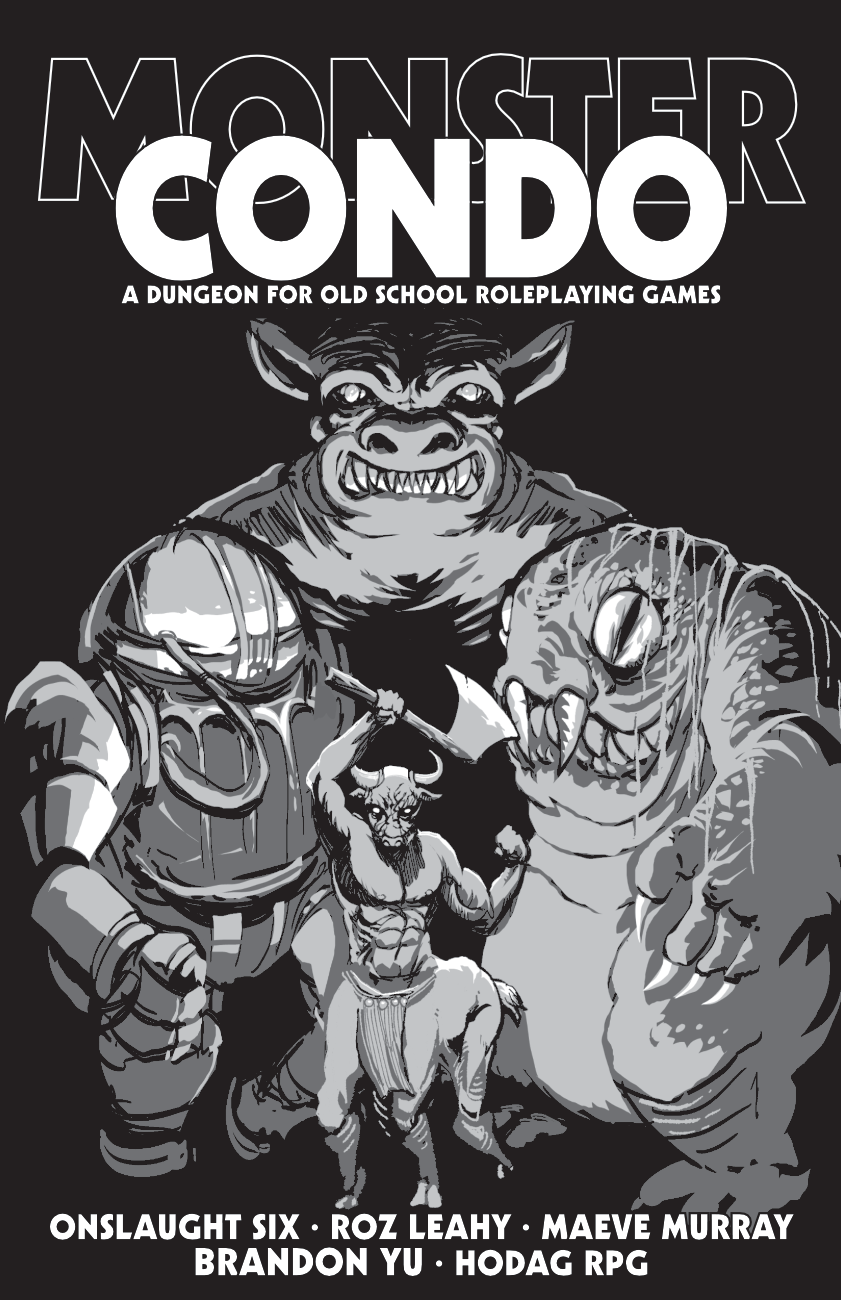
Monster Condo
By Onslaught Six, Roz Leahy, Maeve Murray
Tidal Wave Games
OSE
Level 2?
Tidal Wave Games
OSE
Level 2?
Engage with multiple factions of orcs, beastmen, rodentia, and cults. Infiltrate the followers of a doomed machine. Fall prey to a vampiric lord. Escape from the moat monster. Fight deadly monsters of chaos. Get treasure. Get out alive.
This 44 page digest presents one level of a dungeon with seventeen lairs comprising about 120 rooms. It’s a weirdly worded and padded out hack with secret doors being your only exploration, in spite of a balrog AND demon lord both being present.
There’s this old template complex and blah blah blah a year ago something happens and monsters move in. There are now seventeen different “zones” in this dungeon, each with about five or rooms in them. Yeah man, like I said, a year. And seventeen zones worth of monsters. So, you know, they’re motivated, I guess?
So, the map. One level. It’s got loops? No? Maybe? The seventeen or so zones are all like little mini-maps. Imagine you took seventeen dungeon geomorph tiles, each of which had five or six rooms on it. Then, connect those geomorph tiles with, like, a hallway in to it and a hallway out of it. I think a few of them actually have a THIRD hallway leading in/out of them. Pretty cool stuff, eh! No? Not? Not. And, then, I want you to use the TINIEST fucking font on earth to label each room. Chill? Sounds like a great idea. Yeah yeah, “bryce has old eyes” Fuck you. Well, maybe. But, also, more than one thing can be true at the same time. The fucking font here is TONY for the map keys. There is absolutely no way someone looked at this and said “yup, looks great!” which means that no one looked at it. Also, the map lists “0.1, 0.2” and so on but the text lists “a.1 and a.2.”
How about the room entries Mrs Lincoln? “This room contains a library of tomes purported to contain magical secrets. Taking the time to read the books reveals they are all hoaxes or inaccurate. Empty hooks, designed to hold shields and weaponry, line the walls of this room.” That is a typical room entry. If there’s a monster in the room then there would be a stat block also. So it’s not really read-aloud. And I’m not sure it’s really DM text either. The concept of a room? The concept of 120 rooms? How about “Rotting wood shelves endure upon the walls Hurrath “ Nice and purple, yes? Or “The Beastlord resides here, commanding his underlings to capture the Muroids and put them to work.”
This is a kind of interesting style of abstraction that pops up from time to time. It’s not the normal generic abstraction that shows up usually but more of a, oh, I don’t know, I think I’ve compared it to writers note for an episodic tv series. “Kirk is a brash officer, a ladies man born in iowa who was the only person ever to pass the blah blah blah.” So, it’s kind of painting a general picture of what’s going on. And, to a degree, that is the point of writing a room, you want to give the DM an idea of what is going on there so the DM can then take the reigns and run it. But it’s almost as if the room is forgotten, the specifics of playing a D&D adventure are forgotten. If we look at the room descriptions “The Beastlord resides here, commanding his underlings to capture the Muroids and put them to work” then you get a decent idea. Yes, that is what is going on here, in general, as in that is the kind of activities that take place here. Maybe we could summative it as “throne room” or “command center. “ That tells us the same thing. But, also, not, what the fucking is going on in the room? If he directing his legions and the the party runs in ala New Hope? Does he have a sand table he is standing over? What the adventure has provided are some very general writers notes. As if it were then to be handed to a different writer who would then create a room, the specifics, from it. “Lou! I need two paragraphs by Tuesday about a room that some dude called the Beastlord oversees his attempts to capture the Myredions.” That’s not a room description. It’s the IDEA for a room description. Not chill.
Let’s see. We’ve got a zombie ogre in this place. He has a pot on his fireplace bubbling away. Can zombies do that? He’s smart? I guess He’s got a pet gelatinous cube. Wait, what?! Nothing means anything anymore. My kobold has a pet Zeus on a leash. The LG Lich is fighting against the forces of Nirvana and their commander Asmodeaus. Look, man, bend things is you will but you gotta have SOME kind of logic to them. And why the fuck do we need to know that the zombie dude feeds the cube limbs and pieces of its victims. That’s backstory. Better if the cube is guarding something, some passage or some way its stuck, and there’s a crate of limbs and bodies in another room with obvious limbs hacked/torn off. Then it makes some kind of sense.
Essentially each room is just a combat. The various zone leaders DO have some goals. Like “Bob wats the eye of moloch” but the roleplaying notes and faction issues really are not present much, except maybe in an occasional note like “Mary hates everyone. Thus, each room is just the concept of a room. You go in and kill something. You pick up some genero treasure. “An unusual hat made of peculiar material.” YES. Not why the fuck is the hat unusual and what’s it made of?!!?!!!?!?!? A foppish beret made of liquid jade. There, done. See how I named the hate and why it was unusual, instead of just saying its a weird hat made of something unusual? That’s the fucking difference.
Hack hack hack. Abstracted text.
Oh, also, 2d6 wizards are summoning a balrog in this, who WILL show up, as well as some cultists summoning Moloch Archduke of Hell. Who will then go on a tear killing like every following of Tenebrous in the dungeon and then the world. So, you know, better to just kill everyone then talk to them anyway, about their goals and what their needs are.
Little to no interactivity beyond stabbing. Abstracted room and treasure descriptions. Move along move along nothing to see here.
This is $10 at DriveThru. Taint got no preview. Boo! Boo I say! Show us what the fuck we are buying, a sample of it, before I spend my assistant crack whore trainee monies on it.
https://www.drivethrurpg.com/en/product/562586/monster-condo?1892600
Categories: Tabletop Gaming Blogs
The Mismatch in Appendix N

One of the things about Appendix N in the AD&D Dungeon Master's Guide is that, in the main, the protagonists of the works featured don't really represent the typical PC in the old school mode, at least in the way players first meet them at lowly first level. "You're no heroes" has become a cliched marketing line in newer games wishing to evoke the old school D&D vibe, but the fantasy protagonists of Appendix N are heroes, at least in terms of capabilities.
In older D&D, characters get by cleverness (player skill) or by luck (die rolls), but even when we first meet them, the likes of Conan, Fafhrd & Gray Mouser, Ganelon, and Skafloc are skilled, puissant sorts. One might quibble regarding Fafhrd and Gray Mouser. Tthey are presented in the chronologically earlier but written later Leiber stories "Snow Women" and the "Unholy Grail," as youths, but they seem to be pre-hero (call it 0 level) in those, to me. We are told that Conan, in contrast, was formidable even at a young age: "I was one of the horde that swarmed over the hills. I hadn't yet seen fifteen snows, but already my name was repeated about the council fires."

There is fiction more representative of these early level adventurers perhaps as likely to come to ruin as to succeed, but we don't find it as much in heroic fantasy as in other genres. Fairytales and legends with their less competent protagonists often have heroes escaping by cleverness or luck or Providence --or not escaping and meeting a bad end. Picaresque adventure novels and some novels in the Gothic tradition often have protagonists buffeted from one predicament to another and seldom do they get out of them due to their adventuresome capabilities!
While not as violent as D&D or as some older fairytales, the Oz novels have protagonists engaging in exploration, encountering dangers, and mostly having combat being a fail-state.

This sort of plot where characters either narrow escape (or fail to escape) does show up in fantasy, too. Lord Dunsany (who is in Appendix N) and Clark Ashton Smith have stories of this sort. Mignola and collaborators have created some stories in the style of these two masters in Bowling for Corpses and Other Strange Tales from Lands Unknown and Uri Tupka and the Gods.
Are there any of the most frequently cited Appendix N authors and works that depict these sort of characters? I think so. Jack Vance with Eyes of the Overworld and Cugel's Saga, certainly, and Tolkien's The Hobbit.
Categories: Comic Book Blogs, Tabletop Gaming Blogs
OSR Module Commentary Adapting Gary Gygax’s classic 1980 TSR module S3: Expedition to the Barrier Peaks to Adventurer Conqueror King System II (ACKS II)
Adapting Gary Gygax’s classic 1980 TSR module S1: Expedition to the Barrier Peaks to Adventurer Conqueror King System II (ACKS II) transforms a gonzo sci-fi/fantasy dungeon crawl into a high-stakes Expedition with domain-level, military, and tech-securing implications.In ACKS II, the crashed starship is not just a loot run—it is a repository of Ancient Tech capable of disrupting regional Needleshttp://www.blogger.com/profile/11243274667834930867noreply@blogger.com0
Categories: Tabletop Gaming Blogs
RPG a Day 2026 – Day 24: Distance
Welcome to Day 24 of #RPGaDay2026. As I explained in my Day 0 post, I’ll be creating NPCs based on the day’s prompts and the week and day modifiers presented in the infographic below. Check out that post for further details.
Today’s combination: Distance (Prompt) + Emotion (Weekly Modifier) + Fair of Face (Modifier) + Western (Genre)
Here is today’s NPC.
Emogene Covington (Fantasy Name Generator used: Old West name generator)
The Widow Covington is a young woman from the East Coast who traveled to this frontier town to marry Booker Covington, the proprietor of the Covington Hotel. The grand Victorian-style building is the largest in town, built when Booker invested the profits from a silver strike to rebuild his original establishment.
A lifelong bachelor, the older Covington sent for the beautiful young woman and her little son after exchanging letters with her family. Her striking features and fair complexion quickly became the talk of the town. Women jealously commented on her fair face. The significant age difference was a popular subject of gossip, but the fact that she was already a young widow with a child fueled the most chatter.
When Booker passed away just a few weeks after the wedding, the local rumor mill truly went into overdrive. Emogene displayed the appropriate emotions as her new husband was buried, donning widow’s weeds and strictly observing mourning conventions. Dressed entirely in black with a veil obscuring her face, she kept her distance from most of the townsfolk.
Today, the Widow Covington is still officially in mourning, remaining distant and stoic while her young son runs about the hotel. She continues to oversee the establishment’s day-to-day operations, alongside her other, less-public ventures: hiding wanted criminals for a steep price and acting as a fence for stolen goods. Whether she inherited these illicit side businesses from her late husband or started them herself remains unclear. However, if you are part of the local criminal underworld, this distant, veiled widow is someone you will inevitably have to deal with.
Thanks for reading; I am looking forward to your RPG a Day 2026 post, comments, and conversation. If you want further information about #RPGaDay2026, be sure to check out Autocratik’s blog.
A Spanish version of this post is available at the Desde la Fosa Facebook page.
See you all tomorrow!
Categories: Tabletop Gaming Blogs
TSR's module A2, Secret of the Slavers' Stockade (Dungeon Level)
After a long hiatus, during which my role-playing table defeated all that A2 had to offer, I probably should wrap up with a critical review of the dungeon part of the module.
Like the fort level, the dungeon is built around two "railroad" sequences of rooms which are shaded on the TSR map. Each is similar in structure, leading the players at first through a sequence of traps, trick ambush fights, and difficult problem environments. Each sequence culminates in a boss-group fight that (like the climax of the fort level) is laid out tactically for the GM in a then-innovative detail map showing the location of each foe and furnishing.
Also like the fort level, these tricks and traps are for the most part shamelessly silly. This is D&D funhouse material with no care for naturalism. There's a magnet trap in the wall, punishing plate mail and capturing blades while hobgoblins run out and hit you with wooden clubs. There's a gauntlet of oily grille-bars through which a colony of boggles, the dimension-hopping menaces used as hound dogs in the fort, will stab and pickpocket you. There's a cave that can only be traversed by finding the sawn-off tops of stalagmites that cross an abyss filled with obscuring and sometimes scalding steam. There's a room with beehives, but no flowers; a room for cheesemaking, with nothing remotely milkable.
Indeed, if the module's dungeon were laid out just with the two railroads connected end-to-start, the whole ordeal would be a ridiculous way for the bad guys to run their operations - tortuous, snaky, running visitors and reinforcements through deadly steam, giant spiders, and bees. But in the first improvement over the fort level, the published edition of the dungeon adds sensible secret passages that both make more sense of its layout and allow more discovery and choices in play. There's a secret shortcut around the boggle grille that can be deduced by watch the scary but harmless ghost of an elf act out its last actions on Oerth. There's another that allows bypassing the steam and bee perils, leading from the first boss fight to the newly developed back area of the second boss fight -- an area that itself is laid out in a branching, not railroad, way.
Some of the other trickery works remarkably well in play. The boggles in their grille-gauntlet get to use their limb-phasing ability for good effect, not wasted as it is in the fort level. I played it like this: for each 5 x 5' wall, floor or ceiling surface a player is exposed to, they have a 1 in 6 chance of being spotted by a boggle (and can then attack its face, if they are watching and ready in that direction), once spotted, they have a similar chance of coming under attack from each surface they're close to, with an even chance of being stabbed or pickpocketed. I was able to drive the players to some truly wild levels of spell-based problem solving to get the more vulnerable members across. One even had a prized weapon stolen from him, which in the bounce-back world of 5th edition stings much more than 10 or 20 hit points damage would. The hives and their honey-bucket trap, as silly as they are, also lead into creative solutions (5th edition makes it easy to talk to the bees and that's the way my nature-loving players went.)
The end-of-railroad fights, like the one in the fort level, show off principles of a good tactical challenge that would become codified in advice to Dungeon Masters over the coming decades - variety of opponents, terrain features and obstacles (stairs, balconies, tables), and weaponized hazards (falling chandeliers, brine vats, caged monsters). By the early 80's it could no longer be taken for granted that DMs had a devious wargamer mind, so each fight comes with a detailed playbook of the foes' positioning, moves, and spells. These instructions may have been created out of a wish to standardize the running of the combat in tournament situations, but they also came to serve as examples for DMs who wanted to write and run their own memorable combats at home.
In the fort level, many of the added areas beyond the tournament gauntlet seem like dead ends or afterthoughts. In the dungeon, the added areas are much better done. They include the living quarters and operations of a varied group of slavers, led by Markessa, the boss of the final fight. As in the preceding module, there is an area of cages, as well as living quarters for the slaver NPCs. In full realism mode they include a kitchen, mess hall, and latrine.
We also find the lair of Markessa and areas supporting her operations. This evil elf is already memorable as a mad scientist -- she is responsible for many of the mutant creatures in the dungeon, and the fight takes place in her lab. Her home area has the details that establish her as one of the best villains in the TSR modules. There's a cloned body double, a surgically enhanced perfect lover and bodyguard, plenty of secrets and tricks, and a whole cave complex full of mutant humanoids, the cavelings, who worship her as a goddess.
The caveling area is the most underdone part of all this. The map places their caves in a tightly arranged 100' square, but the description of their environment deserves a more sprawling, abstracted or procedurally generated maze of tunnels to live in. The cavelings also are meant to fuel the unruly-stronghold dynamic. Not only are they subject to various mental derangements, but they steal and eat slaves from the cells from time to time (how exactly?), and they explicitly can be turned against the slavers and even their creator Markessa. How the rabble-rousing is supposed to happen, when to get to the caveling area you will have to fight through both the slavers and, probably, Markessa, is not clear. Still, the intention is there.
When you run out of space in the corner of the graph paperA better unruly element is the gang of slavers nominally allied with Markessa, whose leader, Blackthorn, is an ogre mage who affects a creepy-barely-human shape. Like his name-alike in James Clavell's Shogun (Japanese ogre, get it?), Blackthorn is ambitious and might work with the party to betray Markessa. In his barracks are some werewolves and a group of slavers who mostly embody the banality of evil - an architect, an accountant, an alchemist, all keeping the wicked operation running.
Blackthorn is a more credible early encounter, as his area can be reached through one of the secret passages early on. But Markessa has a way of spying on him -- a telepathic potted plant with hidden mutant eyes and ears which, although absurd, is memorable and perfectly in character for the mad scientist.
Overall, the dungeon level presents a fun challenge marred by implausible excess and less-than fluent strategic design. I have to also mention the obvious repetition of elements from the fort level. This is understandable if the level was designed to be run in parallel, but it creates jeopardy if the whole place is run as one adventure. These repeats include:
- Were-creature henchmen (boars above, wolves below)
- A kitchen with a grumpy cook
- A trap with a rolling danger (bear on wheels, pile of logs) and a pit behind
- A slave gone insane (escaped in the fort, caged in the dungeon)
- An apparition tied to the trauma of its death - represented by two different monster types, the haunt and the less dangerous phantom, both intended to be less difficult than the official high-level Ghost monster.
- An NPC found sitting behind a desk, who pretends to chat with the PC's in good faith for a while, then flips the desk and attacks
As well, there's material that repeats well-known beats from other TSR modules of the era. There's a wholly gratuitous delegation of drow and a tunnel leading down to the underdepths. Obviously, this calls back to the culmination of the Giants series, but tends to undermine Markessa as the most evil elf-type around. The masquerading ogre mage is maybe just a good use of the monster type but recalls a similar climax at the end of one of the railroads in White Plume Mountain.
As a whole, A2 is a more ambitious, unbalanced, and overstuffed experience than A1. The unruly elements don't quite rule out the danger of a total party kill on the fort level, while the dungeon level is both less railroaded and less amenable to a complete mobilization of the defenders. The creative and naturalistic challenges of A1 take a turn for the worse, into absurdist funhouse territory. Markessa is a much better final boss than the underwhelming Sturm Bluchholtz of A1 (who's not even named in the first printing). As proof of her appeal, in the Slavers sequel module from 2000, the idea of a self-obsessed villain who creates a line of clone henchwomen led to some righteous excess, with different color-coded Markessas roaming the Flanaess.
The Stockade can be said to outdo the Undercity, but that's not always a good thing. In any event, we are past the high-water mark of the series now, as we prepare for the least worthwhile module of the quartet, A3 - Assault on the Eyrie of the Slave Lords.
Categories: Tabletop Gaming Blogs
Adapting North West of Earth By C.L. Moore - Orbital Decay (MicroRed version) From The Red Room & The New Flesh Rpg - Sci Fi Adventure Locations D100 Old School Solar System Random Graves, Tombs, & Dungeon Table
In the classic planetary romance tradition of C.L. Moore and Leigh Brackett, the Solar System is littered with the bones of forgotten civilizations. These ancient burial sites, sealed vaults, and subterranean ruins hold immense power, cosmic terror, and unimaginable wealth for bold rogues and spacers.Below is a d100 Random Graves, Tombs, & Dungeon Generator Table tailored for old-schoolNeedleshttp://www.blogger.com/profile/11243274667834930867noreply@blogger.com0
Categories: Tabletop Gaming Blogs
RPG a Day 2026 – Day 23: Fortune
Welcome to Day 23 of #RPGaDay2026. As I explained in my Day 0 post, I’ll be creating NPCs based on the day’s prompts and the week and day modifiers presented in the infographic below. Check out that post for further details.
Today’s combination: Fortune (Prompt) + Instinct (Weekly Modifier) + Blesses (Weekly Modifier) + Post-Apocalyptic (Genre)
Here is today’s NPC.
Malahki (Fantasy Name Generators used: Futuristic name generator and Scientific device name generator)
Malahki is the proprietor of a gambling den in a crossroad settlement. His establishment, The Blessed Fortune, is a wooden two-story building with a sign bearing its name in large, gaudy letters. Jugglers, fire-eaters, and exotic mutants perform outside, inviting passersby to come in and try their luck.
Malahki was once a scavenger, surviving by rummaging through the ruins of the past out in the wastes. Stories tell of how he found a powerful artifact from before the fall and used the riches it brought him to start his enterprise. The owner of The Blessed Fortune not only runs card and dice games but also hosts pit fights and animal races. He loans money to his den’s patrons, as well as to merchants and traders in town. Everyone knows Malahki has a sharp instinct for business and games.
What only a few trusted associates know is that the relic Malahki found was the Harmonic Twister—a box of dull metal with dials and controls that shift locations across its surface every time it is used. Only Malahki understands how it works. To those he trusts, he explains that the Harmonic Twister whispers to him.
The artifact controls luck and probability, warping reality to produce outcomes that benefit Malahki. Simple, small adjustments, like ending a client’s lucky streak, have little visible effect on the world; perhaps someone’s eye color shifts, or they suddenly have a new name that everyone seamlessly accepts. Larger adjustments, like causing the failure of a debtor’s plans or eliminating a rival, impact the world in major ways, profoundly changing the people around him or even rearranging buildings across town. Regardless, thus far, only Malahki notices these shifts in reality, and most work to his benefit.
Thus far.
Thanks for reading; I am looking forward to your RPG a Day 2026 post, comments, and conversation. If you want further information about #RPGaDay2026, be sure to check out Autocratik’s blog.
A Spanish version of this post is available at the Desde la Fosa Facebook page.
See you all tomorrow!
Categories: Tabletop Gaming Blogs
Pages
