Your wildly multifarious home!
Tabletop Gaming Feeds
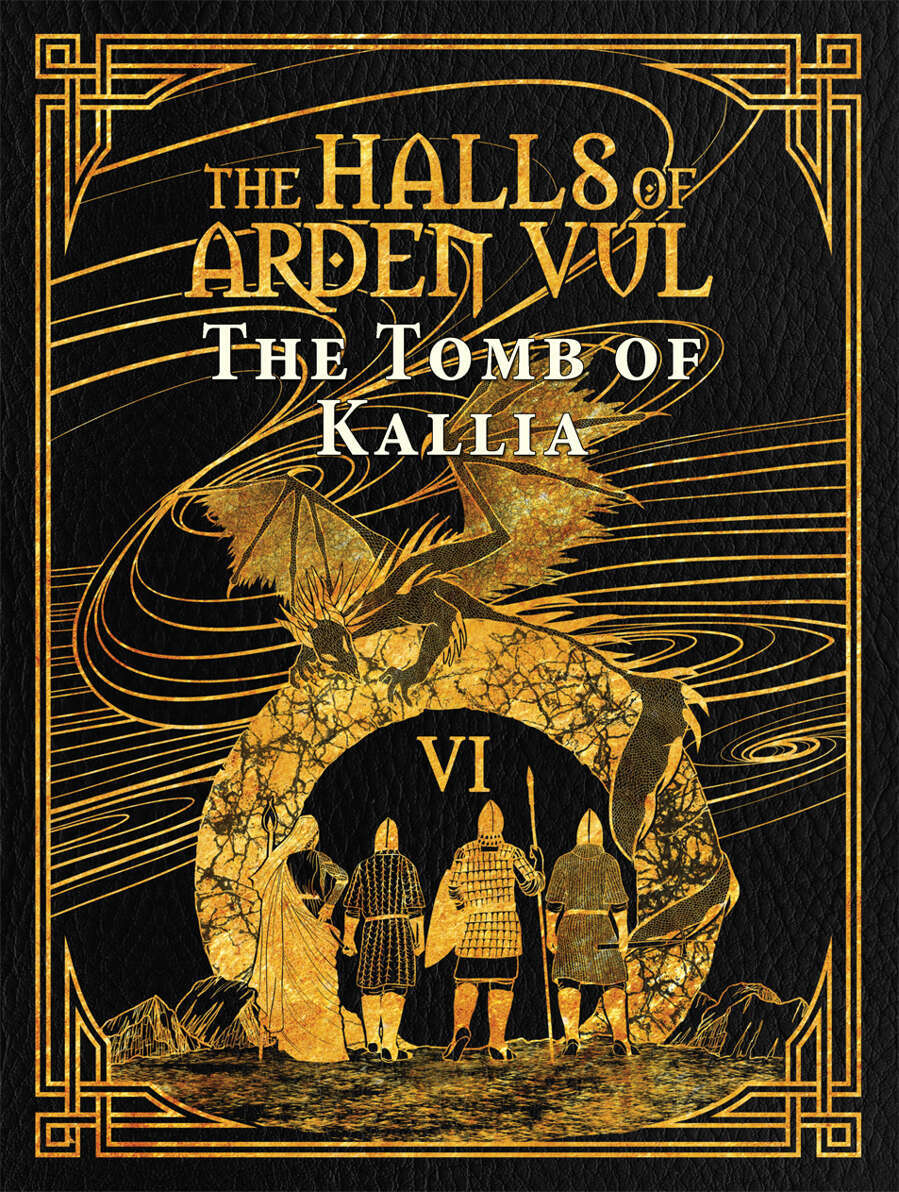
The Tomb of Kallia
By Richard Barton
XRP
OSRIC
Levels 2-4
XRP
OSRIC
Levels 2-4
Rumors of a lost tomb lying deep within the New Forest are starting to trickle into the ears of adventurers in Gosterwick and Newmarket. While the source – and thus the veracity – of these whispered stories remains uncertain, all of the third-hand accounts suggest that the tomb was the product of the Archontean golden age, and not a simple tomb delved by the local Thorcinga. A few rumors even imply that the tomb displays the type of exceptional craftsmanship usually associated with dwarven master masons. Could this lost tomb be the work of the great Zhorak? or of Zhorak’s legendary master, the lesser-known Grishia Basalt? If Grishia was involved, might this tomb shed light on the location of the fabled Egg of Creation? Regardless of its creator, the tomb is sure to be filled with the treasure and lore of the ancients!
This one hundred page adventure uses about six pages to detail ten rooms in the Tomb of Kallia. There is also extensive coverage of a nearby wilderness area. Extensive being the watchword with this, as eighty words are generally used where one will do. Padded with backstory, I am bewildered by Arden Vul.
Yo, notably there is no map, at all, in this.You have to download a separate map pack, The Maps of Arden Vul, which is free download containing all of the Arden Vul maps and all related regions.
So, my summary is off. While this is titled the Tomb of Kallia that section makes up just a small portion of it. The tomb is actually sitting in the middle of a larger slavers camp which has about twenty locations and then about ten locations for the tomb proper, plus few more in the slavers section for a false tomb. The bulk of this is a forest with about thirty locations, many with a small handful of sublocations. Thusly the adventure here is really the various intrigues taking place in the region that will eventually lead the party to the slavers camp and/or the tomb that is a relatively minor part of the product.
And there is quite a bit going on in the region. There are a couple of groups with some larger intrigues, like the slavers, and a several smaller things going on, such as some scammy bills of lading related to a quarry and humanoid band with, ahem, elective raiding, that loosely, or strictly hint at the larger “slaver” plot, with slaver in quotes because of the various schemes going on. As a regional supplement, sandboxy, it has a decent amount going on in it. The level range here is, I think, a bit misleading when you look at things like all of the level sevens and nines in the slavers camp, which the adventure warns you about. The wilderness sites ARE dangerous as well, so this feels like a long slow adventure with lots of retreats to regain strength and recruit again, slowly making progress in clearing things and finding more sites.
Look man, I know we’re going to get in to it on these next comments. There are readers who will love this. There are fanboys who love this. There are contrarians who have an identity based on disagreeing and ignoring meaning. My platonic ideal of an adventure includes it being easy to run. That is the purpose of an adventure. To be run at the table. Ideally with little to no prep required. “You can run it without reading it!” is hyperbolic but also the unreachable goal to shoot for. “Easy” to run. What is easy? We’re not going to agree, some of you. I recognize that we read adventures before hand, we take notes and highlight things. We have to puzzle out the connections in the adventure and make reference sheets and all of that shit. How much of that should you have to do to run it? How much of that should, in fact, be on the designer to solve before it reaches your hand? The writer, designer, editor, it has to be “easy” to run. We can disagree on the nuance here, but not on the premise. Except now I’ll walk that back, there ARE adventures that come along, rarely, that are obtuse and ABSOLUTELY worth it to puzzle out and spend a lot of time prepping. And those adventures are exceedingly rare. It is far, far more likely that an adventure will be a disaster of writing, layout etc and not be “easy” to run and not worth the effort you will put in. And that is, I think, the case with all of the Arden Vul products I’ve seen so far. The fucking thing fights you, for no reason, and ultimately I’m going to turn to some other product to run instead of this. Because the content, while decent, just isn’t worth devoting my life to in order to make it to the table. I’d have to go look at Thicket and Arden Vul proper to verify, but my recollection is that it’s been the same with all of them.
The writing here is dense, almost to wall of text territory. It’s padded out with backstory inline and descriptions of why and irrelevant descriptions. You have to fight through mountains of text and loosely formatted paragraphs in order to suss out what’s pertinent in the various locations.
One section has a palisade with watchtowers. Palisades get an inordinate degree of attention in this. “The palisade is 9’ tall and made of new wood bound together with vines, rope, and interior support timbers.”9’ tall? Sure. The rest of it, is that important? How about a description of the watchtowers? “Four observation and firing platforms are found along the length of the wall. These small platforms are 5’ above the ground and accessible by ladders. They allow guards to watch the approaches to the compound.” Well, I guess we’ve defined what watchtowers are, yes? These, yanked out of context, don’t seem terrible, but it is just relentless in the degree of detail everything is described in. How about an NPC? NPC’s routinely get a quarter page description. “Personality: Orphaned at an early age, Happy was taken in, raised, and trained by one of the Elder Brothers of the Benevolent Brotherhood of Arcturus.” Is this relevant to the adventure? No, it’s not. Sometimes, like the palisade detail, these things can be used to add color to areas. But you can’t do it everywhere. You can’t take every single thing in the adventure fully describe it.
I don’t know. Maybe you can. But you gotta WORK that formatting to do it. And this don’t do that. We’re relying on paragraphs here with some underlining and some light indentation in places. And then there are these long ass sections of supplemental information that just appear thrown in willy-nilly. You’ll be in a room description and suddenly it will ballon to multiple pages and there will be this cumbersome page and half table just tossed in. How you can keep a train of thought here is beyond me. It’s almost a wall of text broken by weird presentations of information.
There is something here. More so, i think, than The Thicket. But it is so hard to get at that I can’t possibly, after multiple read-throughs, think of a situation in which I’d be pleased or excited to run this.
This is $20 at DriveThru. There’s no preview. This HAS to have a preview. You HAVE to know what you are getting in to before purchasing this.
https://www.drivethrurpg.com/en/product/577509/the-tomb-of-kallia?1892600
Categories: Tabletop Gaming Blogs
Integrating Adventurer Conqueror King System II (ACKS II) with the legendary, chaotic, and maximum-gonzo DNA of Dave Hargrave’s Arduin Grimoires- A Random d100 Arduin and ACKSII rpg Wilderness Encounter table
Mixing the extreme gonzo high-fantasy of Dave Hargrave’s Arduin with the domain-scale, hyper-structured mechanics of Alexander Macris’s Adventurer Conqueror King System II (ACKS II) creates a volatile blend: absurd, lethal hazards cross-referenced with exact ACKS II encounter distance, surprise, and morale traits. This blog post picks right up from Integrating Adventurer Conqueror KingNeedleshttp://www.blogger.com/profile/11243274667834930867noreply@blogger.com0
Categories: Tabletop Gaming Blogs
The Legion and Me!
(There is some talk about gaming here, so bear with me!)
A new Legion of Super-Heroes comic book series dropped this week, which inevitably sent me down memory lane and resulted in this post.
I won’t claim to be the biggest Legion fan in the world, but they’ve always held a special place in my collection. I was introduced to them through DC Digest issues filled with Silver Age stories and scattered Spanish translations. The first actual issue I picked up at a newsstand was Tales of the Legion of Super-Heroes #331, featuring Lightning Lass on the cover. She quickly became one of my favorites, alongside Wildfire and Blok in the late 80s and Andromeda in the 90s. After that issue, I was hooked and started hunting for the series every month. Then Crisis on Infinite Earths happened, and I was enthralled by what would become of the team.

Soon after, I discovered our local specialty shop and started collecting Legion of Super-Heroes (vol. 3) along with most of post-Crisis DC. It was among the first books I would read each month. I was also heavily into L.E.G.I.O.N. and the modern-day connection they had to the classic team. The Five Years Later run was a brilliantly complex story—decidedly not easy to get into, but it pays off completely.

In hindsight, it remains my favorite era, though I was certainly ready for a return to the classics when the Zero Hour reboot arrived. Around this time, my friend Luis ran a Legion-inspired superhero campaign, cementing the team as a major reference point whenever I thought about superhero TTRPGs.

I’d be hard-pressed to pick a definitive favorite between Marvel and DC; it always depended on the era and the creators working on them. But I was definitely riding a DC high when I got the DC Heroes 1st edition boxed set from Mayfair Games. While it focused on the regular DC universe rather than the 31st Century, I absolutely loved the Legion supplements, especially the two volumes covering the characters and the worlds of the United Planets. Somehow, I missed out on the four-part Chessmen Adventure Series, which is amazing in retrospect since the Time Trapper was arguably their greatest villain. The 2995 Legion of Super-Heroes Sourcebook, which dealt directly with the Five Years Later period, was another massive favorite. I eventually parted with my DC Heroes rulebooks, but I made sure to keep the Legion and Watchmen sourcebooks.


Following the post-Zero Hour reboot, Luis and I were really into the new series, and I recall him trying to get another campaign off the ground. I believe we used Heroes Unlimited—our go-to superhero system back then—though I’m not 100% sure. By the end of that era, my comic reading had tapered off, so I only read the rest of those issues much later when filling gaps in my collection. I dabbled in subsequent versions, like the Waid and Kitson “Threeboot,” but it didn’t really capture my interest.

During the retroboot of the classic timeline, I wasn’t buying monthly floppies, so I mostly followed the news via YouTube commentators.

Still, my love for the franchise never vanished. I thoroughly enjoyed Green Ronin’s DC Adventures for Mutants & Masterminds, which included excellent Legion character write-ups. I even planned a homebrew sequel to a Wild Cards and New Universe-inspired campaign (Dawn of a New Age) featuring a Legion-esque team traveling back in time, though it never made it to the table. When I wasn’t getting my Legion-fix from comics, the two-season Legion of Super-Heroes animated series captured the classic heroics with a post-Zero Hour flair.

Later, when Bendis tried to refresh the book with the post-Rebirth Legion, I excitedly picked up a few issues but forgot to return to the store—I was a new dad, and my priorities had shifted.

The 2023 animated movie reignited that old spark, prompting me to track down TPBs and omnibuses. I never got around to reading the whole thing, but the Legion mania was definitely back.

Now, I’m going to the comic store with my son as he explores his own interest in comics and manga, making the release of this new Legion of Super-Heroes perfectly timed. The Absolute series by DC are amazing, and reading the new Legion #1 feels a bit like an Absolute Legion book, even if it isn’t branded as such.

It is a clear, engaging jumping-on point for new readers, packed with great writing and stellar art. But if you are a long-time fan, there are plenty of nods to continuity, along with twists and changes to keep you guessing. I’m intrigued and will definitely keep reading to see what happens to these characters. I highly recommend picking it up.

As I prepare to wrap up my Savage Fading Suns campaign in a few months, I know our next game will be in the superhero genre. I was deeply tempted to run a Buck Rogers XXVc and Legion mash-up: a super-team in a colonized star system, cut off from their homeworld by a collapsed jumpgate, dealing with boiling political tensions and an unknown extra-solar threat. But after playing a sci-fi game for over three years, our table needs a change of pace, so we’re shifting to pulp heroes instead.
Regardless, I hope to run that Legion-inspired campaign someday. While I wait for the opportunity, I’ll happily stick to the comic adventures. Long live the Legion!
P.S. – There is also a new Doom Patrol series out right now. I’ve always loved that group, their concept, and their past runs. I don’t love them quite as much as the Legion, but still… maybe I should check it out!

P.S. #2 – Let me share with you a picture of my flight ring from my time with the Legion! (I love this ring I got from Metro Comics years ago.)

P.S. #3 – If you want to read some Legionnaire write-ups for the original DC Heroes game, check out the Legion entry in the DC Heroes Role Playing Game Database.
Categories: Tabletop Gaming Blogs
OSR Commentary - Running T1-4: The Temple of Elemental Evil (AD&D 1E) by Gary Gygax With Frank Mentzer using Adventurer Conqueror King System II (ACKS II) Rpg - The Deeper Depths
Running T1-4: The Temple of Elemental Evil (AD&D 1E) using Adventurer Conqueror King System II (ACKS II) requires reading the first part of this blog post OSR Commentary - Running T1-4: The Temple of Elemental Evil (AD&D 1E) by Gary Gygax With Frank Mentzer using Adventurer Conqueror King System II (ACKS II) RpgTo model the dynamic cold war and active Needleshttp://www.blogger.com/profile/11243274667834930867noreply@blogger.com0
Categories: Tabletop Gaming Blogs
Development of the Majestic Fantasy RPG, Part 4
Sandbox Campaigns often fail when players feel they lack information and that their choices are little better than throwing darts at a board in the dark. In the decades I have been running Sandbox Campaigns, one key tool I use to combat this issue at the start of a campaign is working with the player to establish their character's initial context. This helps them make informed choices as their characters the moment the campaign begins.
Creating CharactersCreating characters for the Majestic Fantasy RPG involves deciding on an initial context, rolling attributes, picking a character class, choosing a character background, allocating skill points, and finally choosing equipment and spells. The following outlines each of these in detail.
The Initial ContextThe players’ choices as their characters propel sandbox campaigns. However, to make choices, the player has to understand the circumstances and the character’s context. Otherwise, the options are no better than making a random dice roll.
The Initial Context is particularly important at the start of the campaign, when there are no past events for the players to reference when making decisions as their characters. The Initial Context establishes the character's circumstances at the start of the campaign, enabling players to make informed choices from the outset.
The Initial Context doesn’t have to be elaborate. It only has to be sufficient. What is sufficient varies from player to player. I have had players come up with detailed histories and backstories, as well as those who found a single sentence sufficient. “Max likes to hang out at bars in Eastgate and likes to get involved in trouble.” This player decided to make a Human Thug in a campaign set in the City-State of Eastgate.
Most players find a paragraph or two of personal background sufficient, along with a handout of the region or city they will be starting out in.
Ideally, with the Initial Context, the players should know or have created:
- Where is the character starting?
- Who does the character know?
- What are the character’s immediate goals?
- What kind of trouble is the character in at the start?
I encountered this in HârnWorld, released by Columbia Games in 1983. The basic idea is that you sit down one-on-one with each player before the first session to flesh out the character’s background. Mostly, this is some discussion intermixed with a bit of light roleplaying.
This technique effectively minimizes the write-up required for handouts. The discussion and roleplaying often work better and are more fun than reading a document, particularly for players or groups who want detailed backgrounds at the start of the campaign.
If this feels too formal or you don’t have the time, that’s OK. The key is that the Initial Context fits the group’s time and interest.
Definition NoteInitial Context: The circumstances, location, and relationships that define where the character is at the beginning of the campaign.
Previous Section: Part 3
Next Section: Part 5
Categories: Tabletop Gaming Blogs
OSR Campaign Slab - Amazing Adventures Rpg - Weird War II Campaign
One of the OSR campaigns that I've been tossing around is a Weird War II Amazing Adventures campaign setting. Amazing Adventures is having Codex Monstorum Kickstarter style campaign & to get ahead of the curve I decided to kick up a Weird War II campaign. Here's what I've got so far in my notes and such. Troll Lord Games’ Amazing Adventures (built on the SIEGE Engine) isNeedleshttp://www.blogger.com/profile/11243274667834930867noreply@blogger.com0
Categories: Tabletop Gaming Blogs
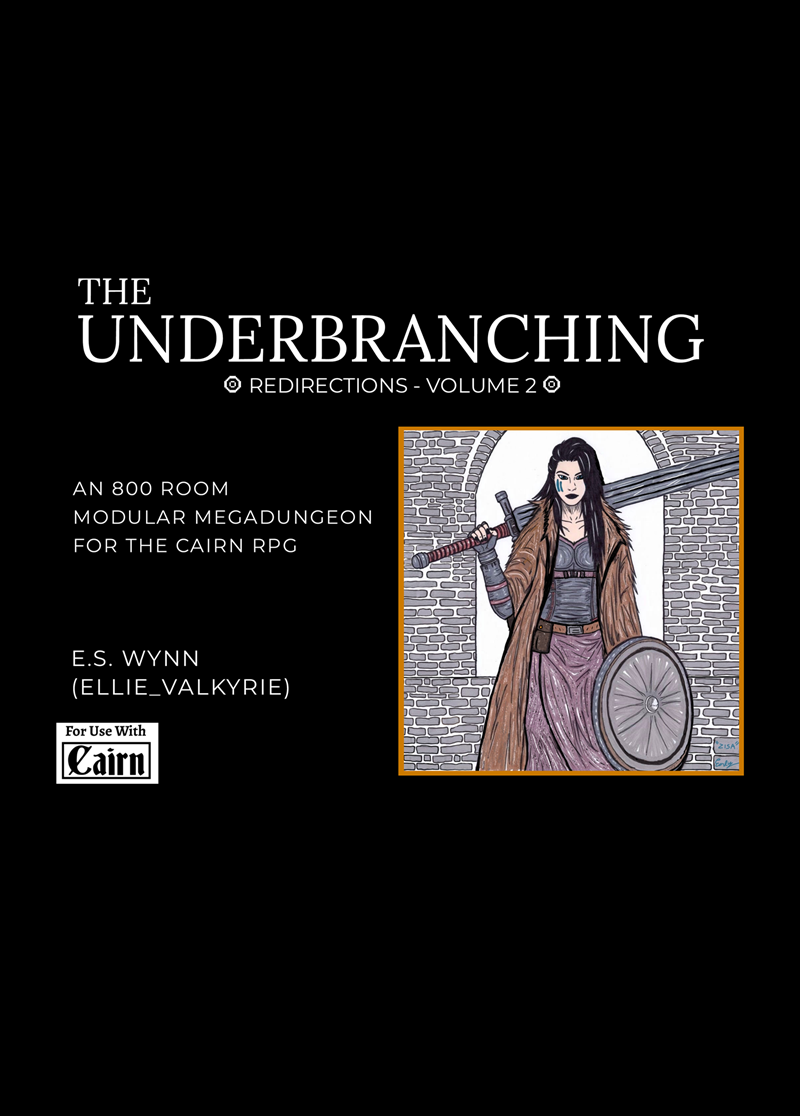
The Underbranching
By E.S. Wynn
Cairn
Self Published
Cairn
Self Published
This 210 page supplement is a collection of one hundred two page dungeon zones. More toolkit than adventure, you stick them together, in a modular fashion, to create your own megadungeon. That’s bs, but the zones themselves are fairly interesting, if small. It channels soe decent OSR zone spirit. Putting some thought in to it would have turned out a decent adventure/megadungeon.
Is it a megadungeon or is it a toolkit? This is almost certainly a toolkit for constructing a megadungeon. It presents one hundred zones that you could stitch together in to something larger and/or drop in as sub-levels to another dungeon. You have to think of it as a kind of dungeon geomorphs project. Each section has a number of entrances/exits that you could link up to other areas, with a few being targeted at main entrances/exits to a dungeon. It’s laid out in a “facing pages” format, with the map and a little overview on one page and the keys on the other. This limits things to about twelve or so rooms per page, maximum, and zone designs that are none too complex, from a mapping standpoint. Each zone will have a few rooms related to the zone, theming wise, and generally a few more not directly related to the theme.
There is a very fine “OSR spirit” present in many of the rooms. One of rooms reads “Ominous Vault: An impenetrable door of warm stone bars access to this room. Three locks are arranged in a triangle on its face, each accessible only with a Branch Key. Inside, a cursed, deathless humanoid like those in the sarcophagi waits, bound in leather straps and desiccated, but still aware. It will wait until someone comes close enough to bite. Stat as a Vampire (Cairn Bestiary.) It may be reasoned with (or bartered with) eventually, becoming a source of information, but is currently crazed with hunger.” So, a vampire. But you’re not just walking in here, it’s triple locked. It gives the party a reason to revisit the one or at least get some knock spells agoing. Once in we’ve got a nice little description of dessicated and bound in leather straps. And then, the vampire, it does have this “you got too close thing” but also it becomes a situation. Can you bargain with the dude to get some info? Will you dump some blood at it?It’s a resource to exploit. It is a fairly involved room for being a short-ish description, with lots of interactivity possible for the party to exploit, or be exploited by. And that’s a good room.
In other zones you’ve got some goblins running a kidnapping for ransom thing. Will you get kidnapped, or will you exploit them to get them to kidnap someone else for you? An undead zone has a lich who wants to finally get to read his big ol book collection. (I’m sure many of us can sympathize,) Are you gonna piss him off? Are you going to manage to use him to your own ends by bargaining a book? He’s testy at being interrupted. This things manages to put in an impressive number of situations in the dungeon, and not just the parties relationship with the various denizens.
Writing is generally good, there are a decent number of evocative description, rooms that feel imagined first and statted second, the way it should feel. That vampire being desiccated and bound in leather being a decent example. It does rely on “strange” and “weird” a little too ofton; we should be striving to write a description that avoids conclusions like that and gets more visceral, to the point the PLAYERs think “huh. That’s weird.” But it’s ok in general, especially given the sheer number of rooms.
The issue here, as with nearly every geomorph type product, is that there is little in the way of a larger picture. These areas are in isolation. “He seeks revenge against whatever pushed them out of their old home in an adjoining area and will pay with a random relic,” That guy, and his situation, with his cult, would be better if he had a specific vendetta against a specific group, that was played with in both zones. The interconnections between zones, and I’m not talking mapping, just are not there. And, i think, by design. There are some possibilities, like a dude who has a bronze tablet that “someone else wants”, but then it would be better if there were, say, some cross-references with ideas for linking areas. Or, just forgo the entire geomorph thing and spend the extra effort to put this thing together into a unified whole. That shouldn’t be THAT much more effort for the designer, already familiar with its two hundred pages of dungeon. Then you’ve have a real product here.
And some areas ARE weak, or have weak aspects to them. “A Maze of rough-hewn mine tunnels carved into the living rock …” This is just a few standard rooms layouts, as one would find in any dungeon, nothing minelike or mazelike about them.
I really like the vibe here. Strong OSR situations in the zones. Terse descriptions that still give the DM a lot to work with. But, then, I’m doing the Bryce thing. I bought a geomorphy thing and now I’m gonna complain that its a geomorphy thing. But it is! And it would be such a strong product if the designer did the work to tie the zones together and create a cohesive whole instead of explicitly noting that the DM is free to link these as they wish. Lean in to some cross-references, at least, to suggest possibilities! Oh, also, it’s Cairn, so, you have to adjust treasure appropriately and I’m not overly happy withthe magic items.
This is Pay What You Want at DriveThru with a suggested price of $10. The preview appears broken.
https://www.drivethrurpg.com/en/product/572362/the-underbranching-cairn-megadungeon?1892600
Categories: Tabletop Gaming Blogs
Wednesday Comics: DC, December 1985 (week 2)
I'm reading DC Comics' output from January 1980 (cover date) to the end of Crisis! This week, I'm looking at comics that were published on September 12, 1985.
Shadow of the Bat #1: This is not, of course, the post-Crisis series. That Batman: Shadow of the Bat doesn't debut until 1992. This is another reprint limited series focusing on the work of Englehart and Rogers, whose late 70s collaboration on bat-titles is celebrated. These first couple of issues, though, are pre-team-up of those creators. Here we have 3 Batman stories with Englehart and Simonson from 1977, and a House of Mystery story with Rogers on art written by DeMatteis. In keeping with my policy on reprints, I won't be reviewing it, but I'm noting it was out there. It runs for 5 issues.
Amethyst #12: Newell and Doran/Kesel fill-in on this issue. Amy is babysitting neighbor kids and tells them a previously unrevealed adventure of Amethyst and Prince Topaz where they must find a way to stop the onyx plague that turns its victims to stone. The solution involves a quest to the Emissaries of Varn. It's a shame Doran didn't draw more Amethyst as her art fits the material well.
Batman #390: The skies are still red as Moench's and Mandrake's story veers into high melodrama. After their kiss in the Gotham Observatory, Batman and Nocturna have a talk. She feels her theft is justified and won't give it up, but Batman can't just let it slide. Nocturna points out that Batman is attracted to "dark and dangerous" women, but he feels compelled to stop them from being that way. If they change to suit him, he can't love them. Batman, perhaps stung by the truth, leaves. Meanwhile, the Night Slayer is still stalking the night, and Catwoman's quest to clear her name by catching him brings her to the Observatory. Robin intervenes to stop her from taking in Nocturna, and as she is fighting him, Batman shows up. He likewise tells her to stand down. Catwoman realizes Batman has feelings for Nocturna and is hurt, and in her anger, vows again to bring in Night Slayer, whatever it takes.
Then she's struck by lightning.
Batman in anger and guilt blames Nocturna and carries Catwoman's body (dead or alive, it's unclear) away with Robin coming after him. Another earthquake in the series that has been shaking Gotham creates a rift between the observatory and where they stand.
All that aside, we get more of the buddy relationship Moench is developing between Bullock and Robin. It's really a shame that that will all go away following Batman: Year One.
Legion of Super-Heroes #17: This is the second issue of Legion (not counting the Subs) I remember reading, though technically I read it in its reprint in Tales of the Legion of Super-Heroes #342 in 1986. LaRocque comes on as penciler this issue. Super-wealthy Leland McCauley wants to get his rival RJ Brande out of the way. Charon, the man he's hired to do that, says that the only way is to get the Legion of Super-Heroes out of way. Then we cut to Dream Girl awaking form one of her precognitive dreams saying RJ Brande is going to die and it's the Legion's fault!
The Legion rushes to the rescue and deals with the assassin, then confronts McCauley. Brande refuses to press charges, though so they have to let him go. Brande decides to give up his public persona and this petty squabbling and head on into space on his own, anonymously, thus making Dream Girl's prediction sort of true.
Omega Men #33: In the first story, Klein and McManus bring most the Omega Men to a planet Nimbus is imprisoned on where they hope to settle the refugees of the Spider Guild invasion. Meanwhile, the other group that we last saw in Blue Devil has an audience with Harry Hokum.
In the second story by Parkhouse and Gibbons, an escaped, "mad android" hiding among the folk dwelling in the sewer system becomes a healer, but he's still hunted.
Star Trek #21: Rozakis Tom Sutton/Villagran give Spock a spotlight story in his new command. The Surak arrives at an unexplored planet. Beaming down with two crewmembers, Spock finds himself alone, and in a dream-like environment. He realizes it is a dream and manages to breakout by force of will. He then has to employ the Vulcan mind meld to help the other crew escape and finds the monster in the mind of Commander Brinks, who isn't fond of her captain, bears a resemblance to him.
Super Powers #4: Superman and Firestorm are investigating one of the "Seeds of Doom" and encounter a Roman gladiator and Steppenwolf. They follow Steppenwolf into the past, Firestorm and the Gladiator having to be wrapped in Superman's somehow expanded cape for the journey. In the Roman era, our heroes are captured and rendered powerless by Steppenwolf, then forced to fight in the arena. Firestorm manages to save both himself and Superman by separating into his component identities to escape the inhibiting device. The heroes defeat Steppenwolf and return to their own time to find the seed shriveled and dead.
Superman #414: Maggin and Swan/Williamson continue the story from last month's DCP #87. The Man of Steel is the captive of the Superman Revenge Squad. They take him to New Krypton, the home of the Kandorians, and forced to watch their conquest of the planet. Though they aren't able to win militarily, they employ means to mind control the Kryptonian population. They even bring them in to beat up Superman, and the poor guy seems so defeated he winds up sitting in a corner with his cape over his head. That's a ruse though, because when Sylvia (the human wife of Superman's cousin Van-Zee) shows up, she gives Superman a Phantom Zone Projector he had told her a little while ago to carry, predicting just such a Revenge Squad plot. The alien leaders are sent to the Zone. Before leaving New Krypton for what will be the last time thanks to Crisis, Superman retrieves Supergirl's body from space and brings it to her parents, Zor-El and Alura.
This is the last story where any of those Kryptonian survivors (or the Superman Revenger Squad) appear for some time, though many have ultimately been reintroduced in one form or another.

Shadow of the Bat #1: This is not, of course, the post-Crisis series. That Batman: Shadow of the Bat doesn't debut until 1992. This is another reprint limited series focusing on the work of Englehart and Rogers, whose late 70s collaboration on bat-titles is celebrated. These first couple of issues, though, are pre-team-up of those creators. Here we have 3 Batman stories with Englehart and Simonson from 1977, and a House of Mystery story with Rogers on art written by DeMatteis. In keeping with my policy on reprints, I won't be reviewing it, but I'm noting it was out there. It runs for 5 issues.

Amethyst #12: Newell and Doran/Kesel fill-in on this issue. Amy is babysitting neighbor kids and tells them a previously unrevealed adventure of Amethyst and Prince Topaz where they must find a way to stop the onyx plague that turns its victims to stone. The solution involves a quest to the Emissaries of Varn. It's a shame Doran didn't draw more Amethyst as her art fits the material well.

Batman #390: The skies are still red as Moench's and Mandrake's story veers into high melodrama. After their kiss in the Gotham Observatory, Batman and Nocturna have a talk. She feels her theft is justified and won't give it up, but Batman can't just let it slide. Nocturna points out that Batman is attracted to "dark and dangerous" women, but he feels compelled to stop them from being that way. If they change to suit him, he can't love them. Batman, perhaps stung by the truth, leaves. Meanwhile, the Night Slayer is still stalking the night, and Catwoman's quest to clear her name by catching him brings her to the Observatory. Robin intervenes to stop her from taking in Nocturna, and as she is fighting him, Batman shows up. He likewise tells her to stand down. Catwoman realizes Batman has feelings for Nocturna and is hurt, and in her anger, vows again to bring in Night Slayer, whatever it takes.
Then she's struck by lightning.
Batman in anger and guilt blames Nocturna and carries Catwoman's body (dead or alive, it's unclear) away with Robin coming after him. Another earthquake in the series that has been shaking Gotham creates a rift between the observatory and where they stand.
All that aside, we get more of the buddy relationship Moench is developing between Bullock and Robin. It's really a shame that that will all go away following Batman: Year One.

Legion of Super-Heroes #17: This is the second issue of Legion (not counting the Subs) I remember reading, though technically I read it in its reprint in Tales of the Legion of Super-Heroes #342 in 1986. LaRocque comes on as penciler this issue. Super-wealthy Leland McCauley wants to get his rival RJ Brande out of the way. Charon, the man he's hired to do that, says that the only way is to get the Legion of Super-Heroes out of way. Then we cut to Dream Girl awaking form one of her precognitive dreams saying RJ Brande is going to die and it's the Legion's fault!
The Legion rushes to the rescue and deals with the assassin, then confronts McCauley. Brande refuses to press charges, though so they have to let him go. Brande decides to give up his public persona and this petty squabbling and head on into space on his own, anonymously, thus making Dream Girl's prediction sort of true.

Omega Men #33: In the first story, Klein and McManus bring most the Omega Men to a planet Nimbus is imprisoned on where they hope to settle the refugees of the Spider Guild invasion. Meanwhile, the other group that we last saw in Blue Devil has an audience with Harry Hokum.
In the second story by Parkhouse and Gibbons, an escaped, "mad android" hiding among the folk dwelling in the sewer system becomes a healer, but he's still hunted.

Star Trek #21: Rozakis Tom Sutton/Villagran give Spock a spotlight story in his new command. The Surak arrives at an unexplored planet. Beaming down with two crewmembers, Spock finds himself alone, and in a dream-like environment. He realizes it is a dream and manages to breakout by force of will. He then has to employ the Vulcan mind meld to help the other crew escape and finds the monster in the mind of Commander Brinks, who isn't fond of her captain, bears a resemblance to him.

Super Powers #4: Superman and Firestorm are investigating one of the "Seeds of Doom" and encounter a Roman gladiator and Steppenwolf. They follow Steppenwolf into the past, Firestorm and the Gladiator having to be wrapped in Superman's somehow expanded cape for the journey. In the Roman era, our heroes are captured and rendered powerless by Steppenwolf, then forced to fight in the arena. Firestorm manages to save both himself and Superman by separating into his component identities to escape the inhibiting device. The heroes defeat Steppenwolf and return to their own time to find the seed shriveled and dead.

Superman #414: Maggin and Swan/Williamson continue the story from last month's DCP #87. The Man of Steel is the captive of the Superman Revenge Squad. They take him to New Krypton, the home of the Kandorians, and forced to watch their conquest of the planet. Though they aren't able to win militarily, they employ means to mind control the Kryptonian population. They even bring them in to beat up Superman, and the poor guy seems so defeated he winds up sitting in a corner with his cape over his head. That's a ruse though, because when Sylvia (the human wife of Superman's cousin Van-Zee) shows up, she gives Superman a Phantom Zone Projector he had told her a little while ago to carry, predicting just such a Revenge Squad plot. The alien leaders are sent to the Zone. Before leaving New Krypton for what will be the last time thanks to Crisis, Superman retrieves Supergirl's body from space and brings it to her parents, Zor-El and Alura.
This is the last story where any of those Kryptonian survivors (or the Superman Revenger Squad) appear for some time, though many have ultimately been reintroduced in one form or another.
Categories: Comic Book Blogs, Tabletop Gaming Blogs
OSR Dangerous Adventure Location -The Iron Rust Exchange - Black Market - Warriors of the Red Planet Combined With ACKS II
Merging the high-science fantasy sword-and-planet flavor of Warriors of the Red Planet (WotRP) with the rigorous domain economics, supply chains, and law enforcement mechanics of Adventurer Conqueror King System II (ACKS II) creates a compelling, highly volatile black market. This blog post picks right up from OSR Dangerous Adventure Location - Port Skagg: The Sunken Docks & Upper Needleshttp://www.blogger.com/profile/11243274667834930867noreply@blogger.com0
Categories: Tabletop Gaming Blogs
OSR Classic B Movie Monster - The Killer Klowns From Outer Space & Random Encounters Table for Cepheus Engine Rpg
Alien Threat Profile: Klowns (Killer Klowns from Outer Space)Klown (Standard Outer Space Klown)Attributes: STR 11 (+1), DEX 09 (+0), END 12 (+2), INT 07 (-1), EDU 02 (-2), SOC 01 (-2)Skills: Athletics 1, Deception 2, Gun Combat (Slug/Energy) 2, Melee (Unarmed) 2, Science (Bio-Technology) 1, Stealth 1Armor: 4 (Padded Carnival Costume/Gag Padding)Traits: Absurd Resilience, Nose Needleshttp://www.blogger.com/profile/11243274667834930867noreply@blogger.com0
Categories: Tabletop Gaming Blogs
Your Backstory Is Not a Warranty

When did a backstory become a warranty? It establishes your character’s past, but some players expect it to secure their future too. Their "heroic destiny" becomes something the DM is supposed to deliver. If keeping you alive until you get a satisfying ending is part of the deal, I call it plot armor.
A campaign arc gives the group a shared goal. It doesn’t guarantee any individual character’s destiny. I want us to have something worth pursuing, with our decisions determining whether we get there and what it costs us. Having a stake in the outcome doesn’t mean my character is entitled to survive it.
Expectations also change how players approach danger, which is where combat as sport comes in. It’s probably my biggest issue with modern D&D. Once players assume every fight is suitable for their characters, “should we fight?” starts giving way to “how do we win?” They’re choosing tactics instead of deciding whether those monsters are worth tangling with. That changes the whole game before anyone rolls initiative.
A fight designed to be winnable doesn’t automatically mean the DM will prevent you from losing. But pair that expectation of suitable fights with a heroic destiny the DM is supposed to protect, and how dangerous is this adventure supposed to be? It’s Avengers with swords. Everyone gets to be a superhero, and the DM gets the job of making sure it works out.
When the dice or the players’ decisions threaten that promised future, the DM steps in with a deus ex machina. Someone arrives just in time, and everyone lives to fulfill their destiny. Keep doing that, and players learn that getting in over their heads is the DM’s problem to solve. Sure, plot armor has always existed, but I object to being expected to provide it.
I want a traditional fantasy adventure with actual stakes. If you guarantee everyone survives to fulfill their “heroic destiny,” then you’re playing a cozy story game with dice. Putting a dungeon or a dragon in it doesn’t make it dangerous.
Categories: Tabletop Gaming Blogs
Artists I Like: Cassegrain Didier
I think I found French artist Cassegrain Didier's Instagram a few years ago and followed him, but didn't pay much attention. I mean... I follow a few thousand people on there. I don't pretend to keep up. Stumbling upon his work again, I'm quite blown away.
I know absolutely nothing about this guy other than he's French and does comics. What strikes me about his work is that he draws very lovely figures and his approach is naturalistic... not Frazetta, but in a similar mode. Which is kind of catnip to me.
Anyway, good stuff.


Categories: Tabletop Gaming Blogs
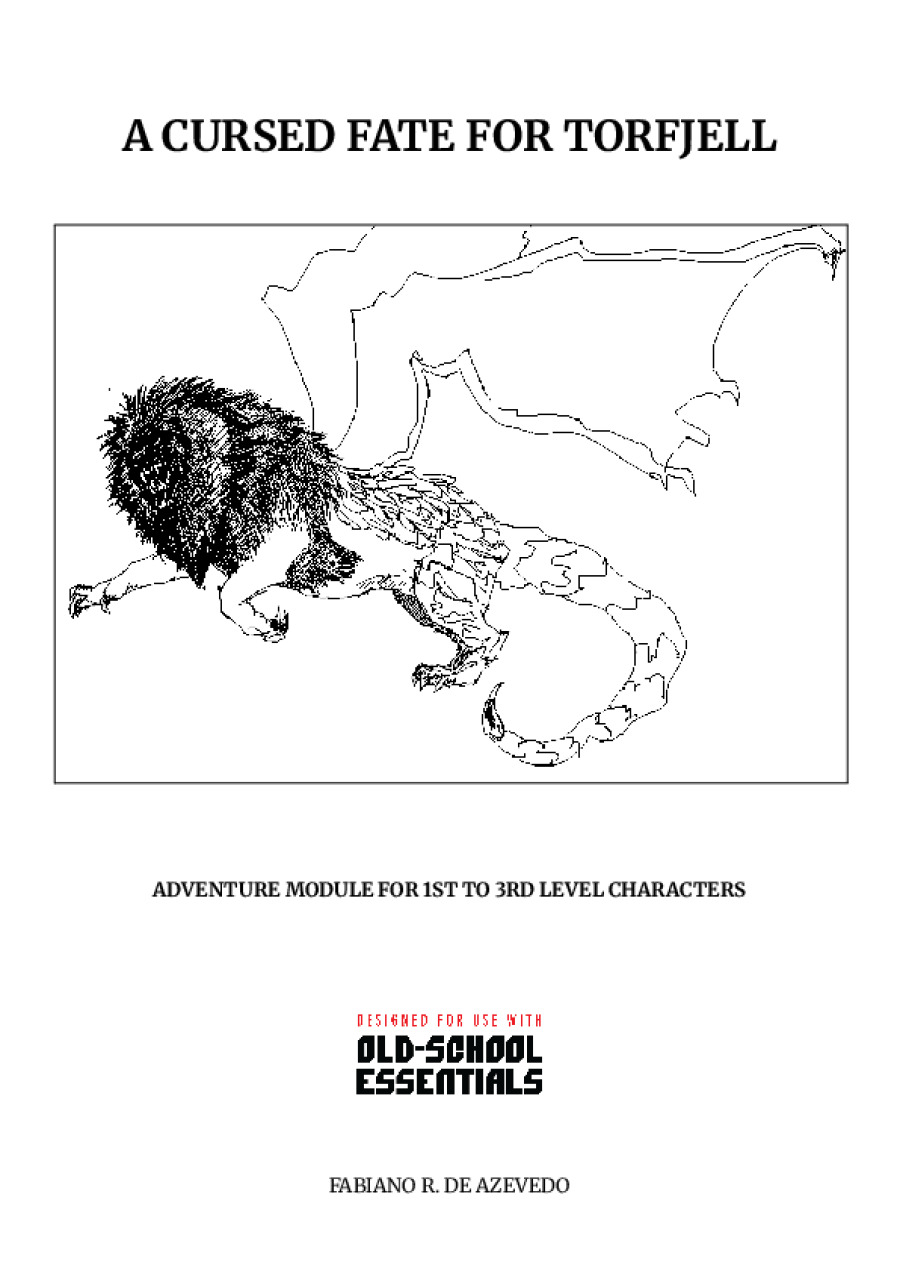
A Cursed Fate for Torfjell
By Fabiano R de Azevedo
Self Published
OSE
Levels 1-3
Self Published
OSE
Levels 1-3
A witch burns. A curse remains. The fate of an entire village rests in your hands. The peaceful village of Torfjell is about to witness the execution of a convicted witch. Whether the adventurers intervene or stand by, the outcome is the same: a terrible curse is unleashed, bringing sickness, madness, and mysterious deaths to the village. With each passing day, more lives are claimed. The only hope lies within an ancient legend: the forgotten Tome of the Light Shaman, hidden deep beneath Mount Inhaltyr in a long-lost dungeon guarded by dangers far older than the village itself. The heroes must uncover the truth behind a centuries-old myth, explore a dungeon filled with secrets and meaningful choices, and confront the creature that protects the tome. But legends are rarely as simple as they seem, and not every monster is truly evil.
This thirty page adventure uses about six pages to describe fifteen rooms in a small dungeon with a manticore. It’s got a nice little set up but the dungeon, proper, makes little sense.
The set up to this one is interesting. As the party enters a village they comes across, live and in progress, the village major just pronouncing sentence of witchcraft on a woman tied to a stake and about to be burnt. If they do nothing then the village burns her and she does the old “pronounce a curse while burning” routine on the entire village. Which now includes the party. Oops. If they free her then she goes off and kills someone and curses the party for their troubles. She is a witch and she DID murder a couple of innocent people. She has to kill three people to extend her life and she had already killed a mother and child, so, you know, it’s D&D and “shes a witch who did bad things” can, actually be true. Noice play on the trope. Anyway, one person a day dies from the curse. Ouchies. Turns out though you can go get a book in a dungeon nearby which will take care of the curse; this shit happened before long ago and the village elders know about the book. So off you go the dungeon.I love the play on the trope and the party getting whats coming to them for meddling in local affairs. Sure, WE know there’s no way out of the hook, but the set up is still a nice one, with a decent curse.
The dungeon is a weird one though. There’s a convoluted backstory that has mom & dad turning their son in to a manticore and the dungeon gets built and the holy book with the curse cure is placed in it. Both mom and dad have “rooms” where a stone golem resides that the party can animate, one to attack the manticore and one to defend th party while fighting the manticore. Got it? Dungeon, purpose built, manticore in it, a couple of golems to help the party out.
But then the place is designed, weird? This is more than a random other monster appearing. In one room there’s a sconce on the wall and if pull it then it casts animate dead on the skeletons in the room. Huh? Why do you do this? Why build a dungeon to HELP defeat the manticore and breaks the sons curse/put him to rest and then include a hidden sconce pull that animates dead? I’m not a fan of the “the tripwire cats a spell that then … “ stuff, it’s trying to explain WHY and you don’t need to do that, but, more than that, why put this kind of … trap? in the dungeon. And why does it have this hidden trigger mechanism? There’s more things like this in the dungeon that just don’t make sense, from a dungeon design standpoint. There’s no hint of something gone wrong over the years, or anything like that.
This is more than natural aging of a dungeon. There’s a decent “bandits attack while you cross a rickety bridge” on the way to the dungeon, always a classic, although there are no hints of bandits even though the bridge is close to the village. There’s a room with a collapsed floor and monster at the bottom, also a classic and I love the classics. Those fit in. But the out of left field stuff is just jarring. Offputting. Looks, it’s a dungeon, not everything has to make sense, but this stuff just doesn’t match up with the rest of the vibe of the dungeon. Why is there a skeleton throne room? And why is the skeleton wearing a golden crown? If this were some kind of rando dungeon, ok, but its supposed to have been purpose built. Remember mom and dad?
Formatting here is all bullets. Bullets can help bring clarity. The EXCLUSIVE use of bullets, though, is seldom a good thing. If everything is important then nothing is.
It’s an ok adventure. The premise is nice. There are some ok elements to manage, like the collapsed room/pit and bandits on the bridge. The formatting isn’t great and dungeon doesn’t make sense, as a whole, which I think is a problem for parties trying to do a thoughtful exploration. Treasure is quite light. Descriptions are bland. Meh.
This is $5 at DriveThru. The preview is three dungeon pages, so, good preview.
https://www.drivethrurpg.com/en/product/578862/a-cursed-fate-for-torfjell?1892600
Categories: Tabletop Gaming Blogs
[Greyhawk] Veluna

The Velunans pride themselves on being the first people to adopt the faith of Nomism. Whether or not this is true, it is certain that the Velunan branch predates the Aerdian church. In fact, it may be that, as is popularly claimed, the religious communities of Veluna predate the nation itself. When Veluna was organized as a part of the Viceroyalty of Ferrond, the archimandrites of the church were treated as fiefholders.
In the Velunan version of the religion, Rao is considered the personification of divine law. He is a serene and distant god, and the monks spend much time in meditation upon his glory. The common folk are more interested in the earthier Saint Cuthbert who is believed to intercede with Rao and allow those who achieve less than spiritual oneness with the Law to enter Heaven.

The Canon is the spiritual and temporal head of Veluna. The Canons are held to delay their own spiritual perfection so that they may minister to the needs of the people. The Canon is supported in the task of managing the country a council by ministers, but also has a council formed from the remaining nobles of the country whose fealty the Canon commands.
Veluna has at times been controlled by Keoland, though that land too recognizes the spiritual authority of the church.
Categories: Comic Book Blogs, Tabletop Gaming Blogs
OSR Commentary - Exploring The Arduin Trilogy Boxed Set – Harbinger Edition Rpg By Emperor's Choice Games
Published by Emperor’s Choice Games (the long-time stewards of Dave Hargrave’s legendary Arduin multiverse), the Arduin Trilogy Boxed Set – Harbinger Edition is a modern retro-clone/restoration release designed to preserve and expand upon the classic 1970s Arduin Grimoires.It serves as both a pristine reprint collection of Hargrave’s foundational books and a treasure-trove package loaded Needleshttp://www.blogger.com/profile/11243274667834930867noreply@blogger.com0
Categories: Tabletop Gaming Blogs
OSR Horror NPC - The Jinn from the Wishmaster films for Sword of Cepheus 2nd Edition rpg
Here is a statistical write-up for the Wishmaster Djinn tailored for Sword of Cepheus (2D6 2D Sci-Fi / Old-School Fantasy RPG).The Djinn (Wishmaster)Born of fire in the dark void between light and darkness, the Djinn are malicious, immortal entities of pure reality-warping malice. A Djinn cannot act on its own accord to alter reality—it feeds on human desire and is bound to grant the wishes of Needleshttp://www.blogger.com/profile/11243274667834930867noreply@blogger.com0
Categories: Tabletop Gaming Blogs
Adapting North West of Earth By C.L. Moore - Orbital Decay (MicroRed version) From The Red Room & The New Flesh Rpg - a D100 Random Martian Encounter table with Ancient Alien and Exemplar NPC's
This d100 Random Martian Encounter Table blends planetary romance, dying gods, reaver bands, Terran imperialists, and ancient alien entities. Scattered throughout are unique Exemplar NPCs—key figures who can act as patrons, rivals, or bosses for a campaign on the Red Planet. This blog post picks right up from Adapting North West of Earth By C.L. Moore - Orbital Decay (MicroRed version)Needleshttp://www.blogger.com/profile/11243274667834930867noreply@blogger.com0
Categories: Tabletop Gaming Blogs
The Swan Hollow Intrigue
By Dylan Hyatt
Rampaging Snail
Shadowdark
Level 1
Rampaging Snail
Shadowdark
Level 1
It’s Sunday and I try to watch a detective mystery on Sundays. SO you’re getting a detective adventure review.
In ‘The Swan Hollow Intrigue’, the adventuring party must solve the mystery of the murder of a monk from the Silverhelm Monasteey. The village’s two inns are close to open confrontation, and what has the haunted ruin of Tamwoth Manor to do with mystery?
This 52 page adventure presents a small murder mystery in a halfling village. It understands what a traditional D&D mystery is, its various parts and aspects, and it gets there in spite of leaning heavily on mechanics and exposition. Lot of classic village/inn tropes are present to lean on.
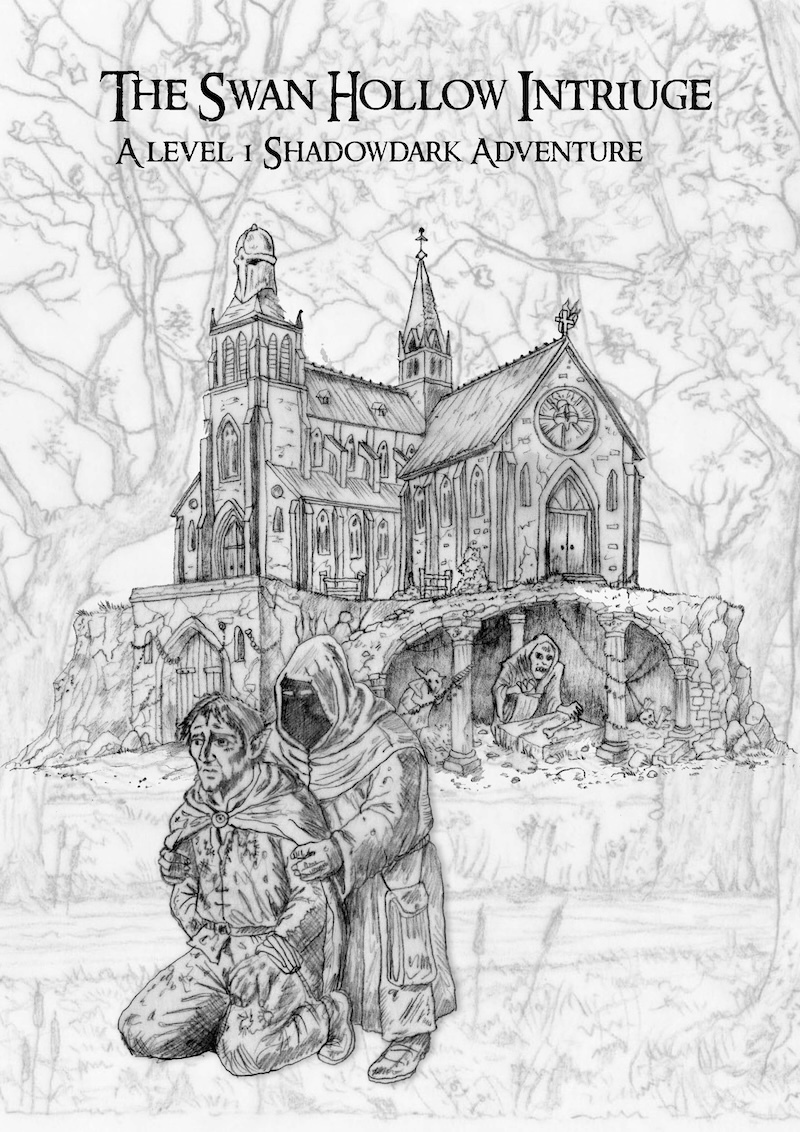
Hey, charming cover! I don’t do bonus points, but if I did I’d give you one for it.
So, Brother Lothario, up at the monastery, comes in to town A LOT to flirt with the innkeepers daughter. One night he comes in to the village to flirt with her and then ends up dead in an alley. Lothario’s brother runs the other inn in town, and is calling for justice! He wants the barkeep/dad hung! He obviously did it! Mayor McCheese wants you to gather evidence. Turns out the barkeep/dad run out after Loathrio when chasing him out on the night in question. And had a big cudgel in his hand when he did it. And someone say him in the area and throwing the cudgel over a wall to get rid of it. Oh, and Lotharios brother seems to have hated him. And Lotharios throat was cut. And he stinks of fish. And he gave waitress Cocktease a note about an abandoned ruin nearby. And … you get the picture. In reality this is a Name of the Rose situation. Lothario stumbled upon the secret bookshelves, learned something about the abbey, and the abbot has the librarian hire a lowlife fisherman to kill Lothario. Also, the secret is that the last group of human monks in the monastery made a deal with the devil, literally, to stave of the plague from themselves and now the old abbot from 300 years ago is a ghoul in the basement. So, you know, pretty please?
There are some classic elements at play here in the events going on. There’s a drinking contest in a bar, and a bar fight, and someone wants a drink paid for to talk, and there’s a chase scene and there’s a village mob. All of the things one would expect to see in a village inn. And this extends a bit in to the adventure as well, a minor haunting can be resolved by placing a child’s ragdoll on her childhood bed. You know ol Bryce is a big softie, so I’m down for all of these classic elements. The overall mystery investigation is not a bad one. A couple of things to discover and leads to follow up on. It’s not really complex in ANY way. It is supported by a coupe of events, like a village mob and a chase of a suspect through the village. Both of these are good in concept to add, just handled rather poorly in execution.
Alas, the implementation of all of this is not great. If it WERE great then it would simply be Yet Another Mystery adventure.
There’s A LOT of text here for such a simple adventure. There is a long background, most of which is unneeded. There are long stretches of read-aloud, in italics. Read-aloud should never be long and italics should never be long. Long read-aloud causes players to loose focus and pull out their phones. They don’t pay attention. Long italics is hard to read, cognitively. Together they are a nightmare for both the DM and players.
There are long bouts of exposition in here, everywhere. A lot of explaining and detail that just s not relevant to what’s going on. Well, I mean, it is, but only in a tangential way. You want to include things that are directly related to the adventure, to play at the table. More is not better. That shit, that trivia, it gets in the way of the DM finding the information they need to run the adventure. Further, instead of including that shit and spending time on it you COULD be making the core of the adventure, the actual things relevant to play at the table, better. The same goes for mechanics. We’ve got mechanics for a bar fight, mechanics for drinking contests, mechanics for a chase scene, mechanics for … and, yes, this is to be expected to some extent. But there is an appropriate level of detail to mechanics. You don’t want to drone on and on and on and be prescriptive about them. You’re not in charge of the game. You don’t know the specifics of the table. You want to give the DM some guidelines and let them run the thing.
There is, I think, often great confusion about details vs specifics. In this context detail is bad. It is trivia. It explains why’s or how’s that we don’t need to know, or almost certainly don’t need to know. Specificity, though, are those things that inspire us to greatness in running the game. It is terse, meaning it doesn’t get in the way of scanning an adventure and it doesn’t require a long pause to read while in the midst of running a game. It is the sort of thing that once you read it it stays with you. You grok it immediately. If a picture is worth a thousand words then one well written specific sentence is worth more than a page of details. It communicates exactly the vibe the DM should be going for.
In this adventure there is a wandering traveller table for one of the inns. One of the entries is for a Quack selling (dubious) portion of healing. That’s the entry on the table. That (dubious) in parens tells us a lot. There’s a decent sized paragraph expanding upon this one liner, which adds little of value except perhaps “Vagdoran” is his name and he’s got a wooden case with six vials in it and that by the time the party discovers the scam he’ll be far away. Not nearly enough snake oil in D&D games, ya know? Anyway, we’ve got something specific here. Still far too long for what it is, but this in the same neighborhood. Compared with “generic pilgrims” or “generic travelling merchants” it’s the spice of life.This is why something like those quick adjectives/adverbs used to describe NPCs hit so well. And it’s why putting in a long section of italics read-aloud for each NPC that is supposed to communicate their personality fails. I need to know Kylo Rens personality in half a second, not struggle through a bunch of second person dialog in italics. I get that they both get us to the same place, but one is much more effective during gameplay.
Mechanically the thing falls down a bit also. In one place we need to make a DC check to tell the innkeeps wife is not being exactly honest with us. However, with regards to the innkeep proper, there is no such opportunity to detect his honesty/dishonesty. I’m not arguing for either case to be correct, but noting that the inconsistency here is the issue. Are we rolling for this shit or not? And this is not an isolated example. There might be another example with the ghost of a child, that I mentioned earlier. We’ve got some specific (convoluted) say a prayer/perform a rite shit that is detailed, and noted about replacing a specific doll on her bed. Rather than the specifics of a rite that the party has absolutely no fucking chance of figuring out, all that mechanical detail can be removed with just some advice to let a party that seems to be doing the right thing/making an effort succeed. (Hmmm, does a Bless need to be sincere, or can you just Constantine the thing?)
The dungeon, proper, is quite small. Just a few rooms with a few undead, and, in fact, may not actually be a part of the adventure. Do you go underneath and kill the old abbot/ghoul? Well, maybe. If things play out the right way I guess so. So, right to handle it as a kind of an aside but the detail, again, gets in the way of anything memorable happening.
This is $5 at DriveThru. The preview is the first six pages so you get to see miles of backstory. The preview should show us some of the actual adventure text so we, as potential buyers and DMs, can judge if the writing is something we can hack or not.
https://www.drivethrurpg.com/en/product/574699/the-swan-hollow-intrigue?1892600
Categories: Tabletop Gaming Blogs
D100 Servants of Set & Serpents Table Plus Treasures & Curios of Set Table For A Castles & Crusades Sword and Sorcery Campaign
The cult of Set thrives on secrecy, dark sorcery, ancient poisons, and serpentine monsters. Designed specifically for the SIEGE Engine (Castles & Crusades), these tables flesh out encounters, cultist factions, foul beasts, and ophidian relics for desert temples, tomb hexcrawls, or urban cult dens. This blog post picks up from D100 Servants of Set & Serpents Plus Treasures &Needleshttp://www.blogger.com/profile/11243274667834930867noreply@blogger.com0
Categories: Tabletop Gaming Blogs
OSR Review & Commentary - Subsector Sourcebook: Mazu By John Watts For The Clement Sector Rpg & Cepheus Engine Rpg
Subsector Sourcebook: Mazu is a setting expansion published by Independence Games for their sci-fi 2D6 / Cepheus Engine space opera universe (Earth Sector / Clement Sector).Overview & Setting ContextSubsector Placement: Subsector F of Earth Sector. It borders Gansu ("The Chinese Gate"), frontier subsectors along the Needleshttp://www.blogger.com/profile/11243274667834930867noreply@blogger.com0
Categories: Tabletop Gaming Blogs
Pages
