Your wildly multifarious home!
Tabletop Gaming Feeds
Recommendation Saturday: Vampire Edition (With some WoD sprinkled in!)
Quick note: This is something I do every Saturday on my Facebook Page, Sunglar’s Musings. Since I know not everyone is on Facebook and I wanted to close out the week here on the blog, I’m sharing my post from FB here.
To close out our week here on the blog celebrating Vampire: The Masquerade’s 35th anniversary, let’s look at my recommendations for playing VtM and exploring the World of Darkness (WoD).
(Note: The links below are DriveThruRPG affiliate links!)
The Classic World of Darkness
First, most obviously, Vampire: The Masquerade. I own the current 5th edition of the rules in digital format, but I feel like I would probably run a game with the 20th-anniversary rules. For those of you who have played both, which do you recommend?
- VtM 20th Anniversary Edition: https://www.drivethrurpg.com/product/94815/vampire-the-masquerade-20th-anniversary-edition?affiliate_id=3727
- VtM 5th Edition: https://www.drivethrurpg.com/product/256795/vampire-the-masquerade-5th-edition?affiliate_id=3727

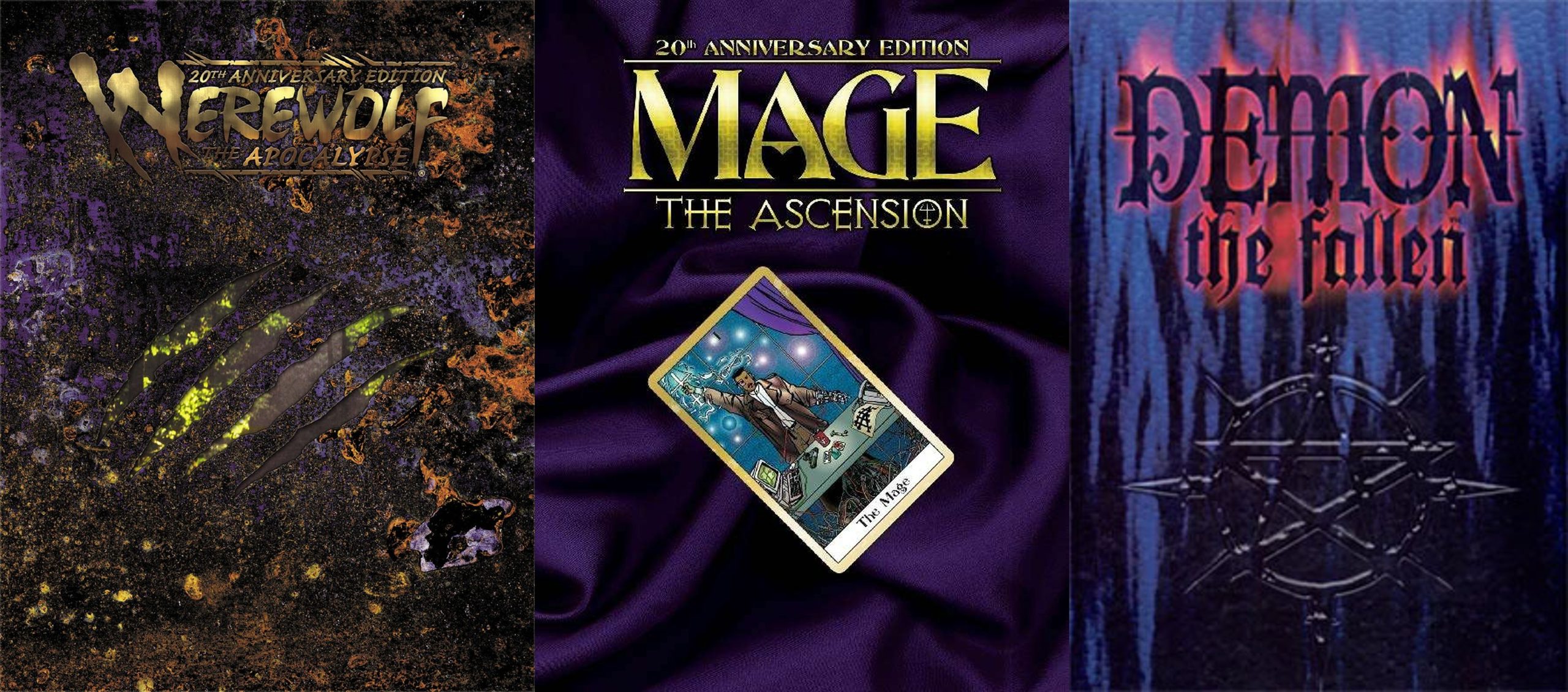
Like I said earlier this week, if I were to run VtM, I would keep it an all-vampire affair. But if you want to mix your games, I have played Werewolf, Mage, and I really like Demon: The Fallen (I never actually played Changeling or Wraith).
- Werewolf 20th Anniversary Edition: https://www.drivethrurpg.com/product/112871/werewolf-the-apocalypse-20th-anniversary-edition?affiliate_id=3727
- Mage 20th Anniversary Edition: https://www.drivethrurpg.com/product/149562/mage-the-ascension-20th-anniversary-edition?affiliate_id=3727
- Demon: The Fallen: https://www.drivethrurpg.com/product/636/demon-the-fallen?affiliate_id=3727
My absolute favorite book for VtM, other than the core rulebook, has always been the lore-heavy Book of Nod:
- The Book of Nod: https://www.drivethrurpg.com/product/538135/vampire-the-masquerade-5th-edition-the-book-of-nod?affiliate_id=3727
A Savage Alternative
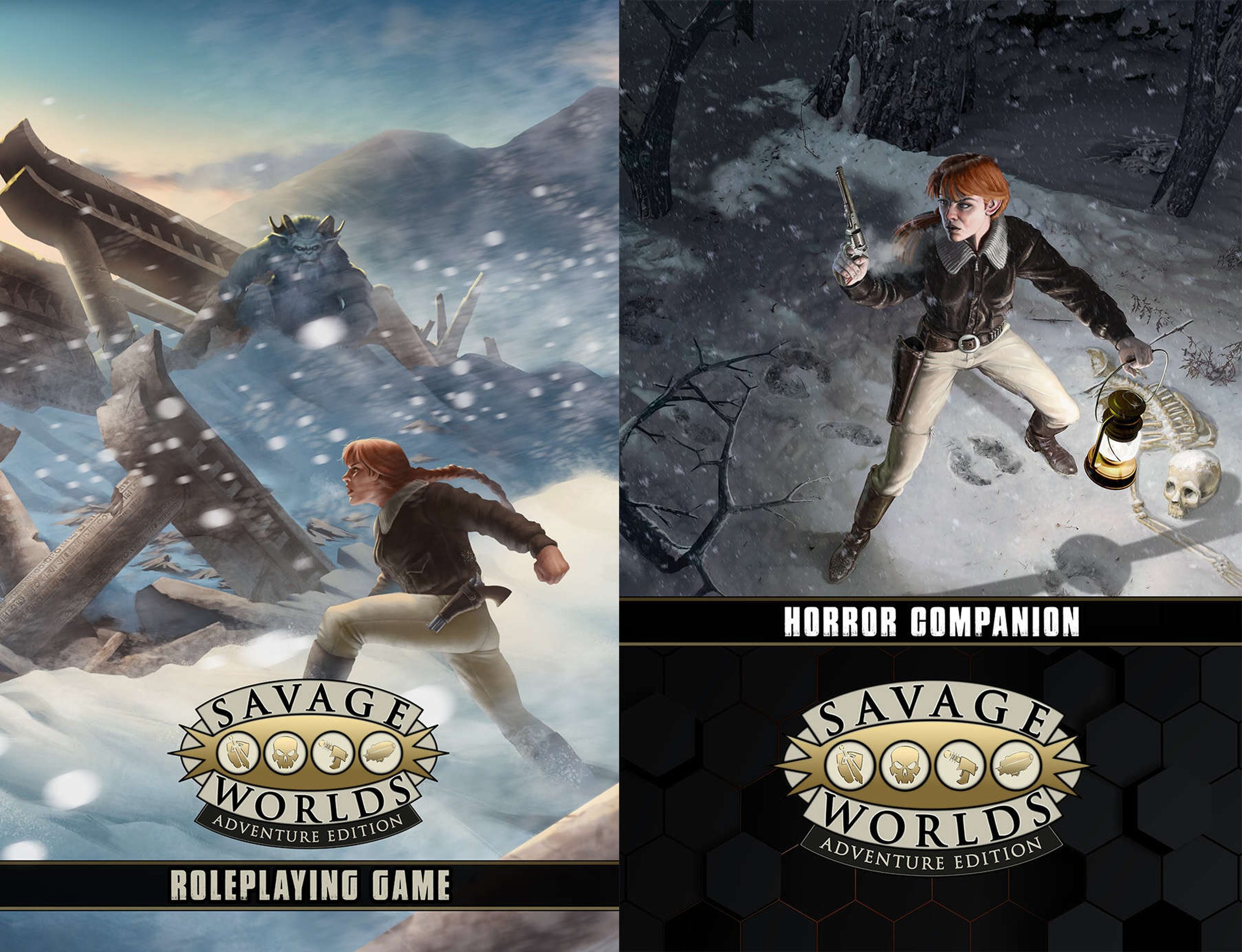
For something COMPLETELY different, I could easily see myself running a Vampire and World of Darkness campaign using (say it with me now!) Savage Worlds.
What would I need? The core rulebook, of course, and the Horror Companion. The rules in that latter book have most of what I need, including rules for Vampires, Werewolves, Demons, Ghosts, and magic for Mages.
- Savage Worlds Adventure Edition (SWADE): (A steal for $9.99 in PDF!) https://www.drivethrurpg.com/product/261539/savage-worlds-adventure-edition?affiliate_id=3727
- SWADE Horror Companion: https://www.drivethrurpg.com/product/448302/swade-horror-companion?affiliate_id=3727
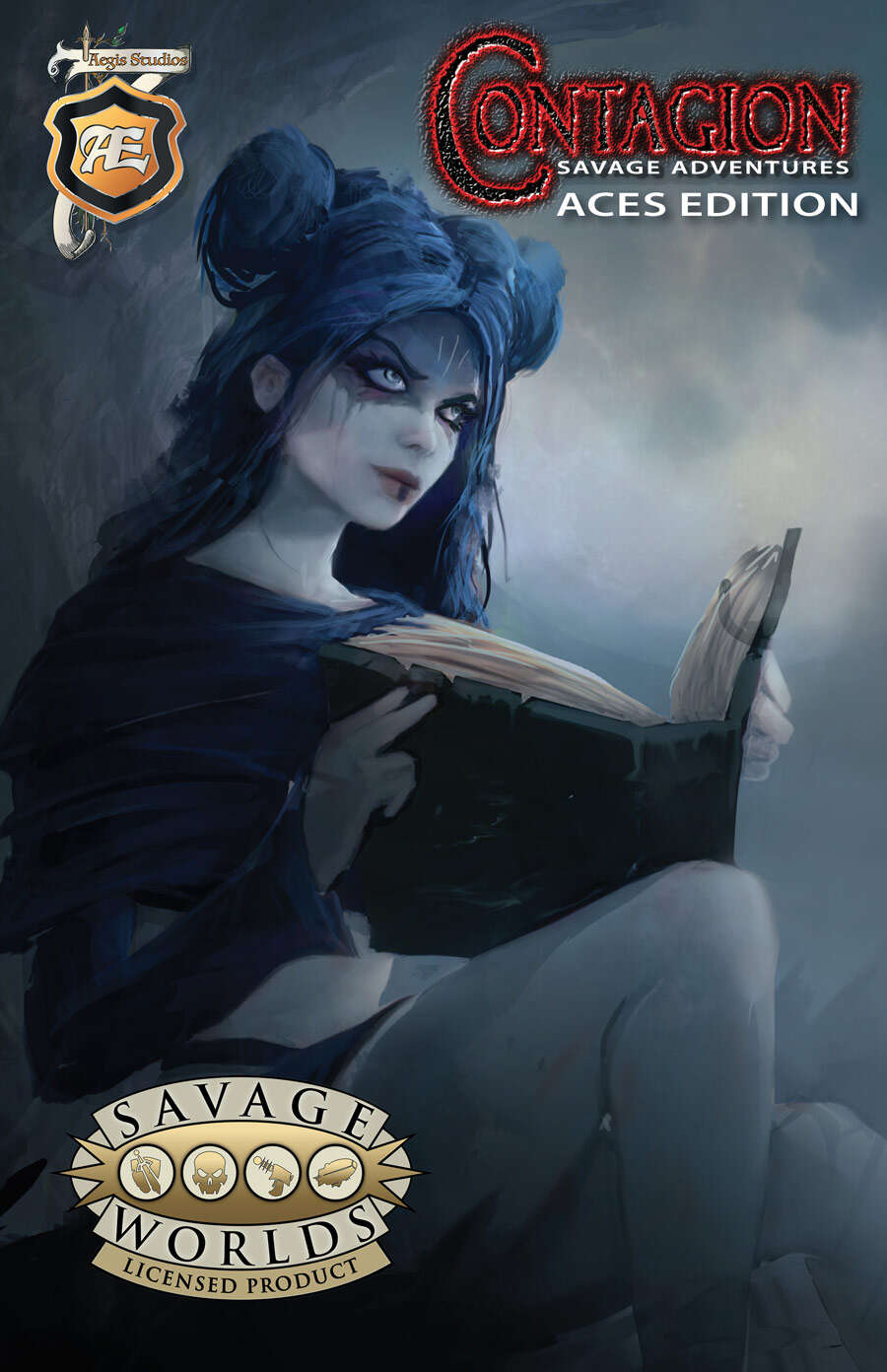
Finally, Contagion Savage Adventures is a setting for Savage Worlds that proposes a world not unlike the WoD—a world where mythical creatures fight a once-secret battle now out in the open. It is a very interesting setting, fully compatible with the Horror Companion above, and something I would definitely mine for a possible “Savage World of Darkness” homebrew:
- Contagion Savage Adventures: https://www.drivethrurpg.com/product/198324/contagion-savage-adventures?affiliate_id=3727
(Bonus tip: If you look online, you can also find a fan-made Savage Worlds conversion for Monte Cook’s World of Darkness. While it’s not exactly the original WoD, it has rules for the creatures in that book that give you great ideas for additional tweaks!)
Thanks for reading along this week! It’s been so much fun doing this themed week on the blog. Is this something you enjoyed? Let me know in the comments, and if it proves popular, I may try doing another themed week soon!
Categories: Tabletop Gaming Blogs
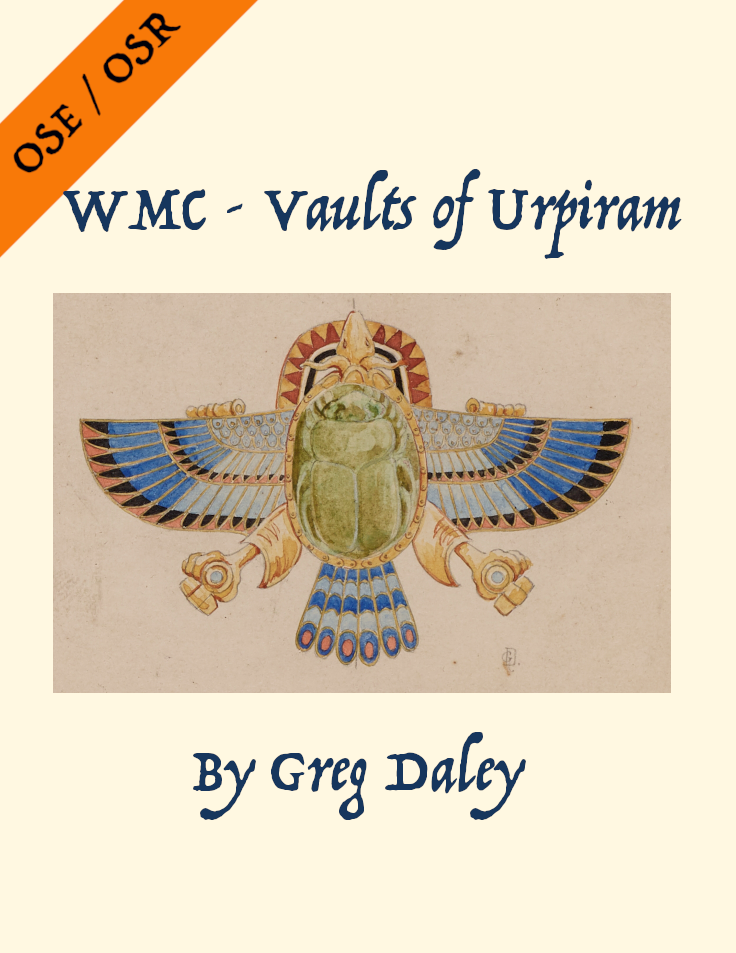
Vaults of Urpiram
By Greg Daley
Tarichan Games
B/X
Level 3
Tarichan Games
B/X
Level 3
In the delta city of Portic, the heralds walk the bridges and call for the brave to save the settlement from the pernicious Thieve’s Guild. Papyri offering rewards in the thousands of gold pieces are handed out to the armed, the weaselly, and the wise. Advertising had its effect and dozens of applicants turned up at the Lighthouse. Even after describing the undead infested island, and the underground trap maze expected to confront them, four groups of adventurers drew lots to select which night they enter. The party is assembled, with retainers in tow, as the sun sinks west on the third day. No one has yet emerged from the Odd’s Sink (the Island of the Death). Straps are tightened, supplies checked, and holy symbols kissed as the guards move the barricade on the pontoon bridge.
This 26 page adventure uses about sixteen pages to present forty rooms in two tomb/undead themed dungeons. It is … obscure? In a good way. Full of tomb encounters that are familiar and yet not boring old vanilla tomb encounters. This feels like a lived-in world. That needs an editor in charge of formatting and layout.
You’ve read the marketing blurb, above, and it sounds a little early days to me. Like, 1972 early days. But, let’s back up a minutes and cover what has lead to that marketing blurb, above. We’ve got an old city. The nobility want to revolt cause they don’t like the current .gov. Revolts cost money. They get a loan from the local Guild Bank. This is a legitimate front for the thieves guild, which the current .gov kind of telerates. Revolution successful, there’s a new .gov in charge. Oh, the nobles have a VERY large sum to pay back to the Guild bank. And don’t want to. And the new .gov HATES thieves. Thus starts a pogrom against the thieves and the guild bank, which has an air of neighborhood watch death squads to it, an/or citizen checkpoints/militias. The last of the guild has been tracked to the Isle of the Dead, a funerary isle for the city. Chill during the day for burials, at night the undead walk about and giant beam of blue light shoots up into the sky. And the last of the guild was seen descending in to a tomb tha the light shoots up from. NOW you can go to the lighthouse and apply to root out the last of the guild … and you’re third in line to do so after drawing lots. Needless to say, your turns pops.
There are two dungeons to explore, each with about twenty or so rooms with a “tomb” or catacombs theme to both of them. Supplementing this is a small handful of other encounters nearby. A ship anchored offshore that could be aligned with the guild. Another, with a letter of marque, bringing in smugglers and pirates. Not exactly an adventure locale but more support for play AFTER the tombs are entered and the party returns out again, either successful or taking a break before they reenter. IE: things to support downtime, and such. This is further supplemented by eight or so “events.” Each takes up about a quarter of a page and details some things that could happen to complicate things. If the party returns out of the dungeon then maybe they get approached by someone and a conversation is had and an alternative entrance is offered, or bribes, or so on.
I’m hoping, from all of that, you take away of a kind of context tha the designer has provided for the adventure. A context that all directly relates to things going in the adventure that a DM can use to add interesting things going on in the real world, to riff on and further enhance play. Specifics. It gives the world a kind of lived-in feel. The dungeon encounters, also, have a kind of lived-in feel to them, but its done in a different way. One room is kind of partially flooded. Below the water, is a grate that shifts if any step on it. (That, alone, is pretty nifty room feature. The use of a shifting grate implies things that a static grate does not.) “The Red Tree brigade, who entered the vaults first, are still here. They move through the water, their mail and robes torn, the wizened and twisted shapes no longer alive. They thrash through the water toward the warm meat of the party. – Red Tree Brigade Ghoul (3) “ The flooded room. The grate in the floor. The SHIFTING grate, and then the former party. It’s layered, and feels real to me. And the adventure does this over and over again. I think tomb dungeons can usually feel boring. But this has more of an undercity vibe, with tombs, vibe thing going on. Not completely, but there’s enough that it does bring a freshness to it. Ye Olde Slamming Locke Door is present as a trap room in this, but the room fills with smoke, a real life hazard that is quite seldom used. And this in spite of the twenty-ish room size of each of the dungeons.
And this thing is a PAIN. I mentioned “obscure”, yes?
It’s like, all over the place. Sometimes we get a “you” in the descriptions. “A set of creatures clunks toward you, heavily decayed, skull domes showing. …” Sometimes there’s a random monster stats in a room that IN NO WAY mentions a creature. The rooms are inconsistently written, not clear in many places, or similar features described different ways, in the same room, making you wonder if you’re missing something. The text is … obdurate. Lengthy, maybe with a touch of self-indulgence, but not falling in to any clearly recognizable sin, like backstory, trap and door porn, or explaining why. Maybe a little of the if/then style. It’s just hard to dig through it all. Hard, but not unrewarding.
I am waffling, back and forth, on the Tarichan adventures. Best. No Regerts. I’m going to Best this one, I think. But, also, you know what I really wish? That Daley keep writing. Keep working on his products. And every day go back and edit the manuscript to this adventure for ten minutes or so. Every day. Not with the intent to publish it again but just to rework it and try to clean it up. Call it a daley trip to the adventure formatting and writing gym. Just to kind of get in the practice of seeing what’s possible, without any pressure to produce.
Anyway, good little necropolis adventure. and, frankly, I think Daley is about at the point in which he’s on an auto-buy list.
This is $3.50 at DriveThru. The preview is fourteen pages, more than enough to get a sense of the piece.
https://www.drivethrurpg.com/en/product/570696/wmc-vaults-of-urpiram?1892600
Categories: Tabletop Gaming Blogs
A D20 Space Wreck Complications & Eviromental Hazards Table & A d100 table of random table of space wrecks, ruins, and derelicts For The Cepheus Engine Rpg or Classic 2d6 Science Fiction Rpgs
Here is a comprehensive d20 table of complications, hazards, and unexpected operational twists to throw at your players once they breach the airlock or cross the threshold of a space wreck.d20 Space Wreck Complications & Environmental Hazardsd20Hazard CategoryDescription & Mechanical Impact1Structural DecompressionThe hull integrity is hanging by a thread. Any explosive weapon fire,Needleshttp://www.blogger.com/profile/11243274667834930867noreply@blogger.com0
Categories: Tabletop Gaming Blogs
“Forever’s Gonna Start Tonight” – Goodbye, Bonnie Tyler
The topic for today’s post may seem a bit odd for a gaming blog, but bear with me. I was getting ready to write my next post for this week’s theme of vampires—all in celebration of the 35th anniversary of Vampire: The Masquerade (VtM)—and then I heard the news this morning.
I heard it on AM radio of all places (yes, at 53, I am officially that old) that Bonnie Tyler passed away at 75.
Just by looking at my friends’ reactions on social media, I can tell that her music resonated deeply with those of us who have been rolling dice for four decades. But what does this have to do with vampires and gaming, you ask? To that, I say: have you actually listened to the lyrics and watched the music video for “Total Eclipse of the Heart”?
Let me show it to you:
With lyrics like these, you can immediately see the vampiric undertones:
“I don’t know what to do and I’m always in the dark.” “Your love is like a shadow on me all of the time.” “Once upon a time there was light in my life / But now there’s only love in the dark.” “Forever’s gonna start tonight.” “Turn around, bright eyes / Every now and then I fall apart.”
I am NOT making this up. Writer Jim Steinman originally conceived the song as a piece for a musical adaptation of the movie Nosferatu (you can read about it in this People article), and the song’s Wikipedia page notes that its original title was “Vampires in Love.”
The connection is not subtle! Even the TV series The Vampire Diaries has an episode named after the song.
This track is a core part of the music I automatically relate to vampires, forever playing on the gaming soundtrack in my head. I KNOW that fans of VtM and the World of Darkness probably have very different, likely more goth-punk, musical references for their games. But between Dracula the Musical, Bonnie Tyler, and other sweeping 80s rock epics, these are my ultimate GM musical references.
Bonnie Tyler had many other hits, of course. The one I immediately think of in a broader gaming context is “Holding Out For A Hero.” It’s been used in superhero movies and countless action sequences, and it is a truly perfect anthem for TTRPG heroics. Here’s the video:
And, keeping with the World of Darkness theme, I must mention that Whitesnake’s “Still of the Night” is obviously an anthem for Werewolf: The Apocalypse:
So, appropriately enough, we started the workweek with a post about musical inspiration for VtM, and ended on the same topic we began with.
See you tomorrow for the final post in our Vampire series. Rest in peace, Bonnie.
Categories: Tabletop Gaming Blogs
Wuxia State of Mind

Events have conspired to put in a wuxia mood what with the Wandering Blades draft, the impending release of the new Last Airbender movie, and the recent Criterion sale on Amazon where I picked up a couple of wuxia titles among other things. Then there's Wesley Chu's wuxia-inspired fantasy novel, The Art of Prophecy. I've been listening to the audiobook.
Chu's book is interesting because it mixes the epic fantasy elements with the wuxia ones. The people of Zhuun have been training a prophesized champion to defeat the Eternal Khan and free them from the menace of the Katuia tribes and their steam-powered roving cities of the grasslands. The first problem is the champion, a fifteen year-old boy named Jian, hasn't really received the proper training. Instead, he's just grown up spoiled by luxury and self-importance. The elder "master war artist" Ling Taishi shows up to set things right, but she's just starting to make headway with the boy when the second problem drops: the Eternal Khan is killed while drunk by a random Zhuun soldier.
With the prophecy busted, Jian is a political liability for the five Dukes of Zhuun and the delicate balance of power between them. Tiashi rescues the boy, and they both go on the run.
When while, the Katuia are thrown into chaos and the warrior Sali, decides to break tradition and delay her duty in order to try to find the only surviving member of her family. There's also the mad assassin Qisami thrown into the mix.
I like how Chu uses familiar wuxia elements but remakes them for a fantasy world. Instead of the wulin we have the lunar court as the society of martial artists, presumably related to the world's three moons and their seasonal cycles. Instead of "lightness kung fu" Tiashi's abilities are described as manipulating air with her spiritual energy. There are also the completely un-wuxia elements of the Steampunkish Katuia cities and their home grassland which is formed by gigantic blades of crash and a brittle crust of earth over a sea.
There are 2 more books in the series after this one, and I am interested in seeing where it goes.
Categories: Comic Book Blogs, Tabletop Gaming Blogs
Rodan from the Monsterverse Movies for Cepheus Engine Rpg Including Scaling The Weapons of The Cepheus Engine Rpg To Damage Titans
Rodan, known as the "Fire Demon" in the Monsterverse, is a Titan-class aerial predator. In The Cepheus Engine, he is not just a monster; he is a force of nature. Because his scale dwarfs standard characters, he is best treated as a "Vehicle/Titan" archetype.This blog entry picks up from Godzilla from the Monsterverse Movies for Cepheus Engine Rpg Including Radiation Sickness Rules, andNeedleshttp://www.blogger.com/profile/11243274667834930867noreply@blogger.com0
Categories: Tabletop Gaming Blogs
Integrating Adventurer Conqueror King System II (ACKS II) with the legendary, chaotic, and maximum-gonzo DNA of Dave Hargrave’s Arduin Grimoires - An ACKS II custom class template for a Planar Merchant who specializes in cross-dimensional market...
To capture the essence of a trader who bargains with multi-dimensional horrors, extra-planar syndicates, and corporate technocrats across the Skull Tower World Gates, we use the ACKS II Class Construction Rules. This blog entry picks right up from Integrating Adventurer Conqueror King System II (ACKS II) with the legendary, chaotic, and maximum-gonzo DNA of Dave Hargrave's Arduin Needleshttp://www.blogger.com/profile/11243274667834930867noreply@blogger.com0
Categories: Tabletop Gaming Blogs
Godzilla from the Monsterverse Movies for Cepheus Engine Rpg Including Radiation Sickness Rules, and Protection for classic 2d6 Science Fiction Games
Here is a stat block and breakdown for Godzilla, adapted for the Cepheus Engine (and classic 2D6 sci-fi roleplaying systems).Because the Monsterverse Godzilla is an apocalyptic, 100,000-ton titan, his physical stats go far beyond the standard human scale. He is treated as a unique, planet-shaping threat.Godzilla, Titanus GojiraNeedleshttp://www.blogger.com/profile/11243274667834930867noreply@blogger.com0
Categories: Tabletop Gaming Blogs
OSR Commentary - The Clement Sector rpg & Space Western campaigns
Clement Sector (published by Independence Games) is a hard science-fiction, sandbox campaign setting built on the 2d6 Cepheus Engine (and heavily rooted in Classic Traveller / 2300 AD traditions).The core premise of the setting makes it an absolute goldmine for Space Western themes: isolation, decentralization, a lack of overarching Needleshttp://www.blogger.com/profile/11243274667834930867noreply@blogger.com0
Categories: Tabletop Gaming Blogs
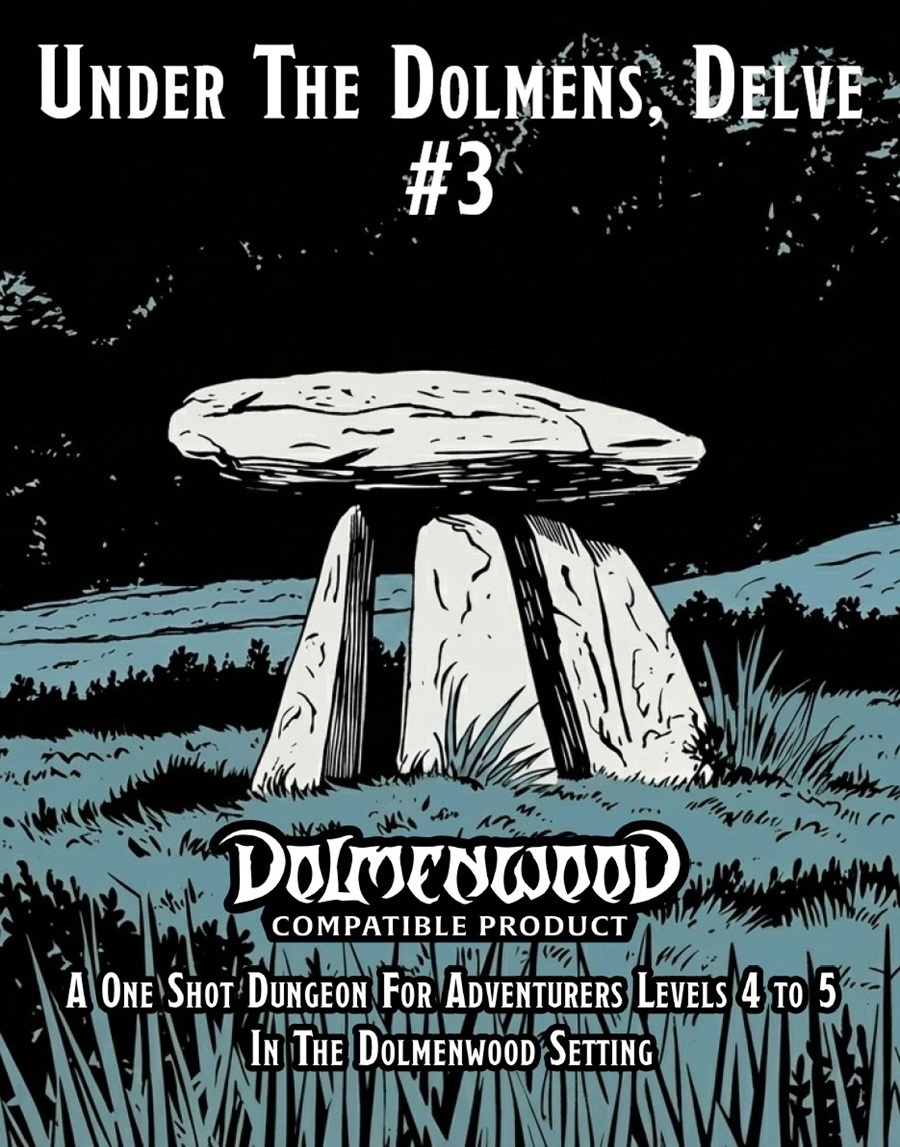
Under The Dolmens, Delve #3
By B. Wraven Wright
2Die10 Games
Dolmenwood
Levels 4-5
2Die10 Games
Dolmenwood
Levels 4-5
Four months ago, Father Wolfgang and several other members of the Church of St Pastery’ clergy were having strange dreams that all had one thing in common: a call of pilgrimage from The One True God. Father Dobey, Vicar of Lankshorn, initially had these strange dreams also but they faded in frequency and severity for him while the opposite was happening to Father Wolfgang and the others. Having been compelled into blind pilgrimage towards the direction of Hags Addle, Father Wolfgang and those afflicted with these dreams were confronted by Father Dobey, who declared these dreams as heresy. In doing so, the pilgrims openly questioned his piousness as well as his status of Vicar of Lankshorn. Father Dobey, eager to avoid conflict, decided to let the pilgrims go on the condition that they return in one month’s time. The pilgrims agreed and took their leave with the vicar’s blessing. One month has come and gone, with Father Dobey wanting to know what happened to the pilgrims for a host of reasons…
This seventeen page adventure uses about five pages to describe 27 rooms in a small dungeon. Hack till you drop and do little else as you explore the monotony of uninspiring rooms.
I was quite disappointed with this one. Dolmenwood has been hitting at a decent rate, but, I guess, as a sign of its success, “more is coming out now.” I would hope you can understand the euphemism. The map, also, looks promising. It’s a larger Dyson affair with forty or so rooms on it, only about thirty of which are keyed in the his adventure. Some columns, stairs, curtains, an overhead passage and murder holes. Almost none of which is taken advantage of in te text. ?
The local clergy been having God dreams. The vicars gives them permission to go on a pilgrimage to their dreamed of site. They don’t come back so in you go to find them.
“The One True God who weeps in the temple underneath the dolmen” is pretty strong flavour. There is no preamble to the adventure, no investigation, so there’s no build up to this before you get to the dungeon. Once in the dungeon the theming, of The One True God, and the weeping, is essentially not present either. You will find a weeping statue face (with decent art piece to accompany it) but that’s it. What you WILL find are a bunch of clergy/clerics. They are all scaly bipedal wolfmen.
Why are they scaly wolfmen? No clue. You just show up and there are these empty, or mostly empty rooms and more than a few of them have these scaly wolf men in them that are doing clericy shit. And they attack you. In fact, everything and everyone attacks you in this. Monsters attack you and in a couple of rooms there’s a false floor that breaks away in to pit things. That’s it. That’s your interactivity.
I cannot emphasize that enough. “You see 4 beings standing, frantically “reading” scrolls out loud in a hissing, barking language.” Thats your room. Oh, also, in the description for BEINGS, “Four LUPINE CLERGY stop praying and attack on sight.” Mystery. Wonder. Exploration. Not present. Just stabbing things that attack, which are the scaly wolfmen clergy and some black blobs that are in a few rooms. More than a little one-note. Oh, and the “break through the false floor” pits, Order of battle, for our clergy? Nope. They just sit in their rooms and get stabbed. Stab stab stab. Stab stab stab. Stab stab for the fun of it, stab stab for the fun of it, stab atb for the fun of it stab stab for the fun of it!
There’s little to no treasure present. The last room of the dungeon has Lareth in it. There is not hint, anywhere, that Lareth is about. “As you get close enough to the tapestry to make out the material it’s made of, you see that the ground starting in front of you winding all the way around the room to the pillars on the other side, is freshly turned earth that has a strong sickly-sweet smell of vinegar.” That’s Lareth for you, all vinegar-smelling! So, an earth wyrm pops out of the dirt and then attacks. LARETH WAS BEHIND EVERYTHING THE ENTIRE TIME!!! Oh, Lareth, such a card. No hint. No build up. Nothing that means anything. Just stab some scaly bipedal wolf clerics and then in the last room a wyrm pops up from the ground and you kill it.
Formatting is ok. Headers, color changing, underlines, bolding. You can find things well enough. It also notes the door, light conditions, and exits in the rooms. I am not amused by anything done by rote. I think, that, unless told otherwise, we can assume darkness, or light, depending on the mood of the individual dungeon. Note what’s different,
I don’t know, man. It’s just a VERY basic and simplistic dungeon. It;s padded out, with doors, and light and exits. It’s got some formatting to make it scan nicer. But the core of what’s going on it is quite simplistic. The One True God is not played up. The wolf dudes get nothing. The Lareth behind the curtain is not hinted at. There’s no build up. There’s no really e octave room descriptions, just a bunch of They Attack!s. There’s no insidious presence in town. There’s nothing really to EXPLORE ot interact with in the dungeon, proper. Even the scaly wolf dudes just sit around waiting to die with no order of battle.
This is different than, say, a raid. In that case you know what you are doing and the various encounters and environments are engineered by the designer to support the raid. This is just … basic and static?
This is $1 at DriveThru. There is no preview. Sucker.
Categories: Tabletop Gaming Blogs
Wednesday Comics: DC, October 1985 (week 2)
I'm reading DC Comics' output from January 1980 (cover date) to the end of Crisis! This week, I'm looking at comics that were published on July 11, 1985.
Flash #350: Bates and Infantino/McLaughlin come to the end of Flash's run of 246 issues and over 25 years (in 2020, the series' legacy numbering was revived) abruptly with zero fanfare. I didn't see a single house ad heralding the series' end. The letter column suggests a rumor was going around fandom, though.
With Abra Kababra revealed as the true villain, the Rogue's must escape from a deathtrap he leaves them in. They wind up teaming up with Newbury and Flash to defeat the time traveling villain. The Flash realizes the identity of the future visitor inhabiting Newbury's body: Iris Allen! It turns out her parents (in the future) were able to rescue her psyche upon her death in the past and have since cloned her a new body. "Newbury" reveals Abra Kadabra's juror tampering which gets Flash acquitted, and somehow, that restores public confidence in him. After all this, and with Barry Allen "dead," the Flash goes to the future to be with Iris. Everybody lives happily ever after--though since we've seen Crisis, we know it's only for a while.
I'd be interested in the origin of this arc and its resolution and whether it was always intended to end this way or it was modified for Crisis. This had the ingredients to make a great storyline. Taking a character to their lowest point always makes good drama: the "Born Again" arc in Daredevil will begin just 3 months from this issue's publication. Unfortunately, Bates's narrative still has a foot firmly planted in the 70s with its episodic nature and lack of resolve to really have Flash wallow in misery, while "Born Again" will become a defining story for the 80s. Further, the story fails to really wring the melodrama from the tale that would have surely been a part of an analogous arc in the Marvel 70s. Cheesy though it would have been, 70s Englehart (or whoever) would have had poor, mid-shattered Fiona Webb become a super-menace briefly, instead of just shuffling her off-stage. At least that would have been interesting! Infantino, unfortunately, is not really the artist for the over-the-top emotion that sort of 70s Marvel-style storytelling would have required. (I think a review of his 70s work at Marvel would support that, but maybe I'm forgetting something).
Some might say these differences are just Marvel vs. DC, but I would argue given the stuff being published in a number of DC titles (Swamp Thing and New Teen Titans, just to name two), it isn't so much DC as perhaps DC's approach to their oldest, core characters, and whether this is due to a failure of creativity or editorial vision, I can't say.
DC Spotlight #1: This was a free promo giveaway, but there are a few interesting things about it. One, it has a nice cover by Jose Luis Garcia-Lopez. Another is that the series it plugs aren't the ongoing series of any of their marquee heroes, outside of Green Lantern (which at this point, isn't your Super Friends Green Lantern). Instead, Firestorm, the Teen Titans, and the Outsiders are plugged, giving an indication of where the comic shop fan interest in DC was at. We do get a page on the upcoming Pozner/Hamilton Aquaman limited series, and some Frank Miller Batman book. Also, this issue is technically the first appearance of the Watchmen, though of course, not in-story, in the illustration accompanying the text piece on the upcoming Moore/Gibbons limited series.
Legion of Super-Heroes #15: After introducing the new Legionnaires last issue, Levitz and LaRocque/Mahlstedt sideline them this issue as they real just serve as bait for Dr. Regulus to lure the Legion into a trap. Sun Boy takes his foe on in one-on-one combat. Though it's a tough fight, Sun Boy wins through creative use of his flight ring.
Meanwhile on Shanghalla, Timber Wolf pays tribute to his fallen comrade, the Karate Kid. He pledges to fulfill the Kid's last wishes by planting a flower at the Sacred Stones of Lythyl. At the Time Institute, Brainiac ruminates over the (historical for him) death of Supergirl.
Amethyst #10: Interesting cover by Colon. His art in the rest of the issue (or perhaps it's Kesel's inks) seems rushed and sketchier than the usual art on this series. We reach the conclusion of the conflict with the Ancients over the fate of Gemworld. As the creatures exert all their influence to destroy the world, Amethyst brokers a deal where they siphon excess energy all the time instead of reaping it in a world's destruction, allowing the worlds to "pay rent." Meanwhile on Earth, Carnelian has found Dark Opal's broach and intends to use it to gain power.
Batman #387: Moench and Mandrake bring Flash Rogue's Mirror Master and Captain Boomerang to Gotham. The two at first discuss teaming up, but after Batman thwarts their first robbery, and members of Black Mask's False Face Society looking for someone new to "hench" fall under the hypnotic sway of Mirror Master, the two villains are as much out to get each other as the Caped Crusader and friends. In fact, after the Mirror Master barely escapes Bullock and Robin, he receives a boomerang from the Captain made from his own will-zapping mirror tech.
Arak Son of Thunder #49: The series reaches its penultimate issue with Arak's final showdown with Angelica. She's revealed as being behind the dragon in the Canton harbor. She's after the elixir of immortality she steals from Mu-Lan's grandfather. Mu-Lan, like Haakon, doesn't survive this issue. They are on a ship smashed by the dragon. Our heroes do a lot of fighting, but they would have likely shared the same fate had not Mu-Lan's grandfather summoned a dragon spirit to do battle with Angelica's monster. He also traps Angelica within a magic mirror, which Arak smashes with his tomahawk.
Omega Men #31: The cover proclaims this as a Crisis tie-in, and it does acknowledge that the Crisis is occurring, but that's really about it. The group of Omega Men we've been following attempt to save an ailing Viathan with travelers in pods in its belly, while Artin and Green Man try to save Elo. Klein and McManus get around to showing us what the Vega System is up too. The Tamaranians mourn the supposed deaths of the group we've been following, and Harry Hokum strikes a deal with Doc, Shlagen, and the rest for cooperation against the remnants of the Spider Guild.
Red Tornado #4: Busiek and Infantino/McLaughlin bring the limited series to a close. Red Tornado confronts the Construct, and it doesn't go well. While the Construct thinks he has the android defeated and spends his time gloating to Kathy, Reddy is rebuilding and infiltration the Construct's mental domain. By force of will and tough questions that shake the Construct's resolve, Red Tornado wins the day. In the aftermath, he embraces his found family and his newfound humanity.
I feel like the more abstract Infantino/McLaughlin art works for this issue in a way it didn't always work in Flash. It probably won't be to everyone's taste, but it reminded me a bit of Alex Nino. It's too bad it wasn't in the service of a story that really played to its strengths for the whole run.
Star Trek #19: We get a Chekov-centric story from the ST:TMP era written by Walter Koenig himself with at by Dan Spiegle. It isn't the best story we've gotten in this series, but still more Trekian than most of the comics previous licensors Marvel and Gold Key put out. Chekov is feeling guilty over the Enterprise's inability to rescue another vessel and inadvertently incites a portion of the crew to mutiny. made worse because Enterprise is out of control and on a collision course with an asteroid. All is not at seems, though, and manipulation by a hidden alien species is responsible at least in part for the crew's behavior. Chekov shakes off the psychic mind games in time to save the day. The aliens decide to make friends instead of manipulating others.
Super Powers #2: The Kupperberg and Kirby/Theakston toyetic series continues with Green Arrow, Red Tornado, and Hawkman sent to New York to deal with one of Darkseid's seeds of doom. They tussle with Kalibak and get sent back in time to the Age of Dinosaurs. Some of the dinos escape to the modern era and Martian Manhunter and Aquaman have to help deal with them. Martian Manhunter also confronts Darkseid in his secret base, but Darkseid holds him off with a bluff.
Superman #412: Nice cover by Janson. On the inside, Bates and Swan/Williamson continue the "Clark Kent--Fired" story. While Clark goes to the unemployment office and reconnects with Steve Lombard, Superman continues to try to do good while worrying about his sanity. Luthor advances his plan, setting these mysterious hi-tech staves in the ground around Metropolis. After Superman experiences an illusion where he fights with Luthor and punches right through his chest, killing his foe and dooming Metropolis to nuclear holocaust as Luthor's battlesuit explodes, he is fully convinced he's losing his mind.

Flash #350: Bates and Infantino/McLaughlin come to the end of Flash's run of 246 issues and over 25 years (in 2020, the series' legacy numbering was revived) abruptly with zero fanfare. I didn't see a single house ad heralding the series' end. The letter column suggests a rumor was going around fandom, though.
With Abra Kababra revealed as the true villain, the Rogue's must escape from a deathtrap he leaves them in. They wind up teaming up with Newbury and Flash to defeat the time traveling villain. The Flash realizes the identity of the future visitor inhabiting Newbury's body: Iris Allen! It turns out her parents (in the future) were able to rescue her psyche upon her death in the past and have since cloned her a new body. "Newbury" reveals Abra Kadabra's juror tampering which gets Flash acquitted, and somehow, that restores public confidence in him. After all this, and with Barry Allen "dead," the Flash goes to the future to be with Iris. Everybody lives happily ever after--though since we've seen Crisis, we know it's only for a while.
I'd be interested in the origin of this arc and its resolution and whether it was always intended to end this way or it was modified for Crisis. This had the ingredients to make a great storyline. Taking a character to their lowest point always makes good drama: the "Born Again" arc in Daredevil will begin just 3 months from this issue's publication. Unfortunately, Bates's narrative still has a foot firmly planted in the 70s with its episodic nature and lack of resolve to really have Flash wallow in misery, while "Born Again" will become a defining story for the 80s. Further, the story fails to really wring the melodrama from the tale that would have surely been a part of an analogous arc in the Marvel 70s. Cheesy though it would have been, 70s Englehart (or whoever) would have had poor, mid-shattered Fiona Webb become a super-menace briefly, instead of just shuffling her off-stage. At least that would have been interesting! Infantino, unfortunately, is not really the artist for the over-the-top emotion that sort of 70s Marvel-style storytelling would have required. (I think a review of his 70s work at Marvel would support that, but maybe I'm forgetting something).
Some might say these differences are just Marvel vs. DC, but I would argue given the stuff being published in a number of DC titles (Swamp Thing and New Teen Titans, just to name two), it isn't so much DC as perhaps DC's approach to their oldest, core characters, and whether this is due to a failure of creativity or editorial vision, I can't say.

DC Spotlight #1: This was a free promo giveaway, but there are a few interesting things about it. One, it has a nice cover by Jose Luis Garcia-Lopez. Another is that the series it plugs aren't the ongoing series of any of their marquee heroes, outside of Green Lantern (which at this point, isn't your Super Friends Green Lantern). Instead, Firestorm, the Teen Titans, and the Outsiders are plugged, giving an indication of where the comic shop fan interest in DC was at. We do get a page on the upcoming Pozner/Hamilton Aquaman limited series, and some Frank Miller Batman book. Also, this issue is technically the first appearance of the Watchmen, though of course, not in-story, in the illustration accompanying the text piece on the upcoming Moore/Gibbons limited series.

Legion of Super-Heroes #15: After introducing the new Legionnaires last issue, Levitz and LaRocque/Mahlstedt sideline them this issue as they real just serve as bait for Dr. Regulus to lure the Legion into a trap. Sun Boy takes his foe on in one-on-one combat. Though it's a tough fight, Sun Boy wins through creative use of his flight ring.
Meanwhile on Shanghalla, Timber Wolf pays tribute to his fallen comrade, the Karate Kid. He pledges to fulfill the Kid's last wishes by planting a flower at the Sacred Stones of Lythyl. At the Time Institute, Brainiac ruminates over the (historical for him) death of Supergirl.

Amethyst #10: Interesting cover by Colon. His art in the rest of the issue (or perhaps it's Kesel's inks) seems rushed and sketchier than the usual art on this series. We reach the conclusion of the conflict with the Ancients over the fate of Gemworld. As the creatures exert all their influence to destroy the world, Amethyst brokers a deal where they siphon excess energy all the time instead of reaping it in a world's destruction, allowing the worlds to "pay rent." Meanwhile on Earth, Carnelian has found Dark Opal's broach and intends to use it to gain power.

Batman #387: Moench and Mandrake bring Flash Rogue's Mirror Master and Captain Boomerang to Gotham. The two at first discuss teaming up, but after Batman thwarts their first robbery, and members of Black Mask's False Face Society looking for someone new to "hench" fall under the hypnotic sway of Mirror Master, the two villains are as much out to get each other as the Caped Crusader and friends. In fact, after the Mirror Master barely escapes Bullock and Robin, he receives a boomerang from the Captain made from his own will-zapping mirror tech.

Arak Son of Thunder #49: The series reaches its penultimate issue with Arak's final showdown with Angelica. She's revealed as being behind the dragon in the Canton harbor. She's after the elixir of immortality she steals from Mu-Lan's grandfather. Mu-Lan, like Haakon, doesn't survive this issue. They are on a ship smashed by the dragon. Our heroes do a lot of fighting, but they would have likely shared the same fate had not Mu-Lan's grandfather summoned a dragon spirit to do battle with Angelica's monster. He also traps Angelica within a magic mirror, which Arak smashes with his tomahawk.

Omega Men #31: The cover proclaims this as a Crisis tie-in, and it does acknowledge that the Crisis is occurring, but that's really about it. The group of Omega Men we've been following attempt to save an ailing Viathan with travelers in pods in its belly, while Artin and Green Man try to save Elo. Klein and McManus get around to showing us what the Vega System is up too. The Tamaranians mourn the supposed deaths of the group we've been following, and Harry Hokum strikes a deal with Doc, Shlagen, and the rest for cooperation against the remnants of the Spider Guild.

Red Tornado #4: Busiek and Infantino/McLaughlin bring the limited series to a close. Red Tornado confronts the Construct, and it doesn't go well. While the Construct thinks he has the android defeated and spends his time gloating to Kathy, Reddy is rebuilding and infiltration the Construct's mental domain. By force of will and tough questions that shake the Construct's resolve, Red Tornado wins the day. In the aftermath, he embraces his found family and his newfound humanity.
I feel like the more abstract Infantino/McLaughlin art works for this issue in a way it didn't always work in Flash. It probably won't be to everyone's taste, but it reminded me a bit of Alex Nino. It's too bad it wasn't in the service of a story that really played to its strengths for the whole run.

Star Trek #19: We get a Chekov-centric story from the ST:TMP era written by Walter Koenig himself with at by Dan Spiegle. It isn't the best story we've gotten in this series, but still more Trekian than most of the comics previous licensors Marvel and Gold Key put out. Chekov is feeling guilty over the Enterprise's inability to rescue another vessel and inadvertently incites a portion of the crew to mutiny. made worse because Enterprise is out of control and on a collision course with an asteroid. All is not at seems, though, and manipulation by a hidden alien species is responsible at least in part for the crew's behavior. Chekov shakes off the psychic mind games in time to save the day. The aliens decide to make friends instead of manipulating others.

Super Powers #2: The Kupperberg and Kirby/Theakston toyetic series continues with Green Arrow, Red Tornado, and Hawkman sent to New York to deal with one of Darkseid's seeds of doom. They tussle with Kalibak and get sent back in time to the Age of Dinosaurs. Some of the dinos escape to the modern era and Martian Manhunter and Aquaman have to help deal with them. Martian Manhunter also confronts Darkseid in his secret base, but Darkseid holds him off with a bluff.

Superman #412: Nice cover by Janson. On the inside, Bates and Swan/Williamson continue the "Clark Kent--Fired" story. While Clark goes to the unemployment office and reconnects with Steve Lombard, Superman continues to try to do good while worrying about his sanity. Luthor advances his plan, setting these mysterious hi-tech staves in the ground around Metropolis. After Superman experiences an illusion where he fights with Luthor and punches right through his chest, killing his foe and dooming Metropolis to nuclear holocaust as Luthor's battlesuit explodes, he is fully convinced he's losing his mind.
Categories: Comic Book Blogs, Tabletop Gaming Blogs
D100 Dark Sorcery and Profane artifacts table for Sword of Cepheus Second edition rpg & other D2d6 Fantasy Rpg
Here is a fully compatible, custom D100 table designed for The Sword of Cepheus (Second Edition). In keeping with the 2e ruleset, these dark results lean into Mishaps, Mutations, and Dangerous Sorcery rather than classic "Corruption points," utilizing 2D6-based mechanics, Characteristic checks, and skill modifications (like Sorcery or Willpower). This picks right up from OSR CommentaryNeedleshttp://www.blogger.com/profile/11243274667834930867noreply@blogger.com0
Categories: Tabletop Gaming Blogs
Medieval Doors

These are not like modern doors.
No knob to turn.
No door handle.
Often, the outside has a keyhole and nothing else.
Maybe an iron loop or rung to grab, but these are most likely used to pull the door shut when leaving; may double as knockers.
Hinges are on the inside.
They almost always open inward.
On the inside are often multiple locking mechanisms beyond a possible keyhole: Latches that slide sideways, latches that slide into the floor and ceiling. Rungs for wooden beams to slide into.
They are solid as fuck.
You are not hacking through these doors with your weapons.
It takes one full 10 minute turn per attempt to pick the lock which may include multiple latches and such. Two turns if a non-thief is somehow attempting. (My rule).
It could take one full turn before that to search for traps... or you could say that is part of the picking process, but still, two rolls, three, if you find and need to remove prior to picking. Whatever, one turn minimum for the whole process.
One full turn per attempt to open a stuck or heavy door.
Looking at the doors below, bashing them down seems ludicrous in many cases and of course should result in a mandatory and heightened wandering monster check.
It's hard to imagine hearing anything through them... that's why it's a special thief ability. And you're putting your ear to where the door meets the floor, not up against the door itself like you're trying to crack a safe. (Maybe while picking).
Attempting any of the above forfeits any hope of surprise. In fact, it should guarantee surprise against the PCs.
Simply opening the door should forfeit surprise. Imagine the noise.
Doors are obstacles.


.jpeg)


Game on.
Categories: Tabletop Gaming Blogs
OSR Commentary - H.G. Wells' iconic Martian war material tailored for The Burrows & Borderlands Rpg
Here is a conversion of H.G. Wells' iconic Martian war material tailored for Burrows & Borderlands (a standard fantasy tabletop roleplaying framework utilizing classic six-attribute blocks and d20-style mechanics).1. The Fighting Machine (The Tripod)The crown jewel of the Martian vanguard. This massive, 100-foot-tall engines of glittering metal parodies the human gait with a terrifying,Needleshttp://www.blogger.com/profile/11243274667834930867noreply@blogger.com0
Categories: Tabletop Gaming Blogs
Release of the Maps and Reference Sheets Book for the Northern Marches.
Since the release of the guidebook and the poster maps, I have gotten excellent feedback on both. Several comments made me realize that I was too focused on the 12" by 18" poster format.
Based on that feedback, I realized we also need the maps in book form. So I divided the four poster maps into 25 overlapping sections and created a visual index to make them easy to use.
This format has several advantages.
- It makes referencing the maps at the table, or while traveling, easier.
- It allows those of you outside of the United States to get printed maps at a more reasonable cost.
- It lets me create a more attractive package for the handful of retailers I work with.
The books also include printed versions of the travel and encounter reference sheets I created for the digital download, along with a copy of the Terrain Index and the Locale Registers for each of the four poster maps.
There are two formats available: a softcover standard-color book for $9.99 and a hardcover premium-color book for $19.99.
For those of you who already bought the guidebook or backed my Kickstarter, I have emailed you or sent you a Kickstarter message with a discount coupon for both versions. They are marked up slightly so they register as a sale on DriveThruRPG for promotional purposes.
The link to the Maps and Reference Sheets for the Northern Marches Book.
Map Page
Categories: Tabletop Gaming Blogs
OSR Commentary - Using Worlds without Number with Sword of Cepheus 2nd edition
Mash-ups between Worlds Without Number (WWN) by Kevin Crawford and Sword of Cepheus 2nd Edition (SoC 2e) by Stellagama Publishing form a phenomenal pairing. They are both built for sandbox-style, gritty sword-and-sorcery worlds, but they approach the genre from two completely different mechanical lineages: WWN uses an OSR (D&D-adjacent) baseline, while SoC 2e is a d6 skill-based system Needleshttp://www.blogger.com/profile/11243274667834930867noreply@blogger.com0
Categories: Tabletop Gaming Blogs
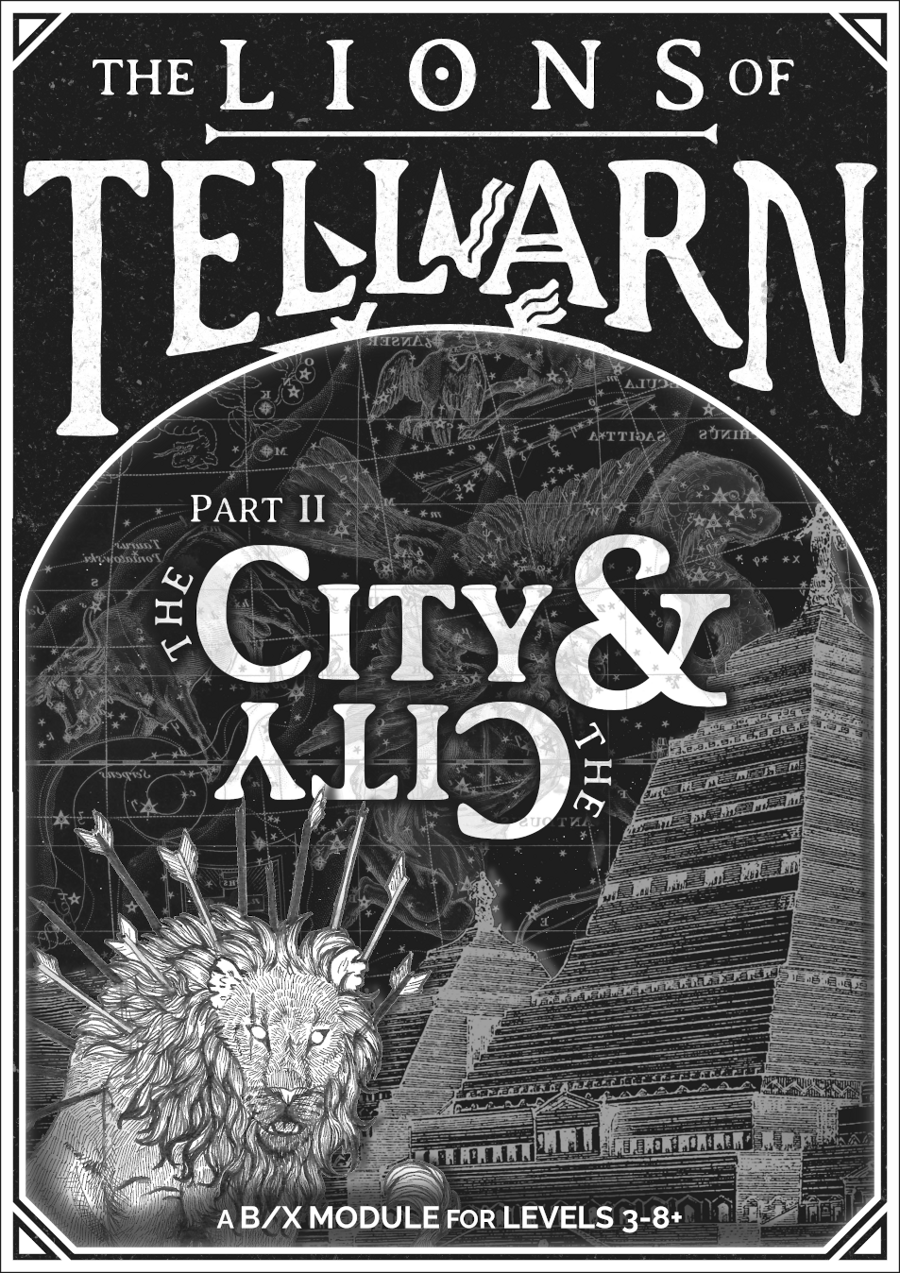
The Lions of Tell Arn Part 2 – The City & The City
By Nikoline
Self Published
OSR
Levels 3-8
Self Published
OSR
Levels 3-8
As above, so below. Above, Tell Arn is abandoned, the Hyrkossi kings ashamed of what is buried there. Below, stranger kings hold greater shames, and greater terrors are locked away. The mistakes of lost civilisations repeat on one another in the dark, holding a delicate, unruly balance. Tip the scales, break the seal, and let the Lions drink deep.
This 81 page adventure presents two more levels of Tell Arn with about a hundred numbered major rooms and probably as many sub-a/sub-b rooms. Complex maps. Great writing. Interesting environments to adventure in. An adventure that can stand toe to toe with Dark Tower/Thracia/Hyqueous/Xyntillian/The Bowman Levels. Buy the hard copy now.
One of the two level maps The Upper right corner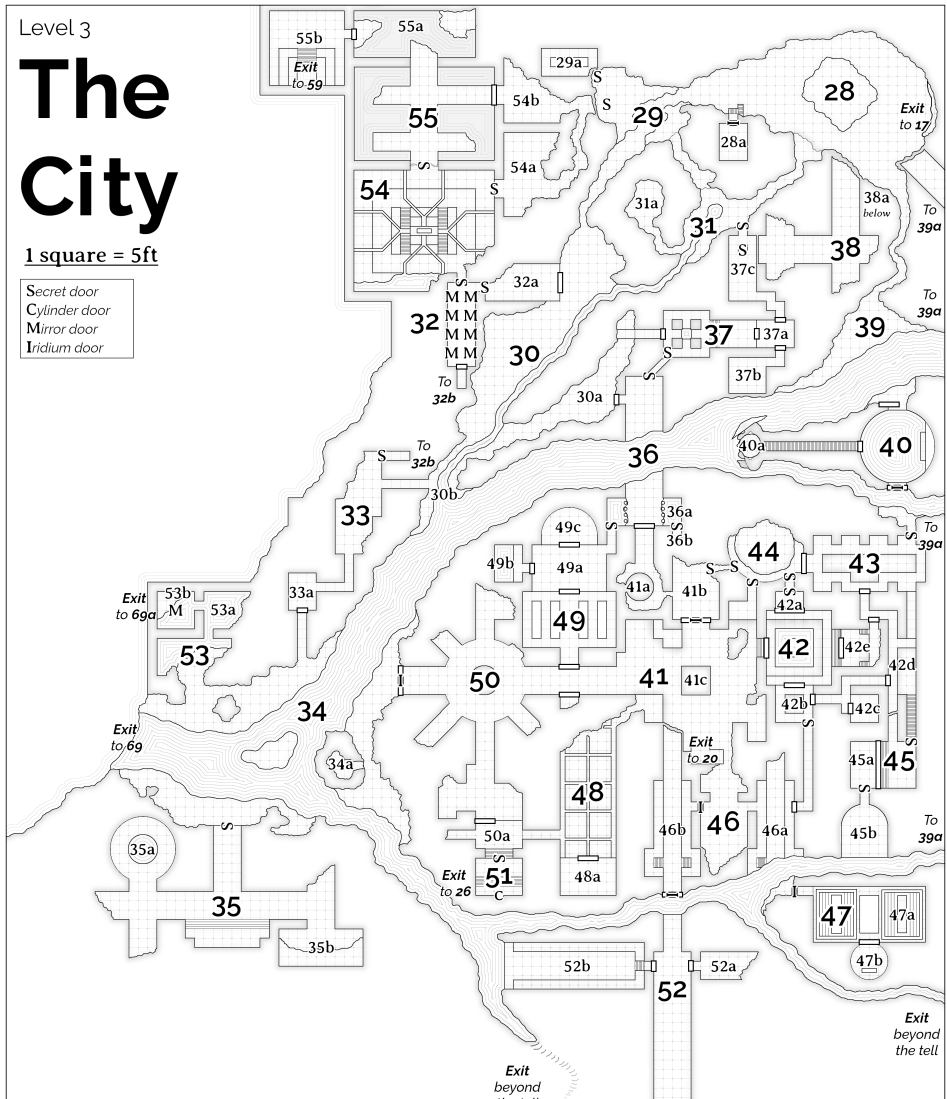
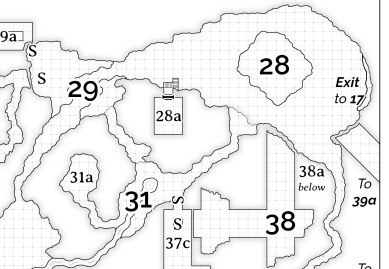
I think, perhaps, I’d like to examine this adventure through one small portion of a zone, in the northeast of the map. The map, alone, should be enough to get you excited. Water, tunnels, above and below, weird shapes, and a complexity that naturally lends itself to exploration. It FEELS like a ruined city, yes? Looking at the small area in the upper right, a kind of cavern. IN the middle is a pit. There’s this long corridor off to 39a, and a broken set of stairs clinging to a wall leading up to 28a. Rough caves to 29, with secrets in that room, multiple secret doors! Pools in 31, with more secrets, but the entrance to the 31 hallway from 28 is a ledge up on the wall. Rooms. Caverns. Pits. Ledges. Stairs. Exits. Secrets. An almost bewildering number and type of environments. Fucking great map! A place for an adventure!
The rooms start with a kind of vibe overview. Room 28 is “Lower Hydra Nest”. How much more classic can you get than a hydra in a ruined city? It makes my mouth water just thinking about the deliciousness of the encounter! Then the entry reads “Sickly stench; grease and putrescence. A ledge (40’ up) to the south (to 31). Water and blood drips from above” It’s kind of orienting the DM to the room. Room 29, the Putrescent Larder reads “The detritus thickens; half-rotted carcasses in great mounds. Sweet stench of death. Lit by guttering blue corpse-fires, burning at random. Sucking steps.” Got it. Ewww! Or, maybe room 21, the Upper Gallery “Reprieve from the miasma. Crashing water. Blue light through fine mist. Hollow on the north wall leads to 29. “ Crashing water, sweeter air, a blue light in a fine mist. GUTTERING. Or SUCKING STEPS. These descriptions feel imagined. They feel like someone called up a mental image in their head, lived the room, and then were able to get that down on paper, and down on paper in such a way that you, the DM reading it, can pick it up and run with it just as the designer imagined in their head. That IS the goal of good writing. A sucking step. Anyone in the mud, bog, fen, swampy environments knows what that is like. It’s a perfect description for that kind of thing. You KNOW what it is. The descriptions here range from good to excellent, across the board.
But wait, there’s more! This is not the end of things.We expand, when entering from room 17, the trail narrows, the stone crumbling, there’s a 30’ ledge to the floor below, with pitted walls. Pitted. The room? A ruined amphitheatre, buried in filth. Corroded pillars break the surface. They are gnawed and scored with deep claw marks. Detritus is 10 deep, bone, plasma, cave-slime, guano. I fucking love that amphitheater description.
Heyt man, how about that pit? Let’s look at that bullet “In the centre of the amphitheatre, a sunken pit (40’ across, 20’ deep). The floor is thick with golden slime. Inspection reveals twisting movement below. A colossal gold-faced bust (3000c/300lb) rests against the west edge. Bringing fire nearby alerts the hydra: 4d6 HYDRA SPAWN surge into 28 to defend it. “ Golden slime. Twisting below. Jesus fucking christ! I’m not going near that thing! I see your colossal gold-faced bust, but the hand AND eye had better be clearly visible to get me to go there! Great fucking environment. And remember, we’ve still got “A broken set of stairs winding 20’ up the wall. At the top, a dark hollow “ and other things in here. Depth. Multiple things going on. Multiple things to look at, explore, interact with.
Expanding this hydra room even more, there are mechanics to help the DM out. That 10’ deep filth? “The filth halves all movement in 28/29 “ Wanna dig through it? There’s a short table for that. Oh, hey, remember that pit with the golden slime and twisting movement? How about this as fucking follow up to that description: “If the slime-floor is broken (like the skin of a water-bed), it reveals a knotted, fused mass of hydra-flesh. A thousand blind eyes swivel into life. 1d10x10 HYDRA SPAWN burst out after 1 turn. “ Like the skin of a water bed. A thr\ousand blind eyes SWIVEL into life. A knotted and fused mass of hydra flesh. Fucking a man, this is a fucking adventure right here!
We saw that colossal gold-faced bust, as treasure. Digging about in the filth could get you “Seventh Binding. (300c). A scabbard faced with moulded silver plates depicting the slaughter of seven giants. Inside, it is choked with black blood. “Nice little description. CHoked with black blood is a good touch also. No blade kept within will dull or rust. That’s a decent effect without relying on mechanics. And, then also “7 charges. The bearer can negate a mundane attack dealing ?8hp. The wound scars over, one of the seven giants rots to bones, and the scabbard fills with the blood that would have been spilled. “ Ewwww! Noice! Love it! Magic item that FEELS like a magic item.
Hey, how about another room? How about that upper gallery, with the blue mist? “Softly phosphorescent lichen coats the walls. It is thicker to the south, growing elaborate tendrils, swaying. On close inspection, see the form of a halfling, splayed out and subsumed by the algae. Its skull is stripped bare; a jewelled holy symbol (200c) of a sapphire rose embedded in the socket. “ Uh. Ok. And also “A stream of water cascades from above into a shallow pool. The pool is white with foam. It breaks off into a stream running down to 30. The water is bright blue and bitter. Small blind fish swim within. “ And then each of those two things, which are major bullets, have a minor bullet like “If bathed in, the water (highly alkaline) causes 1hp damage, drinking it 1d6hp. It cleans anything washed in it to a mirror sheen.”
Formatting wise, we’re seeing a vibe overview that’s highly evocative. Then a few major bullets with details on things from the overview. Then a sub-bullet or two with mechanical-like impacts from those bullets. Bolding and italics are used to effect to draw the eye to certain words, but not overused. Evocative treasure with good descriptions, terse but much more interesting than a Sword, +1.
These rooms hit, over and over again. There are zones in this places, “themed” areas, if you will. There are a couple of major factions running around with wants and needs and goals, as well as theming around hunger, in particular, with a ravenous hydra and ghouls. The amount of repetition of rooms is close to zero, nothing really feels like it’s just thrown in, or padding out the adventure. Room after room and description after description feels intentional, as if absolutely everything in the is adding to the adventure, building it up with intention.
Dense. Complex. Thrilling. Full of awe and wonder and horror the way an exploration adventure should be. You are a FOOL if you don’t check this out. For all the crap being published, today and every year, there is always someone out there with a singular vision who drives it to completion. This is the OSR.
This is Pay What You Want at DriveThru with a suggested price of $5. That’s absurd. This thing is great and you need a physical copy. The preview is twenty pages. You get to see a great map and lots of dungeon entries. Great preview.
https://www.drivethrurpg.com/en/product/530112/the-lions-of-tell-arn-part-ii?1892600
Categories: Tabletop Gaming Blogs
When the Crowdfunding Rewards Arrive
With starting our new campaign in Nimble and life in general, I just haven't got around to giving the attention I'd like to to crowdfunding rpg products that have been arriving.

Two Little Mice have been busy lately and I got the physical occupy of Outgunned: Superheroes (I've had the pdf for a while) and the drafts of the Twilight Sword material. The former is the "action flick" (campaign book) for the Outgunned action movie rpg for cinematic supers. The latter is their Legend of Zelda-inspired fantasy rpg. Both look good, and I'm interested in seeing the rules implementation in both of them, more than I think either will be something I will play any time soon, admittedly. I'm always interested in rules lite-ish supers games, and I'm like to compared Twilight Sword to the similar jrpg-inspired Legends of Akeroth.

What I have spent a little bit of time reading over is the plain text draft of Wandering Blades, a wuxia rpg. Wuxia (sort of like supers) is a genre where I haven't found the system that I think perfect captures what I want to see in such a game. Wandering Blades looks pretty simple (which is a plus), but also flavorful.
These aren't the only crowdfunding rewards I haven't really given a thorough read, I'm said to say. If only these things would arrive at the moment I had maximum interest in them and time to engage with them!
Categories: Comic Book Blogs, Tabletop Gaming Blogs
Xmen Comics Sentinel Mark II (Standard Model) For the Superpowered! rpg & Classic 2d6 Science Fiction Rpgs
Bringing the iconic, mutant-hunting Sentinels from X-Men comics into Stellagama Publishing’s Superpowered! RPG (the lightweight, 2d6-based Quantum/Cepheus Engine ruleset) requires capturing their sheer scale, implacable tracking systems, and adaptive defenses.In Superpowered!, a standard comic-book Sentinel operates as a high-threat powerhouse designed to force team coordination rather thanNeedleshttp://www.blogger.com/profile/11243274667834930867noreply@blogger.com0
Categories: Tabletop Gaming Blogs
Building The Red Planet Empire - Mixing Warriors of the Red Planet (WotRP) with the Domain-level Architecture of ACKS II Rpg - The d100 Table of Barsoomian Land Encounters Table & Martian Outlaw Markets
For a ground-bound caravan, a party of infantry, or a lone hero traversing the dried seabeds (ochre moss plains), deep scarps, and shifting orange dunes of Mars, the wilderness is a brutal testing ground. Without the safety of a sky-galleon's hull, adventurers are directly exposed to predatory megafauna, tribal raiding parties, and environmental hazards unique to the dying world. This blog Needleshttp://www.blogger.com/profile/11243274667834930867noreply@blogger.com0
Categories: Tabletop Gaming Blogs
Pages
