Your wildly multifarious home!
Feed aggregator
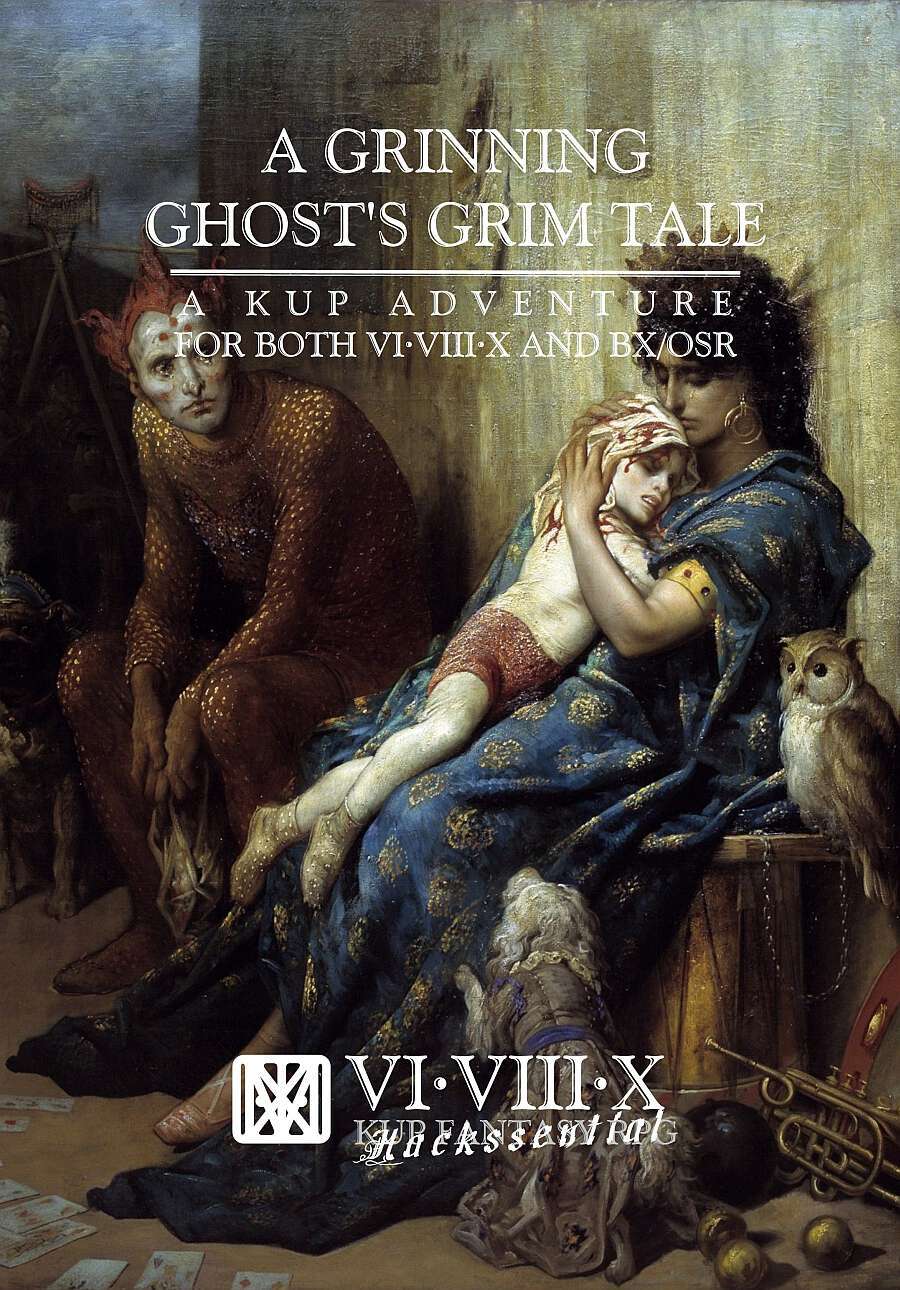
A Grinning Ghost’s Grim Tale
By GMaia
Knight of the Lake Games
OSR
Levels 4-8
Knight of the Lake Games
OSR
Levels 4-8
[…] A bold entrepreneur decided to reopen the “cursed” stage, now renamed the Daggerpierce Theater, and revive what was hailed as the greatest play ever written, and at the same time the one everyone wished never to see again. The from the Côte d’Écume, were not fully aware of the rumors surrounding the theater, the play, and its infamous author. Ignoring those who begged to keep the Daggerpierce Theater shut, the troupe accepted the job and sealed its fate along with that of The Tragedy of Gus de Montagne. The play was cut short just Wave fled Pont-Verre without leaving a single word or trace behind.
This 48 page adventure has a few locations in and around a theater with a curse. It’s pretty obvious what the adventure WANTS to be and it’s also pretty obvious that it is doing VERY little to make that happen. Maybe something like “This 48 page adventure presents some napkin notes that could one day be an adventure.” Oh, and it’s fucking pretentious.
Life. You try to make some money then you die. A symphony that is bittersweet. And this adventure explores that. The theater (always a good sign when there’s a theater in an adventure) is cursed. “the curse can only be broken when the play’s profound message is understood and performed with the sole purpose of teaching the people to value what truly matters.” Yeah, I guess The Verve is wrong because “as long as the work brings success and enriches actors and theater owners, it will remain misunderstood, and its performances will claim lives.” I don’t know, it’s love or selflessness or some shit like that. The playwright’s lover got framed by rich people to draw attention away from their counterfeiting. (Which, shows an incorrect view of counterfeiting. You don’t get away with fucking with the States money supply no matter who you are.) Anyway the designer, or playwright or someone somewhere, knows the meaning of life and The Verve’s more nuanced view can go fuck itself. This leads us to this interaction near the end where THE ENTITY asks the party questions. And you better get them right, or else! ““What would you have done for him, knowing he was innocent?” Examples: Refuse to be passive before injustice; vow to place life above wealth. 2. “What truth have you hidden for material gain that you could confess?” Examples: Based on PC story, reveal a secret of greed or betrayal. 3. “What act of justice would you perform now, even at great cost?” Examples: Cut off a hand that committed a selfish act; blind an eye that witnessed corruption.” So, yeah, childish morality. Which means I can take the stance that this is the designer attempting to impose their own childish value system on the rest of us, and their players, in a game night that is supposed to be fun, or ITS ON PURPOSE!!, the standard artist cop-out. In this case that would appear as something like the intent of the curser, the playwright, his beliefs, and curse following that and the characters needing to figure that out so they can navigate his bullshit reality correctly. But we all know that’s not what is going on here. It’s designer imposing their morality on the rest of us and punishing us for not following it. This is absolute fucking bullshit. You can stick in all the fucking orc babies you want, you just can’t punish people for not holding whatever bullshit views you do. ESPECIALLY when there is a god of evil in the game who is ACTIVELY rewarding their followers for evil acts. Fucking bullshit.
Hey, you want a challenge, how about this one? “Two to eight (2d4) energy discs hover in the air, half a meter wide, razor-thin,crackling with electricity.” There’s your fucking combat. I guess fighting rats might make a statement about man’s subjugation of the natural world. Far better to die by crackling electric discs.
The adventure is fucking garbage, what there is of it. I can make a decent case that this isn’t an adventure at all, just an outline of one, if that. You get a few locations, you get some NPC”s with motivations and the rough outline of a plot. GO!. This leads to discovering clues like “Torn letter referencing a mysterious debt – Actually belongs to Auguste, proving his ties to a shady merchant guild.” How’s that for evocative gameplay?! No more to this. Just that. No letter. No details. No specifics. That’s all you get. And everything in this is like that. Just a few general ideas and notes. No specifics on how to use things. It’s weird, how detached it is. You’d think, with actors, customers, and so on that you might have some vignettes or something, but, no. Nothing. Dads house has a couple of sentences on background and then three bullets of clues. “Empty painting frame in the bedroom – Points to the diary hidden in the Red Hills hideout.” How the fuck you make that jump I have no idea. Everything is like that, half finished? Just an idea? I think it might be referring to this? “Concealed inside a magic mirror hanging on the wall, framed identically to the empty frame found in Edwin’s house (Clue #1)” So. I don’t know? Is that a clue? Am I just being obtuse? Anyway, given the page count here the lack of specificity of ANYTHING resembling a plot or details is confounding.
The formatting is … well, an interesting choice was made. It’s doing a “facing pages” layout thing. Hardcoded in to the PDF. Ug. Not cool. Anyway, the left page is a more traditional text based description while the right is essentially a cliffs notes version of the same text. As the designer notes “this is to test whether presenting the same content twice can serve both those who enjoy a full,detail-rich reading experience and those who prefer concise keywords and minimal description.” I would take exception to this statement, The two are not mutually exclusive. Well, ok, maybe they are if we take “detail-rich reading experience” to mean “people who buy adventures to read instead of to play.” In which case, Fuck You. But I’m going to go with that the designer is taking the view that somehow full text and usable text are mutually exclusive. I think we all know, from numerous Best examples from this very blog, that is not he case.
In any event, this experiment fails. The facing page “terse view” is a disaster. The font is in some faux-handwriting thing, which immediately destroys readability. And then its in a light blue text, which makes it even hard to read. Then it slapped down on some “lined paper” background, which again interferes. IF something sane had been chosen to put the “bullet points” in then maybe this would have worked. But not as presented. Which is too bad because every once in awhile the summary information IS good. The theater producer, in his “full on” text has a line that says something like “Does not believe in the daggerpiece curse.” But, in his summary it says “The curse does not exist.” This is interesting, presenting what is essentially the same idea in two different manners., using two different wordings. Which conveys two different attitudes. The summary version “the curse does not exist” is, I think, far better, giving a much more solid foundation on which to roleplay the manager from.
The level range here appears to be arbitrary, with no real reason you’re level eight are fucking around with a playhouse. Also, the fucking overland map is a disaster with hard to read fonts on it. Why legibility” remains a barrier in 2026 is beyond me. And, for the final cinema sin, there’s a fucking expo dump in a fucking diary. It explains everything. Lame. LAME. DON”T PUT IN FUCKING DIARIES! DONT EXPO DUMP! Figure out how to convey information naturally through the game, if it even NEEDS to be conveyed.
This is $1 at DriveThru. There is no preview. You make baby jesus cry when there is no preview. You don’t want to make baby jesus cry do you?
https://www.drivethrurpg.com/en/product/558386/a-grinning-ghost-s-grim-tale?1892600
Categories: Tabletop Gaming Blogs
D100 Random Space Encounters Table for Thirteen Parsecs: Beyond the Solar Frontier Rpg
The Solar Frontier is a vast and unpredictable expanse where hard sci-fi grit meets the wonder of the unknown. In Thirteen Parsecs, the O.G.R.E.S. system thrives on fast-paced, high-stakes situations.Below is a custom D100 Space Encounter Table designed to fit the tone of the game—covering everything from industrial hazards and corporate shakedowns to the eerie isolationist horror the Needleshttp://www.blogger.com/profile/11243274667834930867noreply@blogger.com0
Categories: Tabletop Gaming Blogs
Video of the Day – Radio Times, 2026
The post Video of the Day – Radio Times, 2026 appeared first on Blogtor Who.
Categories: Doctor Who Feeds
Harn and the Elven Kingdom of Evael has launched!
I’ve been a fan of Columbia Games and the Harn setting since the early 1980s. It’s not just a strong medieval fantasy world in its own right. What has always set Harn apart is its modular design. Each product consists of self-contained articles, which makes it easy to incorporate material into other campaigns. I’ve used it extensively in my own Majestic Wilderlands and Majestic Fantasy Realms.
Evael, Kingdom of the Elves Kickstarter
For decades, Harn products came as three-hole punch, loose-leaf articles. That format was ideal for organization. You could build your own binders exactly how you wanted.
That said, I’m aware I’m in the minority there in liking that format.
In recent years, Columbia Games shifted to hardcover releases, and they’ve just launched the Kickstarter for Kingdom of Evael, the final book in their nine-kingdom series.
Evael, Kingdom of the Elves Kickstarter
While a hardback, the format is still a series of articles covering the kingdom and various locations. So even if you don't ever plan to use Harn itself, it will be useful in giving you a capital for an elven realm (Elshavel*), an elven port (Ulfshaften*), a strange, enigmatic ruin to explore (Pesino), or a cultural article on the Harnic Dark Elves (Morsindarin**)
While a lot of settings are good at lore, Harn is good at providing usable material for your campaign. And the Evael, Kingdom of the Elves, will do just that for the elves in your setting.
*I guess I am a superfan of Harn because I was able to type those names from memory correctly spelled.
** This would be useful to those of you who are fans of my Blackmarsh setting and want to flesh out the Brotherhood of the Raven.
Categories: Tabletop Gaming Blogs
Spell Research

Been awhile...
Cool way to mix random spell determination with choice...
When you level up (or even at character creation) and are gaining new spells, you roll randomly to determine what spell(s) has turned up in your off-screen research (you're a wizard, you're always researching).
This requires random lists of all possible spells (by level) in whatever system you're using. You may have to make these yourself. (I have such disdain when spells are simply listed without the option of random determination; laziness).
After a spell is rolled and you want to learn it, you need to make a learning check. In AD&D 1E this would be a "chance to know spell" check. In 3.Path, it would be a spellcraft check. If you don't want to learn it, you can pass and roll again (you can only "pass" a number of times equal to your level). You may regret this, because that spell is lost to you until you randomly roll it again or find it in the wild. (Speaking of, if you have a scroll with a spell that you want to learn, you can skip the random roll and try to learn that spell instead. Failure means you didn't learn it and must roll randomly. Success means you learned it and the scroll is destroyed. Critical failures could get interesting, as could critical successes.)
- Spell Books are coveted because they contain a variety of spells you can choose from, thus bypassing random research. But learning rolls must still be made.
If you fail to learn a spell, you record that spell on a list of "spells being learned" and can try again the next time you gain a new spell of that level. This will probably be an easier roll as your skill/intelligence score should/could be higher. If not, a small bonus may be granted each time an attempt is made.
Success on your learning roll means that you've learned the spell, of course.
More flavor... How did you find the spell? (Roll this before you roll for the spell, as it might influence whether or not you choose to learn it).
- Library Research.
- Dream/Meditation.
- Another Wizard. (This might cost you, perhaps 1,000 GP/spell level, but thanks to expert tutelage, this spell is always cast as one level higher).
- Demon/Devil. (Could be a multitude of beings, but as I view magic as black...) Learning the spell from a demonic/devilish source could come with a price such as a contract, blood sacrifice, or physical/mental corruption: Horns, rotting flesh, scars, hooves, etc. (represented mechanically by stat loss), but, the spell is learned with greater potency; cast as 1d4 levels higher.
And just like that, Wizards are infinitely more interesting.
Categories: Tabletop Gaming Blogs
To Lose Your Heart in That Eldritch Sea (Design Post)
Substack is starting to come together for me. Regular Notes, first couple of subscribers and here's the second post. A design post about some ideas I had for a game I'm writing just now: That Eldritch Sea. You'll get an idea what the game is about, how it will work and the details on one little idea I needed to make that game click.
You can find it here (for free):
.jpeg)
As I said in the introduction, there's a bit more to discover now. I'll use blogger solely as a sign post from now on, until I think the blog is dead for good. It is for the better. Blogger has run its course and I need a new start of sorts. Substack fits that bill, and I'll be happy to see all those over there who liked my stuff here. As well as making new friends, of course.
Another post will hit Sunday. Meanwhile I'll do a little series of note about all my projects. That's a lot, as you'll find ^^
Categories: Tabletop Gaming Blogs
Draw Steel Monsters on a Credit Card
Click to get it full-size
front and back!
I’m the guy who does “monsters on a business card” posts, and I just started at MCDM, so I should probably do a Draw Steel Monsters on a Business Card, right?
Well it turns out I don’t have to! Amber over at amby.navy did it for me!
If you’re new to DS, there are a lot of new terms here and it may look intimidating! Luckily, it’s all spelled out in a few pages in the introduction of Draw Steel: Monsters. (No reverse engineering required!) But once you’ve read those pages, you may want to grab Amber’s card, which is a clever and compact distillation. Print it out, carry it, and use it to design monsters, and, heck, run completely improvised Draw Steel monsters on the fly!
The latter goal may seem crazy, but why not? In my never-ending goal to reduce my game prep time to just thinking about story beats, I intend to try out the business card to do that very thing.
Categories: Tabletop Gaming Blogs
REVIEW: Doctor Who – The Nightmare Begins and Devil’s Planet
The recovery of The Nightmare Begins and Devil’s Planet further confirms The Daleks’ Master Plan as possibly the best Dalek story of the 1960s
The universe, as we know, is vast and complicated. Sometime, seemingly impossible things happen, and we call them miracles. This latest miracles comes courtesy of the angels at Film is Fabulous! Like all real miracles, of course, the first return of missing Doctor Who episodes since 2013 is really the result of patience, hard work, and more than a little luck. With a remit far beyond just the Doctor’s adventures, the FiF! team tracked down a true treasure trove of archive film in a private collection, and negotiated permission to assess and archive it, all while bravely managing the expectations of a certain type of fan who would struggle to find perspective if you marked it on a map.
This would be a red letter day in the Whoniverse under any circumstance. But what a treat that The Nightmare Begins and Devil’s Planet are not only episodes from one of the most exciting serials of William Hartnell’s era as the Doctor but, as it turns out, absolute bangers.
Doctor Who: The Devil’s Planet (c) BBC The first half of The Daleks’ Master Plan plays out like a political action thriller in space

Unlike some recovered episodes, this isn’t a case of radically reappraising a once underrated story, as with Enemy of the World. No, anyone who’d already listened to the soundtrack knew that Terry Nation’s script delivered a tense and atmosphere political action thriller – Jack Ryan in space. The Doctor has brought the TARDIS and his new companion Katarina to the planet Kembel in the 41st century, desperate to find medical aid for his other companion Steven. But he find himself instead in the middle of a vast intergalactic conspiracy. The Daleks and their allies are plotting the conquest of the entire galaxy. They need only one last thing to end human civilization forever, and only the Doctor can keep it from them. But who can he trust when the Daleks have already corrupted the highest levels of Earth’s government?
All that said, actually being able to see the episodes reveals so much, and makes them oh so better.
The Doctor finds some missing film in the newly recovered Day of Armageddon (c) BBC Studios Douglas Camfield was one of Doctor Who’s finest directors, and these episodes contain some of his most dynamic work

Douglas Camfield was a genius at directing Doctor Who and The Daleks’ Master Plan is a masterpiece that ultimately left him exhausted. The Nightmare Begins and Devil’s Planet shows all that same dramatic flair and technical ability, if anything enhanced by how fresh and energetic he must have been at these early stages of the 12 week run. Arguably the Daleks have never looked better, before or since, emerging from the thick jungles of Kembel, looming over the doomed Kent Gantry, or the pristine Supreme Dalek gliding into view alongside the others in their control room.
Surprises include communication officer Roald miming along to politician Mavic Chen’s often repeated tropes about universal peace, or the truly brutal shot of Gantry’s corpse. Meanwhile, after more than six decades, we finally get to see Zephon’s seaweed like face without his hood. The hairy, cave-dwelling prisoners of penal planet Desperus suddenly feel like a sequel to An Unearthly Child, with leadership battles over their only knife in place of the secret of fire. Desperus itself is an imaginative vista of foreboding mountains looming of the flaming torches of the prisoners, pin pricks in the darkness as they advance on our heroes.
Only the Screamers of Desperus had a better life on audio, Devil’s Planet revealing them to be slightly disappointing rubber bat like props, swinging back and forth of strings.
The Doctor (William Hartnell), Brett Vyon (Nicholas Courtney) and Katarina (Adrienne Hill) in The Nightmare Begins (c) BBC Studios We finally get to see more of short lived companion Katarina, and Adrienne Hill’s surprisingly charming performance

However, the greatest beneficiaries of these moving pictures are the cast themselves. William Hartnell may be having a very bad wig day, with props conspiring to send his locks into wild abandon more than once. But he’s also fierce and determined, more than anyone else selling the galactically high stakes. Indeed, the power of his performance somehow makes his occasional line fluffs more forgivable. (And we do get some absolute classics here, like his insistence that “the Daleks will stop at anything.”)
Of his companions, new ally Bret Vyon, as played by future Brigadier Nicholas Briggs, is just effortlessly smooth and cool, while an oiled up and dirty Steven, stripped to the waist, is an early, not entirely unpleasant, shock. The big winner, however, is Adrienne Hill as Katarina. The Trojan handmaiden was a victim of changes behind the scenes, written out almost as soon as she joined as a companion. Thanks to this recovery, three of her five episodes now exist, and with it a new appreciation of Hill’s performance. It’s full of an otherworldly charm that fails to come across on audio. There’s a sparkle in her eyes as she looks adoringly at the Doctor, and a delight as she successfully operates control panels under his instruction.
The powers that be thought a companion from the past would be too limiting, but to an extent these episodes prove them wrong. They suggest she could have been almost as entertaining as Jamie would be later. Quickly learning her way around the flight deck of spaceships, but still slightly baffled by a tablet, and always trusting of the Doctor to guide her.
Doctor Who: The Daleks’ Master Plan – The Devil’s Planet (c) BBC The exceptional recovery work from Film is Fabulous! gives fresh hope that there might still be more to come from the lost world of 60s Who

At 12 episodes, The Daleks’ Master Plan is one of the most ambitious epics Doctor Who ever attempted. The very fact that almost half of it is now available for fans to watch is incredible, especially with the previous return of second episode Day of Armageddon meaning we now have a clear run of the first three parts. Indeed, most of the first half of the story, containing some of Terry Nation’s finest writing for Doctor Who, now exists. Interestingly, this may well increase the narrative whiplash for viewers for any future Blu-ray release, as the bleaker, tenser, mostly live action Nation episodes give way to a presumably mostly animated, and somewhat broader and sillier, episodes 7-12 from writer Dennis Spooner.
However, that assumes there’s not more yet to find. Every time new discoveries are made, fans wonder if it they will be the last. The collector who held The Nightmare Begins and Devil’s Planet was far from the only enthusiast maintaining such personal archives. Many wish to retain control of those collections in their lifetime. But perhaps we can hope their legacies will ultimately mean future generations still have even more new old Doctor Who to enjoy in the future.
After all, the universe, as the Doctor says, will always surprise you.
You can watch The Nightmare Begins and Devil’s Planet for free now in the UK and US. Full details here.
The post REVIEW: Doctor Who – The Nightmare Begins and Devil’s Planet appeared first on Blogtor Who.
Categories: Doctor Who Feeds
Saints and Clerics

In the post-industrial fantasy, The Gutter Prayer, by Gareth Hanrahan, gods are essentially strange loops of magical energy, powered by worship and quite obviously a lot more trouble than they're worth. At least most of them don't eat the souls of living being like the gods in R. Scott Bakker's The Second Apocalypse series, but that's about the only thing one could say in their favor.
One of the interesting things in Hanrahan's portrayal are the saints. These saints are much like "The Gifted" in my Weird Adventures setting and in other posts in that they are people effectively imbued with super-powers by a god. As such, they make good inspiration for an approach to clerics in fantasy rpgs.
Saints differ from your standard cleric of the D&D variety in a few ways. One, they don't seem to cast spells, just manifest divine powers. Two, they aren't necessarily people of high faith, but ones who just happen to be on the same psychic wavelength as the god, making it easier for the god to establish a connection and work through them. Third, the saints, then, aren't the evangelists and expanders of a faith, generally, but it's holy warriors.
I've long felt that having clerical magic-users that are separate and distinct from regular priests and priestly hierarchies worldbuilding-wise, and this remains a really good approach, I think, and I feel like Hanrahan provides a flavorful implementation of it, with an interesting take on the gods, in general.
Categories: Comic Book Blogs, Tabletop Gaming Blogs
40 Years a Gamer: The Artists Who Inspired Me – Mike Ploog
My recent deep dives into comics led me to explore other fantasy and sword-and-sorcery books I’d either missed or forgotten about over the years. That winding path eventually led me to Weirdworld, a comic created by Doug Moench and Mike Ploog. And honestly, rediscovering this series sparked an entirely new topic for my “40 Years a Gamer” retrospective: the artists who inspired my campaigns.
I absolutely love Mike Ploog‘s fantasy art. I first became consciously aware of him through his 1994 trading card collection, back when I was working at Metro Comics. I collected all those cards and used them as visual references and inspiration for NPCs and events in my homebrew world.
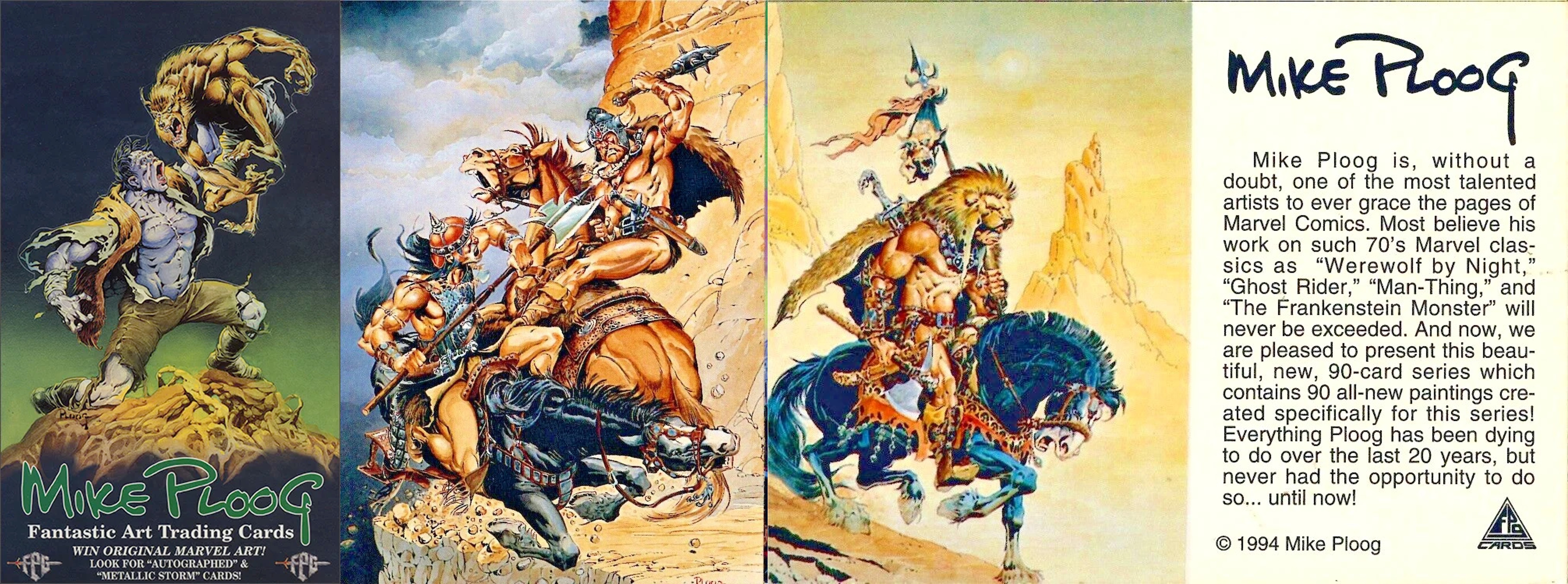
I eventually realized I had already seen his comic work in various back issues. I also found out later that he worked on Ralph Bakshi’s animated movies, Wizards and The Lord of the Rings, which were two of my absolute favorites!
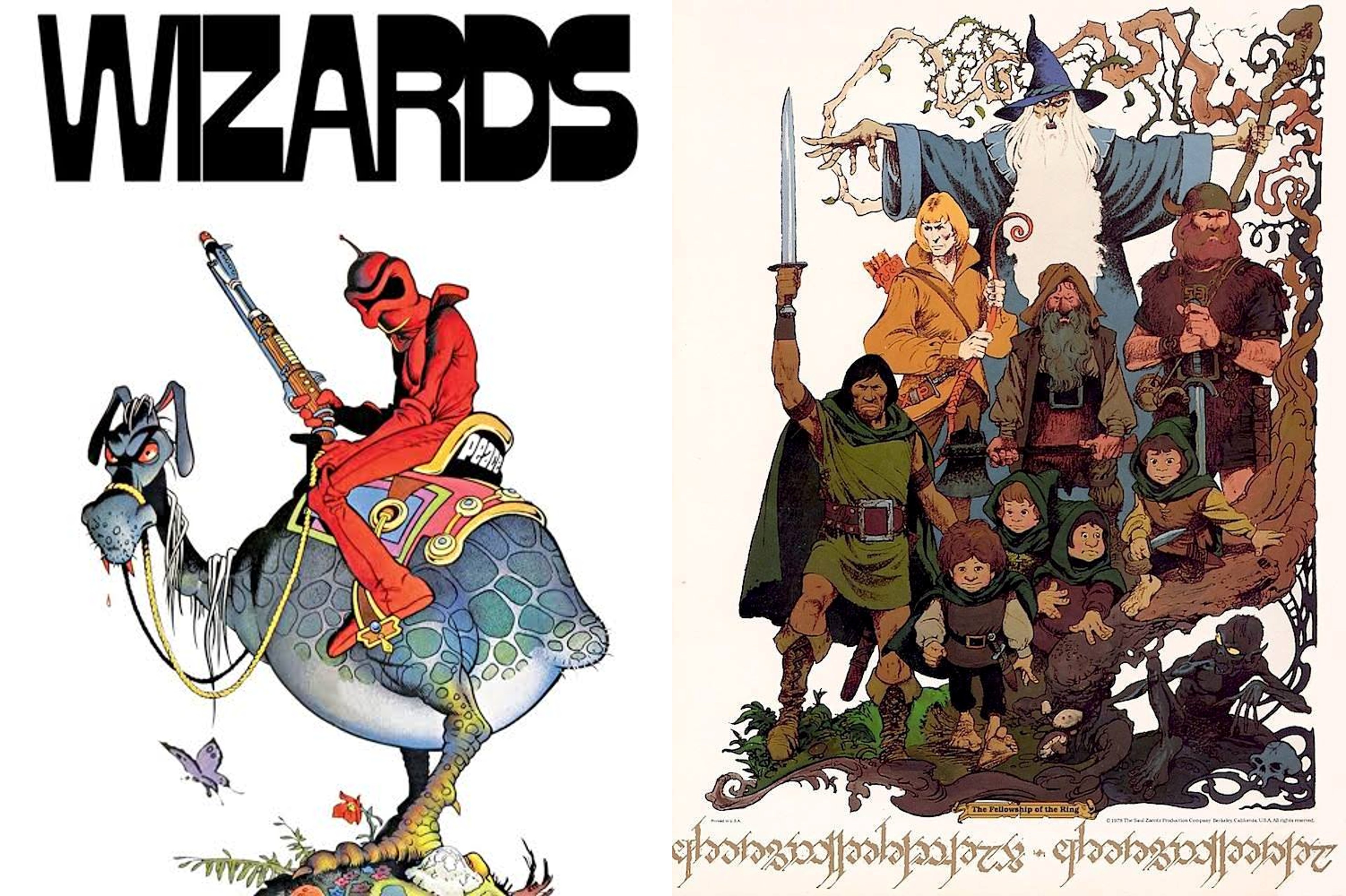
His art style was a bit cartoony—different from the more traditional fantasy art that usually inspired me as a young GM—but it had this incredible dynamism and movement that other pieces just lacked. Sadly, I no longer have the complete trading card set. But back in the days before high-speed internet and Pinterest, physical art books and trading cards were the main sources of visual inspiration for the table.
The Weirdworld connection that sparked all these memories is actually pretty funny. I had completely forgotten about these characters. I originally read about them in Marvel Fanfare issues 24-26 back in 1986. Because I was such a huge Elfquest fan, I was thrilled to find another fantasy story, but I remember being a little disappointed. It just didn’t capture me the way Elfquest did. As it turns out, the stories I read were NOT drawn by Mike Ploog!
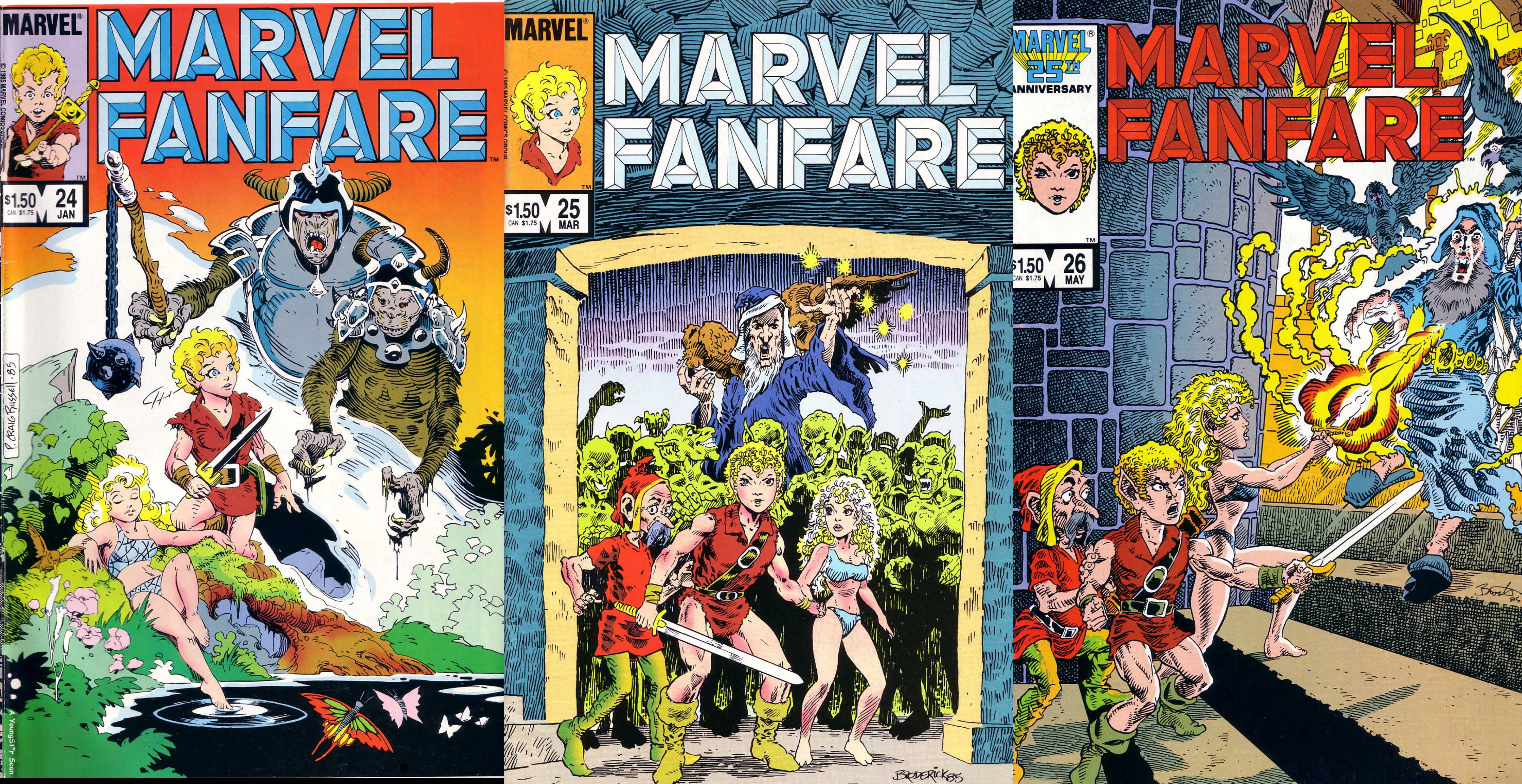
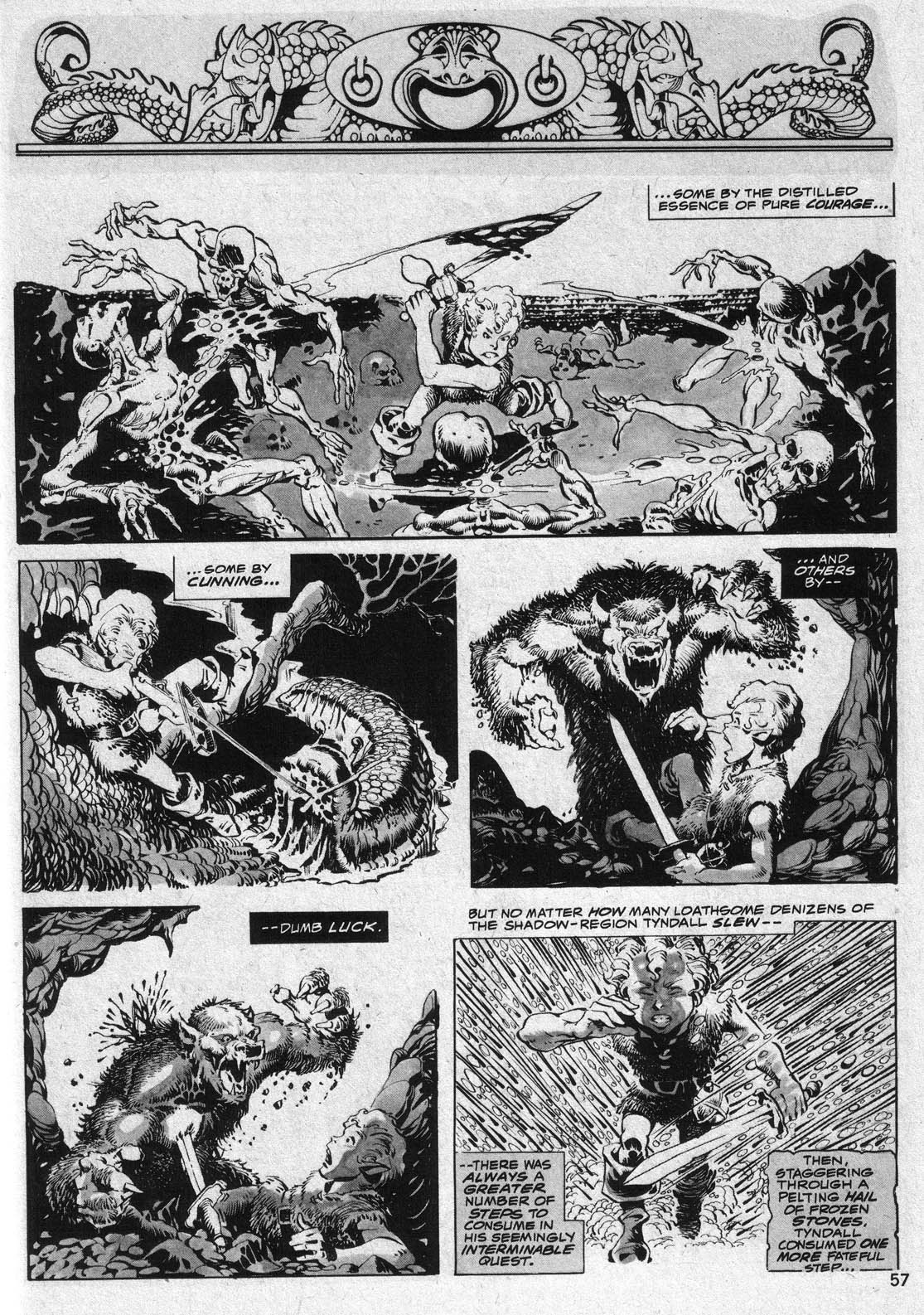
Because of that, I completely forgot about the setting until I stumbled across it again a few days ago and realized it was co-created by one of my favorite artists. What a great connection to finally make. You can see some of Ploog’s original Weirdworld art below.
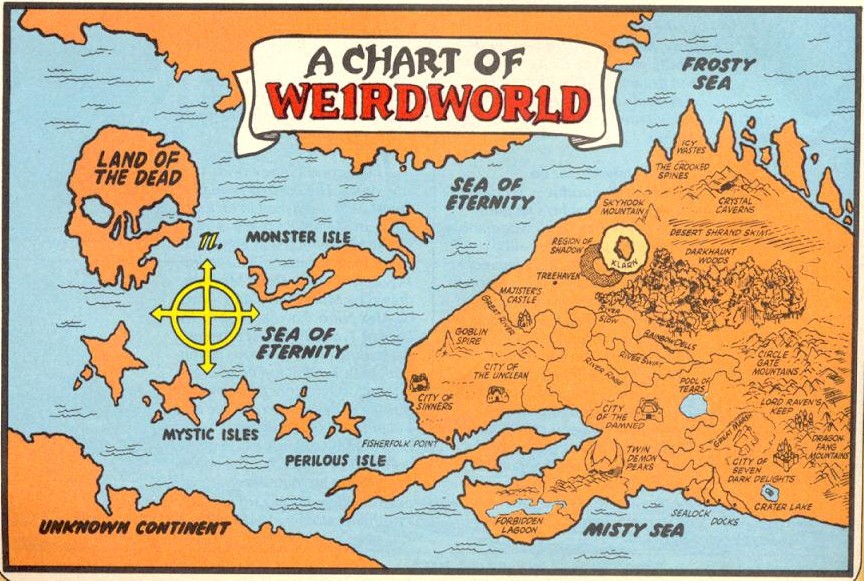
Bonus! There was a map of Weirdworld published in Epic Illustrated #9. The map is a little silly—or perhaps whimsical, and fairy-like is a better description! While I might not use it as direct inspiration for a TTRPG right now, we’ve had two significant adventures in the Fey Realm in my long-running homebrewed campaign, so I am absolutely keeping this handy for later reference.
Categories: Tabletop Gaming Blogs
Video of the Day – Doctor Who: The Daleks’ Master Plan, 1965
The post Video of the Day – Doctor Who: The Daleks’ Master Plan, 1965 appeared first on Blogtor Who.
Categories: Doctor Who Feeds
It's April
Random notes.
After having ran and played in multiple games with player-facing dice rolls, I gotta say I strongly prefer them. Having players roll all the dice frees the GM up to focus more on what's happening and what happens next and it keeps players being active contributors.
Player-facing rolls have moved up the ranks in my gaming preferences right up there with luck points and death choices.
Speaking of gaming... shit I'm behind. I playtested ZSF and I'm in a spot where I could hone it, focus in, and get the game done. But right now in this instant I do not have that fire. I'll get back to it later.
Meanwhile I've dashed out a few other game ideas. I wrote one the other day based an older idea called Dirty Dozen Death Squad. You make a unit of 4 or 5 characters, then all the players bring all their characters and you just go through a violent mission. I guess it's more of a skirmish game and RPG.
Made another one this week. No name yet, but it's got a neat little core where you roll a d20 if you've got a skill and a d12 if you don't. Each hit you take knocks you down a die step. But it's not a combat game... it's more of an explore and interact kind of thing.
Sketching is always on the table. Tons and tons of drawing and doodling and coming up with ideas. I've written many comic book scripts lately. I just can't seem to find the oomph to focus on one thing long enough to get it done.
But I'll get there.

Categories: Tabletop Gaming Blogs
New Flesh Rpg Adventure - Mission Brief: Operation "Threnody in Glass" Adapting The Cultclassic TV show T.H.E. Cat into our New Flesh campaign- "The Hemostat"
The PC's were contacted by The Ghost of Hong Kong after she took on an assignment from Tankana's corporate rivals. I'm using The Ghost of Hong Kong: Targets as a reference. The events of Bidonville Blues adventure & the Thresher almost ended two PC's. This session report picks right up from New Flesh Rpg Adventure - Mission Brief: Needleshttp://www.blogger.com/profile/11243274667834930867noreply@blogger.com0
Categories: Tabletop Gaming Blogs
MooglyCAL2026 Block 8
MooglyCAL2026 Block 8 is a multi-colored mosaic square by Natalie Thomas of Detroit Knots! The Marvelous Mosaic Square is the perfect square to learn mosaic crochet with - and the color possibilities are huge! Get all the details for this free crochet along, and the free pattern link below! Disclaimer: This post includes affiliate links; […]
The post MooglyCAL2026 Block 8 appeared first on moogly. Please visit www.mooglyblog.com for this post.
2
Categories: Crochet Life
OSR Commentary Adapting I2: Dwellers In The Forbidden City by David Cook To The Barrows & Borderlands Rpg
Adapting David Cook’s 1981 classic I2: Dwellers of the Forbidden City for a modern, grit-forward system like Barrows & Borderlands (B&B) requires shifting the focus from "heroic monster-slaying" to "tactical survival and factional maneuvering." This blog post picks right up from OSR Commentary Adapting C1: The Hidden Shrine of Tamoachan To The Barrows & Borderlands RpgThe Needleshttp://www.blogger.com/profile/11243274667834930867noreply@blogger.com0
Categories: Tabletop Gaming Blogs
Mining 70s DC Comics for TTRPG Inspiration: Maps, Missing Souls, and Cosmic Conflicts
When I recently shared that image of classic DC Comics sword-and-sorcery characters as great TTRPG inspiration on my Facebook Page (see the featured image above!), I honestly didn’t expect to fall down such a deep rabbit hole learning about them. But one thread pulled another, and I ended up finding some incredible material that I can’t wait to bring to the table.
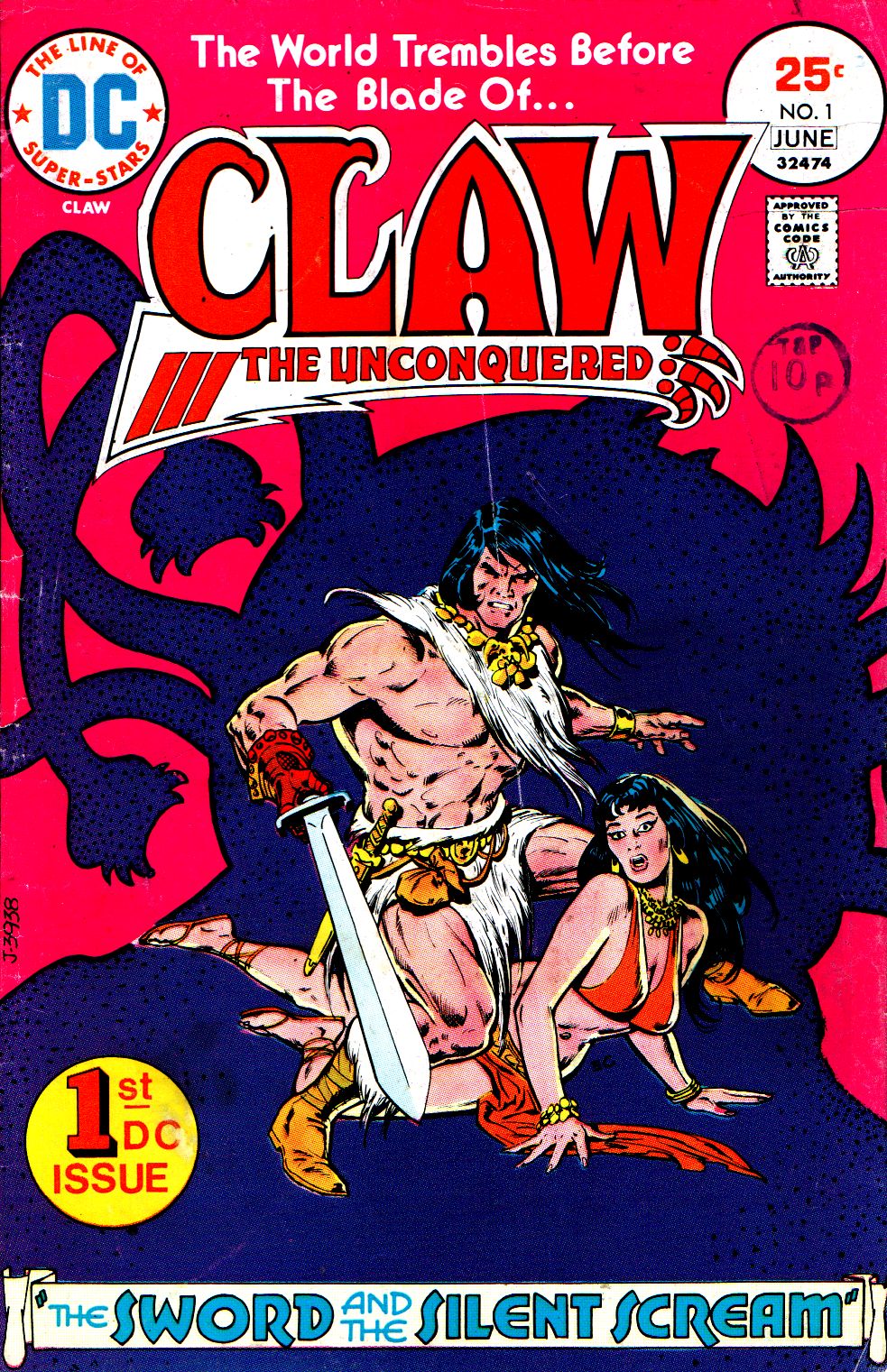
First up was Claw the Unconquered. At first glance, he looks like a standard Conan knockoff. But I was reading Scott Dutton’s Catspaw Dynamics blog (which I mentioned in the blog post where I wrote about Conqueror of the Barren Earth), and Scott shared some beautifully digitally recreated art for the series. More importantly, he shared a map of the setting where Claw’s adventures take place.
It’s literally called “The Known World.”
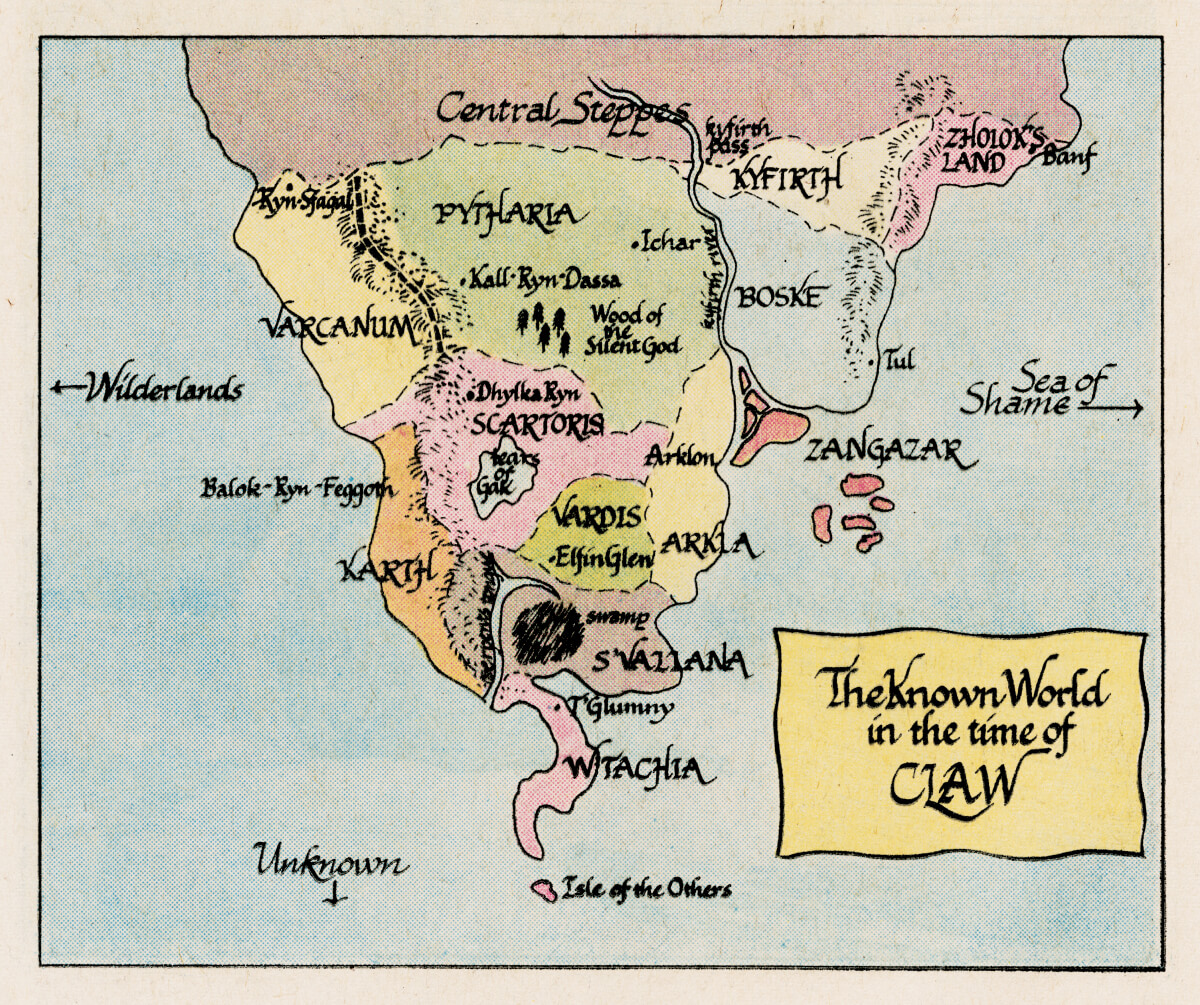
Anyone who knows me knows I am an absolute sucker for fantasy maps, and seeing a “Known World” instantly triggered my Mystara nostalgia! Seeing this immediately makes me want to track down these old comics just to learn more about how they built this world and see what I can borrow for my own campaigns.
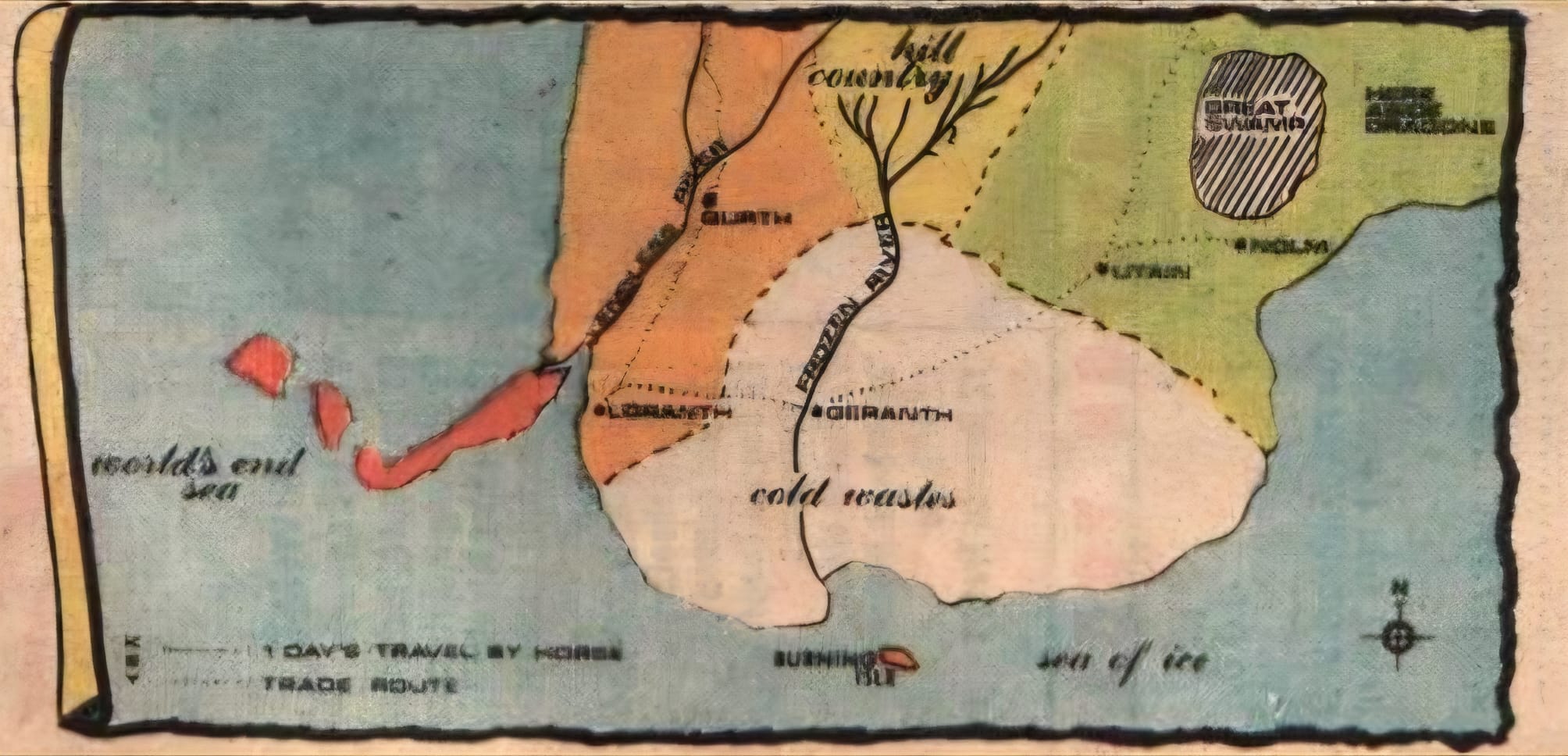
Another classic DC Comics sword-and-sorcery character from that same era that caught my attention is Stalker. And just like Claw the Unconquered, he has a world map too! It’s a simpler one, but it still makes me want to mine it for campaign material.
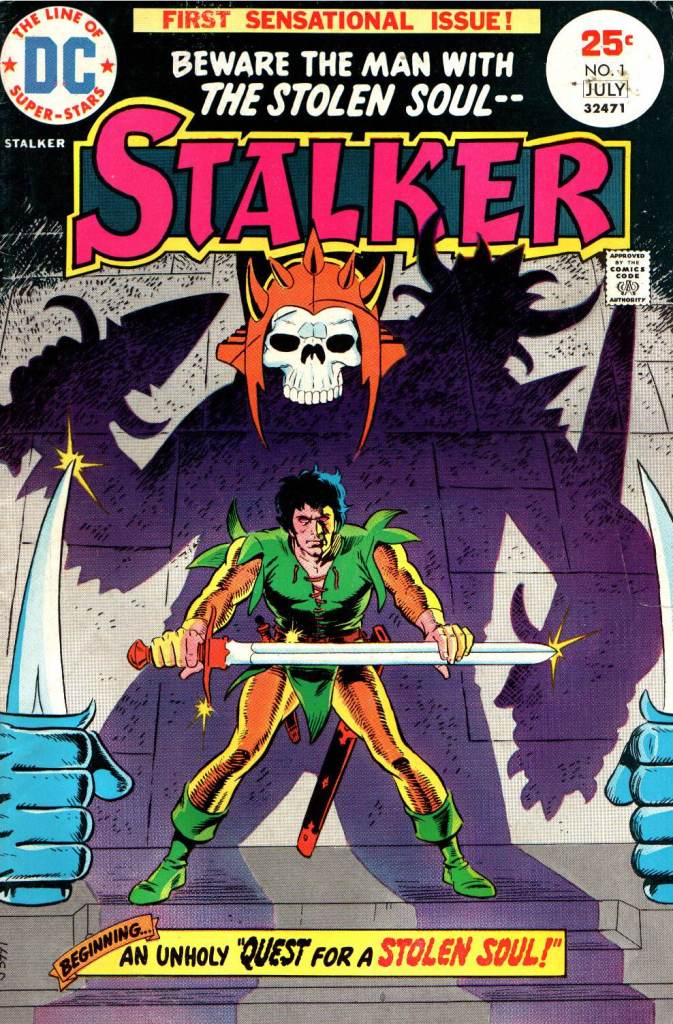
The premise of the book is intriguing: Stalker is a man who sells his soul to become an unbeatable warrior, then goes on a brutal quest to recover it. The art is by the legendary Steve Ditko—obviously of Spider-Man fame, but he did so much more than that. The whole concept of a soulless warrior trying to wrest his soul back from the demon god who granted him power is such a perfect hook for a TTRPG campaign.
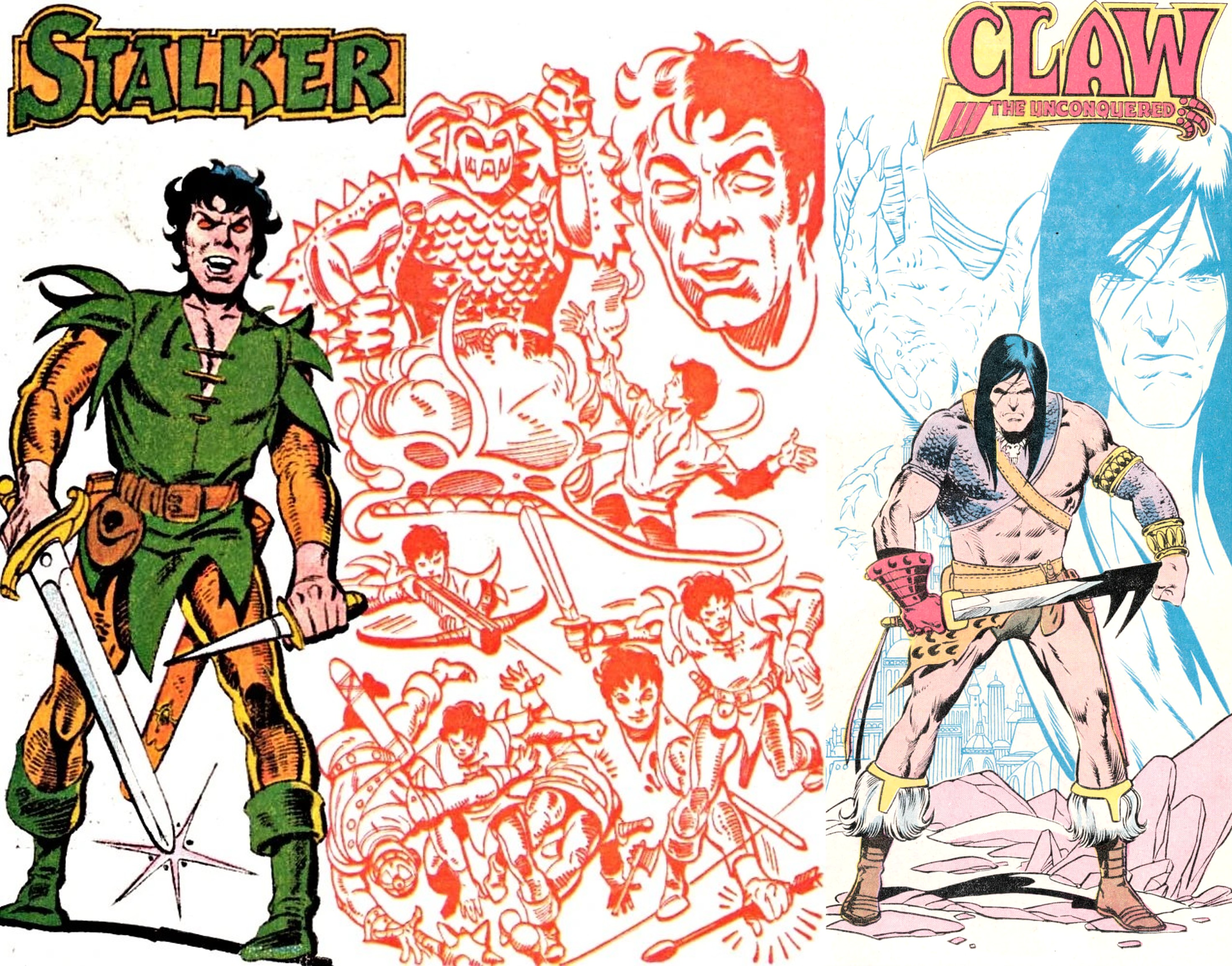
I really want to drop Stalker the Soulless and Claw the Unconquered in as NPCs in a future fantasy game. They could easily fit into Worlds Without Number or Savage Worlds, but honestly, they both give me massive Shadowdark or Old School Essentials vibes. Since I’ve been rereading the Shadowdark rules during my recent holiday, I’m genuinely tempted to just roll up a PC based entirely on Stalker.
As I kept digging, it turns out that back in the late 70s, DC wasn’t just publishing sword-and-sorcery heroes. They were also putting out some wild science-fantasy and sci-fi comics. I honestly did not know much, if anything, about these until I took this deep dive into old comics lore!
There are two I want to learn more about, especially since the descriptions I read online make them seem to be in the exact same vein as one of my all-time favorites, Atari Force.
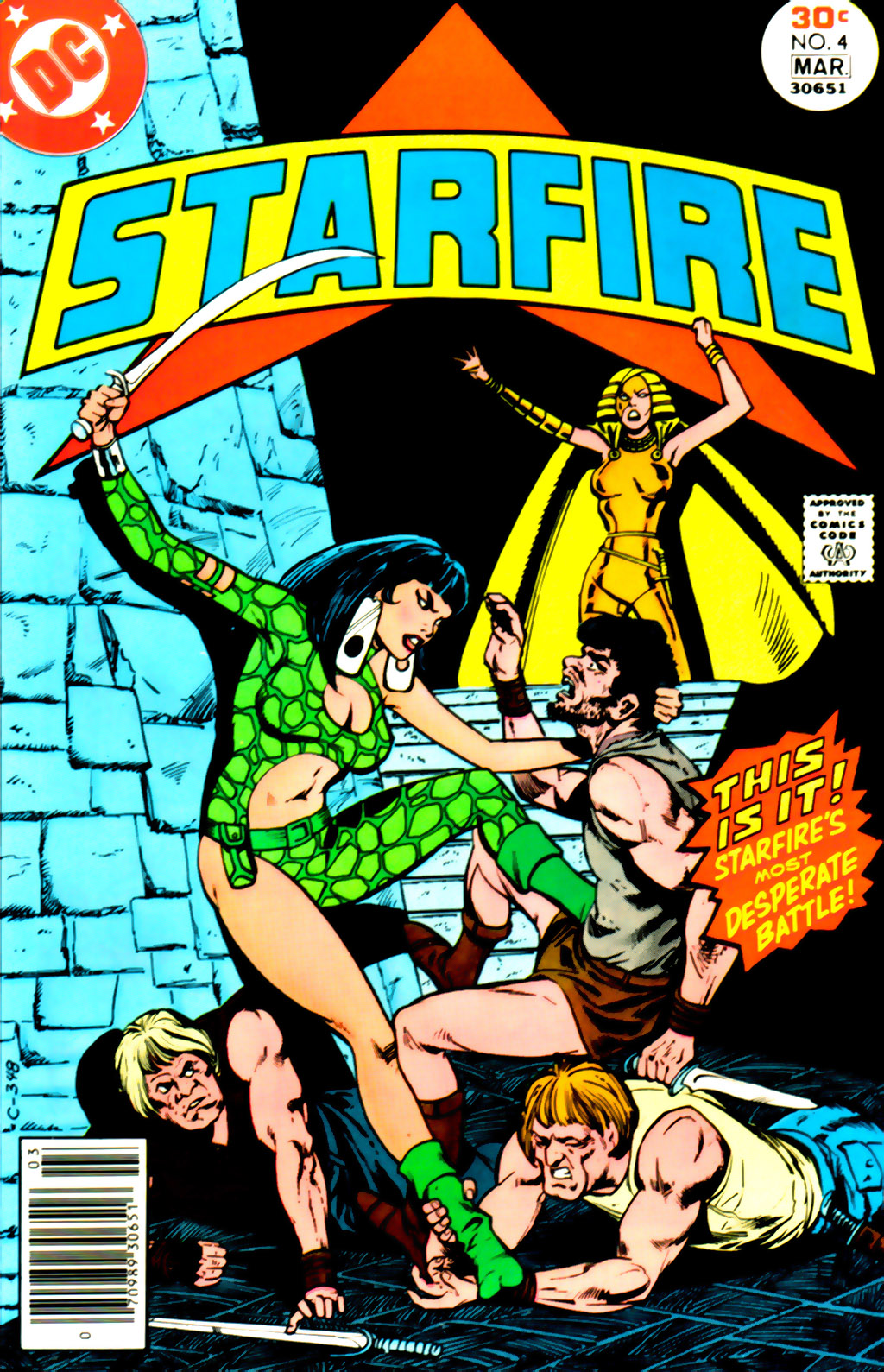
The first is a science-fantasy heroine named Starfire (yes, she had the name before the Teen Titans character!). According to a quote from Hope Nicholson’s The Spectacular Sisterhood of Superwomen on the Wikipedia page, she was originally meant to be DC’s answer to Marvel’s Red Sonja. However, writer David Michelinie took her in a different creative direction, trying to give the series a vibe closer to Edgar Rice Burroughs‘ Barsoom.
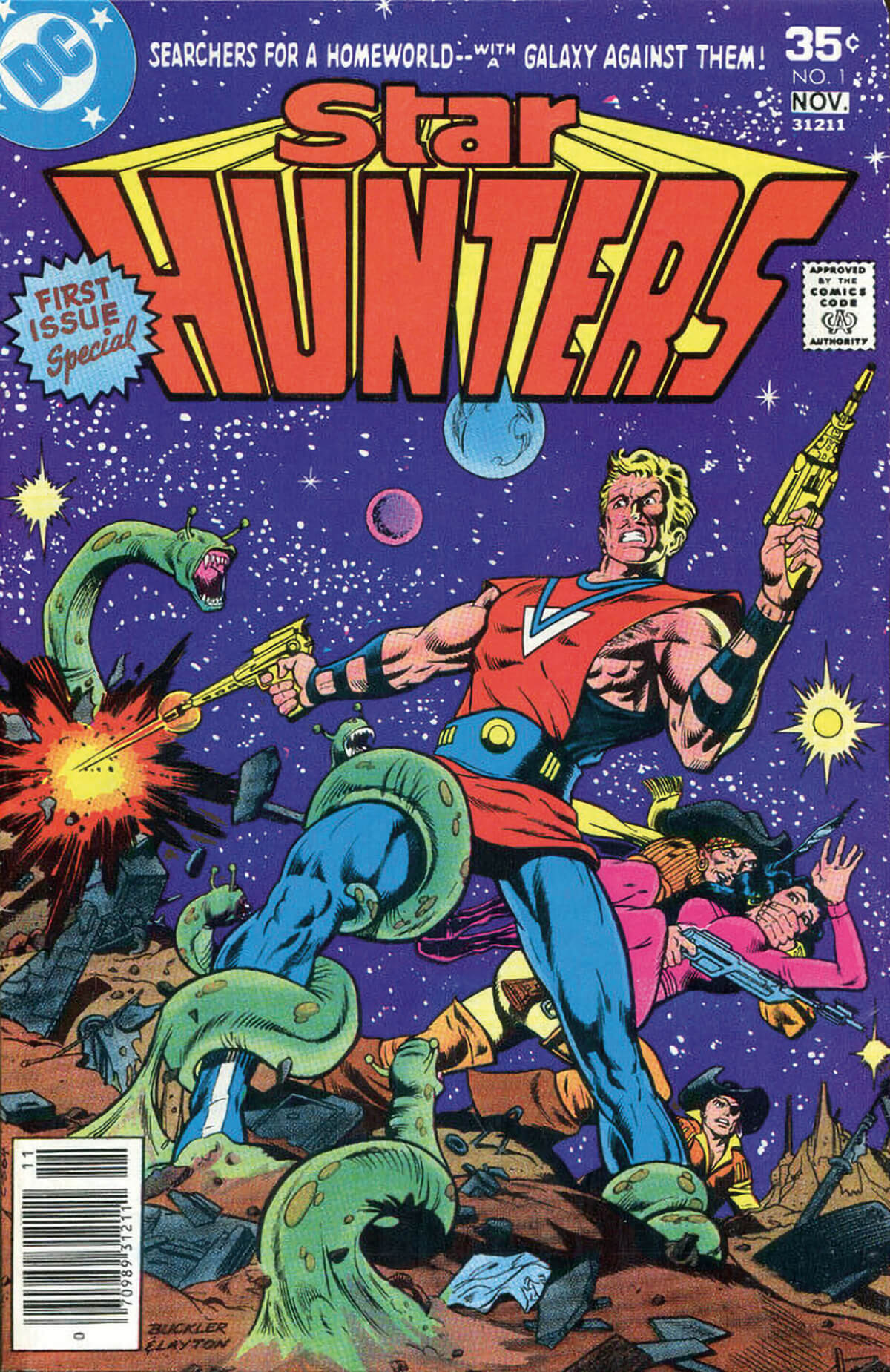
The second is a sci-fi team book called Star Hunters. According to one review I read, it sounds like a bit of a mess—but that might be the fun of it. The art looks genuinely intriguing, and Donovan Flint, the titular Star Hunter, looks an awful lot like Corsair from the X-Men.
Here is the absolute best part of this whole dive: Michelinie actually created Claw the Unconquered, Starfire, and Star Hunters, and he originally wanted them all to be connected as champions in a massive battle between universal forces. It is a direct callback to that cosmic Law vs. Chaos conflict I wrote about Arion a few days ago.
All of this will absolutely serve as inspiration for my future Stars Without Number campaign.
If you want to check out the art and read more about these characters, the Catspaw Dynamics blog has some great entries with preserved and recreated art:
- Claw the Unconquered
- Starfire Poster by Mike Vosburg
- Star Hunters #1 Cover
- Star Hunters #8 (Unpublished Cover)
- The Connected DC Universe of David Michelinie
And if you want a laugh, here is that review of Star Hunters.
Categories: Tabletop Gaming Blogs
Video of the Day – The Show People Podcast, 2026
The post Video of the Day – The Show People Podcast, 2026 appeared first on Blogtor Who.
Categories: Doctor Who Feeds
Torchwood: Curtain – OUT NOW!
It’s almost time for Torchwood’s curtain call as Bilis Manger returns with one final terrifying plot
The latest Torchwood audio adventure is the 99th and penultimate release in the Doctor Who spin-off’s regular range. Curtain focuses on a mysterious character who has loomed large over Torchwood’s history: Bilis Manger.
Three actors receive invitations to reunite at a theatre where they once shared a terrible experience. There’s hasbeen Dermot Lacey (Cyril Nri, Class, Sarah Jane Adventures), and former grand dame Mathilde Balfour (Sarah Douglas, Superman II). Then there’s the massively successful Roger Cartney (Robert Bathurst, Flux).
Here, they find themselves tormented by a figure calling himself Bilis Manger (Colin Ryan, Knock Knock). But how does he connect to the Bilis, previously encountered by Torchwood? And is he angel, demon, or something else entirely?
Murray Melvin originated the character of Bilis Manger on television, before returning to the role numerous times for Big Finish. Curtain’s development began before his death in 2023. The production team subsequently reworked the story to act as a tribute to both Murray and Bilis.
Curtain is about performances and the masks people wear
Director Scott Handcock said: “The influence of Bilis Manger stretches far and wide throughout Torchwood – and Curtain is no exception. It’s a play about performances and the masks people wear, consciously and subconsciously, and it was a delight to work with such a talented band of actors on a script about acting!
“We had the best of times with Murray Melvin, and I know the idea of one more story with Bilis after he’d gone always tickled him. We all miss him a very great deal.”
“Bilis Manger truly deserves one last ovation”
Writer and producer James Goss added: “Curtain’s the release you listen to if you want a slice of horror – three people trapped in a haunted theatre with the devil playing deadly tricks on them.
“It’s a release that we’d have absolutely loved Murray Melvin to be around for; indeed, he suggested the notion of Bilis Manger in a theatre, as he loved lighting up a green room with theatrical anecdotes. Actors adored Murray, and it seemed irresistible to do a story in which Bilis sunk his teeth into three actors – a success, a has-been and a never-quite-was, all broken in their own ways.
“Sadly, of course, Murray died before we could get a script ready, and we were left with a corking idea and the burning need to give Bilis a soaring send-off. Bilis was such a great part of the Big Finish Torchwood range, he couldn’t just go out without a big bang. And so we came up with the notion of Curtain – there is a character called Bilis Manger in it, but who is he?
“The recording was a blast – there’s nothing actors love so much as taking the mick out of themselves and each other. Honestly, it’s a great curtain call for Bilis Manger, and he truly deserves this one last ovation.”
Torchwood: Curtain. Cover by Grant Kempster (c) Big Finish Torchwood: Curtain

Many years ago, the Palace Theatre burnt down during a performance that accidentally summoned the devil.
Now the cast have been invited back to the grand reopening by a mysterious figure. Who is Bilis Manger?
Torchwood: Curtain, scripted by James Goss from a story by David Llewellyn, is now available to own for just £8.99 (download to own) or £13.99 (download to own + collector’s edition CD), exclusively here. Please note: the collector’s edition CD is strictly limited to 1,000 copies and will not be re-pressed.
The post Torchwood: Curtain – OUT NOW! appeared first on Blogtor Who.
Categories: Doctor Who Feeds
Crochet and Catch Up with Moogly - April 15, 2026
It's the Ides of April, and it’s the perfect time to pause, pick up our hooks, and enjoy some creative time together with another Crochet and Catch Up with Moogly! Join me for a relaxed break of crochet conversation, behind-the-scenes peeks, and live Q&A. Join in live, or watch the recording at your convenience - […]
The post Crochet and Catch Up with Moogly - April 15, 2026 appeared first on moogly. Please visit www.mooglyblog.com for this post.
0
Categories: Crochet Life
Pages
