Your wildly multifarious home!
Feed aggregator
Video of the Day – BBC Radio 1, 2025
The post Video of the Day – BBC Radio 1, 2025 appeared first on Blogtor Who.
Categories: Doctor Who Feeds
APEX COMICS GROUP ANNOUNCES THE EXCLUSIVE KICKSTARTER CAMPAIGN for THE R.I.G.H.T. PROJECT Collector’s Special Signed & Variant Covers
TOM DEFALCO! (Amazing Spider-Man, Spider-Girl, Thor) RON FRENZ! (Green Lantern, Spider-Girl, Superman) SAL BUSCEMA! (Spider-Man, Avengers, Hulk) JOIN THE CAMPAIGN HERE! INDEPENDENT COMICS FROM SUPERSTAR CREATORS WITH STATE-OF-THE-ART METAL…
Categories: Comic Book Blogs
Tom DeFalco talks about THE R.I.G.H.T. PROJECT
Tom DeFalco is the former editor-in-chief of Marvel Comics with over fifty books currently in print. Tom has written comic books, graphic novels, short stories, prose novels, and books like…
Categories: Comic Book Blogs
Doctor Who Star John Bishop Has the Wisdom of the Crowd – Coming Soon
Doctor Who’s John Bishop seeks the Wisdom of the Crowd in his new BBC One show
Doctor Who star John Bishop has a new prime time BBC One show this month, but this time it’s a whole other game. Bishop, who played the Doctor’s companion Dan Lewis from 2021 to 2022, will host Wisdom of the Crowd, a new game show from the makers of The 1% Club. Like its ITV sibling, the show will see bold contestants having to take on the collective knowledge of the crowd. But this time they’re not just looking for the right answer; they’re looking for the best answer.
The producers, Magnum Productions, say the inspiration for the show was Francis Galton’s Wisdom of the Crowd theory. Observing more than 800 people entering a competition to guess an ox’s weight, Galton noticed the average estimate was more accurate than the winner’s individual guess. Further studies confirmed the effect, and it’s now a cornerstone of modern political and economic theory. And now of a big-money Saturday night game show on BBC One and iPlayer.
In each show individual contestants take on the might of the Crowd. Who will win the cash prize? The science says the Crowd should win and share the money between them, but will any of our contestants manage to take all the money for themselves by beating Wisdom Of The Crowd?
John Bishop says: “I’m delighted to be back on the BBC on Saturday nights to host Wisdom of the Crowd. This big new entertainment format gives an interesting take on group dynamics – not only testing what the individual contestants know, but also testing what the crowd knows (or what they think they know!) I can’t wait for audiences to see it.”
The fun begins on the 19th of September at 9.15pm on BBC One. You can find it on iPlayer after broadcast here.
The post Doctor Who Star John Bishop Has the Wisdom of the Crowd – Coming Soon appeared first on Blogtor Who.
Categories: Doctor Who Feeds
JUST IMAGINE! March 1967: Who Needs Super Powers?
Having walked away from Spider-Man with issue 38 (July 1966), Steve Ditko, at the height of his powers, was in a perfect position to provide us with a pinnacle in…
Categories: Comic Book Blogs
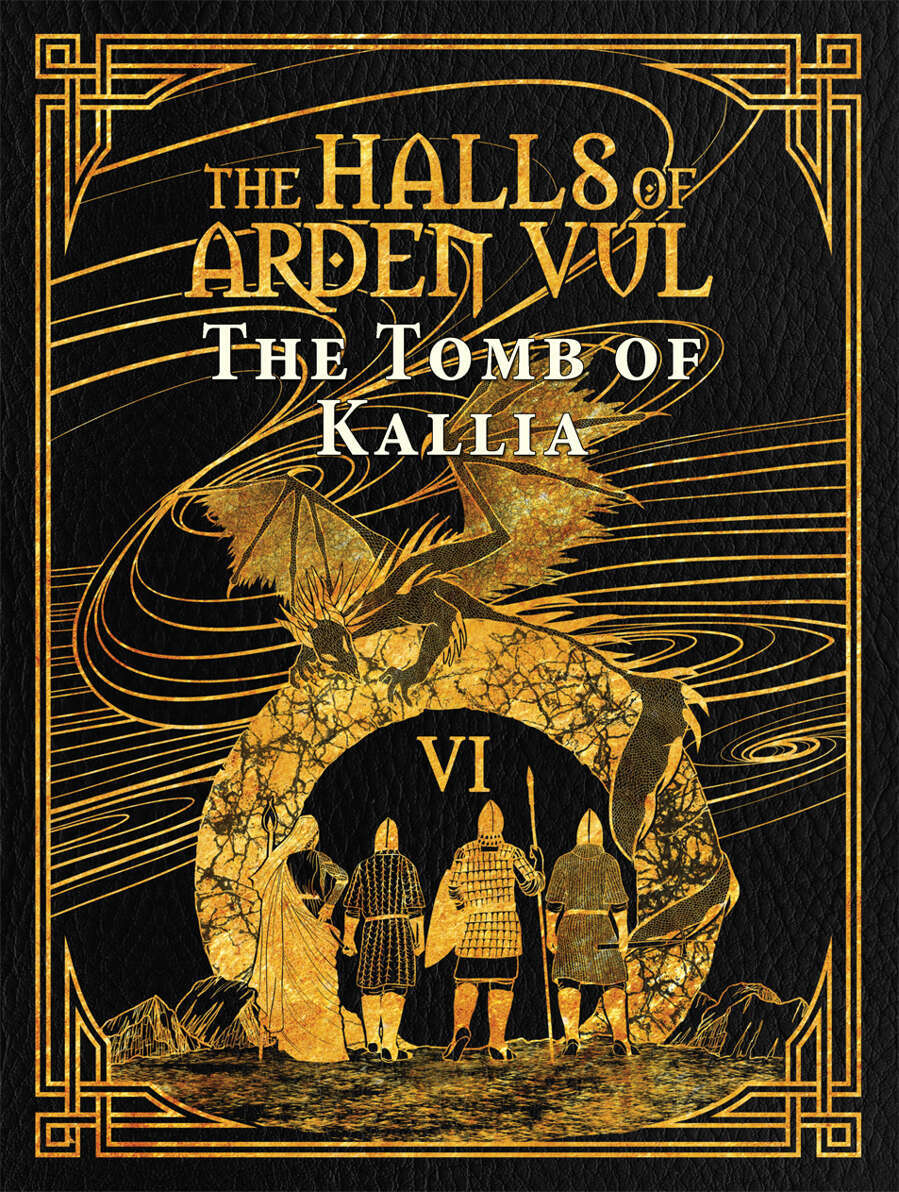
The Tomb of Kallia
By Richard Barton
XRP
OSRIC
Levels 2-4
XRP
OSRIC
Levels 2-4
Rumors of a lost tomb lying deep within the New Forest are starting to trickle into the ears of adventurers in Gosterwick and Newmarket. While the source – and thus the veracity – of these whispered stories remains uncertain, all of the third-hand accounts suggest that the tomb was the product of the Archontean golden age, and not a simple tomb delved by the local Thorcinga. A few rumors even imply that the tomb displays the type of exceptional craftsmanship usually associated with dwarven master masons. Could this lost tomb be the work of the great Zhorak? or of Zhorak’s legendary master, the lesser-known Grishia Basalt? If Grishia was involved, might this tomb shed light on the location of the fabled Egg of Creation? Regardless of its creator, the tomb is sure to be filled with the treasure and lore of the ancients!
This one hundred page adventure uses about six pages to detail ten rooms in the Tomb of Kallia. There is also extensive coverage of a nearby wilderness area. Extensive being the watchword with this, as eighty words are generally used where one will do. Padded with backstory, I am bewildered by Arden Vul.
Yo, notably there is no map, at all, in this.You have to download a separate map pack, The Maps of Arden Vul, which is free download containing all of the Arden Vul maps and all related regions.
So, my summary is off. While this is titled the Tomb of Kallia that section makes up just a small portion of it. The tomb is actually sitting in the middle of a larger slavers camp which has about twenty locations and then about ten locations for the tomb proper, plus few more in the slavers section for a false tomb. The bulk of this is a forest with about thirty locations, many with a small handful of sublocations. Thusly the adventure here is really the various intrigues taking place in the region that will eventually lead the party to the slavers camp and/or the tomb that is a relatively minor part of the product.
And there is quite a bit going on in the region. There are a couple of groups with some larger intrigues, like the slavers, and a several smaller things going on, such as some scammy bills of lading related to a quarry and humanoid band with, ahem, elective raiding, that loosely, or strictly hint at the larger “slaver” plot, with slaver in quotes because of the various schemes going on. As a regional supplement, sandboxy, it has a decent amount going on in it. The level range here is, I think, a bit misleading when you look at things like all of the level sevens and nines in the slavers camp, which the adventure warns you about. The wilderness sites ARE dangerous as well, so this feels like a long slow adventure with lots of retreats to regain strength and recruit again, slowly making progress in clearing things and finding more sites.
Look man, I know we’re going to get in to it on these next comments. There are readers who will love this. There are fanboys who love this. There are contrarians who have an identity based on disagreeing and ignoring meaning. My platonic ideal of an adventure includes it being easy to run. That is the purpose of an adventure. To be run at the table. Ideally with little to no prep required. “You can run it without reading it!” is hyperbolic but also the unreachable goal to shoot for. “Easy” to run. What is easy? We’re not going to agree, some of you. I recognize that we read adventures before hand, we take notes and highlight things. We have to puzzle out the connections in the adventure and make reference sheets and all of that shit. How much of that should you have to do to run it? How much of that should, in fact, be on the designer to solve before it reaches your hand? The writer, designer, editor, it has to be “easy” to run. We can disagree on the nuance here, but not on the premise. Except now I’ll walk that back, there ARE adventures that come along, rarely, that are obtuse and ABSOLUTELY worth it to puzzle out and spend a lot of time prepping. And those adventures are exceedingly rare. It is far, far more likely that an adventure will be a disaster of writing, layout etc and not be “easy” to run and not worth the effort you will put in. And that is, I think, the case with all of the Arden Vul products I’ve seen so far. The fucking thing fights you, for no reason, and ultimately I’m going to turn to some other product to run instead of this. Because the content, while decent, just isn’t worth devoting my life to in order to make it to the table. I’d have to go look at Thicket and Arden Vul proper to verify, but my recollection is that it’s been the same with all of them.
The writing here is dense, almost to wall of text territory. It’s padded out with backstory inline and descriptions of why and irrelevant descriptions. You have to fight through mountains of text and loosely formatted paragraphs in order to suss out what’s pertinent in the various locations.
One section has a palisade with watchtowers. Palisades get an inordinate degree of attention in this. “The palisade is 9’ tall and made of new wood bound together with vines, rope, and interior support timbers.”9’ tall? Sure. The rest of it, is that important? How about a description of the watchtowers? “Four observation and firing platforms are found along the length of the wall. These small platforms are 5’ above the ground and accessible by ladders. They allow guards to watch the approaches to the compound.” Well, I guess we’ve defined what watchtowers are, yes? These, yanked out of context, don’t seem terrible, but it is just relentless in the degree of detail everything is described in. How about an NPC? NPC’s routinely get a quarter page description. “Personality: Orphaned at an early age, Happy was taken in, raised, and trained by one of the Elder Brothers of the Benevolent Brotherhood of Arcturus.” Is this relevant to the adventure? No, it’s not. Sometimes, like the palisade detail, these things can be used to add color to areas. But you can’t do it everywhere. You can’t take every single thing in the adventure fully describe it.
I don’t know. Maybe you can. But you gotta WORK that formatting to do it. And this don’t do that. We’re relying on paragraphs here with some underlining and some light indentation in places. And then there are these long ass sections of supplemental information that just appear thrown in willy-nilly. You’ll be in a room description and suddenly it will ballon to multiple pages and there will be this cumbersome page and half table just tossed in. How you can keep a train of thought here is beyond me. It’s almost a wall of text broken by weird presentations of information.
There is something here. More so, i think, than The Thicket. But it is so hard to get at that I can’t possibly, after multiple read-throughs, think of a situation in which I’d be pleased or excited to run this.
This is $20 at DriveThru. There’s no preview. This HAS to have a preview. You HAVE to know what you are getting in to before purchasing this.
https://www.drivethrurpg.com/en/product/577509/the-tomb-of-kallia?1892600
Categories: Tabletop Gaming Blogs
Integrating Adventurer Conqueror King System II (ACKS II) with the legendary, chaotic, and maximum-gonzo DNA of Dave Hargrave’s Arduin Grimoires- A Random d100 Arduin and ACKSII rpg Wilderness Encounter table
Mixing the extreme gonzo high-fantasy of Dave Hargrave’s Arduin with the domain-scale, hyper-structured mechanics of Alexander Macris’s Adventurer Conqueror King System II (ACKS II) creates a volatile blend: absurd, lethal hazards cross-referenced with exact ACKS II encounter distance, surprise, and morale traits. This blog post picks right up from Integrating Adventurer Conqueror KingNeedleshttp://www.blogger.com/profile/11243274667834930867noreply@blogger.com0
Categories: Tabletop Gaming Blogs
Video of the Day – The Catherine Tate Show, 2010
The post Video of the Day – The Catherine Tate Show, 2010 appeared first on Blogtor Who.
Categories: Doctor Who Feeds
Oni Press Joins Baltimore Comic-Con 2026 with Panels, Exclusives, And a Heartfelt Tribute to Legendary Artist Mike Wieringo
For Attendees of the 2026 Ringo Awards, Oni Press Proudly Presents the First-Ever Ringo Awards Variant Cover, Honoring Mike Wieringo’s Rarely Seen Archie and Jughead ART BY MIKE WIERINGO PORTLAND,…
Categories: Comic Book Blogs
The Legion and Me!
(There is some talk about gaming here, so bear with me!)
A new Legion of Super-Heroes comic book series dropped this week, which inevitably sent me down memory lane and resulted in this post.
I won’t claim to be the biggest Legion fan in the world, but they’ve always held a special place in my collection. I was introduced to them through DC Digest issues filled with Silver Age stories and scattered Spanish translations. The first actual issue I picked up at a newsstand was Tales of the Legion of Super-Heroes #331, featuring Lightning Lass on the cover. She quickly became one of my favorites, alongside Wildfire and Blok in the late 80s and Andromeda in the 90s. After that issue, I was hooked and started hunting for the series every month. Then Crisis on Infinite Earths happened, and I was enthralled by what would become of the team.

Soon after, I discovered our local specialty shop and started collecting Legion of Super-Heroes (vol. 3) along with most of post-Crisis DC. It was among the first books I would read each month. I was also heavily into L.E.G.I.O.N. and the modern-day connection they had to the classic team. The Five Years Later run was a brilliantly complex story—decidedly not easy to get into, but it pays off completely.

In hindsight, it remains my favorite era, though I was certainly ready for a return to the classics when the Zero Hour reboot arrived. Around this time, my friend Luis ran a Legion-inspired superhero campaign, cementing the team as a major reference point whenever I thought about superhero TTRPGs.

I’d be hard-pressed to pick a definitive favorite between Marvel and DC; it always depended on the era and the creators working on them. But I was definitely riding a DC high when I got the DC Heroes 1st edition boxed set from Mayfair Games. While it focused on the regular DC universe rather than the 31st Century, I absolutely loved the Legion supplements, especially the two volumes covering the characters and the worlds of the United Planets. Somehow, I missed out on the four-part Chessmen Adventure Series, which is amazing in retrospect since the Time Trapper was arguably their greatest villain. The 2995 Legion of Super-Heroes Sourcebook, which dealt directly with the Five Years Later period, was another massive favorite. I eventually parted with my DC Heroes rulebooks, but I made sure to keep the Legion and Watchmen sourcebooks.


Following the post-Zero Hour reboot, Luis and I were really into the new series, and I recall him trying to get another campaign off the ground. I believe we used Heroes Unlimited—our go-to superhero system back then—though I’m not 100% sure. By the end of that era, my comic reading had tapered off, so I only read the rest of those issues much later when filling gaps in my collection. I dabbled in subsequent versions, like the Waid and Kitson “Threeboot,” but it didn’t really capture my interest.

During the retroboot of the classic timeline, I wasn’t buying monthly floppies, so I mostly followed the news via YouTube commentators.

Still, my love for the franchise never vanished. I thoroughly enjoyed Green Ronin’s DC Adventures for Mutants & Masterminds, which included excellent Legion character write-ups. I even planned a homebrew sequel to a Wild Cards and New Universe-inspired campaign (Dawn of a New Age) featuring a Legion-esque team traveling back in time, though it never made it to the table. When I wasn’t getting my Legion-fix from comics, the two-season Legion of Super-Heroes animated series captured the classic heroics with a post-Zero Hour flair.

Later, when Bendis tried to refresh the book with the post-Rebirth Legion, I excitedly picked up a few issues but forgot to return to the store—I was a new dad, and my priorities had shifted.

The 2023 animated movie reignited that old spark, prompting me to track down TPBs and omnibuses. I never got around to reading the whole thing, but the Legion mania was definitely back.

Now, I’m going to the comic store with my son as he explores his own interest in comics and manga, making the release of this new Legion of Super-Heroes perfectly timed. The Absolute series by DC are amazing, and reading the new Legion #1 feels a bit like an Absolute Legion book, even if it isn’t branded as such.

It is a clear, engaging jumping-on point for new readers, packed with great writing and stellar art. But if you are a long-time fan, there are plenty of nods to continuity, along with twists and changes to keep you guessing. I’m intrigued and will definitely keep reading to see what happens to these characters. I highly recommend picking it up.

As I prepare to wrap up my Savage Fading Suns campaign in a few months, I know our next game will be in the superhero genre. I was deeply tempted to run a Buck Rogers XXVc and Legion mash-up: a super-team in a colonized star system, cut off from their homeworld by a collapsed jumpgate, dealing with boiling political tensions and an unknown extra-solar threat. But after playing a sci-fi game for over three years, our table needs a change of pace, so we’re shifting to pulp heroes instead.
Regardless, I hope to run that Legion-inspired campaign someday. While I wait for the opportunity, I’ll happily stick to the comic adventures. Long live the Legion!
P.S. – There is also a new Doom Patrol series out right now. I’ve always loved that group, their concept, and their past runs. I don’t love them quite as much as the Legion, but still… maybe I should check it out!

P.S. #2 – Let me share with you a picture of my flight ring from my time with the Legion! (I love this ring I got from Metro Comics years ago.)

P.S. #3 – If you want to read some Legionnaire write-ups for the original DC Heroes game, check out the Legion entry in the DC Heroes Role Playing Game Database.
Categories: Tabletop Gaming Blogs
ROB LIEFELD’S CHICK-WITH-CHAINSAW VARIANT FOR UPCOMING CHAINKATA WILL SHRED THROUGH SHELVES THIS NOVEMBER
PORTLAND, Ore. 09/11/2026 — Image Comics is pleased to reveal a special, highly collectible variant cover by comics icon and Image Comics founder Rob Liefeld (Deadpool, Badrock, Youngblood) for the…
Categories: Comic Book Blogs
HAPPY ROSH HASHANAH
The staff of First Comics News wishes Shanna Tova to all our Jewish fans… Paige Alfred, Bob Almond, Giovanni Aria, Eric N. Bennett, Bill Black, Martin Boruta, Peter Breau, Mike…
Categories: Comic Book Blogs
REMEMBERING PATRIOT DAY
The staff of First Comics News wishes everyone a solemn Patriot Day… Paige Alfred, Bob Almond, Giovanni Aria, Eric N. Bennett, Bill Black, Martin Boruta, Peter Breau, Mike Bullock, Jeff…
Categories: Comic Book Blogs
Toronto Fan Expo: Greg Capullo Spotlight
Greg Capullo Spotlight J.M. Clark spoke with Greg Capullo about coming to Canada when he was young, moving to Arizona, working with Todd McFarlane on Spawn, told funny stories about…
Categories: Comic Book Blogs
JUST IMAGINE! August 1954: The Monster Saves the Day
Even with superheroes in retreat in the early 1950s, super-powered protagonists sometimes continued to come to the rescue in comic books. The Frankenstein monster himself was capable of doing innocent…
Categories: Comic Book Blogs
Chaos! Comics Kickstarter Offers Complete Purgatori & Chastity Archives from Dynamite & Coffin!
September 10, Mt. Laurel, NJ: Two iconic comic book bad girls are back in business, as Dynamite Entertainment and Coffin Comics announce the official launch of a brand-new Kickstarter offering fans…
Categories: Comic Book Blogs
Video of the Day – CEGA: Stacking The Deck, 2025
The post Video of the Day – CEGA: Stacking The Deck, 2025 appeared first on Blogtor Who.
Categories: Doctor Who Feeds
Regency Elegance Cowl Tutorial
The Regency Elegance Cowl Tutorial will show you how to crochet this simple and elegant scarf! A one skein pattern perfect for that special hank in your stash. Just choose the right or left-handed video tutorial below and crochet along! Disclaimer: This post includes affiliate links. Be sure to scroll down past the videos to […]
The post Regency Elegance Cowl Tutorial appeared first on moogly. Please visit www.mooglyblog.com for this post.
0
Categories: Crochet Life
OSR Commentary - Running T1-4: The Temple of Elemental Evil (AD&D 1E) by Gary Gygax With Frank Mentzer using Adventurer Conqueror King System II (ACKS II) Rpg - The Deeper Depths
Running T1-4: The Temple of Elemental Evil (AD&D 1E) using Adventurer Conqueror King System II (ACKS II) requires reading the first part of this blog post OSR Commentary - Running T1-4: The Temple of Elemental Evil (AD&D 1E) by Gary Gygax With Frank Mentzer using Adventurer Conqueror King System II (ACKS II) RpgTo model the dynamic cold war and active Needleshttp://www.blogger.com/profile/11243274667834930867noreply@blogger.com0
Categories: Tabletop Gaming Blogs
Pages
