Your wildly multifarious home!
Feed aggregator
Indie Games to Check Out from LVL UP EXPO ‘26
LVL Up Expo is a fantastic convention to play new games made by indie developers with passion, creativity, and diverse backgrounds. There is generally a large portion of the first…
The post Indie Games to Check Out from LVL UP EXPO ‘26 appeared first on First Comics News.
Categories: Comic Book Blogs
MILESTONE YOUNGBLOOD #100 TO FEATURE COVERS BY SILVESTRI, KIRKMAN, VALENTINO, PORTACIO, LARSEN, MCFARLANE
Plus: Badrock returns with new solo title in what will be a “Summer of Youngblood“ LOS ANGELES 05/12/2026 — Comic book icon and Image Comics co-founder Rob Liefeld is thrilled…
The post MILESTONE YOUNGBLOOD #100 TO FEATURE COVERS BY SILVESTRI, KIRKMAN, VALENTINO, PORTACIO, LARSEN, MCFARLANE appeared first on First Comics News.
Categories: Comic Book Blogs
Rolling cube to collect tiles fine family fun
There seems to be a growing trend of board games built around a standout “gimmick” mechanic, not necessarily in a bad way, but as the central feature that makes the…
The post Rolling cube to collect tiles fine family fun appeared first on First Comics News.
Categories: Comic Book Blogs
JUST IMAGINE! November 1963: Variations on a Hulk Theme
Spider-Man had already fought and thwarted the Chameleon, the Vulture, and the Sandman. He’d nearly been beaten by two doctors named Octopus and Doom. He’d fretted about the frailty of…
The post JUST IMAGINE! November 1963: Variations on a Hulk Theme appeared first on First Comics News.
Categories: Comic Book Blogs
REVIEW CORNER: The Trillion Dollar Kid # 1
The Trillion Dollar Kid # 1 ** Created by Geoff Johns, Peter J. Tomasi, and Francis Manapul** Writers: Geoff Johns & Peter J. Tomasi Artist: Stefano Simeone Letterer: Rob Leigh…
The post REVIEW CORNER: The Trillion Dollar Kid # 1 appeared first on First Comics News.
Categories: Comic Book Blogs
Online Cannabis Mail-Order Explained for Curious Adults
Cannabis-curious adult readers exploring legal online dispensaries face a market that has grown meaningfully across recent years. Online mail-order operators in legal Canadian and US-state jurisdictions now offer a wider…
The post Online Cannabis Mail-Order Explained for Curious Adults appeared first on First Comics News.
Categories: Comic Book Blogs
Wolf Winner Casino Australia: Bonus, Games and Safer Play
For Aussie players who like pokies with a bit of bite, Wolf Winner Casino puts Wolf Winner near the front of the pack with a welcome offer of up to…
The post Wolf Winner Casino Australia: Bonus, Games and Safer Play appeared first on First Comics News.
Categories: Comic Book Blogs
Video of the Day – The Tracks Of My Years, 2026
The post Video of the Day – The Tracks Of My Years, 2026 appeared first on Blogtor Who.
Categories: Doctor Who Feeds
RICH REVIEWS: Space Ghost # 11
Title: Space Ghost # 11 (Vol. 2) Publisher: Dynamite Comics Writer: David Pepose Artist: Jonathan Lau Colorist: Andrew Dalhouse Letterer: Taylor Esposito Cover: Francesco Mattina Variant Covers: Jae Lee, Michael…
The post RICH REVIEWS: Space Ghost # 11 appeared first on First Comics News.
Categories: Comic Book Blogs
ROB LIEFELD ANNOUNCES “SUMMER OF YOUNGBLOOD”: YOUNGBLOOD #100 TO FEATURE COVERS BY MARK SILVESTRI AND ROBERT KIRKMAN; BADROCK RETURNS IN SOLO TITLE
LOS ANGELES, CA – Monday, May 11th – Comic book icon and Image Comics co-founder Rob Liefeld is thrilled to announce the “Summer of Youngblood,” a season-long celebration marking the…
The post ROB LIEFELD ANNOUNCES “SUMMER OF YOUNGBLOOD”: YOUNGBLOOD #100 TO FEATURE COVERS BY MARK SILVESTRI AND ROBERT KIRKMAN; BADROCK RETURNS IN SOLO TITLE appeared first on First Comics News.
Categories: Comic Book Blogs
REVIEW: Doctor Who: Helter Skelter
Scream if you want to go faster, as Helter Skelter brings you on a thrilling ride of twisted horror and fun
The latest set of Fifth Doctor Adventures arrives under the collective title Helter Skelter. It’s a slightly misleading name for a couple of reasons. Most obviously, it names the entire set after James Moran’s middle story despite it being the odd man out. That’s a fun and fast adventure sandwiched between two scripts by Big Finish’s resident king and queen of chills and thrills, Lauren Mooney and Stewart Pringle. It also suggests the chaotic yet inexorable downward spiral of the traditional fairground ride. But this trilogy of Doctor Who stories actually goes in much more unexpected directions.
All three stories feature the TARDIS team of Peter Davison’s Doctor, Janet Fielding’s Tegan, and Mark Strickson’s Turlough. It’s a particular treat, given Australia based Strickson’s limited availability and it results in an excitingly fresh dynamic. As with most of Big Finish’s recent Fifth Doctor stories, the genuine affection of the cast for each other is plain to hear. It does soften the relationship between the three characters. The bickering between Tegan and Turlough, or the eye rolling at the Doctor’s driving, here feels more like the love language of this close knit family, with no real suspicion or rancor in it. It does, however, create a wonderful moment when Turlough comes under the malign M’s charismatic influence in Land of Fools. Tegan basically rolls her eyes at his sudden yet inevitable betrayal. The lad, let’s face it, has form.
Field of Miracles and Land of Fools bookend the set, and despite drastically different settings, mirror each other’s themes of grief and desperation
Mooney and Pringle’s Field of Miracles and Land of Fools are united by some common themes. The heaviness of grief and loss hang over both of them, along with the desperation that the unscrupulous will prey upon. Field of Miracles takes the TARDIS to the sleepy English village of Hetherington. It’s 1951 and the community still struggles under the shadow of so many of its young men dying at war. They think they have a miraculous solution, as one by one those they lost return, wandering home out of the darkness of a nearby field.
Land of Fools mirrors it but on a grander scale, while throwing in a dash of political commentary. The story’s alternate 1980s London embodies Thatcherism in its purest form. A dream for some, with a BMW in every garage and champagne on tap in the section of the city segregated for use by the ‘luminary’ yuppie elite. A nightmare for others, as poverty runs rampant outside their gates and increasing numbers of people are ‘disappeared.’
Of course, this being Doctor Who, it’s not as simple as basic human authoritarianism at work behind the disappearances. There’s something growing under the heart of the City. Something which promises much, but demands even more. And it’s hungry.
Both stories are full of delightfully horrible imagery, including a field weaving a macabre crop out of its roots and vines
The pair of writers’ trademark folk horror vibes made them stand-outs of the already critically acclaimed Torchwood range. By now they’ve also mastered the code shifting needed to bring it to the more family friendly Doctor Who lines. So this pair of tales are full of imaginatively grotesque images, like a field growing televisions and luxury cars from gnarled roots below ground, or a rustic farmhouse and its unsettling mistress perched inside a skyscraper’s penthouse.
However, the real success, in both Field of Miracles and Land of Fools, is their ability to create real, believable, guest characters to visit all these horrors upon. There are no crude shortcuts to elicit our sympathies either. Whether 1950s unmarried mother Joanie, desperate to save her newborn baby, or Tegan’s terminally ill friend Jackie, it’s the reality of these women and their fear and dreams which heightens the fantastical drama around them.
Title story Helter Skelter gifts the main cast a script full of opportunities for fun mischief
In contrast, middle entry Helter Skelter is not terribly concerned with verisimilitude. Comedy science fiction stories are always difficult to pull off, but James Moran’s script is rightly confident in his cast’s comic skills. It takes inspiration from the classic fairground ride, and the Beatles song. Both in its theme park planet setting, and the nature of the trap awaiting our heroes.
When I get to the bottom I go back to the top of the slide,
Where I stop and I turn and I go for a ride
Time loops have become a standard go-to when science fiction shows want to let the cast have a little fun, but Helter Skelter is a particularly great example. Its particular stroke of genius is putting Tegan at the centre of the chaos. Only she’s aware that the planet keeps exploding over and over again. The Australian firecracker has never had the longest fuse in the Whoniverse. So there’s a special pleasure in seeing her move through the cycle of denial, anger, bargaining, anger, depression, anger, acceptance, and, indeed, anger, even as she moves repeatedly through the cycle of rude staff, candy floss, skeptical security guards, killer cultists, and exploding planets.
And, of course, explaining. So much explaining. The script successfully turns one of the more annoying time loop tropes on its head. Yes, the Doctor should be pretty open to the possibility of time loops. But it’s precisely because he’s so familiar with them that he’s doubtful he’d be trapped in one without realizing it. Both Davison and Fielding take full advantage of the reversal, having fun with the long suffering Tegan expositioning technobabble to a befuddled Doctor always three steps behind.
Both the supporting cast and the threat at the heart of the time loop are only lightly sketched in. Even Turlough gets little to do other than sighing that he has little to do. But that’s all to give more space to Janet Fielding’s delightfully sparky Tegan. It’s all hugely entertaining.
Like a true Helter Skelter, the latest Fifth Doctor Adventures will leave you laughing and screaming so much, you just may stop being able to tell the difference
Perhaps Helter Skelter is an appropriate over-arching title after all. It’s a set which zigzags unpredictably from folk horror, to technicolor riot, to urban dread. You’ll certainly enjoy the ride all the way down, even if you’re screaming…
Doctor Who: Helter Skelter. Cover by Rafe Wallbank (c) Big Finish Doctor Who: Helter Skelter

Doctor Who – The Fifth Doctor Adventures: Helter Skelter is available to purchase now for just £19.99 (download to own) or £24.99 (download to own + collector’s edition 3-disc CD box set). Please note: the collector’s edition CD box set is strictly limited to 1,500 copies and will not be re-pressed.
The post REVIEW: Doctor Who: Helter Skelter appeared first on Blogtor Who.
Categories: Doctor Who Feeds
OSR Commentary - Adapting AX2: Secrets of the Nethercity For ACKS II rpg & Barrows & Borderlands Rpg
Adapting Secrets of the Nethercity—a sprawling, "classic-style" underworld crawl—to Adventurer Conqueror King System II (ACKS II) is a match made in gaming heaven. Both share a love for high-lethality exploration and meticulous underworld ecology.Since Secrets of the Nethercity was designed for a similar OSR chassis, the conversion is less about rewriting the book and more about mapping theNeedleshttp://www.blogger.com/profile/11243274667834930867noreply@blogger.com0
Categories: Tabletop Gaming Blogs
Faceless Howl

Faceless Howl is an adventure from Kabuki Kaiser for the rules lite, dark Sword & Sorcery system Many Sought Adventure, but is easily useable with any D&Dish system with a bit of work and a lot of other systems as well given it isn't a rules heavy adventure. I received a review copy of the pdf. I don't do a lot of reviews here, but previous publications from Kaiser have received praise from quarters I trust so I wanted to check it out.
The adventure involves "malign entities of pure oblivion" known as the Faceless who are devourers of information and have been drawn to an ancient repository. Not only is this bad for said repository, but it's also bad for the townsfolk of the neighboring of Bec de Corbin ("Raven's Beak") who have their identities and knowledge eaten by the Faceless, turning them (eventually) into Howlers. Complicating matters (if they were already complicated enough) are the Ragshadows, who are subterranean evil, fairy-tale-ish goblin sort of creatures who opportunistically operate alongside the Faceless to steal physical physical valuables.
That's the set up. The adventure is broken into two parts not counting getting the PCs involved: the village and figuring out what's going on, then a crawl through the repository. There's a clock to ensure the situation escalates. The presentation is fairly terse with prose that is informal, generally evocative and occasionally staccato delivery.
It's style and the overall graphic design place it in the tradition of things like Mörk Borg and the sort of NSR/OSR stuff you find on itch. Like those sorts of publications, it values brevity but supplies you with random tables and other necessary tools, and atmosphere, but expects the GM to bring it to life. Beyond aesthetic, this isn't standard, D&D fantasy either, so people looking for that find not find it's weird, horror sort of approach to their taste.
For me, though, Faceless Howl, is the sort of adventure I tend to look for when I don't have any other particular thing in mind. It isn't particularly combat heavy, and its atmosphere and bit of mystery is the sort of thing that intrigues my players. Its brevity would make it easier to reskin to make it fit whatever setting I'm running at the moment.
If that sort of stuff sounds appealing to you, you should check it out. It's available on drivethu.
Categories: Comic Book Blogs, Tabletop Gaming Blogs
40 Years a Gamer – ‘Cause we’re living in a world of thieves, shaking us down!
I’ve written about the first TTRPG books I ever got at a garage sale a couple of times here on the blog over the years. I think it’s worth recapping the event for those who have not read about it—specifically because it relates to the topic of today’s post, which is (not so cleverly) revealed in my take on the classic Bee Gees’ lyrics in the title: Thieves’ World.
The Garage Sale Loot
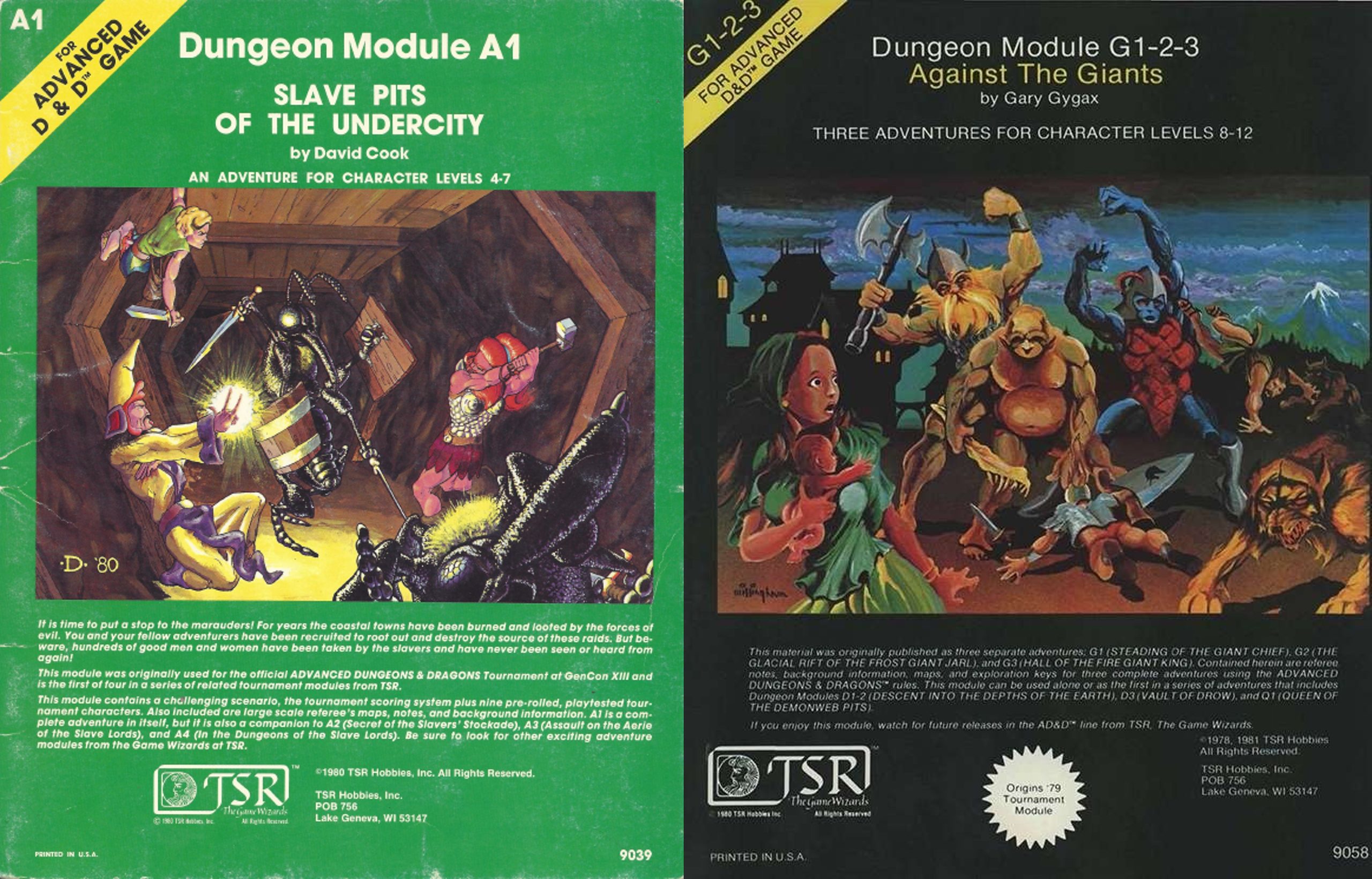
In the summer of 1987, about a year after I had begun playing TTRPGs with my neighbors, I went to my Uncle Chechin’s house on the other side of the island for a few days. When I came back, my friends had brand new (to us!) D&D books. I remember them having a few modules from the Slavelords (A-Series) and Giant (G-Series), and I was immediately curious. They told me that a neighbor was having a garage sale, so I rushed right over to his apartment.
When I got there, he dismally told me my friends had already gotten most of the “good stuff” and that all he had left were the more expensive items. I was unfazed and told him I had money my grandfather had given me!
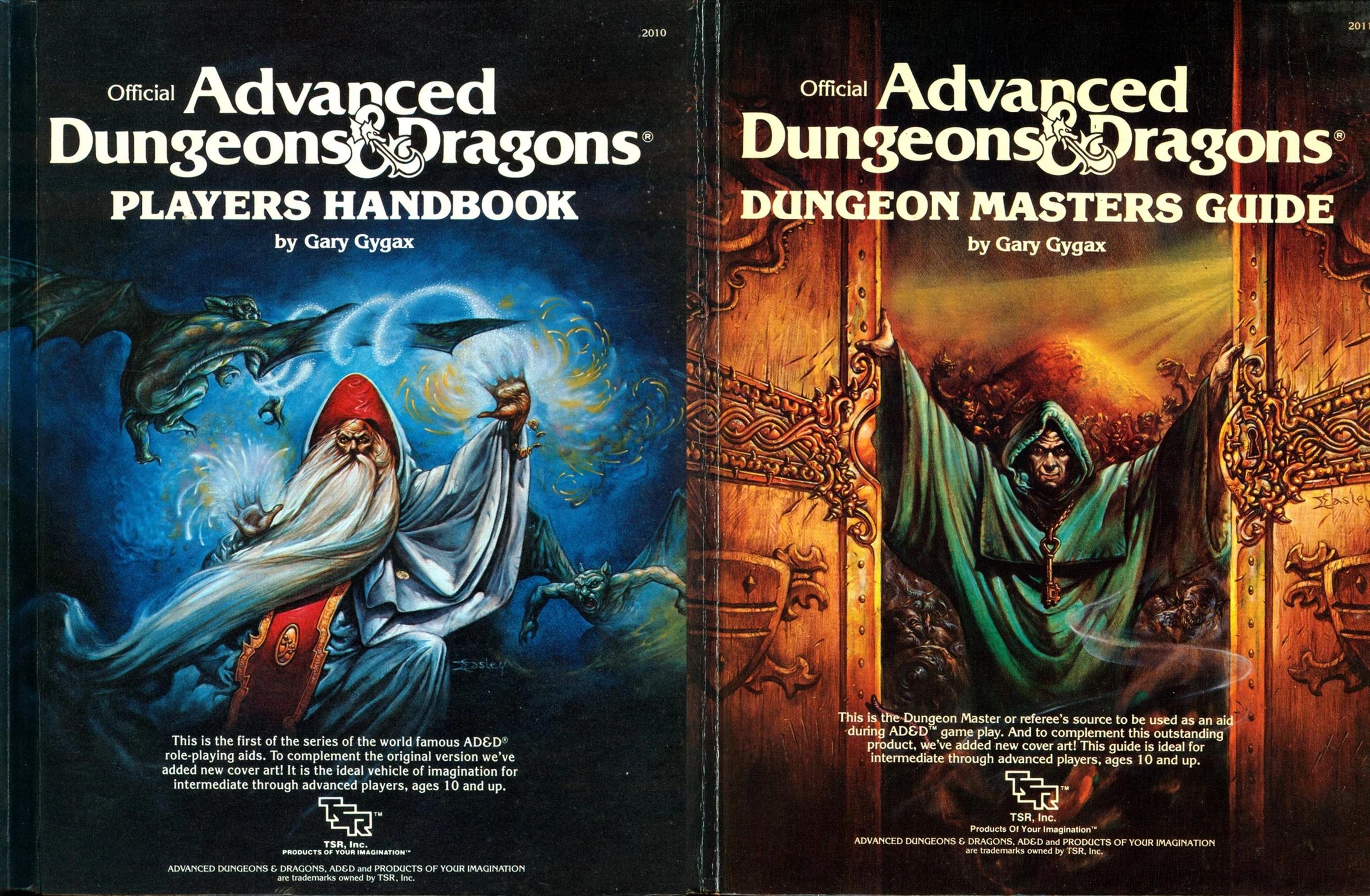
Before I go on, some context: while we had been playing D&D for months, I had recently purchased the AD&D Players Handbook (PHB) and Dungeon Masters Guide (DMG) and was in the process of reading them to “level up” our gaming experience to the advanced rules.
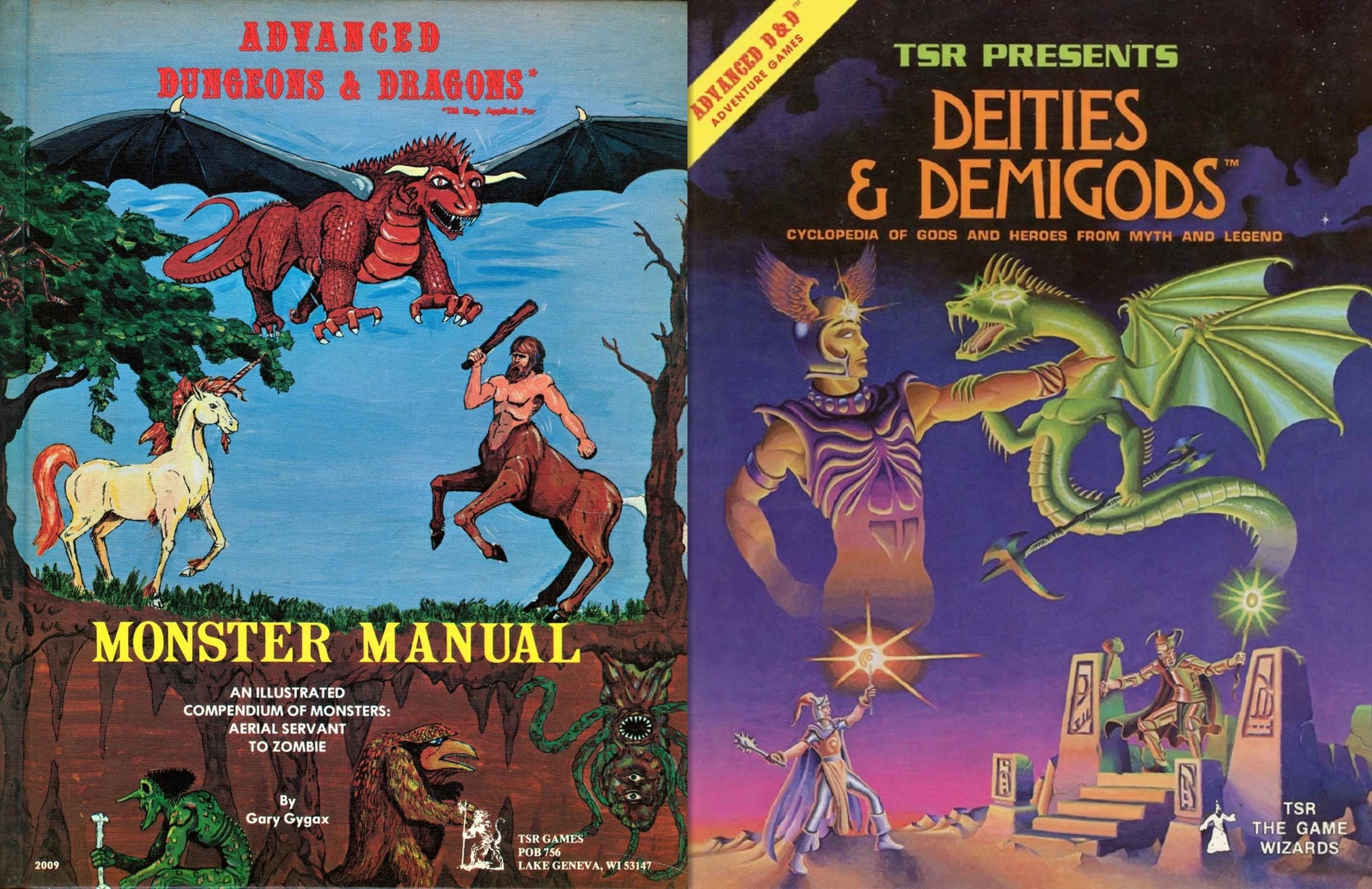
The neighbor pulled out a large piece of luggage, unlocked it, and showed me what he had left. Imagine my surprise when I saw the Monster Manual and Deities & Demigods. As I’ve mentioned recently, both featured the original covers, and the Deities & Demigods included the Cthulhu Mythos (which was famously removed from later editions). Furthermore, the owner had photocopied the “Saturday Morning Monsters” article from Dragon Magazine #48 and glued it to the end sheets. This was an extra cool find, and I had no idea at the time!
He asked for $10 per book, which had been too much for my friends. If memory serves, I had paid $15 for the PHB and $18 for the DMG, so $10 seemed very reasonable. Knowing what I know now, I think that was the original cover price for those books when he got them, so he was selling them used for what he paid—but that didn’t stop me! I had a very generous grandfather, so I handed him twenty dollars and walked out with two new AD&D books.
The Second Trip
But as I left, I knew there were two other things left in that luggage. So, the next morning, I convinced my grandfather and came back with $15 for the other two items.
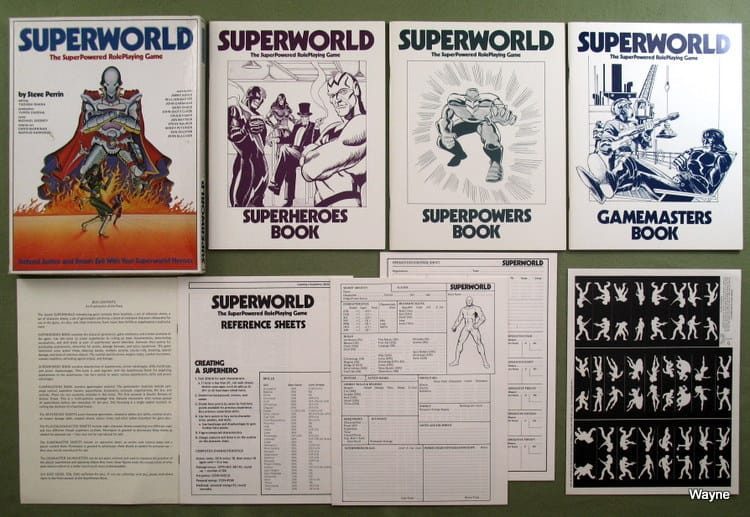
One was a book from the Superworld boxed set—just the character creation book. By itself, it wasn’t enough to play the game. I was a fan of the Wild Cards shared-universe anthology; I had read one or two books by then, and I had heard somewhere they were based on the author’s TTRPG Superworld campaign, so I was really interested. Alas, I was never able to play it since I never got the original Superworld box.
However, the other item I got was part of another shared-universe anthology: Chaosium’s 1981 Thieves’ World boxed set!
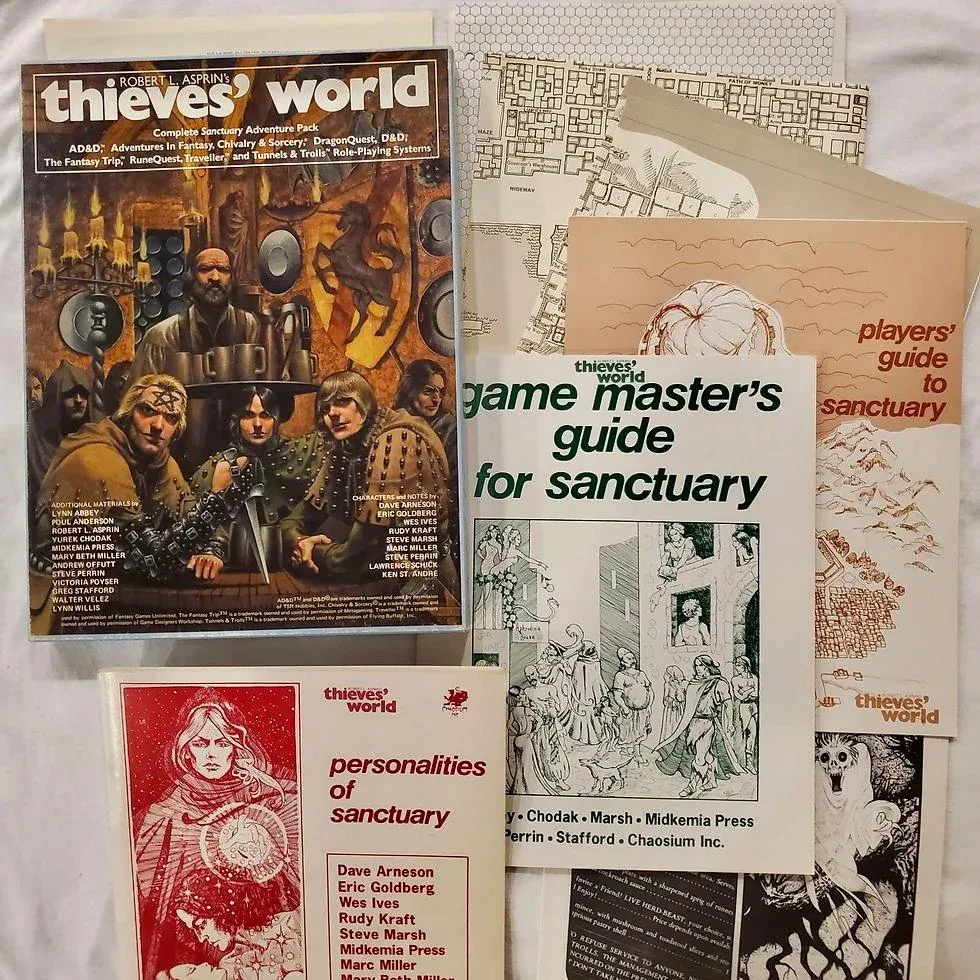
Discovering Sanctuary
I had never read the Thieves’ World anthology, so I had no context for what this was. The neighbor who sold it to me simply said it was the setting for a series of books, so that was all I had to go by.
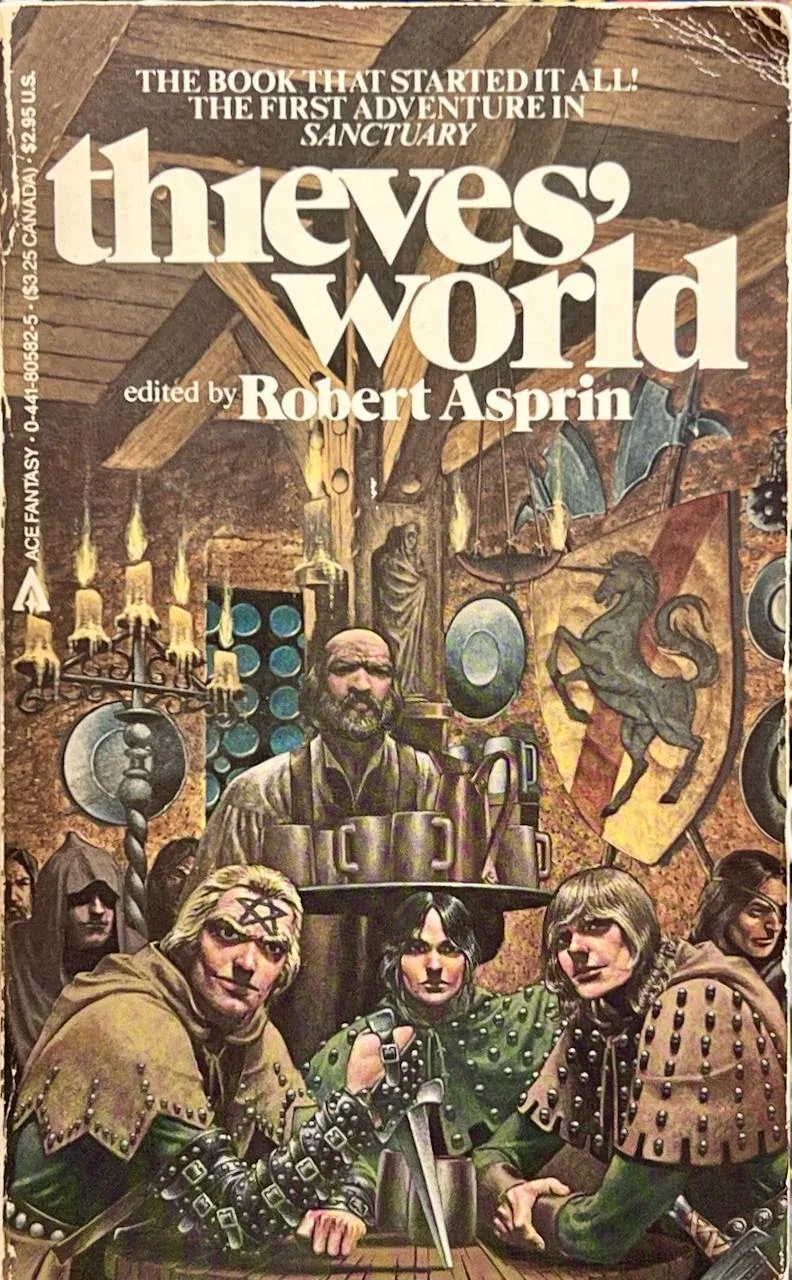
However, Walter Velez’s cover was so evocative that I had to open the box and delve in. I’ll admit there was a lot I did not understand. I was 14 years old, and my reading comprehension was still developing, but I absolutely loved what I did understand.
I loved the cover of the Player’s Guide to Sanctuary. To me, it looked exactly like a GM looming over his creation!

The discussion of the city, the details, the glossary! If the AD&D books felt textbook-like, this felt like a living, breathing, lived-in world. As an adult, I understand there was a lot of implied world-building in the early D&D books, but to my teenage mind, this was the opposite extreme—it was explicit and detailed. Come to think of it, this was perhaps the first fully fleshed-out campaign setting I ever encountered. There was the “Known World” section in the D&D Blue Box Expert Rulebook, but this was something else entirely.
The Maps and the Multiverse
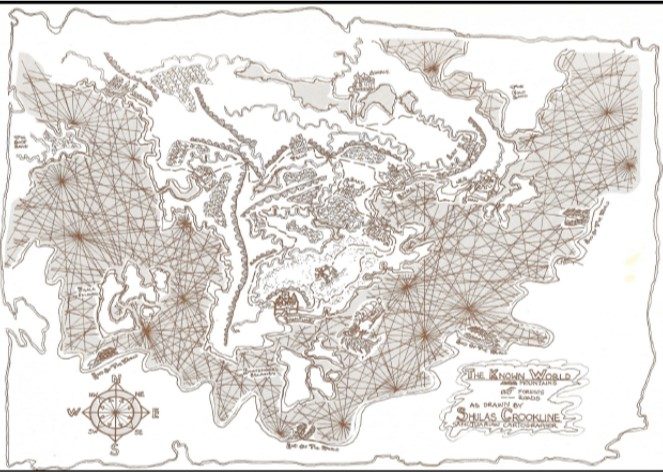
I loved the maps! I had actually forgotten this was also labeled as the “Known World” on the map at the end of the Player’s Guide to Sanctuary.
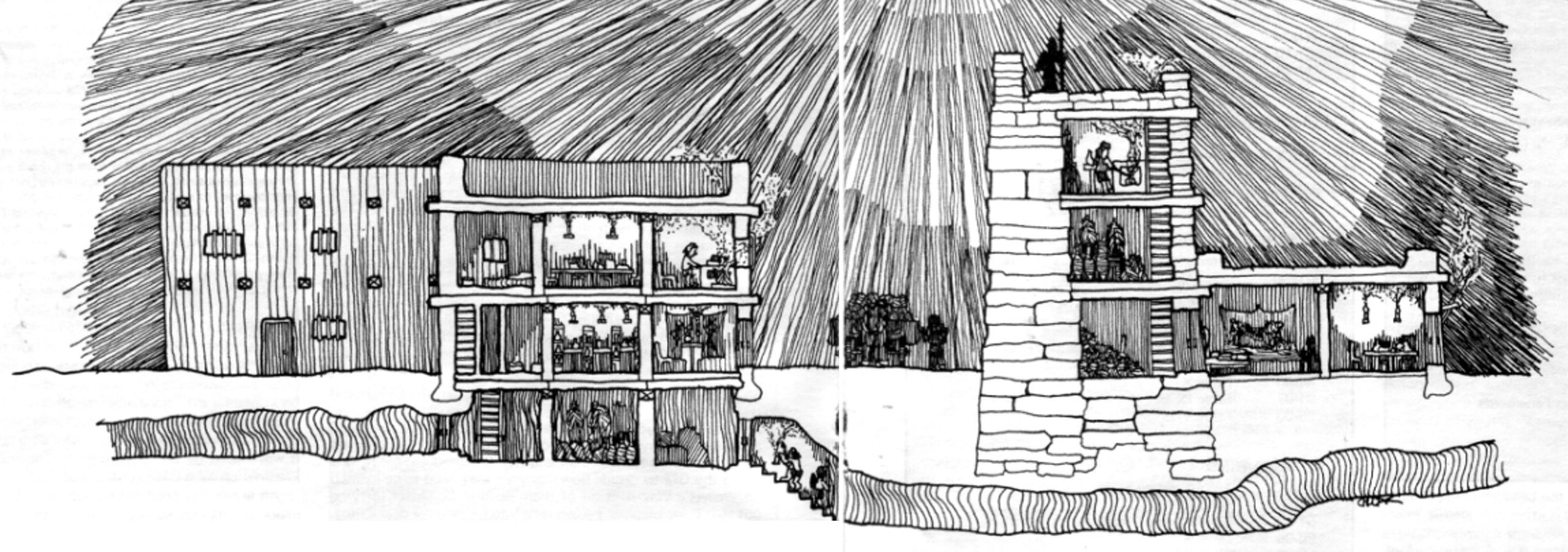
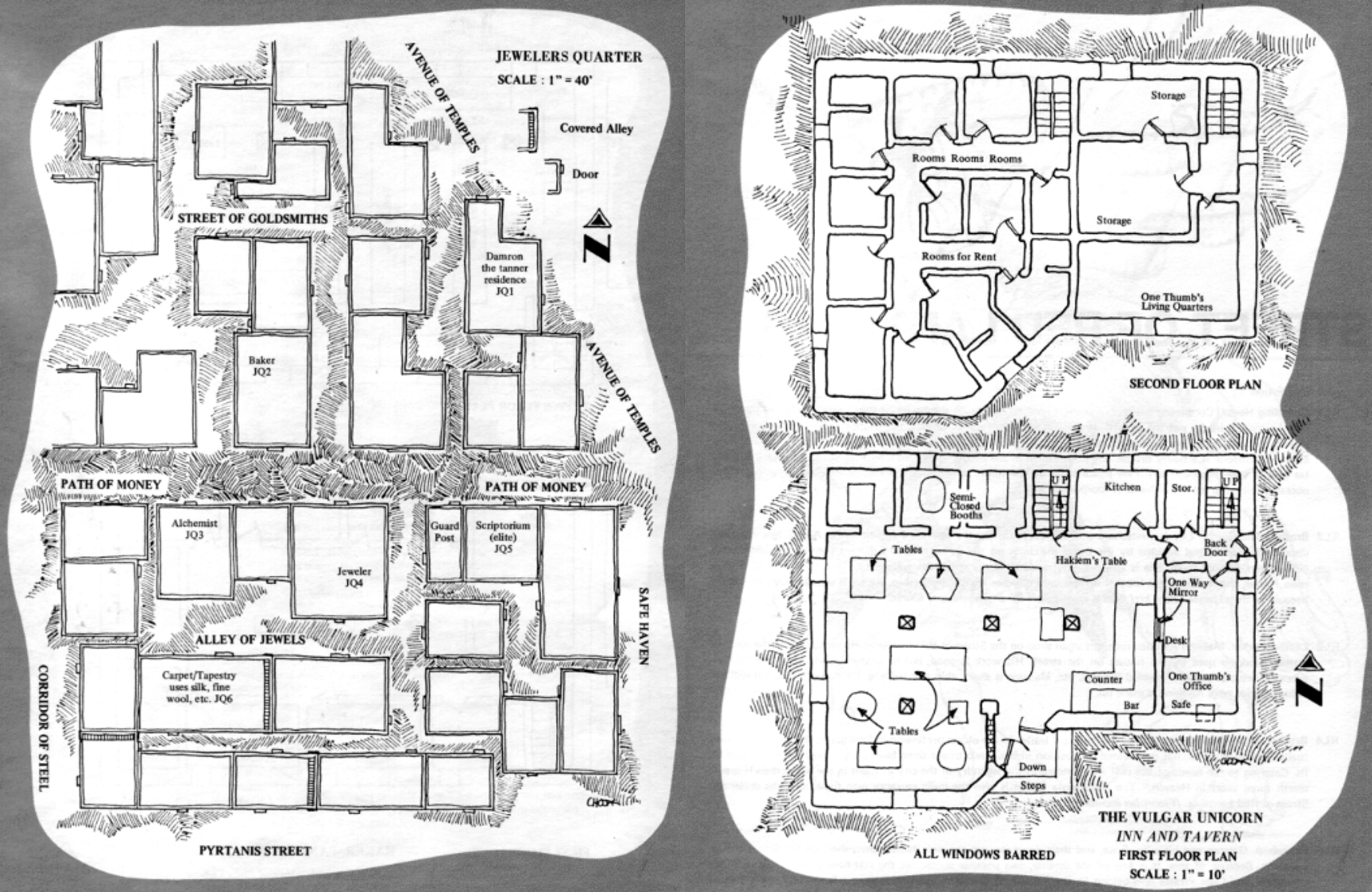
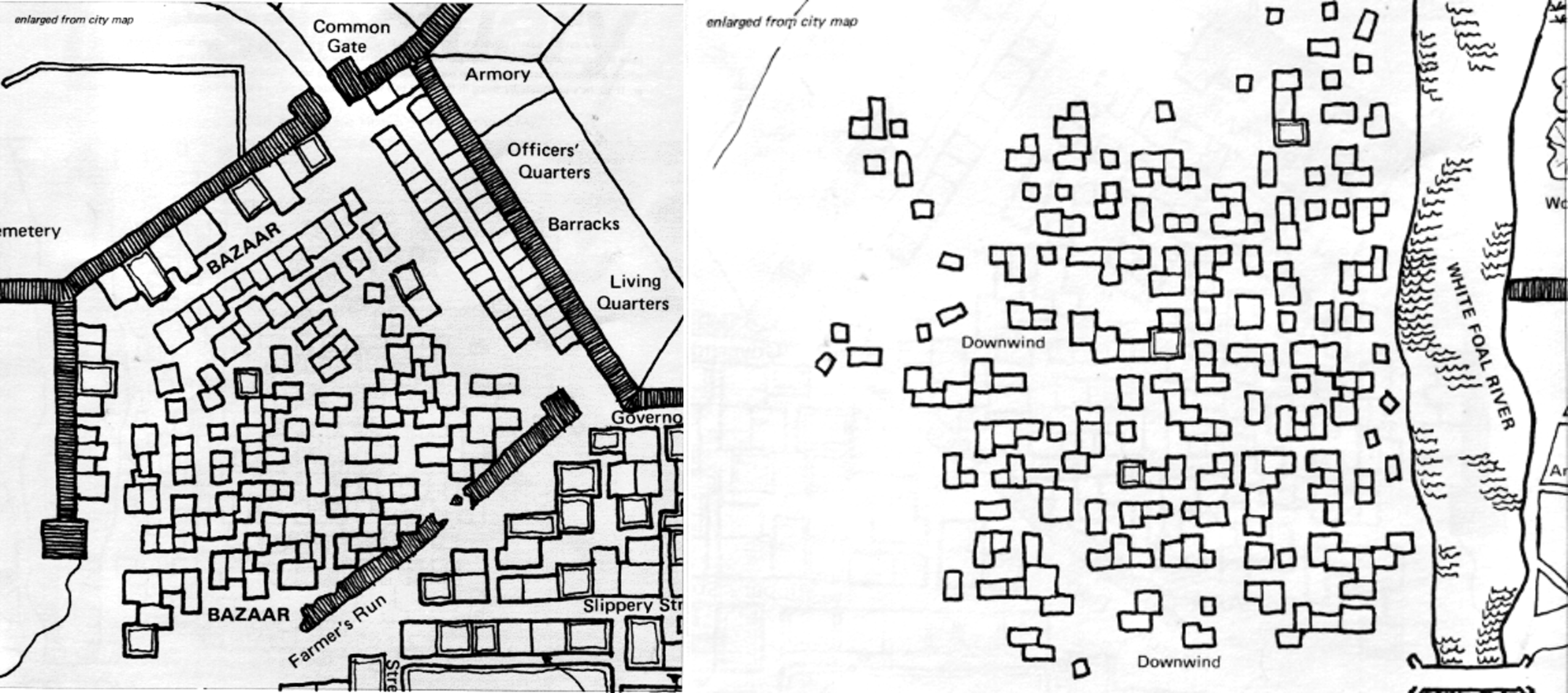
The maps in the Game Master’s Guide to Sanctuary were even better. I look back at the cut-aways on pages 33 and 34, the maps of buildings starting on page 37, and the details of city sections on pages 63 and 64, and I realize just how much these maps inspired my own map-making at the time and in the years to come. To say nothing of the incredible full-page Hellhound knight illustration on page 9!
The Personalities of Sanctuary book was like a mysterious compilation of other games. I knew what D&D and AD&D were, but I had no idea about other systems. I pored over the stats, trying to figure out what these other games must be like.
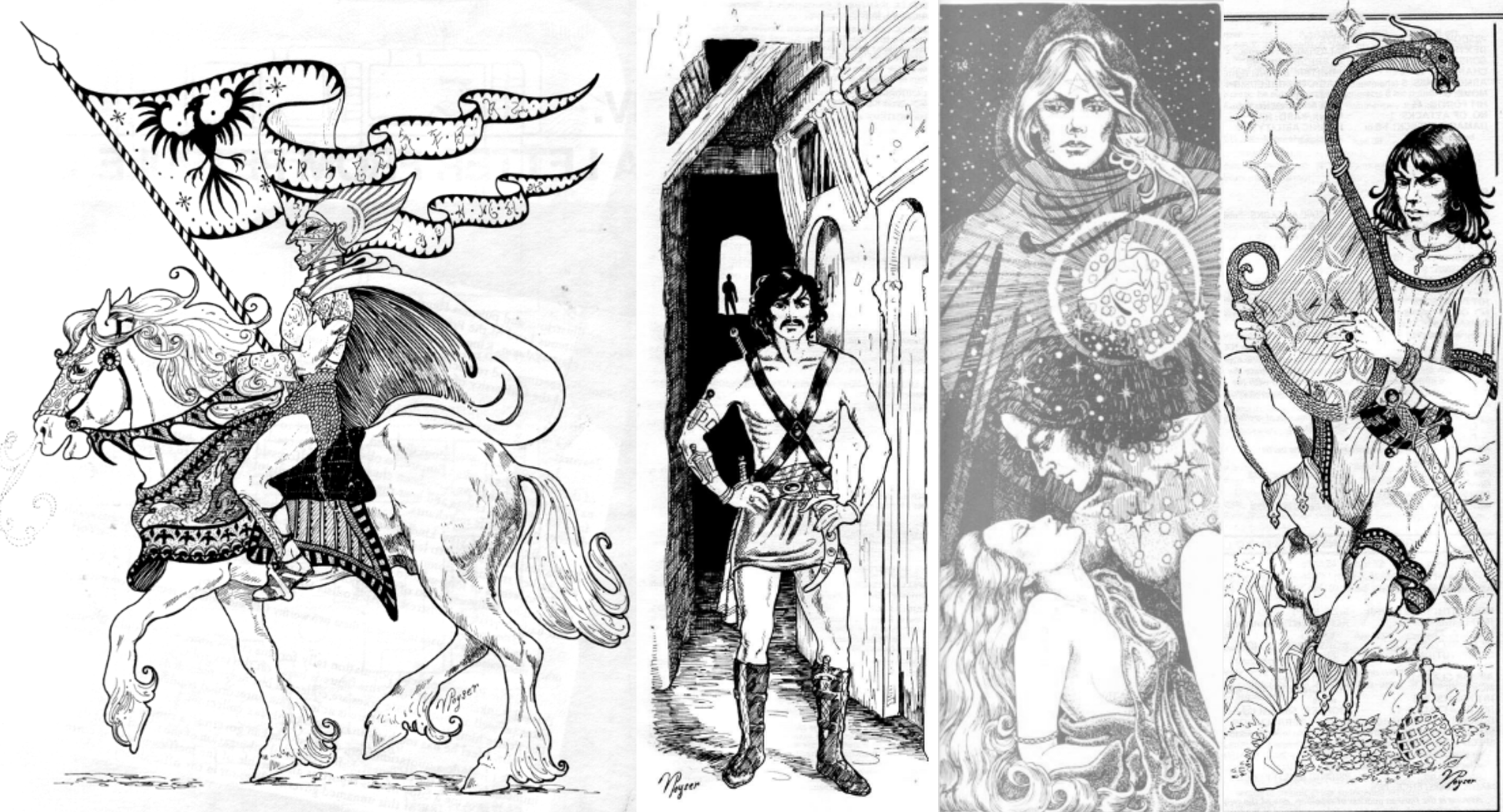
The art throughout the books was sparse but evocative, creating a unified feel and a deep sense of wonder for Sanctuary. Concepts like “The Maze” heavily influenced my concept of fantasy slums, and the “Vulgar Unicorn” inspired many of my tavern names in the same vein.
Looking Back
The maps were my favorite part, hands down. Early on, I would frequently use the map of Sanctuary in my games without necessarily using the setting itself.
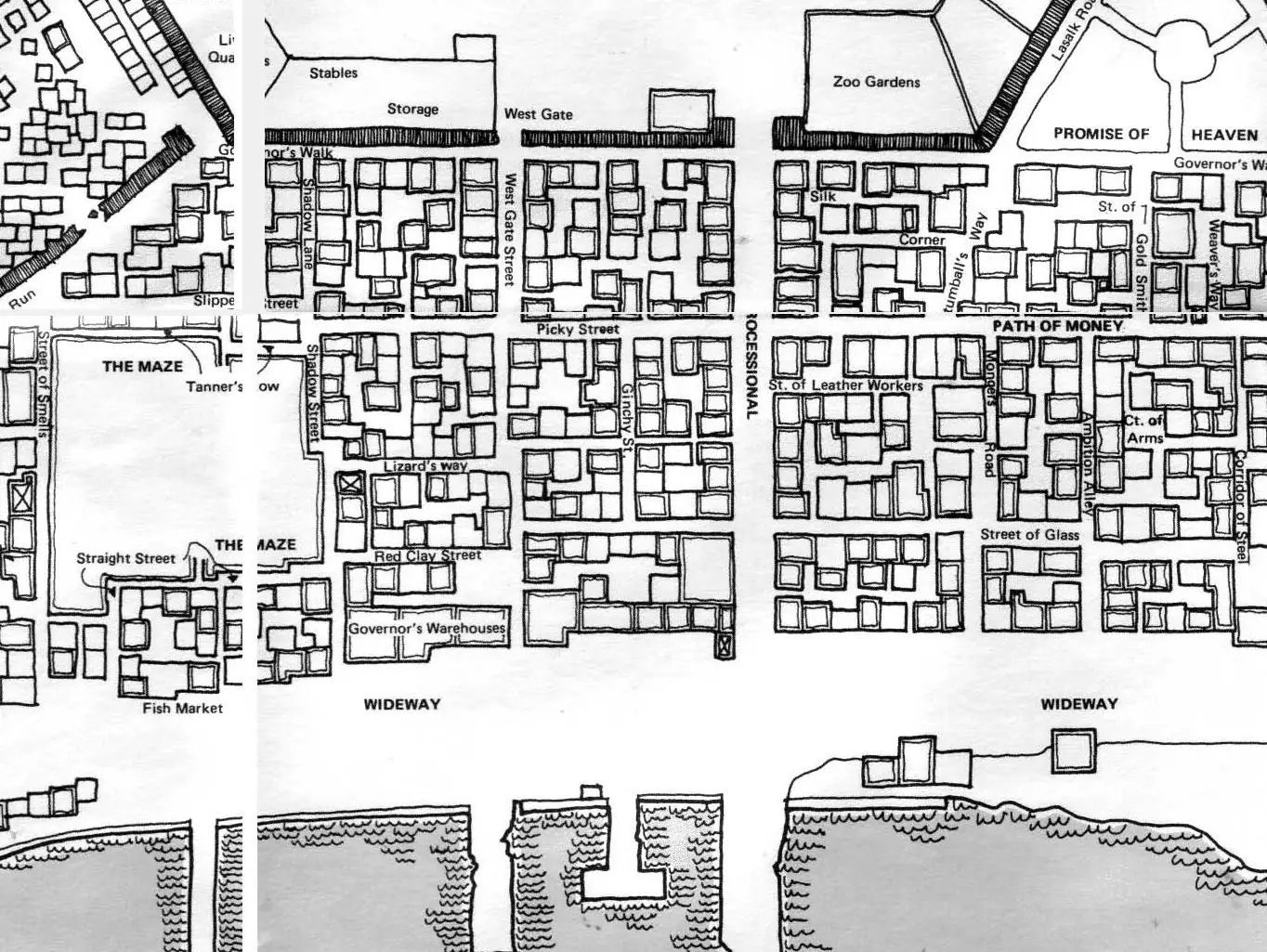
I still have the books and the maps, and taking them out to peruse before writing this was a delightful trip down memory lane. There were so many incredible details I had forgotten.
Sadly, I got rid of the actual box years ago. To save space, I threw out many of the boxes for my classic boxed sets. I really wish I had kept them.
Two more things before I go.
If you’ve read the wonderful Designers & Dragons by Shannon Appelcline, you might already know this, but just in case you don’t: the inclusion of the Melnibonéan and Cthulhu Mythos in the original Deities & Demigods is actually what made it possible for Thieves’ World to include stats for D&D and AD&D!
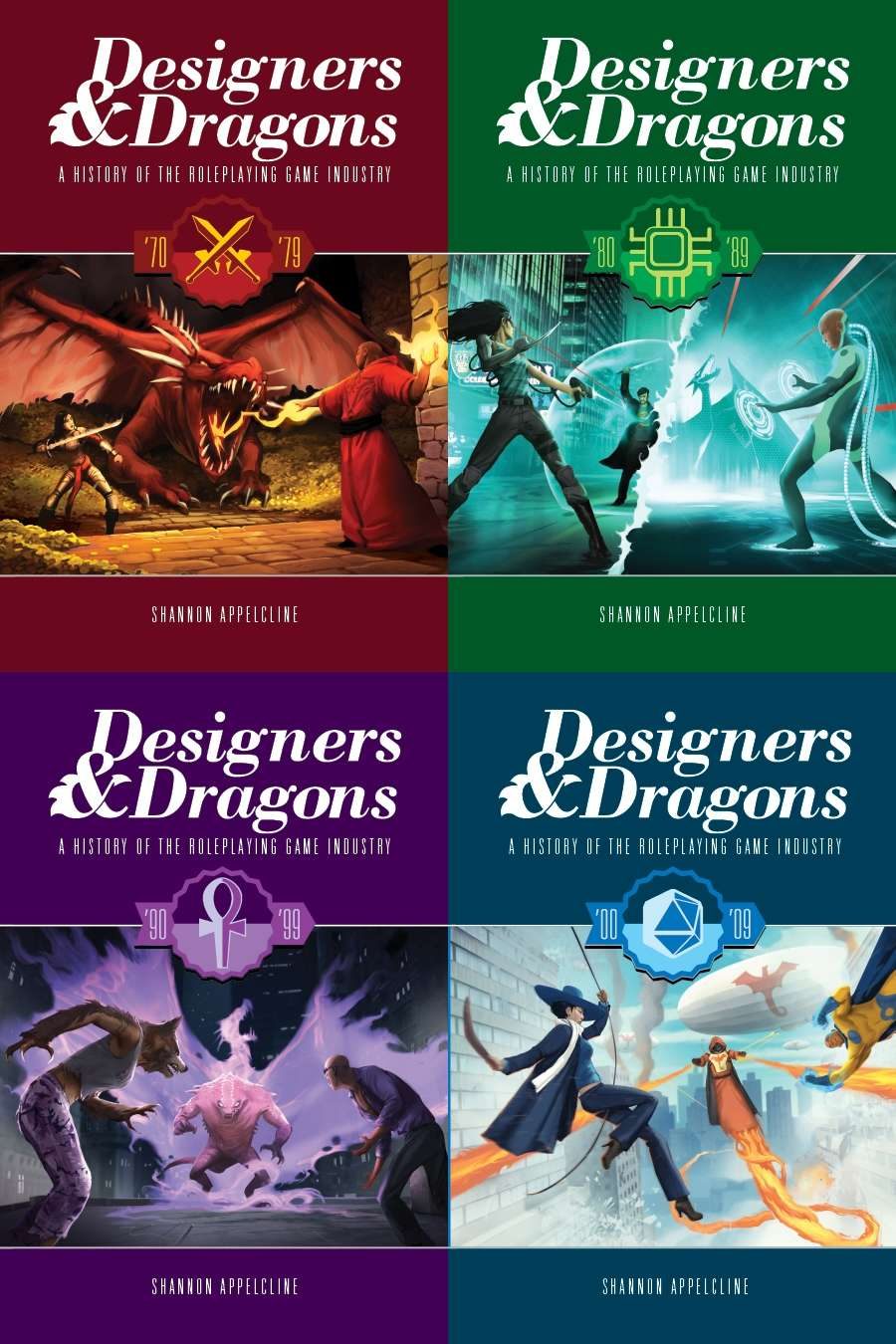
Here is a quote from Appelcline detailing this exchange from this RPG.net column:
“Chaosium (1980). Jim Ward characterizes what TSR received from Chaosium as a “C&D”. Knowing most of the principals at Chaosium, I find it unlikely that anyone wrote anything that antagonistic or legalistic. In any case, at the time Chaosium held contracts giving them gaming rights to Michael Moorcock’s Eternal Champion novels and H.P. Lovecraft’s mythos stories. But TSR published deities for both of those fictional settings in Deities & Demigods (1980), and Chaosium complained. The end result was that Chaosium granted rights to the usage based on a thank-you in the credits (but the Blumes quickly decided to remove the mythos entirely because they didn’t want to mention another roleplaying publisher) and that Chaosium got rights to use D&D stats in Thieves’ World (1981), which would be one of the last major licensed uses of the D&D game under TSR.”
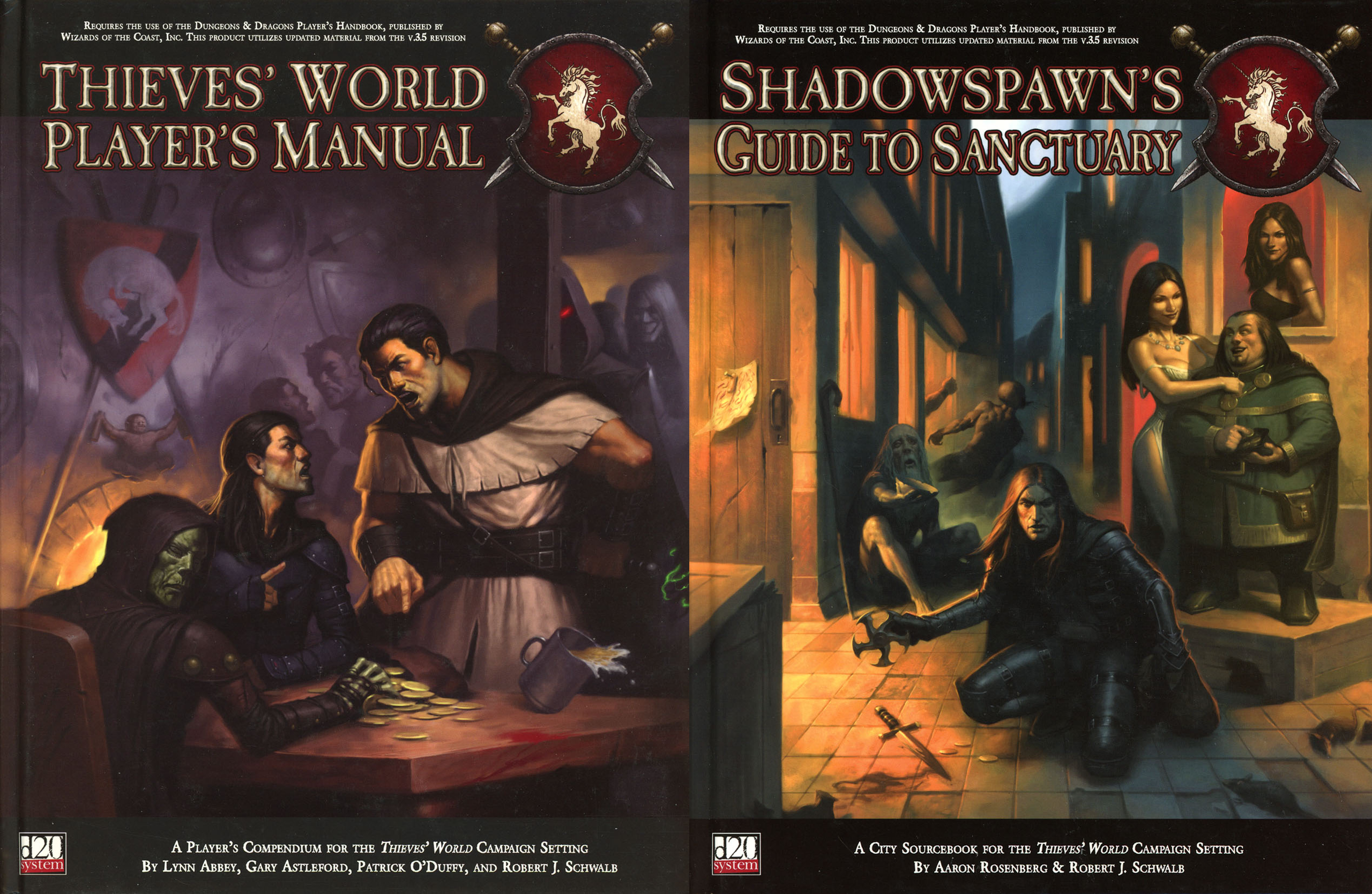
In the early 2000s, Green Ronin published new materials for Thieves’ World using the d20 rules. I own those books as well, but sadly, they no longer hold the license.
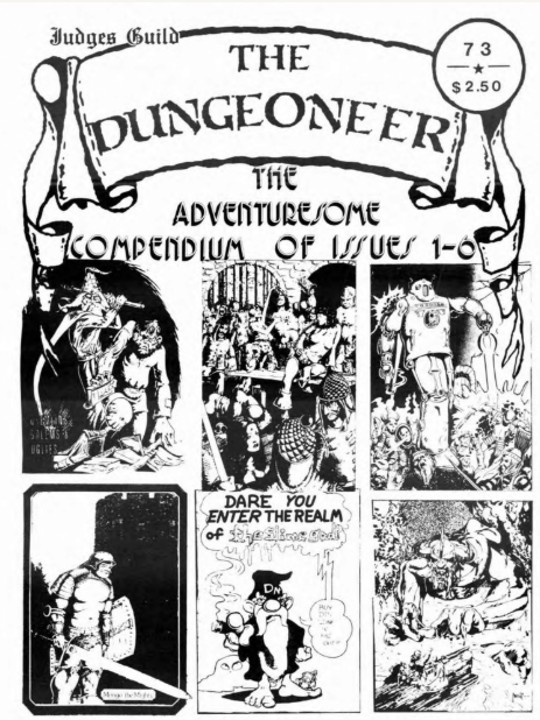
One final thought, at one point, I can’t remember if the first time or the second time, I visited my neighbor’s garage sale, I also got the Dungeoneer Compendium of issues 1 to 6. It was in bad shape, so I remember getting it for $1. It was $2.50 brand new. My neighbor fleeced me, really!
Categories: Tabletop Gaming Blogs
D100 Sword & Sorcery Chimera monsters & creatures for OSR Rpgs & Castles & Crusades Campaigns
In a Sword & Sorcery setting, a chimera isn't just the classic "lion-goat-snake" triad; it is often a blasphemous union of beasts or a sorcerous mishap. Here is a d100 table designed to generate unique, horrific hybrids for your Castles & Crusades campaign. This blog entry picks right up from Two D100 Sword & Sorcery sewer & dungeon encounter tables For Castles & Needleshttp://www.blogger.com/profile/11243274667834930867noreply@blogger.com0
Categories: Tabletop Gaming Blogs
Video of the Day – Doctor Who Confidential, 2006
The post Video of the Day – Doctor Who Confidential, 2006 appeared first on Blogtor Who.
Categories: Doctor Who Feeds
An Interview with Lala Mágica, a Sorceress with a Needle
Hello again, reader! Welcome back to my continuing series highlighting the art of incredibly talented Puerto Rican creators.
This week I’m talking to Laura, aka Lala Mágica. I’ve known about Laura for a few years. I’ve been following her on social media, seeing her creations. Laura happens to be married to a friend and longtime member of Puerto Rico Role Player (who I hope to interview in the future about his TTRPG content). It is a pleasure to talk to her and learn more about her as an artist and a gamer.
Without further ado, here is the interview.
Introduce yourself! Who are you and what do you create?
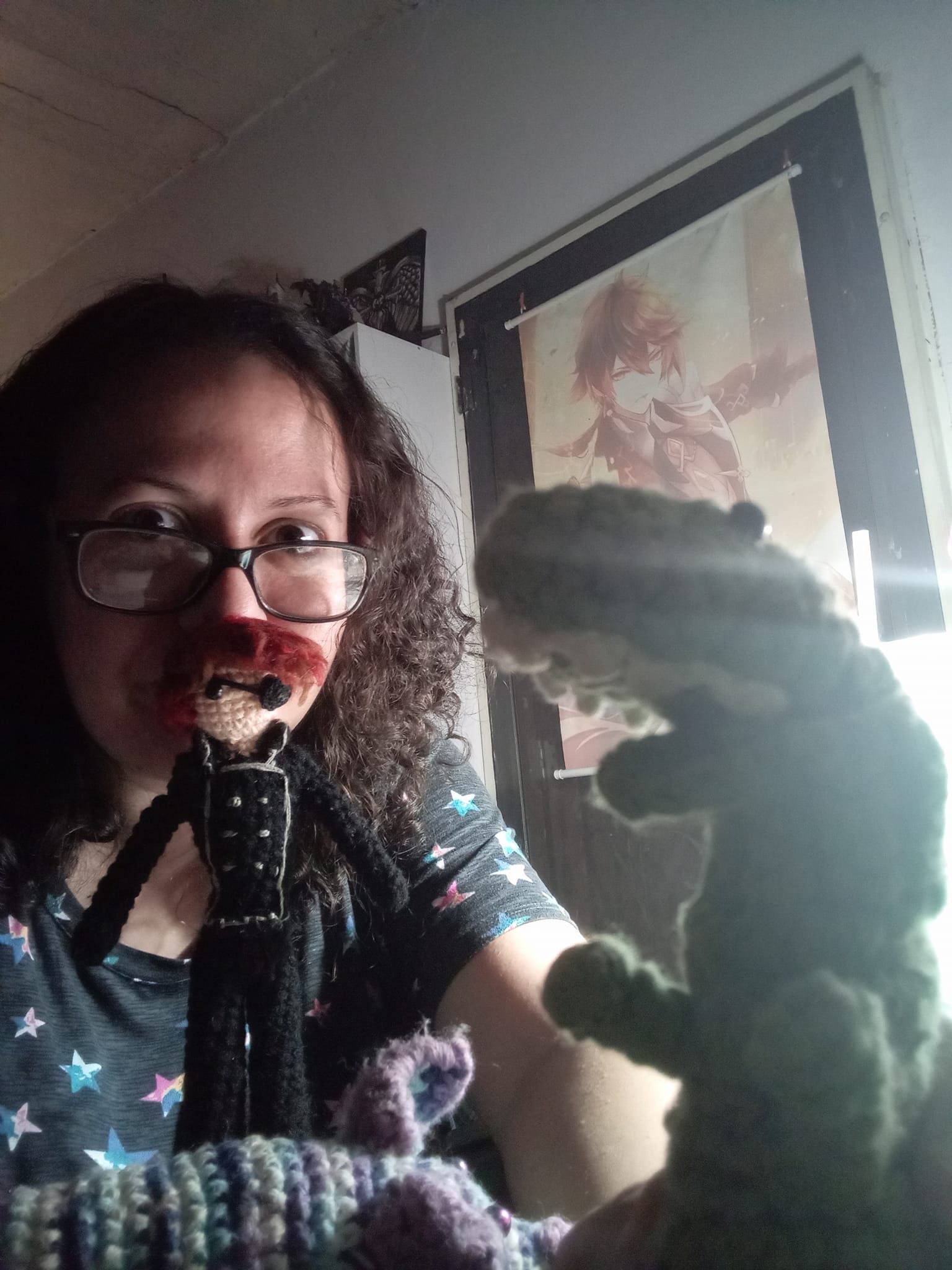
My name is Laura, but with my knitting needle, I am Lala Mágica. With a creative spirit in crafting, I like to knit original characters that aren’t easily found. I started with dice bags and then expanded into other accessories, such as keychains and garments.
How would you describe your art or creative endeavor?
Karso the Halfling Barbarian from Juego La Mesa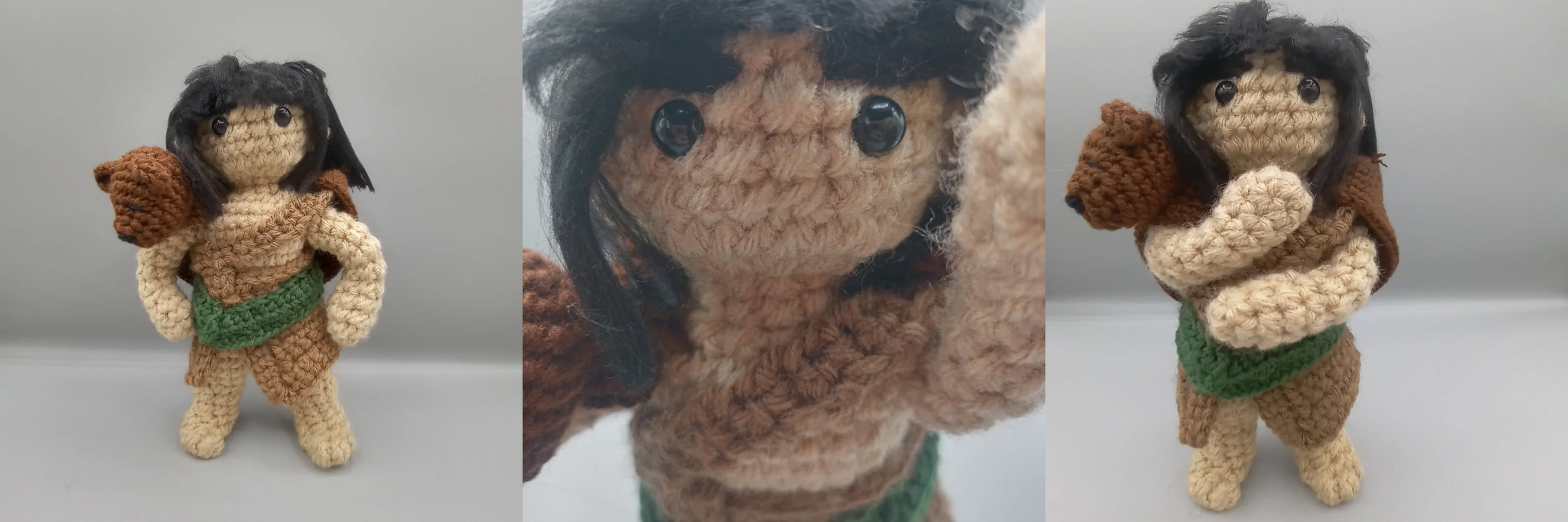
I would describe my art as 3D printing, but with yarn. Usually, I do what is known as “freehand,” which is knitting without following a pattern. So, creating a plush of your original character is possible for me.
How did you discover TTRPGs?
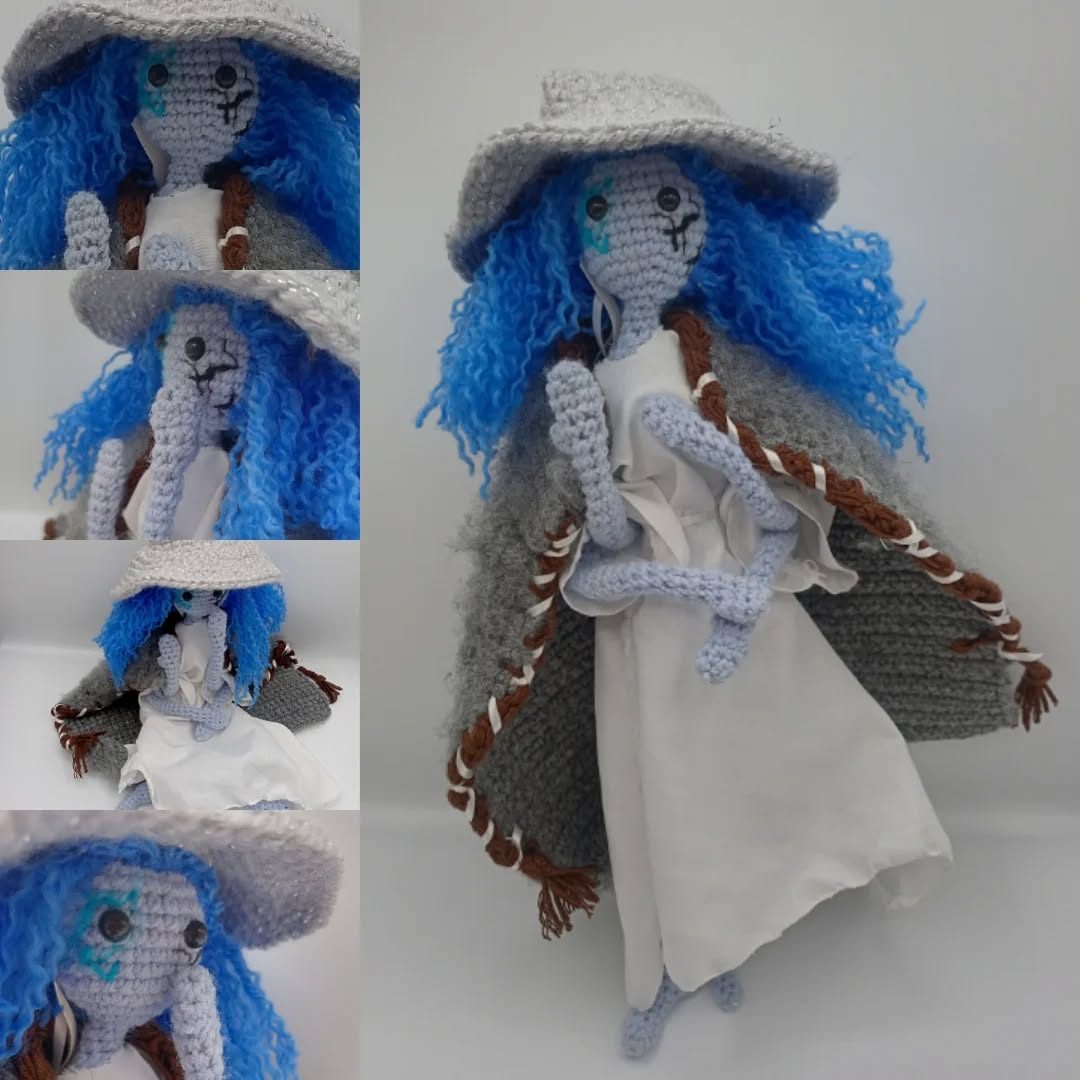
I discovered tabletop role-playing games through friends in college. I played two sessions of Mage: The Ascension, but I was able to get into the hobby properly after getting married. My husband is a DM, so we share that.
Do you actively play TTRPG? What are you playing?
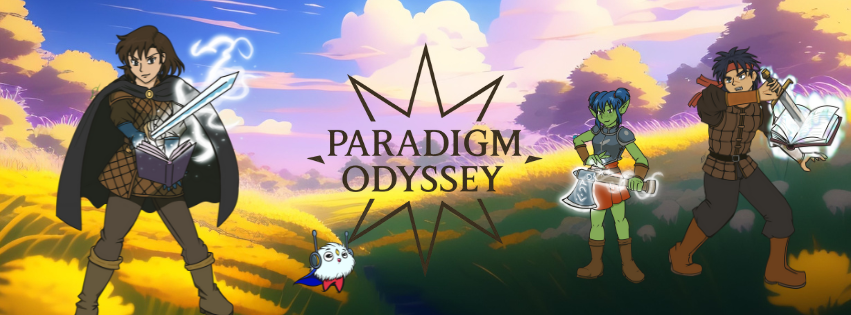
At the moment, I’m active in two campaigns: one of Paradigm Odyssey: “War is Raw” as a clown “living doll”, the system is being developed by Enyol currently, and one of Daggerheart: Age of Umbra as a fairy Seraph.
What do you want to play next?
What do I want to play next? Honestly, whatever my next session 0 throws at me. I’ll be honest, probably more Paradigm Odyssey.
What projects are available, and what are you working on next?
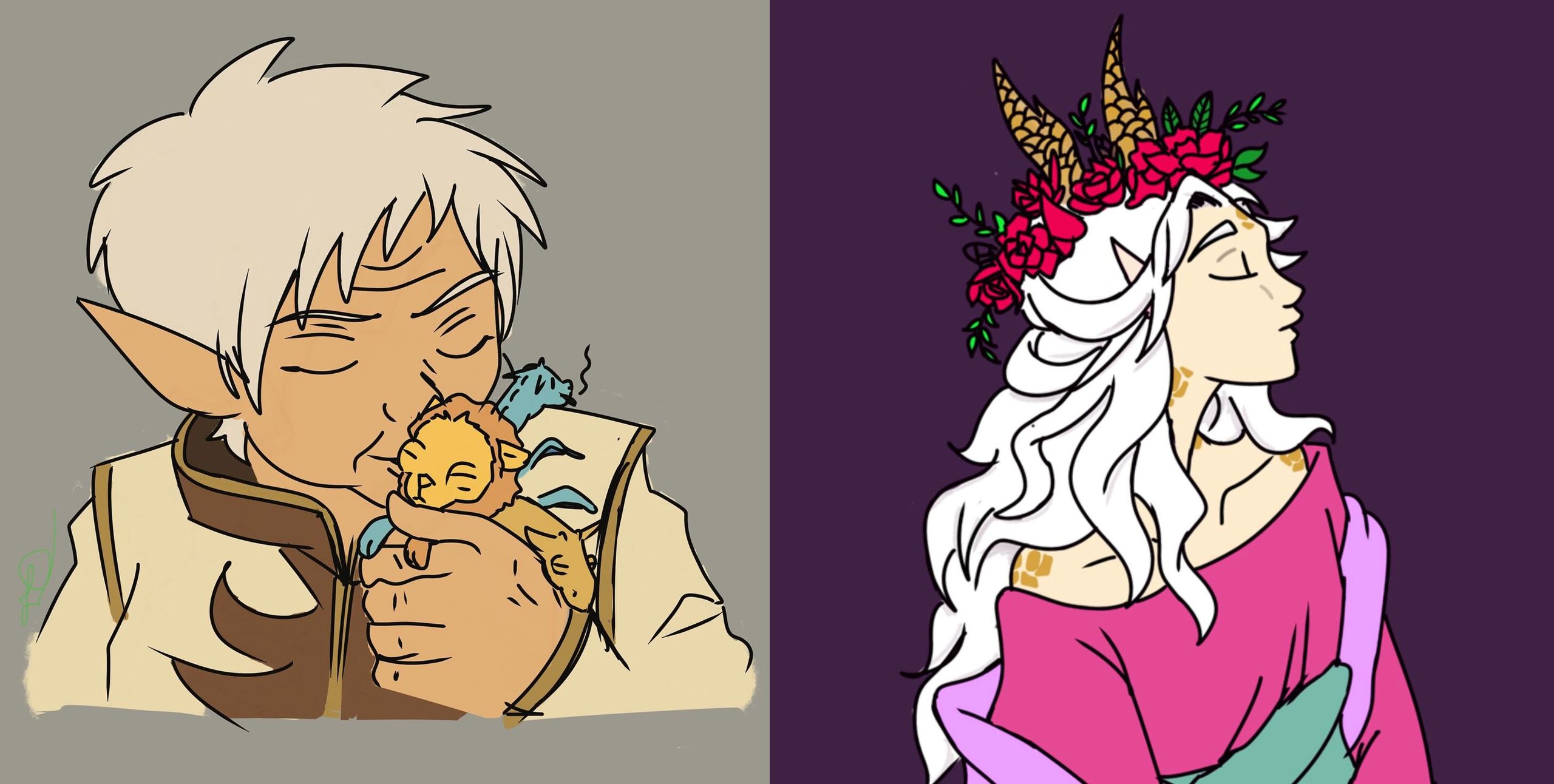
I’m in the process of a “restock,” since I gave away dragon and dinosaur coasters at the Juego La Mesa event last month. Besides that, I’m also recreating one of the small puppets that came out in the movie “Five Nights at Freddy’s.” On top of that, I’m illustrating the supplements that Enyol is sharing on DriveThruRPG, since drawing is another passion of mine.
Where can people find your creations?
You can find me actively on Instagram as Lala Mágica, and I have a FB page with the same name.
Any closing thoughts?
My hook is “My wand and my yarn is the magic”—whatever you can imagine, I can create.
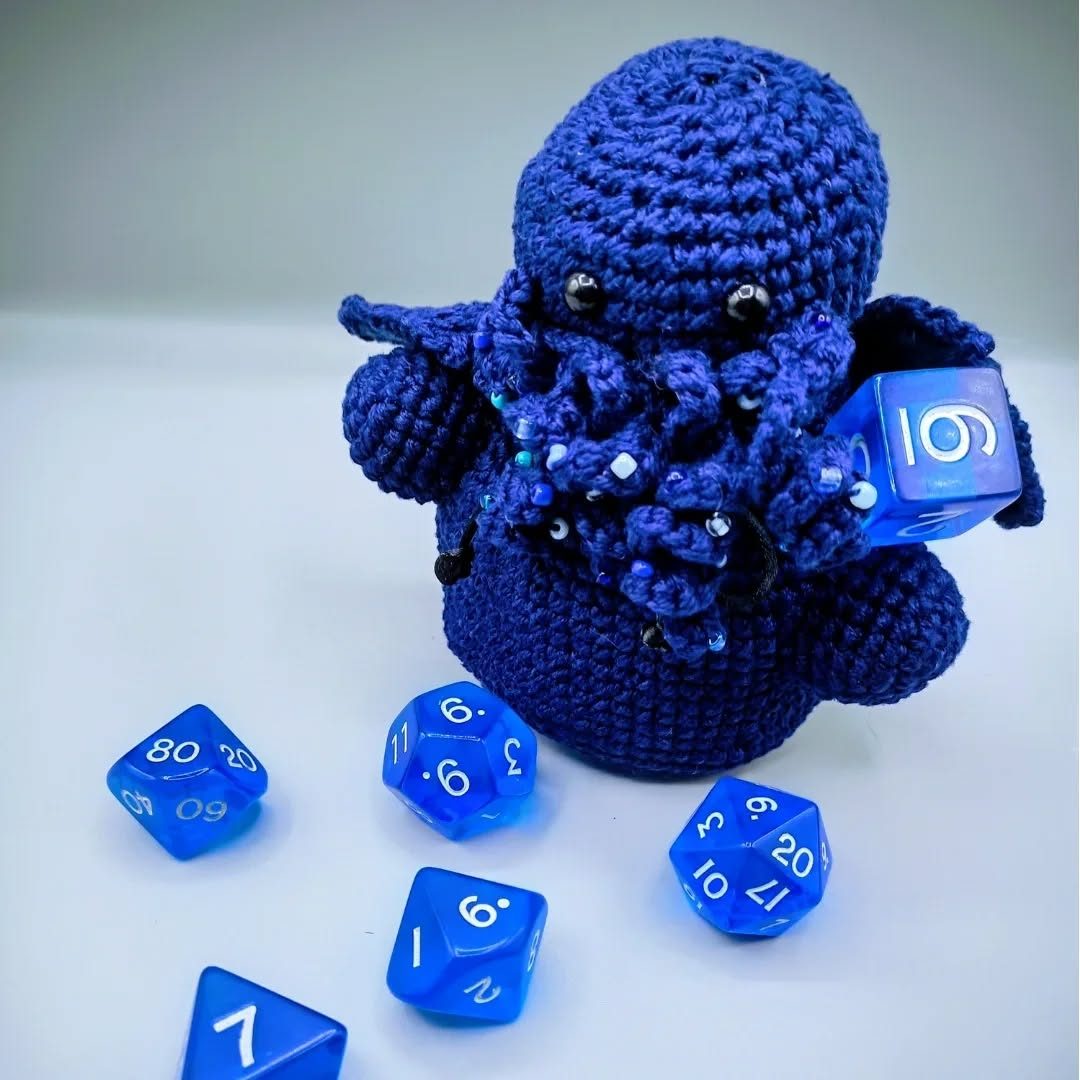
Thank you, Laura, for your time and for sharing your creations. As a Cthulhu Mythos fan, I must admit I love the Cthulhu dice bag below. It looks terrifyingly adorable.
Categories: Tabletop Gaming Blogs
Artists I Like: John McKenzie
I started seeing John McKenzie's work on Facebook a while back and was immediately smitten by it. John has the perfect balance of silly cartoonery and grit. It's almost as if Basil Wolverton and Mike Mignola conspired to create a new life form and I truly love it.
My instinct is to say his work begs to be animated. It FEELS animated. But I don't want to suggest it would better if animated... It lives and breathes as is, but it would translate to animation quite easily.
Also sounds like he's making an RPG. Gotta have that for sure.


Categories: Tabletop Gaming Blogs
Video of the Day – The Jonathan Ross Show, 2026
The post Video of the Day – The Jonathan Ross Show, 2026 appeared first on Blogtor Who.
Categories: Doctor Who Feeds
Pages
