Your wildly multifarious home!
Tabletop Gaming Feeds
Further Meditations on The B2 Keep On The Borderland Adventure Module By Gary Gygax & ACKS II Rpg
Gary Gygax’s 1979 module B2: The Keep on the Borderlands is the foundational text of the sandbox campaign. Ostensibly written as an introductory adventure for the D&D Basic Set, it functions under the hood as a masterclass in dynamic world-building, spatial economics, and emergent play. This is going to pick right up from OSR Commentary - Adapting AX2: Secrets of the Nethercity ForNeedleshttp://www.blogger.com/profile/11243274667834930867noreply@blogger.com0
Categories: Tabletop Gaming Blogs
Review and Use of Amazing Adventure Rpg The Brotherhood Of William St John Adventure and Sourcebook
The Brotherhood of William St. John is a central organization and meta-campaign setting supplement created by Jason Vey for Troll Lord Games' multi-genre roleplaying game, Amazing Adventures (available in both the original SIEGE Engine and 5th Edition-compatible rulesets).Instead of locking players into a single, restrictive world, theNeedleshttp://www.blogger.com/profile/11243274667834930867noreply@blogger.com0
Categories: Tabletop Gaming Blogs
Random D100 Post Apocalyptic Barbarian and Sword & Sorcery Raiders table for the Siege Engine Rpg by troll Lord
Here is a random D100 table designed for a post-apocalyptic setting using the SIEGE Engine by Troll Lord Games. This blog entry picks right up from d100 Random Sword & Sorcery Barbarian Hordes For Castles & Crusades rpg CampaignTo keep this perfectly tailored to the system, each entry includes essential mechanical anchors: Hit Dice (HD), Armor Class (AC), Primary Attributes (Needleshttp://www.blogger.com/profile/11243274667834930867noreply@blogger.com0
Categories: Tabletop Gaming Blogs
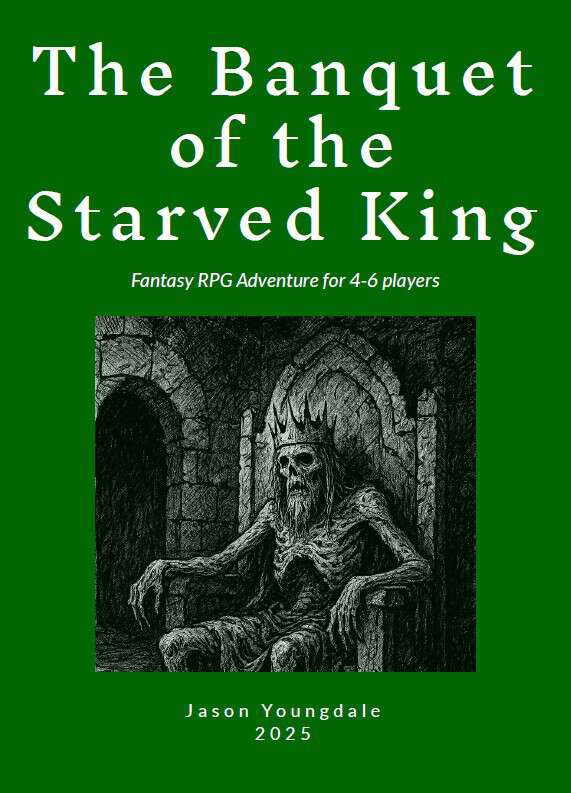
The Banquet of the Starved King
By Jason Youngdale
Youngdale Productions
DCC/OSR
Levels 1-2
Youngdale Productions
DCC/OSR
Levels 1-2
Long ago, beneath the fertile valleys south of Castle Dragonwater, a minor baron swore fealty to the Starved King, a demonic entity of hunger. In exchange, the baron’s land flourished with endless crops and fattened livestock. When the baron died, his descendants sealed the King’s shrine in terror—but the hunger below never ended. Now, farmers near Horndale report crops rotting overnight and livestock turning feral. Strange lights flicker in the old Granary Hill Mound, and the smell of roasted meat fills the night air. The locals beg the adventurers to descend into the forgotten vault and end the demonic banquet once and for all.
This twenty page adventure uses about four pages to describe twelve boring rooms of boringness using single-column formatting. Here are words that should be a contradiction: it’s a boring DCC adventure.
The turn of the millennia was an exciting time in RPG’s.the 3.0 explosion, indie RPG’s everywhere. I remember Polaris. Or, rather Polaris: Chivalric Tragedy at Utmost North. Conflict can be ended by someone saying “Thou are but a warrior …” Yeah, that’s tragedy all right. Your force of arms can do nothing here to resolve things. Noice! You know ol Brycy Bryce loves some human relatability and complexity in his game. Not to punish the party for wrong choices but to muddle the affairs of the way the word REALLY works in to an RPG and still have it be fun. Let us imaging, though, after saying this the party then stabs the NPC. And then they go all Lancelot-at-the-wedding and stab the king, queen, prince, half-brother, wedding guests, and everyone else in a ten mile radius. Ha! Damn skippy I’m a warrior biatch! I’m not sure that one is playing Polaris then, even though you might be using the Polaris rules. Blah blah blah its art is the creator calls it art blah blah blah. Whatever. It’s lost the point of Polaris.
And thusly this adventure and DCC. Let us imagine a DCC adventure with three 30×30 rooms in a row. No doors. 4 orcs in each room. Each room is otherwise empty. Is this DCC? It’s stat’d for DCC. Does that make it DCC? Sure. But it has lost the point of what a DCC game is. What is it, Mighty Deeds or something, where you can describe using what’s in the room to do cool shit? That’s the point of DCC. It makes cool shit happen. The halfling, the thief, the mage, the fighter, they are all built around making cool shit happen ORGANICALLY. The person has an ability, but the environment and set up is there for the party to riff on. The designer takes us to the McDonalds PlayPlace and the fighter drowns someone in the ball pit. Except. What if there is no ball pit? Or slide. Or anything else. It’s just an empty room. I’ve played in DCC games like this at cons and the difference is marked.
Examining this adventure, room 1 save or vomit. Room 2 save or eat dirt. Room 3 is a ghost kitchen with nothing to use to fight in. Room 4 has a banquet table to fight in. Room 5, finally, is larder is hanging hooks to fight in. Room 6, pantry of jars to fight in. Room 7 had a bed to fight in. Rooms 8 and 9 have nothing but saves. You get it. There’s is little to build on here. What the fuck am I supposed to Might Deed in a ghost kitchen in which nothing is real? The banquet table isnt fucking stupendious but at least it has a table, and the same goes for the larder, at least there are hooks with shit hanging on them. Not exactly a complex environment but at least its SOMETHING.
And the save rooms. Ug. Save or vomit. Save or eat some dirt. These have no meaningful impact on the game. It’s window dressing. Just a reason to roll dice. It’s fucking lame.
The locals are starving, crops withering, livestock fading away. “The locals beg the adventurers to descend into the forgotten vault and end the demonic …” WHat about them? DId they try and fail? No? We don’t care about them? Because we don’t care about the adventure? It’s just a flimsy pretext for a VERY lightly themed “hunger” dungeon? Yeah, I know, because it comes off like that. There’s no immersion here. All these pages. Nothing.
“Giant rats could also be in this room, waiting to attack any intruders.” Wonderful. “Four ghouls here jerk their heads sharply as you approach.” Great, embedded tenses in the summaries. “This appears to be a” Padded out wording. It’s only four fucking pages rooms and it’s still padded out.
Nothing to see. Move along. Move along.
This is $10 at DriveThru. The preview is the first three pages and shows you nothing but the credit and table of contents. You can’t make a purchasing decision based on that, so it fails at being a preview.
https://www.drivethrurpg.com/en/product/555500/the-banquet-of-the-starved-king?1892600
Categories: Tabletop Gaming Blogs
Bringing it Into Focus

There are a lot of opinions about setting in rpgs and how much is the right amount or too much. Consequently, a lot has been written about it by a lot of people, me included. As readers of this blog likely know, I am pro-setting, in the sense that I personally like thinking of and writing about them, but one might also have intuited that I enjoy them as a player or GM. They are a major part of what gets me into a game, a fundamental part of supporting imagining the game world. I realize there are people who like their settings merely implied or at the least as light as possible, and that's their right, but to me that would reduce an rpg to the same sorts of pleasure I might get from a board or arcade game, and that would not have been enough to sustain my longterm interest.
As I have been working on the setting for my new campaign, I've talked with my players for the first time about how I feel about GM creation vs. player creation of setting material. It's not that it was a secret before, but it never game up in an explicit way. My personal observation is that while most players don't want to be given a lot of homework to play a game, they also don't tend to be told impromptu to imagine things for a world. A framework to inspire their character creation tends to be what most of my players are looking for, though how much they intend to flesh things out varies.
Encouraging this sort of engagement, though, means that the world is a bit out of focus until we get into the playing of it. I can have thought of a lot of things, but a lot of details I have in mind stay flexible on until the players get their hands on them. In the end, the worlds winds up being a collaborative process even if it mostly starts in my mind.
Here's an example. In creating Azurth, I clearly called out that despite a number of animal people in the setting, there were no cat people. Now, the fact that I noted that and didn't mention a whole list of other animal people that would never appeared in Azurth was meant to suggest "something's going on here." And it was.
However, my friend Jim, in creating his bard Kully missed that. Jim did a very flavorful, brief character write-up, nailing the Ozian sort of vibe. The only problem was he mentioned Kully encountering a Cat Man at a pivotal moment.
I could have suggest a change to that detail and in some circumstances, I might have. Here though, because I had already intended something to be going on with that point, I used what Jim came up with. I told him that Kully had had that encounter, which was odd because there aren't supposed to be Cat-folk in Azurth, and so no one believes him. Jim was creating a little mystery in his characters backstory, which wound up tying into a minor mystery of the entire setting. Kully's backstory became setting material supporting a future reveal that at least one player was going to care out.
Not all instances of a player's view of the world and my own having a discrepency turn out so serendipitously, but I think it's worth looking for those opportunities and leaving things just a little fuzzy to facilitate those clarifications.
Categories: Comic Book Blogs, Tabletop Gaming Blogs
Robert E. Howard's Conan From "The Tower of the Elephant" and "Rogues in the House" AS NPC For Sword of Cepheus 2nd Edition
In Robert E. Howard’s original stories—specifically "The Tower of the Elephant" and "Rogues in the House"—Conan’s time as a thief in the cities of Zamora and Corinthia features a distinct version of the character. He isn't yet the seasoned general or king; he is a raw, hot-blooded, powerful teenager (around 17–18 years old) navigating the decadent, civilized "Maul" of Arenjun.He lacks the Needleshttp://www.blogger.com/profile/11243274667834930867noreply@blogger.com0
Categories: Tabletop Gaming Blogs
B/X Tomb Robber Hack
I wrote this little B/X D&D hack recently to emulate a gritty, scummy, city style sword and sorcery experience using the classic game rules.
You can download a zine PDF of it here.

B/X TOMB ROBBER HACK
IN THE DIRTY CITY OF HOGBONE, or Tombsburk, or Sluckbucket, or whatever filthy name you give it, the tomb-robbers, treasure-hunters, and murderous criminals thrive. There are no safe shires here.
This B/X sword & sorcery hack is inspired by Conan (the barbarian), Thieves’ World, Lankhmar, The Black Company, and a bit of Ankh-Morpork.
PC RULES
1. Everyone is human. If the GM allows elves or something, they’re inhuman aliens from another dimension or space or Hell and everyone hates, fears, and/or distrusts them. Your campaign is now defined by this fact.
2. There are no clerics. High priests might be sorcerers, but they’re not healing anyone.
3. Good and evil are not linked to alignment. Alignment is related to powers of Law and Chaos. A Lawful monster might be evil as a devil. PCs are most likely neutral, but it’s up to you.
4. Every player character is a 7th level Thief because those are the skills needed to be a crypt-raider. No levels are gained or lost. Level drain drains Ability scores instead.
5. This is your stuff: 3d6 x 100 gold. Roll 2 magic items using the General Magic table (page X44). Re-roll consumable items (like potions) if you prefer.
6. You get these perks based on your highest or second highest Ability.
•Str: Additional +2 to hit, +7 HP.
•Int: +3 (or +1d6) languages, 2 (or 1d4) 1st level Magic-User spells.
•Wis: Re-roll failed initiative; glean 1 useful fact about anything (once per encounter); good ventriloquist.
•Dex: All your Thief Skills are as level 10; climb upside down.
•Con: Save as level 10 Thief, +5 HP.
•Cha: +1 Morale of retainers; 1 devoted follower per Cha score above 10 (as 3 HD bandits); good at mimicking voices.
7. Rest to regain your strength. Heal up to 7d4 HP per day, rolling up to a total of 7 dice at any intervals you prefer. Taking a breather after that alley fight? Roll a couple of d4s to get your spirits up.
8. You know fear. When faced with undead, cosmic entities, or dark sorcery, save vs. spells or be gripped with fear for 1d6 rounds, unable to do anything but run and hide or stand there wetting your pants. Only for the first encounter, per occasion.
9. Gain 1 Hit Point after every adventure.
10. Spell-casting PCs can learn more spells, but it ain’t easy. Make a hard Int check (-4 to the Ability for the check) to learn a new spell from a book or scroll. Only 1 spell can be learned from any discovery of books of magic.
11. They will tell stories of your exploits. When you’ve played enough adventures that it feels like a proper hip-pocket paperback’s worth of short stories, everyone gains +1 to attack and saving rolls. At this time, you can retire a character, making them a level 9 NPC.
GM SUGGESTIONS
1. Monsters. Make them as unique as possible and never say “it’s a goblin”. Instead, “the locals say there’s a bog beast lurking about” or “the old temple is haunted by the angry spirits of the dead” and that’s that. There are no tribes of goblins, but there might be bandit gangs in masks.
2. Make monsters weirder. You can use monsters from the book as templates, but mix them up. Take abilities from three different creatures and hammer them together. That’s not a hill giant, that’s an abomination of human flesh stitched together by sorcery and leaking poison gas… with a big club.
3. Creatures of the night. Monsters of this world hate the sun and mostly only come out at night… mostly.
4. No clerics, but the dead rise. And they are afraid of the gods. PCs using relics of the gods may force morale checks on the walking dead.
5. Nothing is free. If you can waltz into a broken ruin and find a hoard of gold… it’s almost certainly cursed. Either cursed directly and each PC now has a death warrant, or it’s sacred to some ancient guardian who is now awakened and will not relent until everyone is dead. Watch a mummy movie for ideas.
6. Get to the action. Don’t let the players waste time debating their next moves. Keep the pace up. Assume a real time clock is ticking. They’ve been discussing how to or if they should open that crypt door for five minutes straight? Angry spirits show up to run them off. Other tomb raiders ambush them. Etc.
7. NPCs can be based on PC classes from the monster list, such as Acolytes and Bandits. More important ones can also be 7th level of their class. Boss NPCs should be treated as 9th level or better of their class: Fighter, Magic-User, or Thief.
8. Start local, don’t lore-nuke. Do NOT let yourself get caught up in too much pre-game world-building. Make up the dirty city, some NPCs, and nearby locations as needed. Let the adventurers guide your next move. Let the world grow from this local seed into whatever it will be, even if that means the PCs never really leave town. Cities have crypts, sewers, and assassins aplenty.
9. Luck of heroes. Taking a note from the classic 1e Conan modules, PCs have Luck Points. Only you, the GM, knows how much Luck they have. Players can spend Luck to accomplish feats of adventure that would be very risky if they relied on the luck of the dice. Like leaping roof-to-roof in the rain without dropping a fragile glass egg or putting an arrow through the tiny hole in the dread warlord’s demon scale armor.
Players cannot spend Luck to affect dice rolls and Luck must be announced before actions are taken. Luck doesn’t replenish, but you can secretly give a point here and there for incredible moments of gaming or for completing a book of adventures.
Ask each player to roll 4d6. Now secretly determine which result goes with which PC. That’s their Luck… until it runs out.
Happy sword & sorcery gaming!
Categories: Tabletop Gaming Blogs
An Interview with Carbo_Creates, Puerto Rican artist and game designer
An Interview with Carbo_Creates, Puerto Rican Artist and Game Designer
Happy Sunday, dear reader! We are back for another interview with a Boricua creator. Today’s subject is someone I’ve had the pleasure of knowing through the active Puerto Rican TTRPG online community. He is a true gaming polymath—designing content, creating art, and even producing gaming-related music. I genuinely hope to sit down and play a game with him someday.
Let’s get right to the interview!
Introduce yourself! Who are you and what do you create?
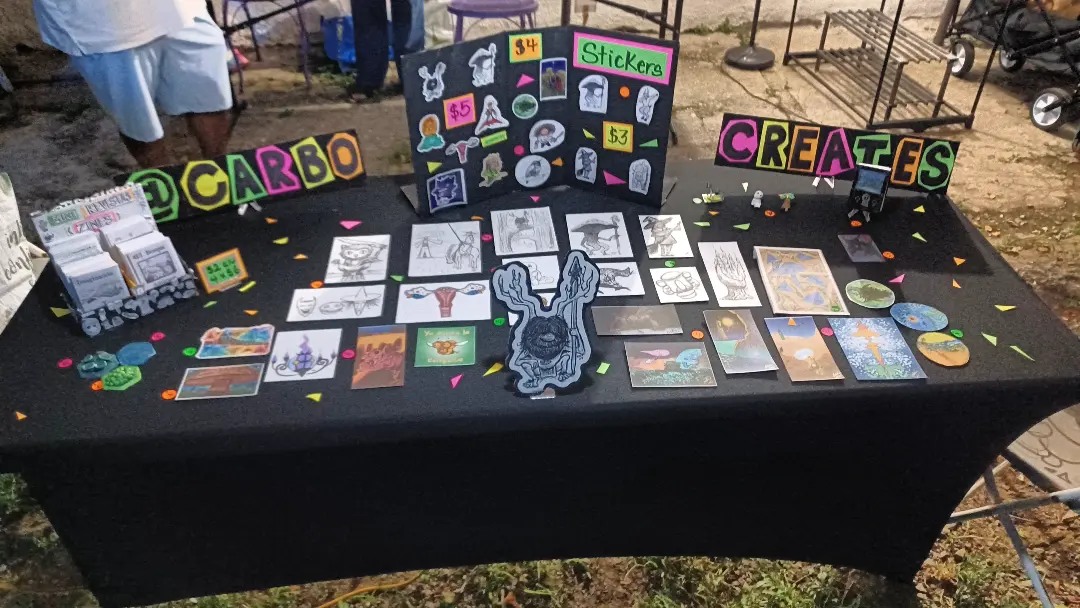
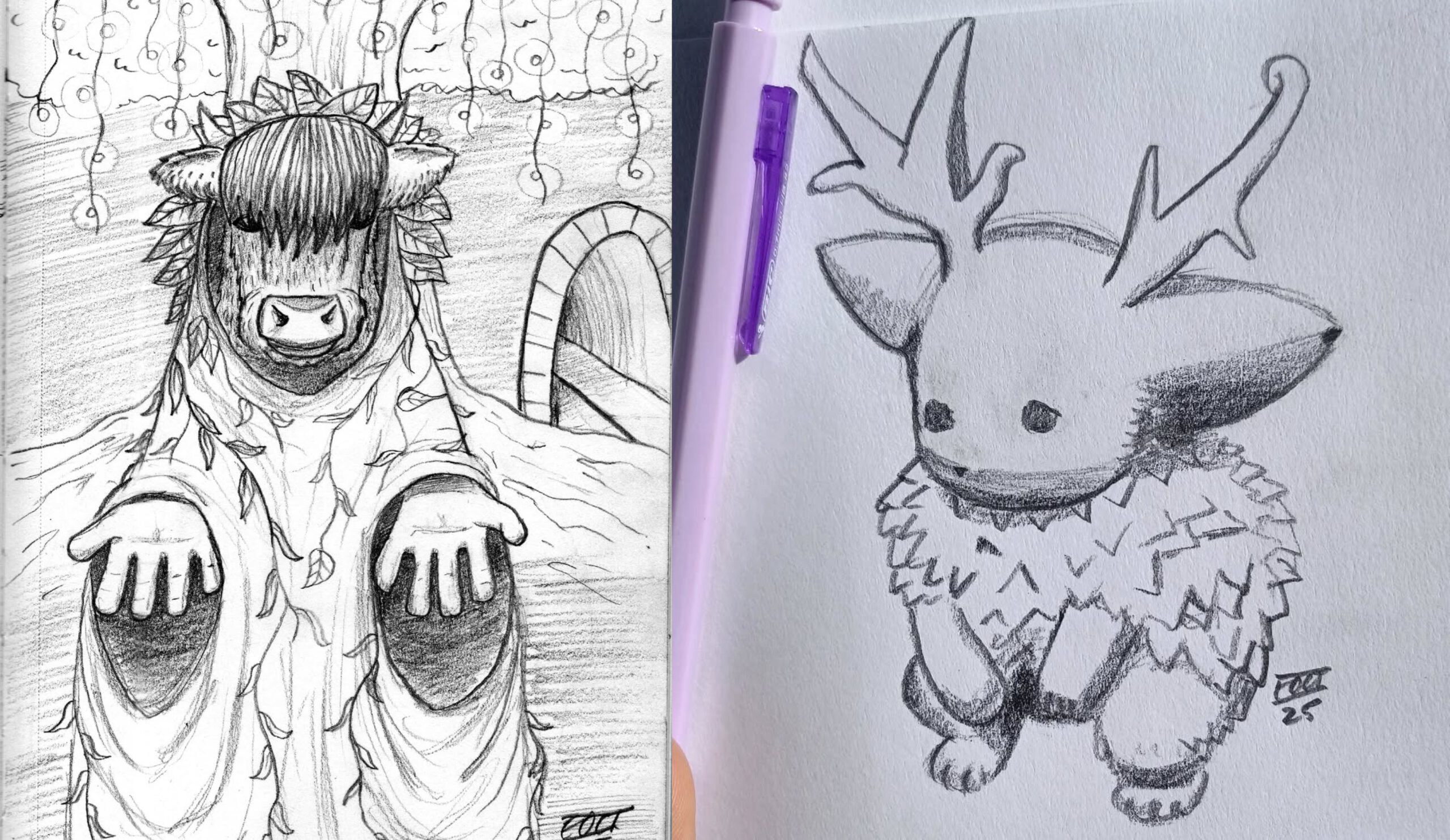
Hello there! My name is Eddie, also known as Carbo_Creates on social media. I create all sorts of things. I draw (characters, maps, places, etc.), write adventure modules and mini-zines, make dungeon tiles, and create sculptures (in clay and cold porcelain). I also design tattoo pieces.
How would you describe your art or creative endeavor?
I would describe my creative endeavor and art style as chaotic and improvised. Sure, I can have a theme or idea in mind, but I let things flow as they go. I might start drawing something, but that inspires another vision or way around it, and I try to explore that too—basically, a chill, go-with-the-flow kinda mindset.
How did you discover TTRPGs?
I started playing and getting involved with TTRPGs in 2017, but I had heard of them way before that. Funny enough, what got me interested again was watching a live play where Matt Mercer game-mastered, and Vin Diesel was a player. I saw it and thought that I’d love to play that game.
(I believe he’s referring to this!)
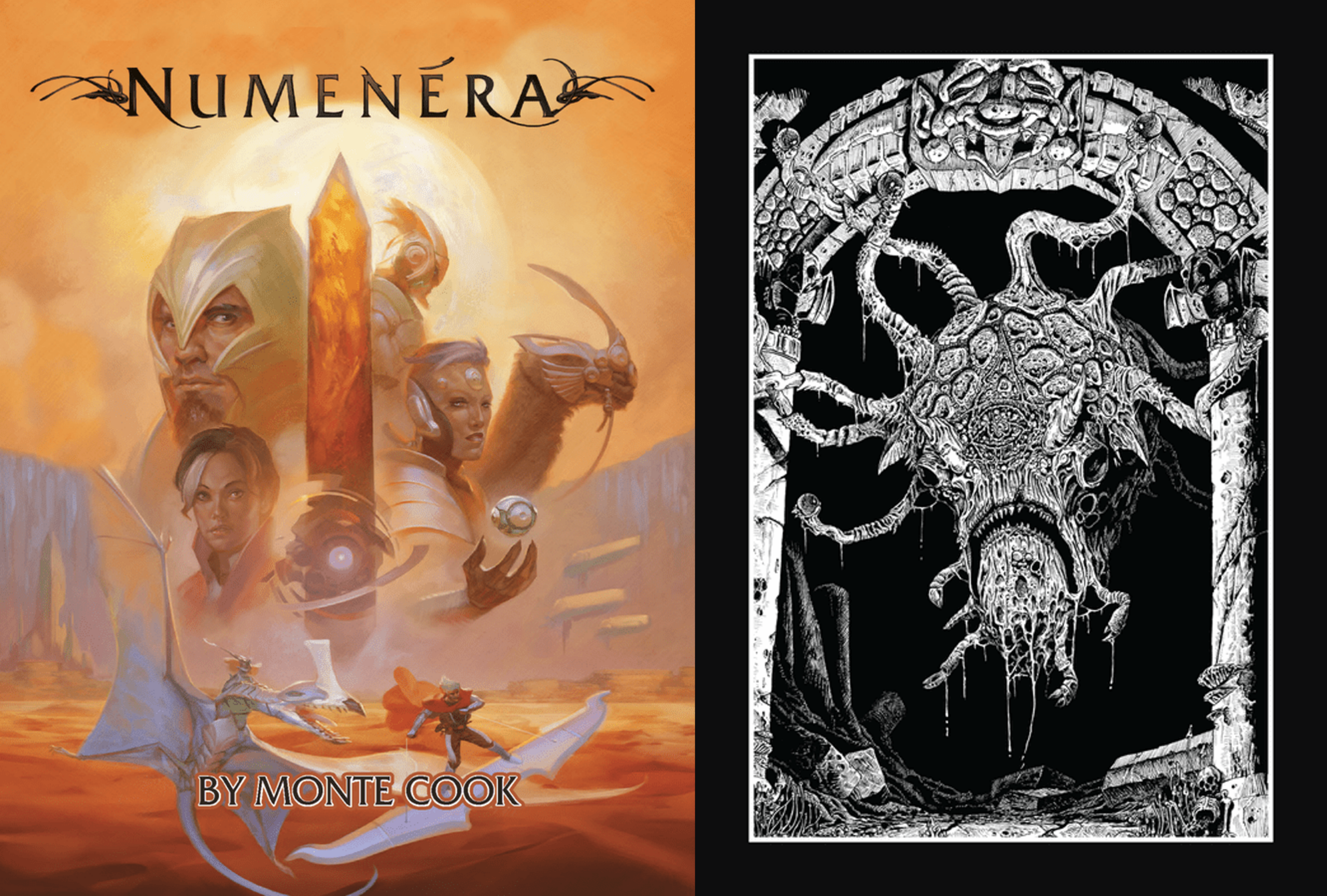
It’s like making a movie or series episode in collaboration, and I love movies and fantasy shows. After that, I went online and read everything I could find about systems, adventures, modules, bestiaries, etc. I really fell in love with the Numenera setting. It got me through the Hurricane Maria recovery time.
Do you actively play TTRPGs? What are you playing?
Right now, I have a campaign starting soon with a group of players from various Puerto Rico TTRPG Discord servers. It’s a Shadowdark campaign that I will GM for.
What do you want to play next?
I really want to get that Shadowdark campaign going, but I haven’t set an official date for it yet. Beyond that, I would also love to GM Numenera and play one-shots in a variety of different systems.
What projects do you have available right now, and what are you working on next?
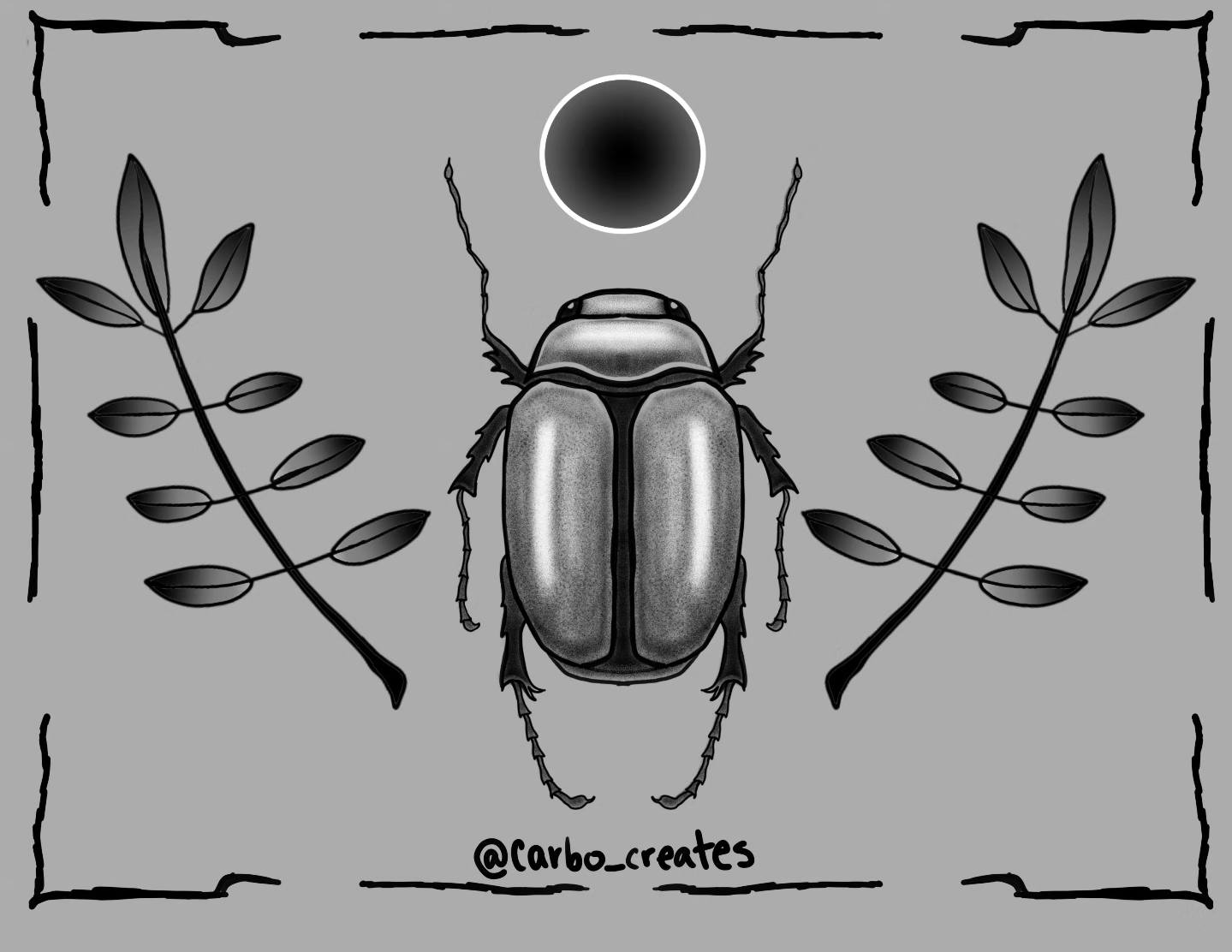
Wow, this will be a long answer, so I’ll try my best to keep it short! I have many mini-zines available, from a simple D6 ruleset inspired by EZd6 and other TTRPGs to setting-inspiring zines. I also sell stickers and prints of my art. I’m currently working on turning my first published adventure, The Grand Palace Opera, into single pages so I can send it to print.
I also have a lot of ideas in mind, and some of them are starting to manifest, like a dungeon synth album and many more mini-zines. On the drawing side of things, I’m focusing on doodling every day. I love how it has inspired some of my best work. Also, I do art commissions and will soon be taking clients for tattoos!
Where can people find your work?
My work can be found on my Carbo_Creates itch.io and DriveThruRPG pages. You can also find me on Instagram and Facebook as Carbo_Creates. Most of my work is free in digital form, except for my music and The Grand Palace Opera adventure zine for Shadowdark.

Any closing thoughts? To close, I must thank you for this opportunity to share my story with TTRPGs and my art. To anyone reading this: keep imagining a better world, keep playing and having fun, experience joy in the little things, and explore your creativity as much as possible. Oh, and I guess check out my work!
We will definitely check it out, Eddie! I am really looking forward to seeing your future projects.
On a general note, I am actively looking for other Puerto Rican creatives in the TTRPG space—creating art, writing, or whatever it may be—who would like to share their experiences and their work. Your art does not even have to be directly related to TTRPGs, but I want to continue sharing interviews with Boricua gamer-creatives for this ongoing Sunday series.
I’m also open to interviewing other creators worldwide who want to share their art and experiences or have me review their products. If you’d be interested in a conversation or have some game-related project you’d like me to look at, reach out here via the blog or on my socials! I want this year of celebrating my 40th gaming anniversary to be a time to talk with and get to know other gamers and creators, and to help spread the word about new, interesting projects in our gaming space.
Categories: Tabletop Gaming Blogs
D100 Victorian Underground and Underdark encounters For the Belle Époque, Red Rpg By The Red Room & Troll Lord Games Victorious Role Playing Game
Here is a custom d100 Encounter Table designed for the subterranean depths beneath a Victorious campaign. It bridges the gap between the historical, soot-stained Victorian Underground (sewers, tube tunnels, catacombs) and the cosmic horror, primeval dangers of the deep Underdark (caverns, forgotten civilizations, and hollow-earth fringes).Use this table when your heroes descend into the Needleshttp://www.blogger.com/profile/11243274667834930867noreply@blogger.com0
Categories: Tabletop Gaming Blogs
The Claw Arch Villain For the Belle Époque, Red Rpg By The Red Room & Troll Lord Games Victorious Role Playing Game Including Minions, Lair Country, and More
The Claw is one of the most bizarre, visually striking, and historically significant supervillains of the Golden Age of Comic Books. Created by Jack Cole (who later created Plastic Man), The Claw first appeared in Silver Streak Comics #1 (December 1939) published by Lev Gleason Publications. The blog post picks up right from Using the Belle Apoque, Red Rpg By The Red Room & Needleshttp://www.blogger.com/profile/11243274667834930867noreply@blogger.com0
Categories: Tabletop Gaming Blogs
Ghost Crest Peak
By Taron Pounds, Lawrence Schick
Landof the Blind
OSR
Levels 5-10
Landof the Blind
OSR
Levels 5-10
Three relics have been stolen from their owners, and worries have spread about the power one person would have with all three in their possession. Word of a substantial reward for their return spread, with a poem as the only clue.
This 36 page adventure uses about twelve pages to describe the eighteen rooms of White Plume Mountain. A homage/updated version with the serial numbers scrubbed off, it is trying hard on the ease of use front but loses the charm of White Plume by under-describing.
I’m down with the overall goal here. Updating some of the classics to improve upon them seems like a fine idea. I mean, I still have several Dungeon adventures on my ToDo list to overhaul and update for when watching paint drying becomes too exciting for me. As an experiment to understand layout and formatting and what’s important I think it’s an interesting idea. It also gets some eyes on older adventures, many of which forged new conceptual ground. And then also I suspect time would be better spent on new adventures, but, who am I to tell someone how to spend their few remaining precious moments of life? There’s another aspect to this as well: the system-neutral thing. It’s not really system-neutral, it’s aimed at D&D-like systems, with stat blocks to prove it. I’ve never really found a problem using adventures for other systems in whatever I’m running (which is generally B/X based with a heavy bend to oD&D) however I suspect there is a certain market limitation, or advantage, to saying “Works with Mork Borg!” in any event, I think this is the proper way to do it; stat it for a B/X as the foundation of most systems follows, and then note what it can be used/adapted for. Perhaps a little disingenuous in the marketing, but, meh, at least you planted a stake in the ground.
It’s pretty obvious what they doing with the formatting. Bolding, bullets, icons, headers and so on. There’s a little intro section, a few sentences or so with some bolded words and then some bullets to follow up on those. The icons are probably overkill, meant to tell you “this is a trap” or “this is a monster.” All in all, I think there’s too much here. The pages end up busy and your eyes tend to glaze over a bit. This is a not uncommon problem in some adventures. Folks recognize that formatting and layout can bring clarity but they they take it too far and it can contribute to obfuscation. If everything is important then nothing is, or something similar to that saying. I’m going to list the lighting condition, door, stone texture, etc in every room, would be a similar problem. No. You have to craft these things carefully. Adventure design, or, room formatting and layout, is not a one size fits all issue. You can have go to techniques but you have to use them carefully to highlight certain aspects to bring clarity. When something becomes rote and is generically applied then it can lead to problems.
But the major problem here is that this comes off more than a little soulless. There was a charm in White Plume that came through and this doesn’t feel like it has that. This feels like a bunch of rooms with challenges in it and little else whereas White Plume had just a little bit more going on to ground the rooms and encounters. S2 has a rather mangy and bedraggles sphinx squatting in the water. This, however has “a sphynx stands on the other side” [of the forcefield.] This has six globes of silver dangling from the ceiling, with bullets for their contents. S2 had silvered glass globes dangling from the ceiling on unbreakable wires, that a good crack would shatter, dumping their contents in to the muck below. It’s a much fuller picture and paints a much more evocative scene than just a mostly fact-based list of the challenges in the room. And this is not cherry picking, it happens over and over again. I ofton encourage folks to think about the room, devoid of mechanics, and create it, then adding mechanics, instead of the mechanics leading the charge. This is how we get the slim strands they hang from and the good crack and the dumping the contents in to the muck. Further, we can see a word choice in S2, spartan but present, that brings this room to life, and that just isn’t present in this adventure respin. While we do get the “silvered” globes, it feels like an extra adjective was just thrown in for the sake of having one rather than painting a complete and evocative picture of the room.
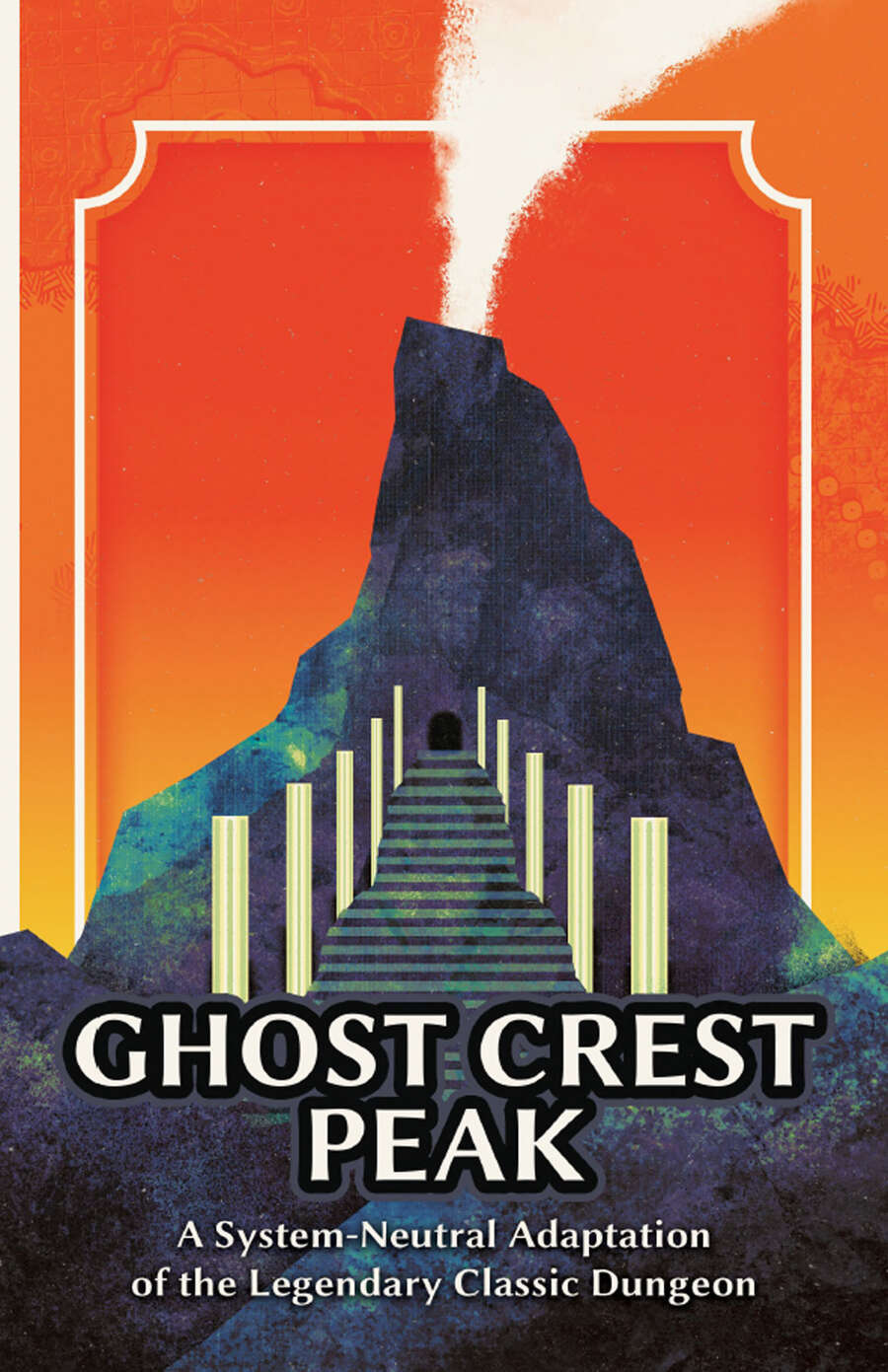
I do like the cover, but that art style is one I find personally appealing. And an attempt is made at the wanderers, with the gargoyles flying a corpse somewhere, for example. It lists factions, but, these are not really factions with a factions game and things they want, it’s just a list of major monsters. I not, also, there is a disconnect between the text and the supplementary pointcrawl map. (The adventure has a “real” map also.” The pointcrawl map point out rooms with the mucky water in them, but it disagrees with the text on rooms 13/14. No so great when the reference material is off.
So, it’s White Plume, explicitly, with updated text and layout and the serial numbers filed off. But the updated text has removed the specificity that brought White Plume to life. Thus, it is just the wacko room challenges boiled down to mostly mechanics. And that’s not the vibe I’m looking for in an adventure.
This is $5 at Drivethru. The preview is the whole thing. Yah! Great preview. I might suggest checking out page ten of the preview/page six of the product. That is the Globe room. I think it encapsulates the formatting/layout and the derth of specificity in the descriptions.
https://www.drivethrurpg.com/en/product/561058/ghost-crest-peak?1892600
Categories: Tabletop Gaming Blogs
[Parsulan] Mayura

The tale as it's told in Mayura (a city, it should be said, that never chooses truth over a good story) is that an aged, latter-day Wizard-Kings, Mordrey, upon his death split his kingdom among his children. For reasons known only to himself, he bequeathed rulership of his capital to his most unassertive son. While Mordrey had seen fit to place powerful wards upon city so that no one of his blood could rule if they took the city by force, the timid Prince despaired that one or another of his grasping and ambitious siblings would find some indirect means kill him and take the prize. Fearing any day might be his last, he threw himself into pleasures to live life to the fullest. He began spending his inherited fortune on distractions. Entertainers and artists flocked to the city to partake of his largesse.
The prince died young and without an heir, though not at the hands of his siblings but as a result of his sybaritic pursuits. By then, he had inadvertently placed the city on the course it holds to this day, passing through the end of the Age of Magitech, the Demon War, and the darkness that followed, largely unchanged, if not unscathed.
It is true that, despite popular depictions (often popularized by the troubadours and theater troupes of Mayura, itself), a city of its size and importance must have citizenry beyond artists and performers. Of course, there are craftsmen, merchants, beggars, and servants. But how many artisans are only supporting themselves until the quality of their verse is recognized and rewarded? How many moneylenders or soldiers are perhaps actors researching a role?
Mayura is still a monarchy technically, though its ruler is not of the line of Mordrey. Instead, a grand, annual, nonlethal fighting tournament held at the Aristeion colosseum used to select who will serve as the ceremonial ruler for the next year and a day. Competitors are drawn from all over Parsulan, and the event is bolstered by matches and demonstrations by the professional gladiators in the arena's training schools. The Mayura citizenry feel that having such a formidable and dynamic public representative helps deter otherwise bellicose neighbors. They also appreciate the coin brought in by the spectators to the competition.

The work of running Mayura is done by an elected council of citizens interested in that sort of drudgery. The actual ruling in the sense of setting a course for the city's future is currently done by an unelected former dancer, the Lady Petalutha. The paramour of a former four-term King, Petalutha has parleyed her celebrity into a position of real power, and no one sense has been willing to brave public disapproval to make her give it up. By all accounts, however, she is a capable leader, bolstering Mayura military, leading to a quelling of the coastal pirates, and pushing for trade deals that have benefited her city. She is not well liked by the old nobility who control the lands around the city-state, however, who would prefer a more tractable head of state.
Categories: Comic Book Blogs, Tabletop Gaming Blogs
d100 Random Sword & Sorcery Barbarian Hordes For Castles & Crusades rpg Campaign
Creating a d100 table for barbarian hordes requires a mix of environmental flavor, unique cultural hooks, and immediate mechanical threats suitable for the Castles & Crusades Siege Engine system. This picks right up from Two D100 Random Sword & Sorcery Underdark & Underground Encounters Table For Castles & Crusades CampaignsBelow is a breakdown of 100 barbarian groups, Needleshttp://www.blogger.com/profile/11243274667834930867noreply@blogger.com0
Categories: Tabletop Gaming Blogs
Review and Commentary On The Red Room's Red Alerts issue #1 For The Red Rpg System and Other OSR Role Playing Games
In this issue of Red Alerts issue #1 you will find The Abandoned Temple of the Veiled Sun, a one-shot scenario for Savage Swords written by Mark Brooks, who also wrote A Red Vision of an Alternative Retro-Future. Roger Jones contributes The Price of Silver, an adventure for the upcoming western game Blood and Dust and a short story, Brides of Darkness. The Red Room team presents Absolution Needleshttp://www.blogger.com/profile/11243274667834930867noreply@blogger.com0
Categories: Tabletop Gaming Blogs
Two D100 Random Sword & Sorcery Underdark & Underground Encounters Table For Castles & Crusades Campaigns
This d100 table is designed for the high-adventure, "siege engine" style of Castles & Crusades, blending classic dungeon crawling with the eerie, atmospheric tension of the deep earth. This blog post continues from Two D100 Sword & Sorcery sewer & dungeon encounter tables For Castles & Crusades CampaignsUnderdark & Underground Encounters (d100)d100EncounterDetails /Needleshttp://www.blogger.com/profile/11243274667834930867noreply@blogger.com0
Categories: Tabletop Gaming Blogs
OSR Review & Commentary On The Crusader Journal #28 For Siege Rpg System, Castles & Crusades and OSR Games
The Crusader Journal #28 marks the significant revival of Troll Lord Games' flagship magazine after a decade-long hiatus. Released in 2025, it serves as both a "journal of intrepid adventure" and a bridge between the classic era of the publication and the modern OSR (Old School Renaissance) scene.
Categories: Tabletop Gaming Blogs
Arcton: From Ingala to the Wastes Crowdfunding
Do you remember my interview with Eliana Falcón-Dvorsky a few weeks ago? She is officially crowdfunding the project we discussed, Arcton: From Ingala to the Wastes, over on BackerKit!
Here is the description of the setting directly from the campaign page:
What is Arcton?

“An uncontested and insurgent undead army laid waste to the frozen nation of Arcton centuries prior. Now, 8 oligarchical Liches oversee their respective regions, sending their Officers to craft their undead labor force out of their own living citizens. These powerful and arrogant entities consume and destroy the land that once held a vast resource of wild and unpredictable magic.
However, the story is not truly about them. Arcton is a vast and distinct nation with various cultures, people, customs, and beliefs that remained isolated from region to region. This is the story of the details, the inhabitants, and the dangerous, but beautiful, land, as complicated and nuanced as it can all be. But most importantly, this story is about you.”
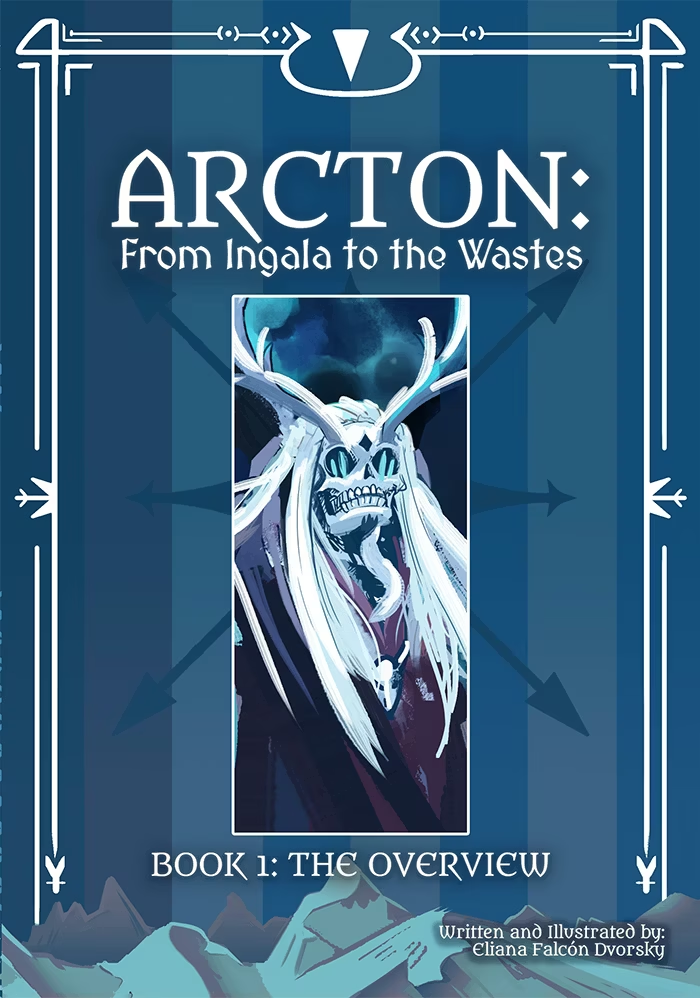
Eliana is an active member of the Puerto Rico TTRPG community and an absolutely amazing creator. The project is already fully funded, which is fantastic! I am proudly a backer, and if this setting interests you, I highly invite you to check it out and support it if you can.
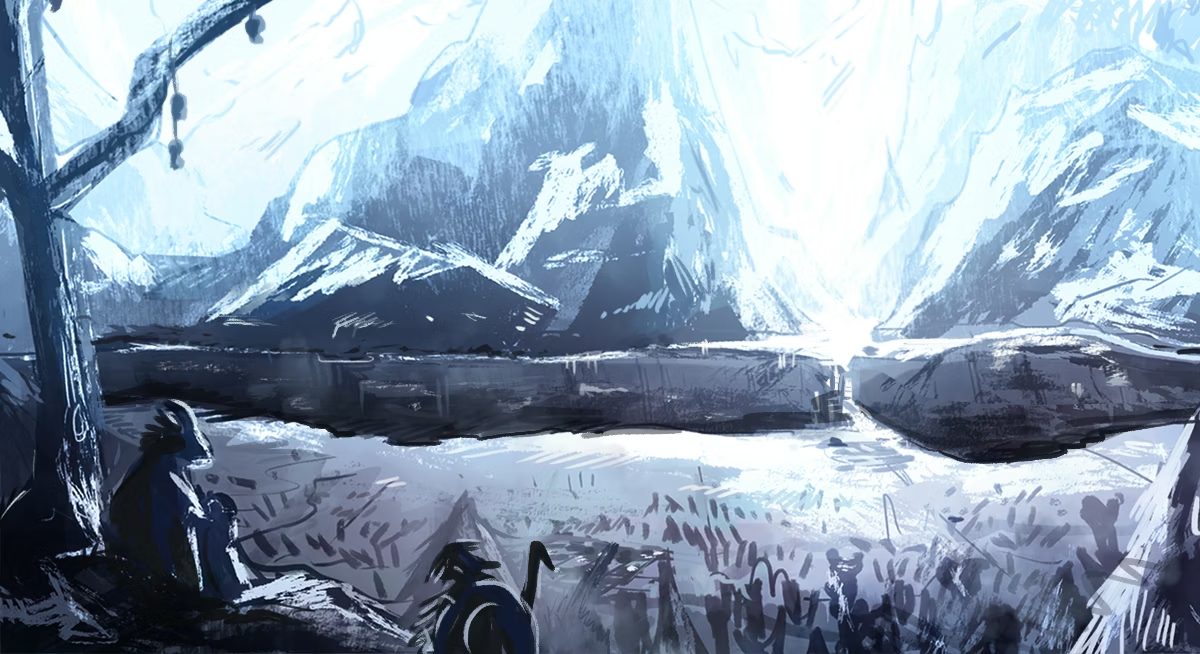
I wish Eliana continued success with this amazing project!
Project link: https://www.backerkit.com/c/projects/cosmographia/arcton-from-ingala-to-the-wastes-books-1-and-supplements
Categories: Tabletop Gaming Blogs
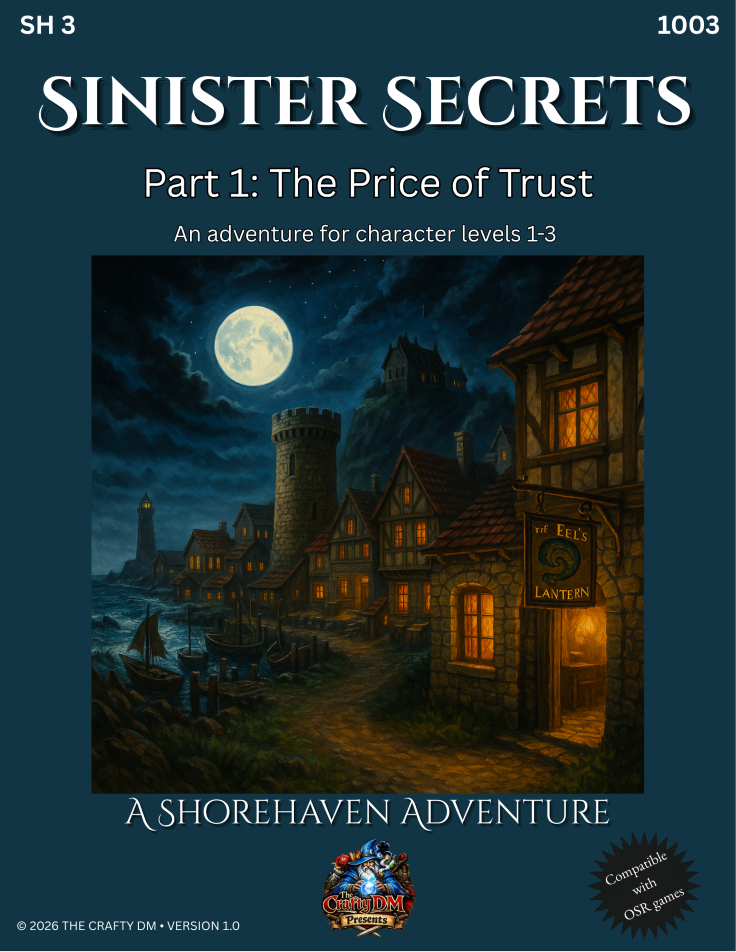
The Price of Trust
By The Crafty DM
Self Published
OSR
Levels 1-3
Self Published
OSR
Levels 1-3
Arriving with little coin and no reputation, the player characters must earn their place through action, not titles. The town is wary, its people practical, and its problems real. Strange signs gather along the docks, the nearby wilds grow unstable, and something stirs beneath the waterline. Through investigation, negotiation, and hard-earned victories, the party builds trust with the townsfolk while uncovering the first threads of a larger danger.
This 39 page adventure presents three mostly scripted fights mini-quests in a small fishing town. They follow a pretty rigid outline with some kabuki of interactivity that amount to monologue, fight, monologue. It seems to have some U-series overtones.
We’re not starting out strong with this one. The pretext here is that the party is new to town and they have to do a bunch of mini-quests to gain the town’s trust. Then, in another module in the series the town will trust them enough to give them an actual task.This strikes me as aking to the asshole quest-giver tropes who treats the party like shit and still expects them to run errands. The implicit assumption is that you can treat the PC’s like shit and that they have no free will. Yes, we all want to play D&D tonight but how many hoops do we need to jump through before they just go somewhere else to seek their fortune? The party has free will. This is followed up with bythe designer with a comments “Not all of these quests are presented with full detail in this module. This is intentional, allowing you to tailor certain tasks to the personalities, abilities, and backstories of your players.” I see this sometimes in adventures. This is inevitably NOT a sealed off passage for the DM to expand upon. It is instead getting ahead of criticism by saying the flaws exist on purpose. The whole It;s Up To The DM To Bring Life To The Game thing. Which, while true, ignores the central tenant of adventure writing for others: you’re supposed to be helping the DM out. Leaving a sealed off passage is great. Flaws in execution are not.
You’re in town, arriving in a bar in the opening read-aloud. What follows is a series of mini-quests that all follow the same outline. Some comes up to you to ask you to do something. You talk to them. You go to a location and maybe roll some dice in a performative way to “investigate.” You get in a fight. You talk to the person who gave you the quest. I know, this sounds kind of like the platonic outline of a quest, but, the difference is that this is three scenes. Someone runs to get you. You talk to a fisherman and look at a body and talk to an old lady. You might roll some dice to look at a body. You go back to the docks at night (I hope …) and get in a fight. You talk to more people the next morning and are told you did a good job. You talk to someone about a druid. You go looking and fight some woodland beasts in three waves. You talk to the druid and do the performative thing. It’s all a really simple pattern here.
There is nothing really to fail, except I guess the combat. If you don’t do the thing you are railroaded in to then you’re instructed to modify the end monologue but to keep the arc going. On the docs, the Sea Devils you fight are looking for the body you examined, and that get stolen no matter what you do. I guess if you have it strapped to your chest and chained to you it still gets stolen?
It’s just so … obvious? Low effort? Read a bunch of text. Lots of read-aloud and lots of italics. Everything just follows along the “plot” without any deviation, no matter your actions. Your actions and die rolls don’t really matter. What’s the point of this?
It’s just a railroad of an adventure with a VERY simple outline of a pattern that repeats. I mean, again, I get it. We;re playing D&D tonight. But the meaninglessness of it all. Rolling dice for no reason. No pretext of choice at all. Yes, the DM can fill in and bring it to life. But you have to give them something to work with.
A haunted house on a hill. Sea Devils Lizardmen, The house in this is red herring, not even really covered. The lizardmen are friendly. But it’s the same elements as the U series. It’s fine, I guess. You get to reimagine and respin the classics. Well, if done right. And this isn’t done right. Perhaps the platonic example of a low-effort adventure that one might throw together on the back of a napkin in three minutes before the game starts?
There is no price of trust in the adventure. And I’m not sure I’d come back for anothe rgame if this were the campaign kickoff.
This is $3 at DriveThru. There is no preview. There is an annoying youtube promo.
https://www.drivethrurpg.com/en/product/563326/sinister-secrets-the-price-of-trust?1892600
Categories: Tabletop Gaming Blogs
Wednesday Comics: DC, August 1985 (week 3)
I'm reading DC Comics' output from January 1980 (cover date) to Crisis! This week, I'm looking at comics that were published on May 16, 1985.
Batman #386: This was the subject of the last recorded but to date unreleased episode of The Bronze Age Book Club and an episode I am fond of. Moench and Mandrake set out to create a new major Batman villain, and they are more successful here than Moench's attempt with Nocturna and Night-Slayer at least to the extent that Black Mask continues to appear and has even been in a movie.
We're introduced to Roman Sionis scion of a wealthy family and subject of childhood trauma in parallel to Bruce Wayne. After his company releases a poorly tested cosmetic that has horrible potential side effects, Sionis is ruined and snaps, becoming the masked crime boss Black Mask and contesting with Batman as the head of the False Face Society of Gotham. Black Mask uses his toxic cosmetic to kill his enemies, and Bruce Wayne is his next target.
Jemm, Son of Saturn #12: Potter and Colan/MacLeod bring the series to an end, if not a definitive one. The Red Saturnians storm the one remaining ship of the White Saturnians and Synn, grieving the death of her lover, distractedly agrees to end hostilities, but in no way indicates a willingness to make peace with Jemm. In fact, Jemm's own people are still ambivalent about his actions. He flies to Earth to save Luther from the Kamah, the last belligerent Koolar. His fight with her is sort of perfunctory, but its decisive. Meanwhile, Lincoln and Crazy Eddie find Bouncer still alive in the rubble. They offer him to come with them to find a place to live and he agrees. They reunite with Luther along the way, but not before the boy and his alien friend say their goodbyes. Jemm returns to his people even if they are not yet ready to embrace him.
Amethyst #8: I have this issue, but I didn't remember anything about its contents. Mishkin/Cohn and new artistic team Jurgens/Kesel (though we're told Colon will return to the title he co-created next issue) finish the Fire Jade arc. After her identity is revealed to Princess Emerald, Fire Jade attacks, but Prince Garnet appeals to her, and she hesitates, allowing Amethyst to take out the demonic creature commanding her. Then, what's left of Lady Emerald in Fire Jade, sacrifices herself to stop the grim reaper from taking Citrina. It's doesn't have the old woman, but it does give her enough time to pass on custody of Gemworld to Amethyst before dying.
Meanwhile, Prince Topaz and Lady Sapphire are caught in a storm and seek refuge in an isolated city which is under the leadership of White Opal, brother to evil overlord.
Arak Son of Thunder #47: Arak and friends are in a harbor in China and Arak is unsettled by all the dragonboats given the beef he's got with the Serpent. Seemingly confirming his suspicion, a real dragon attacks some ships and Arak dives in to save a woman, but Arak himself is knocked out. He's rescued by his old ally Haakon who is in China possessing as a Byzantine ambassador as part of a scheme. After all that, Valda and Arak get some time alone, but then Mu-Lan attacks, and it isn't the Disney version!
Flash #348: After seeing the footage Frye recorded, the Flash believes Reverse Flash is back. He tells Cecile, who starts an investigation of her own. Meanwhile, Reverse Flash keeps taking down the Rogues, and some in the police force wonder if the Flash is responsible.
While all this is going on, the jury in the Flash's trial deliberates. They are deadlocked until Nathan Newbury steps in. Contrary to my expectations, he actually seems to be trying to help the Flash. He uses a device to show the jury what really happened: that the Flash is Barry Allen and so had a good motive reason to murder use lethal force to stop Reverse Flash. They jury members are all going to vote for acquittal, but then Reverse Flash appears in the strange realm Newberry has taken them to and somehow possesses him. He then uses Newberry's power to make the jury vote unanimously "guilty."
Legion of Super-Heroes #12: Levitz and Lightle/Mahlstedt send Timber Wolf and Karate Kid's Sensei to Lythyl, a planet like a combination of a deadly martial arts tournament and a bondage club, to fulfill a request from their dead friend. Things get bad enough that some other Legionnaires have to come to the rescue, but they managed to rescue a boy named Myg.
Omega Men #29: Klein and McManus/Mitchell continue the Omegans' trying to get out of the Psions' research station. Their benefactor, the mysterious Artin, through robot minions requires them to complete a task on their way out. The Omega Men penetrate the Psion temple of the Four Questions with Kalista projecting an image of the Psion leader Malthus. In the end, the identity of Artin is revealed, and its Primus, only he doesn't look like the Primus we've known.
Red Tornado #2: Busiek and Infantino/McLaughlin continue on from last issue in pretty much the same mode. The Construct gloats while civilians reject Tornado even as it helps them, and Superman shows up to enforce that the JLA meant their prohibition of Tornado's heroics by tearing the android limb from limb. He self-repairs but in the end he's had enough and says he's never going to help humans again. The Construct takes control of electronic devices across the globe. T.O. Morrow figures out the Construct is behind all this and begins formulating a plan to fight back.
Star Trek #16: We get a new writer this issue, L.B. Kellogg, with a same artistic team. This story is less like a TOS episode and more like something we would have gotten in a later series. Sulu, Uhura, and Bryce go on an undercover mission in a capture ship to make contact with a dilithium smuggler on a space station who happens to be an old flame of Uhura's. Meanwhile, Kirk and the Excelsior discover the mining is being done by slave labor. Uhura and Sulu take down her old lover, putting an end to slave trading and illegal mining, and Kirk promises to relocate the aquatic native species whose environment has become untenable.
Superman #410: Bates and Swan/Williamson give us another one of those action-free puzzle stories so common to Superman comics in the era. Superman stops a satellite falling toward Hawaii by kicking it into a volcano, but after Clark Kent writes the story evidence goes forward that it didn't happen, and Clark's fired in disgrace after (as Superman) he's forced deny being the source of the story to keep Earth's trust in Superman. It's all a hoax contrived by Lex Luthor in a plot to take down Superman, but how it plays out we'll have to see next issue.

Batman #386: This was the subject of the last recorded but to date unreleased episode of The Bronze Age Book Club and an episode I am fond of. Moench and Mandrake set out to create a new major Batman villain, and they are more successful here than Moench's attempt with Nocturna and Night-Slayer at least to the extent that Black Mask continues to appear and has even been in a movie.
We're introduced to Roman Sionis scion of a wealthy family and subject of childhood trauma in parallel to Bruce Wayne. After his company releases a poorly tested cosmetic that has horrible potential side effects, Sionis is ruined and snaps, becoming the masked crime boss Black Mask and contesting with Batman as the head of the False Face Society of Gotham. Black Mask uses his toxic cosmetic to kill his enemies, and Bruce Wayne is his next target.

Jemm, Son of Saturn #12: Potter and Colan/MacLeod bring the series to an end, if not a definitive one. The Red Saturnians storm the one remaining ship of the White Saturnians and Synn, grieving the death of her lover, distractedly agrees to end hostilities, but in no way indicates a willingness to make peace with Jemm. In fact, Jemm's own people are still ambivalent about his actions. He flies to Earth to save Luther from the Kamah, the last belligerent Koolar. His fight with her is sort of perfunctory, but its decisive. Meanwhile, Lincoln and Crazy Eddie find Bouncer still alive in the rubble. They offer him to come with them to find a place to live and he agrees. They reunite with Luther along the way, but not before the boy and his alien friend say their goodbyes. Jemm returns to his people even if they are not yet ready to embrace him.

Amethyst #8: I have this issue, but I didn't remember anything about its contents. Mishkin/Cohn and new artistic team Jurgens/Kesel (though we're told Colon will return to the title he co-created next issue) finish the Fire Jade arc. After her identity is revealed to Princess Emerald, Fire Jade attacks, but Prince Garnet appeals to her, and she hesitates, allowing Amethyst to take out the demonic creature commanding her. Then, what's left of Lady Emerald in Fire Jade, sacrifices herself to stop the grim reaper from taking Citrina. It's doesn't have the old woman, but it does give her enough time to pass on custody of Gemworld to Amethyst before dying.
Meanwhile, Prince Topaz and Lady Sapphire are caught in a storm and seek refuge in an isolated city which is under the leadership of White Opal, brother to evil overlord.

Arak Son of Thunder #47: Arak and friends are in a harbor in China and Arak is unsettled by all the dragonboats given the beef he's got with the Serpent. Seemingly confirming his suspicion, a real dragon attacks some ships and Arak dives in to save a woman, but Arak himself is knocked out. He's rescued by his old ally Haakon who is in China possessing as a Byzantine ambassador as part of a scheme. After all that, Valda and Arak get some time alone, but then Mu-Lan attacks, and it isn't the Disney version!

Flash #348: After seeing the footage Frye recorded, the Flash believes Reverse Flash is back. He tells Cecile, who starts an investigation of her own. Meanwhile, Reverse Flash keeps taking down the Rogues, and some in the police force wonder if the Flash is responsible.
While all this is going on, the jury in the Flash's trial deliberates. They are deadlocked until Nathan Newbury steps in. Contrary to my expectations, he actually seems to be trying to help the Flash. He uses a device to show the jury what really happened: that the Flash is Barry Allen and so had a good motive reason to murder use lethal force to stop Reverse Flash. They jury members are all going to vote for acquittal, but then Reverse Flash appears in the strange realm Newberry has taken them to and somehow possesses him. He then uses Newberry's power to make the jury vote unanimously "guilty."

Legion of Super-Heroes #12: Levitz and Lightle/Mahlstedt send Timber Wolf and Karate Kid's Sensei to Lythyl, a planet like a combination of a deadly martial arts tournament and a bondage club, to fulfill a request from their dead friend. Things get bad enough that some other Legionnaires have to come to the rescue, but they managed to rescue a boy named Myg.

Omega Men #29: Klein and McManus/Mitchell continue the Omegans' trying to get out of the Psions' research station. Their benefactor, the mysterious Artin, through robot minions requires them to complete a task on their way out. The Omega Men penetrate the Psion temple of the Four Questions with Kalista projecting an image of the Psion leader Malthus. In the end, the identity of Artin is revealed, and its Primus, only he doesn't look like the Primus we've known.

Red Tornado #2: Busiek and Infantino/McLaughlin continue on from last issue in pretty much the same mode. The Construct gloats while civilians reject Tornado even as it helps them, and Superman shows up to enforce that the JLA meant their prohibition of Tornado's heroics by tearing the android limb from limb. He self-repairs but in the end he's had enough and says he's never going to help humans again. The Construct takes control of electronic devices across the globe. T.O. Morrow figures out the Construct is behind all this and begins formulating a plan to fight back.

Star Trek #16: We get a new writer this issue, L.B. Kellogg, with a same artistic team. This story is less like a TOS episode and more like something we would have gotten in a later series. Sulu, Uhura, and Bryce go on an undercover mission in a capture ship to make contact with a dilithium smuggler on a space station who happens to be an old flame of Uhura's. Meanwhile, Kirk and the Excelsior discover the mining is being done by slave labor. Uhura and Sulu take down her old lover, putting an end to slave trading and illegal mining, and Kirk promises to relocate the aquatic native species whose environment has become untenable.

Superman #410: Bates and Swan/Williamson give us another one of those action-free puzzle stories so common to Superman comics in the era. Superman stops a satellite falling toward Hawaii by kicking it into a volcano, but after Clark Kent writes the story evidence goes forward that it didn't happen, and Clark's fired in disgrace after (as Superman) he's forced deny being the source of the story to keep Earth's trust in Superman. It's all a hoax contrived by Lex Luthor in a plot to take down Superman, but how it plays out we'll have to see next issue.
Categories: Comic Book Blogs, Tabletop Gaming Blogs
OSR Commentary & Review The Book of Valkyries, published by Night Owl Workshop For Old School Campaign
The Book of Valkyries, published by Night Owl Workshop (authored and illustrated by Thomas Denmark), is a 108-page supplement designed for the Original Fantasy RPG and compatible with a wide range of OSR systems.Released in late March 2026, it serves as a companion to Denmark’s previous work, Norse Beasties, providing deep lore and mechanical integration for the demigoddesses of the Norse Needleshttp://www.blogger.com/profile/11243274667834930867noreply@blogger.com0
Categories: Tabletop Gaming Blogs
Pages
