Your wildly multifarious home!
Tabletop Gaming Feeds
Using Adventurer, Conqueror, King Edition Second Edition Rpg & Castles & Crusades Rpg With B9 "Castle Caldwell and Beyond" (1985) by Harry Nuckols
B9: Castle Caldwell and Beyond (1985) by Harry Nuckols is unique among classic TSR modules. Rather than presenting a grand, sprawling sandbox or a deeply integrated megadungeon, it is a compilation of five bite-sized, single-session mini-adventures designed for levels 1–3.While famously critiqued for its surreal "grab-bag" ecosystem (where bandits, goblins, and giant shrews share adjacent Needleshttp://www.blogger.com/profile/11243274667834930867noreply@blogger.com0
Categories: Tabletop Gaming Blogs
An Interview with Kevin Montijo: A Puerto Rican Artist, Gamer, and Self-Professed Nerd!
Social media is often criticized for the problems it causes for society, and there are certainly many valid concerns. BUT it also has many positive aspects: it has allowed me to meet so many amazing people. Case in point, the subject of today’s interview.
Last week, I was working at a tradeshow, and late in the day, one of the visitors to the booth was this very friendly young gentleman. He engaged with us about the products we were showcasing, and we ended up talking about him being an artist, his love for board games, and the fact that he’s a TTRPG gamer. I told him I’m a gamer too and asked, “Does he know about Puerto Rico Role Players?”
Turns out, I’ve known Kevin in the digital world for almost 10 years! He’s been a participant in Puerto Rico Role Players for years, and we even exchanged messages on Facebook back in early 2017! The last thing I expected was meeting him in person at a trade show. I love the magic of the online gaming community, which allows me to meet people like Kevin. It always makes me happy to meet fellow geeks in the wild!
Having made the connection and already knowing his art form through following him online, I reached out to him to see if he would participate in this series of interviews. He graciously agreed, and he is the subject of today’s post. Without further ado, here we go.
Introduce yourself! Who are you and what do you create?
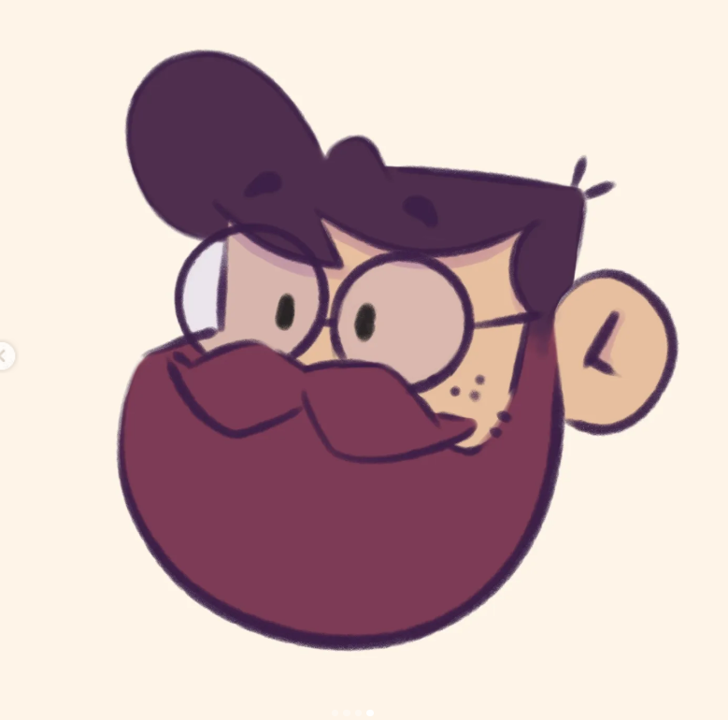
Hello, world! I’m Kevin M., Professor Montijo, or nerdygeekyart (depending on who you ask). I’m a Government Financial Analyst by day, an Accounting and Auditing Professor by night, but in my free time, I make art.
How would you describe your art or creative endeavor?
I would describe my art as colorful, miscellaneous, and delightfully nerdy. On my art pages, you’ll find everything from simple doodles to full illustrations of the things I know and love, as well as professional work I’ve been hired for. Even though my art is more of a personal passion, I’ve been hired for professional projects, such as illustrating and designing art for a physical card game and serving as an Art Director for a PC game available on Steam.
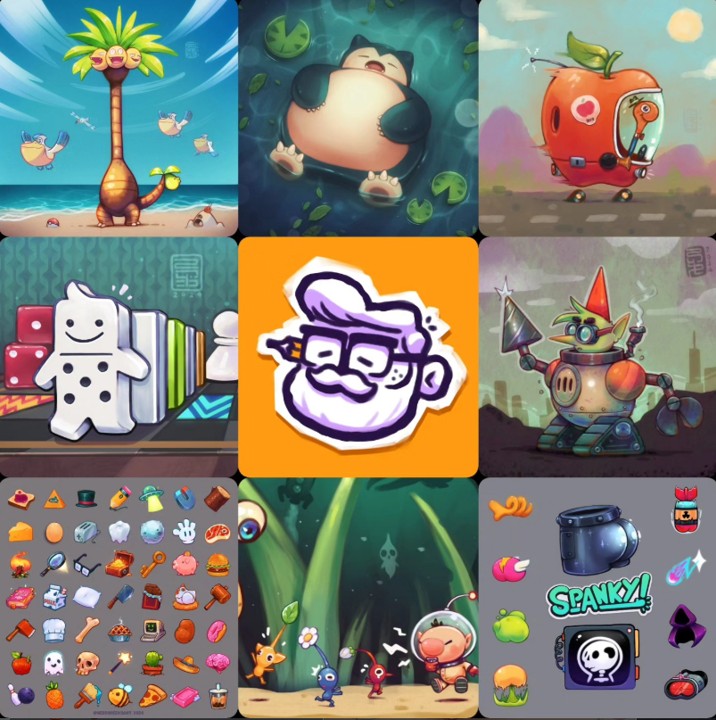
Aside from regular illustrations, you’ll also find game assets, concept art, 3D models/renders, clay sculptures, dungeon maps, and a plethora of art pieces made either digitally or using any number of mixed media—from pen and ink, to alcohol markers, to watercolors, to whatever I can find in my art bins.
How did you discover TTRPGs?
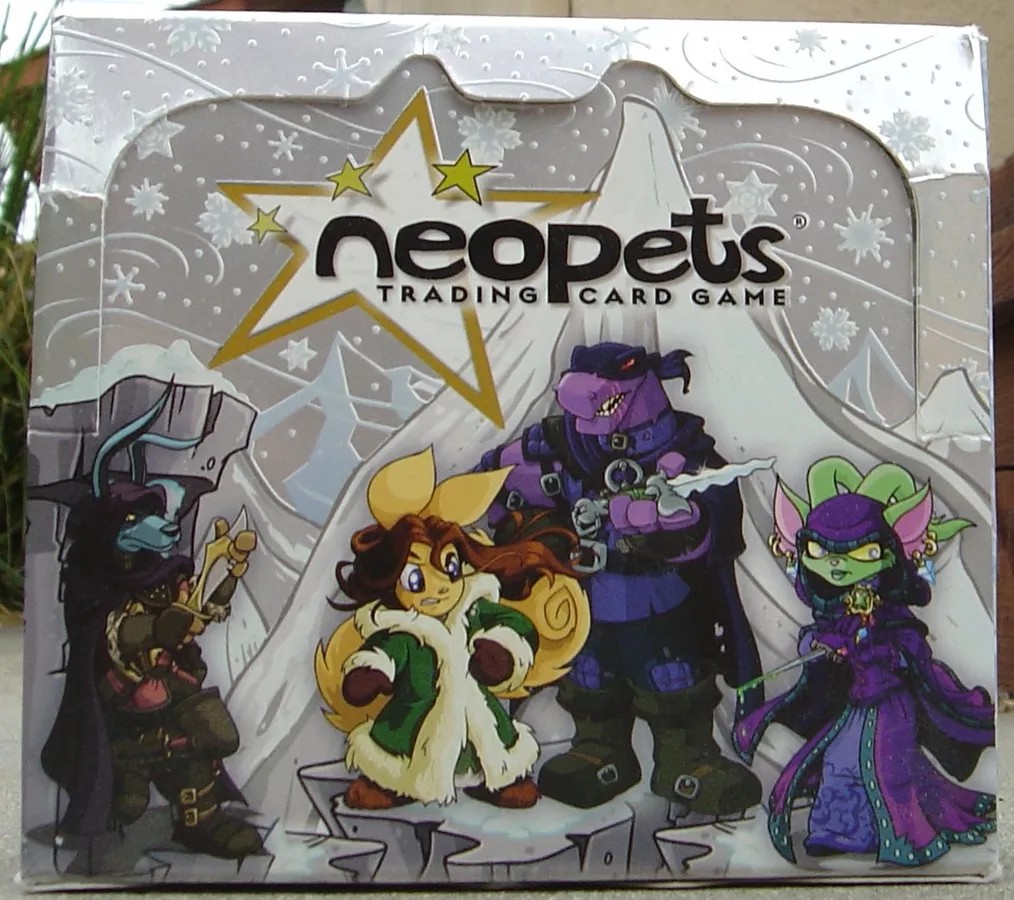
Like many people my age, I grew up playing or collecting cards from various TCGs like Pokémon, Yu-Gi-Oh, and even the Neopets TCG (Yes, I still have access to my Neopets account). Those were, in essence, my gateway drug to the delightfully nerdy activities one could play on the school floor or any available table (other than Tazos/POGs, of course). I was always a fan of classic board games, starting with Monopoly, my great aunt’s favorite, and other classics like Cluedo, Battleship, Operation, etc.
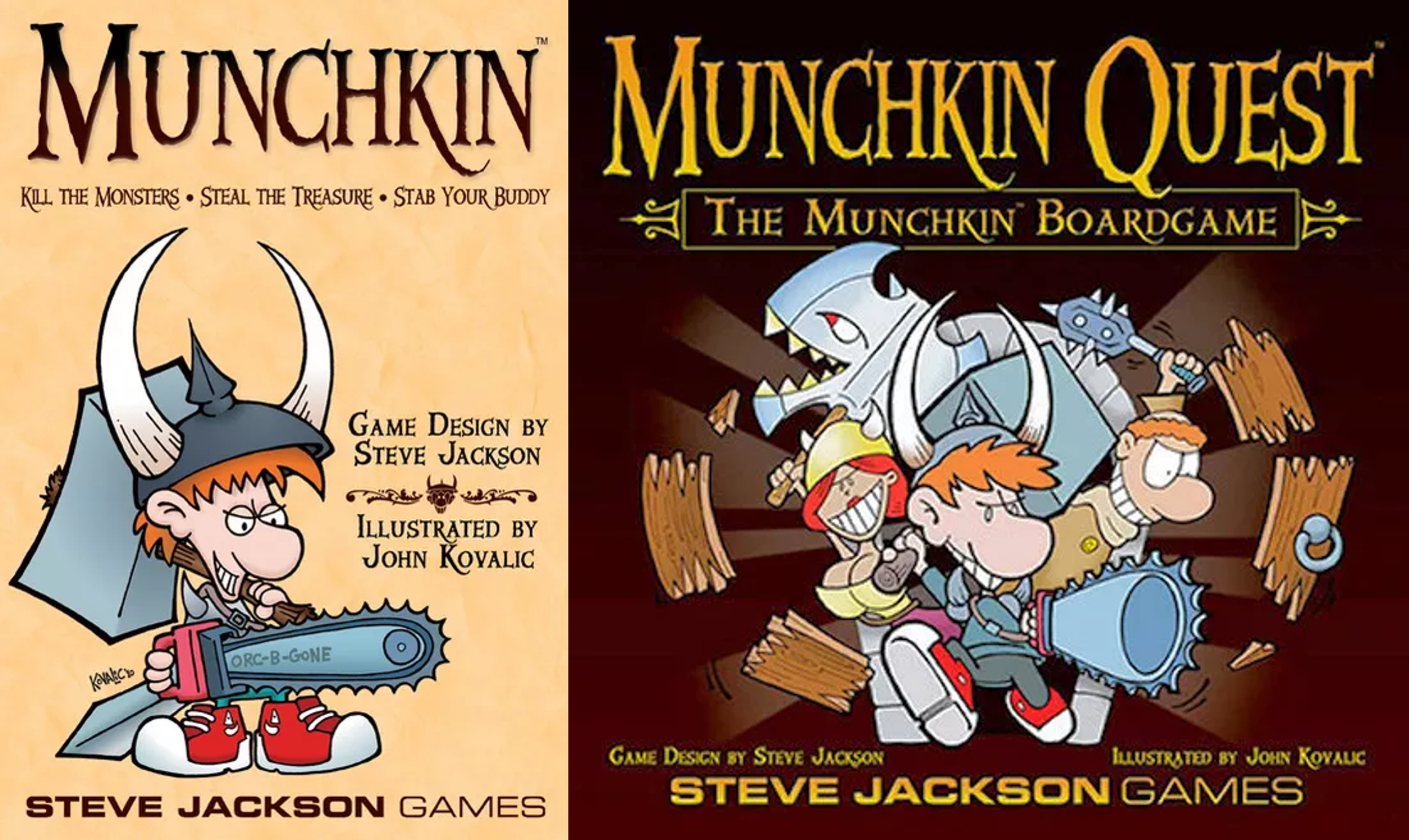
I think an absolutely pivotal moment in my love for tabletop games was when I got my hands on the first edition of a little game called Munchkin. When I brought that compact box to school, my
classmates and I had a blast every single time we played. Each game was entertaining and chaotic, and we often challenged ourselves to draw our characters with all the gear and loot they had amassed throughout their journey to level 10. That led me to eventually getting a more advanced version of the game called Munchkin Quest, in which you actually generated a randomized dungeon as you explored, each room filled with crazy effects, a plethora of wacky monsters to slay, and that oh so coveted loot. I still recall one particularly intense game with my best friend at the time, where, against all odds, we managed to beat the final boss, a level 20 plutonium dragon with a mix of gear, random loot, potions, and sheer luck. Now my collection of tabletop games has grown significantly, nearly reaching 300 different titles and counting.
As for TTRPGs, it’s difficult to pinpoint an exact manner of discovery. I remember visiting a small local comic convention when I was very young, purchasing some comics, collectible figures, and a few other things, when something suddenly caught my eye: a box full of dice of varying shapes and colors. That plethora of polyhedra and platonic solids called out to me like a siren to an unsuspecting sailor. As I rummaged through the box, I ended up picking out a red d20 with blue speckled paint from a now-discontinued Chessex set. That newly acquired icosahedron made me want to research what all those dice were used for. Dungeons & Dragons was, of course, at the epicenter of my search, along with a string of other TTRPGs. Unfortunately, I didn’t know a single soul who played, so I had to push most of that research to the back of my mind for the time being.
Fast forward a couple of years, and I started to learn about the Pathfinder TTRPG. For some reason, the more I learned about it, the more I got into it, and eventually decided to buy one of their starter sets. I became absolutely obsessed with it, reading every bit of material and eventually purchasing the core rulebooks and some adventure modules. That being said, I still knew nobody who played. I went to a small, Christian private school with very few students (my class was made up of just 12), and I didn’t have a personal internet connection during my time at school, so meeting people online was not really an option. For some reason, I longed to play the game so much that it never occurred to me that I could try my hand at being a Dungeon Master/Game Master and teach the game to my small circle of friends. Eventually, as I moved on to college, I managed to get a personal internet connection, make friends who shared my interests, and begin playing a few TTRPGs. The rest is history.
Do you actively play TTRPGs? What are you playing?
The TTRPG I play most actively is D&D, either online or with small groups in sporadic bursts. I’m currently not involved in any active sessions, but I look forward to my next adventure!
What do you want to play next?
There are a few TTRPGs or settings that I own the core material for and would love to try out, but I haven’t had the chance yet. These are mainly, but not limited to:
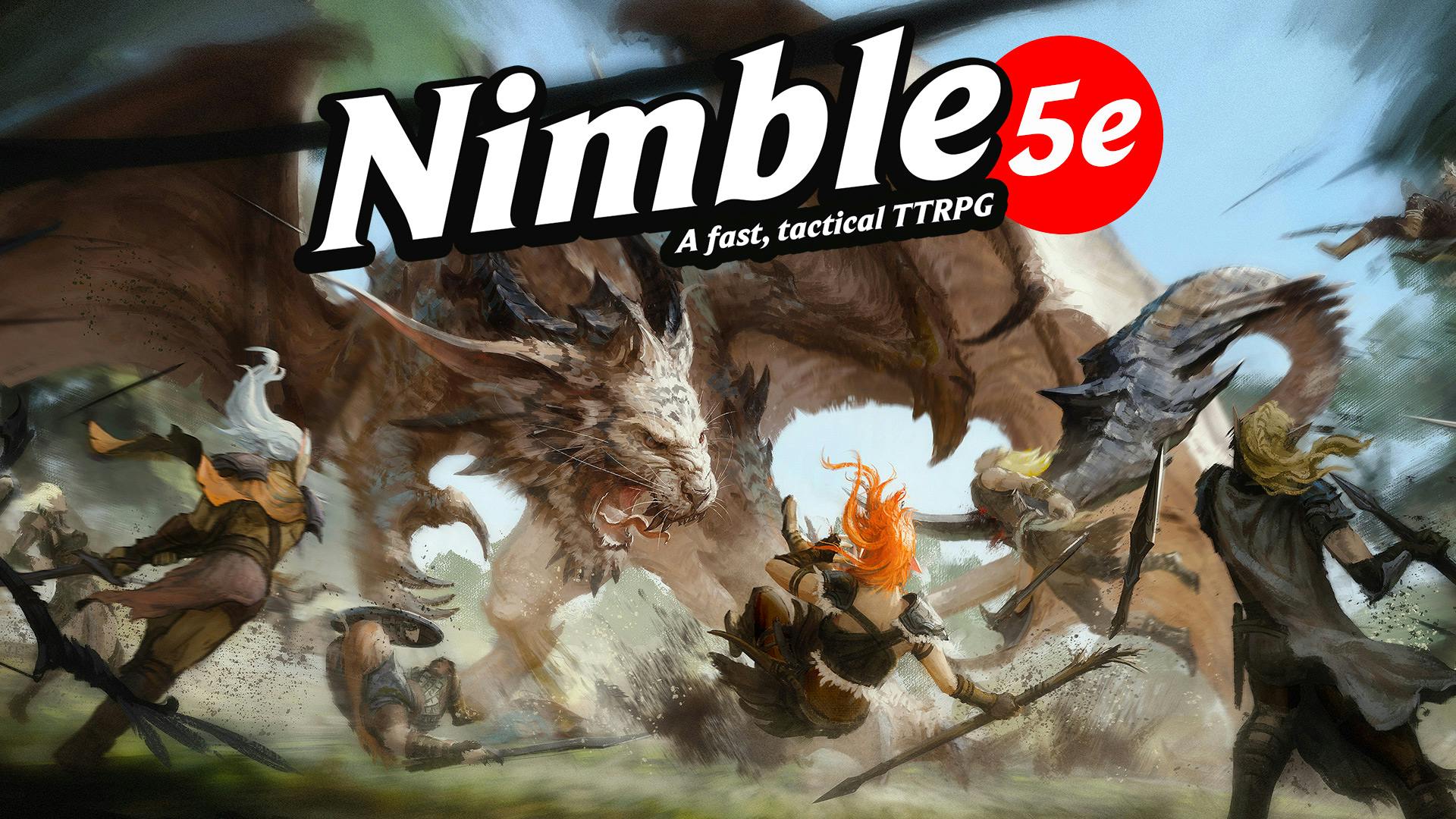
- Nimble: A fast and tactical TTRPG.
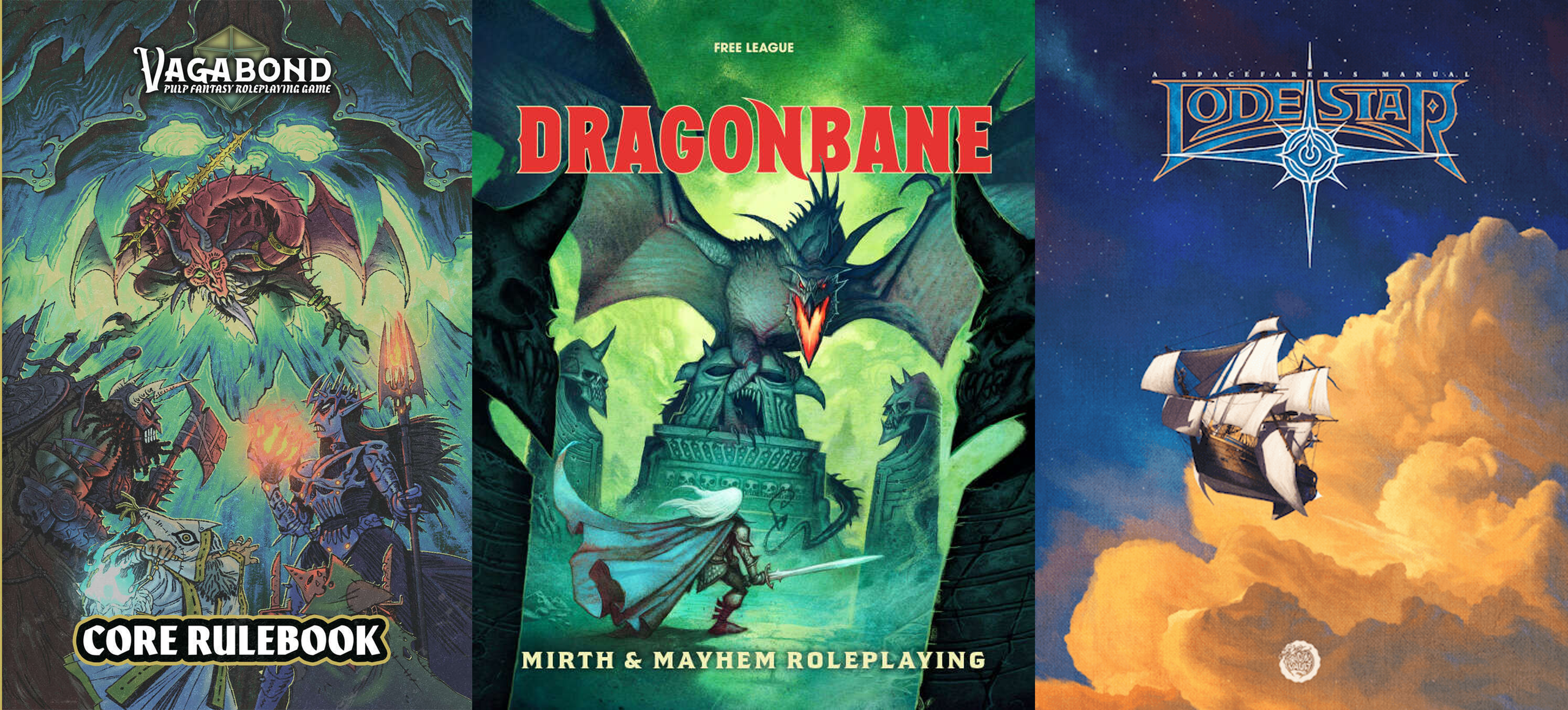
- Vagabond: A pulp fantasy TTRPG.
- Dragonbane: A classic fantasy TTRPG.
- Lodestar: A D&D 5e setting based around space-fantasy, heavily influenced by Treasure Planet.
What projects are available, and what are you working on next?
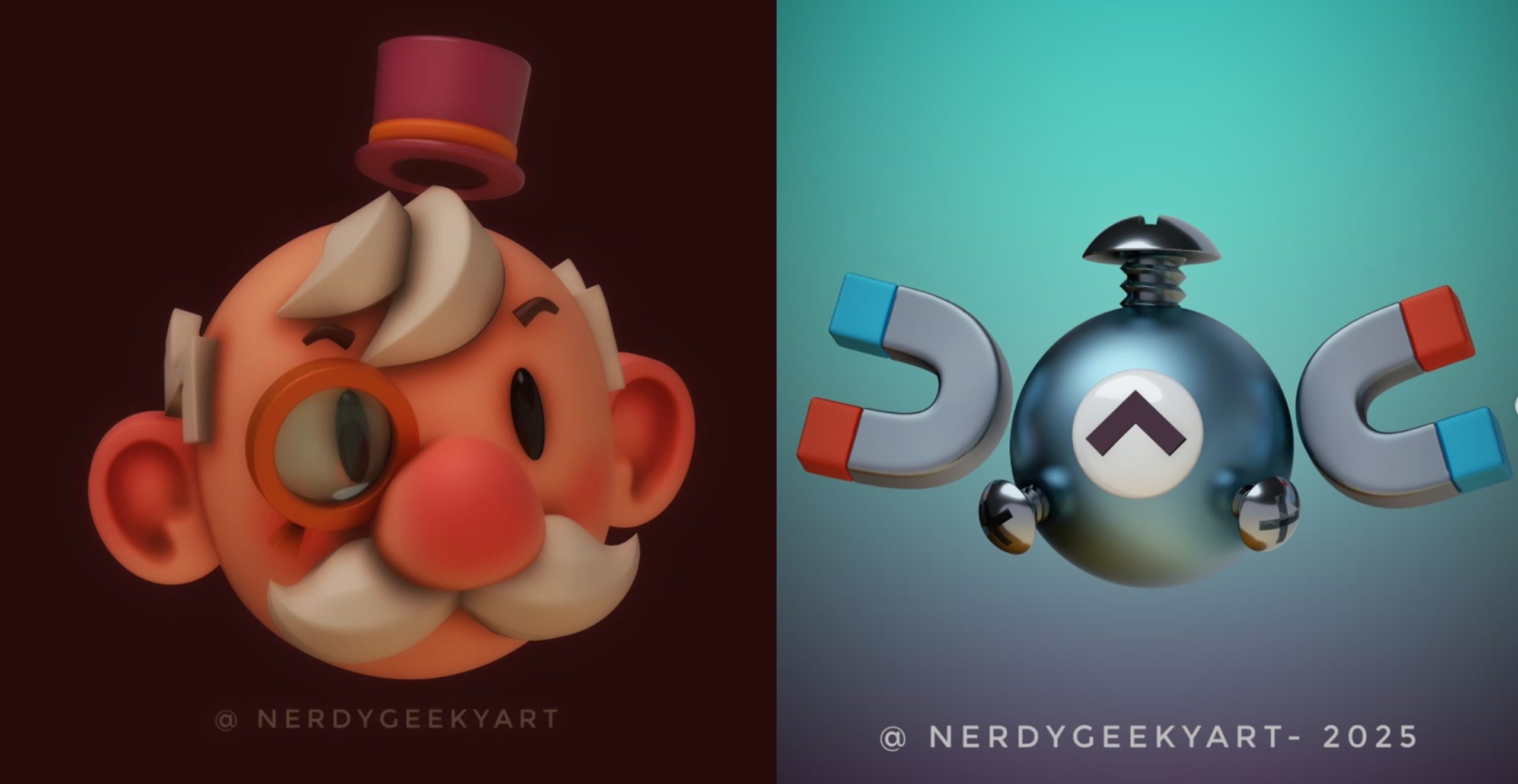
I’m currently working on improving my 3D modeling and rendering skills with Nomad Sculpt and Blender to bring all my fantastical and nerdy 2D ideas to the third dimension with some hopefully exciting applications in the near future.
Where can people find your work?
I’m most active on Instagram and TikTok, both under @nerdygeekyart ! There you’ll find my art, some peeks into my life, and time-lapses of some of my work. Don’t be afraid to pop by and say hi! And, if you like what you see, feel free to follow!
Any closing thoughts?
I would say to all my nerds, geeks, and dweebs out there: the one thing that will lead you to do the things you enjoy most and meet amazing people who share your interests and passions is to be your wonderful self unapologetically. Don’t be afraid to geek out over the things you love. Be kind. Be understanding. Be open-minded and, again, be yourself. Do that, and everything else will follow.
Cheers!
Your friendly neighborhood nerd
Thank you very much, Kevin! See you all next week for the next interview, dear reader.
Categories: Tabletop Gaming Blogs
Integrating Adventurer Conqueror King System II (ACKS II) with the legendary, chaotic, and maximum-gonzo DNA of Dave Hargrave’s Arduin Grimoires - ACKS II Domain Level Play
Smashing Dave Hargrave’s hyper-gonzo, maximalist Arduin Grimoire into Autarch’s mathematically airtight, spreadsheet-driven ACKS II (Adventurer Conqueror King System II) is an incredible exercise in campaign design. You are taking a system designed for high-fidelity medieval demographic simulation and dropping it into a universe featuring multi-classed Techno-Mages, psychopathic Elves, and Needleshttp://www.blogger.com/profile/11243274667834930867noreply@blogger.com0
Categories: Tabletop Gaming Blogs
Integrating Adventurer Conqueror King System II (ACKS II) with the legendary, chaotic, and maximum-gonzo DNA of Dave Hargrave’s Arduin Grimoires - More In depth Details
Marrying the unhinged, high-octane "kitchen sink" gonzo energy of David A. Hargrave’s Arduin Grimoires with the hyper-precise, mathematically model-driven framework of ACKS II is a match made in gaming heaven. It allows you to run a setting where multiversal portals, techno-magic, and body-horror mutations exist, but everything—from the cost of maintaining a Phraint hive-domain to the exactNeedleshttp://www.blogger.com/profile/11243274667834930867noreply@blogger.com0
Categories: Tabletop Gaming Blogs
Bringing Tri-Klops, Skeletor’s cybernetic hunter and swordsman, into The Sword of Cepheus 2nd Edition
Bringing Tri-Klops, Skeletor’s cybernetic hunter and swordsman, into The Sword of Cepheus 2nd Edition requires capturing both his incredible master-at-arms combat prowess and the dark, techno-magic or ancient-tech nature of his iconic three-eyed visor. This blog post picks right up from Skeletor, The Overlord of Evil & Beast Man For Sword of Cepheus 2nd Edition RpgIn the gritty, Needleshttp://www.blogger.com/profile/11243274667834930867noreply@blogger.com0
Categories: Tabletop Gaming Blogs
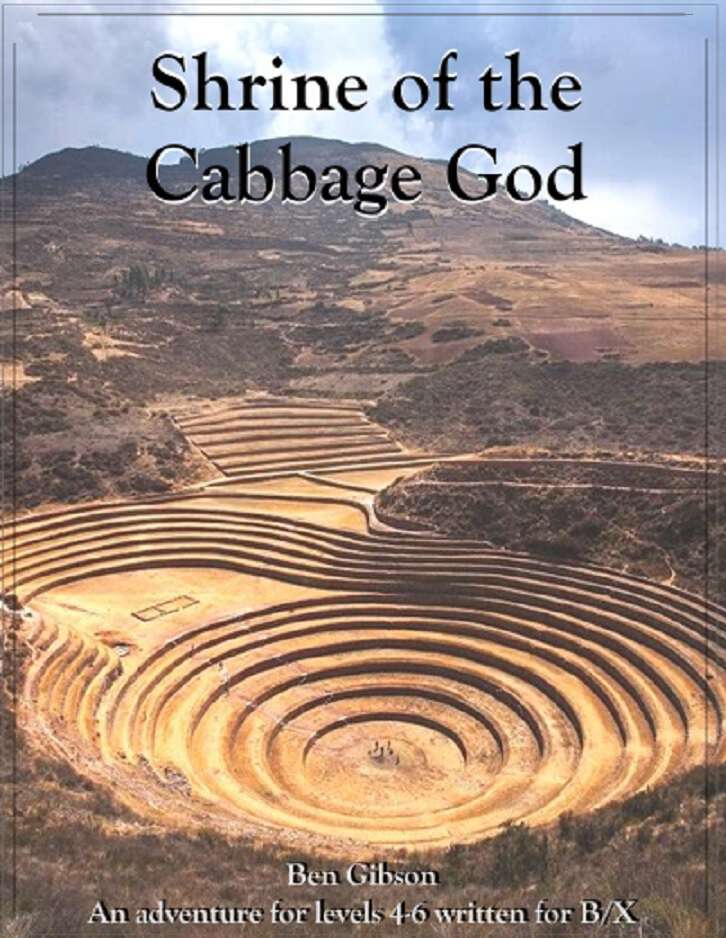
Shrine of the Cabbage God
By Ben Gibson
Coldlight Press
1e
Levels 4-6
Coldlight Press
1e
Levels 4-6
Gayle, priestess of the god of earth, has received visions; an annoying enemy of the god stirs up in the mountains. If servants of his temple can kill this enemy for good then the three earth elementals tasked with keeping him buried will serve the party for a month and a day.
This twelve page adventure describes a two level abandoned temple with about thirty rooms. A classic crawl that leans realistic while still not forgetting it’s a D&D adventure. And, not to worry, it’s not a joke adventure
Ye Olde Abandoned Temple Crawle, that’s what we got here. Because of maybe – “Quecho, cheerful llama-herder, pays for drinks for everyone at the caravansary with part of an ancient gold plate, he claims he found it up in the high plateau near a forbidden old valley.” or maybe “The family ancestor skull Qhawa recently woke up and started annoying his descendants, insulting them and telling them to go to the shrine where he once served. His family is desperate to get rid of him and offload him to the adventurers if possible. He knows the way to the shrine but will admit he only worked in the gardens outside of it when arriving there.” Two pretty decent hooks. Nothing more, really, than “you find a treasure map” but in both cases a couple of extra words to bring them to life a little more. Maybe a little Mort in that second example and perhaps implying a tone that is not present in the rest of the adventure, but, still, both of these have enough specificity that a DM can craft something around them. And that’s a good hook.
Once at the site we find some ruins above ground with an obvious hole in to the ground. Down you go! Oh, also, there’s a band of thieves up top who slay your followers, cut your rope, and rob you. Talk about the classics!
Down below is the two level Shrine of the Cabbage God. It’s a decent mix of traditional D&D elements along with a slight bend to a more realistic temple. One room has “Calendar Chamber: This domed chamber is painted in a yellowing white with black specks for the stars. A raised square platform is in the center; hovering 5ft over the platform is a gleaming golden +1 dagger (worth 3,500gp) with a steel core that points to the constellation currently ascendant “ Hey! Neato! Love a good ol star chamber! Also, that dagger is stuck in the middle of Gelatinous Cube. It told you. The DM told you. It was just suspended there. And you walked right up and tried to grab it anyway, didn’t you? And then half a second too late the light blub clicked on. This is a great encounter.
In other places there are nice little nods to some Indiana Jones style of traps and challenges. “This stone table holds a pair of golden masks (worth 550gp each), one with a melted face stuck to it. A dead thief, face missing, lies next to the table.” Well, yeah. Nice pairing there. The merlot goes excellently with that Stilton. I’m down.
The adventure is a mix of elements: other looters also trapped by the thieves up top, some vermin like the cube, the usual Avatar and other temply things like blessings and genuflects. “Avatar of Oleracea crouches in slumber, a vaguely humanoid shape built of bolted cabbage, half-covered by pebbles, it’s ears and eyes covered by the stony hands of a rocky statue (a patient earth elemental who only cares about silencing the petty god). Oleracea hears and sees through his avatar if the hands are removed and can give directions/ blessings (see spells) if he’s impressed by his interlocuters, but the avatar itself is wilted and cannot move “ Sounds like my fifth wife.
It’s a solid little adventure. I do find the writing a bit dry for my tastes. And the paragraph style formatting can get long in places. There is some bolding, underlining, tables, and what not to try to call out important details, but I still think it’s probably over the line of what can be absorbed quickly. Still, a decent little adventure with a wide variety of interactivity to keep things moving, situations to exploit or be exploited by that introduce some dynamism to the play.
This is Pay What You Want at DriveThru with a suggested price of $2.
https://www.drivethrurpg.com/en/product/566390/shrine-of-the-cabbage-god?1892600
Categories: Tabletop Gaming Blogs
Meditations on the classic In Search of the Unknown (Module B1, written by Mike Carr in 1978) module Adapted To OSR Rpg systems especially The Adventurer, Conqueror, King Second Edition Part II
The following table replaces the generic wandering monster charts typically found in older modules. In ACKS II, wandering encounter tables don’t just serve as random combat tax—they track the passage of time, accelerate resource consumption (torches, rations), and reveal the moving parts of the environment. This blog post picks right up from Meditations on the classic In Search of the Needleshttp://www.blogger.com/profile/11243274667834930867noreply@blogger.com0
Categories: Tabletop Gaming Blogs
Journal of Eternian Studies

With the Masters of the Universe movie upon us, it seemed a good time to revisit my series of posts that take a pseudo-scholarly view of the MOTU mythos, as if it were a legend or myth cycle that might be based on real events.
It started here with "Eternian History Revealed."
Then, I delved into [People]-at-Arms with "Eternian Armsmen."
Next, I looked at the "Gods of Eternia."
Finally, I looked into Skeletor's past: "The Search for Skeletor."
Categories: Comic Book Blogs, Tabletop Gaming Blogs
D100 Sword & Sorcery Profane & Black Magick artifacts table For Castles & Crusades Rpg
Here is a d100 random table of profane, black magic artifacts tailored for a gritty, dark fantasy Sword & Sorcery campaign. These items are designed to be high-risk, high-reward, morally corrupting, and deeply atmospheric—less like clean "plus-one magic swords" and more like dangerous, soul-stained relics.This blog post picks right up from d100 Black Magick & Profane Sword &Needleshttp://www.blogger.com/profile/11243274667834930867noreply@blogger.com0
Categories: Tabletop Gaming Blogs
Mumm Ra The Ever Living From Thunder Cats For Sword of Cepheus 2nd Edition Rpg
Bringing the iconic, shape-shifting dark sorcerer of Third Earth into the deadly, 2D6-based world of The Sword of Cepheus (2nd Edition) creates a terrifying patron-level threat or end-campaign boss.Because Cepheus is grounded and highly lethal, Mumm-Ra needs to be modeled using two distinct stat blocks to capture his transformation mechanic, backed by high-tier Sorcery skills.Needleshttp://www.blogger.com/profile/11243274667834930867noreply@blogger.com0
Categories: Tabletop Gaming Blogs
Integrating Adventurer Conqueror King System II (ACKS II) with the legendary, chaotic, and maximum-gonzo DNA of Dave Hargrave’s Arduin Grimoires - A Barrows & Borderlands style border town that features an ACKS II market economy and a sub-surface...
This blog entry picks right up from Integrating Adventurer Conqueror King System II (ACKS II) with the legendary, chaotic, and maximum-gonzo DNA of Dave Hargrave's Arduin Grimoires - The Deodanth & The PhraintSettlement Overview: Obelisk-on-the-MoorClassification: Borderlands Frontier Town & Planar Trading PostMarket Class (ACKS II): Class VI Market (Small Settlement / FrontierNeedleshttp://www.blogger.com/profile/11243274667834930867noreply@blogger.com0
Categories: Tabletop Gaming Blogs
The GM Who Lost His Voice: Living with Myasthenia Gravis
I posted about this earlier this week on social media. June, in addition to Pride, is Myasthenia Gravis (MG) Awareness Month. I’ll get to what MG is in a moment, but let’s get a confession out of the way first: I have myasthenia gravis. I was diagnosed a little over four years ago, though I exhibited symptoms as far back as six years ago.
Allow me to share some information I am paraphrasing from the MG Foundation of America.
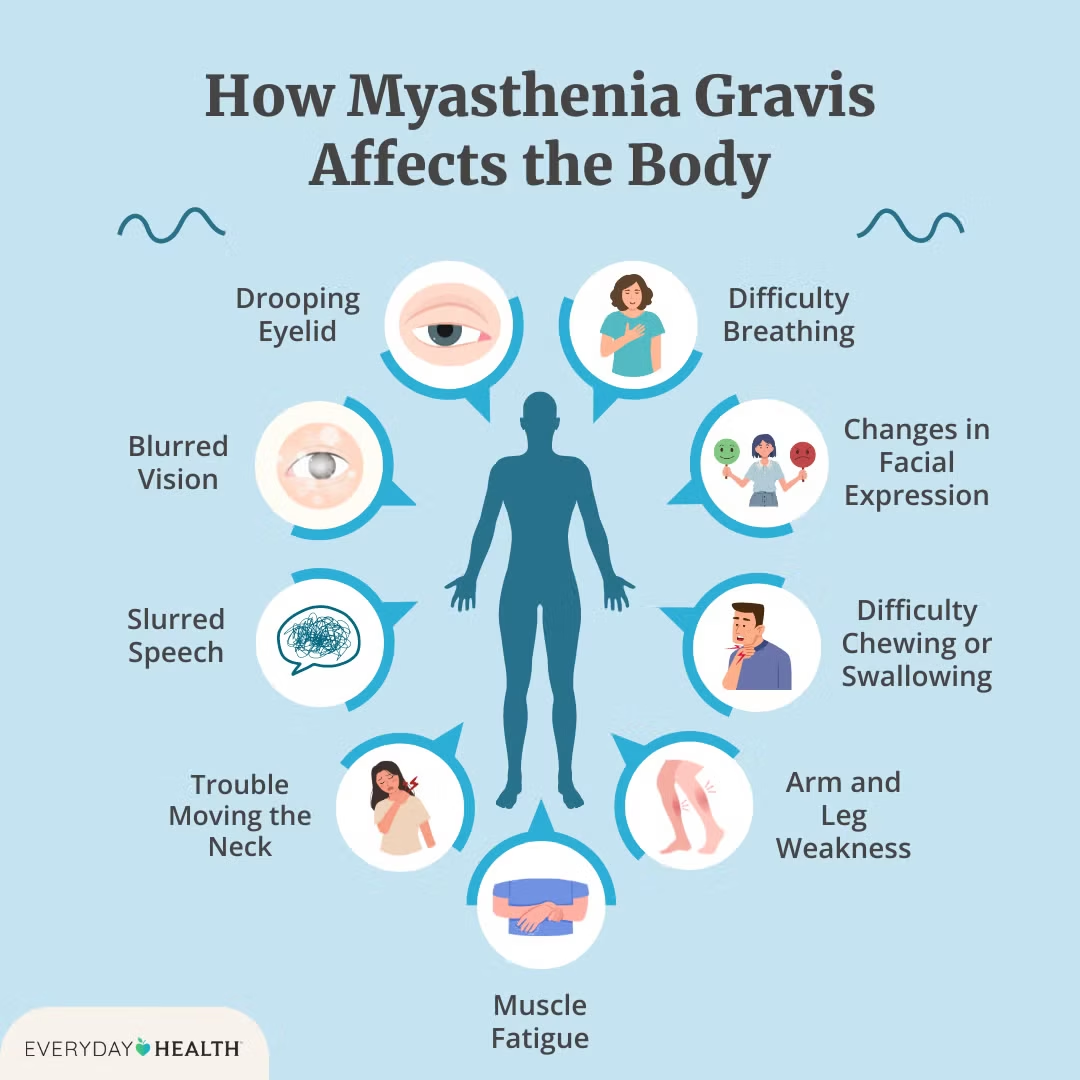
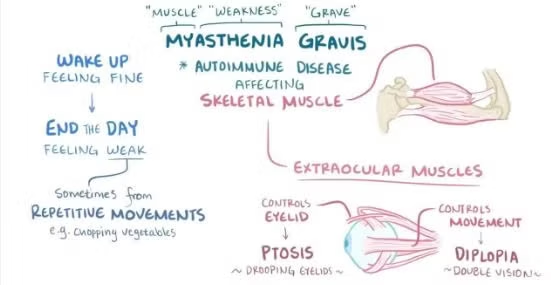
What is it? MG is a rare neuromuscular, autoimmune disorder that causes extreme fatigue and profound muscle weakness. Impulses from the brain travel down nerves but are blocked by antibodies before they reach the muscle. The body is essentially attacking itself and stopping normal muscle function.

You might be wondering what this has to do with role-playing games. Bear with me; I’ll get to it. I’ve decided to talk about this publicly to raise awareness and add my two cents to the conversation about the disorder, but let’s get back to the explanations for a second.
First documented by a physician in Oxford, England, in 1672, MG can impact a person’s ability to see, swallow, smile, walk, breathe, or engage in everyday activities. Everyone’s disease presents a little differently—that’s why myasthenia is known as a “snowflake disease.” (I AM a snowflake, I knew it! Unique and special, I mean.)
For me, the worst symptoms were losing my voice, slurring my words, and simply not being able to speak properly. Those of you who know me in real life saw me a couple of years ago when I was significantly weaker, experiencing serious difficulty speaking and swallowing.
To my family and friends, this is no secret. Many acquaintances know as well. If we’ve run into each other over the last four years, I’ve probably talked about this face-to-face, and I have always tried to share information about MG with people I meet. Still, I’ve been reluctant to discuss it or publish anything on social media for fear of being vulnerable. One often worries about how others will react, how revelations like this might affect employment opportunities, or how people will treat you. But in the spirit of the month and all it celebrates, I’ve decided to share my diagnosis and how I’ve dealt with it.
So, how is myasthenia gravis treated, and what is the prognosis? There is currently no cure, but there are treatments to manage the symptoms. For most individuals, myasthenia gravis is a manageable chronic condition. The outlook for most people with MG is positive, as current treatment options are often highly effective. While existing treatments do not cure the disease, most patients experience improved muscle strength, and some even achieve remission.
What else should you know about Myasthenia Gravis?
I have been incredibly fortunate to have great doctors who identified the right medications and treatments. Having the insurance to access these treatments has greatly reduced my symptoms and made them manageable. I am in better physical shape now than I was four years ago, and I hope to continue to manage my condition effectively.
But this was not the case four years ago. MG is hard to diagnose, and some people spend years without proper answers. I was experiencing symptoms for two full years before I was correctly diagnosed, and by then, I was having trouble speaking and swallowing. It was incredibly taxing and frustrating for me as someone whose voice is a vital tool for my line of work. It was scary. It affected my ability to communicate properly with loved ones. It also impacted my favorite hobby: tabletop role-playing games.
What does a Game Master do when he cannot speak?
With all the other complications in life, not being able to play a game may seem like the least of my concerns. But as I’ve said often, gaming is part of my mental health routine. It is a creative endeavor I enjoy outside my other responsibilities. It is something that connects me with my dear friends. We are part of each other’s support group, and the time we spend together is something we value and treasure.
Having to consider giving that up was just another source of stress during an already difficult time.
The reality was that I needed to rest; speaking for hours often left me exhausted. At the same time, I did not want to give this up. I wanted to cling to this vestige of normalcy in the midst of chaos.
This wasn’t easy for my players. My voice was hoarse, broken, and sometimes slurred. I would speak with great difficulty. Often, I would use text-to-speech software when I could not speak properly. Some people would not put up with this, but my players are first and foremost my friends—guys like Carlos, Fernan, both Josés (Bellavista and Garcia), Lao, and Oscar—they knew how important our weekly gatherings were. They knew how much it meant to me, and they kept showing up. They supported me despite the limitations, and we played on.
These guys have been my gaming support group through this process, thank you!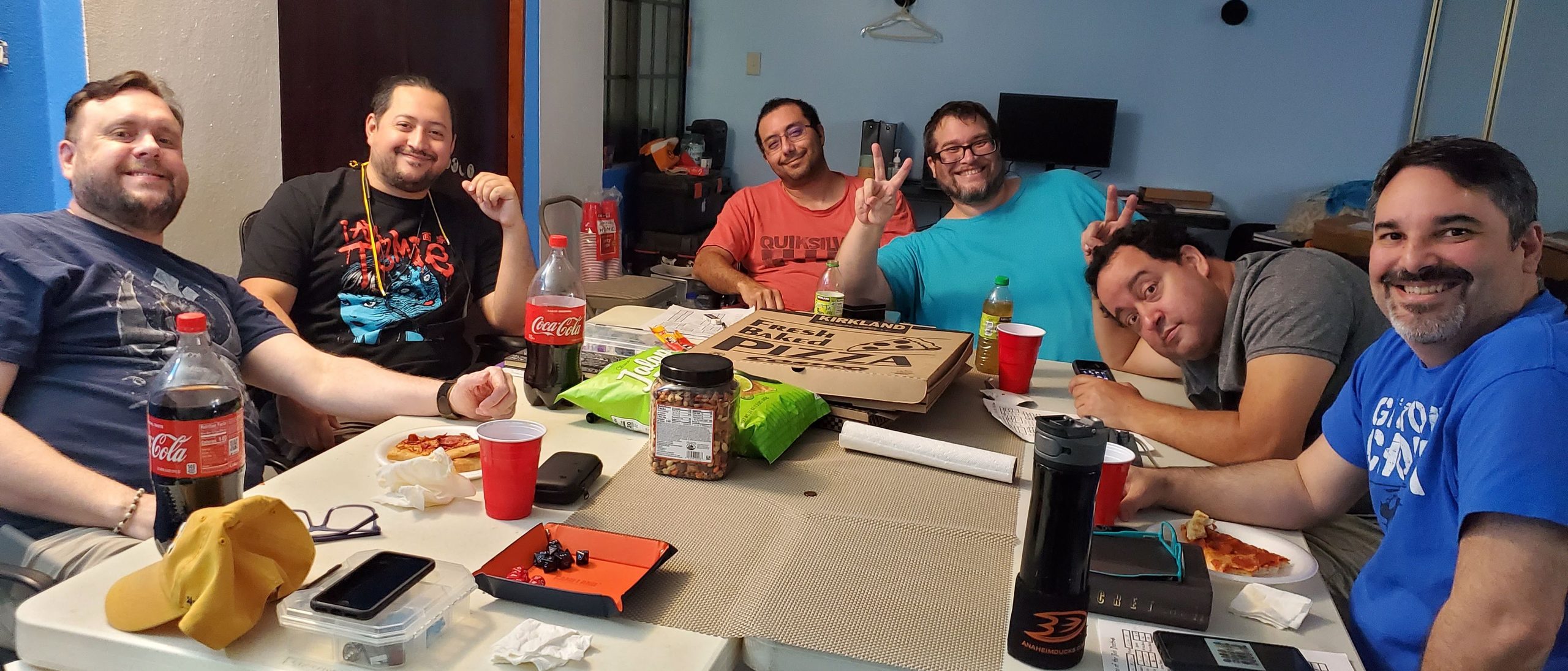
That meant the world to me. It helped me deal with my sadness and my frustration. Their love was a vital part of the support my friends and family showed me during those difficult times.
I am doing much better right now. The medications I take help me manage the symptoms. I know the signs, rest regularly, listen to my body’s cycles, and manage my condition. I hope that this improvement continues in the long term. I am incredibly grateful for the love and support everyone around me shows me every single day. Gaming has truly given me a circle of friends who are like family—a gift that continually enriches my life.
Now, I hope to use the spaces I have online to share my story, build knowledge about myasthenia gravis, return the kindness shown to me, and, hopefully, raise awareness of this relatively rare condition. Knowledge is power! Hopefully, further research will find a cure for MG.
While I’ve gotten to know other MG patients, I have not met other gamers with MG. I wonder whether there are more of us in gaming spaces and whether we can organize to support each other and the larger MG community. If you are a patient, even if you do not wish to share your diagnosis publicly, please feel free to contact me.
If you want to learn more, here are some useful links:
What is MG: https://myasthenia.org/understanding-mg/what-is-myasthenia-gravis/
The Myasthenia Gravis Foundation of America: https://myasthenia.org/
Donate to the Myasthenia Gravis Foundation of America: https://myasthenia.givevirtuous.org/donate/donation-form
Global Genes: https://globalgenes.org/disorder/myasthenia-gravis/
European Myasthenia Gravis Association: https://eumga.eu/
Thank you for reading!
Some of the images I used in this post are from the Myasthenia Gravis Foundation of America website, and this post: Back to Doing What I Love: My Myasthenia Gravis Story By Kathalina Nguyen: which you can read here: https://myasthenia.org/blog/2024/08/08/back-to-doing-what-i-love-my-myasthenia-gravis-story/
Categories: Tabletop Gaming Blogs
Wednesday Comics: DC, September 1985 (week 1)
My mission: to read DC Comics' output from January 1980 (cover date) to the end of Crisis. This week, I'm looking at the comics that were on stands in the week of June 6, 1985.
Losers Special #1: With this, the first of the Crisis Specials, I think we hit a new phase of the event. We saw the Losers die in Crisis #3, but this issue gives them more of a sendoff and introduces a lot of readers to the characters, probably--if they bothered to buy the issue. Easy Company and a town of civilians are pinned down by German rockets. Bravo company was supposed to take those out, but they're all dead. The Losers take up the mission. Along the way, they reminisce about their individual pasts, catching the reader up on the characters that originally had solo strips, but were brought together as a team. The Losers take out the emplacement, but they are separated into two groups by smoke. Separately, Sarge and Captain Storm are killed. The smoke clears and Gunner, Pooch, and Johnny Cloud manage to regroup, but then a German plane strafes the area, killing them. The Navajo Johnny Cloud prays to the sky as he dies and sees an image of a Native American deity. Then, something strikes the hill. When Easy arrives, there is no trace of the Losers' bodies.
This story is a better death for a group of war comic characters, but it doesn't fit perfectly with their death as depicted in Crisis. Presumably we're meant to assume they were taken from the battlefield just before death to truly die in Markovia at the hands of shadow demons. But how did they get moved and healed? This story can't take place essentially at the same time as that part of Crisis #3, because Rock and Easy appear in that issue in 1944 Markovia, too. I suppose it's possible this issue was retconned out of existence before it was ever published. This is how they would have died, had not the Crisis occurred transtemporally.
Crisis on Infinite Earths #6: The Monitor's adversary gets a name this issue (Well, two, since the Psycho-Pirate just calls him "Monitor."): The Anti-Monitor. He gives the whining Psycho-Pirate enough power to control the emotions of the populaces of multiple Earths. Pirate starts pushing the peoples of Earth-S, X, and 4 to suicide in the anti-matter wave.
Meanwhile, the Monitor's satellite is falling apart. The heroes scramble to save themselves while Alex gets read to attempt to bring the other surviving Earths into the Netherverse. Harbinger knocks him out and takes on the risk herself. Disparate groups of heroes (somehow, it's not clear) are transported to the 3 battleground Earths where they are forced to contend with the mind-controlled heroes of those worlds. Black Canary is wearing her new costume here that we haven't seen before outside of her Who's Who entry.
In the Anti-Monitor's base, the Psycho-Pirate suffers feedback, and he loses control of the Earths' people. Harbinger manages to link Earths S, X, and 4 with the merging Earths 1 and 2 in the Netherverse, but she burns out her power, leaving her just Lyra. On Earth-2, a new Wildcat debuts and a group of villains mysteriously disappear. On Earth-1, Brainiac scoops up Luthor from and tells him he has a plan...
DC Comics Presents #85: This is the first of two Alan Moore Superman stories this month. Here he teams him up with Swamp Thing with Veitch and Williamson on art. A patch of still-surviving fungus from Krypton known as the bloodmorel infects Superman causing hallucinations and overheating. It will eventually lead to death from overexertion, and the Last Son of Krypton seems powerless in his delirious state to do anything about it. Trying to get away from people, Clark luckily encounters the Swamp Thing, who manages to link Superman to the Green through the remaining fungus. Immersed in cool calm, Superman is able to sleep and when he awakes the fever is broken. He returns to his life, unaware of the help of Swamp Thing.
Fury of Firestorm #39: Conway and Kayanan/Chen finish up the Weasel story from last issue. Firestorm manages to escape Weasel's death trap but can't capture the villain. Ronnie does some sleuthing and figures out that the connection of the people killed and those attacked is that they were all at Standford in the 60s. Even knowing that, Stein still can't figure who the Weasel might be. The Weasel attacks again and Firestorm manages to best him this time. The villain is unmasked as John Monroe...some guy nobody remembers. Ronnie heads back to New York and graduation.
Justice League of America #242: Conway and Tuska/Machlan continue the story from last issue. Aquaman finds Mera, and they make up surprisingly easily. Meanwhile, the rest of the League splits up and blunders around the Canadian woods like teens in a slasher film and get taken out by Amazo. There's even a ridiculous sequence that seems perhaps a riff on a similar scene in Temple of Doom where Elongated Man just keeps talking utterly oblivious to Gypsy dealing with an irritated grizzly bear behind him. In the end, Amazo throws most of the League in a deep hole and covers it with a Boulder.
There's a MASK preview insert "Assault on Mount Mayhem" in this issue, Superman, and Tales of the Teen Titans as well, but I don't have a copy of it.
Tales of the Teen Titans #57: Cyborg's surgery is a success, and he's more human appearing than ever. He's sent to rehab and meets a tough physical therapist who I feel like should be named Sarah Potential Love Interest unless I'm totally misreading Wolfman's intentions. Meanwhile, the other Titans are hanging out at the pool then doing a little training, oddly unconcerned that the Fatal Five are out there with a new member the Titans failed to stop them from busting out of prison.
That new member is Jinx, an Indian sorceress from who only speaks Urdu until Psimon gives her telepathic language lessons. The Fatal Five come for Cyborg's doctor, and grab him too, not recognizing the hero with his makeover. They want the scientist to awaken Neutron. Cyborg sabotages Neutron's containment vessel to a degree, causing an explosion they we are assured didn't hurt the guy inside. All the strain causes his new plastic veneers to start melting down, though.
Later. Psimon interrupts a press conference by the Major to demand ransom from the city, boasting the Fatal Five now has Neutron on its side.
Vigilante #22: Wolfman/Kupperberg and Smith/Maygar continue the story from last issue with Nightwing and Chase in a running fight across multiple locations, each saying tough guy things to each other and demanding the other stand down. Meanwhile, a guy with a heroin addiction sets out to commit a burglary on condo with no one home and winds up, through a series of bad breaks and worse choices, killing 3 people with a stolen pistol and causing a police car to wreck. He ends up out of bullets and executed on a rooftop by the Vigilante. When that makes the TV news, Nightwing and Chase overhear it and both realize that Chase isn't the current killer vigilante. Chase hadn't even known for certain. Nightwing leaves agreeing to hold off his hunt for the other vigilante so Chase (who feels responsible for inspiring the guy) can handle it, which given the murders and Chase's mental state seems a bit irresponsible. but bro code and all that.

Losers Special #1: With this, the first of the Crisis Specials, I think we hit a new phase of the event. We saw the Losers die in Crisis #3, but this issue gives them more of a sendoff and introduces a lot of readers to the characters, probably--if they bothered to buy the issue. Easy Company and a town of civilians are pinned down by German rockets. Bravo company was supposed to take those out, but they're all dead. The Losers take up the mission. Along the way, they reminisce about their individual pasts, catching the reader up on the characters that originally had solo strips, but were brought together as a team. The Losers take out the emplacement, but they are separated into two groups by smoke. Separately, Sarge and Captain Storm are killed. The smoke clears and Gunner, Pooch, and Johnny Cloud manage to regroup, but then a German plane strafes the area, killing them. The Navajo Johnny Cloud prays to the sky as he dies and sees an image of a Native American deity. Then, something strikes the hill. When Easy arrives, there is no trace of the Losers' bodies.
This story is a better death for a group of war comic characters, but it doesn't fit perfectly with their death as depicted in Crisis. Presumably we're meant to assume they were taken from the battlefield just before death to truly die in Markovia at the hands of shadow demons. But how did they get moved and healed? This story can't take place essentially at the same time as that part of Crisis #3, because Rock and Easy appear in that issue in 1944 Markovia, too. I suppose it's possible this issue was retconned out of existence before it was ever published. This is how they would have died, had not the Crisis occurred transtemporally.

Crisis on Infinite Earths #6: The Monitor's adversary gets a name this issue (Well, two, since the Psycho-Pirate just calls him "Monitor."): The Anti-Monitor. He gives the whining Psycho-Pirate enough power to control the emotions of the populaces of multiple Earths. Pirate starts pushing the peoples of Earth-S, X, and 4 to suicide in the anti-matter wave.
Meanwhile, the Monitor's satellite is falling apart. The heroes scramble to save themselves while Alex gets read to attempt to bring the other surviving Earths into the Netherverse. Harbinger knocks him out and takes on the risk herself. Disparate groups of heroes (somehow, it's not clear) are transported to the 3 battleground Earths where they are forced to contend with the mind-controlled heroes of those worlds. Black Canary is wearing her new costume here that we haven't seen before outside of her Who's Who entry.
In the Anti-Monitor's base, the Psycho-Pirate suffers feedback, and he loses control of the Earths' people. Harbinger manages to link Earths S, X, and 4 with the merging Earths 1 and 2 in the Netherverse, but she burns out her power, leaving her just Lyra. On Earth-2, a new Wildcat debuts and a group of villains mysteriously disappear. On Earth-1, Brainiac scoops up Luthor from and tells him he has a plan...

DC Comics Presents #85: This is the first of two Alan Moore Superman stories this month. Here he teams him up with Swamp Thing with Veitch and Williamson on art. A patch of still-surviving fungus from Krypton known as the bloodmorel infects Superman causing hallucinations and overheating. It will eventually lead to death from overexertion, and the Last Son of Krypton seems powerless in his delirious state to do anything about it. Trying to get away from people, Clark luckily encounters the Swamp Thing, who manages to link Superman to the Green through the remaining fungus. Immersed in cool calm, Superman is able to sleep and when he awakes the fever is broken. He returns to his life, unaware of the help of Swamp Thing.

Fury of Firestorm #39: Conway and Kayanan/Chen finish up the Weasel story from last issue. Firestorm manages to escape Weasel's death trap but can't capture the villain. Ronnie does some sleuthing and figures out that the connection of the people killed and those attacked is that they were all at Standford in the 60s. Even knowing that, Stein still can't figure who the Weasel might be. The Weasel attacks again and Firestorm manages to best him this time. The villain is unmasked as John Monroe...some guy nobody remembers. Ronnie heads back to New York and graduation.

Justice League of America #242: Conway and Tuska/Machlan continue the story from last issue. Aquaman finds Mera, and they make up surprisingly easily. Meanwhile, the rest of the League splits up and blunders around the Canadian woods like teens in a slasher film and get taken out by Amazo. There's even a ridiculous sequence that seems perhaps a riff on a similar scene in Temple of Doom where Elongated Man just keeps talking utterly oblivious to Gypsy dealing with an irritated grizzly bear behind him. In the end, Amazo throws most of the League in a deep hole and covers it with a Boulder.
There's a MASK preview insert "Assault on Mount Mayhem" in this issue, Superman, and Tales of the Teen Titans as well, but I don't have a copy of it.

Tales of the Teen Titans #57: Cyborg's surgery is a success, and he's more human appearing than ever. He's sent to rehab and meets a tough physical therapist who I feel like should be named Sarah Potential Love Interest unless I'm totally misreading Wolfman's intentions. Meanwhile, the other Titans are hanging out at the pool then doing a little training, oddly unconcerned that the Fatal Five are out there with a new member the Titans failed to stop them from busting out of prison.
That new member is Jinx, an Indian sorceress from who only speaks Urdu until Psimon gives her telepathic language lessons. The Fatal Five come for Cyborg's doctor, and grab him too, not recognizing the hero with his makeover. They want the scientist to awaken Neutron. Cyborg sabotages Neutron's containment vessel to a degree, causing an explosion they we are assured didn't hurt the guy inside. All the strain causes his new plastic veneers to start melting down, though.
Later. Psimon interrupts a press conference by the Major to demand ransom from the city, boasting the Fatal Five now has Neutron on its side.

Vigilante #22: Wolfman/Kupperberg and Smith/Maygar continue the story from last issue with Nightwing and Chase in a running fight across multiple locations, each saying tough guy things to each other and demanding the other stand down. Meanwhile, a guy with a heroin addiction sets out to commit a burglary on condo with no one home and winds up, through a series of bad breaks and worse choices, killing 3 people with a stolen pistol and causing a police car to wreck. He ends up out of bullets and executed on a rooftop by the Vigilante. When that makes the TV news, Nightwing and Chase overhear it and both realize that Chase isn't the current killer vigilante. Chase hadn't even known for certain. Nightwing leaves agreeing to hold off his hunt for the other vigilante so Chase (who feels responsible for inspiring the guy) can handle it, which given the murders and Chase's mental state seems a bit irresponsible. but bro code and all that.
Categories: Comic Book Blogs, Tabletop Gaming Blogs
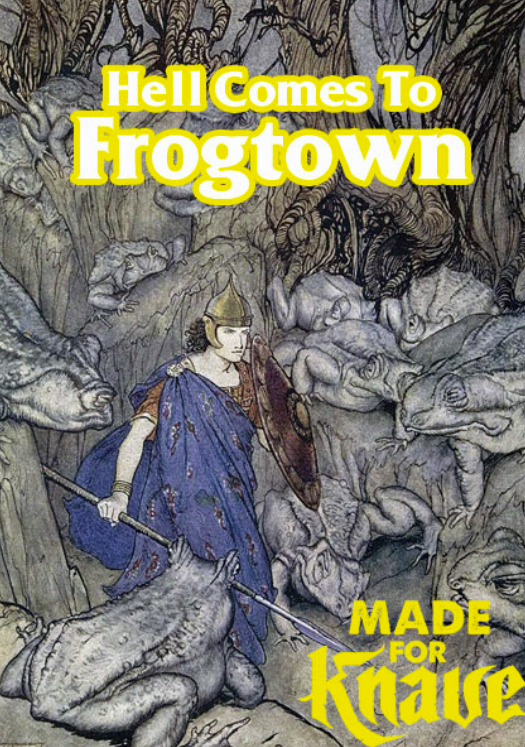
Hell Comes to Frogtown
By Phil Martin
Self Published
Knave
Level 2
Self Published
Knave
Level 2
Come for the frogs. Leave when it all goes to hell. The small hamlet of Roudenbush moulders on the edge of the Great Cheerless Swamp. Built at a crossroads, the town sustains itself on a mix of merchant caravans stopping for provisions, those that seek treasure in the swamp, and the bounty of the swamp itself. Wooden, thatched-roofed residences and stone municipal buildings make up the town. Two weeks ago, a tide of giant frogs breached the town’s outer wall, causing chaos in the streets until they retreated back into the swamp.
This thirteen page adventure uses three pages to describe seven overland locations and a five floor wizard tower. Napkin notes for an adventure, it exemplifies the IF rather than a THEN.
My brief foray in to products recommended that live in Itch has ended as I am, and no one else, is completely shocked. I find it FASCINATING in what both people seem to be willing to pay for nothing and in what people are willing to publish. For Money.So, some giant frogs showed in a a town int he swamps and rampaged through. I guess you’re going to do something about it for some reason. There’s some abandoned wizards tower in the swamp with a magnifying glass turning frogs giant. That location is called Frogtown. There’s also a wandering knight called Sir Robin Hell. Get it?
I’m in a foul fucking mood this morning. This thing isn’t help that any. I’m not going to waste a lot of time on it. Fourteen pages and it manages to put in just a few with encounters in it. This is nothing more than napkin notes. It’s not an adventure. It’s possibilities, rather than specificity.
What do we mean by this? There is some rather common tendency to be seemingly afraid of outcomes. It is as if the designer is terrified of actually stating something concrete may happen. In this sense it is more like a hex crawl but without the scope of a traditional hex crawl. You come across a village of 100 gnomes living in a mesa. “The hive-mind seeks the return of myconids that have gone missing, believed taken by the lizard folk as food / offerings. Will exchange fly agaric mushrooms from their grove for myconids that are found and returned “ I’m paraphrasing the set up but the outcome is from the adventure. This is classic “giant hex crawl.” But it’s not “overland journey to the adventure site.” In the starting village there are a couple of NPC’s. The are not specific to the adventure, just a list of NPC’s for the most part. One of them is a guy you can hire, Buckingham Craddlethatch. The second floor of the five floor “end site” tower in the swamp reads, in its entirety “Ruined arcane library and alchemical lab. Most of the tomes are mildewed and illegible, but an intact Chaos Spellbook can be found among them. If Buckingham Cragglethatch is with the party, he finds a book bound in human skin. Perusing it, he will suddenly announce that he must leave immediately. “
Those two encounters are representative of most of what is going on in this. They are possibilities. They are the “collapsed stairwell to another level of the dungeon that the dm COULD expand upon if they were so inclined.” In a traditional hexcrawl adventure these are the core of the adventure. It’s a wide open area that the party brings themselves to in order to exploit. Contract this to the standard “overland adventure” portion of adventures where to travel to get to an adventuring site. These are instead dangers and Lair, with associated lair treasures. And then contrast these two types of things to the keys found in most adventures. Obstacles and encounters to overcome. Those three encounter types serve much different purposes, influenced by the scope of the adventure and environment.
The muddling of the streams here results in adventure that is nothing but napkin notes for a small adventure.
No more itch for awhile.
It’s Name Your Price at itch, with a suggested price of $5.
Categories: Tabletop Gaming Blogs
OSR Commentary - Running classic TSR modules like L2: The Assassin’s Knot (Len Lakofka, 1983) and B6: The Veiled Society (David "Zeb" Cook, 1984) using the Castles & Crusades (C&C) system Rpg Part II ACKS II
To build the Radu Family’s criminal enterprise using the formal Adventurer Conqueror King System II (ACKS II) domain rules, we treat them as a Syndicate embedded within a Class II Market (a major city/metropolis of roughly 10,000 to 29,999 families). This blog post picks up from OSR Commentary - Running classic TSR modules like L2: The Assassin’s Knot (Len Lakofka, 1983) and B6: The Needleshttp://www.blogger.com/profile/11243274667834930867noreply@blogger.com0
Categories: Tabletop Gaming Blogs
OSR Commentary - Running classic TSR modules like L2: The Assassin’s Knot (Len Lakofka, 1983) and B6: The Veiled Society (David "Zeb" Cook, 1984) using the Castles & Crusades (C&C) system Rpg
Running classic TSR modules like L2: The Assassin’s Knot (Len Lakofka, 1983) and B6: The Veiled Society (David "Zeb" Cook, 1984) using the Castles & Crusades (C&C) system is an exceptional pairing.Because Castles & Crusades uses the Siege Engine mechanics but explicitly retains the math, tone, and architecture of Early Edition D&D (specifically AD&D 1e and Basic/Expert),Needleshttp://www.blogger.com/profile/11243274667834930867noreply@blogger.com0
Categories: Tabletop Gaming Blogs
Off to North Texas Con
So everyone knows I will be at North Texas Con this week. My books and maps will be for sale at the Black Blade Publishing Booth. I am running three sandbox adventures for the event: Scourge of the Demon Wolf, The Domain of the Rat Lord, and The Deceits of the Russet Lord.
I will be available to answer questions throughout the event, and I am looking forward to meeting everyone who can make it.
Categories: Tabletop Gaming Blogs
Happy Pride: Rolling Initiative for Inclusion
Happy Pride! June is a month to celebrate the LGBTQ+ community. Especially in the times we live in, when kindness, respect, and inclusion seem to be under constant attack, we all must come together and fight back. Kindness is punk, and silence is capitulation!
I want to do my part as an ally because too many of my friends, loved ones, and fellow gamers are members of the LGBTQ+ community. While we all dream of a day when who you are and who you love are non-issues and universally respected, we are not quite there yet. Love is love!
To celebrate, I’m sharing a list of ten perfect games to bring to the table this month. You can check out the full CBR article here:
https://www.cbr.com/lgbtq-ttrpgs-to-play-with-friends-pride-month
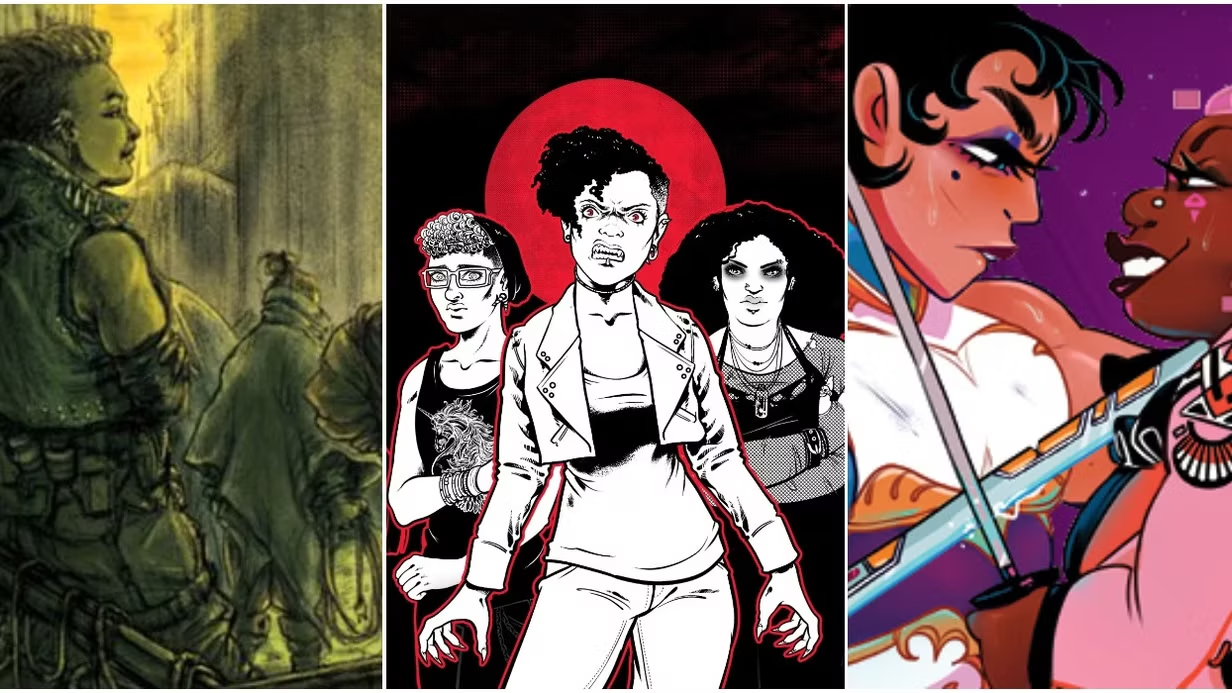
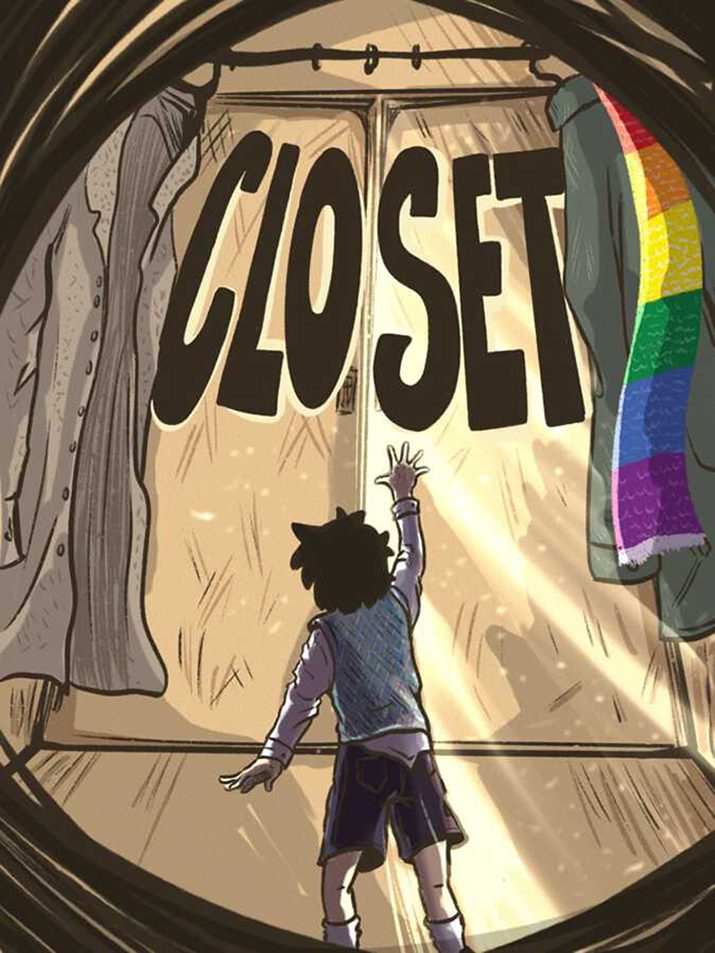
And on a more personal note, I want to recommend Closet, a game by Paco García of GMS Magazine. I had the chance to back his crowdfunding campaign, and honestly, I absolutely love it. I think it’s an excellent tool to help us step into other people’s shoes and empathize a lot more with the struggles the LGBTQ+ community faces daily. You can find it on DriveThruRPG here:
https://www.drivethrurpg.com/en/product/528214/closet
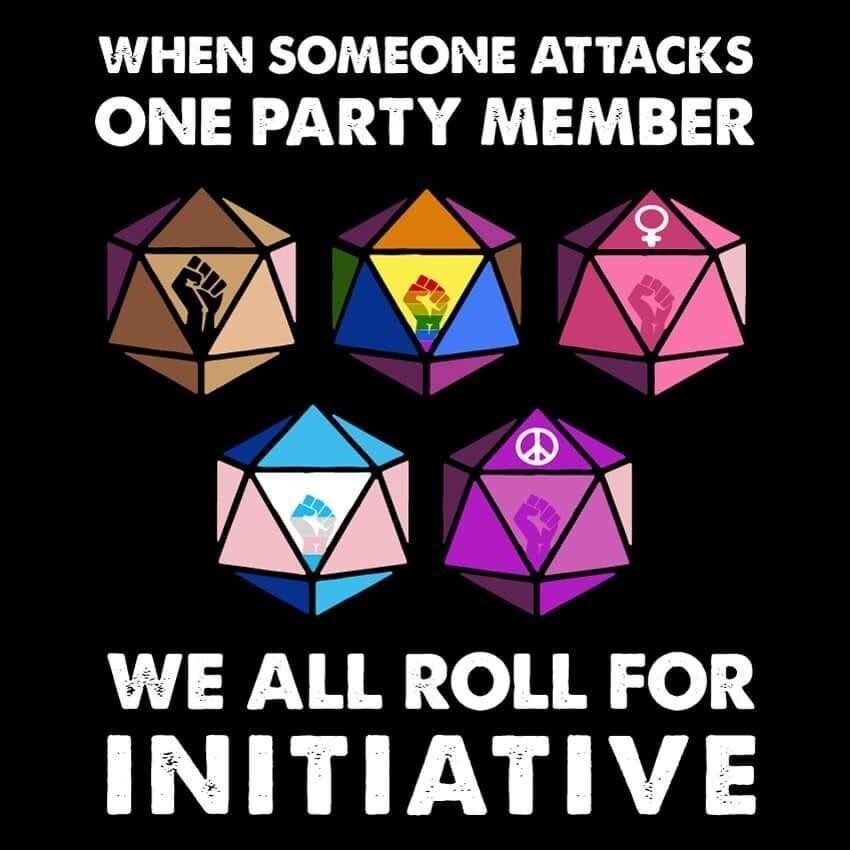
When someone attacks a party member, we all roll initiative!
Categories: Tabletop Gaming Blogs
He Man & Battle Cat For Sword of Cepheus 2nd Edition Rpg Campaigns
Adapting the iconic archetype of He-Man into The Sword of Cepheus 2nd Edition requires blending high-powered sword-and-planet heroism with the game’s gritty, 2D6-based mechanics. Since Sword of Cepheus 2e utilizes the clean, readable formatting compatible with Cepheus Deluxe: Enhanced Edition (dropping the traditional digit-string UPP), high-tier legendary characters are represented using Needleshttp://www.blogger.com/profile/11243274667834930867noreply@blogger.com0
Categories: Tabletop Gaming Blogs
The Steep Mage
By brine
Self Published
Yarn & Bone/Universal
A mage sits in a cemetery, sipping tea while his diggers excavate Lady Veshra’s grave. He must speak only in rhyme lest his lungs collapse. His murdered wife possesses the living to assist his ritual. The cemetery fights back with sentinel crows and grief wraiths. Veshra’s descendant wants the Soulstone inside the coffin… her last asset. Tonight he joins his true love in life or in death.
These twelve pages describe the idea for an adventure rather than adventure.
I don’t even know what’s real anymore. I don’t know how I got here. Somehow this made it on to my list. I THINK that means someone had to specifically ask me to review it. I know itch is worse than DriveThru and so I don’t go clam digging there. Maybe while I was drugged up?
It’s just twelve pages outlining the concept of an idea. A dumb ass mage who has to sip tea is digging up a grave to get some magic thing. There are undead in the cemetery, and a ghost-thing, and some other chick shows up with mercs who wants the same thing the mage is digging for. That’s the outline. And it takes twelve pages to do that.
Look, I’m not saying all of the ideas here are bad. One of the hooks has you showing up, as relatives, to rob the grave. “You arrived early to claim it before your “dear cousin” and her hired thugs “ That’s good writing and a decent hook. Or the local official sending you to deal with some chick who he thinks is batshit crazy who insists her ancestors grave is being robbed. As “hired hands” goes at least its got some life.
And, thus, some of the framings in this are fine, or more than fine. But it never does anything with them. It’s just a collection of motivations and ideas. Heavy on art and whitespace. I can’t emphasize this enough: this is not an adventure. It is a collection of ideas that one could build an adventure from.
Whoever asked me to review this must have been trolling. I see that the system, Yarn & Bone, is variously describe as world-first, conversation heavy and solo. Who knows. But it also says its compatible with all RPG systems. In the sense that this is just a collection of ideas, yes, it is certainly compatible, just as the OED is as a roleplaying adventure.
Gentle reader, why have you not shit in a box and charged $5 for it?
It’s Name Your Price at itch, with a suggested price of $5.
Categories: Tabletop Gaming Blogs
Pages
