
Your wildly multifarious home!
Feed aggregator
Video of the Day – Daily Straits, 2026
The post Video of the Day – Daily Straits, 2026 appeared first on Blogtor Who.
Categories: Doctor Who Feeds
[Parsulan] Abraxad Academy

The Abraxad Academy of Magic is the oldest institute of arcane study on the continent of Parsulan. Nestled within the protective boundary of the Weird Wood, the magi of Abraxad preserve magical traditions from the Age of High Magic and work to expand the bounds of traditional magic without resorting to magitechnology as has taken of the instruction at other institutions. "Magic is Art, not Engineering," the faculty proclaim with pride.
The Academy is entwined with the city of Abraxad, a municipality that is home to a number of former graduates, and practitioners of allied arts, as well as the typical artisans and workers found in any thriving town. Relations between the Academy and the townsfolk has never been better, owing to the unique structure of governance that unites the needs of both Academy and city under a central authority. Though historically there may have been tensions, students of the modern era are always welcome in local establishments.
Each student will join one of the Academy's seven colleges which are smaller academic communities within the larger whole where they will learn the fundamentals of magical practice and begin advancement within a particular school of magic. Each college has its distinct traditions and history of which new students will become forever a part.
No discussion of the school would be complete without mention of the Archmagus, Verraine has presided over the school longer than many of its magi have been alive. Though none would be so rude as the enquire regarding the Archmagus's actual age, the older townsfolk are fond of pointing out fading wall mural in the over 300 year-old One-Eyed Grimalkin Tavern depicts an elvish woman who broadly resembles the Archmagus assisting in driving out a Fomori raiding party at the end of the Demon War.
Categories: Comic Book Blogs, Tabletop Gaming Blogs
A Massive D100 Random Space Encounters Table for Cepheus Engine rpg & 2d6 Old School Science Fiction rpgs
Here is a comprehensive D100 random space encounters table tailored for the Cepheus Engine (and classic 2D6 sci-fi roleplaying).To keep this massive table highly scannable and practical for a Referee mid-session, it is broken down into thematic categories by roll.D100 Space Encounters Table01–15: Commercial & Civilian VesselsRollEncounterDetails & Referee Hooks01–03Subsidized Needleshttp://www.blogger.com/profile/11243274667834930867noreply@blogger.com0
Categories: Tabletop Gaming Blogs
Video of the Day – Doctor Who: Multi-Doctor Adventures, 2026
The post Video of the Day – Doctor Who: Multi-Doctor Adventures, 2026 appeared first on Blogtor Who.
Categories: Doctor Who Feeds
Ridgeline Stripes Crochet Cowl Tutorial
The Ridgeline Stripes Crochet Cowl Tutorial walks you through every step of creating this gorgeous neckwarmer in two different styles! Whether you prefer a simple circle or the trendy bandana style, you can crochet along with the right and left-handed video tutorials below! Disclaimer: This post includes affiliate links. Be sure to scroll down past […]
The post Ridgeline Stripes Crochet Cowl Tutorial appeared first on moogly. Please visit www.mooglyblog.com for this post.
2
Categories: Crochet Life
Calling the Doctor! The new Doctor Who Epic Begins
Circuit Breaker begins! Osgood is Calling the Doctor and about to get a shock and a very different Time Lord responds
Today is the day! The first chapter of Doctor Who: Circuit Breaker is now LIVE, launching a connected Doctor Who story that will unfold across audio, publishing, comics, gaming and digital platforms throughout the summer.
The adventure begins on the UNIT website with Calling the Doctor, written by Esmie Jikiemi-Pearson.
Circuit Breaker follows Osgood (Ingrid Oliver) and Andrew (Omari Douglas) as a mysterious threat emerges from UNIT’s Black Archive, leading them to seek help from the Fugitive Doctor (Jo Martin).
Future chapters will continue across Titan Comics, Doctor Who Magazine, BBC Audiobooks, East Side Games, Puffin, BBC Books and Big Finish.
Circuit Breaker can be followed via the Doctor Who website, the official Doctor Who channels and The Whoniverse Show.
Here is the full release schedule for the rest of Circuit Breaker:
- 8 July: Adversary of the Daleks – Titan Comics, written by Dulce M. Montoya and Dan Watters, with stunning art from Roberta Ingranata and Sami Kivelä
- 23 July: The Honourable Society – Doctor Who Magazine issue 632, written by Jason Quinn and illustrated by Anthony Williams
- 30 July: The Deadliest Weapon – BBC Audiobooks Audio Original written by Steve Lyons, narrated by Jo Martin with David Banks as the Cyber-Leader
- 4 August: Dawn of the Daleks –Titan Comics, written by Dulce M. Montoya and Dan Watters, with stunning art from Roberta Ingranata and Sami Kivelä
- 6 August: Castling – East Side Games written by Mario Mentasti
- 17 August: Don’t Blink! – UNIT website written by Esmie Jikiemi-Pearson
- 20 August: The Doctor and the Three Witches – Puffin book written by Janelle McCurdy
- 27 August: Moment Mori – East Side Games written by Mario Mentasti
- 31 August: The Black Archive Files – Circuit Breaker DVD release
- 3 September: The Kaleidoscope – Penguin Random House book by Jo Martin, published by BBC Books
- 22 September: Full Circuit – Big Finish audio story written by Robert Valentine
- 24 September: Short Circuits – Two Big Finish audio short stories including: Battleships by Alex Hewitt and Get Rich or Die Trying by Alex Hewitt, from a story by Natasha Siegel
Doctor Who: Circuit Breaker #1. Art by Jay Anacleto (c) Titan Comics Circuit Breaker continues with Adversary of the Daleks, from Titan Comics on the 8th of July

The post Calling the Doctor! The new Doctor Who Epic Begins appeared first on Blogtor Who.
Categories: Doctor Who Feeds
MooglyCAL2026 Block 13
MooglyCAL2026 Block 13 marks the start of the second half of this year's crochet along! Kelly Baum-Sehon of Cocky Crocheter has designed the smooth, sleek T.G.I. Phi-Day Square with simple stitches and a mathematically minimalist result. Get all the details for this free crochet along, and the free pattern link below! Disclaimer: This post includes […]
The post MooglyCAL2026 Block 13 appeared first on moogly. Please visit www.mooglyblog.com for this post.
2
Categories: Crochet Life
Meditations on the classic In Search of the Unknown (Module B1, written by Mike Carr in 1978) module Adapted To OSR Rpg systems especially The Adventurer, Conqueror, King Second Edition -- Part Five Other adventure locations within the caverns of...
While the Upper Bastion houses the military frontlines and the Lower Caverns hold the wild, subterranean wilderness, the Caverns of Quasqueton feature several isolated, deeply atmospheric sub-locales. This literally picks right up from Meditations on the classic In Search of the Unknown (Module B1, written by Mike Carr in 1978) module Adapted To OSR Rpg systems especially The Needleshttp://www.blogger.com/profile/11243274667834930867noreply@blogger.com0
Categories: Tabletop Gaming Blogs
Video of the Day – The Chase, 2026
The post Video of the Day – The Chase, 2026 appeared first on Blogtor Who.
Categories: Doctor Who Feeds
New Psi*Run Kickstarter
I have written about Psi*Run before. My most detailed description of it can be found here from 2018. It is my favorite one-session pick-up game.
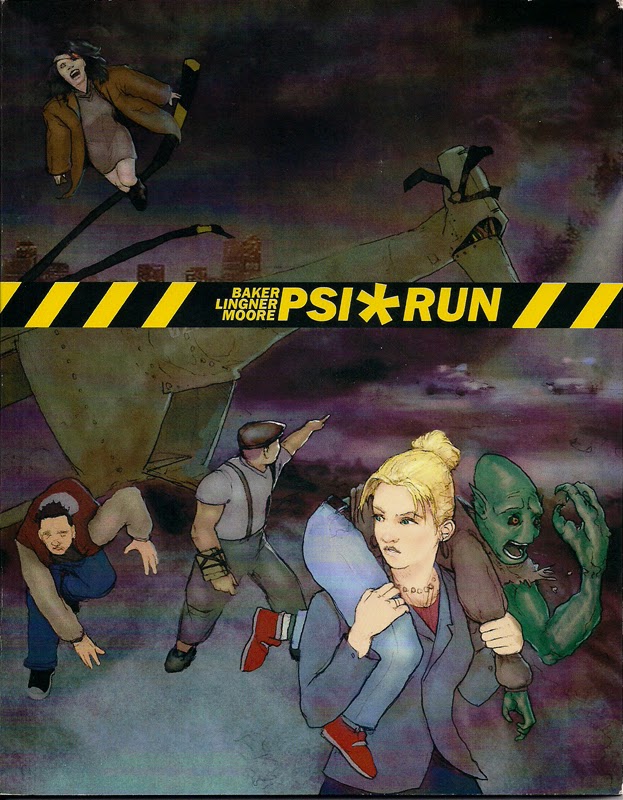
I originally discovered it as an Ashcan edition that I played at Gen Con back in 2007, and it completely fascinated me. I have run it with my regular weekly group more than once and brought it to the Puerto Rico Role Players Geeknics a few times as well.

The core idea, psychics (or supers, if you prefer) waking up after an accident with amnesia, running to escape from their captors while exploring their powers, and trying to piece together their past, is incredibly compelling. I have run it in a modern city, in a steampunk setting, right here in Puerto Rico, and even on a spaceship! I love the concept and the system. Honestly, I am sincerely surprised I haven’t run it more.
Now, there is a Kickstarter campaign for a 2nd Edition! Check out the campaign here: https://www.kickstarter.com/projects/1179631078/psirun-second-edition

According to the campaign page, here is a breakdown of what to expect:
What’s Changing?
The focus for this edition is on refinement rather than a complete overhaul. The creator is taking 15 years of play feedback to heart, specifically focusing on:
- Clarified Rules: The text is getting an expansion to answer common questions and address the edge cases that have popped up over the last decade and a half.
- Polished Mechanics: Expect some tightening of the existing systems. The core “Otherkind” dice pool, where you balance your goals, your memories, and the encroaching danger, remains the engine. You are still rolling that handful of dice and making those classic, agonizing decisions on the Risk Sheet. You can read about the “Otherkind” dice poll rules here.
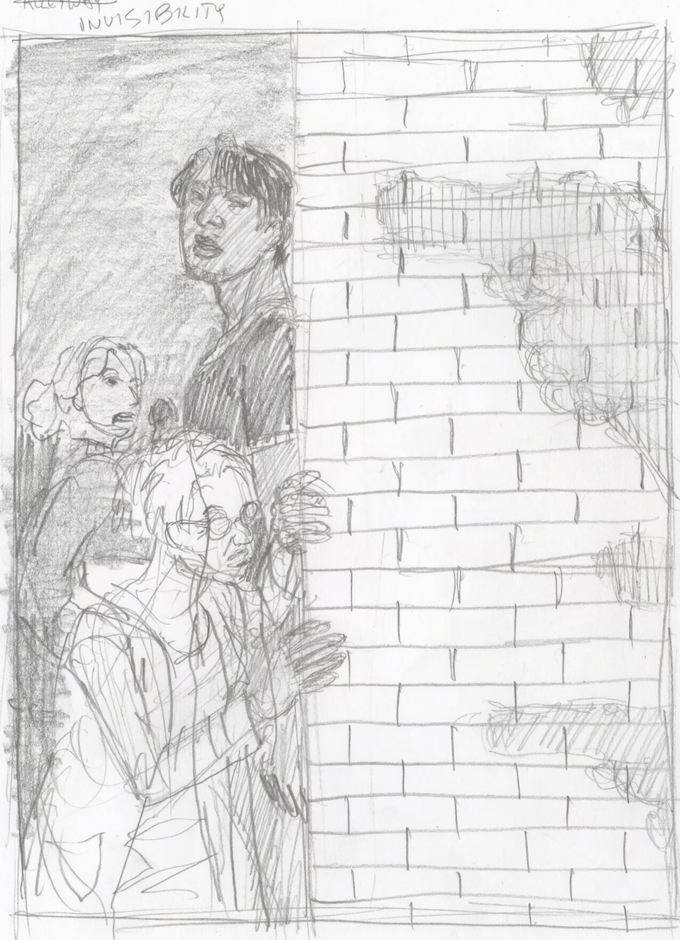
- New Visuals: The aesthetic is getting completely refreshed with all-new art and cartography.
The Stretch Goals
The campaign is also looking to expand the game’s utility, particularly for modern play. If they hit their higher funding targets, there will be a write-up for playing Psi*Run online. Specifically, it will feature an experimental format designed for social media platforms like Bluesky, where you play the Runner while others take on the role of the world around you. I would absolutely love to see this in action.
I am already a backer and wholeheartedly recommend this game. Go check it out!
Categories: Tabletop Gaming Blogs
Crochet and Catch Up with Moogly - June 24, 2026
Happy late June, all! Summer is officially underway, and it's time for another Crochet and Catch Up with Moogly. We'll chat about all the crochet goodness on Moogly, from new patterns and projects to upcoming events and favorite finds. I'll be live on YouTube and Facebook, sharing updates, answering questions, and showing off a few […]
The post Crochet and Catch Up with Moogly - June 24, 2026 appeared first on moogly. Please visit www.mooglyblog.com for this post.
0
Categories: Crochet Life
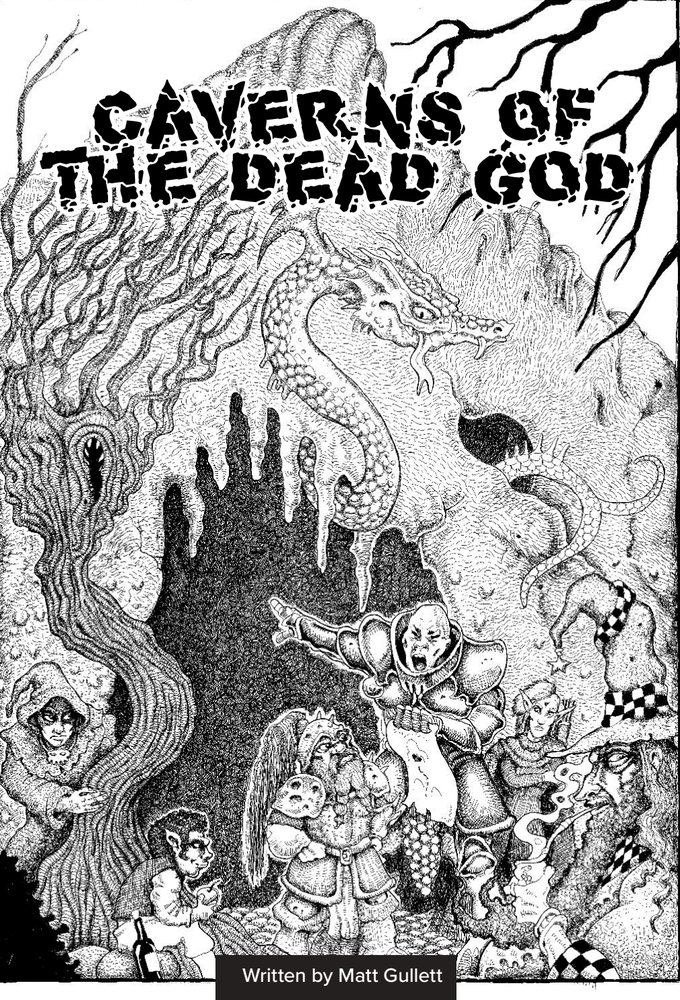
Caverns of the Dead God
By Matt Gullett
The Long Con Press
OSR
Levels 1-2
The Long Con Press
OSR
Levels 1-2
The adventure starts in the rough-and-tumble port city of Warrenburg during the revels surrounding the imminent hanging of a notorious pirate. The Player characters are enlisted to explore the enigmatic cave system some locals refer to as the Caverns of the Dead god.
This 28 page adventure uses about thirteen pages to describe a cave/dungeon full of cultists who just LUV insects. It’s heart is in the right place with a decent amount of interactivity beyond stabbing, supported by a some weirdness and some good use of language in places. It’s lacking just a little in the setup vibe, but the major pitfall is layout nd the need for a HARD edit to bring the rooms in to better focus. Your highlighter is going to go a LONG way with this one.
First off, while listed as OSR, this is clearly a DCC adventure, down to Luck and other terminology. That’s not such a high hurdle, and I used to review many a DCC adventure before finding them a little linear. There’s nothing inherently linear in DCC though, and its nice to see a more traditional crawl trying to cross game system boundaries.
The setup here has some interesting qualities. We’ve got a town of 3,000 people which has swelled to 4,000 for some festivities: an infamous pirate is about to be hanged. At the same time a group of teenagers has gone missing, including the son of a local magistrate. Did I fail to mention the new priests in town who are giving out food and items to the poor? The swelling of the towns population gives a decent enough pretext to why the town isnt looking for the teens; a riff on the old “the kings armies are engaged with a neighboring kingdom” thing. The hanging and town swell offer a nice slice of life to the adventure and are great examples of specificity leading to things that the DM can riff on to add local colour. The hooks, or perhaps “quest givers”, also have a decent mix, from the magistrate to the sheriff to a do-gooder to a local worried that HE’LL be blamed if the kids show up dead. A nice mix of chaos and town “factions” I guess you could call them. Beyond the verbosity of the town/background section, my only complaint here is the lack of a few more specific situations for the DM to riff on during play. Hirelings and rumours are well covered, but a few street scenes would have gone a long way to helping reinforce the chaos of the town swell, the jubilant and chaotic atmosphere of the hanging, etc.
The caves are a relatively simple affair, in a mostly star layout on the map. Nice use of things on the map to lend information, like curtains and statues and the like, but noting lights and sounds on the map, as well as creatures, would save me the trouble of having to note them myself. Entry is through a hole with a rope, always a personal favorite of mine. Unrealistic, but fun! This also seems like a good place to note that the cultists inside don’t really have an order of battle. There is a general note that they will prepare for return expeditions and set traps, but nothing more beyond that.
Interactivity inside is decent. We’ve got status and curtains and porculii to mess with. There’s a spinning gizmo, like a gem, in one room, and a smokey archway in another. Riddles are present, which are NOT a favorite of mine; I like my riddles a little more engrained into the adventure and more subtle than the old say the answer thing. But there’s no question it’s a classical element. Also present is a gem inside of a skull … that you feel a certain compulsion to swallow. I think the last time I saw a swallowed magic gem was in, what, Dungeon of the Bear? Wonderfully non-standard! You do get your fair share of stabbing here, cultists and bugs, but this leans heavy in to the non-standard OD&D vibe. I wouldn’t want to say it goes too far down that path, but there is a sense of wonder here and there that I generally only get from those OD&D centered adventures.
Language use is generally good as well. It’s hidden, sometimes, in the verbosity of the entries, but you do really get the sense that a scene has been painted and/or situations have been brought to life. In one room, were you find captives, “The door here is barred. This darkened cavern reeks of the eye-watering smell of filth. A dozen gaunt, reeking individuals huddle here, shielding their eyes from your light as you fight back the urge to gag.” (There’s no real read-aloud here, in spite of the use of the word “you” in a couple of places. I’ll forgive it as poetic license.) The cavern REEKs. Eye-watering. Gaunt. Huddled. And then, with one of them, “wet, rattling breaths speak of imminent death.” Just a couple of words to really bring home an awful situation. The usual “captive are here” is done more with, and then a situation is introduced, tersely, and not elaborated upon. This is what specificity buys you. Not only a great mental image but also one that you can then riff on as a DM. And this is not a cherry picked example, the use of language can be startlingly good in many of the areas.
But I’m not going to recommend this. It’s because of the layout, formatting and editing. I want to give you a mental image. Imagine a full page of text that is all center justified. So you have both a wall of text issue and the center justified issue to contend with. Now, this is NOT what the adventure layout is doing, but I think it’s the closest mental image I can describe that relates to the issues. This is all a single column, which of course contributes to the issue. When a paragraph is a sentence or so long and it ends a word or three in to the newline then you get this weird effect that almost mirrors a center justify. Especially when combined with a CRIMINAL lack of blank lines to help separate thoughts and sections. Almost a complete lack of bolding, or other elements to help orient the reader and help them locate information. And then a certain verbosity. It’s not appears to be, or room histories or motivations or anything like that, except it is all of them, and more, contributing line after line in very small ways. Things that build up, word after word and sentence after sentence, combined with the lack of formatting and single column.
This needs a REALLY hard edit to focus in without losing the specificity and vibrancy hinted at, combined with some small efforts in formatting, bolding, white space and so on to call out aspects of the rooms, combined with nearly ANY other layout style. Were that done this would be a pretty decent adventure. As if, though, you’re gonna need a box of highlighters.
I am hopeful. The interactivity is decent and the language use, what I think is the hardest aspect of writing, is good. Layout and formatting and ruthless editing can be learned easily enough.
This is $9 at DriveThru. Alas, there is no preview. A good preview of a dungeon room or two gives potential buyers a chance to judge the adventure for themselves before purchasing.
https://www.drivethrurpg.com/en/product/566897/caverns-of-the-dead-god?1892600
Categories: Tabletop Gaming Blogs
Wednesday Comics: DC, September 1985 (week 4)
I'm reading DC Comics' output from January 1980 (cover date) to the end of Crisis! This week, I read the comics on sale on June 27, 1985.
Detective Comics #554: The cover by Janson actually goes with the backup story by Cavalieri and Moore/Patterson. It proclaims this is the debut of the new Black Canary costume "the first time anywhere," but as I've mentioned is this series, it has appeared in both Who's Who and Crisis prior to this.
Following the events of last issue, Black Canary searches for the reason she froze in the battle with Bonfire and comes to believe it was imprinted memories of her mother's fear when she fought a villain named Pyra. Deciding that the only way conquer her fear is to break with the past, Dinah designs a new Black Canary costume for herself, then goes out looking for Bonfire. After a difficult battle she defeats the villain with her canary cry--something her mother couldn't do. She and the late-arriving Green Arrow take Bonfire into custody and discover the fire marshal Ollie was sure was corrupt was doing his job all along.
The main story is an unexceptional but well-crafted action/crime piece by Moench and Janson. Batman, Robin, and Bullock team-up to deal with an ocean liner from Sicily that is being held in Gotham Harbor under suspicion of smuggling. Forces on the liner are trying to get the police cordon opened with a scuba diver with a bomb. Batman and friends win the day, and it's discovered the whole plot was for nothing. The plan was not to smuggle anything in but to smuggle a person out--a person ordered deported on that ocean liner.
We also see an ad in this issue for Outsiders that explains that that group will be getting the same treatment as the Teen Titans and the Legion and receiving a direct market book on better paper, too. No mention of why Batman is no longer in the title, though.
Action Comics #571: Great cover by Bolland for a mediocre issue. The editorial note at the beginning of this story by Maggin and Saviuk/Hunt helpfully tells us that this story takes place before the "Clark Kent--Fired" storyline appearing in Superman. It starts by paralleling a robotic alien scientist on another world with an Earth genius, both of whom are attempting a breakthrough to benefit their people. The robot scientist winds up coming to Earth to find an essential element to save his people, and it turns out to be in the formula the other scientist invented. Meanwhile, the Earth scientist is embittered by her perception that she was snubbed for the Nobel Prize and winds up causing havoc. There's also a subplot about a robot appearing on TV to fill-in for Clark Kent which is where the cover comes from.
Ambush Bug #4: Giffen, Fleming, and Oksner bring this series to an end with some goofing on Thriller facilitated by an appearance by Scabbard. When Scabbard storms off, embarrassed to have been in the wrong book, the creative team is forced to improvise, giving us some one-page gags. Then, we get a second story, one of the most amusing in the series, where Ambush Bug must face the villainous singlet sock in a metal mask, Argh!yle. Finally, Ambush Bug gets his long-promised confrontation with Darkseid--an inflatable Darkseid that he just deflates.
Rereading the series, I think it holds up today in that it's still amusing. I do think 4 issues might be a bit much, but maybe that's an artifact of how many of these old comics I have to read week after week. Regardless, I think a one-shot might have been the right amount.
Arion Lord of Atlantis #35: Kupperberg and Duursema continue the story from last issue. After Arion was engulfed by the shadow bat, the evil sorcerer, Rhajeem, wastes no time in declaring himself king of Atlantis. He's counted Arion out too soon, though. He comes bursting out of the shadow being and two again engage in magical combat until Rhajeem casts Arion through a portal. He begins to declare himself ruler in front of the populace, but no, Arion is back again this time being followed by a monster from the other realm. It gobbles up Rhajeem before Arion banishes it. With the threat ended, the conclave selects D'Tilluh's recently returned son M'Zalle as the next king.
The last page reveals the next issue (coming in two months) is the double-sized conclusion of the series. It seems likely this came as something of a surprise to the creative team as they were steadily introducing new characters and subplots up to the end.
All-Star Squadron #48: Dr. Occult makes an appearance for the first time since 1938. Like the All-Stars, he's a captive of Wotan. Wotan is in league with Hitler and unleashes the Shining Knight and his Camelot robots on British troops. Hourman and Blackhawk manage to snap Shining Knight out of it by waving a Union Jack at the right moment.
World's Finest #319: Cavalieri and Delbo/Alcala have Superman seeking help from Batman as his sleep is continuously disrupted by disturbing dreams. Using a Kryptonian device, Batman enters Superman's dreams and finds out the culprit is Rem who looks like the evil cousin of Rainbow Brite and sneakily quotes a lot of stuff in his dialog, including Shakespeare, the Beatles, Eurythmics, and Catch-22. Rem has a plan to drop a bunch of psychedelics in the Metropolis reservoir so he can get control of the populace's dreams too, and the issues cliffhanger has him dropping Batman into the reservoir from the airplane, as well! Meanwhile, the surviving members of the Network have the feeling that Cathode is still alive within them somehow, and a shadowy figure called the Powerbroker (not the Marvel one) makes his move.
Batman and the Outsiders Annual #2: Barr and Ross/Adkins invite us to the wedding of Rex Mason and Sapphire Stagg. The cover had me a little worried, but it's just a tease. Sapphire isn't killed and the wedding goes on. Things don't go smooth, though. Before the ceremony, the venue is attacked by a power-stealing android on a mission for a Maxwell Tremayne, an old foe of Simon Stagg. Sapphire is kidnapped, and our heroes must pursue. The other Outsiders and Batman do battle with the Masters of Disaster (last seen in issue 10) while Metamorpho rescues his fiancée.
V #8: I've never seen this issue, but I remembered the ads DC ran promoting it with the tagline "I could have had a V 8!" which I suppose they thought was too good to pass up. The actual story involves a group of our protagonists making contact with a printing facility in a rural area that went from printing comics to churning out resistance literature. Unfortunately, it's got a problem with Visitor infiltrators. The team has to flush them all out before they can sabotage the presses.
The editorial addresses fan concerns that NBC might cancel the TV series. It reassures us the series will finish the storyline whether there's a TV show or not. As it turns out, the show had already aired its last episode on March 22.
Vigilante Annual #1: My brother and I had this issue as kids. It was our first introduction to the character. Kupperberg and Cown/Maygar tell an untold story of "times past" before the current craziness in the ongoing title. This is a bit more grounded in style that that series and uses detective fiction inspired first-person narration like Miller would do in Dark Knight Returns and Batman: Year One. That and Cowan's artwork make Vigilante seem a more "realistic" Batman without the gestures at meditations on vigilantism and the psychological breakdown of the main character like in the series.
When a college friend of Marcia's is arrested for the murder of a neighbor, Chase helps out by investigating as Vigilante. He discovers it was a mob hit, and must race against time to stop another crime boss from mistakenly having an assassin hit Marcia's friend in jail as reprisal.
Wonder Woman #327: This is the second ever Crisis crossover, but the tie-in is pretty weak. Newell and Heck just use the red skies and cosmic storm as a convenient explanation for why Wonder Woman loses control of her plane and somehow ends up in the Central American jungle where Tezcatlipoca is. In some weird either other dimension or timeless realm, she and a group of pre-Columbian Indians witness the "death" of Keith Griggs three times, as the god demonstrates his power to create a time loop for some reason. Wonder Woman manages to break the loop and free herself and her three friends from Tezcatlipoca's grasp. Meanwhile, on Paradise Island, the Amazons begin debating whether or not to choose a new queen.

Detective Comics #554: The cover by Janson actually goes with the backup story by Cavalieri and Moore/Patterson. It proclaims this is the debut of the new Black Canary costume "the first time anywhere," but as I've mentioned is this series, it has appeared in both Who's Who and Crisis prior to this.
Following the events of last issue, Black Canary searches for the reason she froze in the battle with Bonfire and comes to believe it was imprinted memories of her mother's fear when she fought a villain named Pyra. Deciding that the only way conquer her fear is to break with the past, Dinah designs a new Black Canary costume for herself, then goes out looking for Bonfire. After a difficult battle she defeats the villain with her canary cry--something her mother couldn't do. She and the late-arriving Green Arrow take Bonfire into custody and discover the fire marshal Ollie was sure was corrupt was doing his job all along.
The main story is an unexceptional but well-crafted action/crime piece by Moench and Janson. Batman, Robin, and Bullock team-up to deal with an ocean liner from Sicily that is being held in Gotham Harbor under suspicion of smuggling. Forces on the liner are trying to get the police cordon opened with a scuba diver with a bomb. Batman and friends win the day, and it's discovered the whole plot was for nothing. The plan was not to smuggle anything in but to smuggle a person out--a person ordered deported on that ocean liner.
We also see an ad in this issue for Outsiders that explains that that group will be getting the same treatment as the Teen Titans and the Legion and receiving a direct market book on better paper, too. No mention of why Batman is no longer in the title, though.

Action Comics #571: Great cover by Bolland for a mediocre issue. The editorial note at the beginning of this story by Maggin and Saviuk/Hunt helpfully tells us that this story takes place before the "Clark Kent--Fired" storyline appearing in Superman. It starts by paralleling a robotic alien scientist on another world with an Earth genius, both of whom are attempting a breakthrough to benefit their people. The robot scientist winds up coming to Earth to find an essential element to save his people, and it turns out to be in the formula the other scientist invented. Meanwhile, the Earth scientist is embittered by her perception that she was snubbed for the Nobel Prize and winds up causing havoc. There's also a subplot about a robot appearing on TV to fill-in for Clark Kent which is where the cover comes from.

Ambush Bug #4: Giffen, Fleming, and Oksner bring this series to an end with some goofing on Thriller facilitated by an appearance by Scabbard. When Scabbard storms off, embarrassed to have been in the wrong book, the creative team is forced to improvise, giving us some one-page gags. Then, we get a second story, one of the most amusing in the series, where Ambush Bug must face the villainous singlet sock in a metal mask, Argh!yle. Finally, Ambush Bug gets his long-promised confrontation with Darkseid--an inflatable Darkseid that he just deflates.
Rereading the series, I think it holds up today in that it's still amusing. I do think 4 issues might be a bit much, but maybe that's an artifact of how many of these old comics I have to read week after week. Regardless, I think a one-shot might have been the right amount.

Arion Lord of Atlantis #35: Kupperberg and Duursema continue the story from last issue. After Arion was engulfed by the shadow bat, the evil sorcerer, Rhajeem, wastes no time in declaring himself king of Atlantis. He's counted Arion out too soon, though. He comes bursting out of the shadow being and two again engage in magical combat until Rhajeem casts Arion through a portal. He begins to declare himself ruler in front of the populace, but no, Arion is back again this time being followed by a monster from the other realm. It gobbles up Rhajeem before Arion banishes it. With the threat ended, the conclave selects D'Tilluh's recently returned son M'Zalle as the next king.
The last page reveals the next issue (coming in two months) is the double-sized conclusion of the series. It seems likely this came as something of a surprise to the creative team as they were steadily introducing new characters and subplots up to the end.

All-Star Squadron #48: Dr. Occult makes an appearance for the first time since 1938. Like the All-Stars, he's a captive of Wotan. Wotan is in league with Hitler and unleashes the Shining Knight and his Camelot robots on British troops. Hourman and Blackhawk manage to snap Shining Knight out of it by waving a Union Jack at the right moment.

World's Finest #319: Cavalieri and Delbo/Alcala have Superman seeking help from Batman as his sleep is continuously disrupted by disturbing dreams. Using a Kryptonian device, Batman enters Superman's dreams and finds out the culprit is Rem who looks like the evil cousin of Rainbow Brite and sneakily quotes a lot of stuff in his dialog, including Shakespeare, the Beatles, Eurythmics, and Catch-22. Rem has a plan to drop a bunch of psychedelics in the Metropolis reservoir so he can get control of the populace's dreams too, and the issues cliffhanger has him dropping Batman into the reservoir from the airplane, as well! Meanwhile, the surviving members of the Network have the feeling that Cathode is still alive within them somehow, and a shadowy figure called the Powerbroker (not the Marvel one) makes his move.

Batman and the Outsiders Annual #2: Barr and Ross/Adkins invite us to the wedding of Rex Mason and Sapphire Stagg. The cover had me a little worried, but it's just a tease. Sapphire isn't killed and the wedding goes on. Things don't go smooth, though. Before the ceremony, the venue is attacked by a power-stealing android on a mission for a Maxwell Tremayne, an old foe of Simon Stagg. Sapphire is kidnapped, and our heroes must pursue. The other Outsiders and Batman do battle with the Masters of Disaster (last seen in issue 10) while Metamorpho rescues his fiancée.

V #8: I've never seen this issue, but I remembered the ads DC ran promoting it with the tagline "I could have had a V 8!" which I suppose they thought was too good to pass up. The actual story involves a group of our protagonists making contact with a printing facility in a rural area that went from printing comics to churning out resistance literature. Unfortunately, it's got a problem with Visitor infiltrators. The team has to flush them all out before they can sabotage the presses.
The editorial addresses fan concerns that NBC might cancel the TV series. It reassures us the series will finish the storyline whether there's a TV show or not. As it turns out, the show had already aired its last episode on March 22.

Vigilante Annual #1: My brother and I had this issue as kids. It was our first introduction to the character. Kupperberg and Cown/Maygar tell an untold story of "times past" before the current craziness in the ongoing title. This is a bit more grounded in style that that series and uses detective fiction inspired first-person narration like Miller would do in Dark Knight Returns and Batman: Year One. That and Cowan's artwork make Vigilante seem a more "realistic" Batman without the gestures at meditations on vigilantism and the psychological breakdown of the main character like in the series.
When a college friend of Marcia's is arrested for the murder of a neighbor, Chase helps out by investigating as Vigilante. He discovers it was a mob hit, and must race against time to stop another crime boss from mistakenly having an assassin hit Marcia's friend in jail as reprisal.

Wonder Woman #327: This is the second ever Crisis crossover, but the tie-in is pretty weak. Newell and Heck just use the red skies and cosmic storm as a convenient explanation for why Wonder Woman loses control of her plane and somehow ends up in the Central American jungle where Tezcatlipoca is. In some weird either other dimension or timeless realm, she and a group of pre-Columbian Indians witness the "death" of Keith Griggs three times, as the god demonstrates his power to create a time loop for some reason. Wonder Woman manages to break the loop and free herself and her three friends from Tezcatlipoca's grasp. Meanwhile, on Paradise Island, the Amazons begin debating whether or not to choose a new queen.

Categories: Comic Book Blogs, Tabletop Gaming Blogs
Video of the Day – The Whoniverse Show, 2026
The post Video of the Day – The Whoniverse Show, 2026 appeared first on Blogtor Who.
Categories: Doctor Who Feeds
Wonderous & Dangerous Consortiums & Xendria World/Lore Book
I have known Agile Monk for a long time, and we have talked a lot over the years about my work and the OSR in general. Recently, he and his team at Fantasy Companion Workshops launched a crowdfunding campaign to fund two books designed as expert-level gaming resources. The Kickstarter is due to end in two days, on June 25th at 4 pm Eastern Daylight Time.
Wonderous & Dangerous Consortiums & Xendria World/Lore Book Kickstarter
The first book, Wondrous and Dangerous Consortiums, focuses on worldbuilding and helps the referee design organizations, societies, clubs, guilds, and similar groups for their campaigns.
The second book is Xendria, a fantasy setting designed by the FCW team. The book is system-agnostic, but includes adventures and support material for Castles & Crusades, ShadowDark, D&D 5e, and Nimble 2e.
I hope you take a look at what Agile Monk and the Fantasy Companion Workshops team are doing and consider supporting their efforts to bring these projects to life for the rest of us to use and enjoy.
Wonderous & Dangerous Consortiums & Xendria World/Lore Book Kickstarter
Categories: Tabletop Gaming Blogs
Building The Red Planet Empire - Mixing Warriors of the Red Planet (WotRP) with the Domain-level Architecture of ACKS II Rpg - d100 Random Martian Dungeons & Wilderness tables
To truly capture the planetary romance aesthetic, a Martian megadungeon shouldn't look like a standard fantasy stone cellar. It needs towering, oxidized metal struts, glowing chemical vats, ancient stasis chambers, and subterranean canal networks. This picks right up from Building The Red Planet Empire - Mixing Warriors of the Red Planet (WotRP) with the Domain-level Architecture of Needleshttp://www.blogger.com/profile/11243274667834930867noreply@blogger.com0
Categories: Tabletop Gaming Blogs
About Me: Tabletop RPG – Stargazer Edition
In May my friend and fellow contributor to this blog, Sunglar, posted about how he discovered Awkward GM Corbin‘s “About Me: Tabletop” template and also provided us with his filled out template and explanation why he chose the games that he picked. This sounds like a fun thing to do, so here comes the Stargazer Edition:
Favorite Game: Mutant Year Zero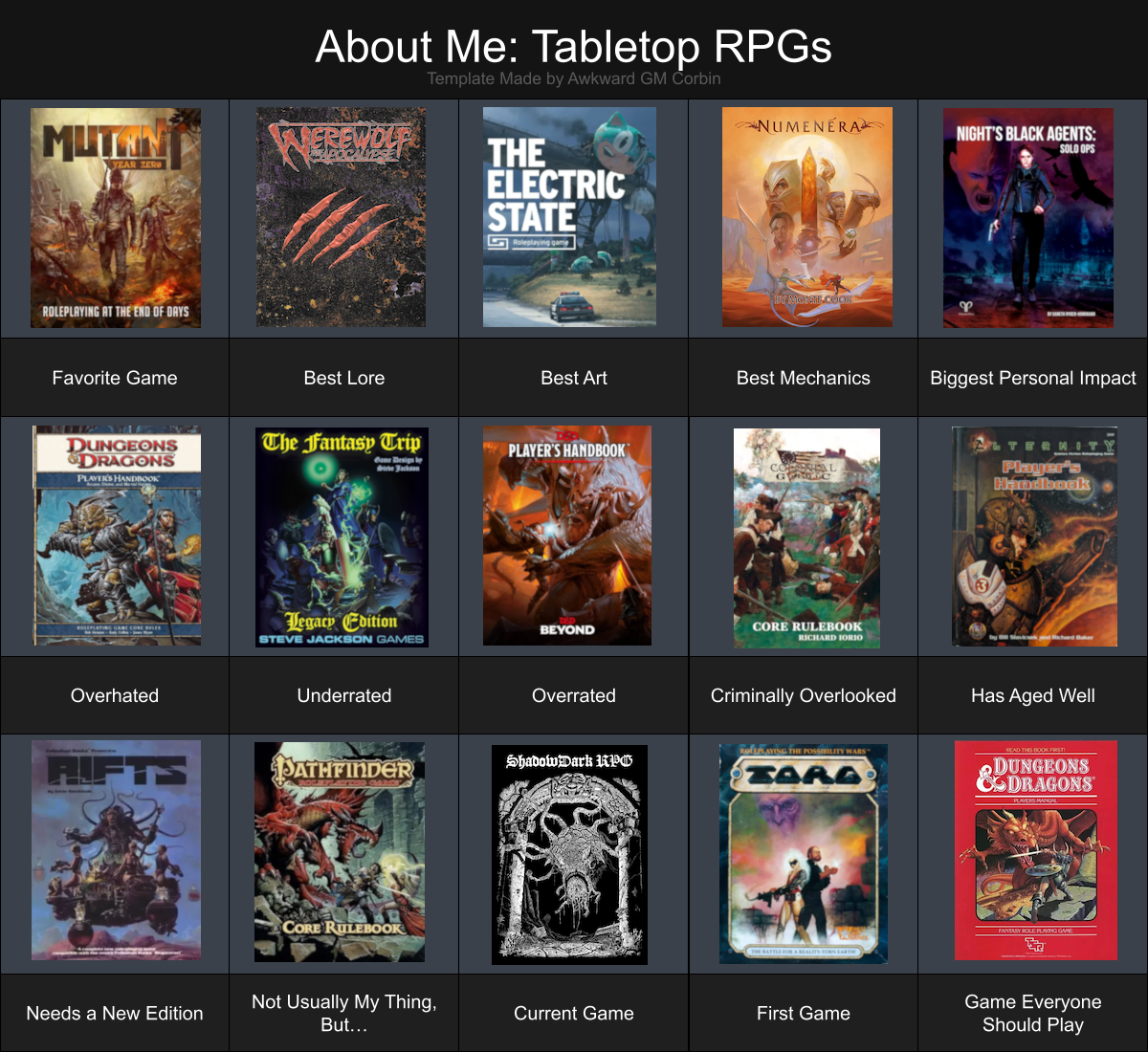
That was a tough one. I have played and enjoyed a lot of TTRPGs but Mutant Year Zero has a special place in my heart. I played in a long-running campaign which we unfortunately never finished but I experienced some of the best roleplaying and the most dramatic scenes in this campaign. Of course this was in no small part because of the other players and the GM, but in my opinion the mechanics and setting were crucial for this outcome. I can highly recommend all games by Free League Publishing, but Mutant Year Zero is definitely my favorite!
Best Lore: Werewolf – The ApocalypseIt didn’t take long to decide which game I would pick for this category. Even to this day I have fond memories of the original World of Darkness. One aspect of these games that I tremendously enjoyed was the deep lore. The whole mythology and history of the setting were extremely interesting to me and one reason I kept playing these games was to find out more about how this world worked. The WoD jargon we had to learn back in the day, had quickly become second nature and I still remember most of it today. I picked Werewolf and not Mage or Vampire since I especially liked the lore they came up with for the Garou and the cosmic conflict between the Wyrm, the Weaver and the Wyld. Great stuff!
Best Art: The Electric StateThis was another tough one. There are so many great-looking roleplaying game books out there. But in my opinion the roleplayng games based on the art by Simon Stålenhag are on another level. His art is realistic and otherworldly at the same time. His images evoke nostalgia but also grant a glimpse into an alternate reality. Even if you don’t intend to run or play them, the games based on his artbooks: Tales from the Loop, Things from the Flood and The Electric State are worth a buy just for the art alone.
Best Mechanics: NumeneraFrom a game master’s standpoint Numenera had the best mechanics of any game I ran so far. What I enjoyed the most was that it makes it incredibly easy to improvise. A NPC is basically defined by its level and perhaps a special ability. The rules are extremely easy and instead of explaing rules to players or looking up stuff I could focus on what’s really important. I also love the fact that all rolls are player-facing. I found this extremely refreshing. In 2014 I wrote a post about the game called “Numenera: One of the best games I’ve ever ran!” and that still holds true.
Biggest Personal Impact: Night’s Black Agents: Solo-OpsIn 2020 my friend Ralf ran Night’s Black Agents: Solo-Ops for me and it was the most intense and rewarding roleplaying experience I ever had. Period. I just reread my post I wrote back about the experience and unfortunately it didn’t give it justice. One-on-one roleplaying can be a very intense experience. As a player you’re under constant pressure, you don’t have other players to rely on. You’re the one who has to make decisions all the time and you have to suffer the consequences alone. The mechanics are quite brilliant and really helped to support the narrative. Playing Leyla Khan, the protagonist of the game, was a very interesting experience and gave me new perspectives. I highly recommend anyone to check this game out!
Overhated: D&D 4th EditionI fully agree with Roberto here. D&D 4th Edition is still hated by a lot of D&D fans but it’s not a bad game. Personally the game didn’t click for me when I first tried it but I like many of the things the designers tried to achieve back in the day. Compared to 5th Edition I think it might even be the better game in many regards. It had a bold vision and tried to kill too many sacred cows in the process which didn’t sit well with most fans. With the right kind of players I might even run it again.
Underrated: The Fantasy TripThe Fantasy Trip is a classic roleplaying game that was held back mostly by the fact that it was out-of-print for about 40 years. In 2017 Steve Jackson – it’s author – reacquired the rights and released an updated version in 2019. The Fantasy Trip is a very easy to learn system for tactical battles between fantasy characters on a hex grid which becomes a full TTRPG with the inclusion of the rules from “Into The Labyrinth”. Much like the more well-known GURPS it just uses three stats, has a 3d6 roll under mechanic and is basically level- and classless. But unlike GURPS it’s much easier but almost as versatile. People have used TFT to run anything from high fantasy to far-future space opera. If it hadn’t been gone for so long, I am sure more people would sing its praises. But unfortunately aside from a few die-hard fans it’s mostly disregarded and overlooked by the players.
Overrated: D&D 5th EditionDon’t get me wrong: I don’t hate 5th Edition. I actually had a lot of fun playing it. But having said that it’s neither the best D&D edition ever, nor the best fantasy RPG out there. After the disastrous fan reaction of 4E it was a return to a more familiar D&D but it also reintroduced elements which should have better be buried long time ago. While 4th Edition was too bold for its time (and fan base), 5th Edition was not bold enough. 5th Edition has neither the tactical combat of 4th Edition nor is it as easy as B/X. But 5th Edition seems to have hit a nerve and for many players who left for Pathfinder during the 4E era returned, so it was probably the right game at the time, but it’s just not THE BEST fantasy roleplaying game as it is hailed by many.
Criminally Overlooked: Colonial GothicIn my opinion the games from Rogue Games are among the most criminally overlooked games out there and Colonial Gothic especially so. Colonial Gothic is a supernatural horror game set during the American Revolution. It uses an original d12-based system which is pretty easy to learn and fun to play. I would have overlooked this game myself if I hadn’t met its author Richard Iorio at GenCon in 2010 since the American Revolution is not a topic I naturally steered towards. But if you choose to overlook Colonial Gothic you miss a very well researched game with a lot of background material which is not only fun to play but also might teach you a thing or two about the American Revolution. If the subject matter is not your cup of tea I can also highly recommend Shadow, Sword & Spell, his take on Sword & Sorcery using the same system.
Has Aged Well: Alternity (TSR)Alternity is a scifi roleplaying game that was unfortunately doomed from the start. It could have been to scifi was D&D was to fantasy. But after TSR had been bought by Wizards of the Coast, the company didn’t want it to be a direct competitor to its new d20 System, so they cancelled the line way before its time. When I had another look at Alternity just a couple of weeks ago I was surprised how well everything has aged. Sure, it has its quirks, but overall Alternity held up pretty well and could easily be used to run games inspired by contemporay fiction. I love the roll-under task resolution mechanics with its detailed degrees of success which is both surprisngly easy and still offers a lot of depth. Unfortunately you can’t buy it digitally anywhere aside from a couple of sourcebooks hidden away in the d20 Modern section on DriveThruRPG.
Needs a New Edition: RIFTSAgain, I am agreeing with Roberto on this: RIFTS need a new edition. RIFTS has a lot going for it: great art, an exciting setting where everything is possible, intriguing character oprions. Unfortunately the rules suck. The Palladium system is basically an AD&D heartbreaker that hasn’t really aged well. Savage RIFTS might be an option to some, but I don’t think the Savage Worlds system really works for RIFTS. If there’s a game that needs a reboot it’s RIFTS!
Not Usually My Thing, But … Pathfinder 1st EditionOver the years I have stated multiple times that I prefer rules-light to rules-medium games. Regardless I am having a blast playing in a Pathfinder 1st Edition campaign with my friends. Sure, I running it would probably make my head explode and without the help of PCGen I wouldn’t have been able to play my character all this time, but during these many months I really grew to love this game. If my current GM would offer to run another Pathfinder campaign after this one, I wouldn’t hesitate to join.
Current Game: ShadowDarkShadowDark is a game I just very recently picked up and fell in love with. I don’t think I need to sing the praises here, since everyone is already pretty much enamoured with this game already. I am kinda late to the party. So what do I love about this game? It’s OSR-ish but still includes some modern ideas. It’s rules-light and extremely light to homebrew for. It’s perfect if you want something that feels like original D&D while being much more streamlined and way less clunky. If you are even remotely interested in dungeon crawling you owe it to yourself to check it out! I am currently planning a one-on-one campaign with my wife using ShadowDark and a sandbox campaign which I plan to run for a group of friends. I haven’t actually run it, yet, but I am sure this could actually become my go-to game in the future.
First Game: TORGThe first TTRPG I ever played was actually the original TORG from West End Games. Back in the early 90’s I went to a local con interested in finally being able to try out these tabletop roleplaying games I’ve heard so much about. Back in these days RPGs weren’t really that well known in Germany even in the nerdier circles. But I was already a huge computer roleplaying game fan at this point. I don’t remember why I chose to play TORG at this day, but I had a lot of fun even though I also made my first contact with “that guy”. I don’t actually remember what the adventure was actually about other than that we fought zombies in the jungle of Borneo and that I played a private detective from the Nile Empire. But even though the rules were clunky and one of the players was a bit problematic, it didn’t deter me from becoming the huge TTRPG fan I am today.
Game Everyone Should Play:Dungeons & Dragons. Period. If you are serious about roleplaying game you should have played it at least once. Give it a try just to find out what it is about. Most people would probably recommend a recent edition but I think you shouldn’t dismiss Basic D&D. Sure it’s a bit old, but it held up pretty well. Old-School Essentials is a great choice if you want authentic rules but with a better layout and overall legibility. If you want a more “authentic” experience you can still pick up the “Red Box” on DriveThruRPG for a few bucks. D&D is such an important part of our hobby, that you owe it to yourself to at least play it once.
So what are your thoughts on my picks? Do you agree? Do you disagree? Do you think I am totally out of my mind? Please share your comments below!
Categories: Tabletop Gaming Blogs
Gen Con is Rapidly Approaching
It doesn’t matter if this is your first Gen Con, your last, or if you’re a veteran; there is something here for you. Lisa and I are well-seasoned veterans of not just Gen Con but many conventions, thanks to our volunteer and judging experience. I have been attending Gen Con since 2002, and Lisa hasn’t missed since 2018. Which has positioned us to be your travel advisors, well, not really, but we can certainly share a lot of information from packing to the return trip home that we have learned over the last twenty years.
One of the first things I would say you might want to look at is your budget. This is something I learned the hard way. I used to travel blindly (not just to Gen Con) with extra Magic the Gathering cards to pay for my way and hopefully not have any out of pocket expenses – that I didn’t have money for. I was foolish. I hope I can give you a lot of wisdom with this. I have learned to look at conventions the same way I was taught to look at survival – food, water, and shelter. If you take those three things to heart, your Gen Con experience will be much more enjoyable. Of the three, water and food are the two easiest to take care of, especially if you drive to the show as we do. Even if you are flying, you can pack enough snacks and protein that you can survive. Shelter is a big expense and could be difficult to obtain. With that said, I have never used the room draw, and we usually manage to stay out by the airport or within twenty minutes.
If you take water with you, it will help you save money and it will make you feel much better mentally and will help with those aches and pains. Dehydration is probably a gamer’s biggest demon; it sneaks up on you, fogs your brain, makes you ache, changes your blood flow, and much more. I try to drink 20 oz. or more of water every hour when I am as active as I am at a convention. The fact is, Gen Con is as much work as it is a vacation for me. It is often hot, I drink, and I am physically. All of which help set me up to be dehydrated. So please, pack yourself one water bottle or refill one at the water stations that are all over the convention center. This also saves you space – one water bottle over a case is a lot less to pack. Bonus Drip Drop hydration packets go a long way to keep you hydrated and alert
Food is a much bigger monster to tackle because there is so much to consider. It comes down to what you are interested in: food trucks, local restaurants, or cooking in the room. I will speak a lot more on food in the future, but we think that balance is a good thing. Lisa and I really try to maintain a budget when we travel. One of the best ways we do that is with what we eat. For us, the first thing we look for is a Hotel with breakfast, preferably a hot one. I can’t tell you how important this meal is for me at a convention. If I don’t eat a good breakfast, I get tired fast. We almost always complement our hotel breakfast with a protein shake. If you can’t get a hotel with breakfast, make sure you get a microwave. You can always hit a grocery store and cook your own eggs – just make sure you pack the needed utensils. If you’re staying downtown, there is a Whole Foods a couple of blocks from the Indiana Convention Center. After that, we pack our lunches – we almost never pay for our lunch. In most of our travels, we ate out of cans, usually tuna or salmon and canned vegetables, but we are evolving, and now we do prepare everything from meat and cheese boards to chicken pesto salads. It doesn’t stop there, we reward ourselves every night with dinner. We only eat out two times over our six days at Gen Con. On the other nights, I cook us a relaxing meal in the room. This year or hotel menu is going to include Mediterranean power bowls, black bean and and corn quesadillas, and a stir fry. I know those aren’t all easy to do in a microwave, and I am not only going to use a microwave this year. I got an induction burner for Father’s Day this year, and it’s a perfect hotel cooker. There are a million things you can cook in your room if you are responsible with your time, like chilis and stews. If any of you want tips or ideas for your hotel room meals – just ask. The only thing I didn’t touch on is snacks. We pack protein bars, Epic bars, a high-protein trail mix with nuts and dried fruit, and usually some pork rinds.
It doesn’t matter if you are walking to your hotel, driving, or getting a cab, it’s important that you learn the area. I highly suggest you get a local map of the downtown area. I don’t trust GPS in the city of Indiana. I can’t tell you how many appointments I missed because my GPS couldn’t find me. If you are walking, know how much time it takes to walk from A to b and plan for extra time just in case something goes wrong. If you are traveling at night, pay attention, and if possible, use the buddy system.
When packing, before you leave for Indy, consider your comfort. A good pair of shoes is a key to success. I buy fresh socks and underwear for every show I attend. I bring a rice pack and a heating pad. If you are flying and need a special pillow, then by all means bring it, these things make your mental health well healthy. Whenever I travel, I take two extra pairs of socks and underwear, a t shirt for everyday, at least one button down shirt, and one extra pair of pants. Beyond that, I bring along all of the standard hygiene stuff. Please, make sure you shower. You may not always be alone in the space that you call yours. Besides, I find that a nice shower to end the day is often relaxing. With that said, if you are worried about germs, I find the restrooms outside of the convention center to be less crowded and therefore more likely to have less germs.
Up to this point everything has been about what to pack, but once you arrive at Gen Con, I suggest you explore. Every year I arrive on Wednesday and walk my trail. That is, I take may schedule and walk it from each event, and interview that is on my schedule so I have an idea of where I need to be. This does two things for me: one, it allows me to take in some of the surroundings before I really start, for example, I may stumble across a tournament area that I was thinking was elsewhere. Two, it allows me to scout, take notes, and pictures of things I may want to do. In other words, explore, stop and listen to one of the performers, check out some miniature terrain, participate in paint and take, and parous Authors Alley. Gen Con is so big, and it is really easy to put the blinders on. I know from experience it is really easy to miss something I wish I had seen – I do it almost every year.
A trip to Gen Con wouldn’t be complete without a trip to the Vendors Hall. Here is what every attendee should know. One, they no longer allow carts/dollies in the hall except for special needs. Two, use the map to scout your targets before the show and plan you entry points. If you come in the wrong door, it can add five or even ten minutes to your trip. Three, respect the space of others. I shouldn’t have to say this, but every year I see something happen, like cutting people off, or not paying attention, and knocking something out of a booth. Remember, everyone is there to have fun.
If you are going to try and see the entire exhibitors hall there are a few things that I think should never be over looked. Entrepreneurs Avenue is where the newest game companies can be found. And if you move through it on Sunday, you might just stumble across that crazy deal. While moving through and playing the demos, don’t forget about the coupon book – some really good deals. Keep in mind the hall is broken down into blocks like the family fun zone and the RPG aisle. If you play every demo and check out every booth, you can make the exhibitors hall a four-day trek.
I hope this brings some basic principles, like food, shelter, and water, to the forefront of not just your Gen Con travels but all of your travels. If I have given you ideas about food for your trips, I would love to hear about them. Again, if you want some ideas about lunches and/or hotel dinners, just reach out.
Matt Lemke
Categories: Tabletop Gaming Blogs
Video of the Day – Blue Peter, 2006
The post Video of the Day – Blue Peter, 2006 appeared first on Blogtor Who.
Categories: Doctor Who Feeds
Integrating Adventurer Conqueror King System II (ACKS II) with the legendary, chaotic, and maximum-gonzo DNA of Dave Hargrave’s Arduin Grimoires - Converting The Techno PC Class To ACKS II
To inject the Arduinian "Techno" class into the mechanically precise framework of ACKS II, we must translate a character who relies on high-tech gadgets, firearms, and cybernetics into the game's 4-point Class Construction system. This blog post picks right up from Integrating Adventurer Conqueror King System II (ACKS II) with the legendary, chaotic, and maximum-gonzo DNA of DaveNeedleshttp://www.blogger.com/profile/11243274667834930867noreply@blogger.com0
Categories: Tabletop Gaming Blogs
Pages
