Your wildly multifarious home!
Stargazer's World


An Interview with Restless Geek, a Puerto Rican Creator
A few weeks ago, I published an interview with Eliana Falcón-Dvorsky, a local Puerto Rican artist who created a TTRPG supplement for her homebrew campaign world. Her work will be available for sale at the Puerto Rico Comic Con this year, and she will be crowdfunding a print run starting in May 2026. I am always thrilled to spread the word about Boricua TTRPG enthusiasts who create game- and geek-related art and content.
I want to use the platform and reach I have here on the blog and across my social media channels—like Sunglar’s Musings—to amplify the signal and showcase the immense talent of these creators. To do that, I put together a standard set of questions, rolled up my sleeves, and got to work. I revised my notes from the previous interview, reached out to creators I know, and began to plan.
Three creators have already replied to my initial contact, and I am waiting to hear back from three more. The first person I contacted to test this idea was Maite Rodríguez, a fellow gamer and great friend. We are both administrators of the Dungeons & Dragons Puerto Rico Facebook group and one-time co-workers. I am incredibly thankful to her for helping me polish this idea.
Moving forward, I plan to showcase local Puerto Rican creators on Sunday posts here on Stargazer’s World, on Sunglar’s Musings, the Puerto Rico Role Players Facebook page and Discord, the Dungeons & Dragons Puerto Rico group, and my other socials—for as long as I can find creators willing to share their stories and content!
If you are a Puerto Rican artist or creator working on TTRPG content, TTRPG-adjacent projects, or geek-related art that I have not contacted yet, and you’d like me to take a look and share your work with the world, please reach out to me here on the blog or via my social media channels.
Now, without further ado, let’s get to the interview!
Tell us about yourself! Who are you, and what are you creating?
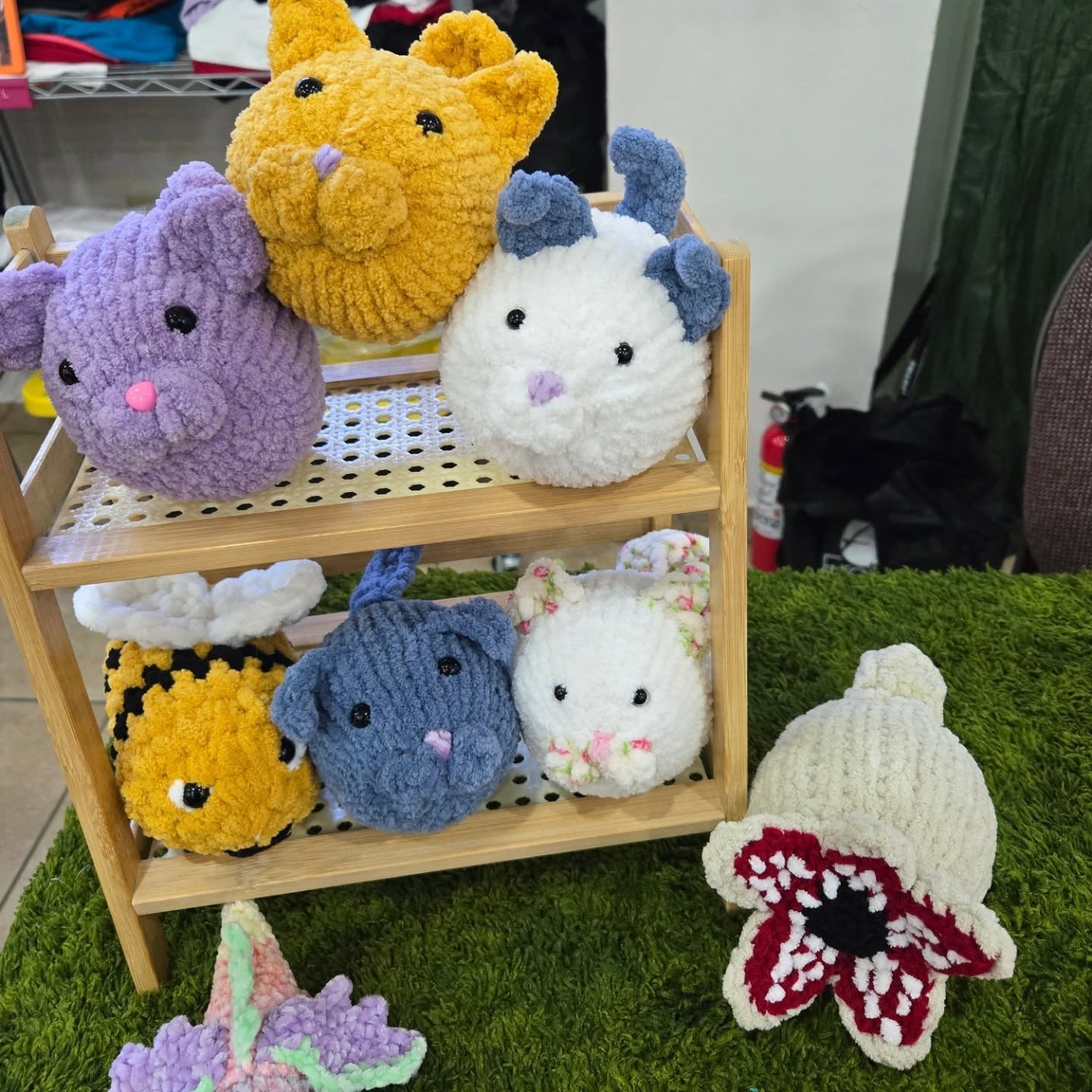
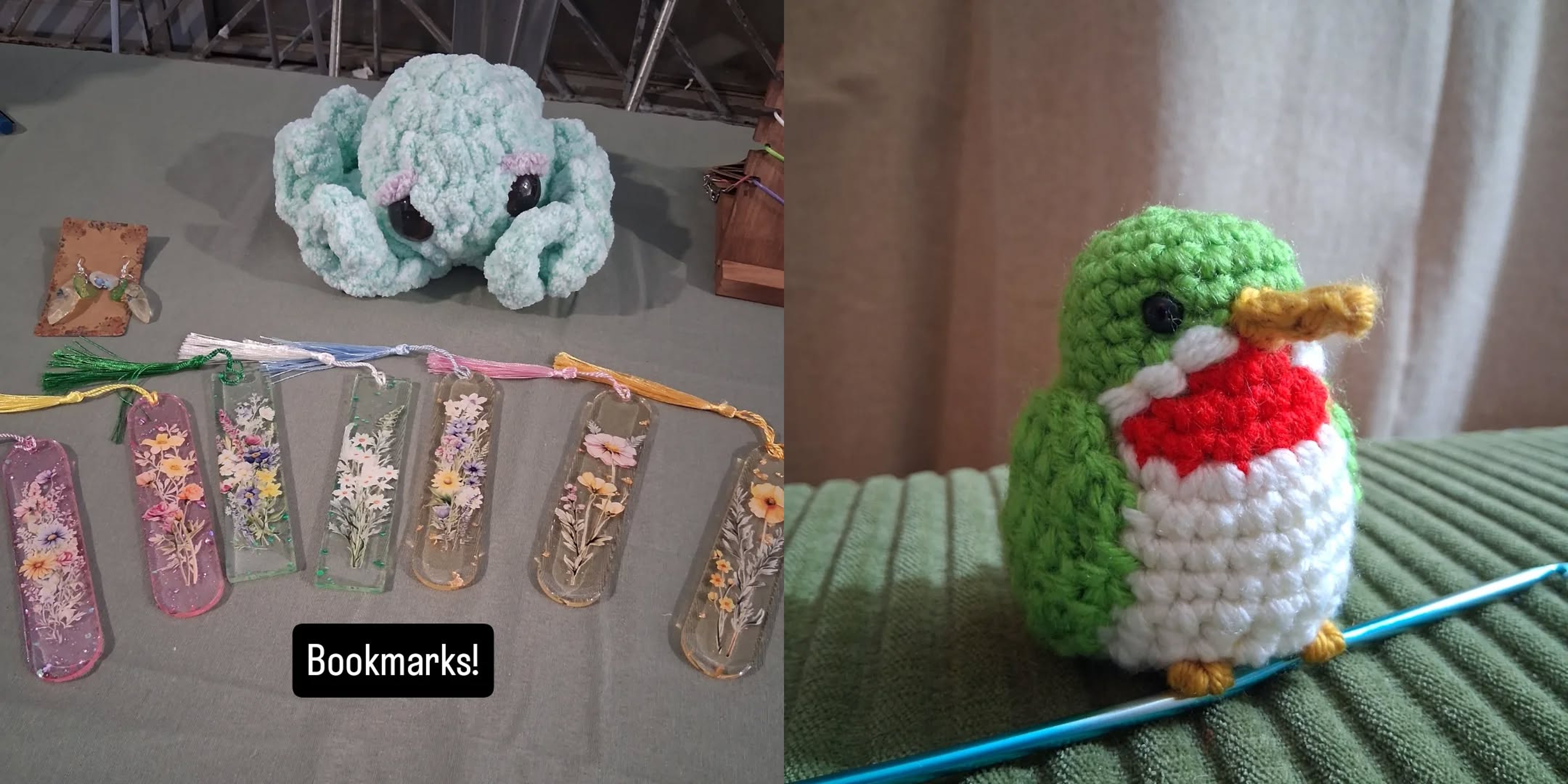
I’m Maite Rodríguez, also known as Restless Geek in the nerdy corners of the internet. I’m a full-time working mom who dabbles in every hobby imaginable. My artwork is best known for my crochet dolls and resin crafts, but my creativity doesn’t stop there. I constantly dream up projects across all kinds of media. I’m drawn to the whimsical and magical, inspired by the worlds I imagined as a kid: dragons, fairies, vampires, werewolves, epic heroes, and forest witches. I want to explore all of that and bring it to life through my art.

How would you describe your art or creative work?
My greatest joy comes from seeing people connect with something they love at my table. Kids run up to me at a market because they spot something they love, or adults get excited like kids over something I’ve made. I think the description “3D printing with yarn” is super accurate, and it’s something I do almost compulsively. I started selling my work partly because, if I didn’t, my house would be buried under all the stuff I create! Restless Geek was meant to be my space to explore all mediums and ideas, but crochet is what I’m most requested for and known for.
How did you discover TTRPGs?
I started playing board games seriously on April 5, 2014, for International Tabletop Day. While I’d of course played before, that’s where I found “my people.” From there, it was a natural leap into TTRPGs, and with my love of fantasy, I dove in headfirst.
Do you play actively? What are you playing right now?
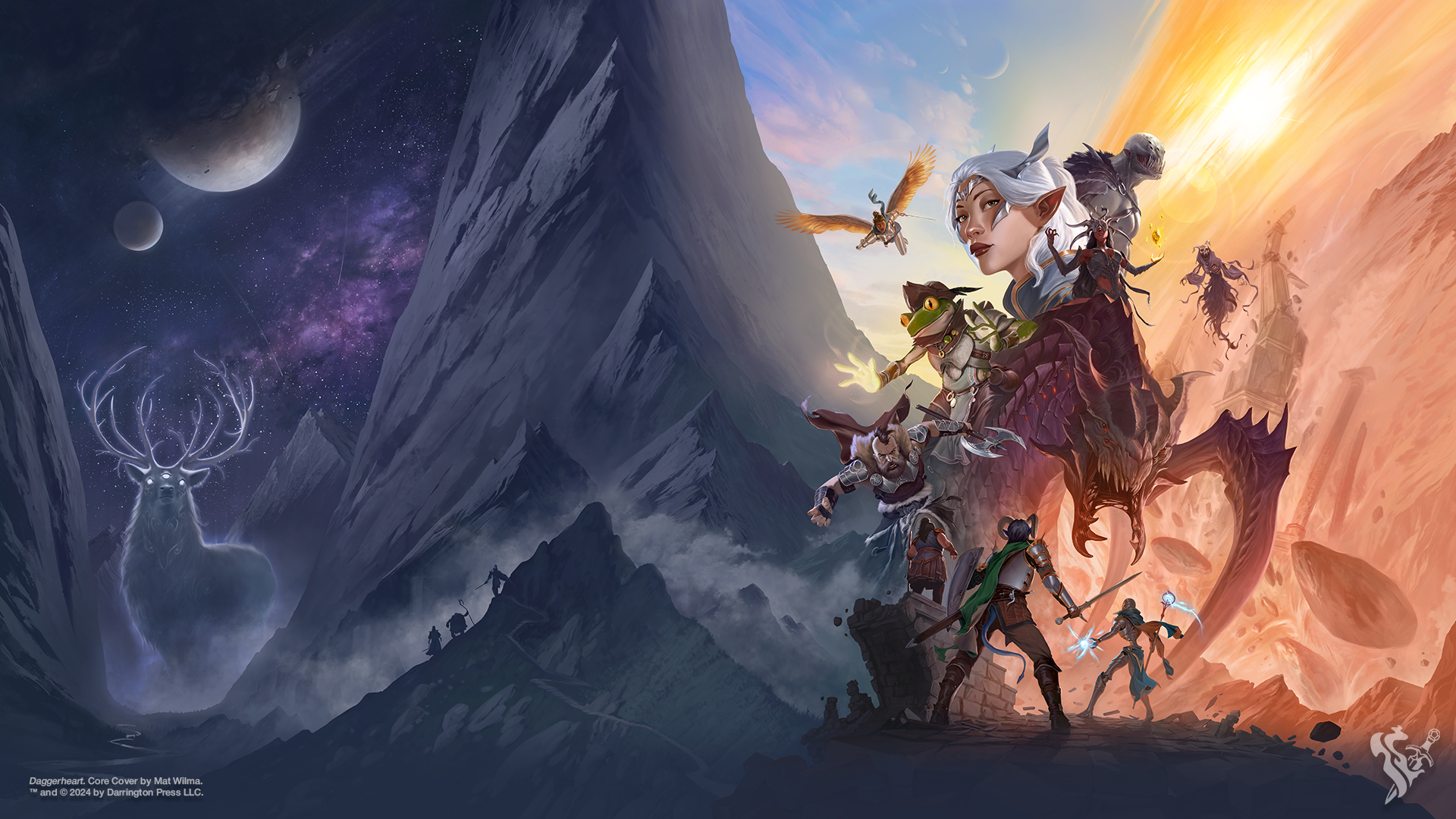
My group is currently paused on our Daggerheart campaign, and life has been pretty busy, but I’ve managed to catch the occasional game, like at a Geeknic or the online TTRPG weekends hosted on Discord. I also really want to host more Daggerheart demos with the Autumn Leaf Adventurers Guild.
What’s next on your list to play?
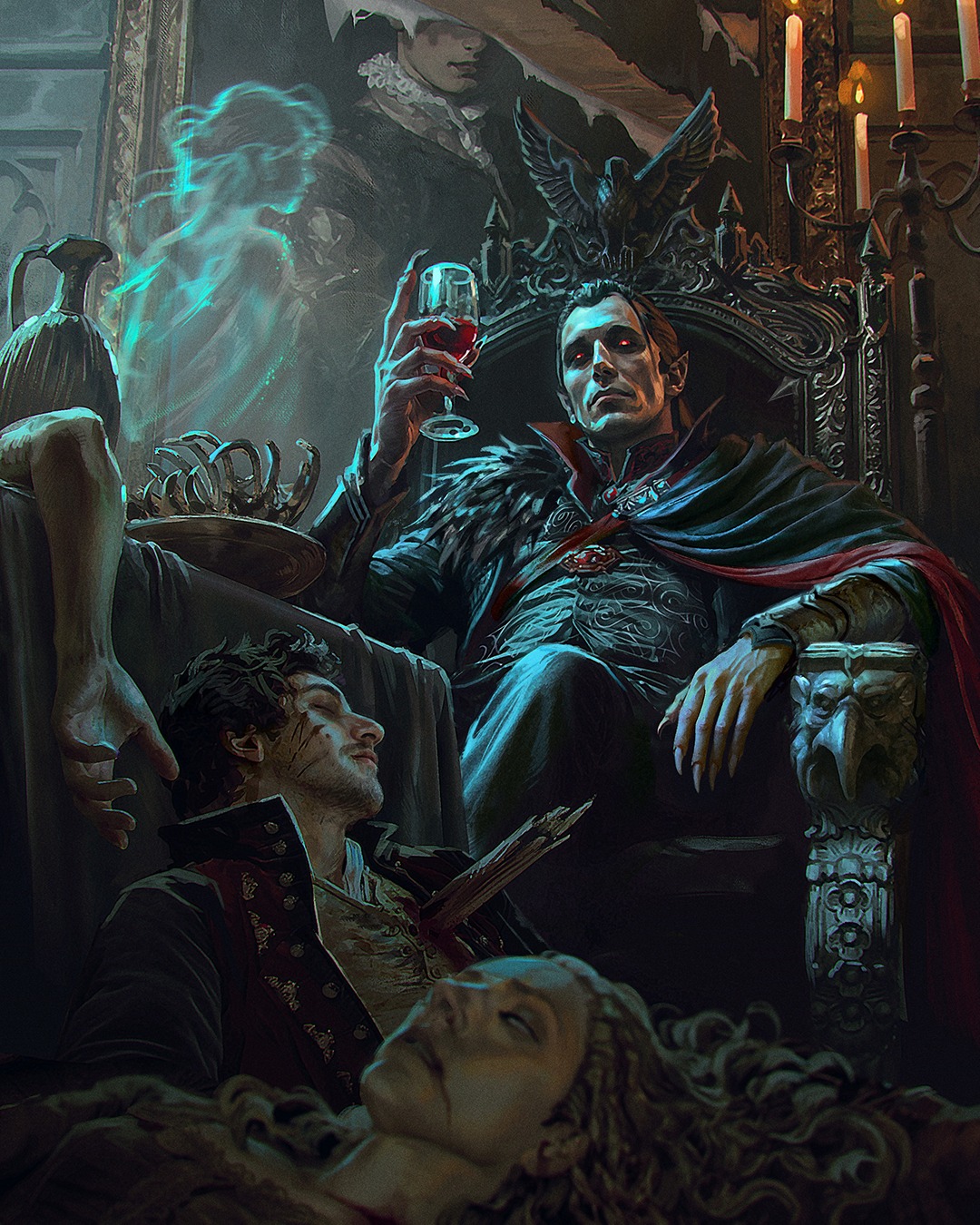
Oh, that’s a tough one! A friend recently got me interested in Faster, Purple Worm! Kill! Kill! It looks like a blast. I’d also love to play something spooky and scary. There’s new Ravenloft content out this year that’s calling my name.
What projects do you have available, and what are you working on now?
My next event is on October 31st at The Portal in Ponce. I’m also setting up my website, Restless-Geek.com, which will include an integrated online shop; it should be live this week! Right now, my inventory features dice bags, health potions, coasters, squishy dolls, and keychains. I also write spicy fiction (adults only), which I’ll be promoting more openly soon and publishing on Patreon.
Where can people find your projects?
For announcements, events, musings, and all things related to me and my art, you can find me on Instagram as @restless-geek. Everything I post there also goes straight to Facebook.
Any final thoughts?
Thank you for this initiative. I’m terrible at self-promotion; I wish I could create and have people magically find me, haha! But things like this help so much. Restless Geek is the dream, you know? Something I hope to do full-time someday, and to make my kid proud that I went for it.
Two quotes have been guiding me this past year as I have worked toward my goals:
“You can fail at something you hate, so you might as well try doing something you love.” — Jim Carrey
“It is possible to commit no mistakes and still lose.” — Captain Picard
They give me the “eff it” mentality I need just to get out there and do it. So yeah, thank you!
A huge thank you to Maite for her candor, for everything she does to support the local TTRPG community, and for helping me iron out the logistics for this new series. Stay tuned, and I’ll see you all next week for another interview with a talented Puerto Rican creator!
Categories: Tabletop Gaming Blogs
70s Sword & Sorcery Comics Inspiration: Discovering Dagar the Invincible
Just when I thought I had uncovered all the hidden gems from my recent deep dive into 70s sword-and-sorcery comics, I stumbled across another one that I knew absolutely nothing about: Dagar the Invincible!
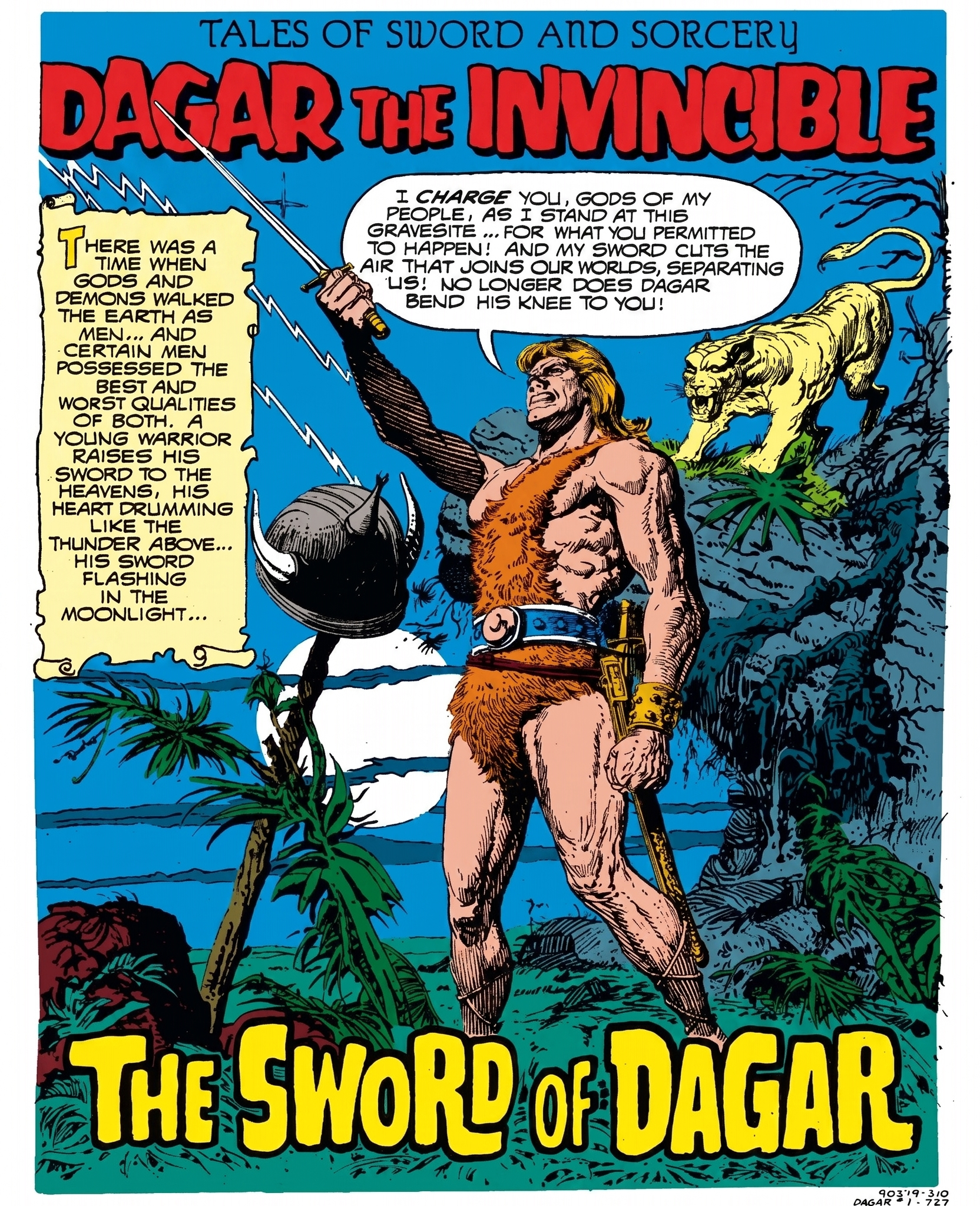
Published by Gold Key Comics, written by Don Glut, and featuring art by Jesse Santos, it hits all the classic high fantasy notes I’ve been looking at lately with characters like Claw the Unconquered and Stalker.
Looking at the art and the setting, my Game Master brain immediately started turning. This gritty, classic fantasy aesthetic is prime material to mine for a future Shadowdark, Old School Essentials, or even a Savage Worlds fantasy campaign. It is genuinely fascinating to see how much of this genre flourished in the 70s, driven by the massive success of the Conan comic books.
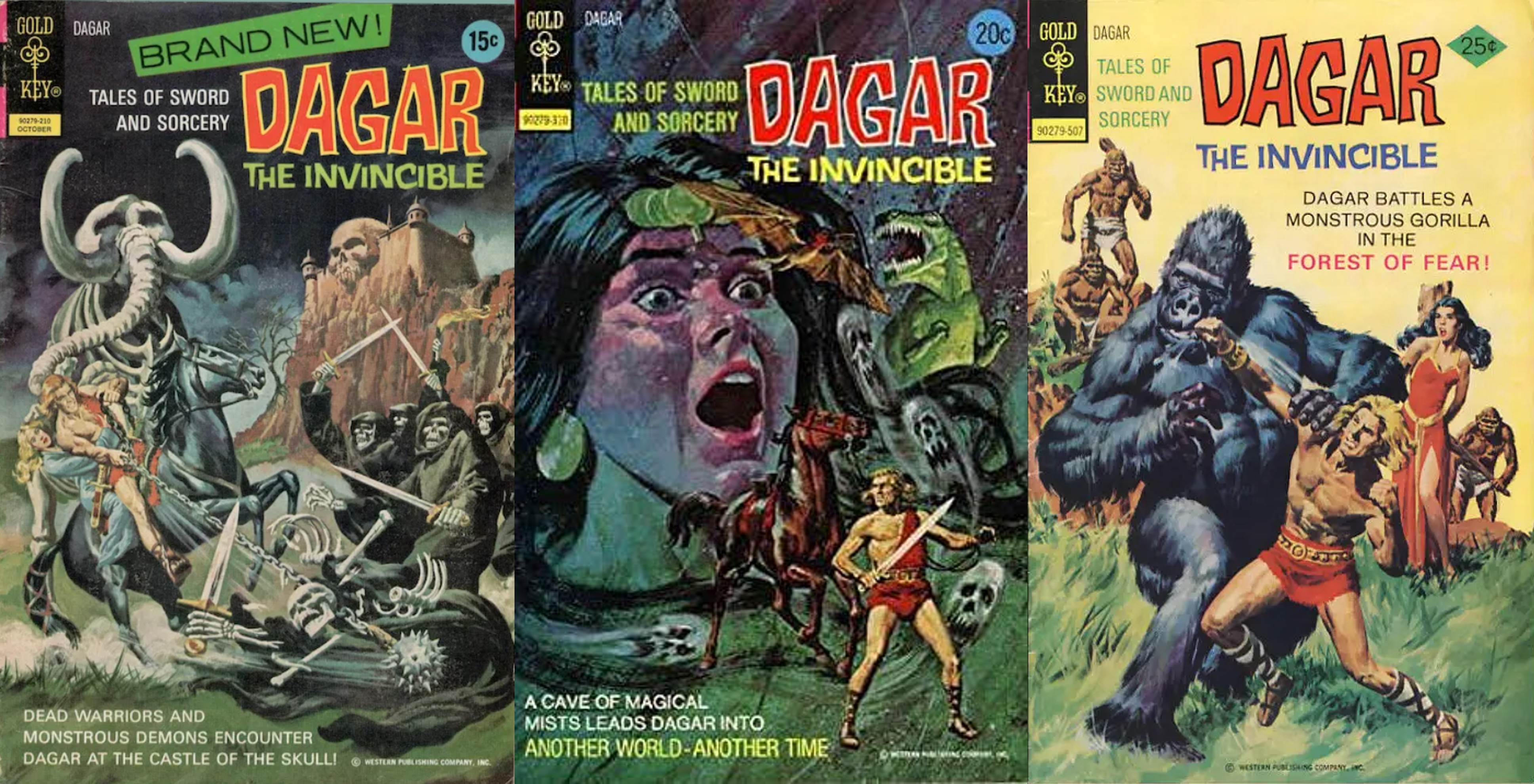
If you want to read up on the character and the world, here is the Wikipedia entry: https://en.wikipedia.org/wiki/Dagar_the_Invincible
And you must check out this fantastic blog post looking at some of the beautiful original Jesse Santos art: https://davekarlenoriginalartblog.blogspot.com/2012/02/gold-key-comicsdagar-invincible.html
With what little I know about him so far, I decided to take a shot at creating Savage Worlds and Shadowdark versions of the character. Check them out below:
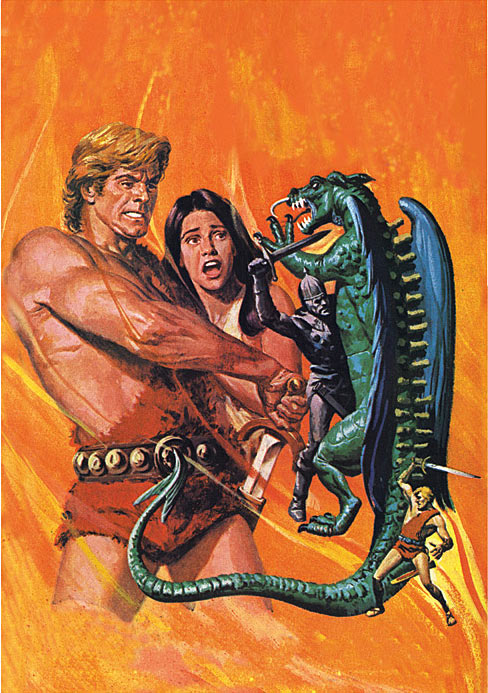
Dagar the Invincible (Savage Worlds)
Rank: Novice Ancestry: Human
ATTRIBUTES: * Agility: d4
- Smarts: d4
- Spirit: d6
- Strength: d10
- Vigor: d8
DERIVED STATISTICS: * Pace: 6
- Parry: 7 (6 with Great Sword)
- Toughness: 9 (2)
- Size: +1 (Brawny Edge)
SKILLS: Athletics d6, Common Knowledge d4, Fighting d10, Intimidation d6, Notice d4, Persuasion d4, Stealth d4, Survival d6.
HINDRANCES: * Heroic (Major): He cannot turn away from those in need.
- Outsider (Minor): A wanderer from a far-off land.
- Vow (Minor): Sworn to destroy evil sorcerers and tyrants.
EDGES: Brawny, Brute
GEAR: Great Sword (Str+d10, AP 2); Dagger (Str+d4); Leather Armor (+2 Armor); Adventurer’s Pack.
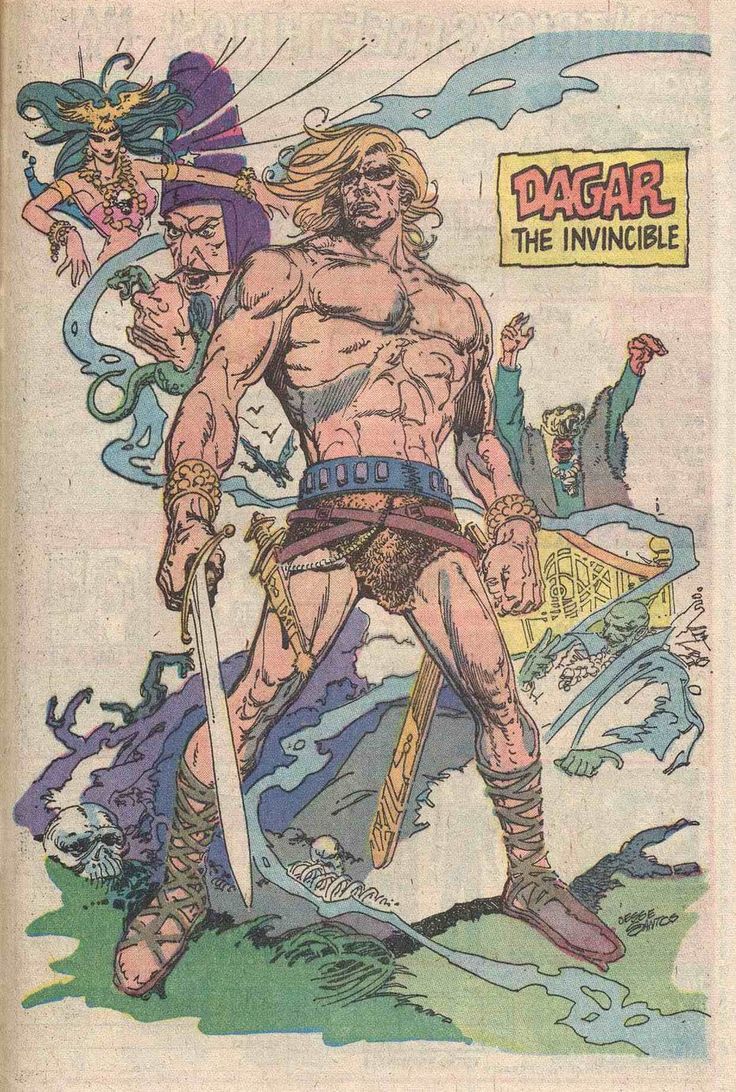
Dagar the Invincible (Shadowdark)
Class: Fighter | Ancestry: Human | Level: 1 | Alignment: Neutral
STATS:
- STR: 17 (+3)
- DEX: 13 (+1)
- CON: 15 (+2)
- INT: 8 (-1)
- WIS: 10 (0)
- CHA: 9 (0)
SECONDARY STATS:
- HP: 10 (1d8 + CON modifier)
- AC: 13 (Leather Armor + DEX modifier + Level 1 Talent)
- Attack Bonus: +4 (Strength + Level 1 Talent)
CLASS ABILITIES:
- Weapon Mastery: Bastard Sword. He has +1 to hit and damage with it.
- Grit: Strength
- Talent Rolls: +1 to Melee and Ranged attacks, and +1 to Armor Class (Leather).
GEAR:
- Bastard Sword: 1d8/1d10 two-handed, +5 Attack Bonus
- Dagger: 1d4 damage
- Leather Armor (AC 11)
- Crawler’s Kit: Backpack, flint and steel, 2 torches, 10 iron spikes, 50′ hemp rope, 10 items of iron ration, waterskin.
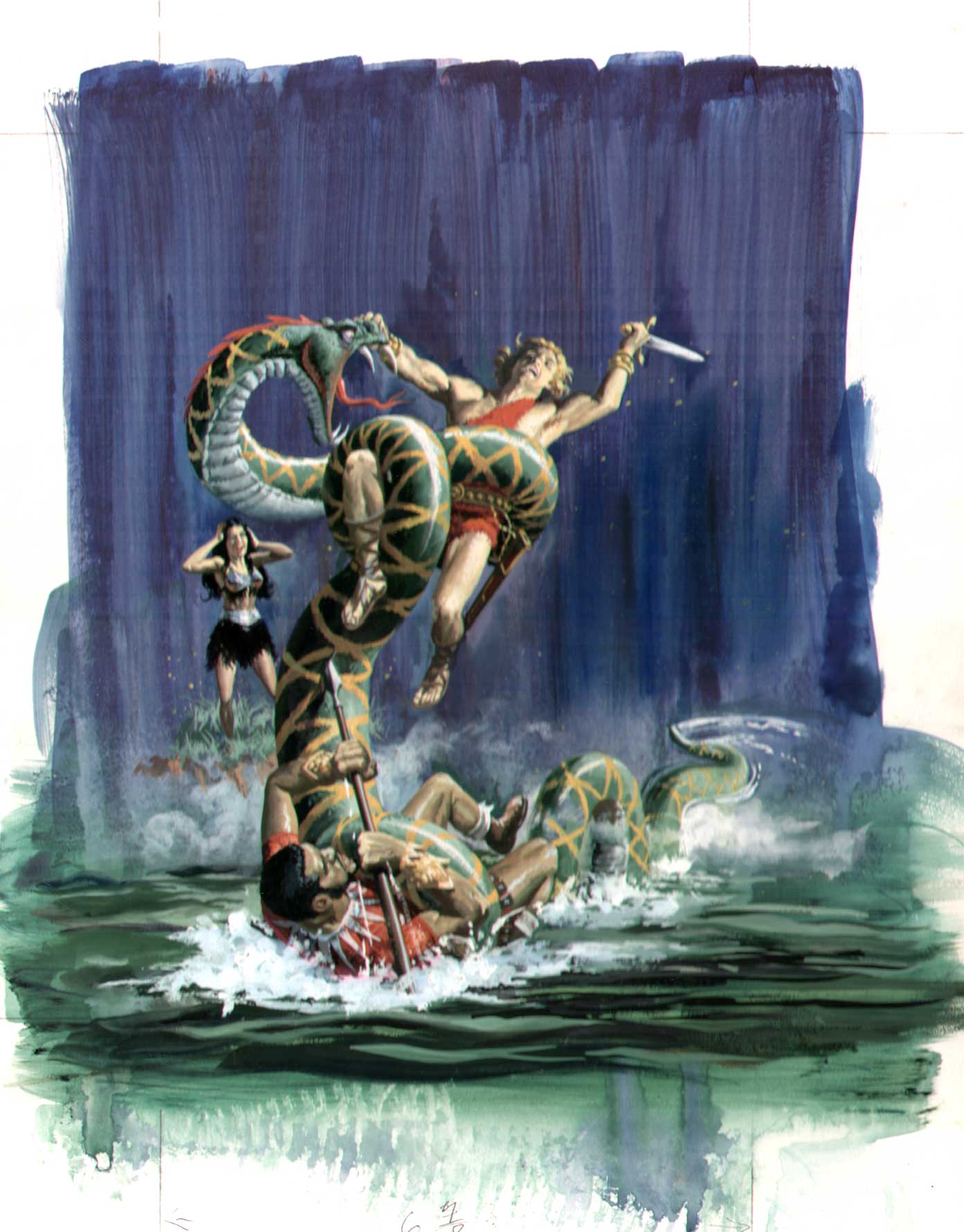
What do you think of Dagar for Savage Worlds and Shadowdark? Did anyone read these comics back in the day? If so, what did I miss?
Categories: Tabletop Gaming Blogs
What am I reading right now?
Even though I am not actively running any games at the moment, I am still excited in the hobby and regularly check out new games (at least to me) or revisit games I have been known for many years. The first game on my current reading list is Alternity by TSR. Yes, the TSR of D&D fame. If I am not mistaken, Alternity was actually the last game line published by TSR before it was completely integrated into Wizards of the Coast and vanished as an entity.
Alternity is a TTRPG ruleset for contemporary or science-fiction roleplaying campaigns using an original system. It has some Dungeons & Dragons DNA but feels very much like its own system. There are classes but they mostly provide a framework for your character and some special abilities. The skill system allows pretty much to build any kind of character. The core mechanic is quite interesting. You roll with a d20 and a situational dice which is either added or substracted depending on whether the task is harder or easier than what one would consider routine. The target number which you must meet or roll-under is directly tied to your character’s skill. There’s also a simple system for determining the scale of success. Going into much more detail would probably go way beyond the scope of this post but you should find more information about Alternity online easily.
Like D&D Alternity has a Player’s Handbook and a separate Game Master’s Guide. Over the few years Alternity was in print, they released several sourcebooks and two major settings: Star*Drive and DarkMatter. The latter was eventually revived for d20 Modern while some elements of Star*Drive showed up in d20 Future. There was also a Gamma World game based on the Alternity rules and a rather peculiar (and quite rare nowadays) Starcraft boxed set which had very limited rules and usability. I guess it was some kind of attempt to get people interested in a proper Starcraft TTRPG using the Alternity system. Personally I really like the system and it’s a shame Wizards of the Coast pretty quickly cancelled the line in favor of the d20 System.
Unfortunately the Alternity books are not available online (aside from a few which can be found under the d20 Modern section on DriveThruRPG). You pretty much have to rely on second-hand books. But last time I checked the core rulebooks are still available for reasonable prices if you want to check it out for yourself.
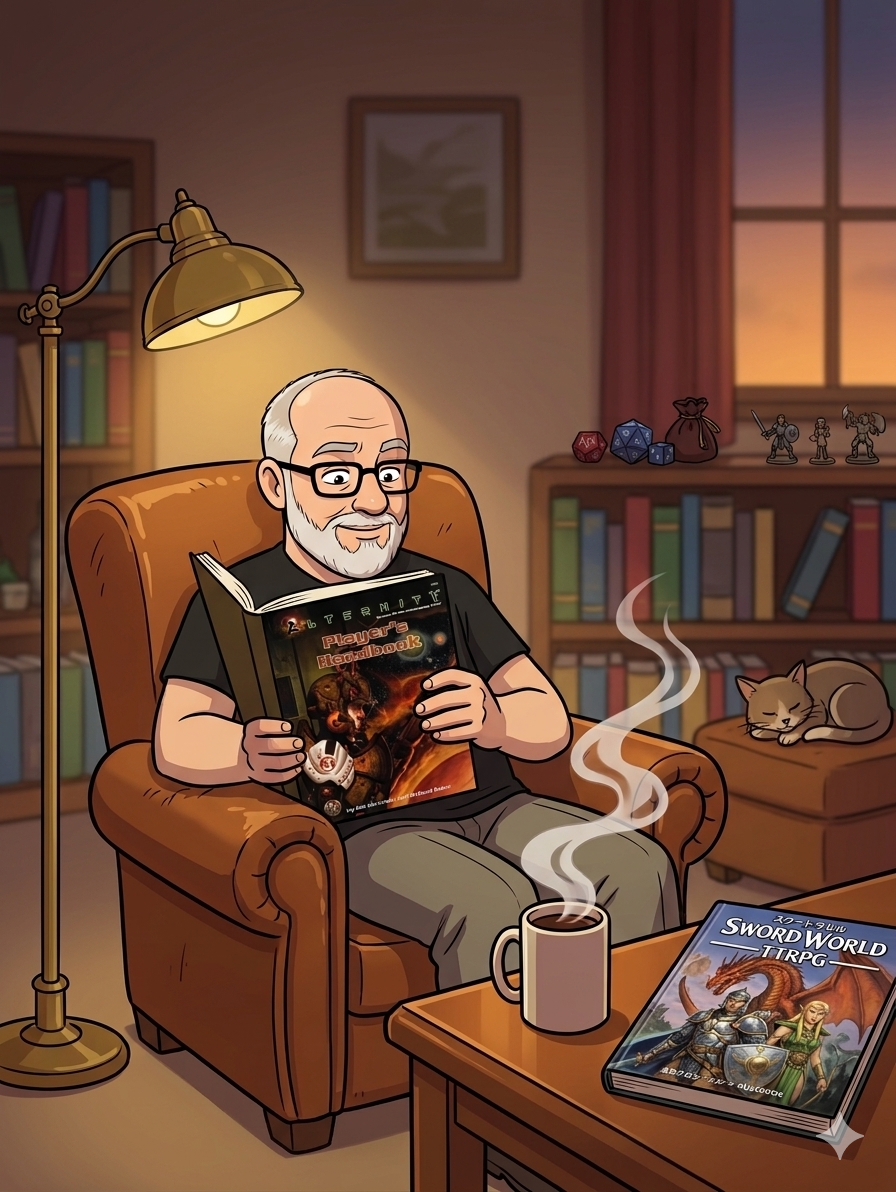
The core books make the assumption that the GM creates their own campaign. That’s also what I’d love to use it for. One of my big dreams has always benn writing my own kick-ass space opera game and Alternity seems like a perfect fit – much better than the more pedestrian Traveller or Cepheus System.
Another TSR property which didn’t get much fanfare back in the day but which I like a lot is their Buck Rogers in the XXVth Century RPG. The rules are based on AD&D 2nd Edition and don’t work really well but I love the hard-SF meets pulp action approach they took with the setting. Perhaps converting the game to Alternity rules might be a cool project. At this moment I haven’t committed to anything yet, but the idea of running anything with this venerable system could scratch an itch I had for quite some time now.
There’s still one thing I should mention related to Alternity before moving on: there is a new game called Alternity which was created by one of the creators of the original game. Personally I don’t think it’s a worthy successor since they threw out the core mechanics an added stuff I did not like at all. Your mileage may vary.
The other game I have been excited about for a while is even more obscure than Alternity since it hasn’t been available in the West yet. I am talking of course about Sword World from Japan. The anime fans among you might have heard of “Record of Lodoss War”. The series is based on a light novel which itself is based on a “replay” of a AD&D campaign. A replay is pretty much an “Actual Play” but in text form.
Back in these days a group of Japanese gamers wanted to release their campaign as an official AD&D product but TSR didn’t grant them a license. So they decided to write their own game. The end result was Sword World. Since polyhedral dice were extremely rare in Japan – even rarer than in the US at the time – they chose to use a 2d6 system. But even with different mechanics it still feels a bit like a D&D heartbreaker. But I’d consider it to be one of the better ones. SW has classes like D&D but they work more like skillsets. In a sense multi-classing is the expectation in this game. The original Sword World has classic D&D classes and the world it is set in is the same as in Record of Lodoss War. But I am pretty sure you’d be able to run a Greyhawk game using these rules.
The new edition, Sword World 2.5, is quite different. While the core mechanics are pretty close, the AD&D connections are replaced by a JRPG influence. Where SW 1.0 had pretty much the standard D&D races, SW 2.5 offers options like Tabbits (anthropomorphized rabbits) and Lykants (think of werewolves). The new setting called Raxia is also more of a science-fantasy setting like in the Final Fantasy games.
We now have to adress the huge elephant in the room. There’s no official English translation of Sword World. In order to learn more about the game you have basically two choices (or three if you are more patient than me): First you can learn Japanese and import the books from Japan. Since Japanese is not very easy to learn this is probably not the preferred option even though importing the books is no big deal nor very expensive. I got the three core rulebooks from Amazon.co.jp and paid less than 40 € for everything including shipping. The original books remind me a lot of manga books and they are in a very cute A6 format. The second option is to rely on the fan-translated books you can find online for free. There’s a dedicated subreddit to the translation of Sword World where you can find links to all translated books. The third option is to wait for the official translation which has been announced a while ago. Mugen Gaming which is a small US publisher has gotten their hands on the SW license and will run a crowdfunding campaign on Backerkit in the near future. While I will definitively will back this project I already started reading the fan translations.
From what I’ve seen so far, Sword World might be a viable D&D alternative for me. The rules are pretty light-weight, it easily supports both classic Western fantasy (in the case of SW 1.0 easily so) and a more JRPG-influenced version of the genre. I like the 2d6 mechanics and the character creation which pretty much allows for a very wide range of character builds. It easily supports all the fantasy concepts I ever came up with and especially the ones which weren’t almost impossible to replicate in D&D. I also enjoy the whole Anime/Manga aesthetic and some if not most of the tropes the game and settings support like an Adventurer Guild which hands out jobs to the characters, magitech, ancient but lost civilizations and so on. One part of the appeal is probably the fact that’s a game not well known over here. Finding out more about SW and its settings feels a bit like being an explorer unearthing long lost secrets.
So even though I am still struggling a bit with GM burnout, the hobby itself still has a lot of appeal to me. I still love reading TTRPG books and there’s always the hope that I overcome my issues and get to bear the mantle of GM once more. What are your thoughts on both Alternity and Sword World? What are the games you’re excited about right now? Please share your thoughts below!
Categories: Tabletop Gaming Blogs
About being in over one’s head as a GM
The AI-generated image I used to illustrate this post is pretty much the feeling I am in all the time. Since I started running games as a GM so many years ago, I always felt at least a bit overwhelmed. I always felt like I wasn’t really at the top of my game. But for the longest time things worked out quite well. My players had fun and didn’t even notice that I was panicking and improvising like a madman. Eventually I learned to really rely on my improvisational skills and preparing a session just minutes before meeting the players became like second nature. The feeling of being overwhelmed cropped up from time to time, but for most of the time running games for my players was fun for everyone at the table.
Unfortunately things didn’t stay the same. My roster of players regularly changed as people moved away or lost interest in the hobby. At the same time work got more and more into the way of my hobby. In most cases it’s a time issue. One just doesn’t have as much time as before to run, play, or prepare games. In my case it was different: I had major conflicts with superiors which led me down a dark path into depression.
Many years of therapy followed and eventually I emerged stronger and more confident than before. I took on new responsibilities at work, changed into a new position and ran for the staff council and was eventually elected deputy chair. Confidence in my skills and my work is better than ever and I am respected by coworkers and superiors.
BUT when it comes to gaming, my confidence issues are worse than ever. I feel totally overwhelmed all the time, even when trying to prepare something as simple as a one-shot. I have constant doubts that cause me to change my mind often. Sometimes I feel that I don’t even know what I want anymore. The only thing still burning bright inside of me is the wish to get back into the GM’s chair. It’s something I love(d) and which I am quite good at.
So what caused this? One reason is that I had a pretty serious falling out with a particular player who I considered a friend but who turned out to be quite toxic. Our relationship started to deteriorate when he began attacking my style of running games. He didn’t just discuss his criticisms with me after our gaming sessions but usually muttered things under his breath during the game or actively sabotaged the campaign by acting like the proverbial “that guy”. Unfortunately I tolerated this behaviour far too long and it let it affect my confidence as a GM. Probably because I still was struggling with depression and anxiety I fell into the trap of believing that it was to blame, my lack of skill as a GM was the cause of his behaviour. Instead of setting boundaries I became more vulnerable to the whims of my players. Usually I try to limit the players’ options to what I can handle. Back then I threw all of this out of the window and let them run wild. It ended in desaster. The campaign basically derailed as soon as it left the station.
The second problem I’ve been facing for years is that I own way too many cool TTRPGs and deciding what to play becomes increasingly hard. I would love to try out as many games I can, but that isn’t compatible with the interests of my RPG-playing friends and our schedules. At this point I am feeling like I am pretty much burned out as a GM. I am still playing in a Pathfinder and a Shadowrun game. But putting on the GM’s mantle is still something I’d love to do but I feel I can’t. My fear of messing things up is still pretty strong.
Why am I telling you all of this? There are a few reasons. Writing about these issues help me deal with them. I also hope that some day I get helpful advice I can use to get out of that hole I’ve dug myself into. Perhaps this post can also help others not to make the same mistakes or show them that they are not the only ones having these issues. I’ve also thought about how I could try to get back on my feet.
Planning and running a whole campaign is pretty much out of the question. I don’t want to set myself up for failure again. It’s probably best to stick to one-shot adventures with pre-generated characters. I might have to do some convincing to do with my regular players but this could help me get my feet wet again while also trying some of these fancy games which have been sitting on my shelf all these years.
I am also considering offering to run games online. Since it has been very hard to schedule meetings with my regular gaming group, perhaps looking for new people to play games with online sounds like a viable alternative. I am pretty hesitant though since I have mostly run games for people I know. The last time I introduced new players into one of my games things didn’t turn out that great.
Last but not least I could offer to run something for the groups I’ve been playing with. We’re still in the middle of the respective campaigns, but perhaps we could squeeze in a one-shot adventure when the regular GM or one of the players can’t make it to a session.
I don’t know if this approach might help me in any way, but I have to try. Roleplaying games are my favorite hobby and I am a pretty good GM (at least when I can get my depressive thoughts in check). At the moment I am reading both the fan-translation of Group SNE’s Sword World 2.5 TTRPG and TSR’s Alternity RPG. I haven’t run those before but I’d love to. As of time of this writing I haven’t really approached my gaming groups if they were interested in giving these games I try. What do you think? Does my approach make any sense at all or are you in danger of repeating the same mistakes I did before? Have you been in my shoes before? How did you deal with these issues? Please post your thoughts in the comments below. Any advice is highly appreciated.
Categories: Tabletop Gaming Blogs
40 Years a Gamer: The Artists Who Inspired Me – The Proto-History
After looking at two artists I discovered in the early 90s—between what I had termed the Early-Years and the Middle-Years—let’s travel back to the Proto-History. Let’s look at the art that inspired me before 1986, long before I even considered myself a gamer.
I discovered some of this art through a large coffee-table book my mother bought for me:
National Geographic Picture Atlas of Our Universe
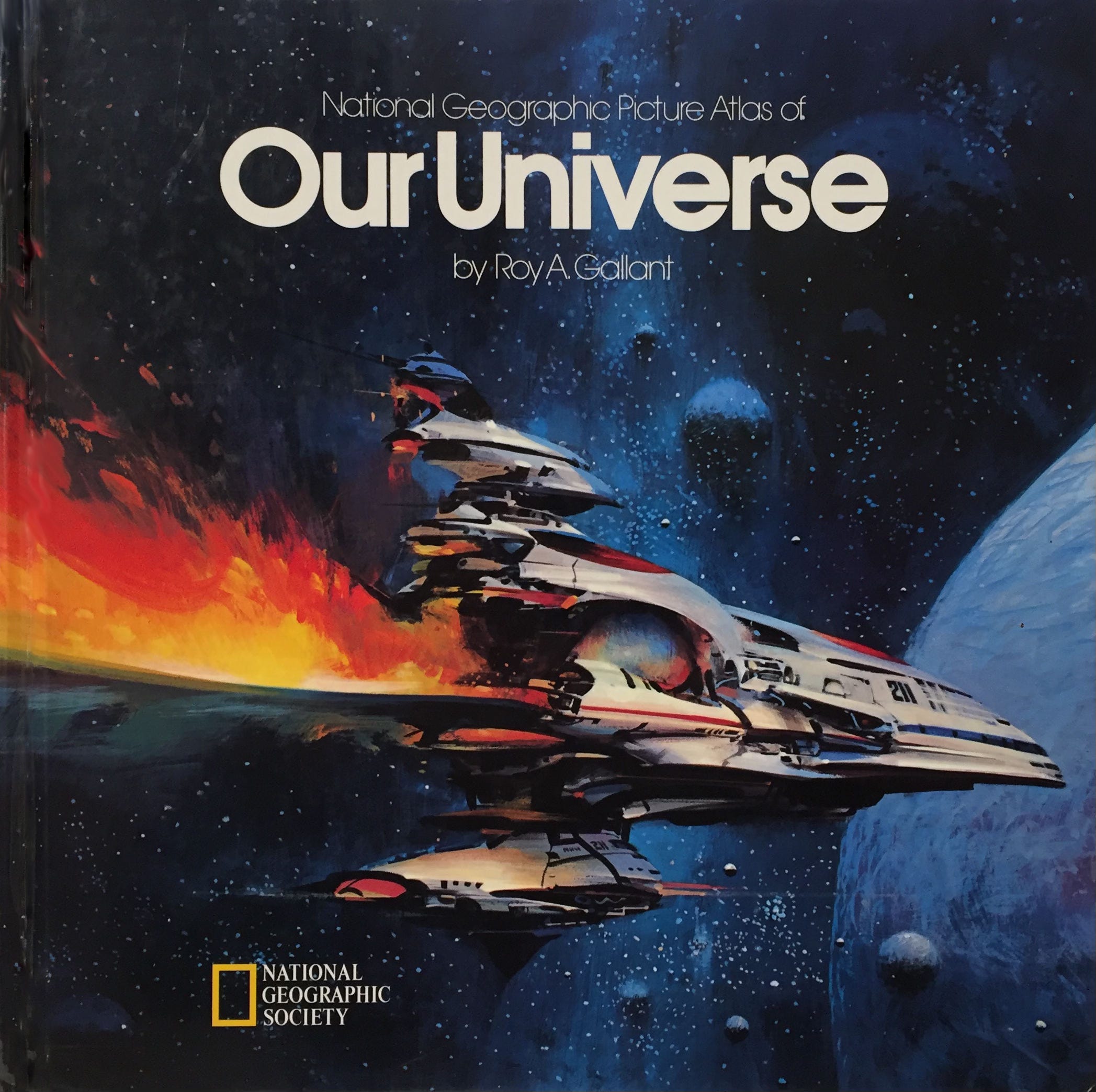
Published in 1980, the book was honestly too long for me to read on my own. My mom and uncle read it to me, and I managed some of the smaller captions myself, but my English was limited back then. The illustrations, however, completely captured my imagination. Throughout the early 80s, I kept returning to that book, reading more of it as I got older.
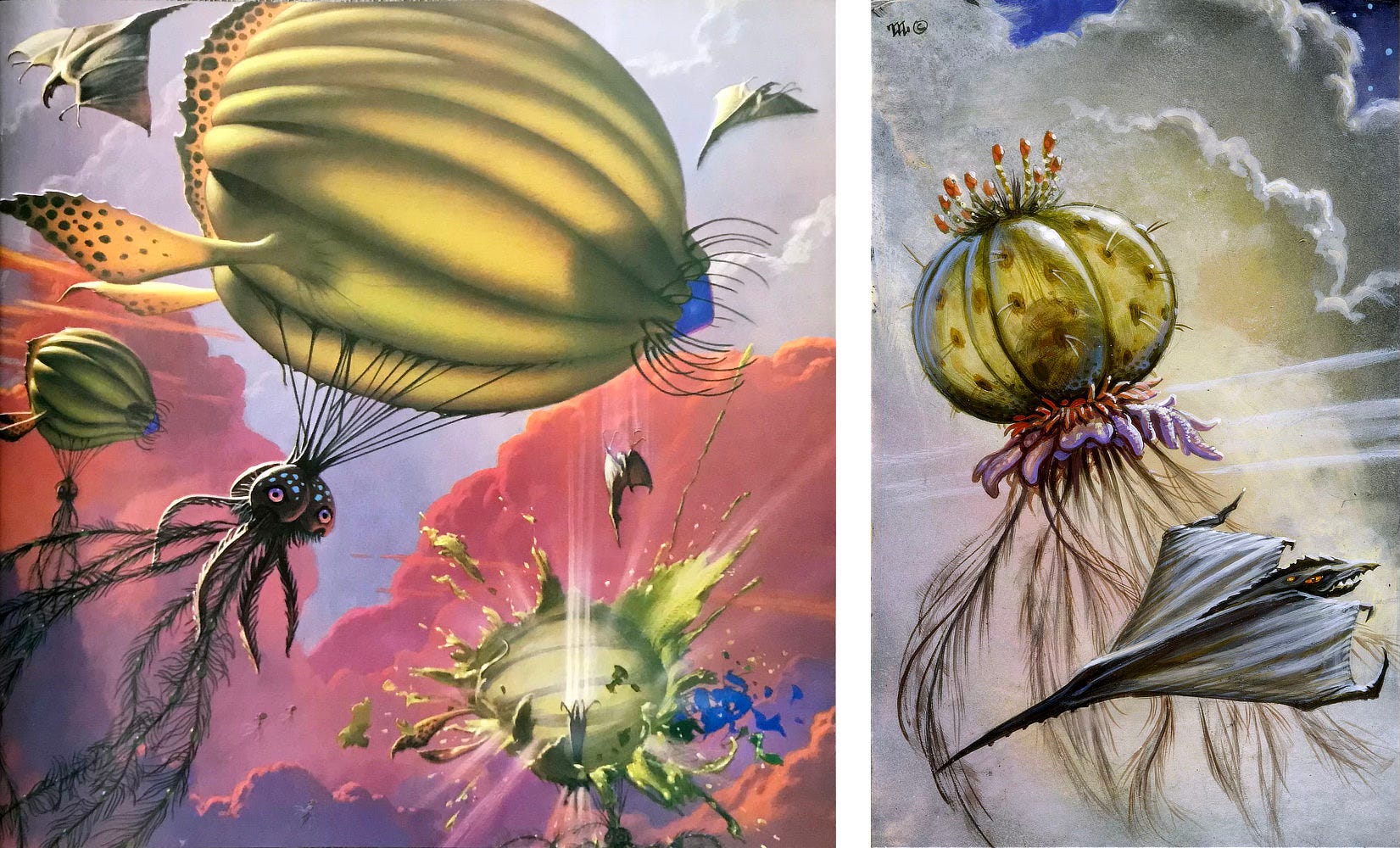
There was a “What if?” section early on about what life on other planets might look like. I absolutely loved this part. I had no idea the art was by Michael Whelan until I started writing this post!
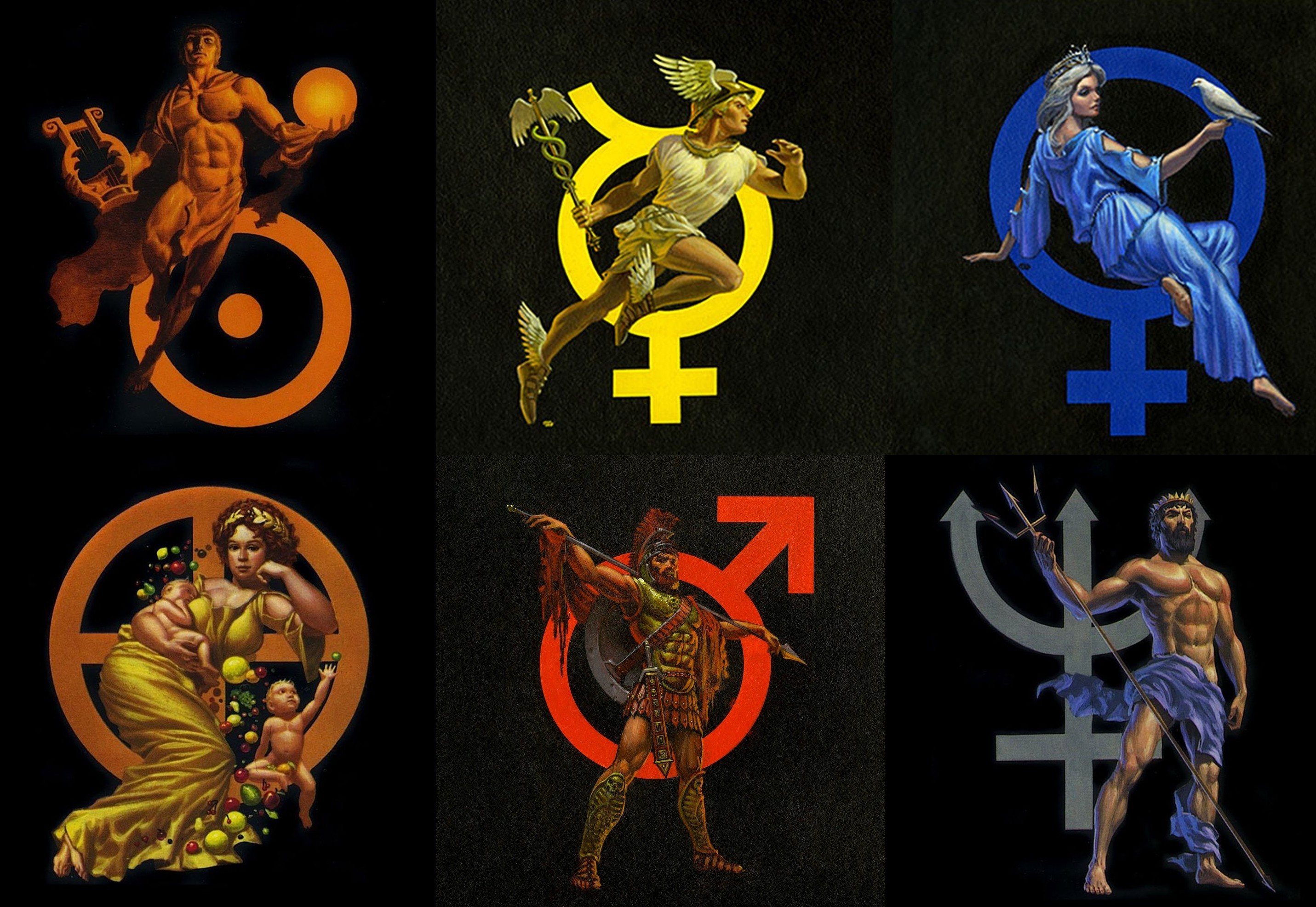
Each celestial body also featured an illustration of the mythological figure that gave it its name, also painted by Michael Whelan. I was completely unaware of how much his art influenced me so early on!
(You can borrow the book on the Internet Archive at this link: https://archive.org/details/nationalgeograph00gall)
Another large book in that same style was:
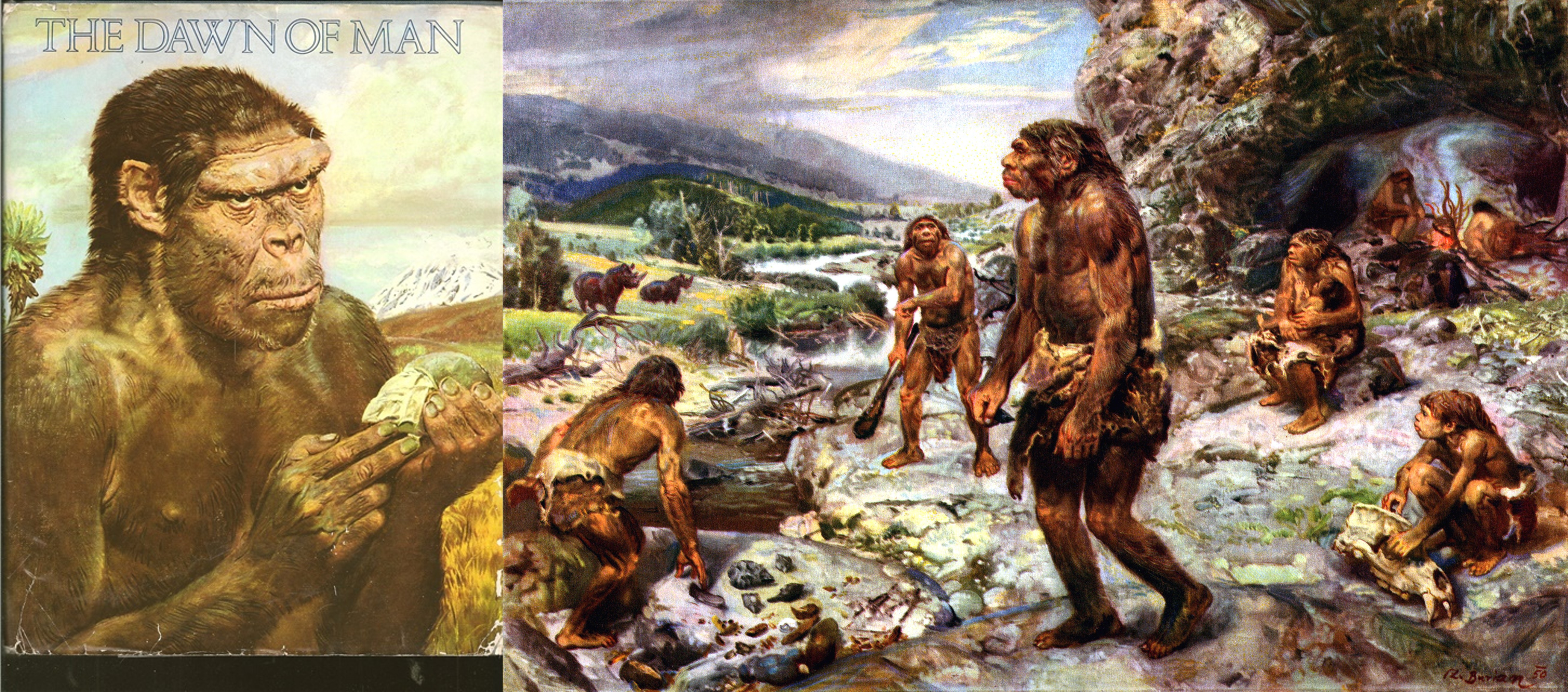
Published in 1978, this one belonged to my uncle, and I would peruse it every single time I visited him. He eventually gifted it to me, and I kept it for years.
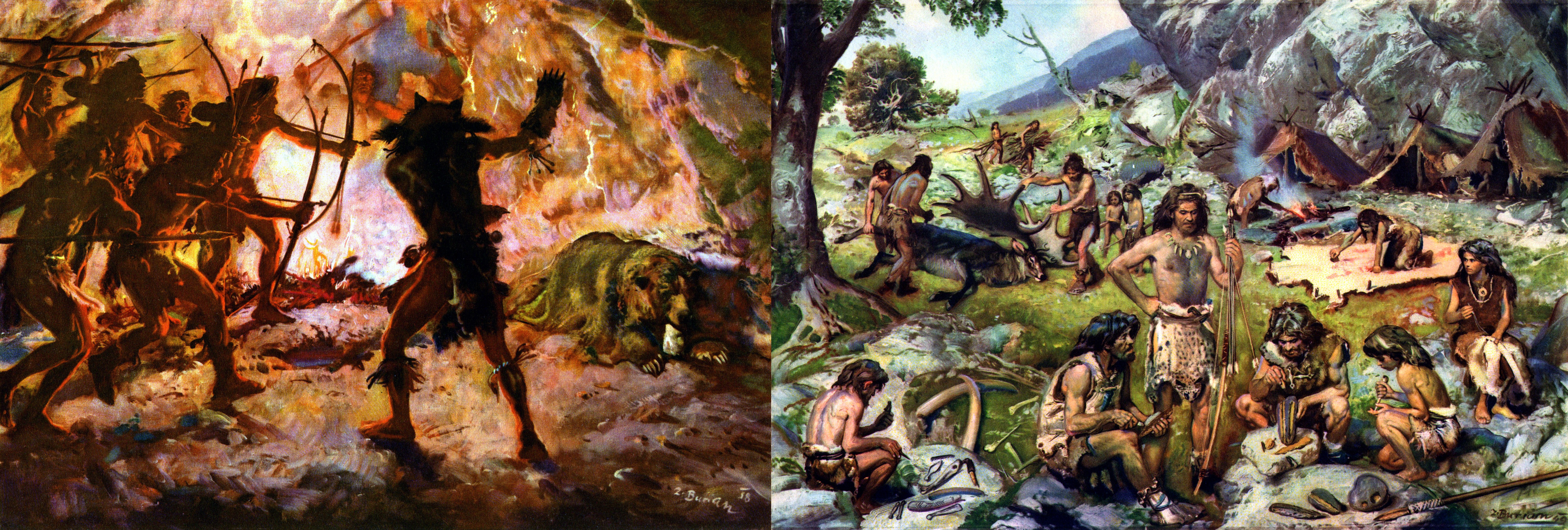
The art by Zdeněk Burian, a Czech illustrator and palaeoartist, fascinated me. I asked so many questions about evolution and the origins of humanity just by looking at those pages that I know my mom had to scramble to explain it all to me in terms my younger self could understand.
To this day, when I picture early humans and lost worlds in my TTRPG campaigns, these are the exact images I conjure up.
(You can see the book online here: https://archive.org/details/dawnofman00wolf/mode/2up)
I mentioned this next comic series in my post on comic books that inspired my worldbuilding, so I won’t rehash what I said there, but it is definitely worth mentioning that the art style inspired me greatly:
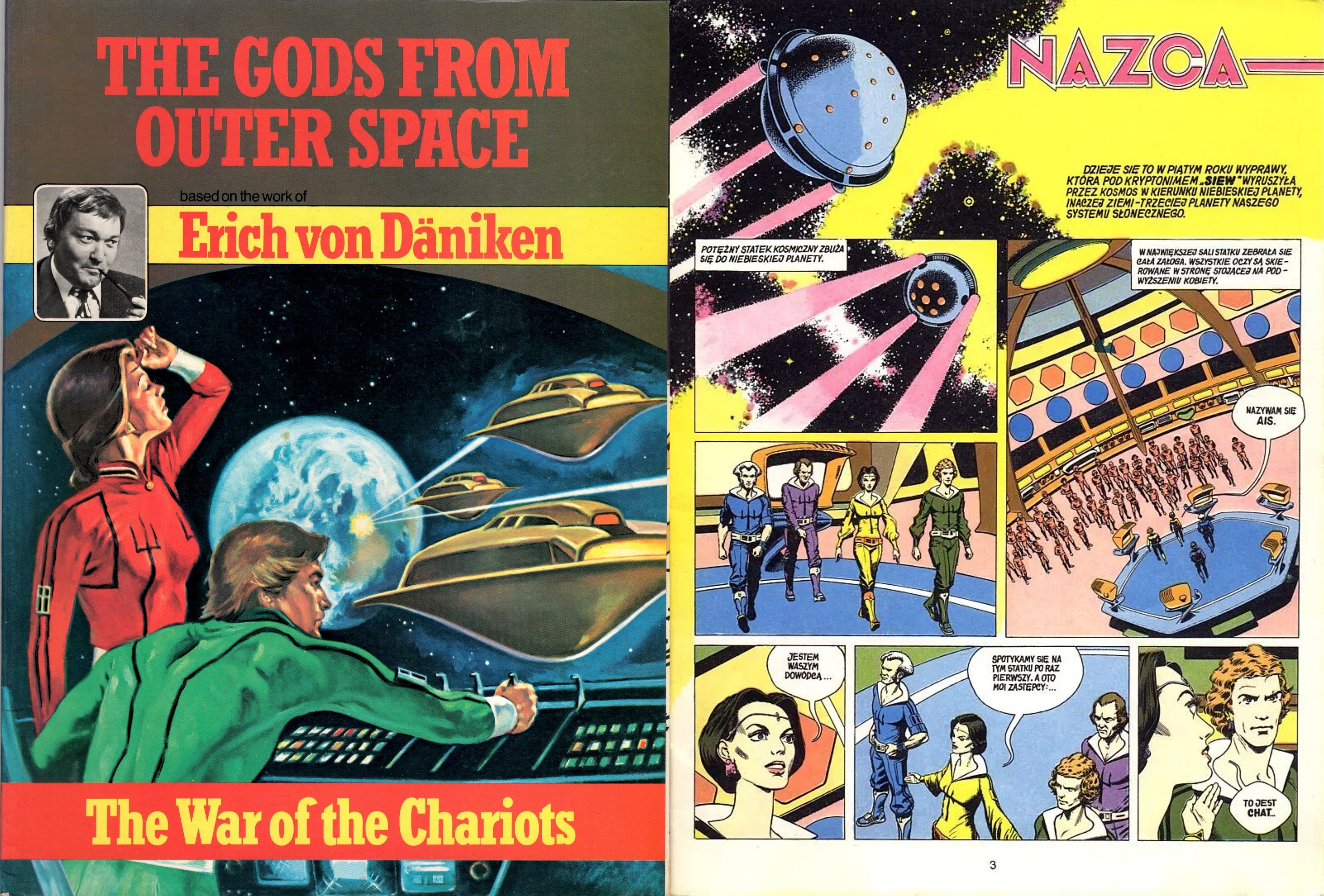
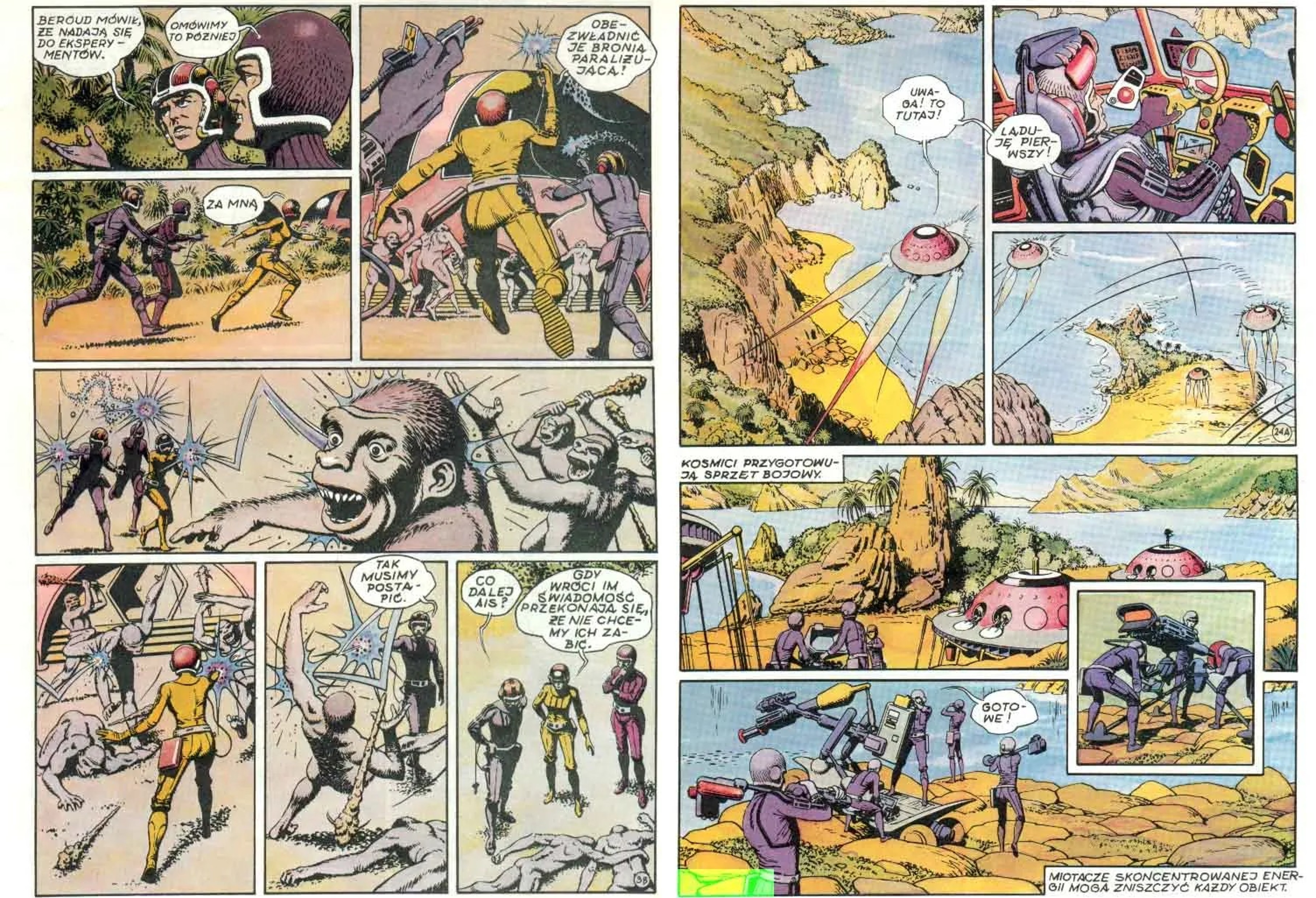
Polish artist Bogusław Polch illustrated this. I found the art I originally shared in that post over on the We Are The Mutants site, which includes some great details about how the books were published in Britain: https://wearethemutants.com/2020/04/30/ancient-astronaut-comics-the-gods-from-outer-space-1978-1982/
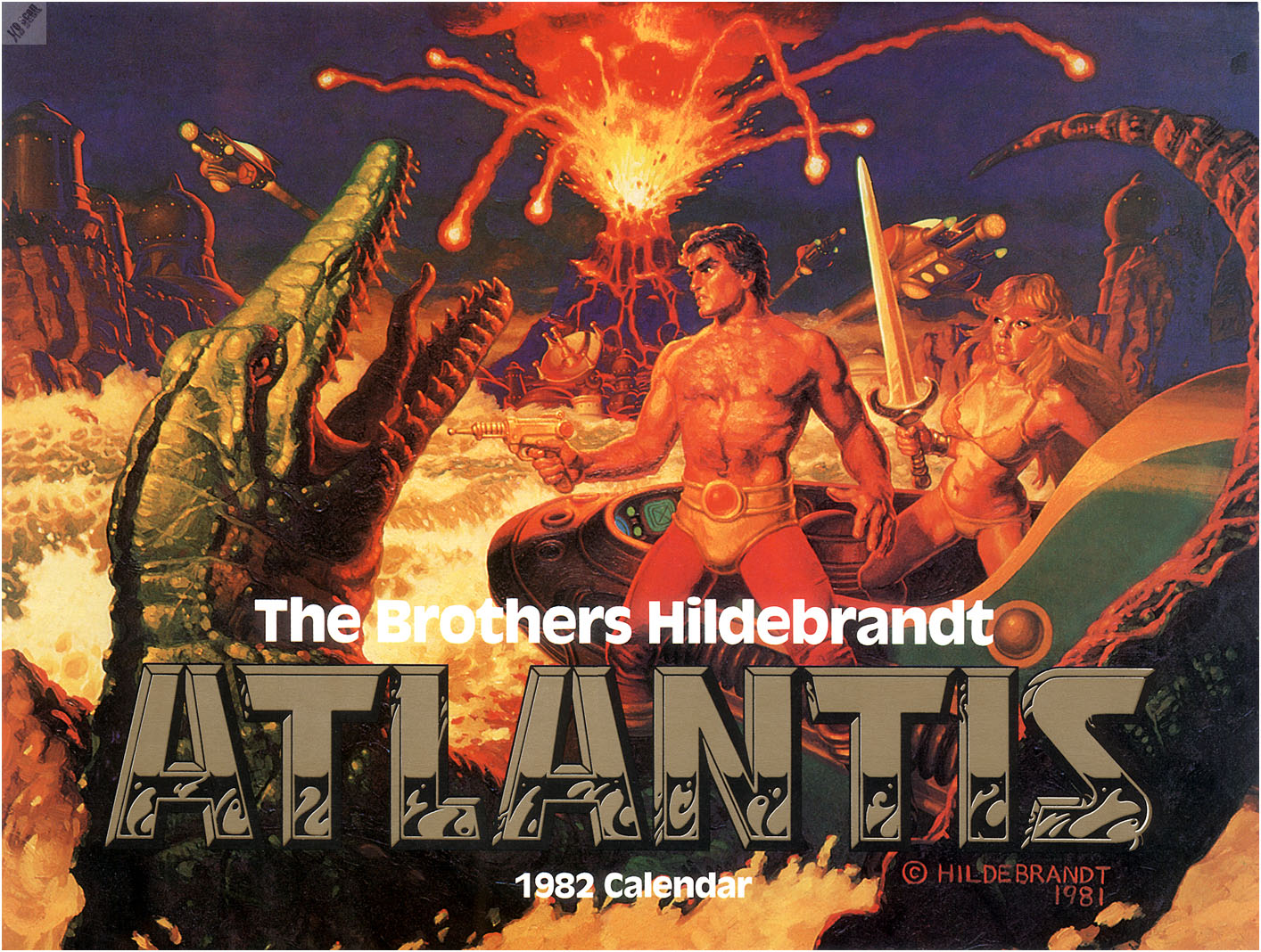
Fantasy calendars were also a huge thing for me! I would frequently get one as a Christmas gift. Often, they were Tolkien-themed, even before I had read the books. But none were quite as influential as this one:
The Brothers Hildebrandt 1982 Atlantis calendar.
I’ve mentioned this wall calendar in posts throughout the year. Yes, it was genuinely that influential.
Here’s a video of one of the artists talking about the project, and another featuring some of the art from it:
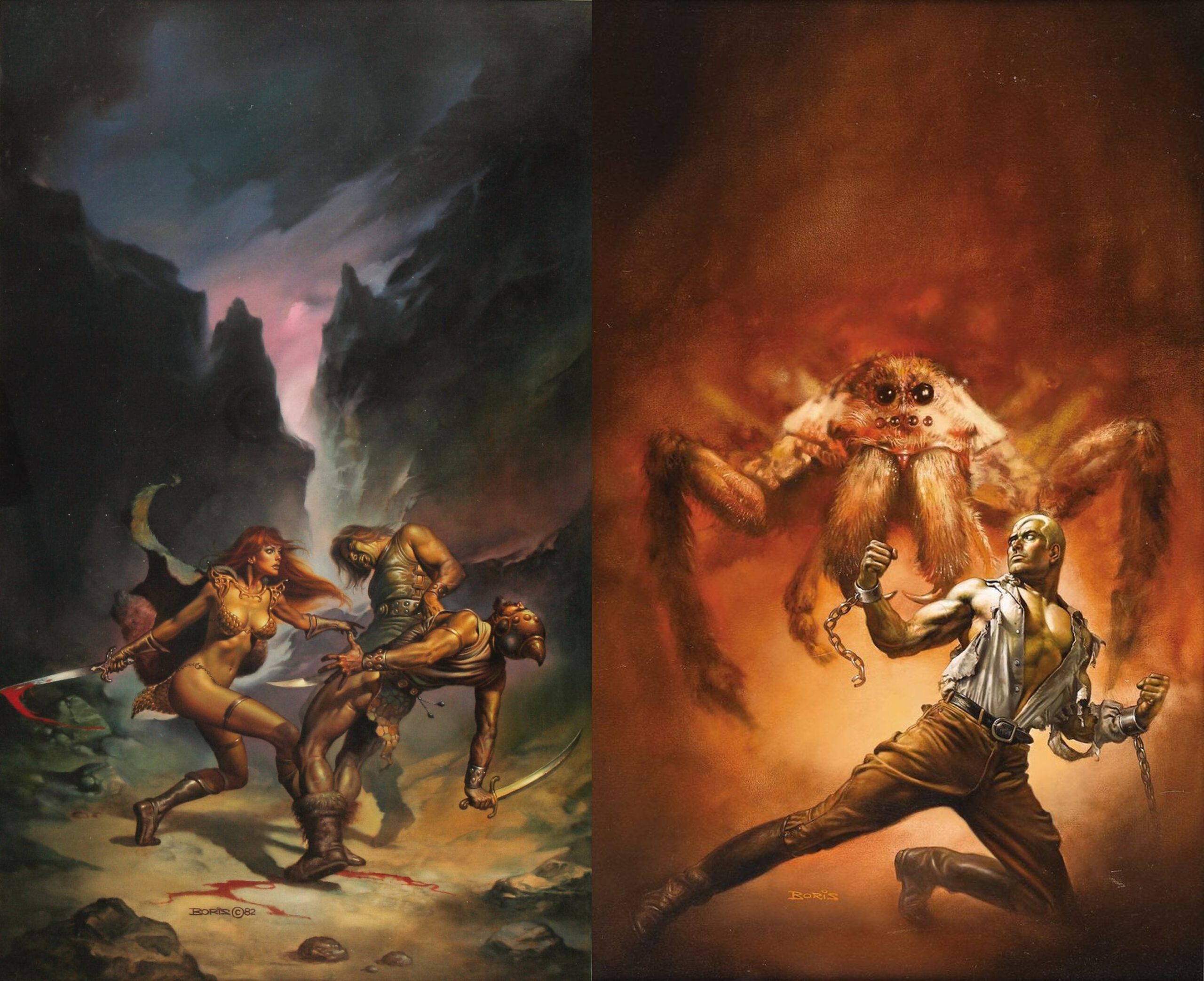
Another calendar I vividly remember was this one:
I remember this one distinctly, even though it wasn’t the only Vallejo wall calendar I got. The Atlantis calendar told a cohesive story through its art, so I remember the narrative more vividly, but this Boris calendar might have been the first time I ever read the name “Red Sonja” or saw “Doc Savage.”
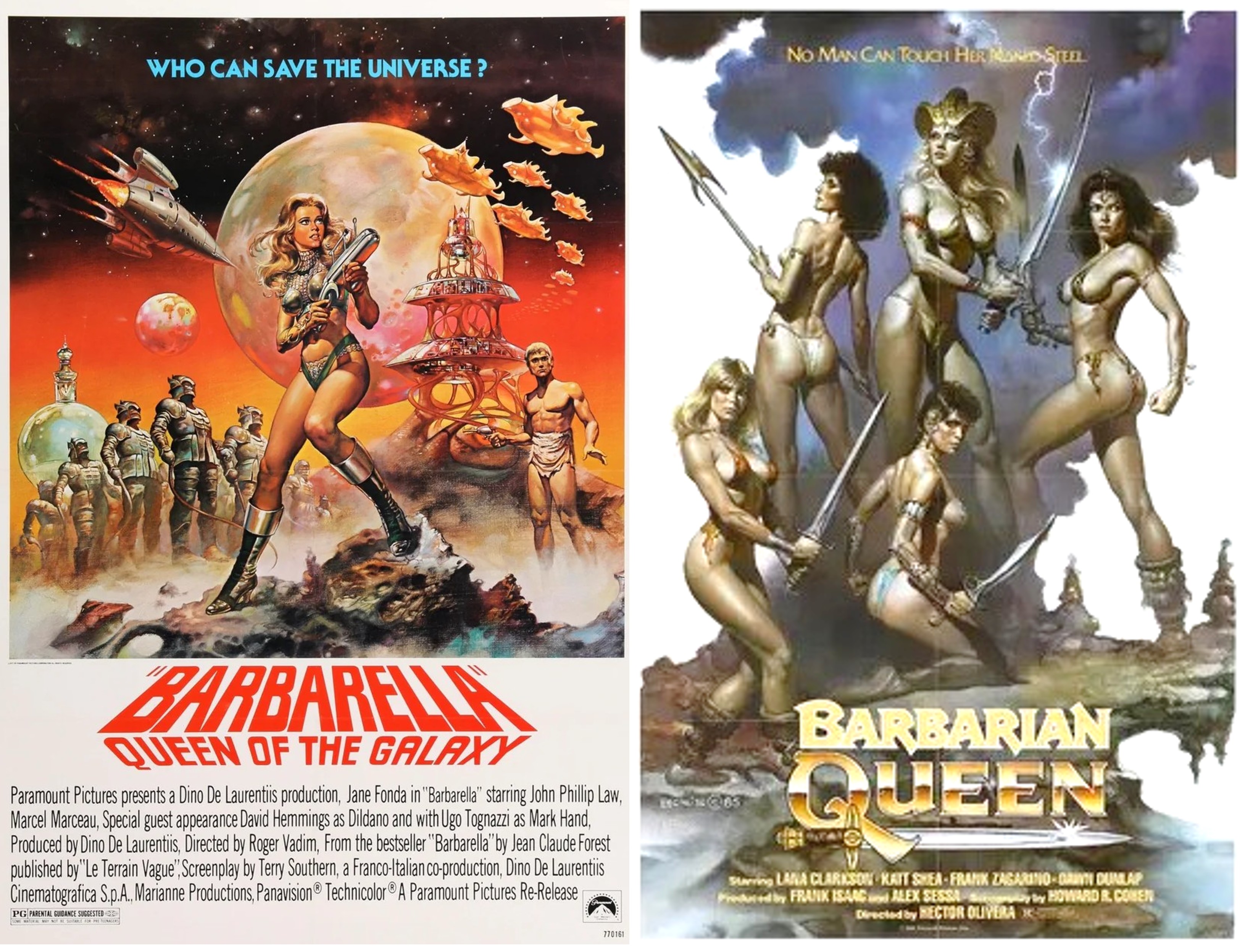
Of course, Vallejo’s art was also prominent on the covers of the movies I rented at the local video club, even if I didn’t make the connection at the time.
Another influence I have mentioned often in many posts is perhaps my favorite fantasy movie:

I believe this was my true introduction to Frank Frazetta. I later explored his other work—his Conan, John Carter, and especially Death Dealer were awe-inspiring—but I first discovered his art right here in this movie. Outside of the original Star Wars trilogy, Fire and Ice might be the film I’ve rewatched the most in my life.
There were also some video game tie-in comics whose artists deeply impacted young me:
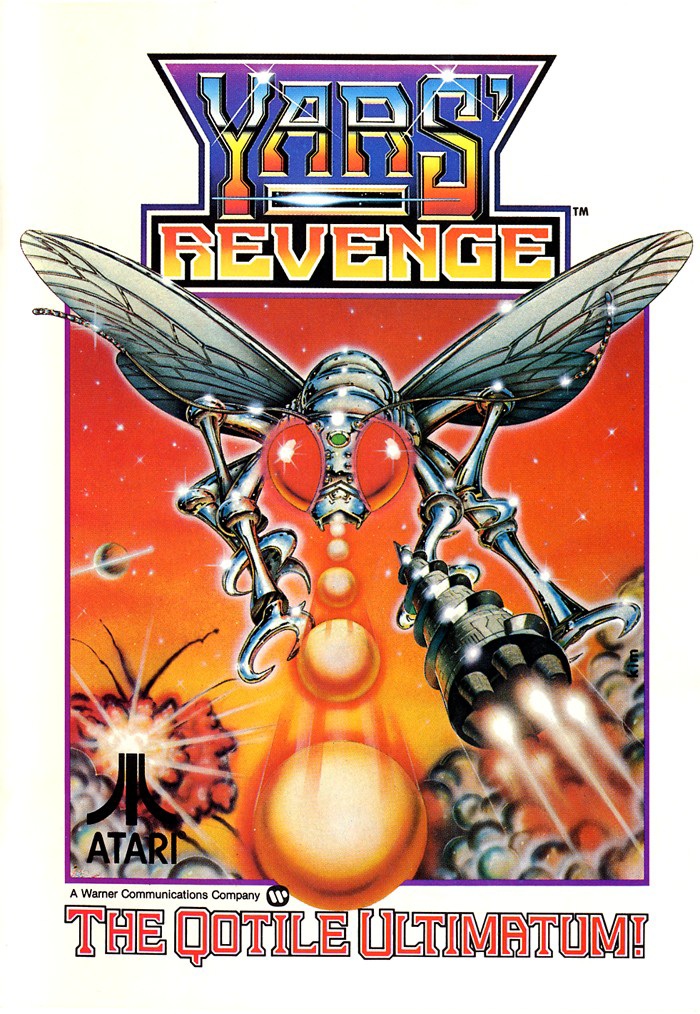
When I got the game cartridge for Yar’s Revenge, it came with a mini-comic that told the background story of the game. According to the internet, Atari’s in-house creative team of Frank Cirocco, Ray Garst, and Hiro Kimura created the art.
(You can read the comic here: https://atariage.com/comics/comic_thumbs.php?MagazineID=48)
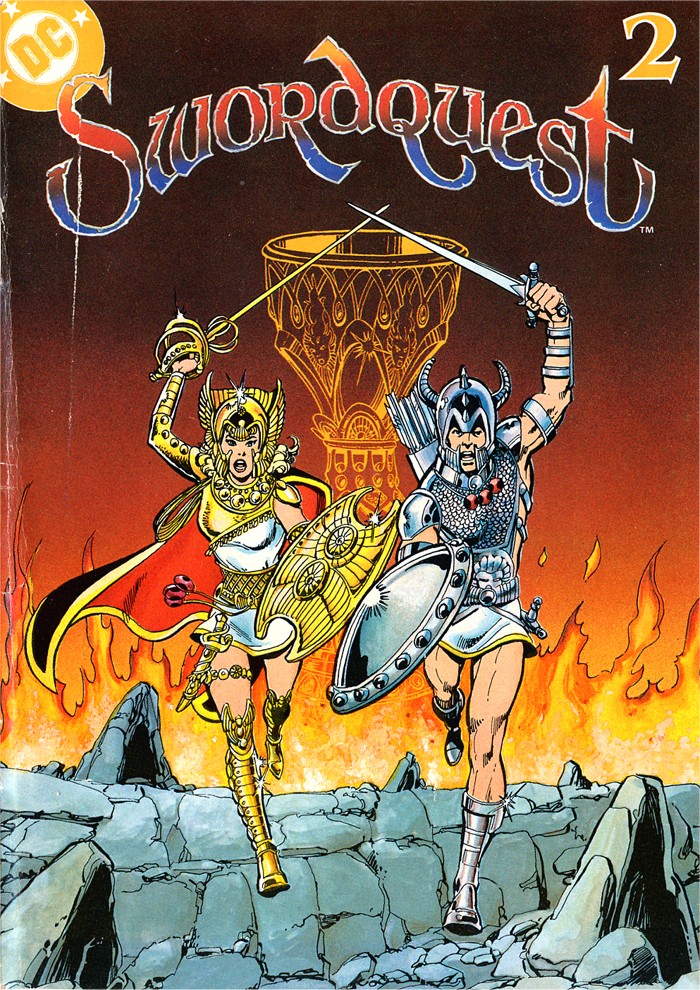
I got the Swordquest: Fireworld Atari cartridge. I honestly don’t remember playing it much, but I do remember the included fantasy comic and how George Perez’s art completely blew my mind. I returned to that comic many times, long before I even knew what D&D was. I only ended up reading parts 1 and 3 years later via the links I’m sharing below.
- Swordquest Earthworld: https://atariage.com/comics/comic_thumbs.php?MagazineID=45
- Swordquest Fireworld: https://atariage.com/comics/comic_thumbs.php?MagazineID=46
- Swordquest Waterworld (no connection to Kevin Costner!): https://atariage.com/comics/comic_thumbs.php?MagazineID=47
And the final entry on this list of artists that inspired me before I played TTRPGs is cheating, because it’s actually a book featuring the work of multiple artists:
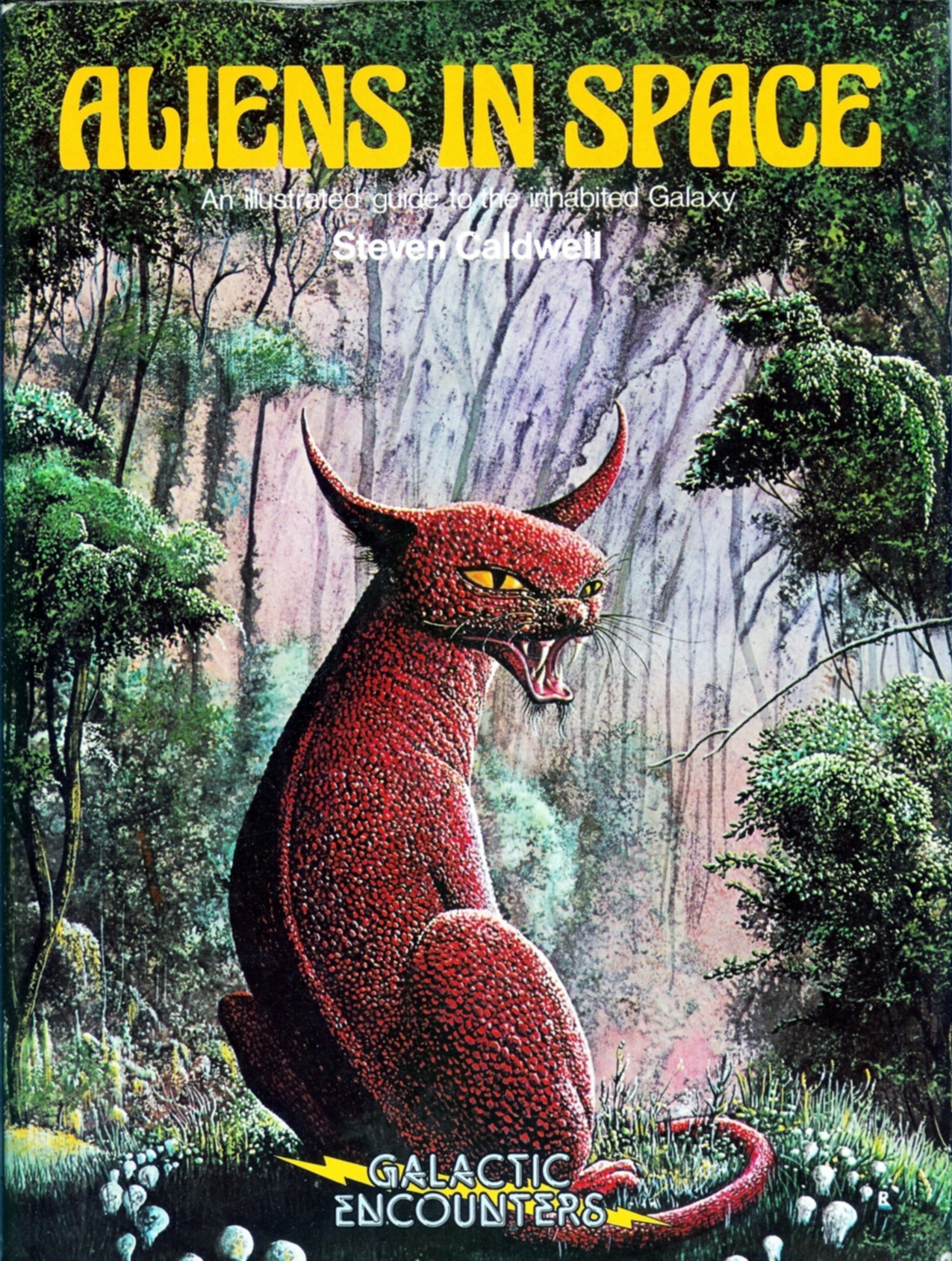
This was written by Stewart Cowley under the pseudonym Steven Caldwell, with art from various contributors. All the art seems to be reused from other sources, but despite the disparate styles, Cowley’s writing really ties it all together. (You can see the full list of artists if you follow this link.)
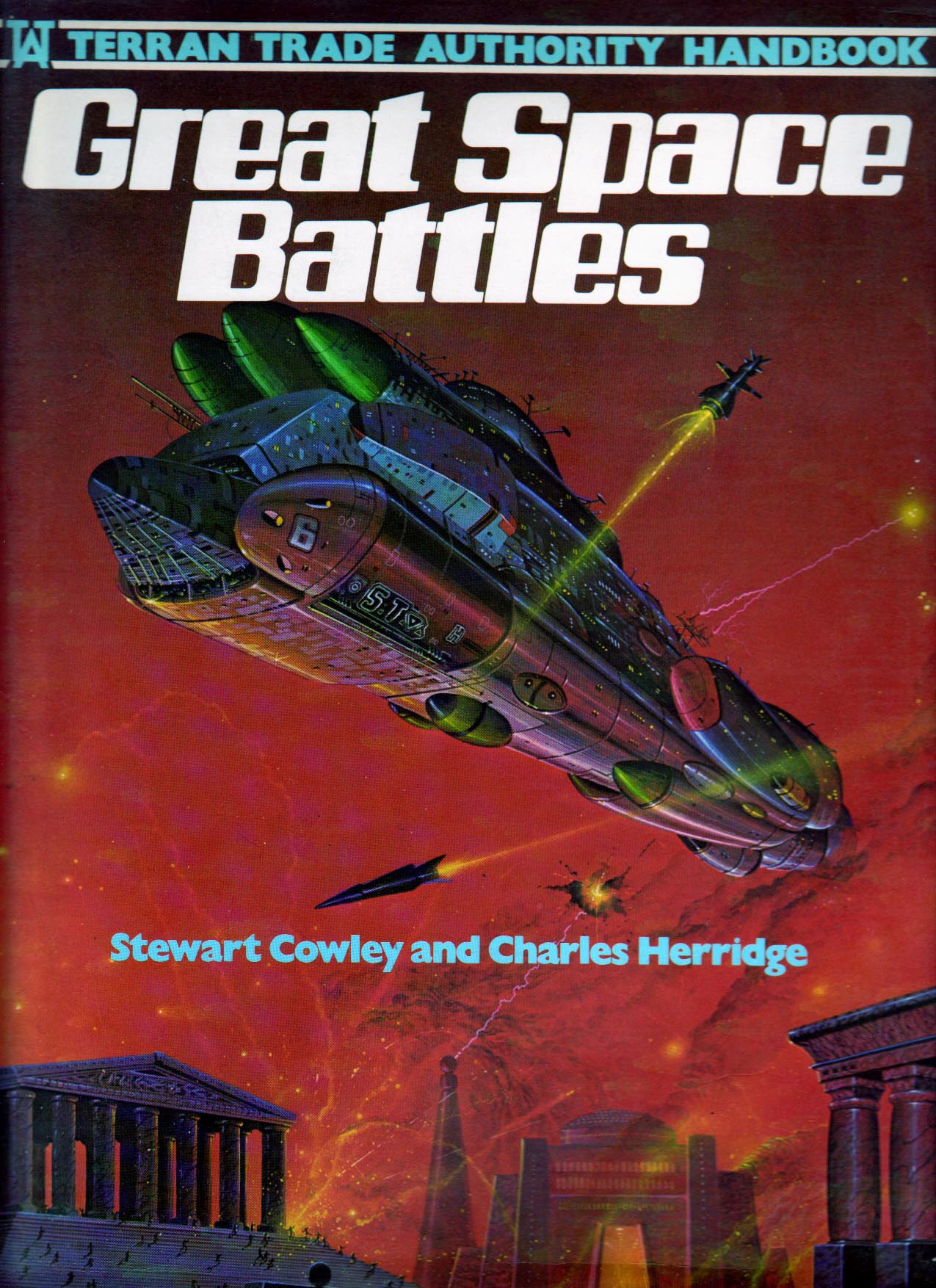
I borrowed this book from the school library, and along with the Terran Trade Authority Great Space Battles book, it fundamentally shaped how I conceived sci-fi beyond just Star Wars or Star Trek.
Now I want to ask you, dear reader, what art inspired you before you became a gamer?
Categories: Tabletop Gaming Blogs
40 Years a Gamer: The Artists Who Inspired Me – Chris Achilleos
Chris Achilleos is another artist I discovered while working at Metro Comics. Two years before Mike Ploog’s trading card collection, which I mentioned in my previous post, the same company, FPG, published the Chris Achilleos Fantasy Art Trading Cards.
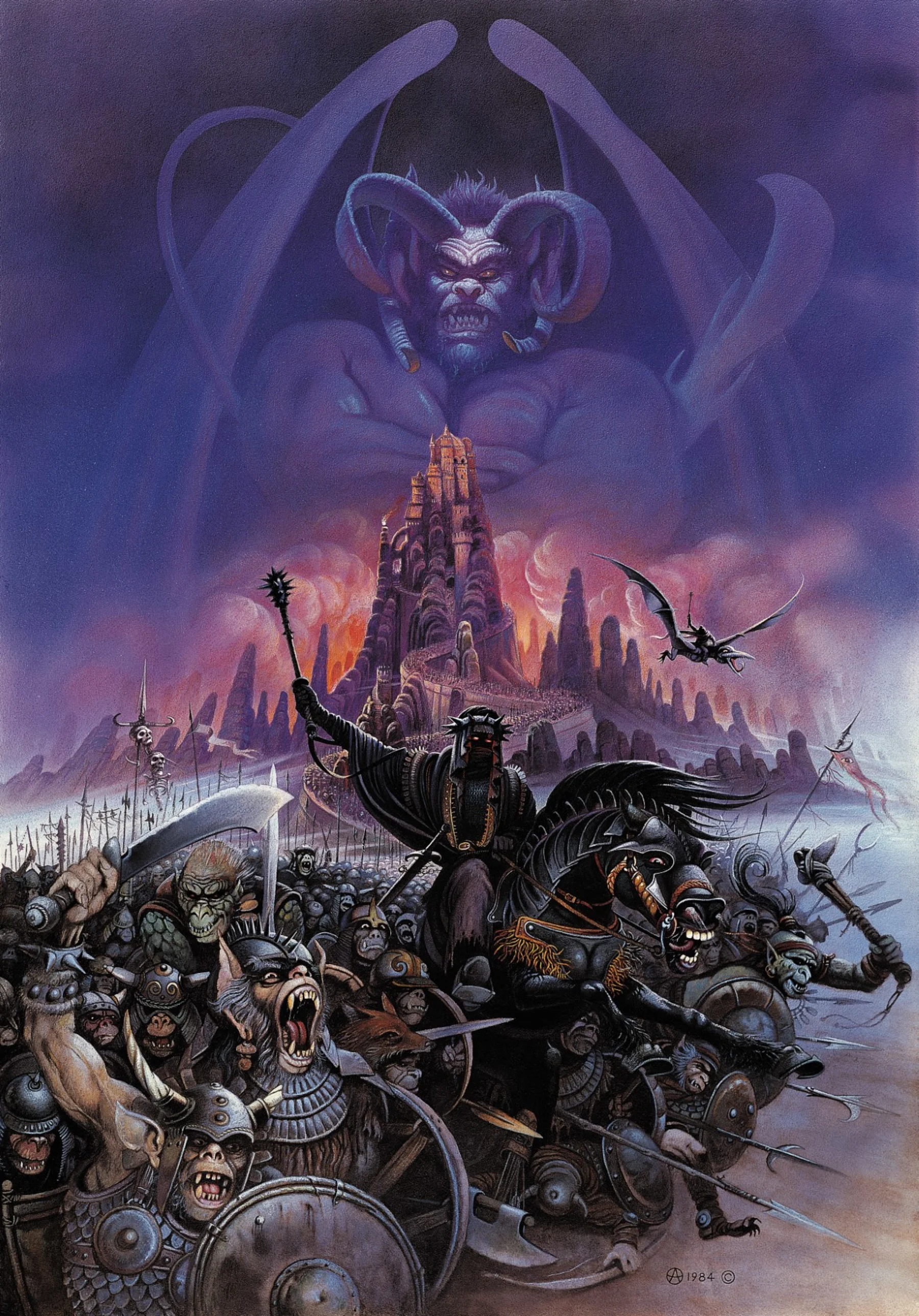
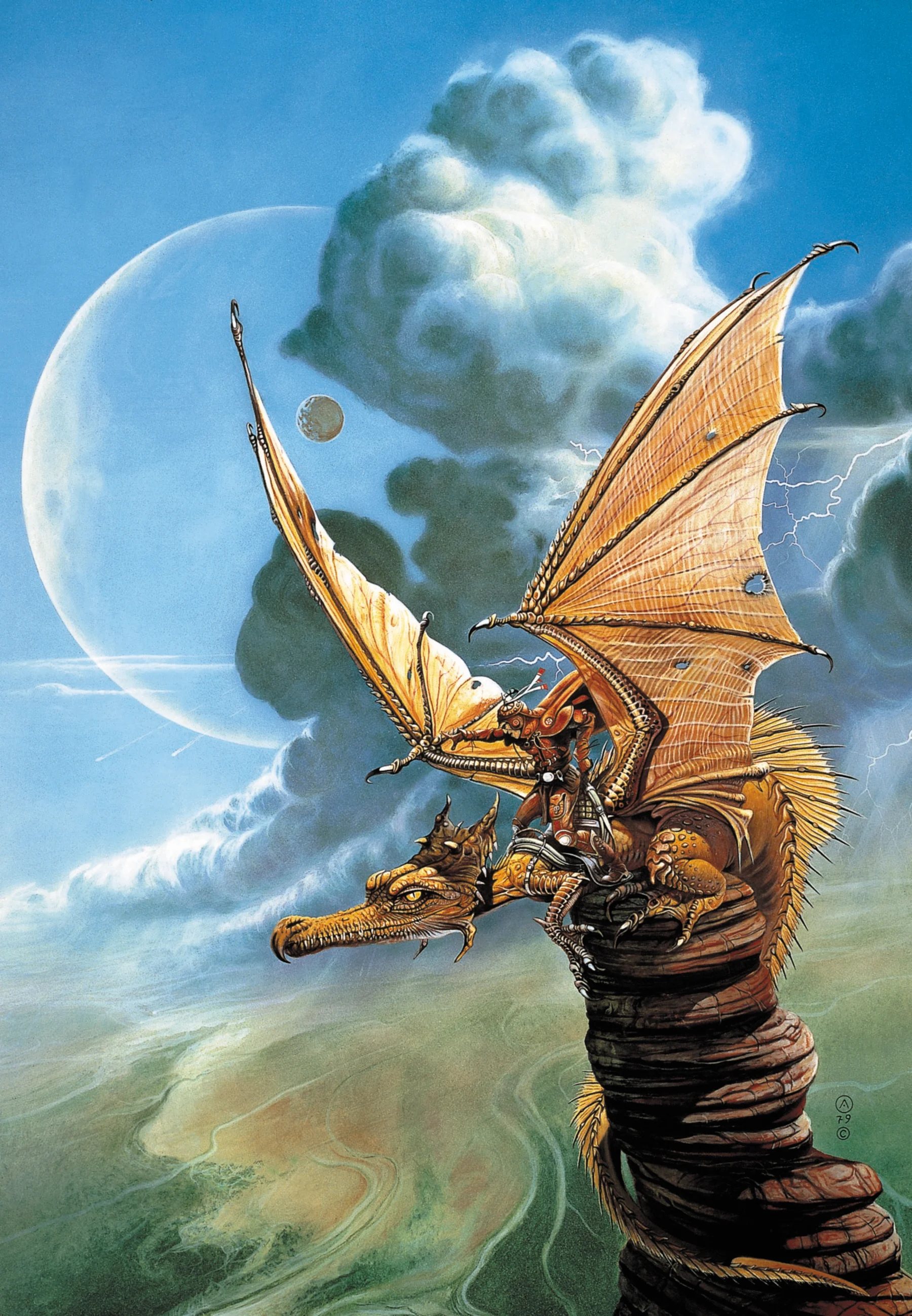
I don’t recall if I consciously knew Achilleos’ work before becoming obsessed with those cards. I had probably seen some of his Lord of the Rings pieces. I had definitely seen his most famous work—the Taarna Heavy Metal cover and the movie poster—on the record sleeve and later in other related media, but I had NO idea who the artist was.
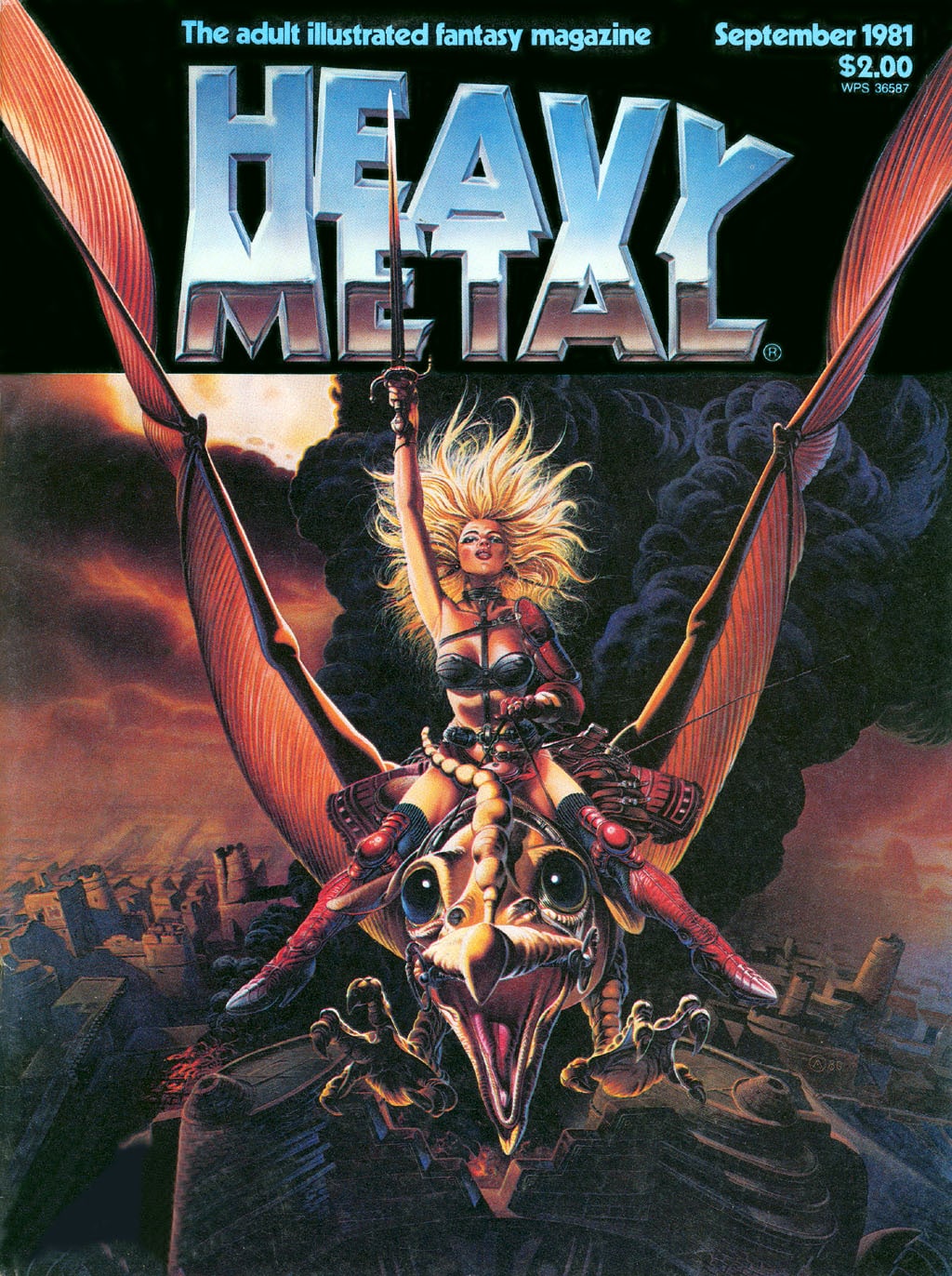
You can listen to the Heavy Metal soundtrack below:
When I finally discovered the depth and breadth of his work through that trading card set, I was blown away. This was amazing fantasy artwork, but it felt entirely different from the work of the typical D&D artists and other fantasy painters I grew up with, like Boris Vallejo or the Hildebrandt brothers. His work had this fine-art quality mixed with a fantastical allure that completely fired my imagination.
As I mentioned in my previous post, this was the early 90s. We didn’t have Pinterest. We were online, but we certainly didn’t have access to art and images the way we do now. Art books, calendars, and these trading cards were my absolute main points of reference and inspiration. The best part about the trading cards was their utility at the table: I could make notes about the campaign, a specific adventure, or an NPC, clip them to a trading card featuring the art that inspired that bit of worldbuilding, and then physically show them to my players during the game.
The timeframe when these two trading card collections came out—1992 to 1994, and the years immediately following—was a defining era for me as a Game Master. I was actively organizing my campaign world, my written adventures, and my GM notes. In fact, 1993 was the year I officially rebooted the homebrew world I originally created in 1987, turning it into the version we have been playing ever since.
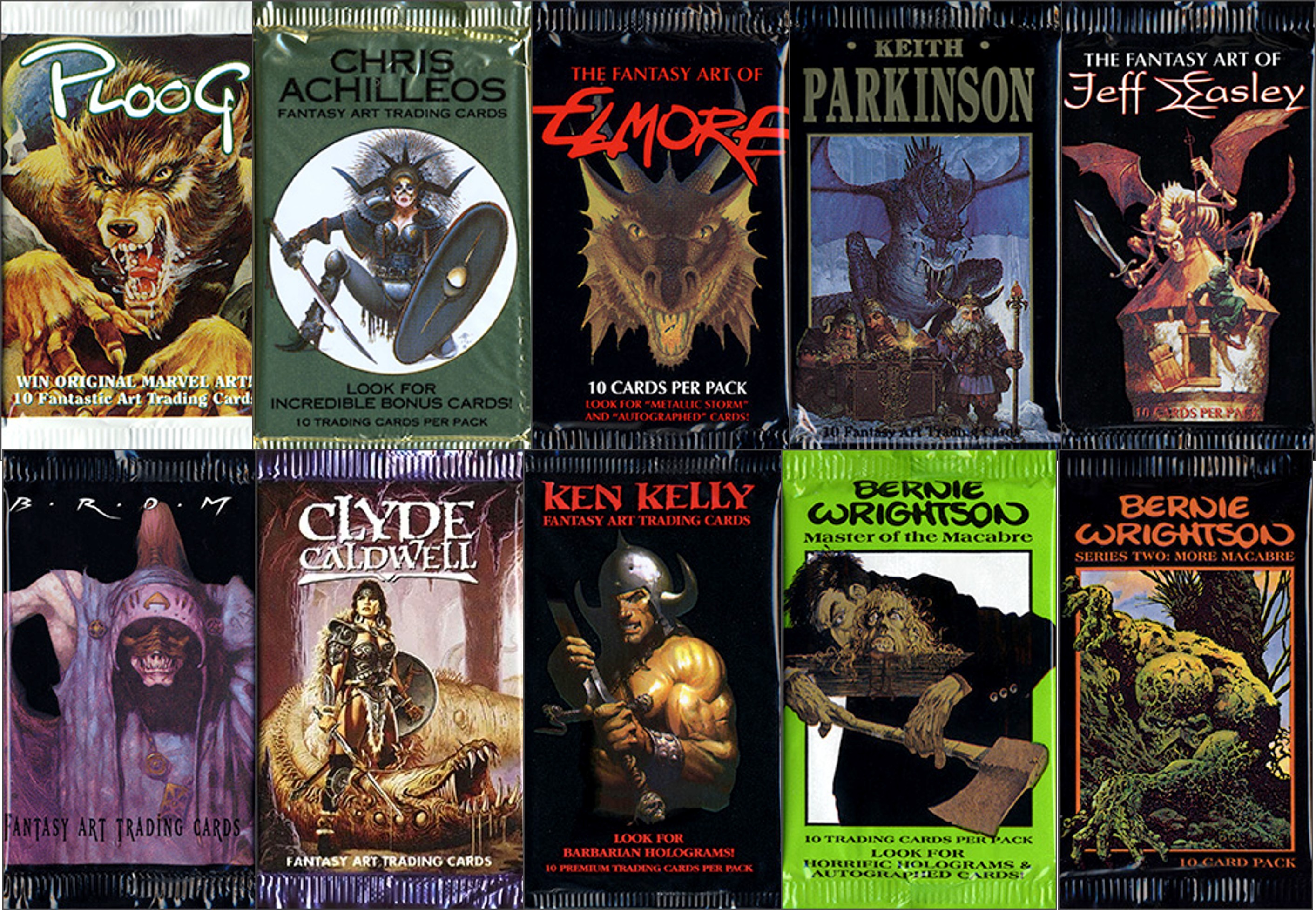
The Ploog and Achilleos trading cards, along with sets featuring legends like Elmore, Parkinson, Easley, Brom, Caldwell, Kelly, and Wrightson (some of those names might just pop up in future posts!), were a massive source of inspiration and reference throughout those formative years.
By the time I put together my first official, printed campaign handout for my players in 1999, I had already moved on to using desktop publishing tools and digital art. The physical trading cards started to see less use, and at one point, during a house cleanout, I ended up getting rid of many of them. The cards themselves might be gone, but the art and the artists I discovered through them continue to amaze and inspire my games to this day.
Categories: Tabletop Gaming Blogs
40 Years a Gamer: The Artists Who Inspired Me – Mike Ploog
My recent deep dives into comics led me to explore other fantasy and sword-and-sorcery books I’d either missed or forgotten about over the years. That winding path eventually led me to Weirdworld, a comic created by Doug Moench and Mike Ploog. And honestly, rediscovering this series sparked an entirely new topic for my “40 Years a Gamer” retrospective: the artists who inspired my campaigns.
I absolutely love Mike Ploog‘s fantasy art. I first became consciously aware of him through his 1994 trading card collection, back when I was working at Metro Comics. I collected all those cards and used them as visual references and inspiration for NPCs and events in my homebrew world.
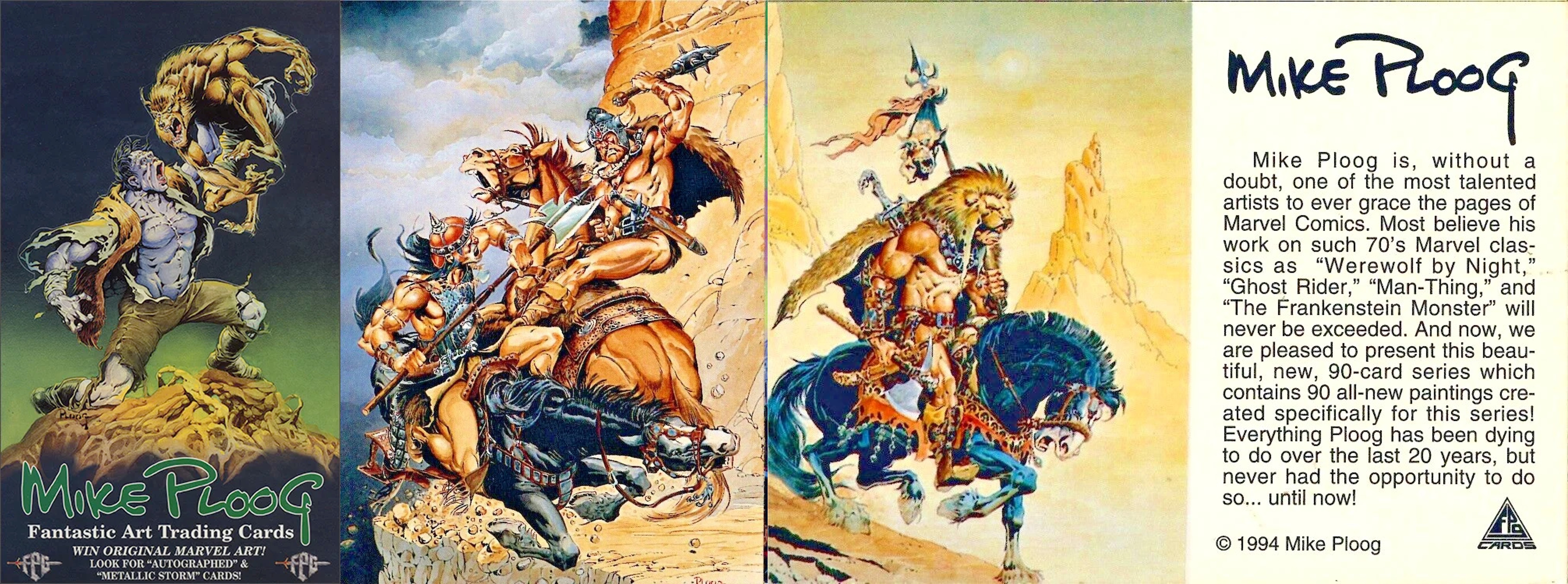
I eventually realized I had already seen his comic work in various back issues. I also found out later that he worked on Ralph Bakshi’s animated movies, Wizards and The Lord of the Rings, which were two of my absolute favorites!
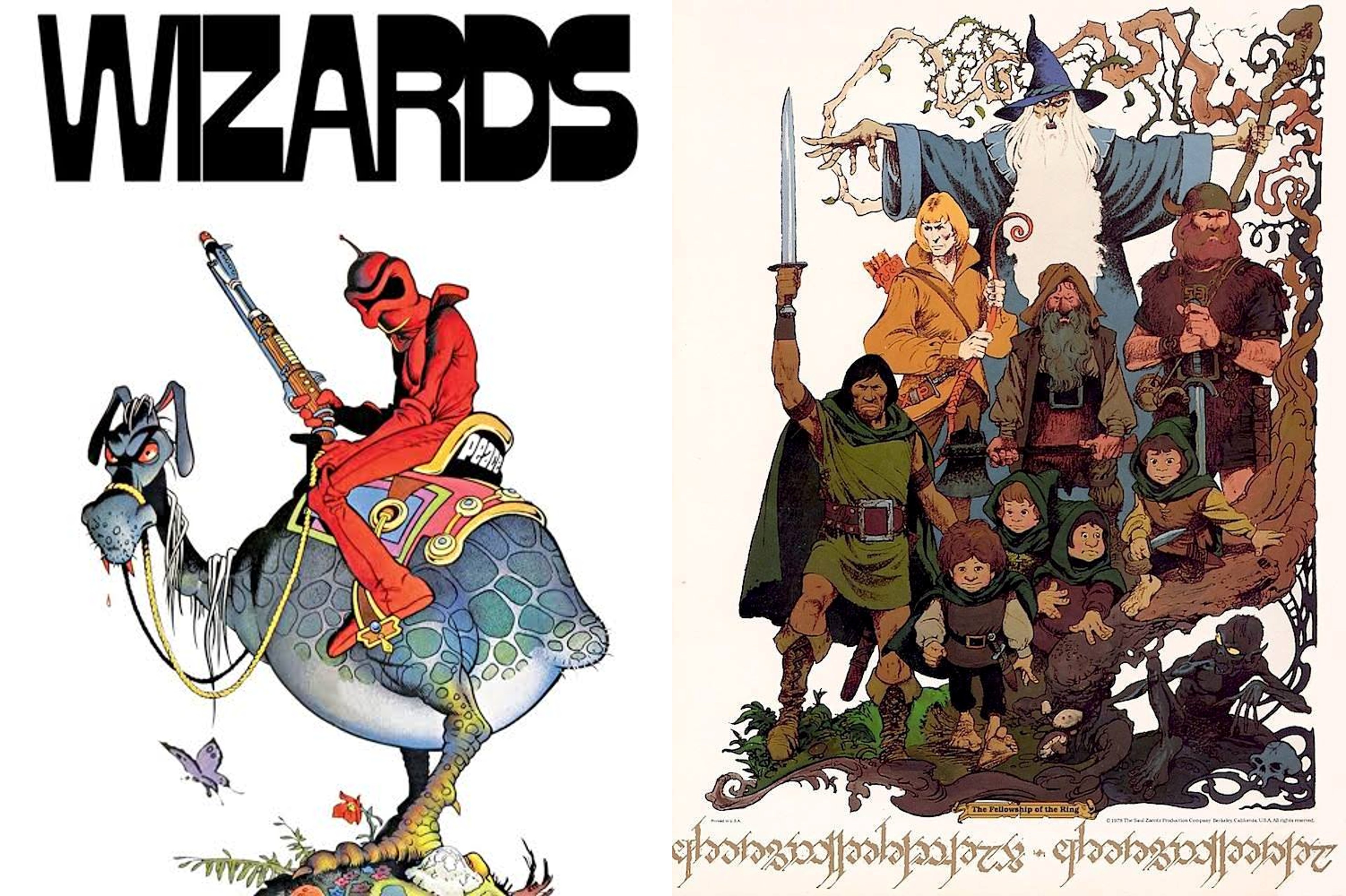
His art style was a bit cartoony—different from the more traditional fantasy art that usually inspired me as a young GM—but it had this incredible dynamism and movement that other pieces just lacked. Sadly, I no longer have the complete trading card set. But back in the days before high-speed internet and Pinterest, physical art books and trading cards were the main sources of visual inspiration for the table.
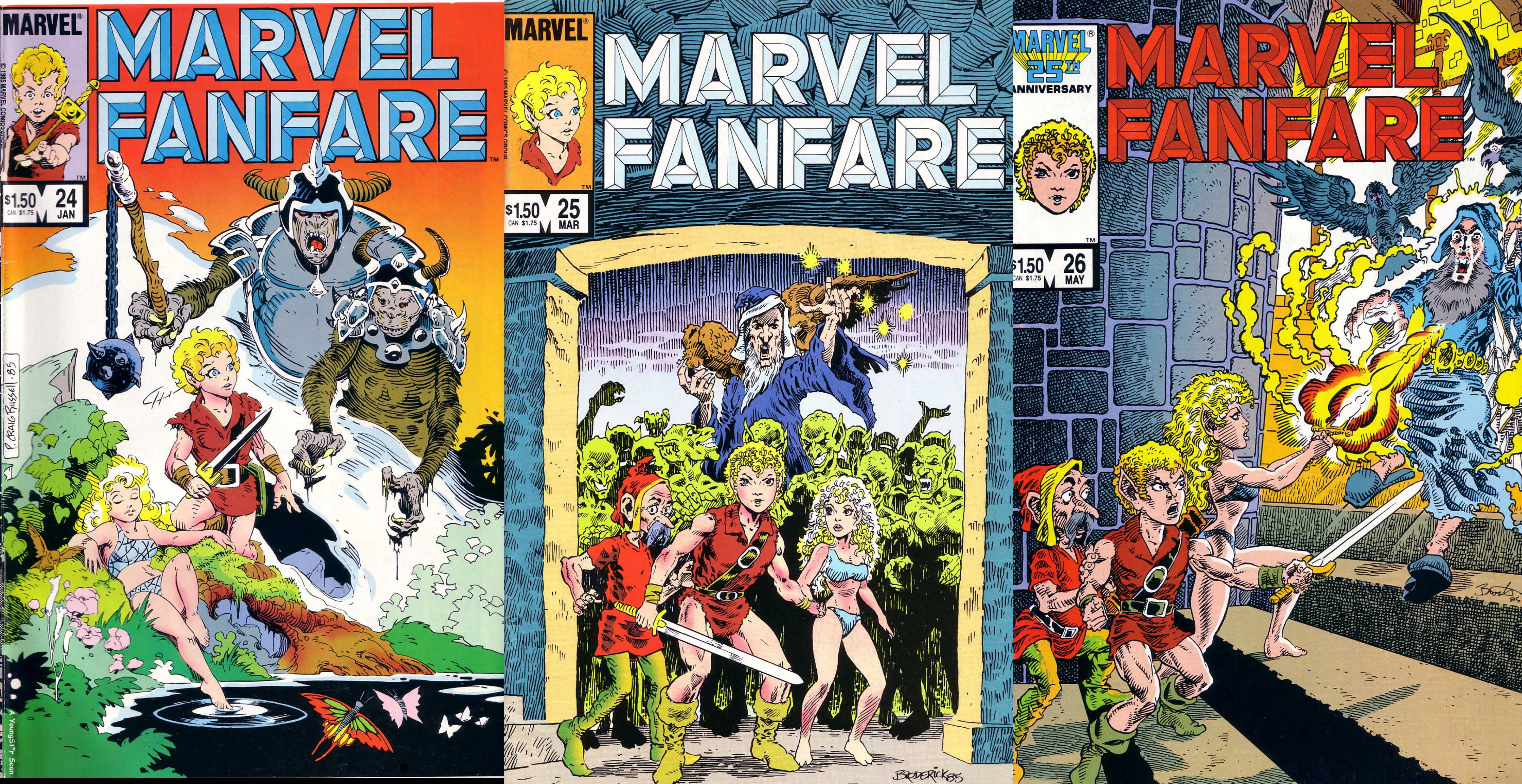
The Weirdworld connection that sparked all these memories is actually pretty funny. I had completely forgotten about these characters. I originally read about them in Marvel Fanfare issues 24-26 back in 1986. Because I was such a huge Elfquest fan, I was thrilled to find another fantasy story, but I remember being a little disappointed. It just didn’t capture me the way Elfquest did. As it turns out, the stories I read were NOT drawn by Mike Ploog!
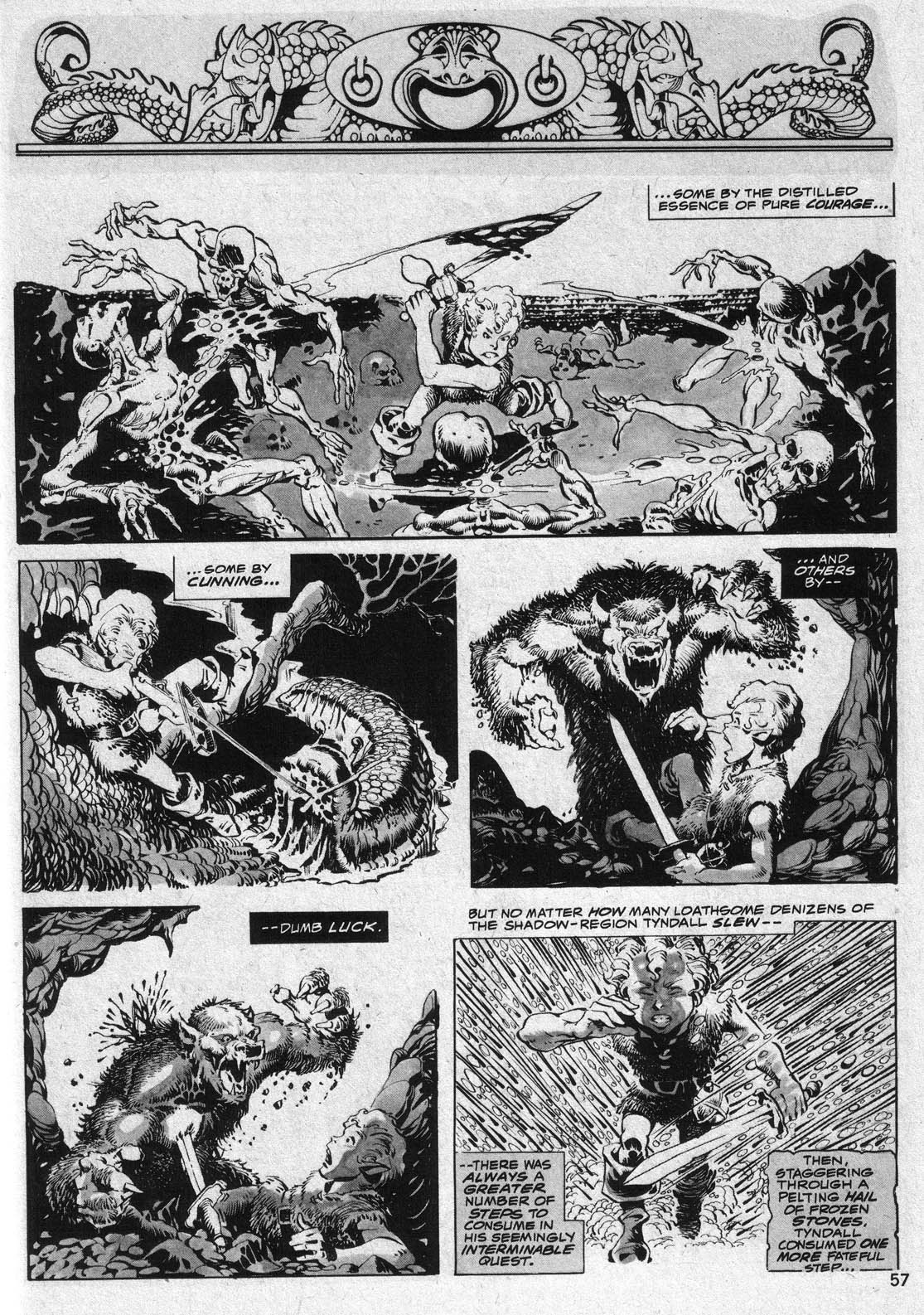
Because of that, I completely forgot about the setting until I stumbled across it again a few days ago and realized it was co-created by one of my favorite artists. What a great connection to finally make. You can see some of Ploog’s original Weirdworld art below.
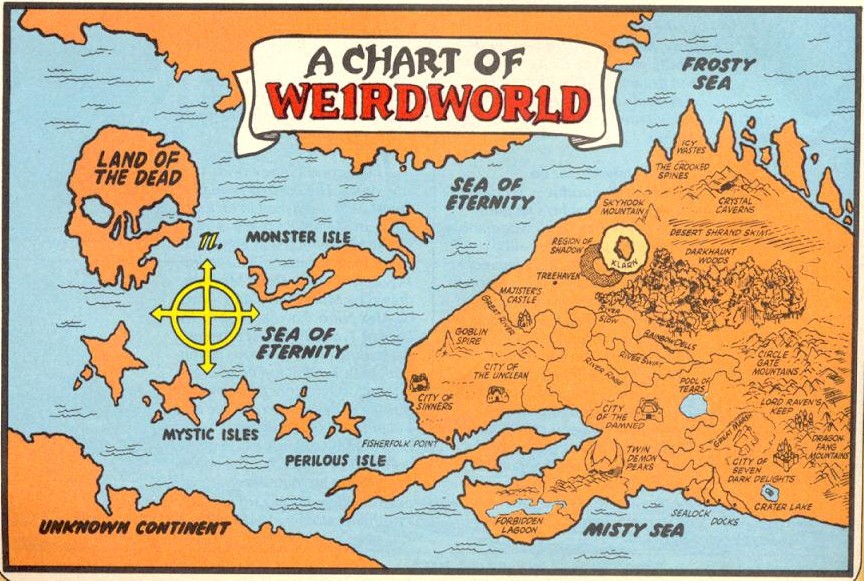
Bonus! There was a map of Weirdworld published in Epic Illustrated #9. The map is a little silly—or perhaps whimsical, and fairy-like is a better description! While I might not use it as direct inspiration for a TTRPG right now, we’ve had two significant adventures in the Fey Realm in my long-running homebrewed campaign, so I am absolutely keeping this handy for later reference.
Categories: Tabletop Gaming Blogs
Mining 70s DC Comics for TTRPG Inspiration: Maps, Missing Souls, and Cosmic Conflicts
When I recently shared that image of classic DC Comics sword-and-sorcery characters as great TTRPG inspiration on my Facebook Page (see the featured image above!), I honestly didn’t expect to fall down such a deep rabbit hole learning about them. But one thread pulled another, and I ended up finding some incredible material that I can’t wait to bring to the table.
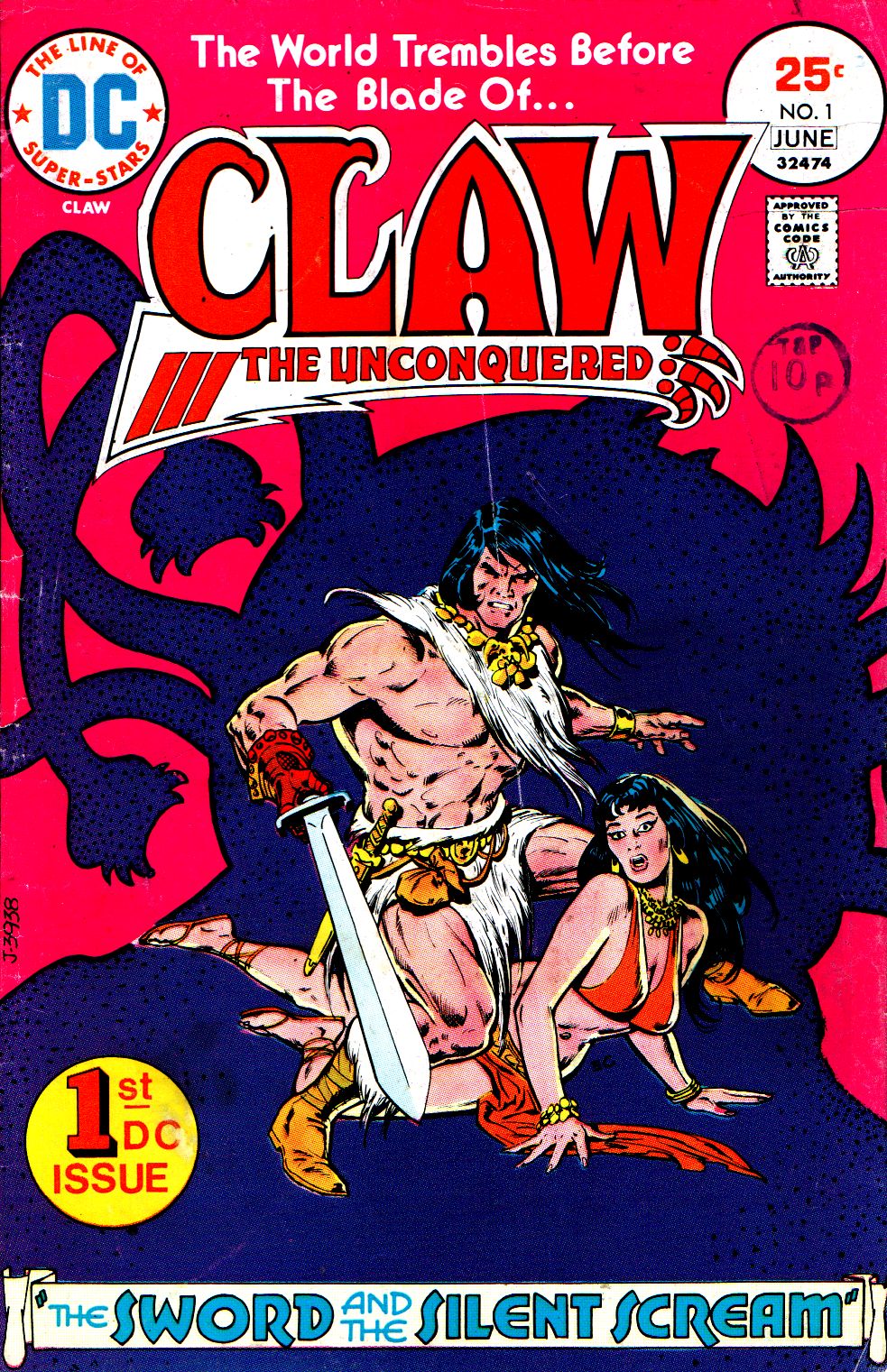
First up was Claw the Unconquered. At first glance, he looks like a standard Conan knockoff. But I was reading Scott Dutton’s Catspaw Dynamics blog (which I mentioned in the blog post where I wrote about Conqueror of the Barren Earth), and Scott shared some beautifully digitally recreated art for the series. More importantly, he shared a map of the setting where Claw’s adventures take place.
It’s literally called “The Known World.”
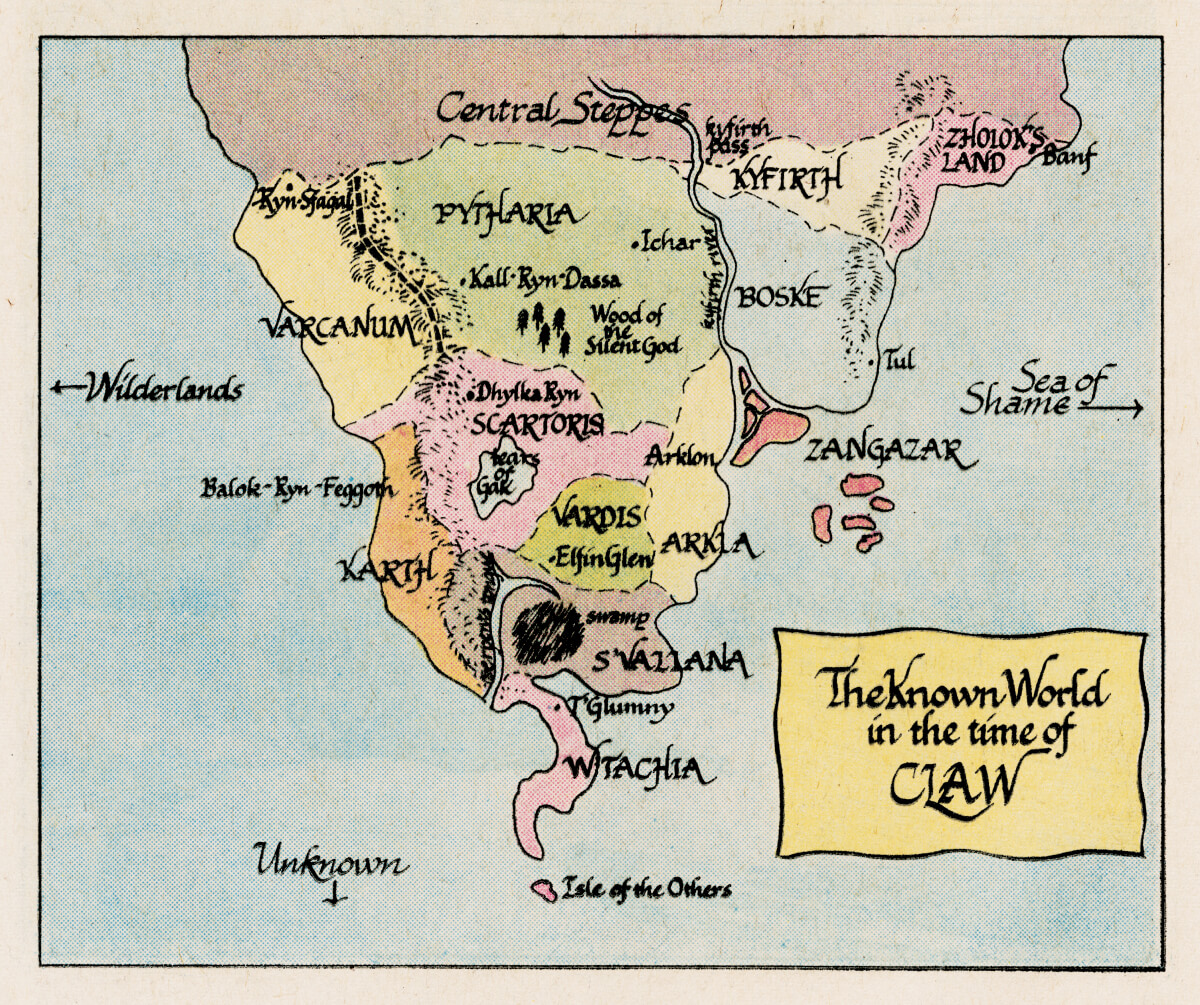
Anyone who knows me knows I am an absolute sucker for fantasy maps, and seeing a “Known World” instantly triggered my Mystara nostalgia! Seeing this immediately makes me want to track down these old comics just to learn more about how they built this world and see what I can borrow for my own campaigns.
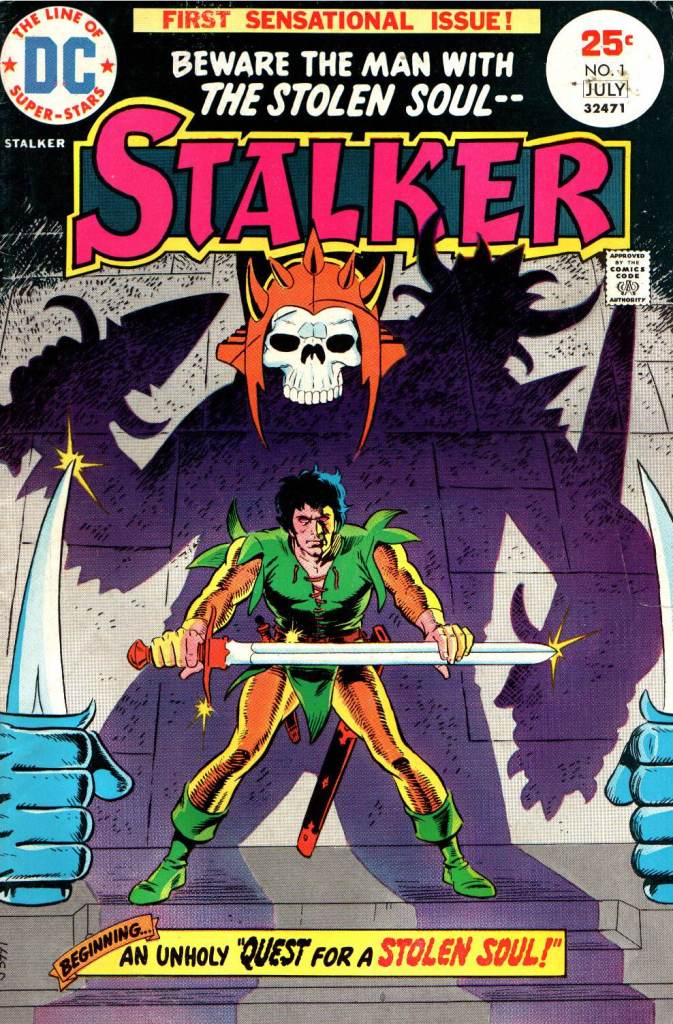
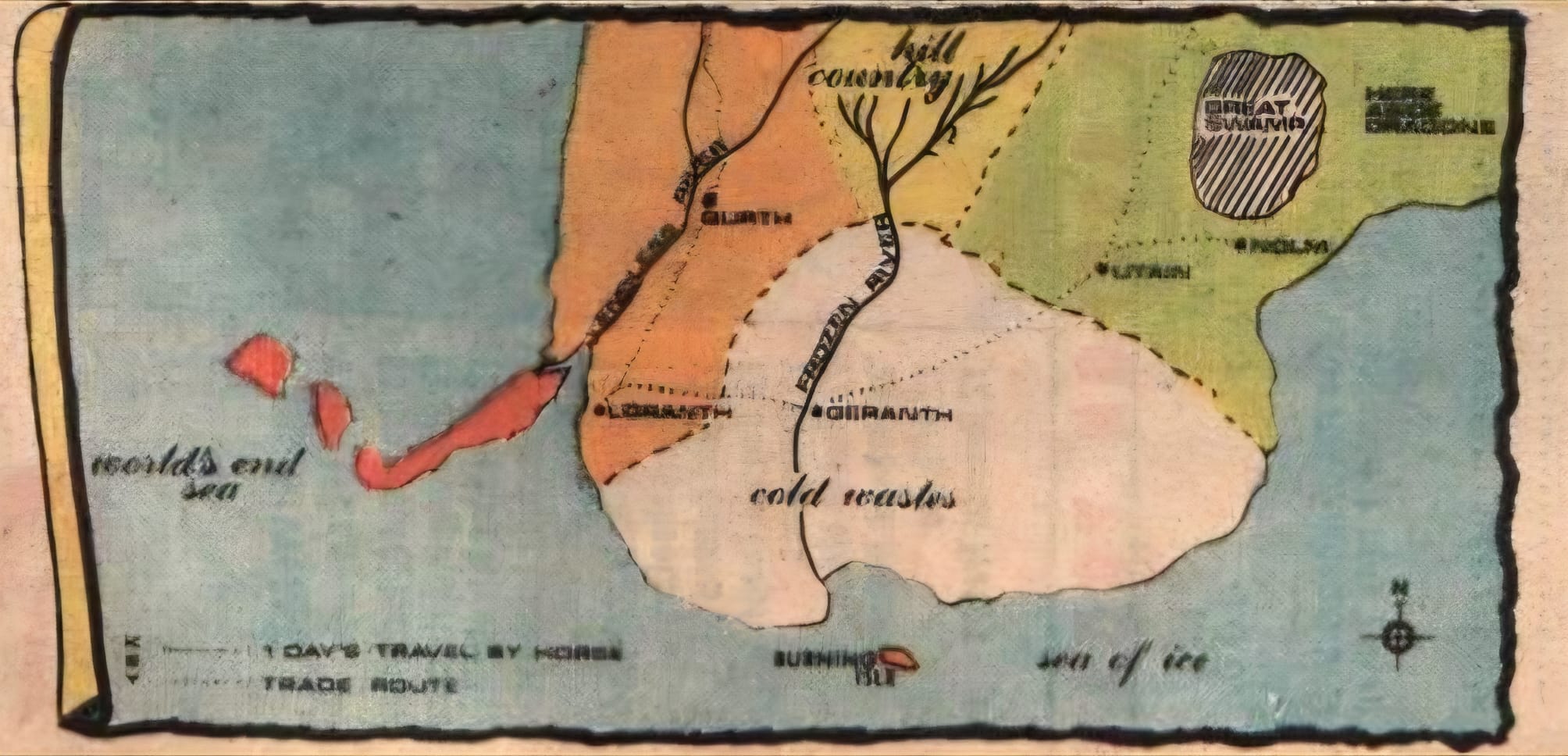
Another classic DC Comics sword-and-sorcery character from that same era that caught my attention is Stalker. And just like Claw the Unconquered, he has a world map too! It’s a simpler one, but it still makes me want to mine it for campaign material.
The premise of the book is intriguing: Stalker is a man who sells his soul to become an unbeatable warrior, then goes on a brutal quest to recover it. The art is by the legendary Steve Ditko—obviously of Spider-Man fame, but he did so much more than that. The whole concept of a soulless warrior trying to wrest his soul back from the demon god who granted him power is such a perfect hook for a TTRPG campaign.
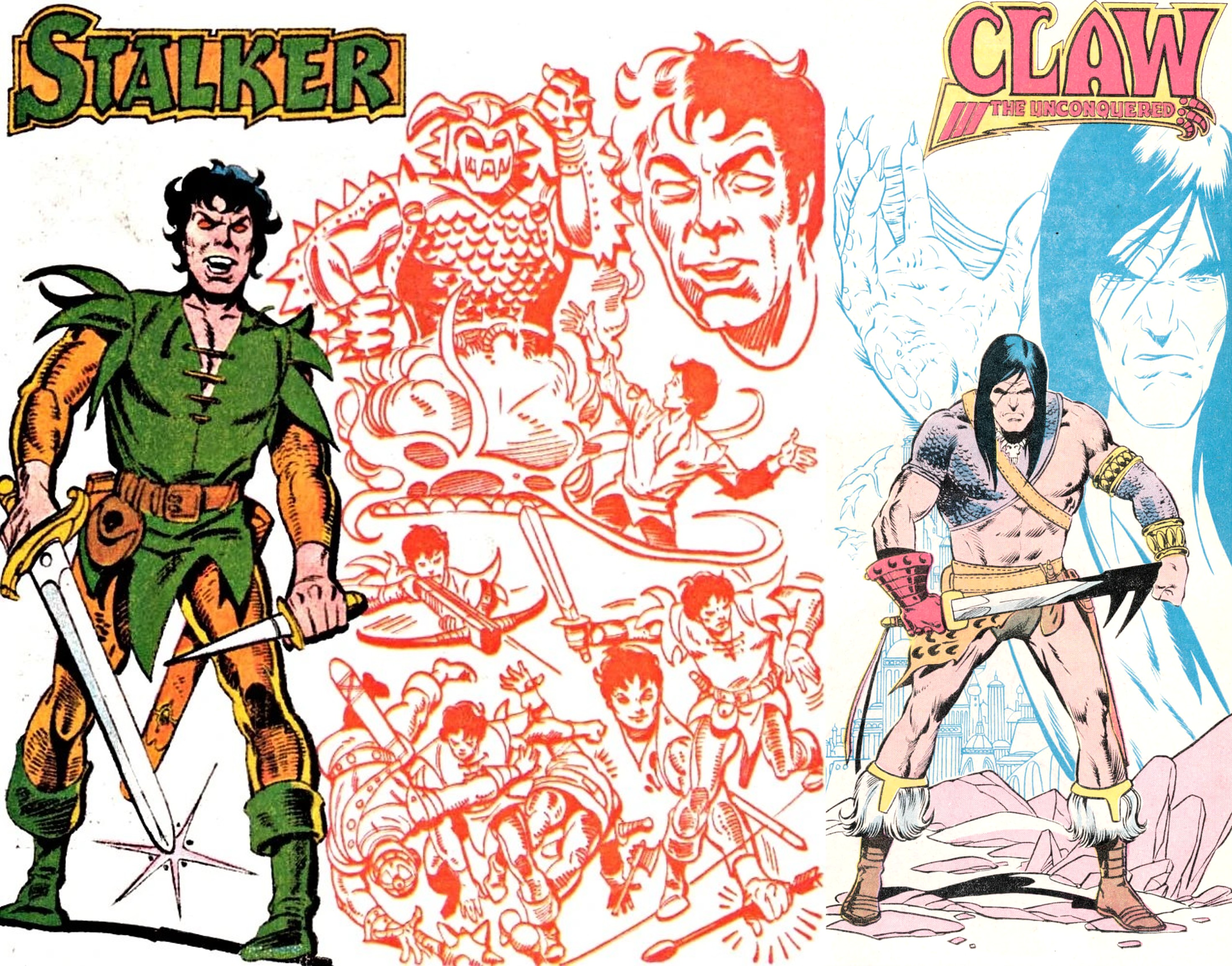
I really want to drop Stalker the Soulless and Claw the Unconquered in as NPCs in a future fantasy game. They could easily fit into Worlds Without Number or Savage Worlds, but honestly, they both give me massive Shadowdark or Old School Essentials vibes. Since I’ve been rereading the Shadowdark rules during my recent holiday, I’m genuinely tempted to just roll up a PC based entirely on Stalker.
As I kept digging, it turns out that back in the late 70s, DC wasn’t just publishing sword-and-sorcery heroes. They were also putting out some wild science-fantasy and sci-fi comics. I honestly did not know much, if anything, about these until I took this deep dive into old comics lore!
There are two I want to learn more about, especially since the descriptions I read online make them seem to be in the exact same vein as one of my all-time favorites, Atari Force.
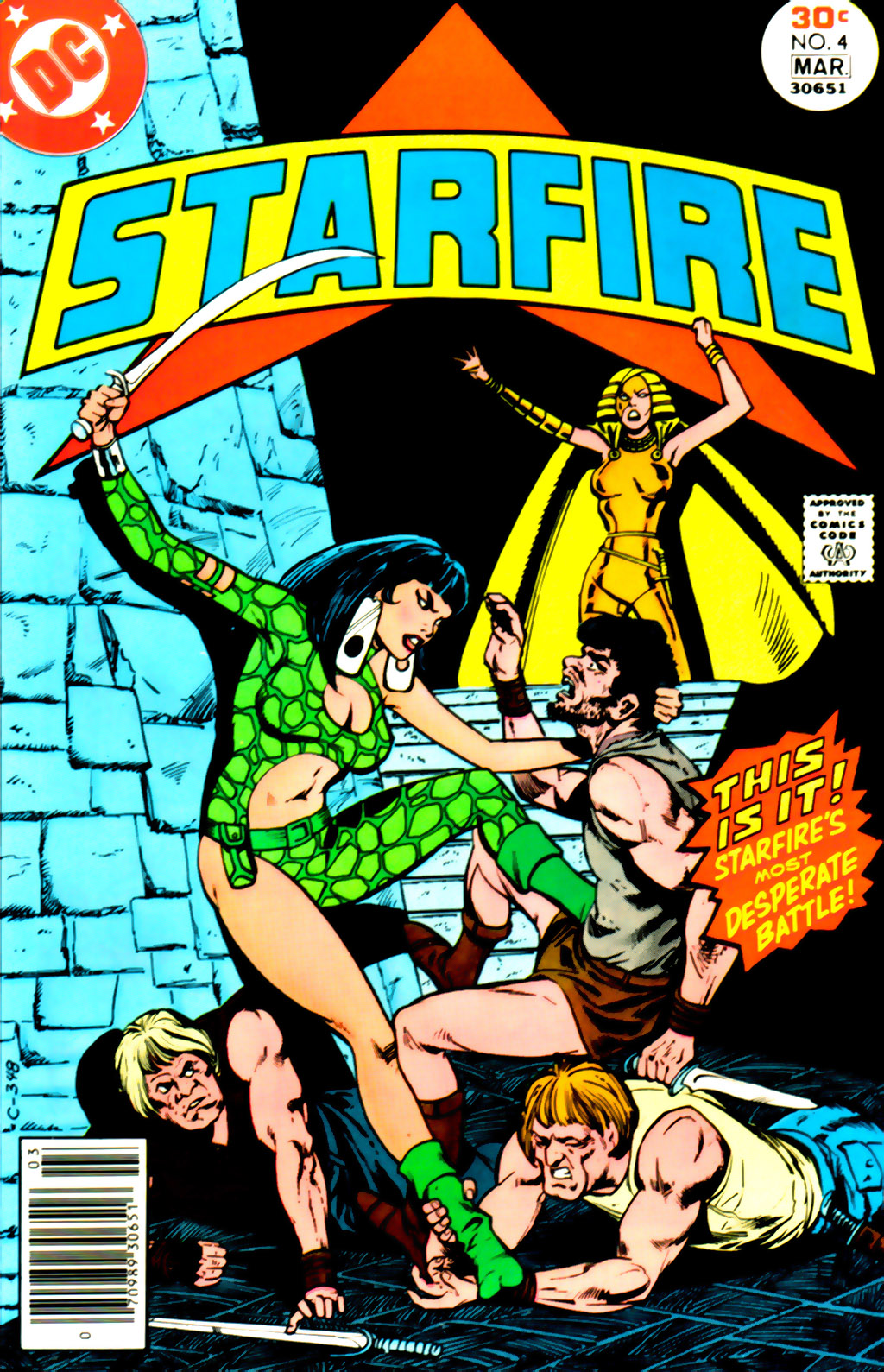
The first is a science-fantasy heroine named Starfire (yes, she had the name before the Teen Titans character!). According to a quote from Hope Nicholson’s The Spectacular Sisterhood of Superwomen on the Wikipedia page, she was originally meant to be DC’s answer to Marvel’s Red Sonja. However, writer David Michelinie took her in a different creative direction, trying to give the series a vibe closer to Edgar Rice Burroughs‘ Barsoom.
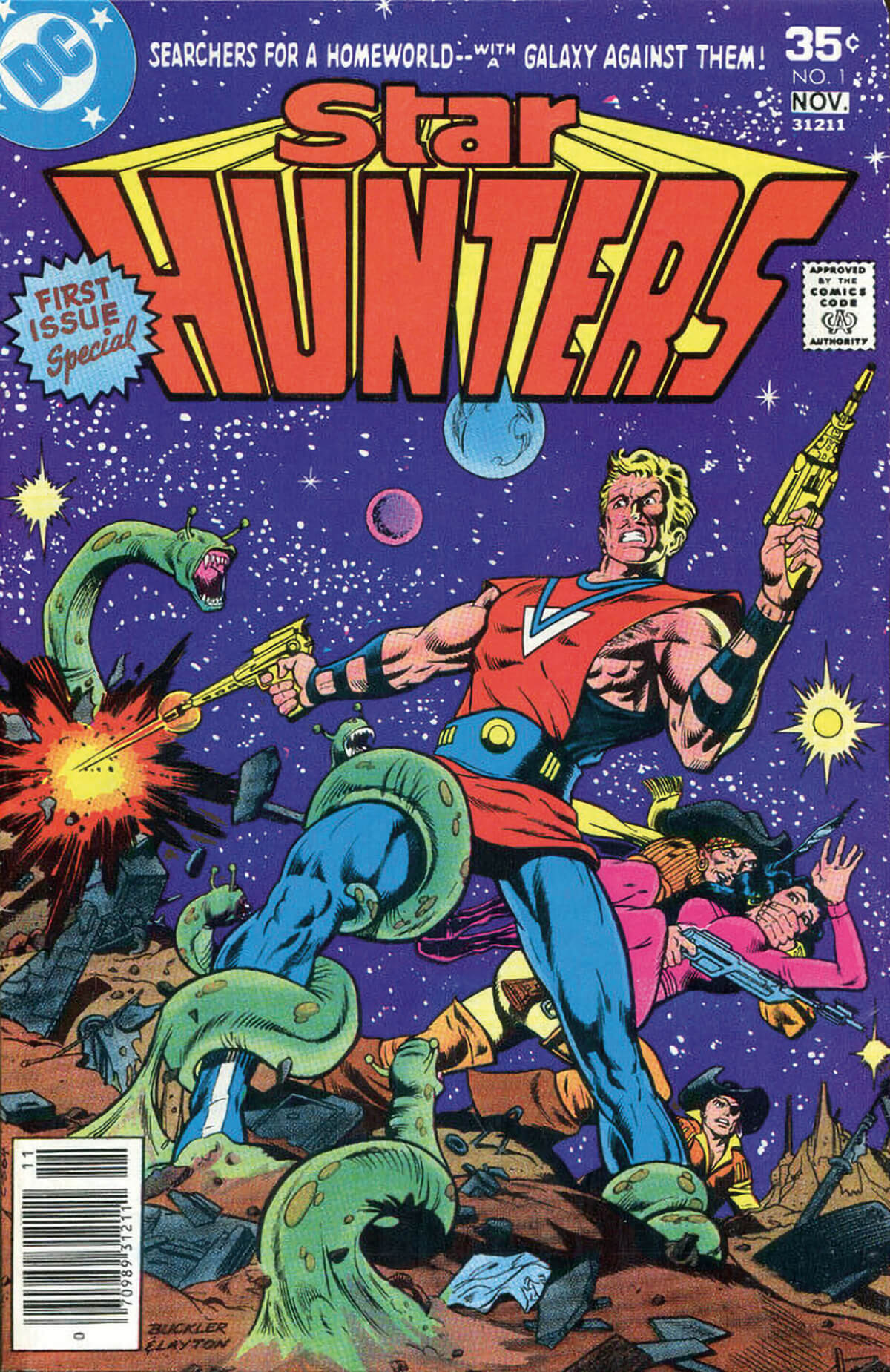
The second is a sci-fi team book called Star Hunters. According to one review I read, it sounds like a bit of a mess—but that might be the fun of it. The art looks genuinely intriguing, and Donovan Flint, the titular Star Hunter, looks an awful lot like Corsair from the X-Men.
Here is the absolute best part of this whole dive: Michelinie actually created Claw the Unconquered, Starfire, and Star Hunters, and he originally wanted them all to be connected as champions in a massive battle between universal forces. It is a direct callback to that cosmic Law vs. Chaos conflict I wrote about Arion a few days ago.
All of this will absolutely serve as inspiration for my future Stars Without Number campaign.
If you want to check out the art and read more about these characters, the Catspaw Dynamics blog has some great entries with preserved and recreated art:
- Claw the Unconquered
- Starfire Poster by Mike Vosburg
- Star Hunters #1 Cover
- Star Hunters #8 (Unpublished Cover)
- The Connected DC Universe of David Michelinie
And if you want a laugh, here is that review of Star Hunters.
Categories: Tabletop Gaming Blogs
Comic Books That Inspire My Gaming: Visualizing the Possibility Wars with Malibu’s Torg
For someone who posts primarily about tabletop role-playing games, I certainly have been talking a lot about comics lately. Indulge me again, because this one is directly related to the hobby. Today, I want to look at a comic book based specifically on a TTRPG—Malibu Comics’ 1992 Torg mini-series, published under their Adventure Comics imprint.
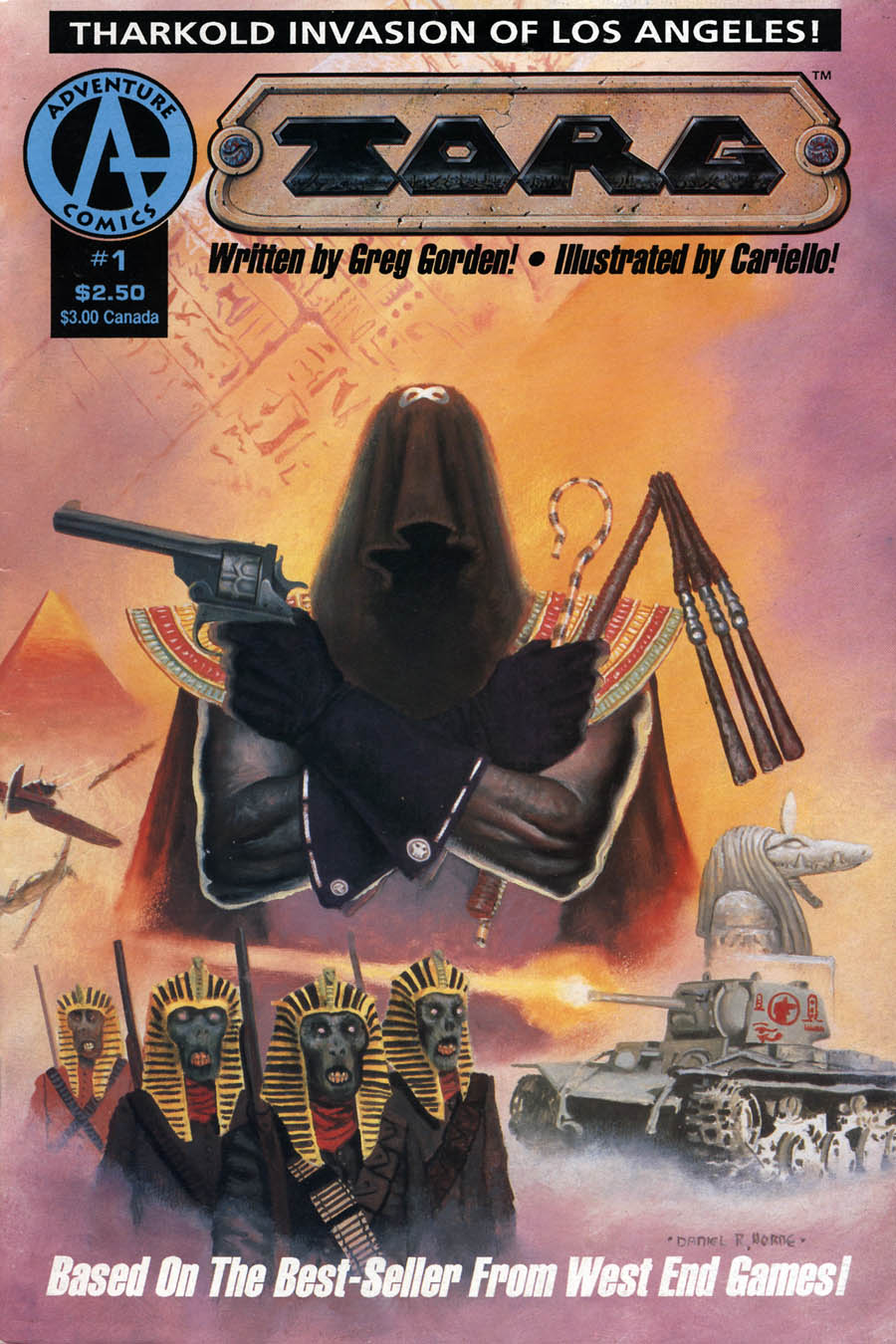
It was 1992. Torg: Roleplaying the Possibility Wars had been out for two years, and I was completely obsessed with it. I had read the first tie-in novel (because it seemed like every major TTRPG released in that era had to have one!), and as much as I liked it, I was still trying to wrap my head around what a Torg campaign should actually look like at the table.
This comic finally gave me that answer.
It was thrilling to see an alternate-world reality invading Earth on the page. Specifically, the Tharkoldu invasion of LA! The book perfectly illustrated the dynamics of heroes from wildly different realities teaming up to face these massive challenges. I don’t have the physical issues in front of me right now—they are packed away in storage—but at the time, I was a massive fan. I managed to get my hands on issues 1, 2, and 4 right away, though it took me years to finally track down issue number 3. When someone asked me what Torg was like back then, I didn’t point them to the heavy rulebook; I referred them to these comics.
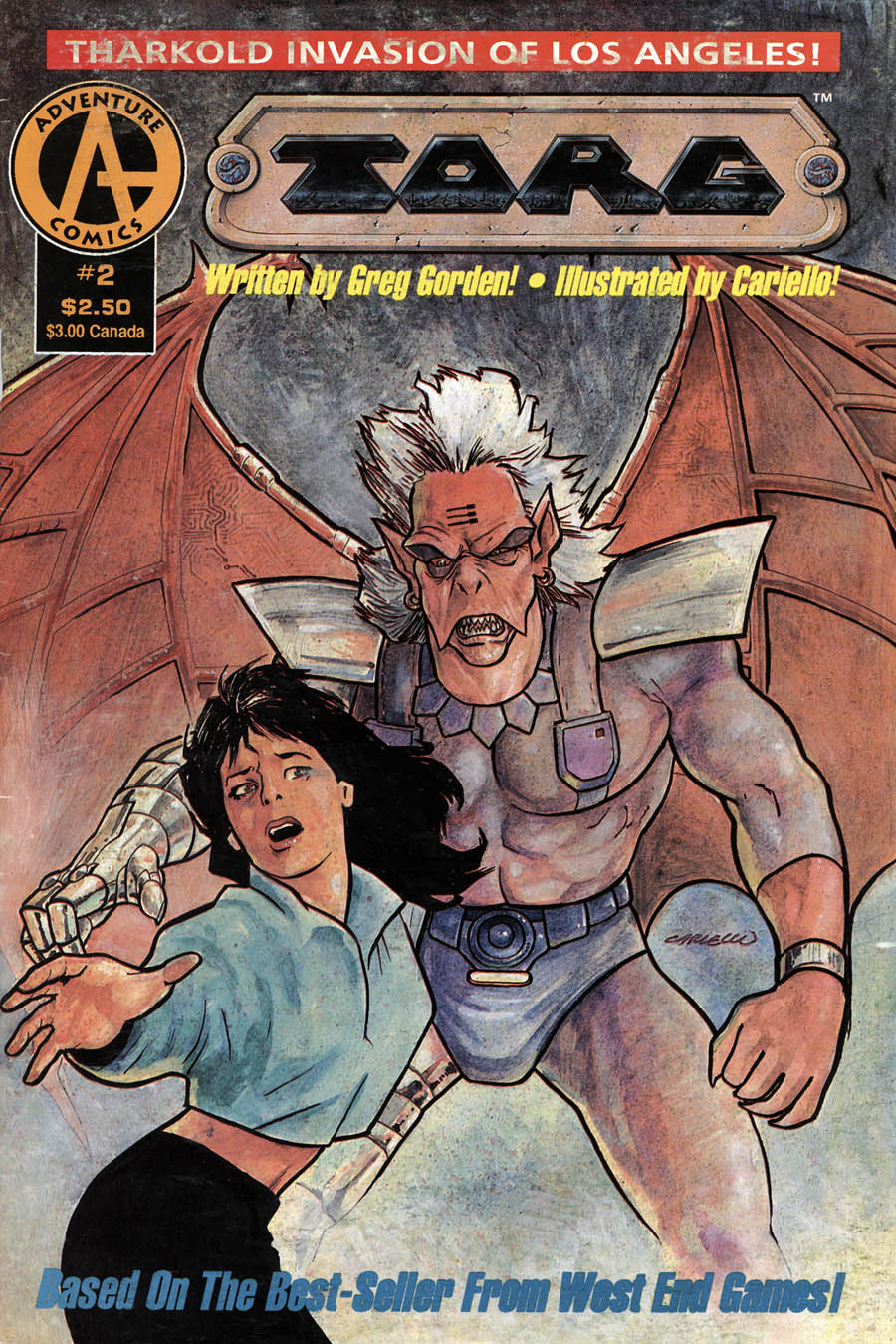
It helps that the book was written by legendary game designer Greg Gorden, who was actually part of Torg‘s original design team. His resume is incredible. He was part of the team that designed the James Bond 007 RPG, served as the main designer on Mayfair’s DC Heroes, worked on West End’s Star Wars D6, and was the main author of the Imperial Sourcebook—setting a high bar for game design that influenced the entire Star Wars franchise. He also worked on the original Deadlands, which ties my early love of Torg directly to my current predilection for Savage Worlds.
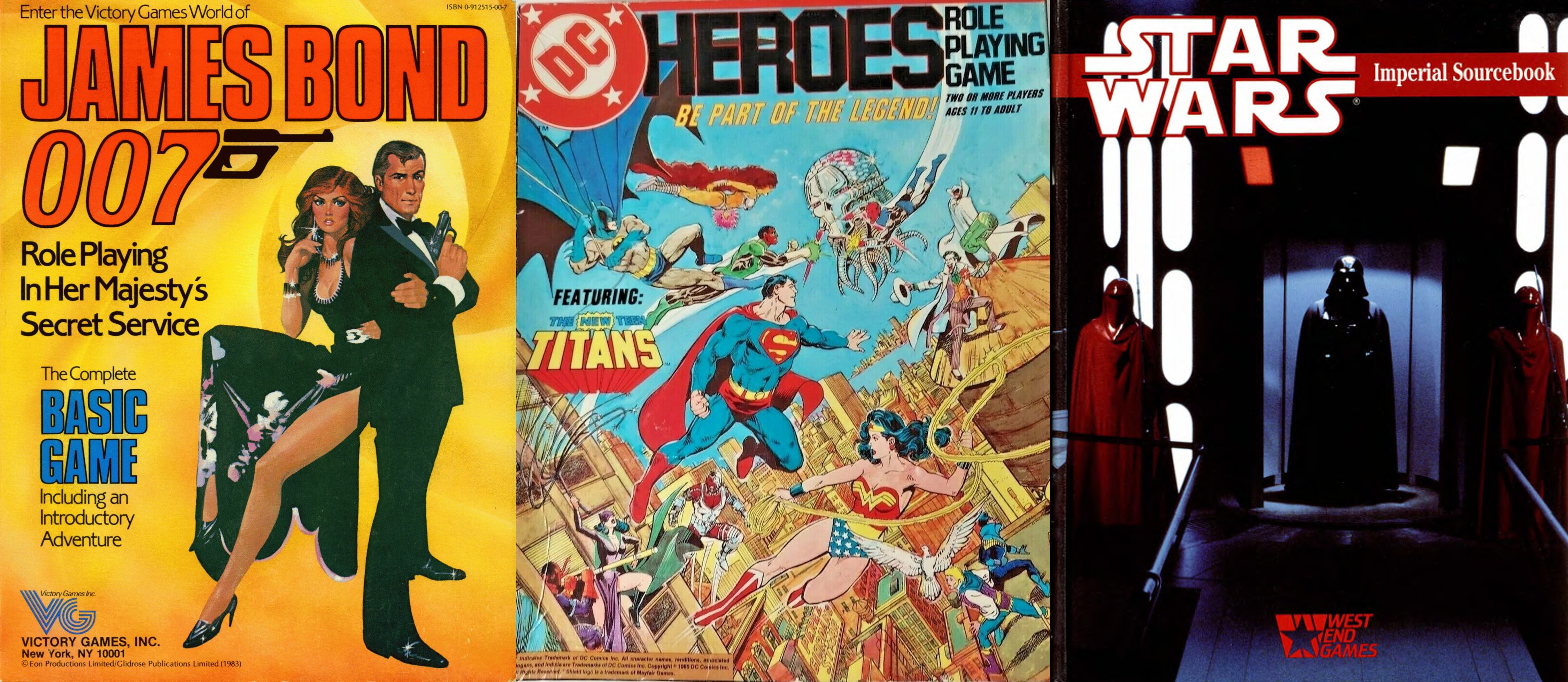
If you want a deep dive into his game design and influence on the hobby in general, check out this excellent interview and analysis over at Geekerati Media.
The art was handled by Sergio Cariello. He went on to work for more mainstream titles, but here he captured the setting’s cinematic feel perfectly. The comic looked like a gritty action movie—more grounded and realistic, and not four-color at all. It was black and white, after all!
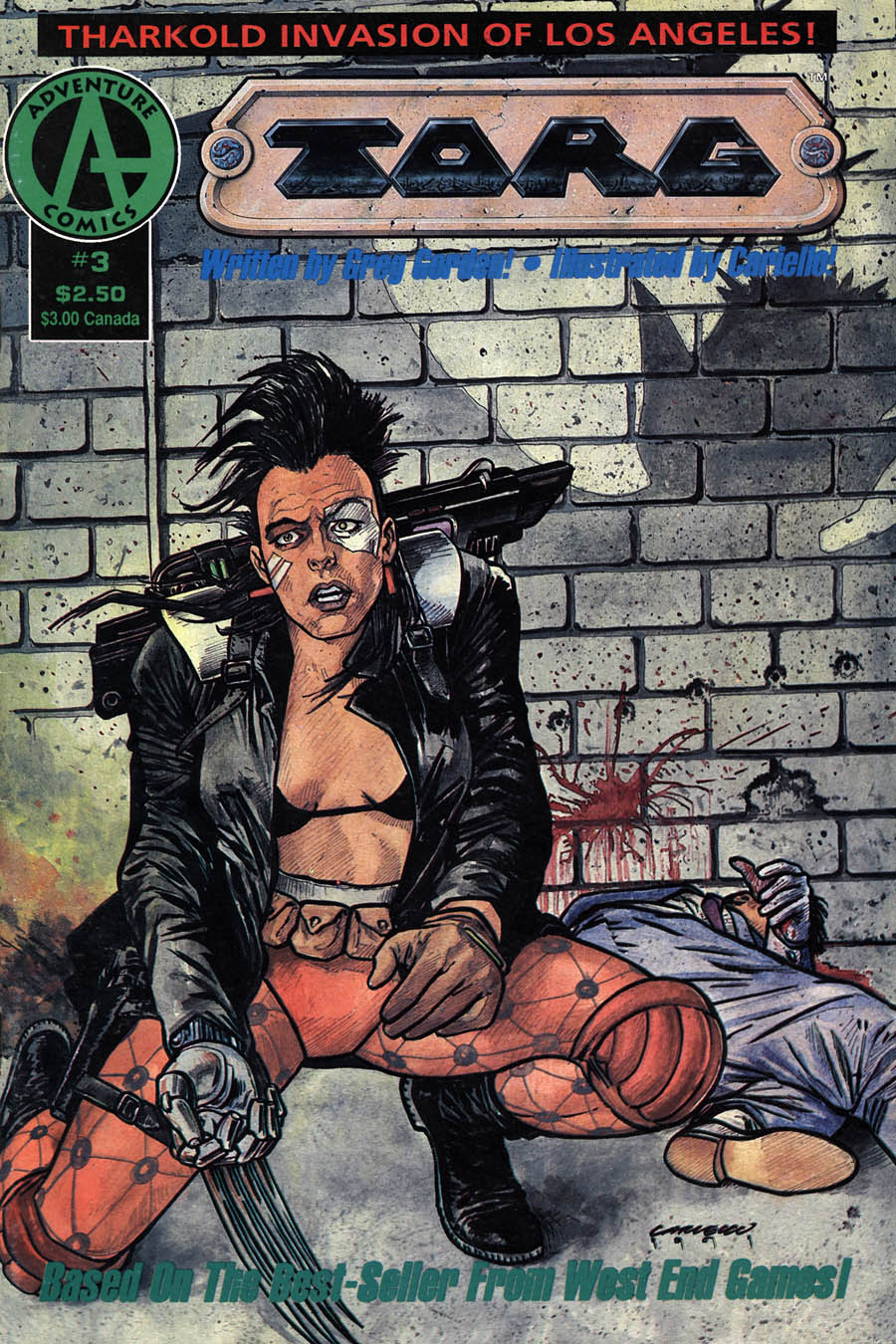
There might be some rose-colored-glasses reminiscing about what I just wrote. But in 1992, and for a few years afterward, this four-issue run was hugely influential in shaping my conception of what Torg was and could be. I reread the original novel trilogy and these comics to prep for a Torg prequel campaign I ran in the early 2000s.
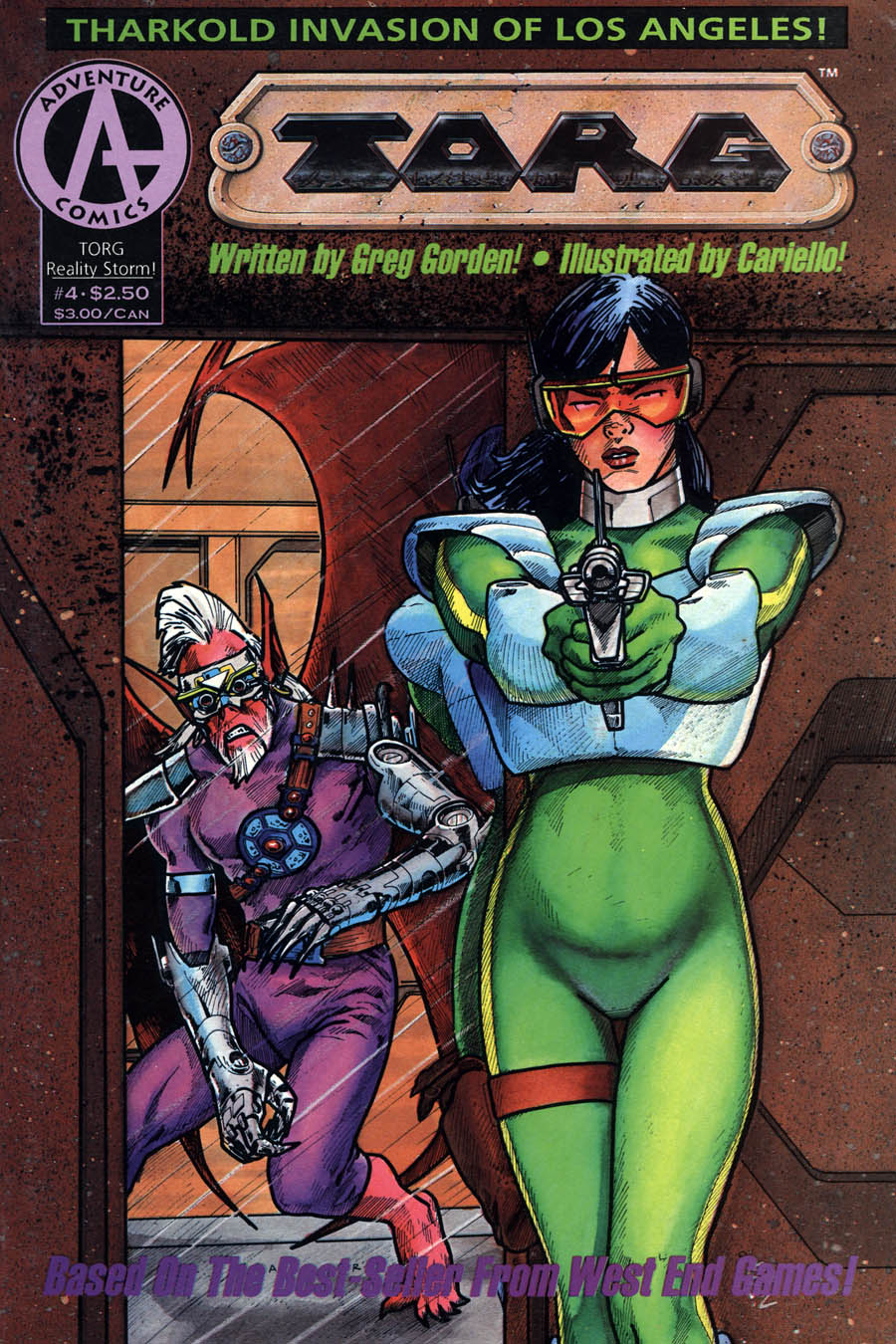
I really wish more TTRPG comic crossovers would use the medium to show what playing the game feels like, rather than just telling a generic story with the game’s branding slapped on the cover.
Have you ever read a tie-in novel or comic that completely changed how you ran a specific RPG?
Categories: Tabletop Gaming Blogs
40 Years a Gamer: The Comic Books That Inspired My Worlds
Back in July 2010, I wrote a post right here on Stargazer’s World about how comic books were a parallel passion of mine and how deeply they influenced my role-playing games. As I’ve been putting together this “40 Years a Gamer” retrospective, I realized I needed to revisit that topic. It’s easy to list movies or literature as the main drivers of fantasy gaming. Still, for me, comic books provided a visual, episodic template that directly translated to how I ran my campaigns. The pacing, the larger-than-life characters, and the shifting status quo were exactly what I wanted to replicate behind the GM screen.
Over the past couple of weeks, I’ve been sharing these inspirations in a series of social media posts on my Facebook Page, Sunglar’s Musings. Now, I want to collect them all here into one definitive list, creating a full picture of the panels and pages that inspired my gaming over the last four decades.
The Fantasy Cornerstones
If we’re talking about the absolute bedrock of my fantasy gaming, three works shaped my love for the genre: Tolkien’s books, the Dragonlance Chronicles, and Elfquest. I discovered Elfquest through the Starblaze Graphics collections, and Wendy and Richard Pini’s work defined my conception of elves, trolls, and faeries (the Preservers in the comics) more than Professor Tolkien ever did. It gave me a template for the exact sort of fantasy story I love to tell: stories about family, love, epic themes, and, most importantly, a narrative that can have closure for some characters. At the same time, new adventurers face new challenges in a living world—a lot like a TTRPG campaign. Chaosium even published an Elfquest TTRPG in the 80s, and they crowfunded a deluxe edition a few years back.
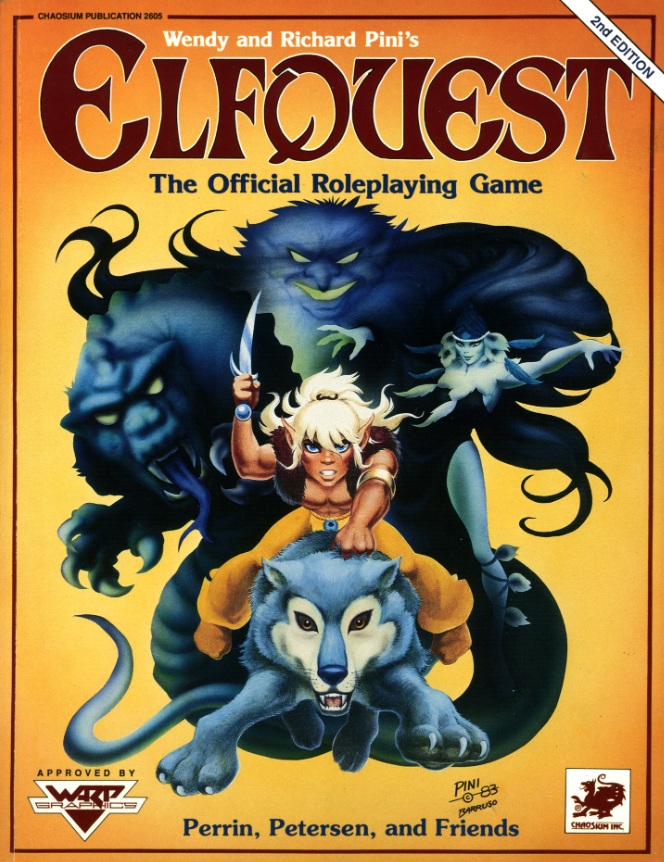
You can read the Elfquest comics online here: https://elfquest.com/reading-room/
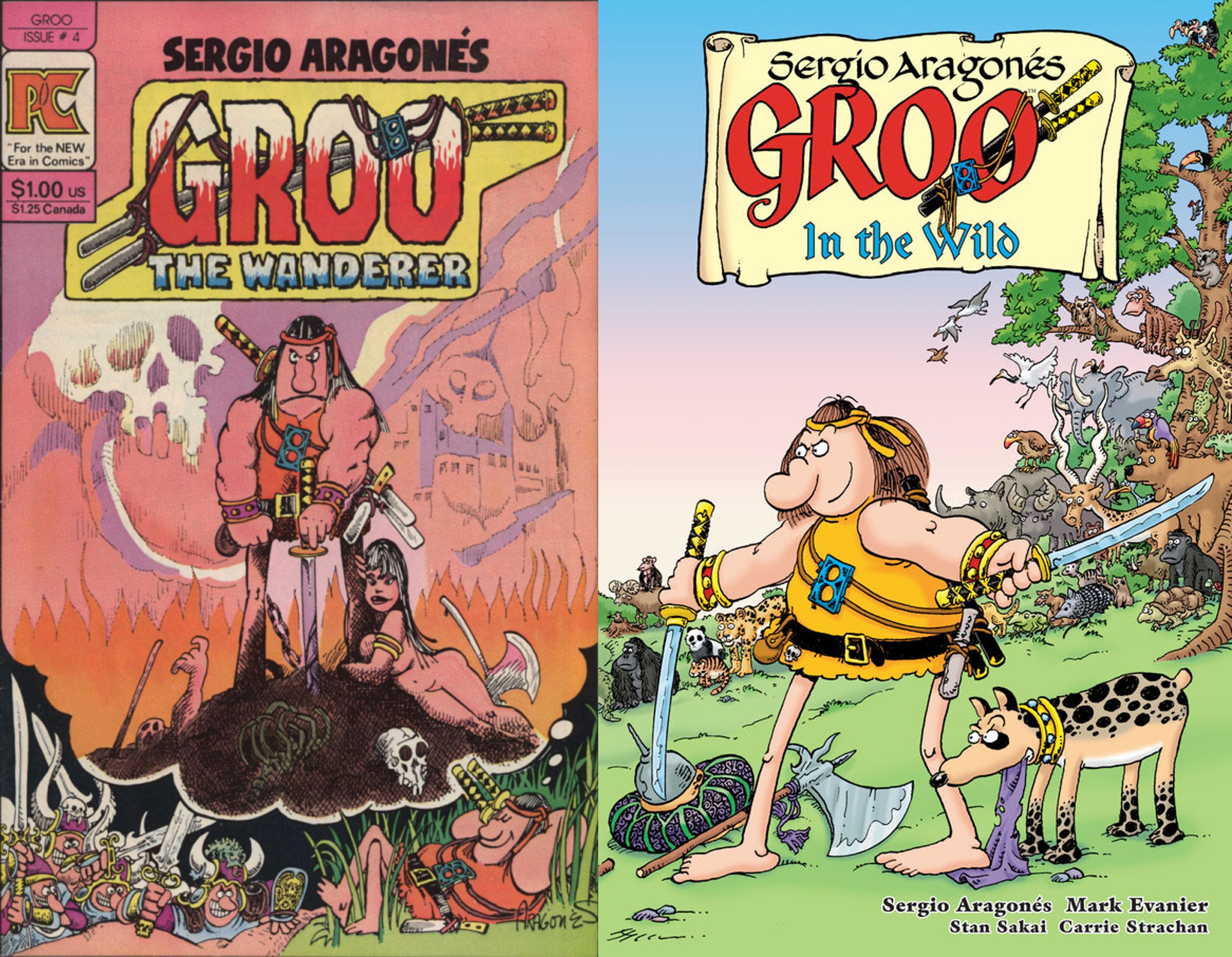
Then there is Groo the Wanderer. This may seem like an odd choice, but hear me out! Groo is a hilarious comic by the legendary Sergio Aragonés that brilliantly pokes fun at fantasy barbarians and countless other genre tropes. I discovered Groo directly from the creator himself while visiting a comic shop in NYC back in the 80s. He heard me speaking Spanish with my mom, called me over to his table in the back of the store, and we started chatting. I left that day with the original eight Pacific Comics issues and have been reading Groo ever since. In high school, I would sit in class and scrawl Groo’s stats in the margins of my notebooks for whatever RPG system I was playing. While I never officially introduced Groo into a campaign, his incredible cast of supporting characters provided ample inspiration for NPCs in all my games—especially The Sage, Chakaal, and Taranto. I did include a lost dog named Rufferto looking for his master in a game once, though! There should always be a little room for fun and absurdity in our fantasy games, and Groo is the perfect reminder of that.
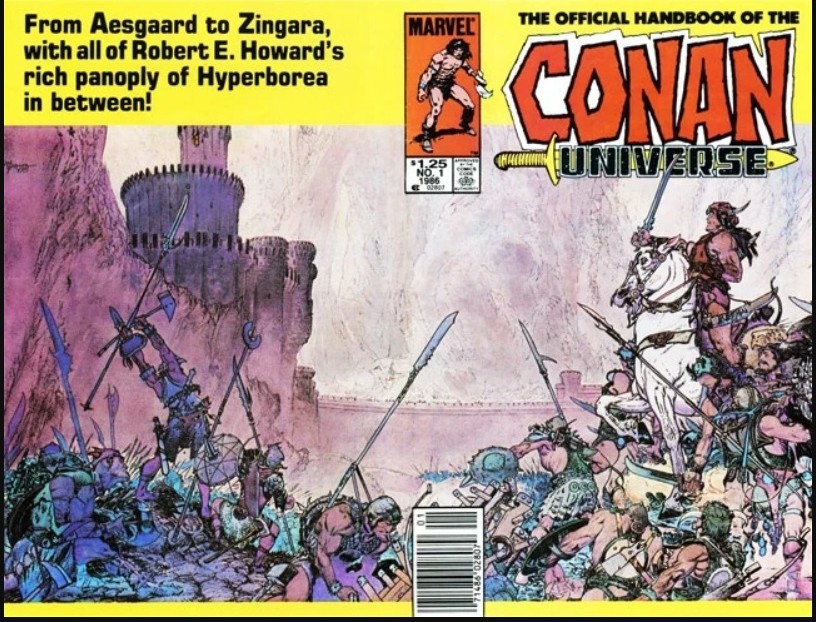
Rounding out my early fantasy influences are Marvel’s adaptations of Robert E. Howard. I first knew Conan through the 1982 movie, which I talked my paternal grandfather and uncle into taking me to see on a summer trip to NYC. But I really got to know the mythos through the comics. In December 1983, I got my first issue, Conan #156. Soon, I was buying Savage Sword of Conan, King Conan (which shaped my ideas of domain-level D&D play), and Red Sonja. Sonja was such a strong lead that I based a major rebel leader NPC on her in my 1993 AD&D 2nd Edition homebrew; her descendants are still part of my campaign world today. And I must mention The Official Handbook of the Conan Universe. I read it repeatedly, and its format influenced how I organize my own campaign materials.
Swords, Sorcery, and the DC Universe
Over at DC, Mike Grell’s The Warlord and Paul Kupperberg and Jan Duusrsema’s Arion, Lord of Atlantis were massive for me.
My mom picked up back-issues of The Warlord on a business trip, along with a huge stack of Rom Spaceknight. I first read the adventures of Skartaris completely out of order. Still, the sword-and-sorcery elements hit so hard that in the summer of 1988, I based a homebrew NPC named Janna directly on Shakira the werecat. Janna became the love interest of Ranger Oliver (whose player was a big Green Arrow fan, particularly The Longbow Hunter, tying it right back to Mike Grell!). She was the daughter of the Cat Lord (remember him in Monster Manual II?). Eventually, she replaced her father and became the mythical ruler of all felines in my campaign.
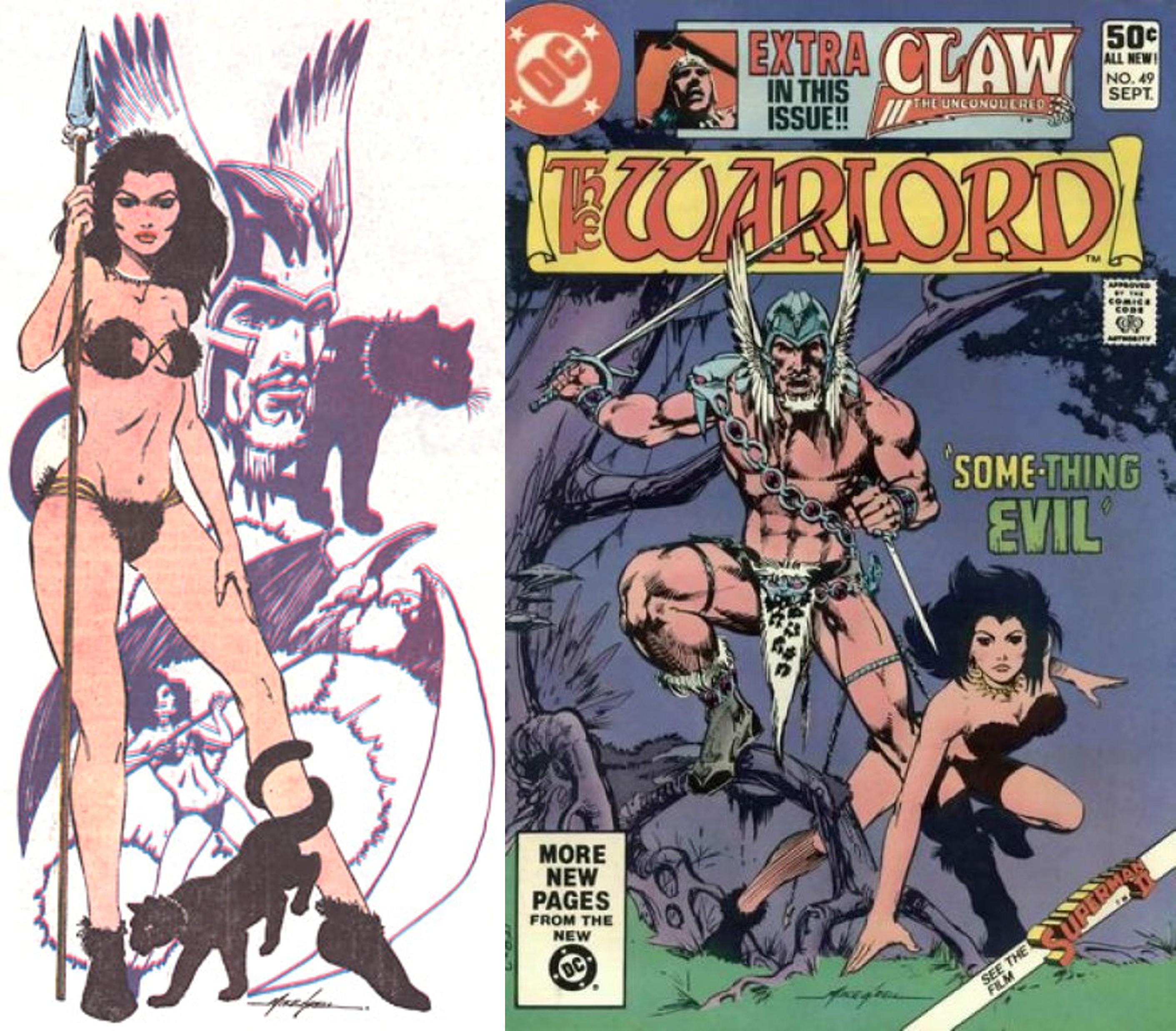
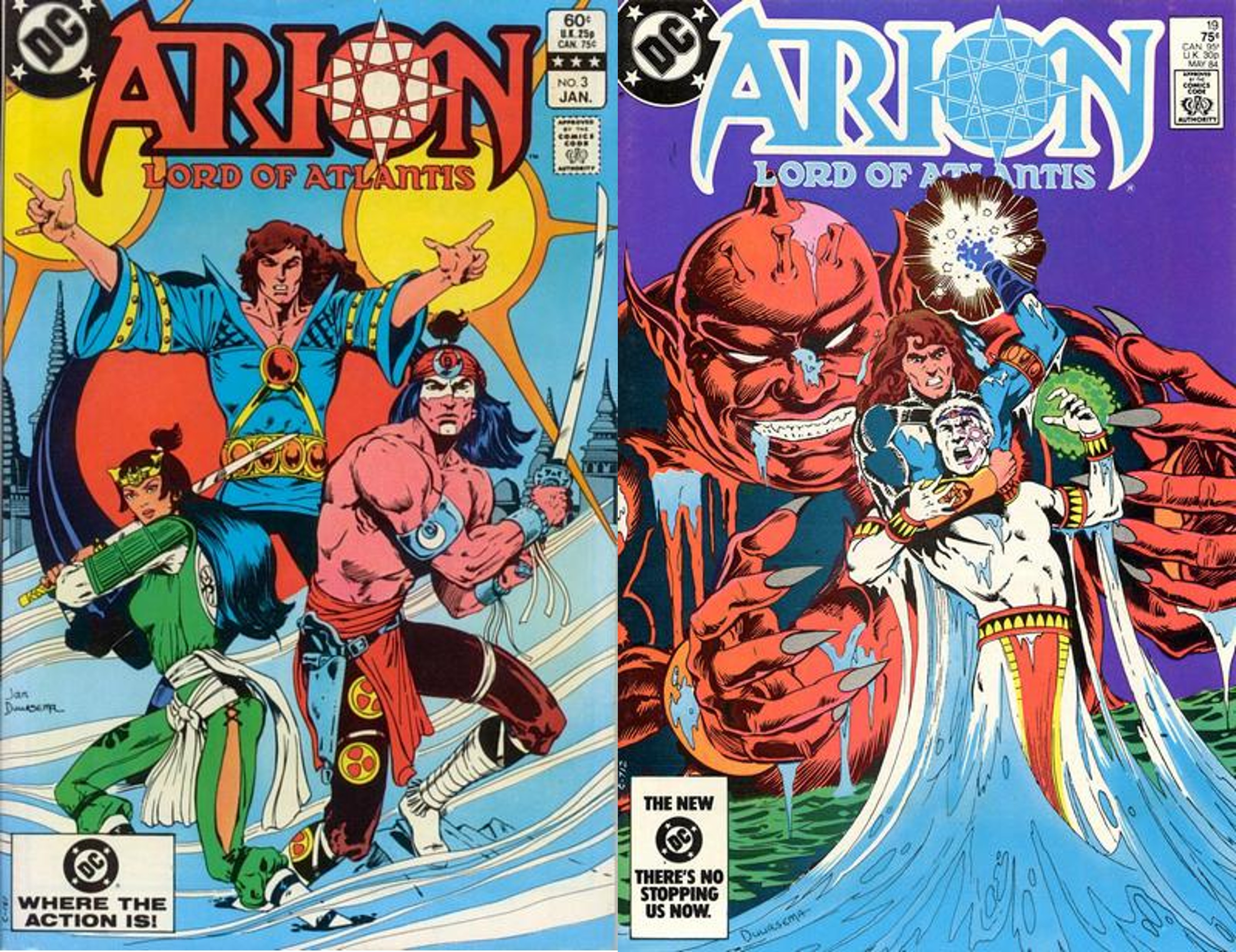
Arion gave me a different perspective. Arion’s battle against the Lords of Chaos to protect Atlantis gave me an immediate, tangible reference point for the Law vs. Chaos alignment conflict in D&D, long before I ever read Michael Moorcock’s Elric, or learned about Poul Anderson’s influence on the development of the alignment system for D&D. I also loved the post-Crisis on Infinite Earths connections to DC lore, the Lords Chaos and Order in the DC universe. Then there is the fact that Arion’s co-creator, Jan Duursema, illustrated the original AD&D comic. Another gaming connection!
Sci-Fi, Aliens, and the Apocalypse
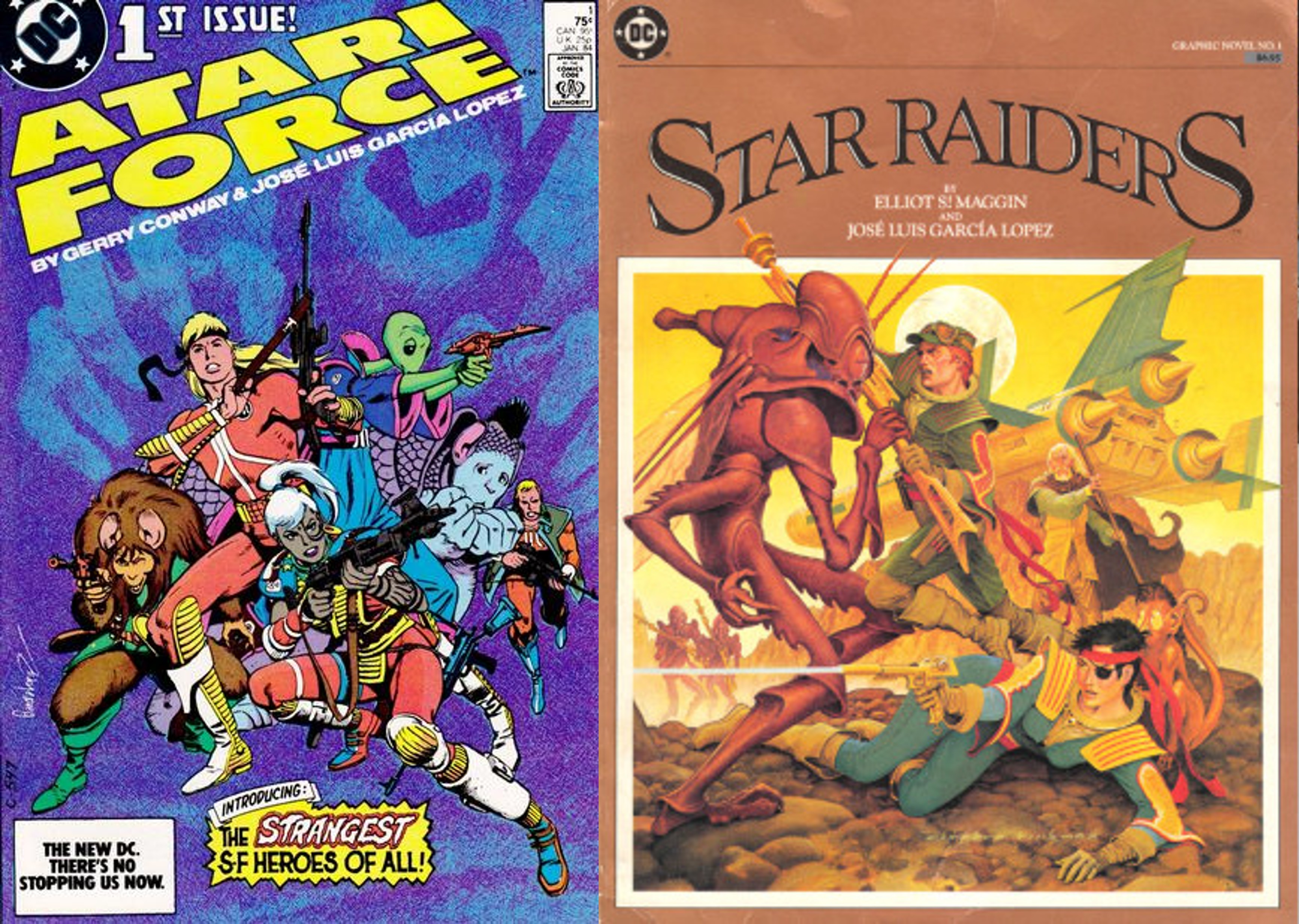
My sci-fi gaming drew heavily from a few specific series. First up is Atari Force. I discovered the universe in the mini comics tucked inside Atari cartridges. Still, it was the comic book series and graphic novel illustrated by José Luis García-López that truly inspired me. Many of the comic’s characters became NPCs in my high school Star Frontiers campaign and later campaigns. Some elements from the comics and the visual aesthetics still influence and inform my sci-fi games, including the Wanderers of the Outlands and the Stars Without Number campaign.
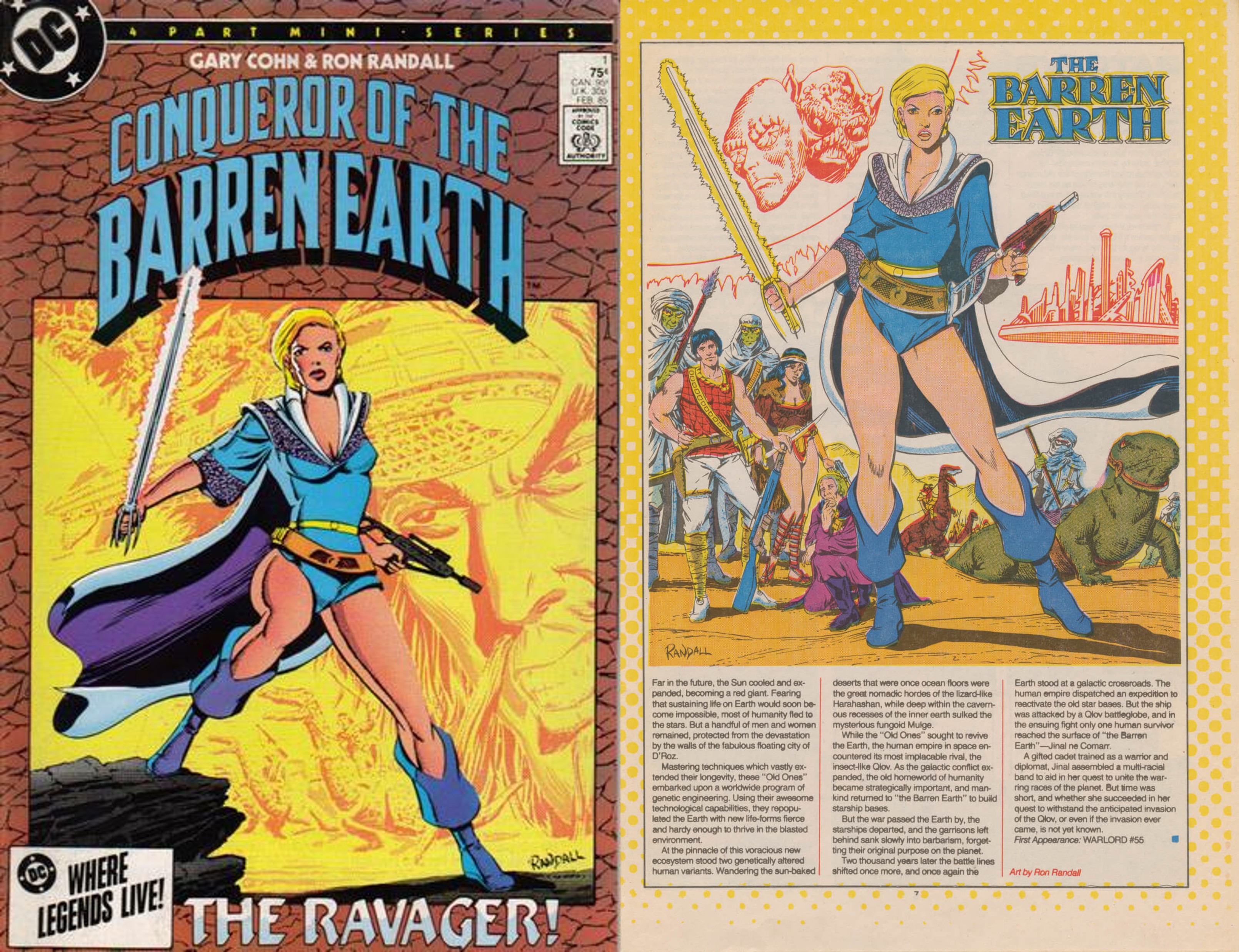
Conqueror of the Barren Earth started as a backup feature in The Warlord before getting its own four-issue mini-series. Eleven-year-old me loved this post-apocalyptic mash-up of sci-fi and fantasy. With its strong female lead, Jinal Ne’ Comarr, it became a huge reference point for me when I eventually discovered games like Gamma World and Rifts.
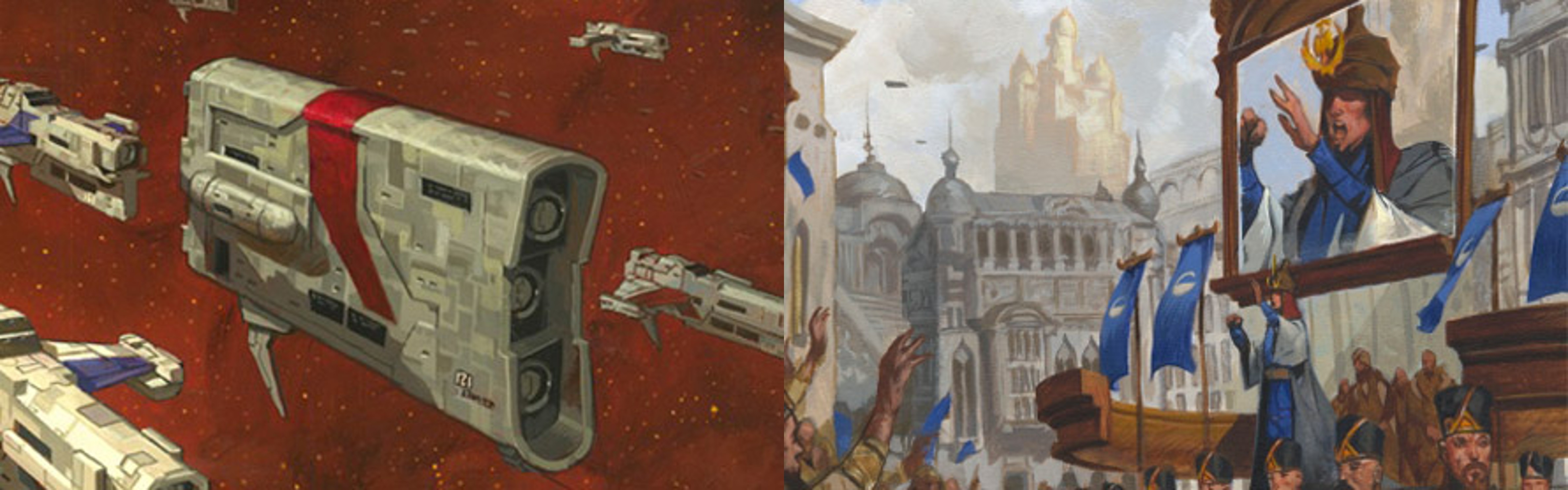
For the Alternity and dX campaigns I ran in the late 1990s and early 2000s, Christopher Moeller’s beautifully illustrated Iron Empires series was hugely influential. Only the first two books, Iron Empires: Faith Conquers and Sheva’s War, were out when I ran those games, but I now own all three, including volume 3, Void. There is even a TTRPG for the setting called Burning Empires, based on the Burning Wheel system. I once walked all the way across Manhattan to get a copy of it at The Complete Strategist, but I still haven’t played it!
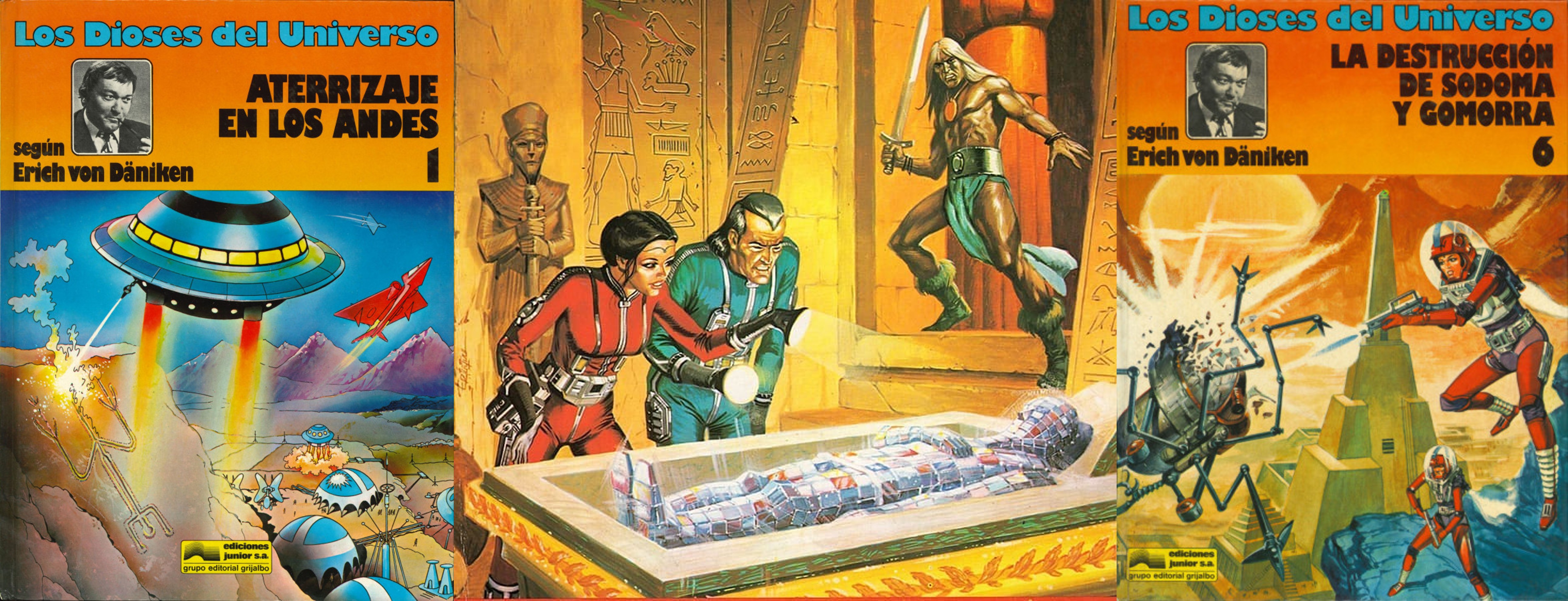
On the weirder side of the spectrum, I devoured the Spanish editions of Gods from Outer Space (Los Dioses del Universo) when I was nine. Let’s be clear: the book these comics are based on, The Chariots of the Gods, is unscientific, Eurocentric hogwash that minimizes the achievements of other cultures. But as a kid, I knew nothing about that. They were just wild ideas that fascinated me and informed my early TTRPG worldbuilding. Today, I sometimes go back to those concepts at the table, but those meddlesome creatures from beyond the world are now cast firmly as oppressors and antagonists.
Superheroes, Cyberpunk, and Pulp Action
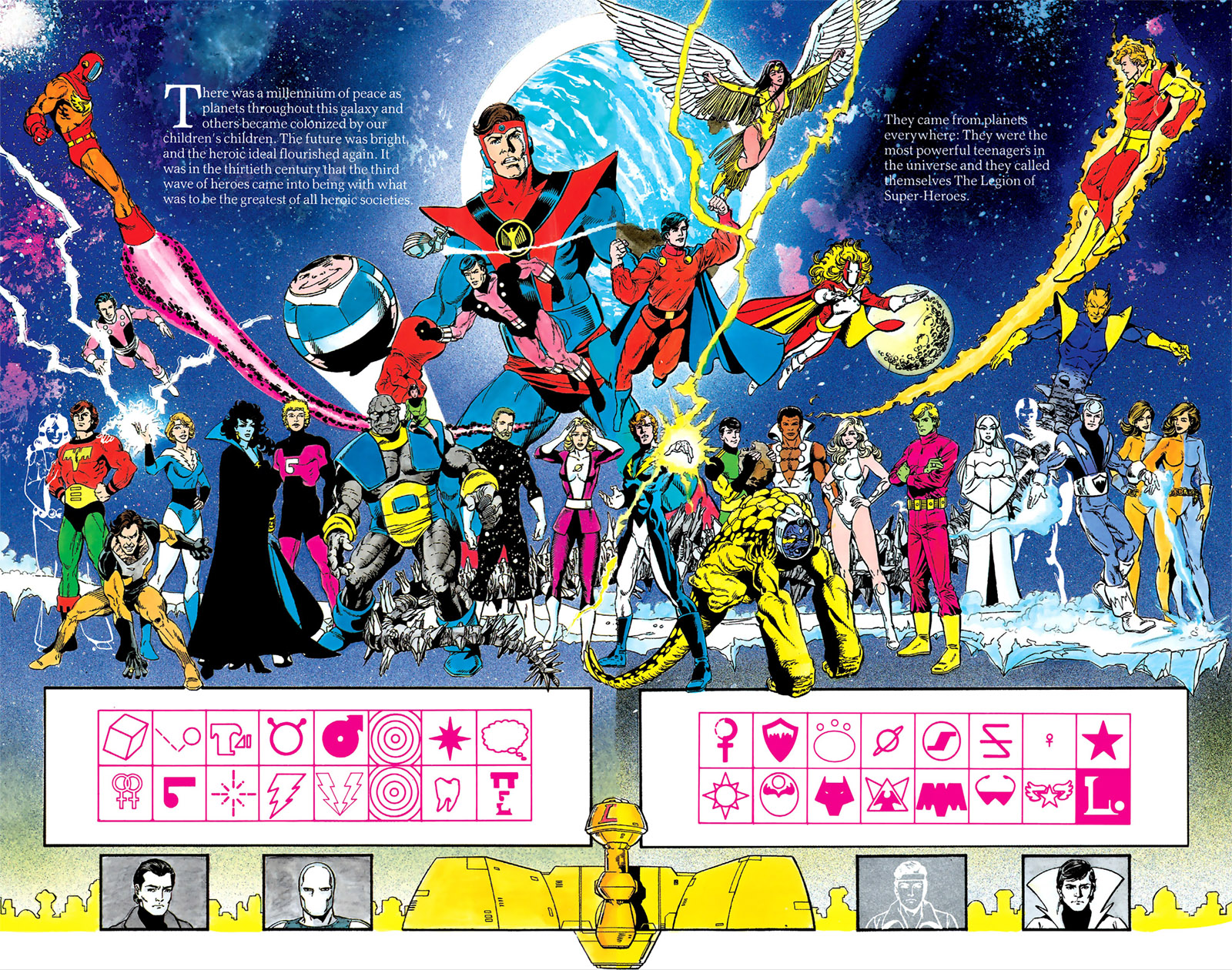
Regardless of the genre you are playing, your adventuring party is essentially a superhero team. Each member has their roles and powers, and the dynamics between them set the tone for the game. For me, one team in comics exemplifies that perfectly: the Legion of Super-Heroes. I read the Legion for years; the old stories in DC digests in the early 80s, the Great Darkness Saga, and the 1994 reboot. The Legion taught me, as a GM, how to handle the varied dynamics of a vast, diverse cast, proving that interpersonal relationships are what actually make a game interesting. The Five Years Later storyline also taught me not to fear tearing down a campaign and rebuilding it into something different when your stories need a reboot.
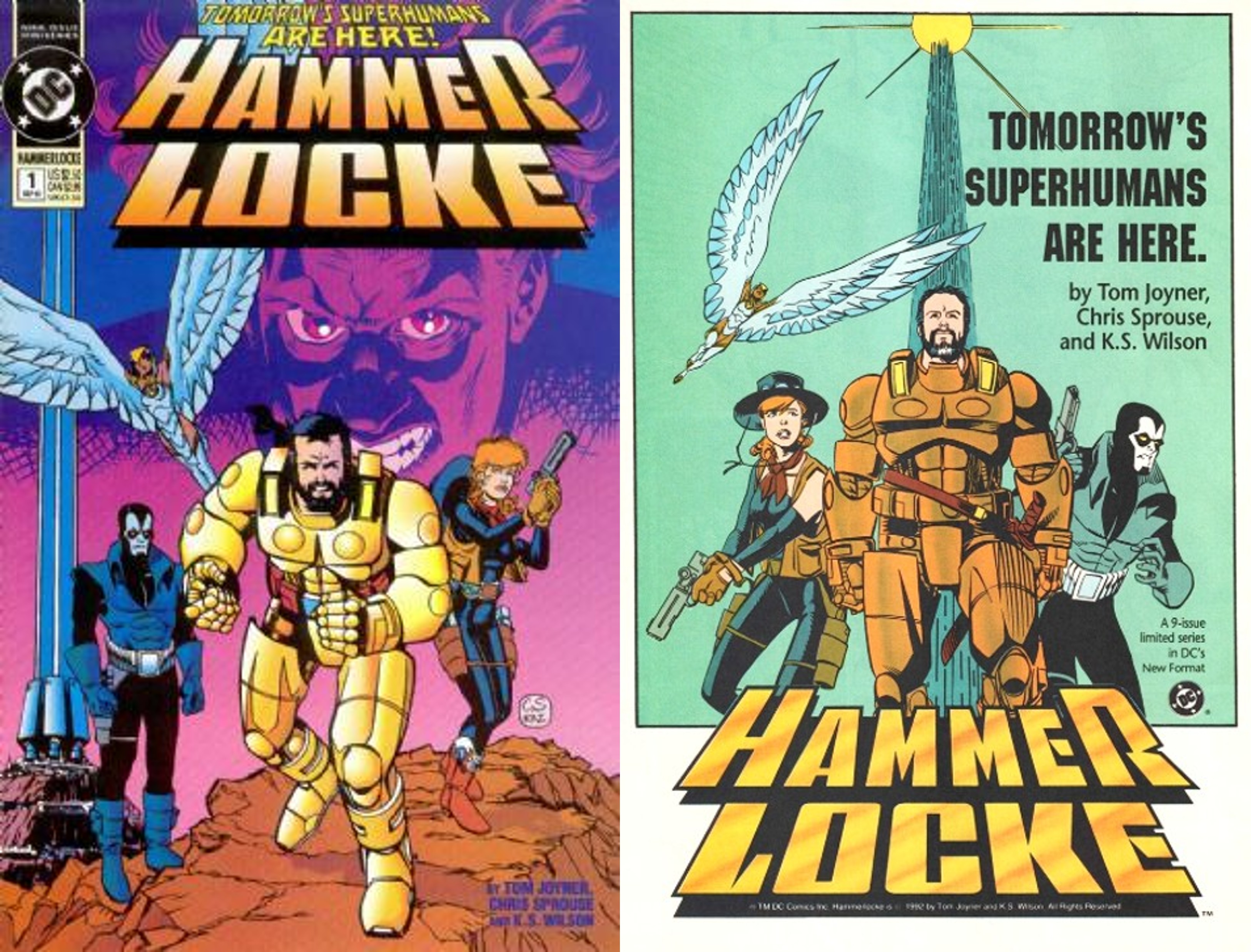
Another huge superhero influence was Hammerlocke, a 1992-1993 nine-issue series drawn by Chris Sprouse. It was a brilliant mash-up of low-power superheroes, cyberpunk sci-fi, espionage, and mystery centered on a space elevator and cyborg Archer Locke. It showed how to run superheroes in a completely different setting from the four-color mainstream adventures and directly influenced how I construct those sorts of stories.
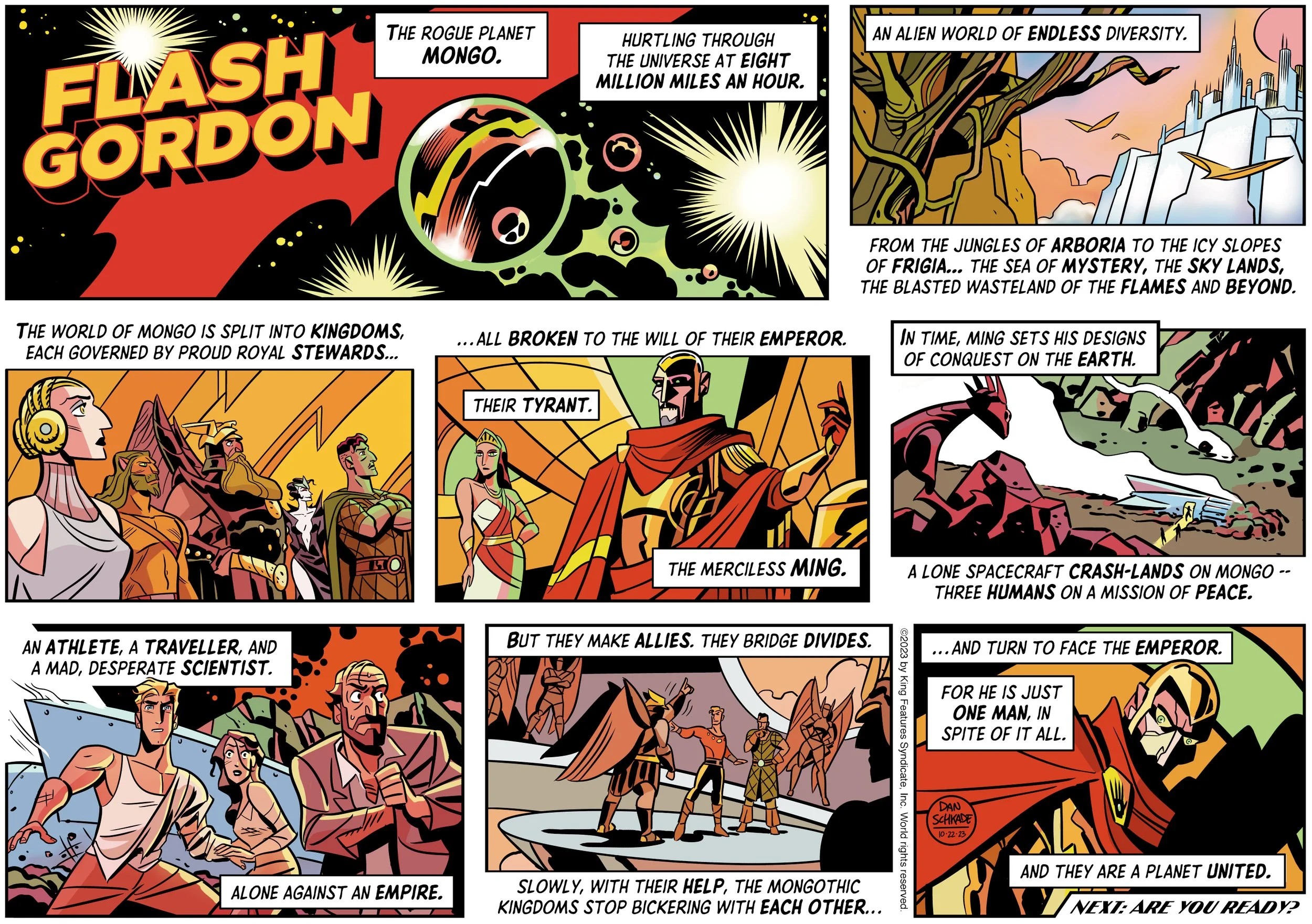
Finally, let me tell you about an old character whose current adventures are my favorite comic being produced today: Flash Gordon. For years, Dan Jurgens’ DC mini-series adaptation (where Flash was a washed-out basketball player) was my benchmark for a modern version of the character. But then came Dan Schkade. As the creator of the current daily strip, he tells refreshing stories that respect and build on the classic mythology while making it feel completely new. He inspires my gaming by showing how to create fresh content that builds naturally on the work that came before it. Reading his strip makes me want to run games based on pulp characters, a reimagined Defenders of the Earth, and it really makes me want to finally run that Mystara game I’ve always dreamed of playing.
Looking back, these comics taught me pacing, worldbuilding, and how to create larger-than-life situations that still felt grounded in character relationships.
What comic books shaped your time at the table? Let me know in the comments.
Categories: Tabletop Gaming Blogs
An Interview with Eliana Falcón-Dvorsky
As part of the excitement for the upcoming Puerto Rico Comic Con, which I posted about yesterday, and all the gaming goodness that is happening there, I learned of a project for a system-agnostic TTRPG supplement being created by a very talented local artist in Puerto Rico, Eliana Falcón-Dvorsky, who posted about the project in the Puerto Rico Role Players Discord Server, and I was immediately curious. Eliana was tremendously kind, replying to my questions, sharing details about art and the upcoming gaming project, and gracefully answering the interview I am sharing with you below.
Who is Eliana Falcón-Dvorsky?
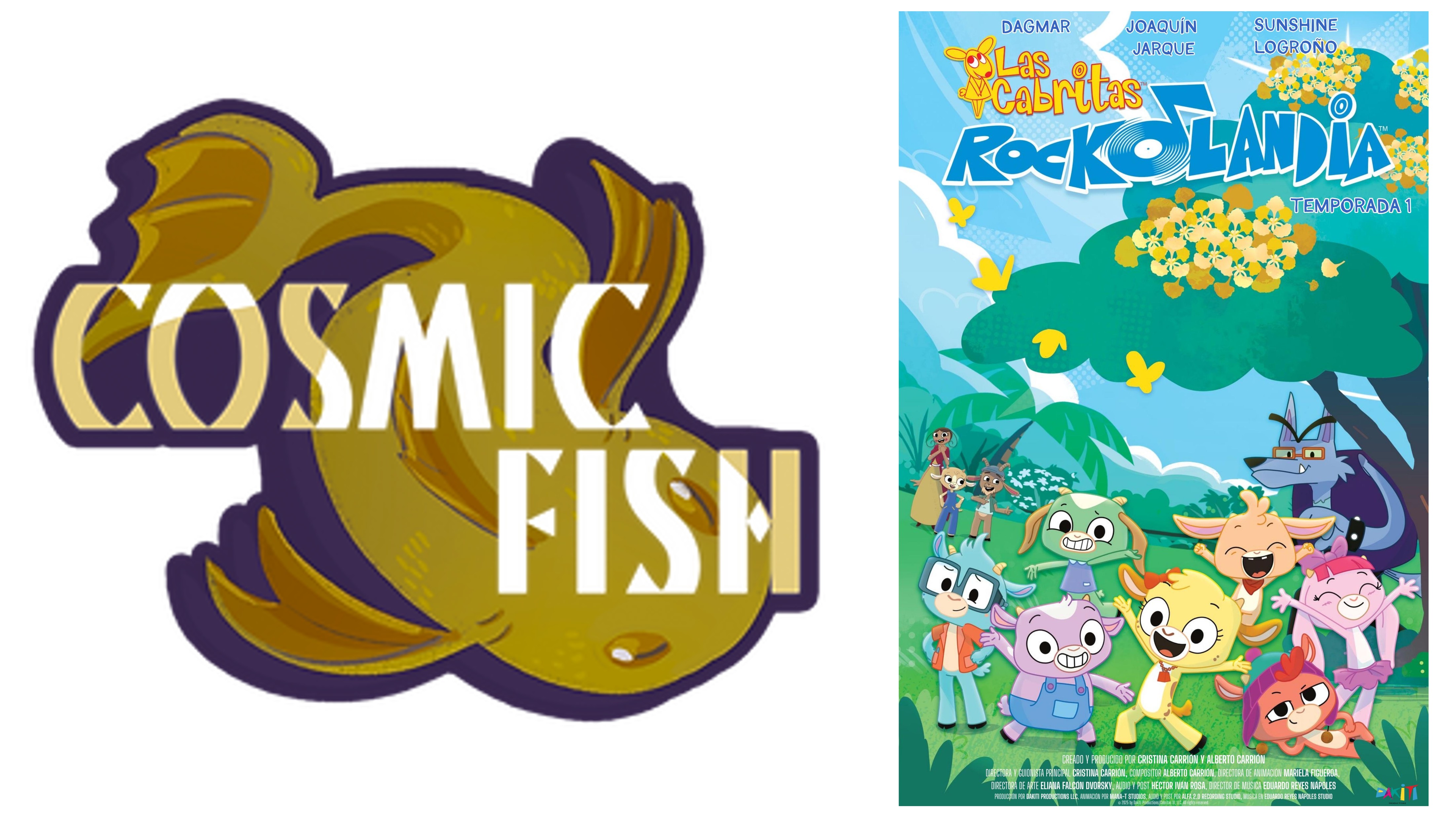
I am a writer and artist born, raised, and living in Puerto Rico. I eat, breathe, and obsessively think about storytelling and character writing, frankly. My main publication work is my own webcomic, Cosmic Fish, which I write and draw. I’ve also worked as a colorist and editor for Somos Arte’s La Borinqueña, and as an art director, storyboard artist, and character designer for Dakiti Productions’ animated adaptation of Rockolandia. I’m also a huge anthropology, gardening, and cooking nerd, so it’s not all art, haha!
How would you describe your art?
I tend to have two distinct styles, and some people know me either for one or the other, rarely both. I’m usually known in larger circles for my “cute art” and the application of a lot of Puerto Rican folklore and criticism of our sociopolitical situations in my work. For my closer social circle, they know me as a bit of a darker writer and artist, constantly exploring complicated themes with as much nuance and empathy as I can. So, there’s an interesting dichotomy in my work that I think tends to cross over once in a while due to overlapping themes or design choices, but only now am I a little brave enough to finally start showing all sides of my work.
How did you discover tabletop role-playing games?
I used to RP a lot with friends back in the forum days and early days of Skype and Discord, so the transition has been pretty natural, honestly. After Hurricane Maria, I was looking for a bit of a distraction while everything in real life was descending into chaos. Back then, I lived in a rural area in PR. We didn’t have running water for 5 months, electricity for 8, and I’d be driving over debris, flooded bridges, and broken roads that were ready to collapse for about a year. I lost a few family members, either directly or indirectly, in the aftermath of the storm. Tabletop suddenly became an interesting and welcoming hobby I could play with others in person, without needing electricity or being online. The group didn’t work out, sadly, but it opened the door for me to play different games and plenty of homebrew systems with my online friends once I managed to get back online.
What games do you like to play?
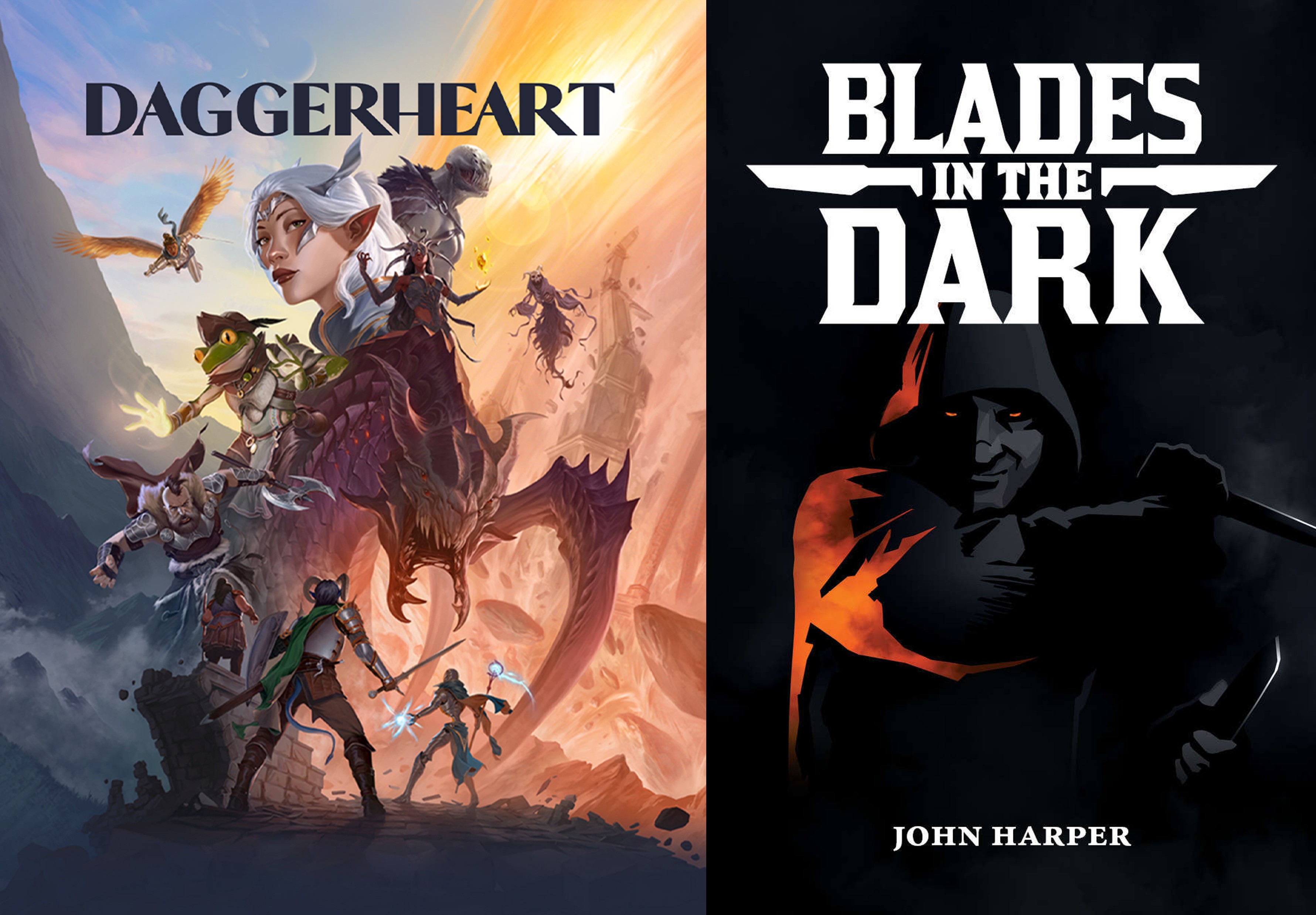
I’m definitely a very RP-oriented kind of player because of my past, and I focus a lot on balancing player-dynamics in the groups I’m in. In my DMing, I tend to prioritize the player’s narrative goals and themes, finding ways to challenge them as writers (all of us are writers and artists) or to help them explore something they’ve never had a chance to before. I’m a storyteller first, but I always try to find a group that looks for a nice balance of play/combat systems and RP to be able to challenge myself. For a long time, I played homebrew systems designed by a friend of mine from Australia. And for a while, it was very liberating because of the diverse classes my friend’s system focused on, which I felt many mainstream systems lacked. It was after that we began expanding to other systems like Daggerheart and Blades in the Dark. I tried getting into Triangle Agency, but it didn’t click. I’ve tried getting back to D&D, but Baldur’s Gate 3 is currently the only way I’ve been able to play it since 2017.
What are you currently playing?
I’ve been playing the same weekly Blades in the Dark campaign for almost 2 years now. We play it on Discord, so we try to get our RP and character moments in written RP during the week and then play a heist or session on the weekend. It’s worked for the most part, but admittedly, we’re very invested in the drama hahaha. It’s been really fun, and it’s been fantastic to work with a team that goes over lines and veils and other table etiquette that I wish were a bit more common locally. I think for a game like BitD, communication and these tools are very important.
What would you like to play?
I think after two years of Blades in the Dark, I’d like to explore brighter settings, not necessarily simple, but I could go for a theme set in a forest or someplace more diverse. I’d like to try a longer Daggerheart campaign or The Quiet Year. I’d love to play Eat the Reich, which I got during a Kickstarter campaign, but I haven’t had the chance yet. If not, my girlfriend is the one with a long list of different systems and games, so I tend to follow whatever she’s vibing with.
What are you working on (that you can tell us about)?
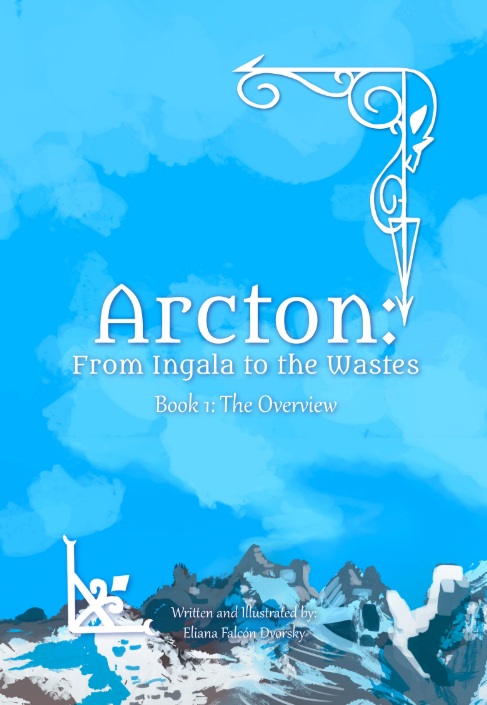
Right now, I’m juggling a few personal projects, trying to see where I can fit their output. I’d love to go back to Cosmic Fish even if it’s not as consistent as I could before; I have a horror comic set in Puerto Rico that I’d love to start, a children’s book that’s been in the over for a while now, but I also really want to expand my first TTRPG worldbuilding module, Arcton: From Ingala to the Wastes. So, I have a lot of diverse projects in the works!
Tell me about your project, Arcton: From Ingala to the Wastes? What is it about?
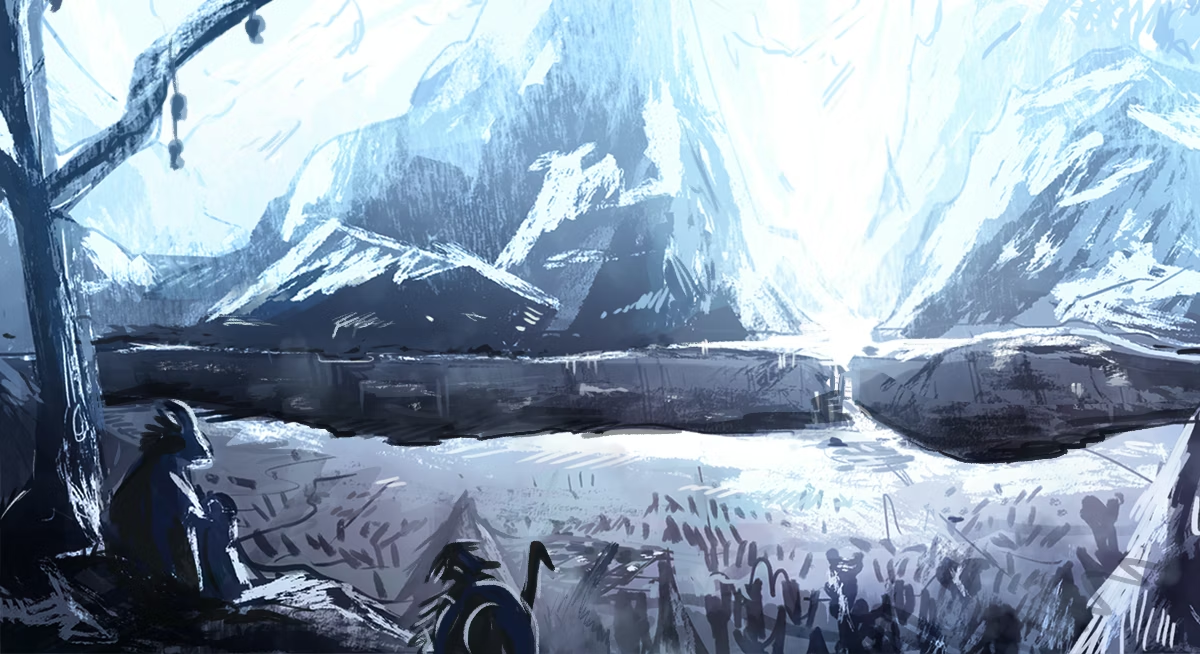
Arcton has been a setting I’ve been using on and off for about 7 years or so. It started as a response to how I would fix WotC’s Thay and a few other issues I have with the worldbuilding of that setting as a whole, and it slowly began evolving into its own thing. Because the system it was built on was one of the discontinued homebrew designs made by my friend from Australia, the book is currently more of a system-agnostic worldbuilding module that offers tools and inspiration rather than concrete stats.
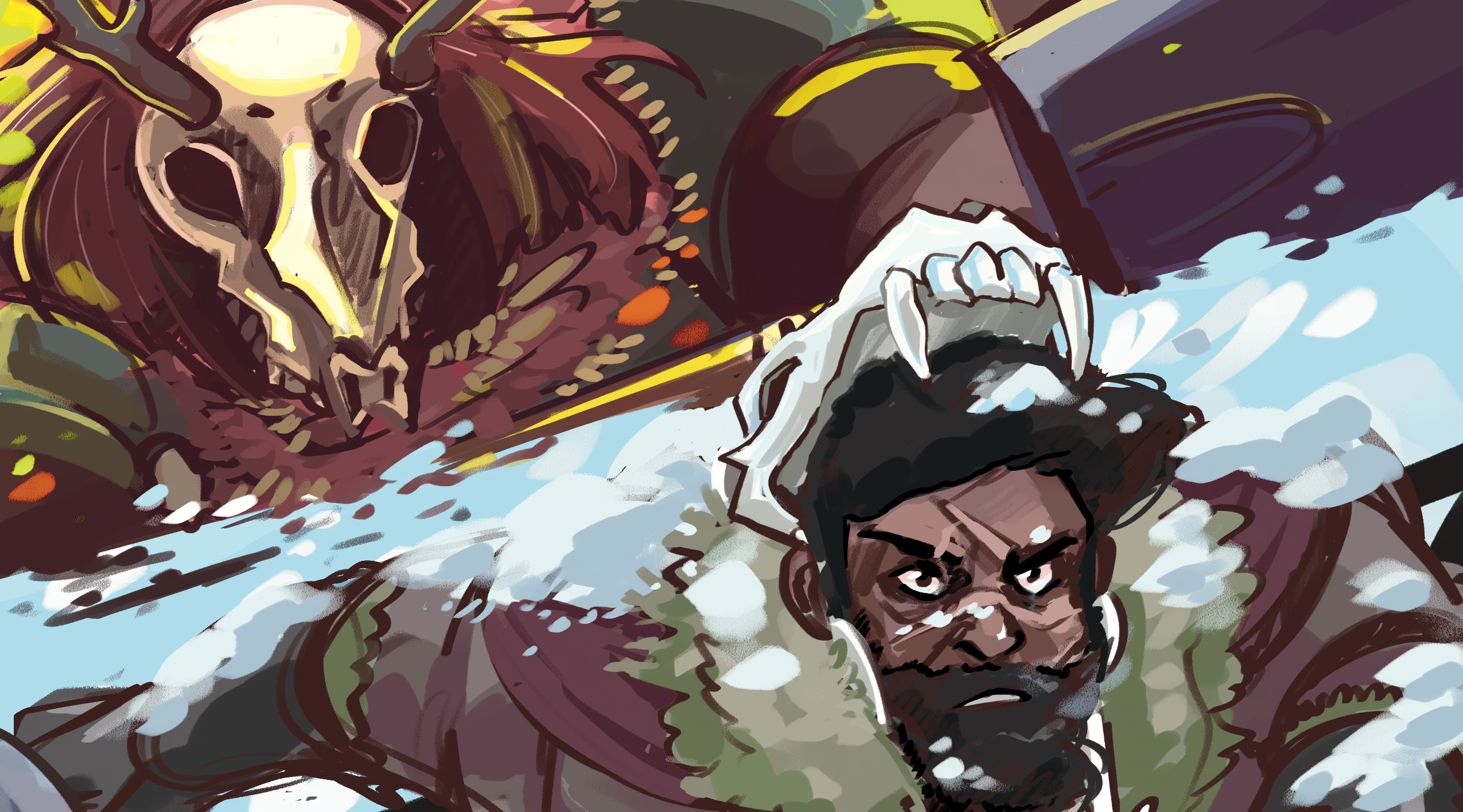
Arcton is a northern nation founded by eight liches after they succeeded in their revolution and “ascended”. Each lich runs a region and uses the Officers (or living servants) to gather citizens, bring them back as enslaved undead, and force them to work in mines or their armies. However, the story is about the citizens, about the history, the context, and what role YOU can play in it.
The first book is an overview that explores worldbuilding, history, flora, fauna, and some NPCs, and offers the necessary tools to inspire DMs and players in their campaigns. With the rise and normalization of thoughtless and effortless AI slop, I’m really hoping this book inspires people to read and to add their own take to my work, create their own interpretation, and try to build something of their own without a machine, no better than an undead, to do the thinking and working for them. I think anyone can be a storyteller, and TTRPG’s popularity is proof of it. I want more human stories! The book is a tool by creatives for creatives, and it really tries to cover as much anthropological background and art as I can in 106 pages.
The goal is to then release supplementary books covering 2-3 regions per volume. These will offer maps, details, biographies, lists of encounters and items, NPCs, story hooks, and enemies for each region. Some might change genres, from a government conspiracy drama to a murder mystery set in a nomadic town, to even an adventure story about finding a library of forbidden knowledge, adding more inspiration to a craft sparked by creativity.
I understand you will have it available at the Puerto Rico Comic Con. Where can people find you there?
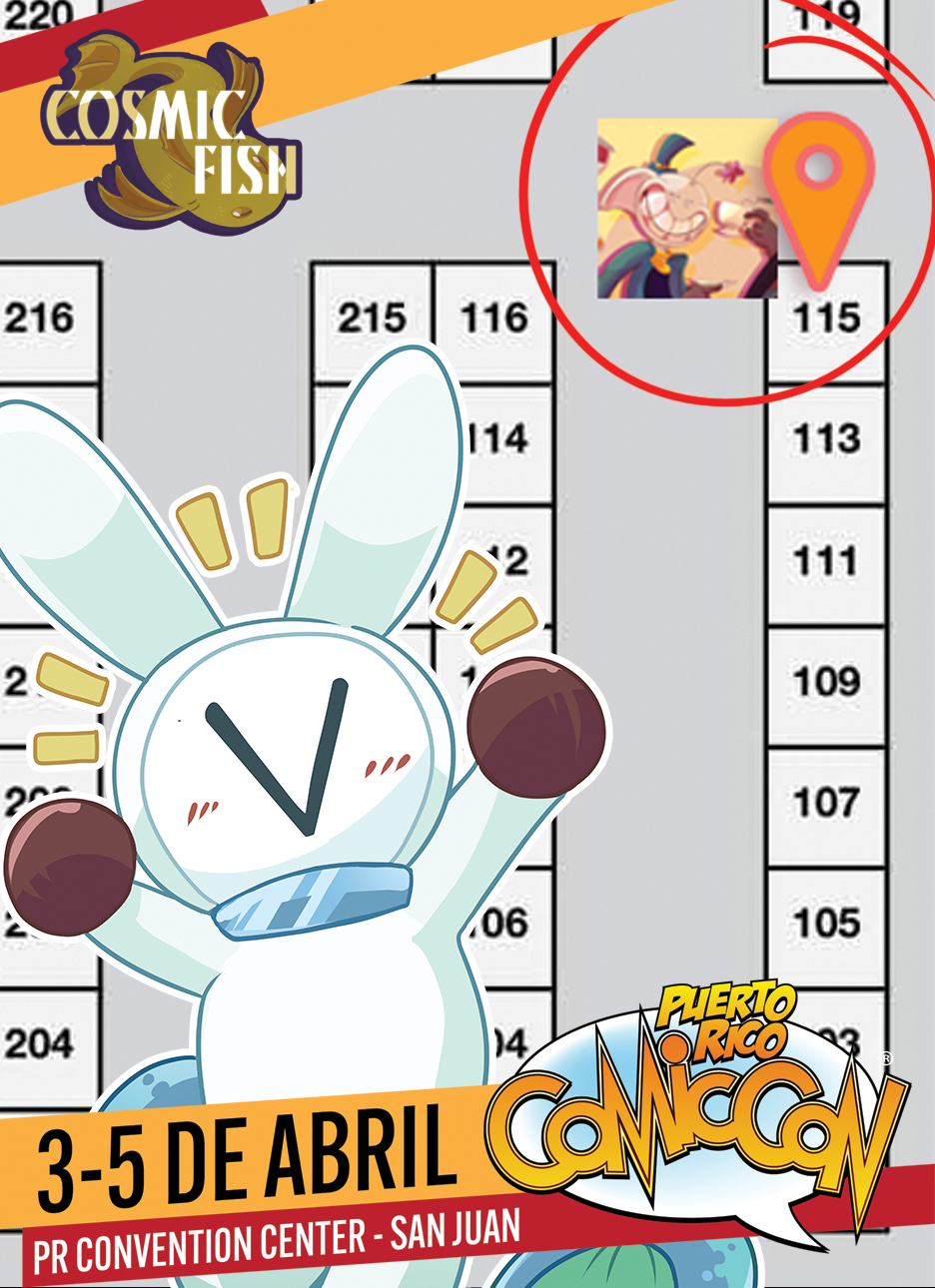
YES! My main focus is still my comic, Cosmic Fish, but I will be at 115-E in artist alley, at the rightmost end of the hallway. I’ll also be selling plenty of TTRPG stickers and goodies. The comic my girlfriend and I work on, named Weekend at Benny’s, will also be available, and it takes place near Arcton.
What other ways can people get Arcton: From Ingala to the Wastes, and support your other projects?
From May 7th to May 28th, Arcton: From Ingala to the Wastes will be available on Backerkit as part of Pockettopia. The goal is to help the book become widely accessible for a limited time. I’d also like to try to unlock bonus items for you to use in games, including character/NPC and item cards, setting prompts, tables, and hopefully help fund the next book that covers Ingala and Fraye, my recommended suggestions for first-time explorers.
Thank you, Eliana, for participating in this interview. If you are in Puerto Rico, be sure to visit her at PRCC; if not, be on the lookout for her Backerkit project. You can follow it via this link: Arcton: From Ingala to the Wastes.
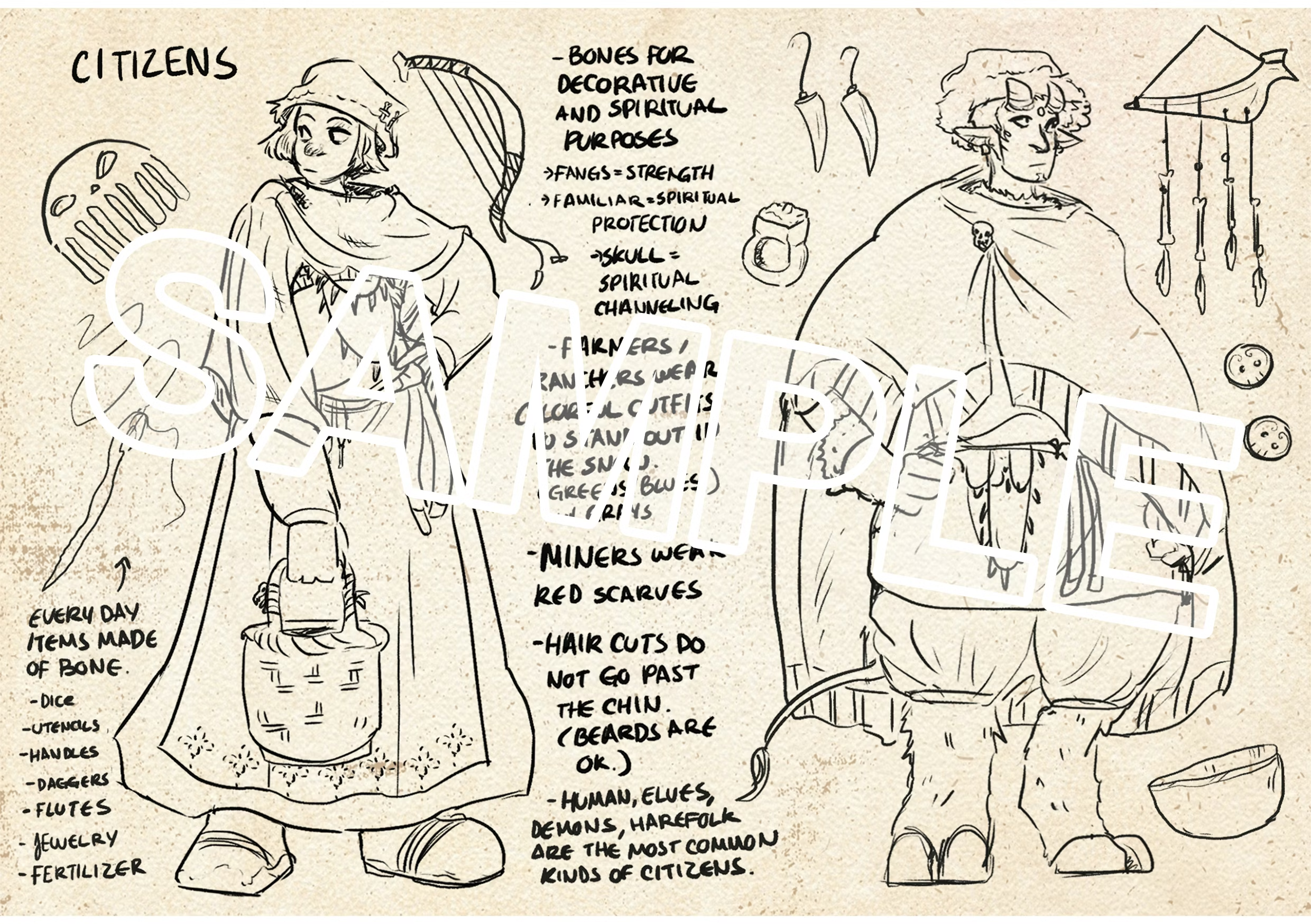
As a bonus, when you follow the project, you get access to a 19-page preview of the material. I am blown away by these 19 pages alone. I used some art from the Backerkit preview page in the post, but there is more art in the preview. I love the heraldry, the symbols, the full-page art. Beautiful! The setting seems very imaginative, and I really want to learn more. Make sure you check it out.
Categories: Tabletop Gaming Blogs
Gaming in Puerto Rico – Puerto Rico Comic Con 2026
There’s going to be a massive tabletop presence at the Puerto Rico Comic Con (PRCC) this year, happening from April 3rd to the 5th at the Puerto Rico Convention Center.
It figures this is the year I won’t be able to make it! We have a family vacation to a beach house planned for that weekend, and my son has been looking forward to it for weeks. Fatherhood absolutely trumps all other plans. But just because I won’t be there doesn’t mean the rest of the local gaming community shouldn’t go all out, or that folks off the island can’t support the creators showing up.
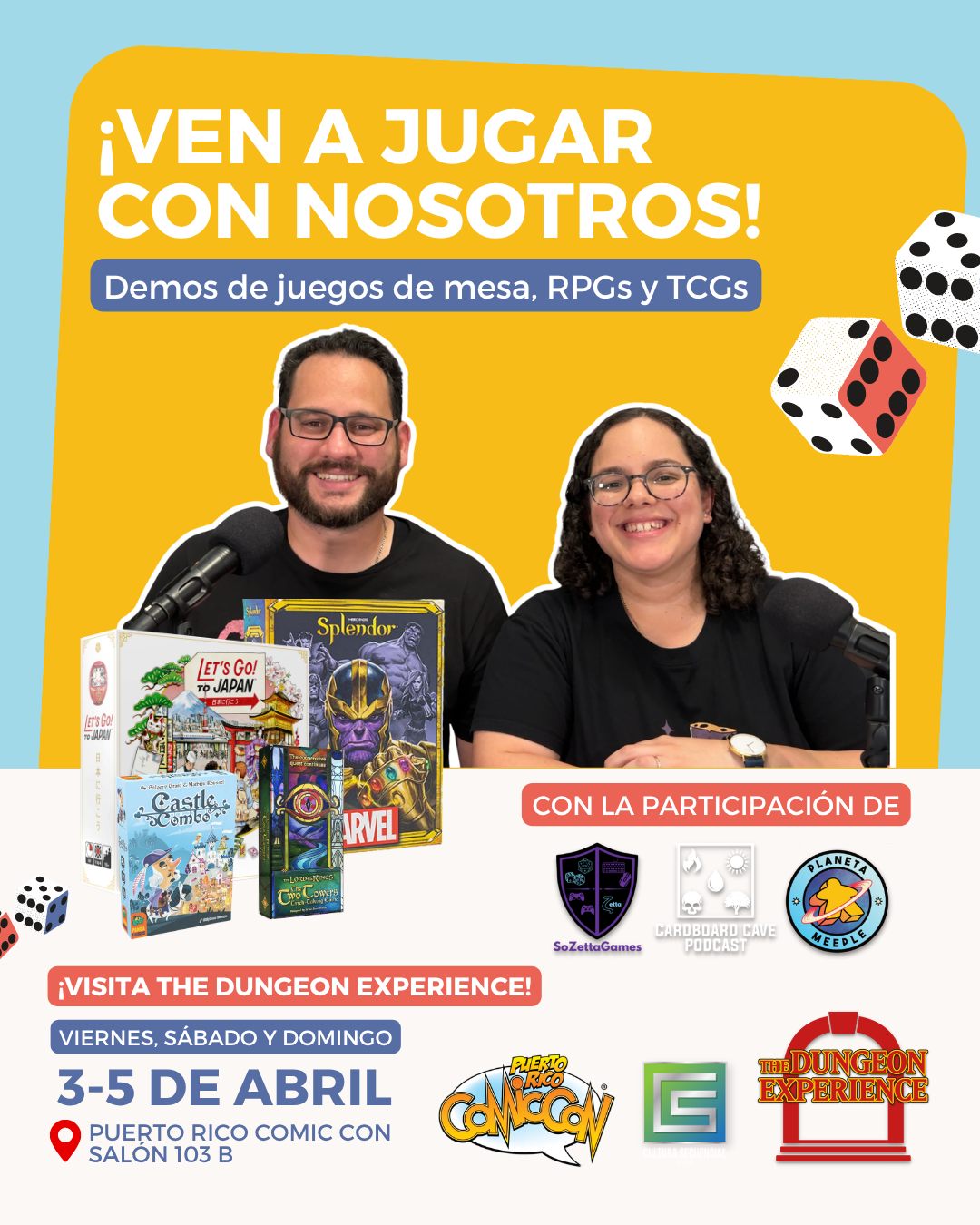
Running Friday through Sunday, PRCC is hosting a dedicated tabletop event called the Dungeon Experience. It’s going to feature trading card games, board games, TTRPG demos, and more. Planeta Meeple and the Cardboard Cave Podcast are both participating. The folks at Planeta Meeple aren’t just acquaintances; they’re good friends who do a ton of active work to promote and support the tabletop community here in Puerto Rico. If you are going to the con, please visit and support them. If you aren’t going, give their socials a follow.
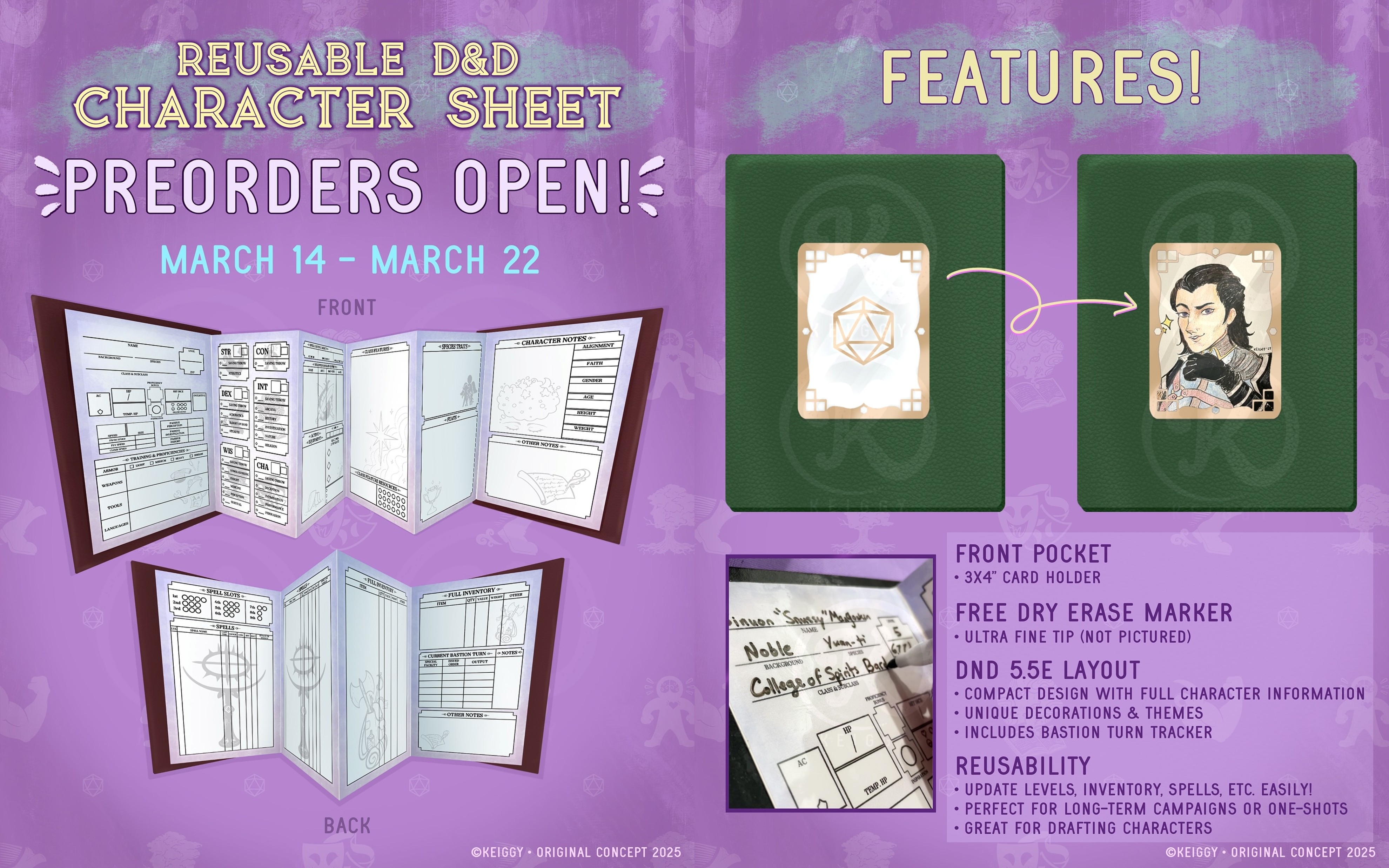
You should also look out for Keiggy, a local artist and member of Dungeons & Dragons Puerto Rico. She will be over at table 232 in Artist Alley, selling her handmade, reusable D&D character sheets and doing portrait commissions. Check out her work!

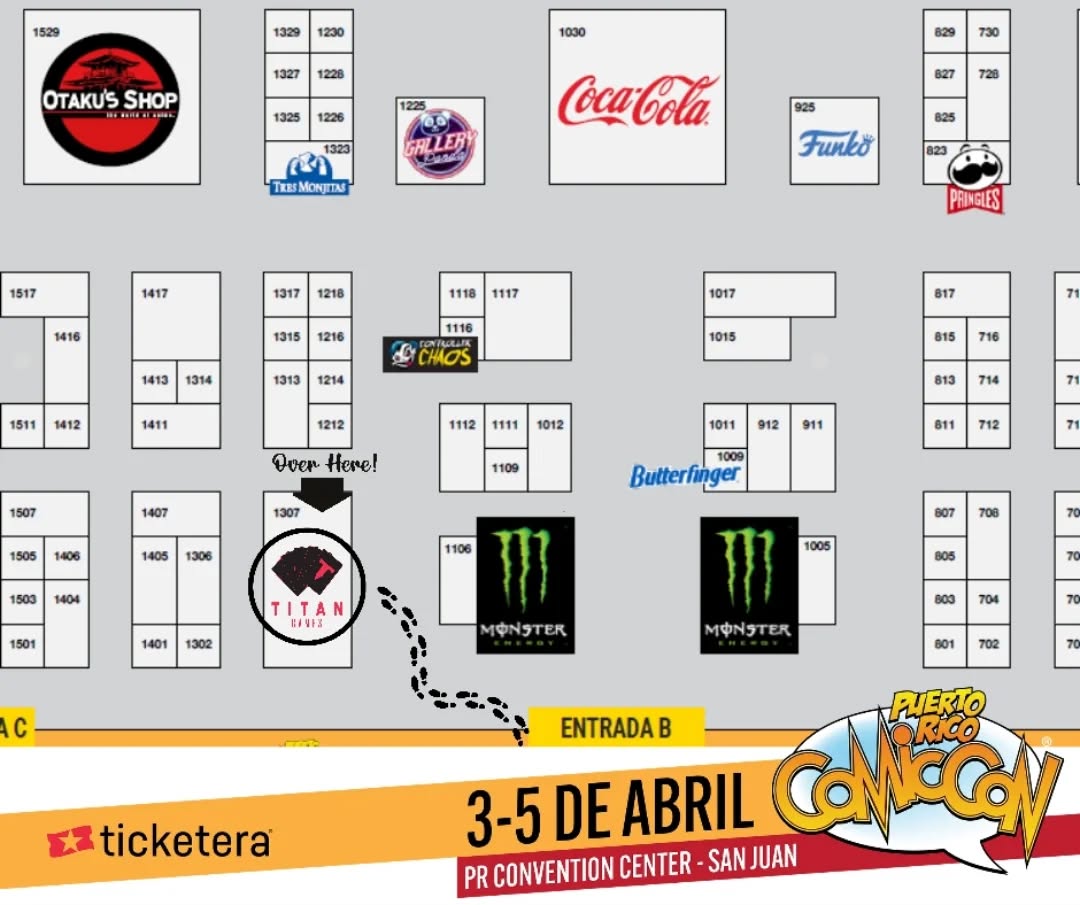
Our friends at Titan Games will also have a massive setup right by Entrance B at booth 1307. They always carry a huge selection of tabletop gear, including a great spread of role-playing games, so make sure to stop by their booth.
These are just a few of the friends and creators I know will be setting up shop, but I’m sure there are plenty more. In fact, there is one specific project I want to highlight in detail, but I’m saving that for tomorrow’s post!
Who did I miss? Who else has tabletop projects at PRCC this year? Let me know in the comments so I can help spread the word.
Categories: Tabletop Gaming Blogs
40 Years a Gamer: A Time of Change (2017 to 2026)
We’re here, on the final installment of the retrospective of my past 40 years as a gamer. It will not be the last post on the topic, mind you; this is just the end of the decades-long account of how gaming has been a part of my life. This instance overlaps with the previous post because I left off just as Hurricane María devastated the island.
If you don’t mind me paraphrasing The Sound of Music…
How do you solve a problem like what María left?
I won’t go into too much detail. Suffice it to say that in September 2017, Puerto Rico suffered some damage from Hurricane Irma early in the month, and on September 20th, María devastated the island as a Category 5 hurricane. This CNN article, one year later, is a great summary of the impact and aftereffects, if you are interested.
Irma began to wreak havoc with our gaming schedule. A week-long blackout after Irma meant we cancelled game plans for both the home game and the Desde la Fosa game, and we might have gotten two or three sessions in before María hit. We had a Geeknic planned for the weekend before, and we cancelled it. All gaming stopped after that!
With no power and gas shortages, we could not meet to play. From September to December, I played twice. I was lucky to return to work about 10 days after the disaster, but there were very few leisure opportunities. Friends from Puerto Rico, Role Players who lived nearby and knew I was going stir-crazy, dropped by, and we played board games, helping me stay sane!
My friends from Puerto Rico Role Players came to my rescue post-María.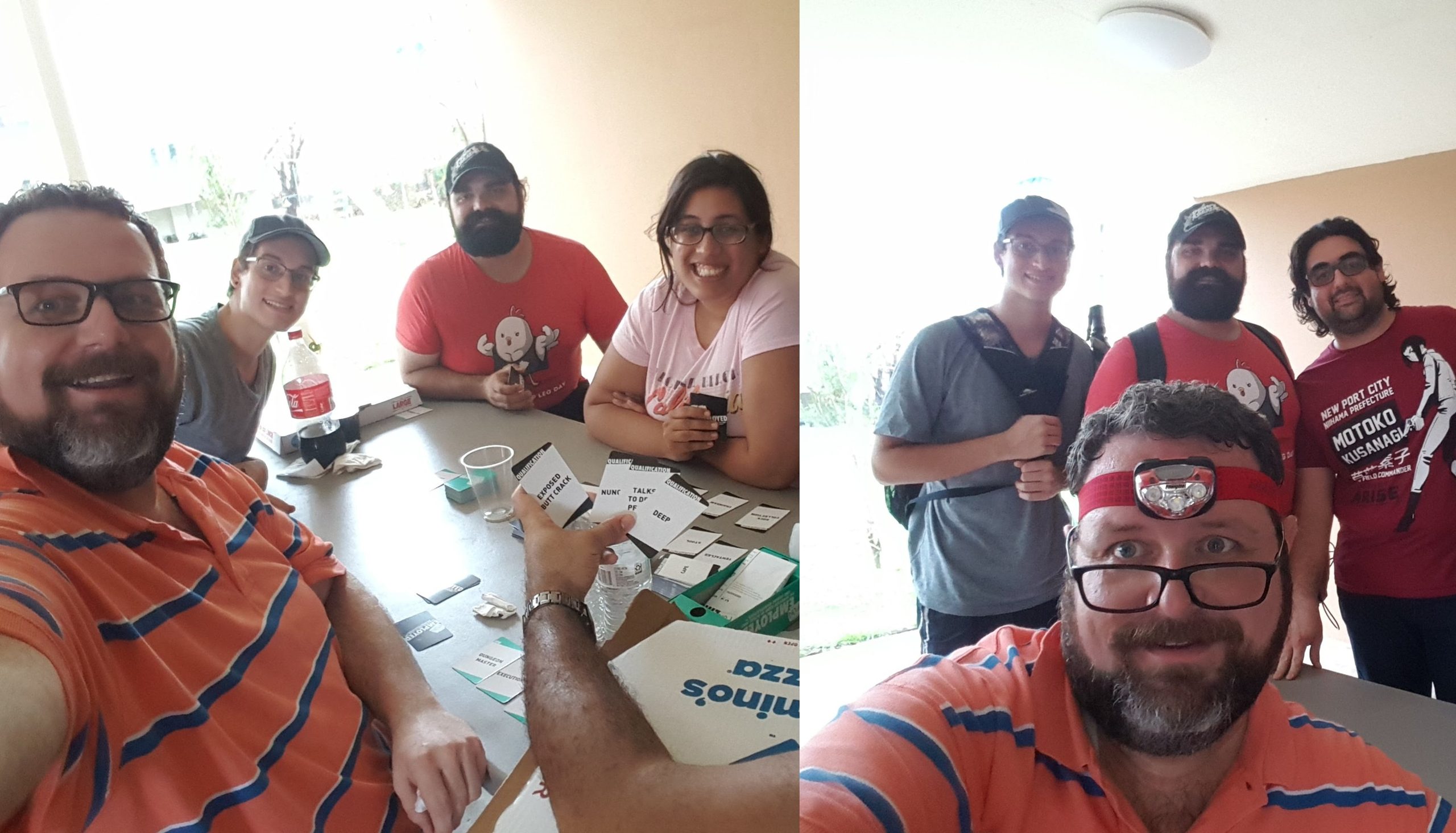
The weekly gaming group met once to try to continue the D&D 5e campaign, but we knew we would not be able to meet regularly for the time being. Two players were across the island; one was about to leave for the mainland US to continue his PhD research. So, we finished some plotlines and paused the campaign until we could gather again.
The final D&D 5e session of 2017.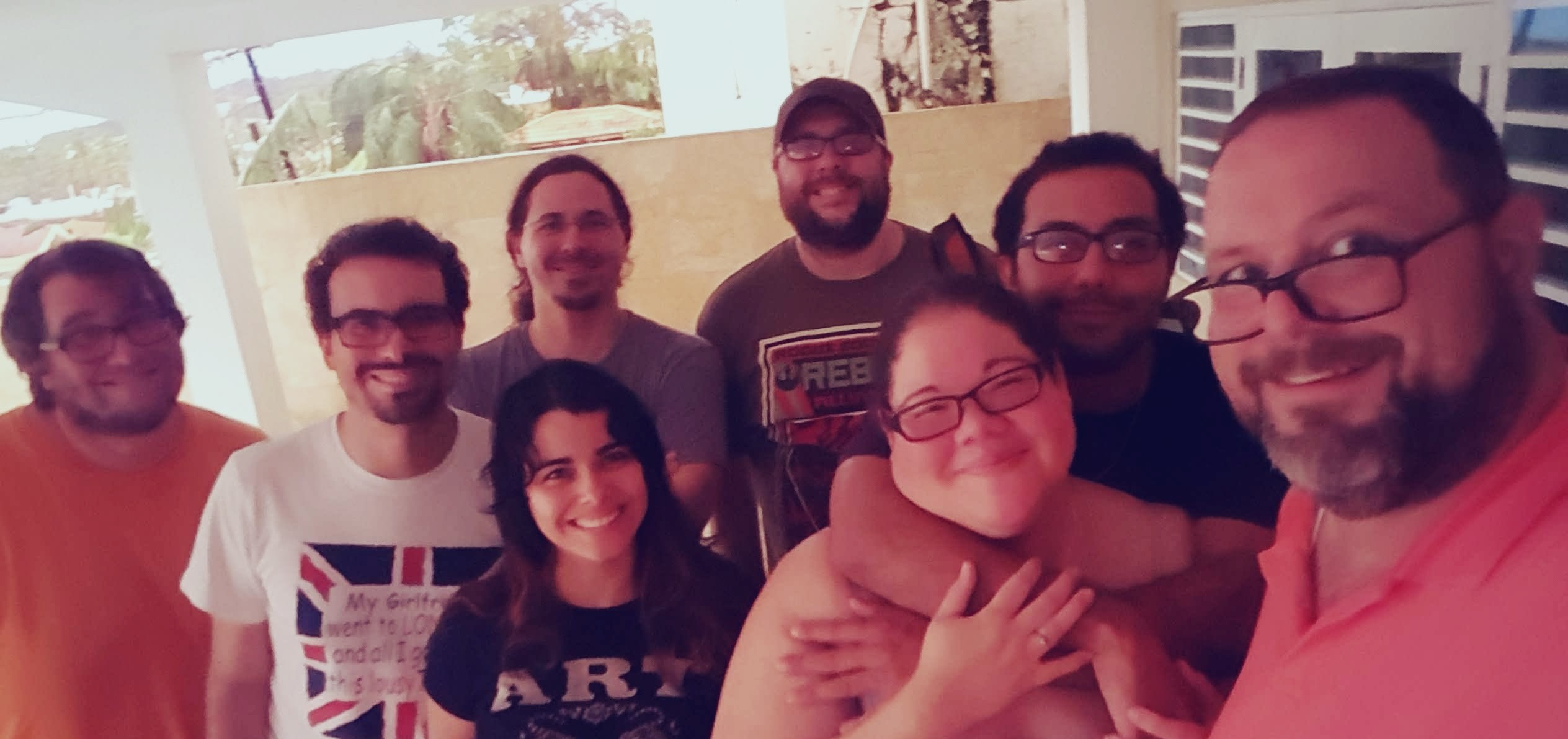
From left to right: Luis Lao, Edgardo, Richard, Mariana, José Fernando, Naida, Fernando, and Roberto (me).
Desde la Fosa was similarly affected. We met a few more times, but over the next few months, two of the team members emigrated. While the channel continued to post content and videos about RPG a Day and other topics, getting together to play games and stream them online stopped.
By November, some of us had power, but connectivity was spotty, so we could not reach players across the island. One player remained out of the country, so we decided to start another campaign until we could get back to D&D 5e.
My god, these are Stars Without Number!
In November 2017, we had session zero of our Stars Without Number (SWN) campaign, a few days after Thanksgiving. We were grateful to be all together and well! We called the campaign Alternate Frontiers Without Number, because I mashed up the aliens from Star Frontiers and Alternity to populate the SWN sector I rolled up using the book’s tools. I posted about my conversions for the campaign here and here.
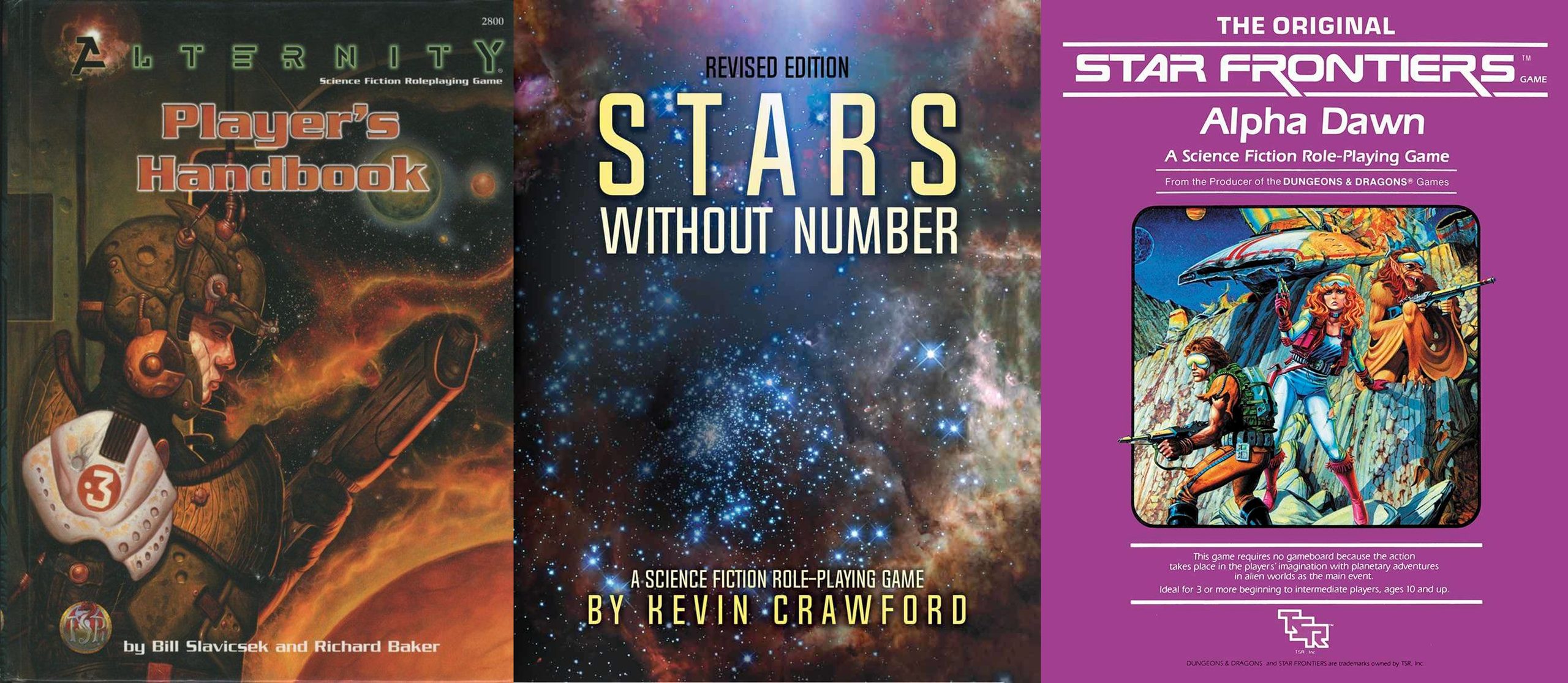
The smaller group consisted of five players playing D&D 5e (José Fernando, Fernando, Naida, Carlos, and Luis Lao) and one player who rejoined us (Raul), while Mariana, Edgardo, and Richard could not play at that time. I planned a “short” campaign, which for me is anywhere from 9 months to a year.
This plan worked out great because, a few months later, my wife and I found out we were going to be parents! My son was going to be born in December, so I planned for the campaign to end before his birth, when I planned to take a hiatus to help with his care.
Alternate Frontiers Without Number was a lot of fun! It solidified my love for Kevin Crawford’s work. We had a satisfying story arc with an epic finale. Luis Lao’s girlfriend, Aileen (now his wife), played a few sessions with us, as well as Fernando’s brother, who dropped in for a cameo in the game.
The crew after Desde la Fosa, playing Free League Publishing Games.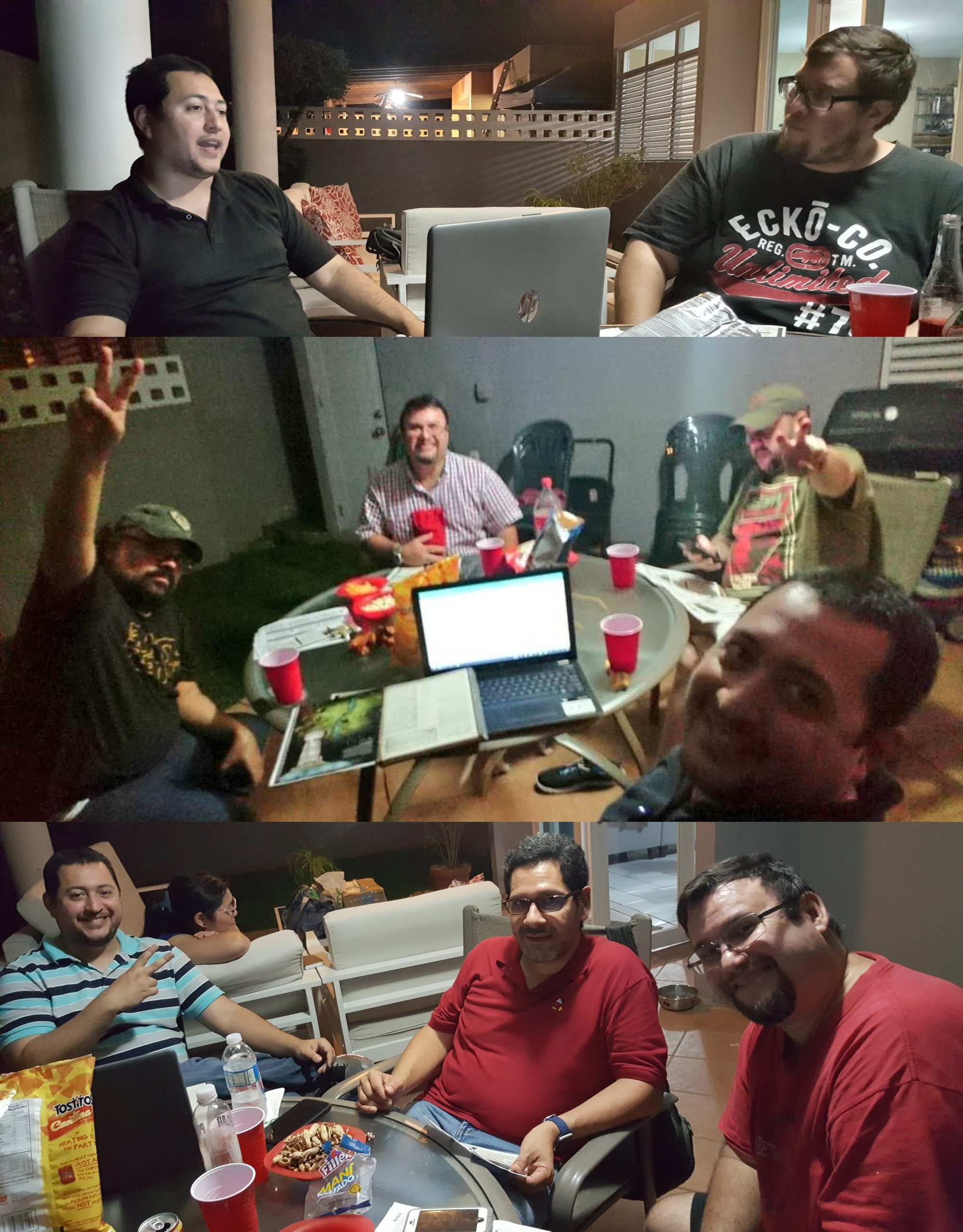
From left to right, top to bottom: José García, Luis Lao, AJ, Gustavo, José Fernando, José García, José Garcia (again, he was the GM after all!), Kenneth, and Gustavo.
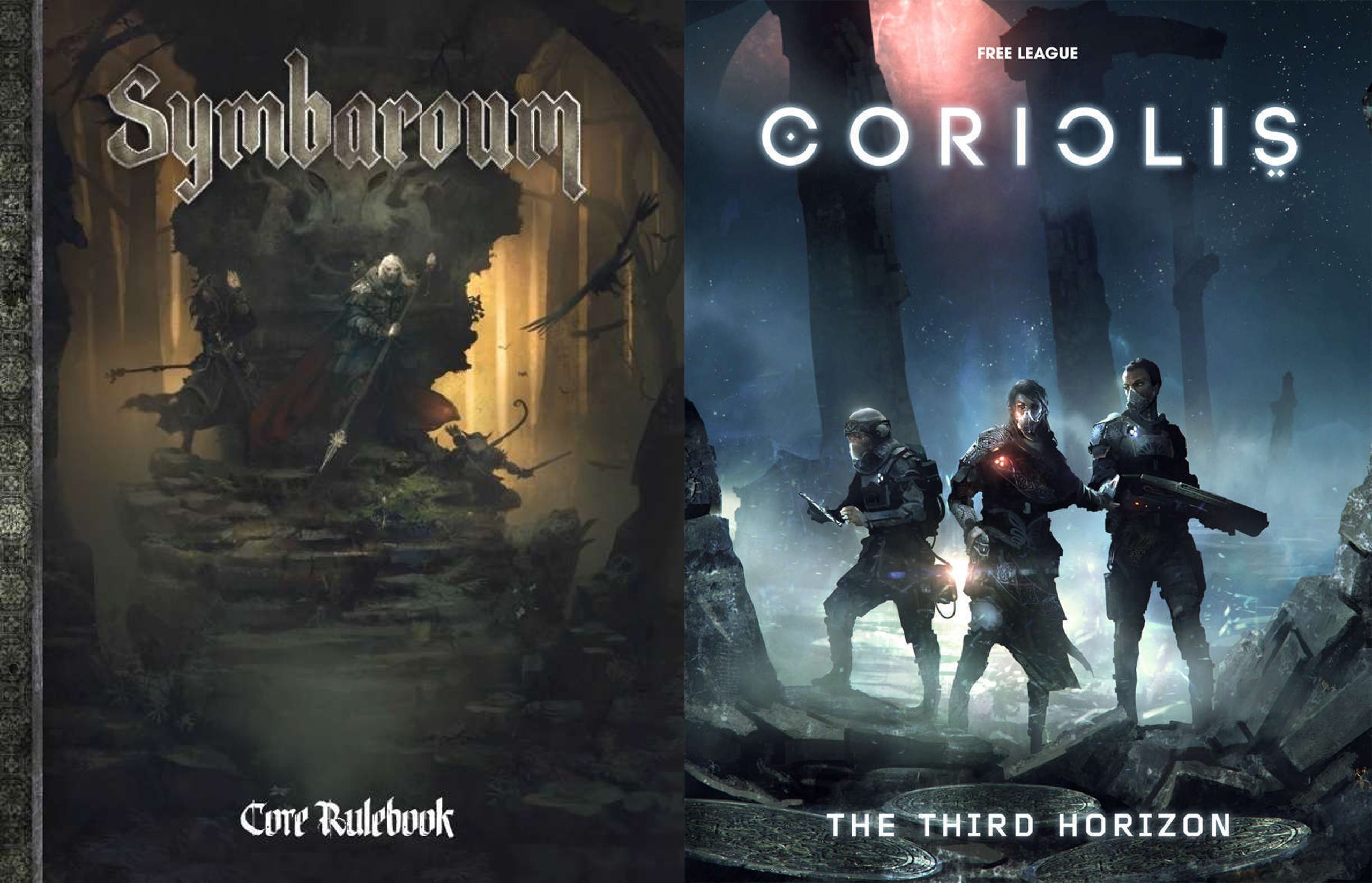
We also played with friends from Desde la Fosa. José García ran Symbaroum for us before AJ left Puerto Rico. The Symbaroum system and setting made me a fan of Free League Publishing. We also played some more Free League games when José García ran Coriolis for Felipe, Enith, Tracy, José Fernando, and me.
On December 18th, we played the 53rd and final session of our SWN campaign. My son was born the next day!
The last session of the Stars Without Number Campaign.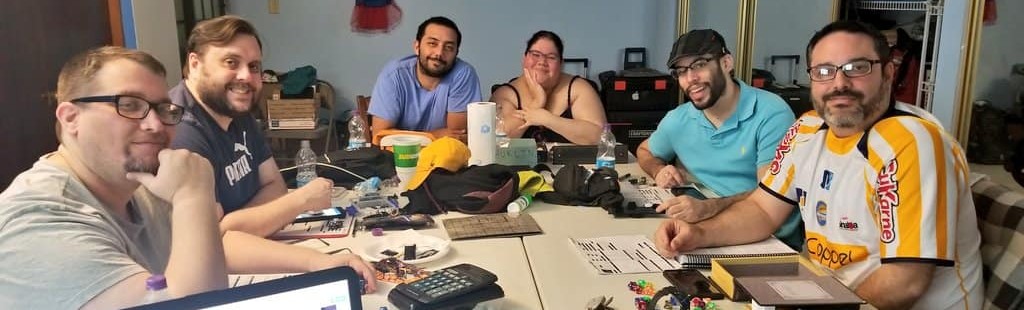
From left to right: Luis Lao, José Fernando, Fernando, Naida, Raul, Carlos.
I am your father!
Parenthood is the most wonderful role I have ever had in my life. From the moment I carried him after his birth to today, my son’s presence has filled me with endless joy. Despite the hardships and challenges, the rewards are thousandfold, and being called “dad” is my favorite moniker.
As I’ve said before, TTRPG gaming is part of my wellness routine. It helps me relax, refocus, and keeps me connected with my close friends. However, I recognized that caring for a newborn requires time. I paused my weekly campaign, telling my friends I would take a few months off, and when I thought Marchelo’s sleep patterns and care were something my wife could handle on her own once a week, we would start playing again.
I knew this was unpredictable. But my son’s sleep patterns were so regular that he would slumber through most of the night, getting up only once to feed and be changed. When he was four months old, we had established a routine, and my wife, knowing how much I missed gaming, encouraged me to resume weekly gaming. We only took a short hiatus!
The good, the bad, and the gamer
I wasn’t ready to get back to playing D&D 5e in my homebrewed world and all the prep that entailed. We still had a lot to do with my newborn son. Also, I started a new job a month after he was born, so I was taking on many new responsibilities. We were going back to gaming, but I wanted to run a simpler game. There were also some genres I had never run, so, in consultation with my players, we decided to run a western-horror game using Down Darker Trails from Chaosium, designed for use with Call of Cthulhu (CoC) or Pulp Cthulhu, but using Troll Lord Games’ Amazing Adventures.
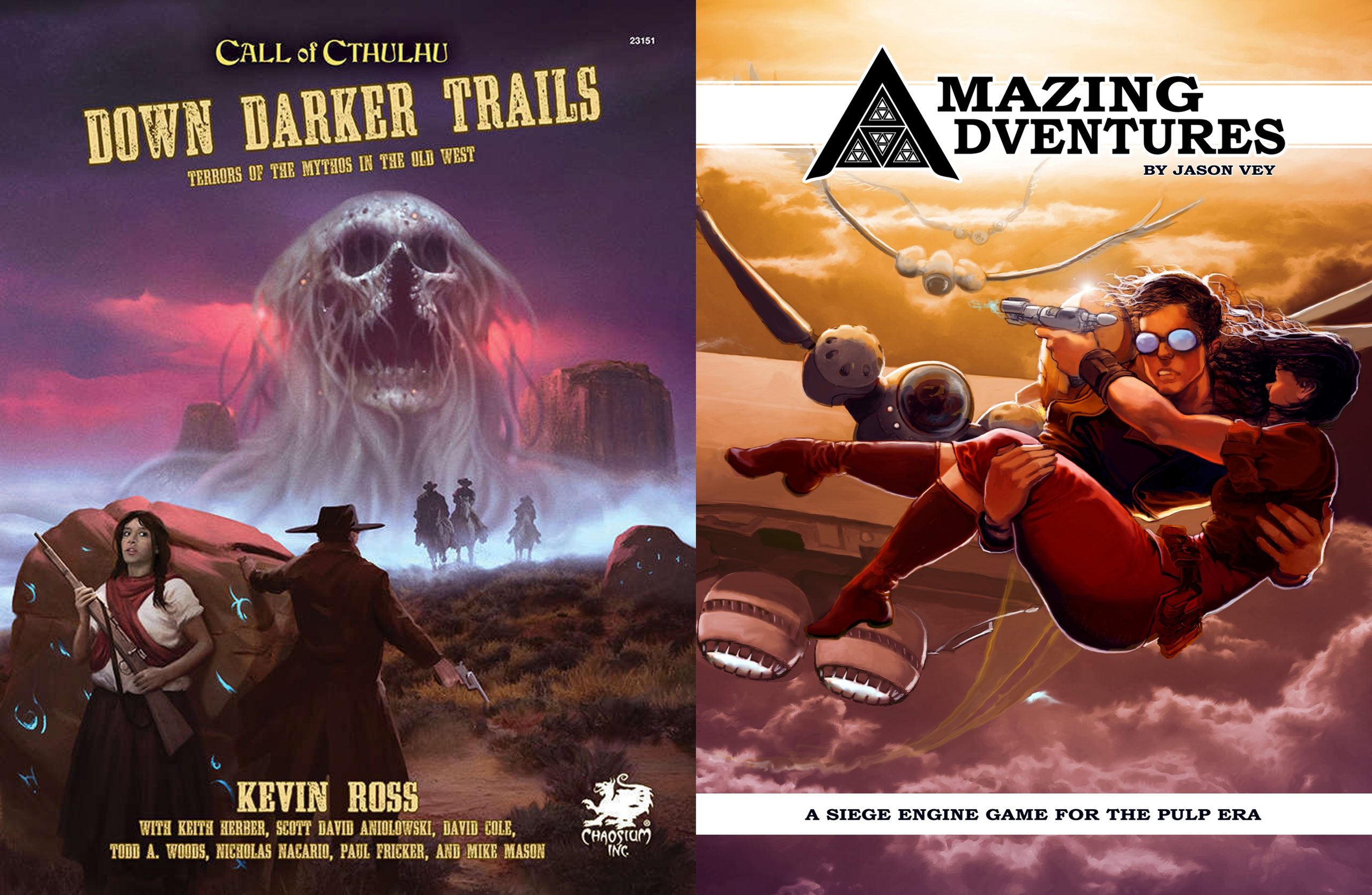
This was a great experience. Chaosium’s adventures are the sort of adventures I enjoy: a framework with lots of setting information I can use to run a game. This was the smallest group of players in ages: Naida, Fernando, José Fernando, Luis Lao, and Carlos. It kept the adventure lean, moving at a good pace, not too complex for me as a GM.
Creating characters for Down Darker Trails.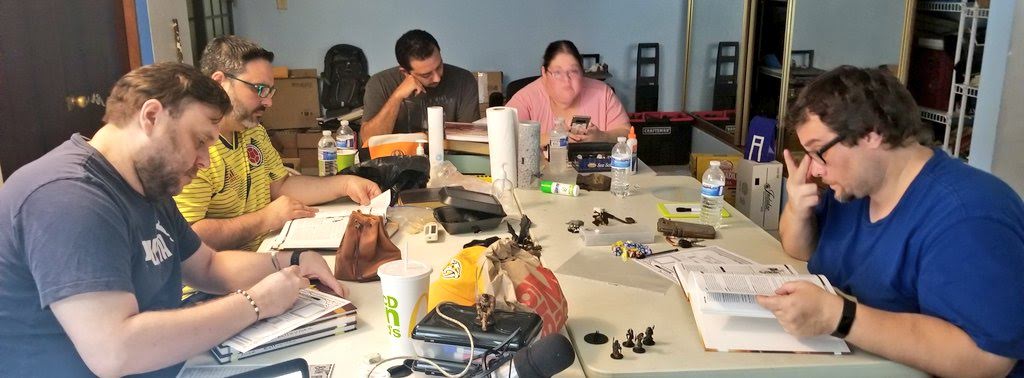
From left to right: José Fernando, Carlos, Fernando, Naida, Luis Lao,
While currently I don’t think I will run Troll Lord Games for the foreseeable future, back in 2019, playing Amazing Adventures motivated us to change the system when we restarted the fantasy campaign we paused in 2017. We switched systems from D&D 5e to Castles & Crusades.
There, Crusade. There, Castle.

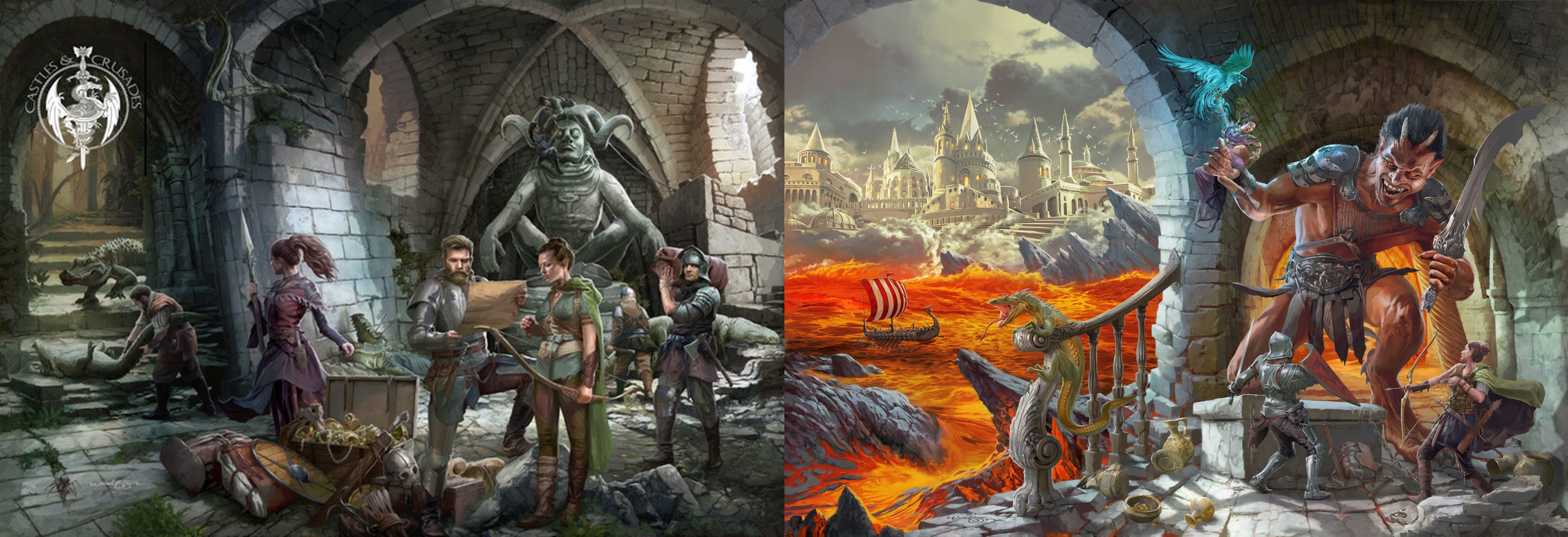
As 2019 ended and 2020 began, Puerto Rico was still recovering from Hurricane María, and a series of earthquakes struck the southwest of the island. Despite the new hardships, we soldiered on with gaming, and in February 2020, we restarted the fantasy campaign but converted it to Castles & Crusades. It was great to return to the campaign we had paused three years before. Mariana and Edgardo had married and moved from Puerto Rico, but Carlos, Fernando, Naida, José Fernando, Richard, and Oscar returned to the campaign. Naida, sadly, did not finish the campaign, and losing a player was not the only challenge we would face. We began playing in February, and by March, the Covid-19 pandemic had hit Puerto Rico, and we were in lockdown!
Just before the pandemic lockdown!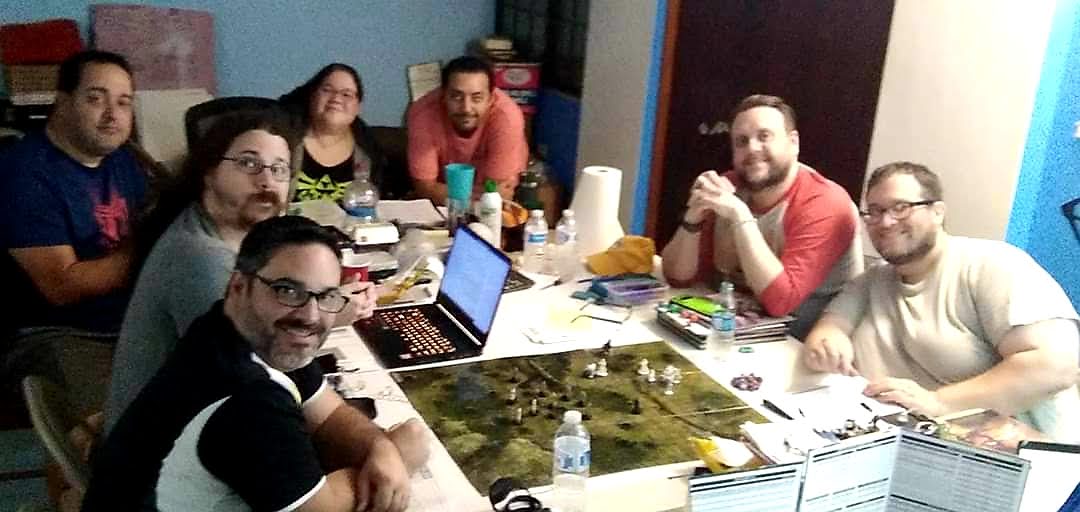
From left to right: Oscar, Richard, Carlos, Naida, Fernando, José Fernando, and Luis Lao.
We moved the game online, and while we played a few sessions in person when lockdown orders were lifted due to lows in infection rates, outbreaks soon kept us playing remotely again. We finished the campaign a year later, playing virtually.
Online map over Zoom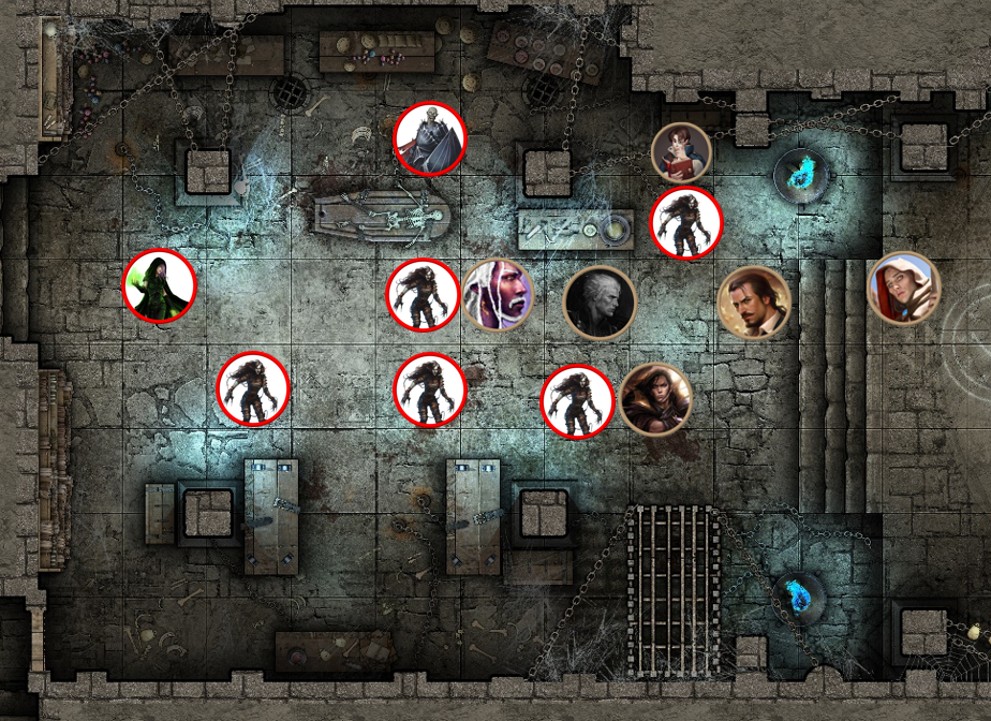
This was a challenge; we tried Discord first, but eventually settled on Zoom for ease of use for all involved. At first, I was not a fan of playing online, but we adapted. My friends were great sports; some really were not into playing online, but they soldiered on, and we managed. All this was compounded by some health issues that affected my voice, which made playing online even more difficult.
Playing online would be a good practice for the future.
Listen to them — children of the Red Death.
After finishing our fantasy campaign, I wanted to play something different, so we played a mash-up of the Victorian-themed Ravenloft setting, Masque of the Red Death, using the horror toolbox system by Kevin Crawford, Silent Legions. We called the campaign Legions of the Red Death.
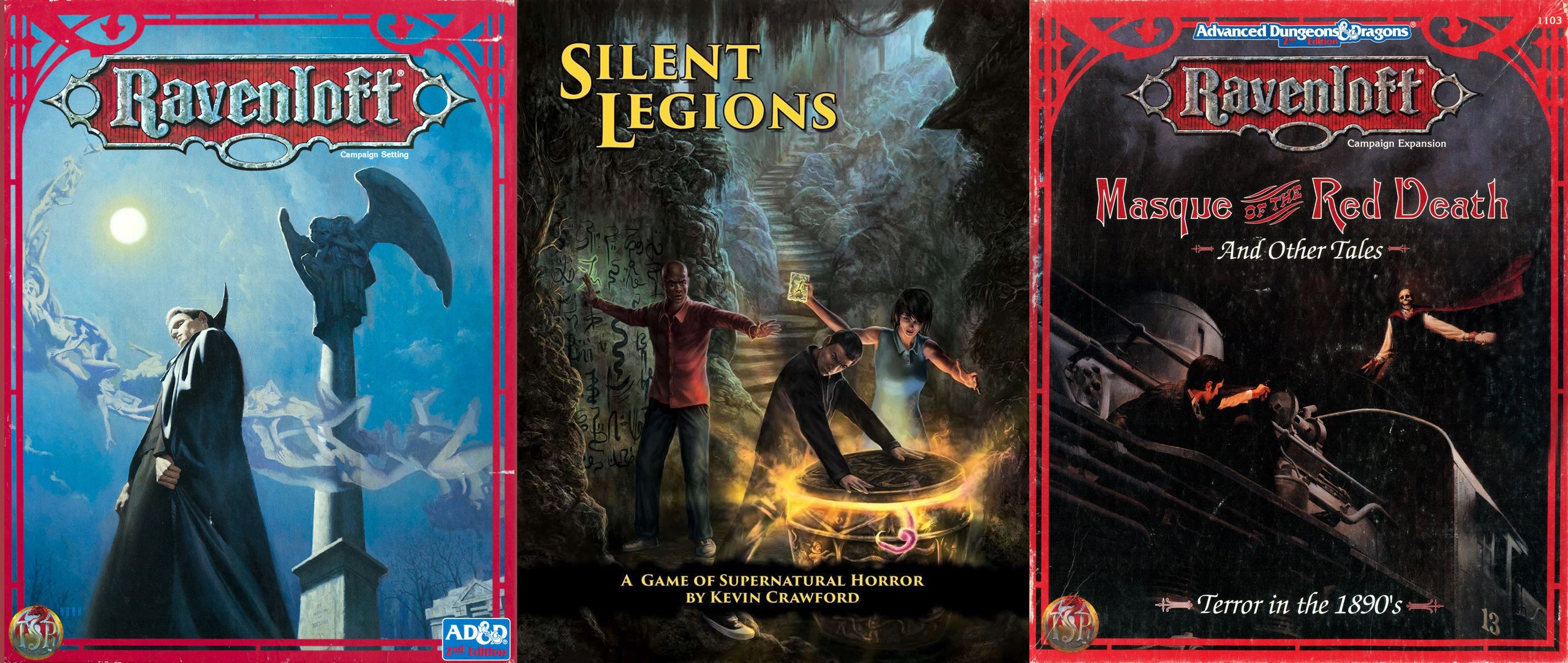
Do you see a pattern? First, we switched the latest iteration of my long-running homebrew campaign from D&D 5th Edition to Castles and Crusades. My fantasy campaign has adapted to different editions, from BECMI to AD&D 1st Edition, 2nd Edition, D&D 3rd Edition & 3.5, Pathfinder, and then to D&D 5th Edition. But never mid-campaign! Then playing a Call of Cthulhu adventure using Amazing Adventures, and now Masque of the Red Death using Silent Legions.
Carlos, Fernando, José Fernando, Luis Lao, and Oscar returned for this campaign, and José García from Desde la Fosa officially joined the group. These six core players have been the regular weekly group for the last five years!
From left to right: José Fernando, José García, Fernando, Luis Lao, Oscar, and Carlos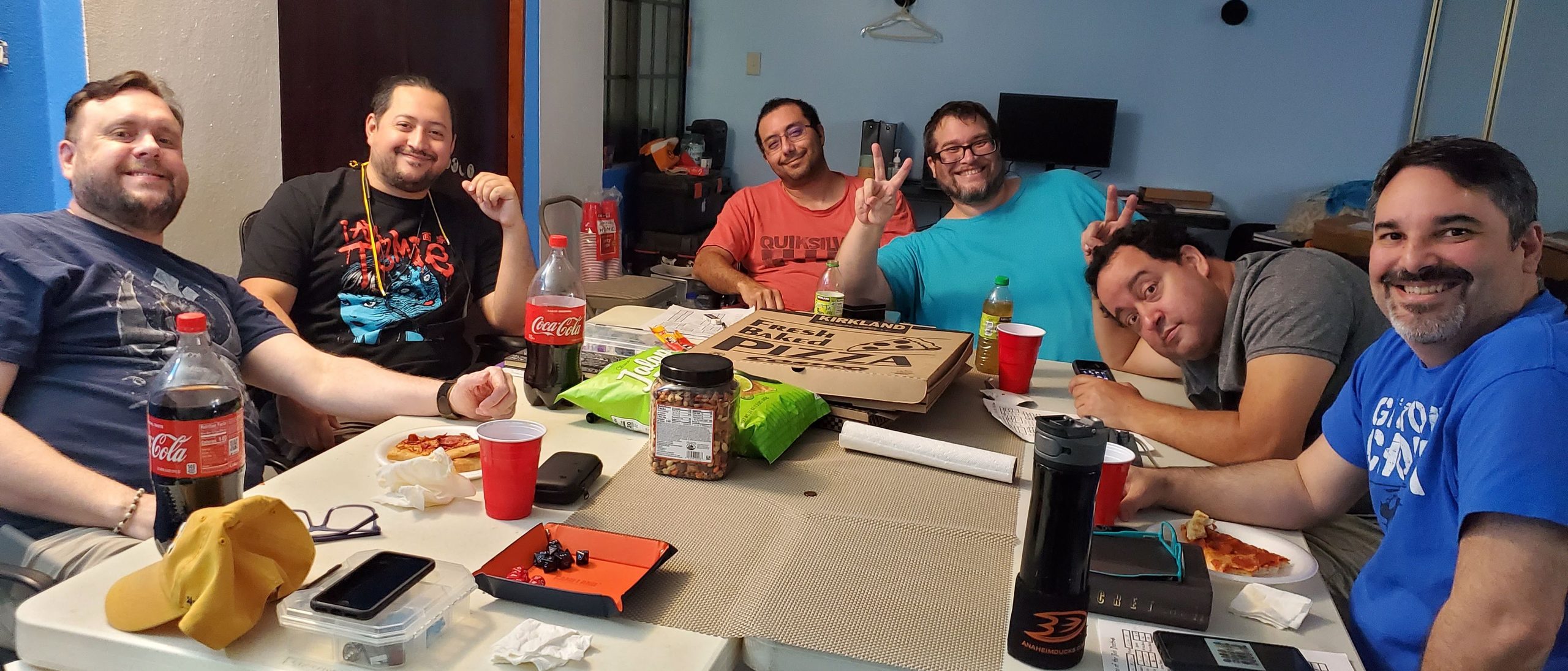
This campaign lasted most of 2022, and by the end of the year, we began planning for the campaign we are currently running: Savage Fading Suns.
The stars are fading, and if they die, we die, everything dies
Here was another mash-up: The Fading Suns setting with the Savage Worlds rules. I had intended to play it using the latest iteration of the setting rules, but after reading and discussing them with the players, we settled on Savage Worlds, which has quickly become our go-to system.
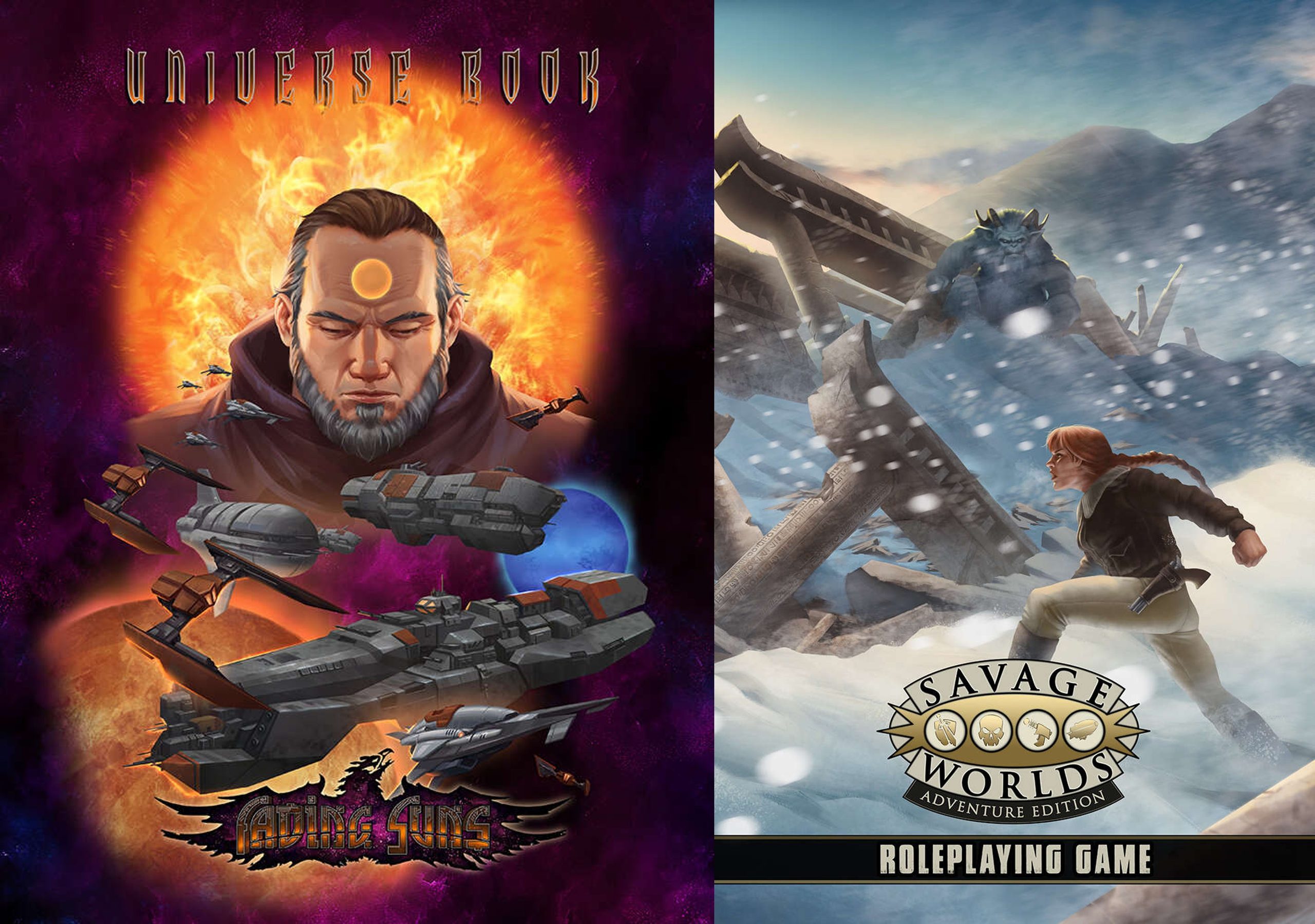
With the same six players (Carlos, Fernando, José Fernando, José García, Luis Lao, and Oscar) and Felipe, who dropped in for a guest appearance, we’ve been playing Savage Fading Suns since December 2022. Over three years now. As of this writing, we’ve played 130 sessions.
From left to right: Luis Lao, José Fernando, Roberto (me), José García, Fernando, Oscar, and Carlos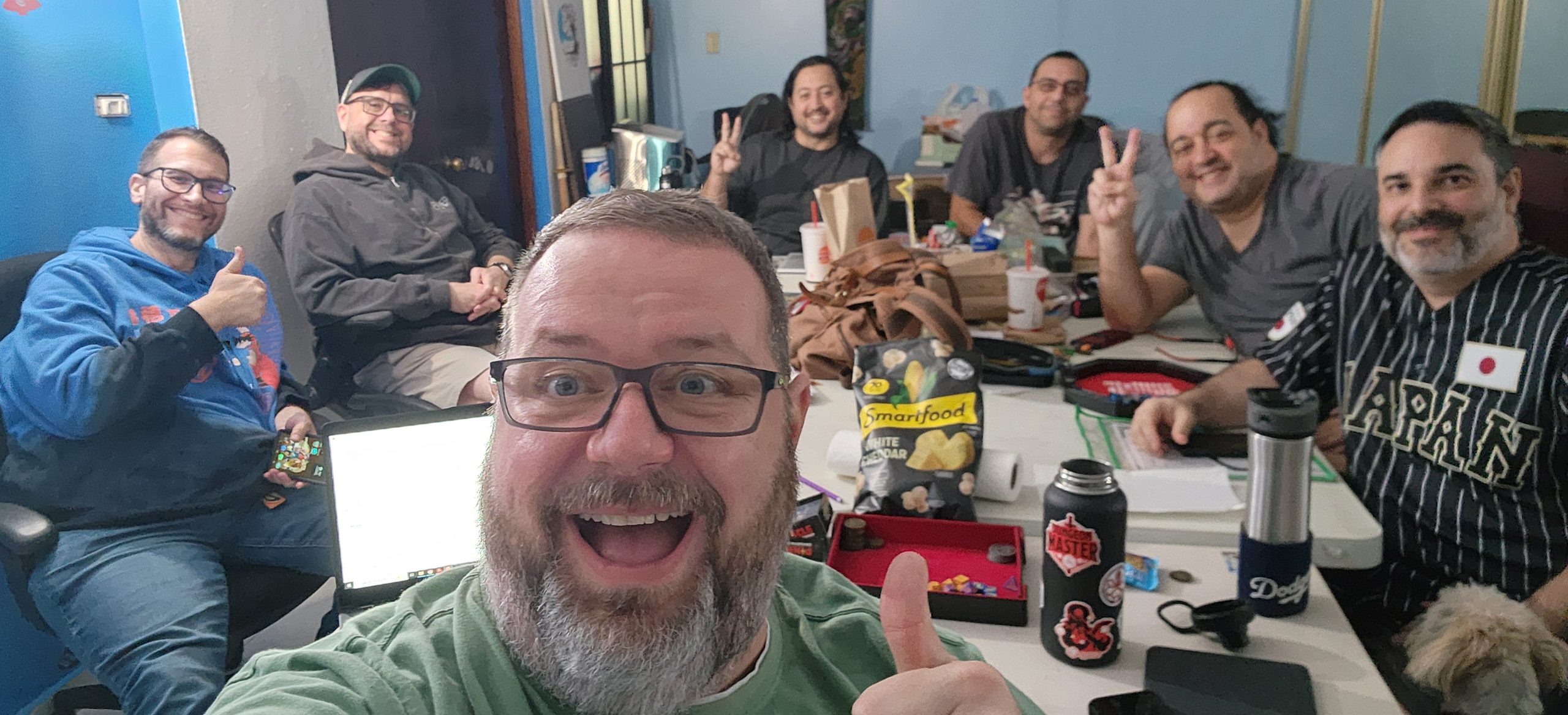
This has not been a campaign without challenges! My health worsened, and I had trouble speaking. My friends stuck with me while I struggled to run games because they knew how important it was to me. I got treatment and improved, and then I had to spend extended periods of time away from home due to work, so we moved the game to Discord and continued playing virtually when I was away, which was more often than not.
This was not the only game I’ve played these past three years. José García ran Free League’s Alien game for us on Halloween 2023, Ten Candles for Halloween 2024, and I ran The Dare, a CoC adventure, using the Eldritch Hack rules for Halloween 2025. Keeping alive the recent tradition of running a setting with different rules from the ones it was written for.
Playing Alien, Ten Candles, and The Dare.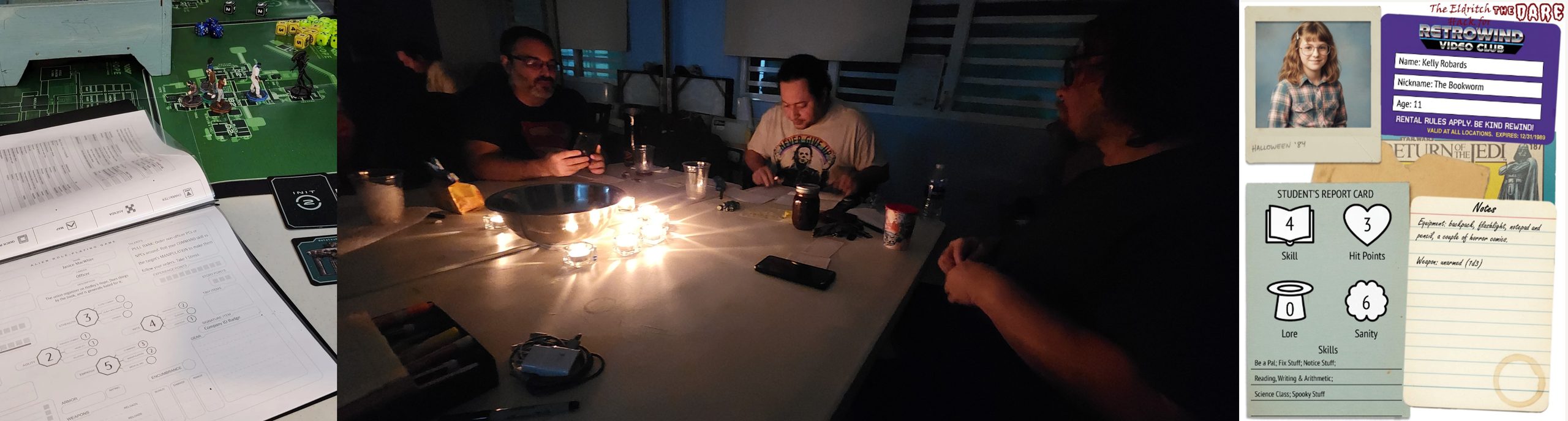
I also played a two-session fill-in game of an improvised TTRPG I put together when some players could not make our regular session, and a fantastic Fabula Ultima campaign that José García ran, which I would love to finish. For an online gaming weekend my friend Brightcadle (that’s his Discord handle) organized, I ran a Savage Worlds one-shot for Yamir and Maite, a Shadowdark one-shot for the same event, and ran a play-by-post short campaign with my good friend Pierre, whom I miss every day.
By September 2025, I was back in Puerto Rico. We’ve been playing face-to-face again. Since being back, I’ve also re-engaged with Puerto Rico Role Players. We had a holiday event at El Gremio in Cayey, and a Geeknic in February, where I playtested a TTRPG system I am developing. I am celebrating these 40 years as a Game Master and gamer and reconnecting with the local gaming community after an extended absence due to work-related travel.
The Savage Fading Suns campaign has maybe six to nine months left, or thereabouts, before we conclude. I am famously bad at predicting when a campaign will end, especially one I’ve been wanting to run since 1996, when I first read the Fading Suns book. This campaign has been meaningful not just for that reason, but also because my players stuck with me during my illness and my travels.
I am lucky to be surrounded by such wonderful friends, who sit down to play our weekly game, but beyond that, those who are part of my immediate circle of friends, the Puerto Rico Role Players community, and those I reach and interact with through social media and this blog.
I am truly lucky to have had this hobby for most of my life, for the people I’ve met, the connections I’ve made, the lessons I’ve learned, and the abilities that I have developed every day. Thank you all for this wild ride. Here is to many, many years more!
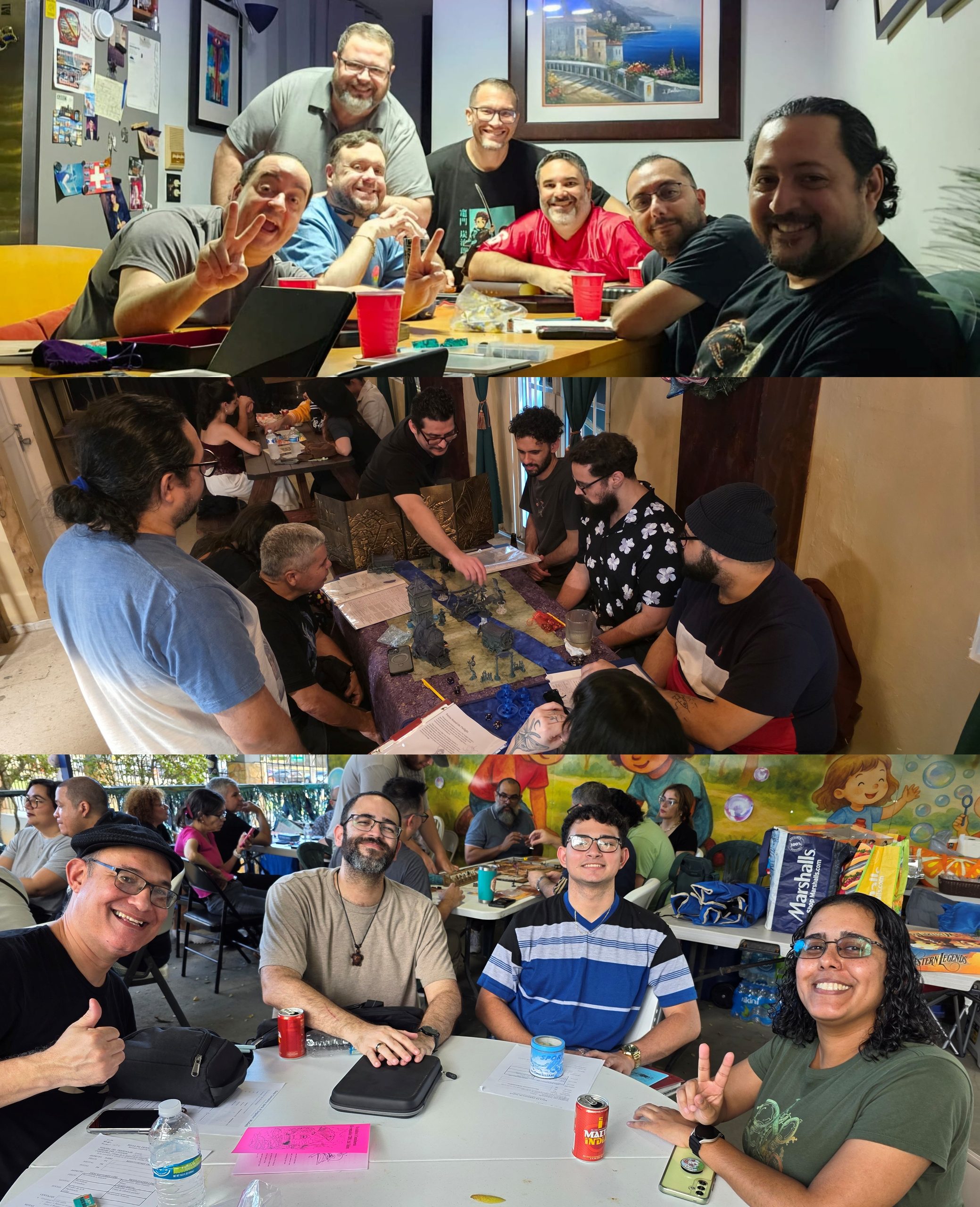
One final note: I mentioned which movie the first section title came from. Who can tell what other movies I reference in the other sections? A few are rather obvious. Let me know in the comments.
Categories: Tabletop Gaming Blogs
The Musical GM!
It may surprise you, or perhaps horrify you, that I am a massive fan of musical theater. I grew up listening to musicals with my uncle Chechin (his real name is José Agustín, but Chechin is his nickname). I still remember watching A Chorus Line at the Centro de Bellas Artes de Puerto Rico in the early 80s, and Nine was probably the first musical I knew all the lyrics to by heart.
While I love many different shows, none has inspired me more than Les Misérables.
I know it is long and melodramatic, but it is also undeniably a powerful, grand spectacle that speaks directly to humanity’s struggles. The Les Misérables: Complete Symphonic Recording has easily been the soundtrack I’ve listened to the most while writing about TTRPGs. In fact, I am listening to it right now as I write this post!
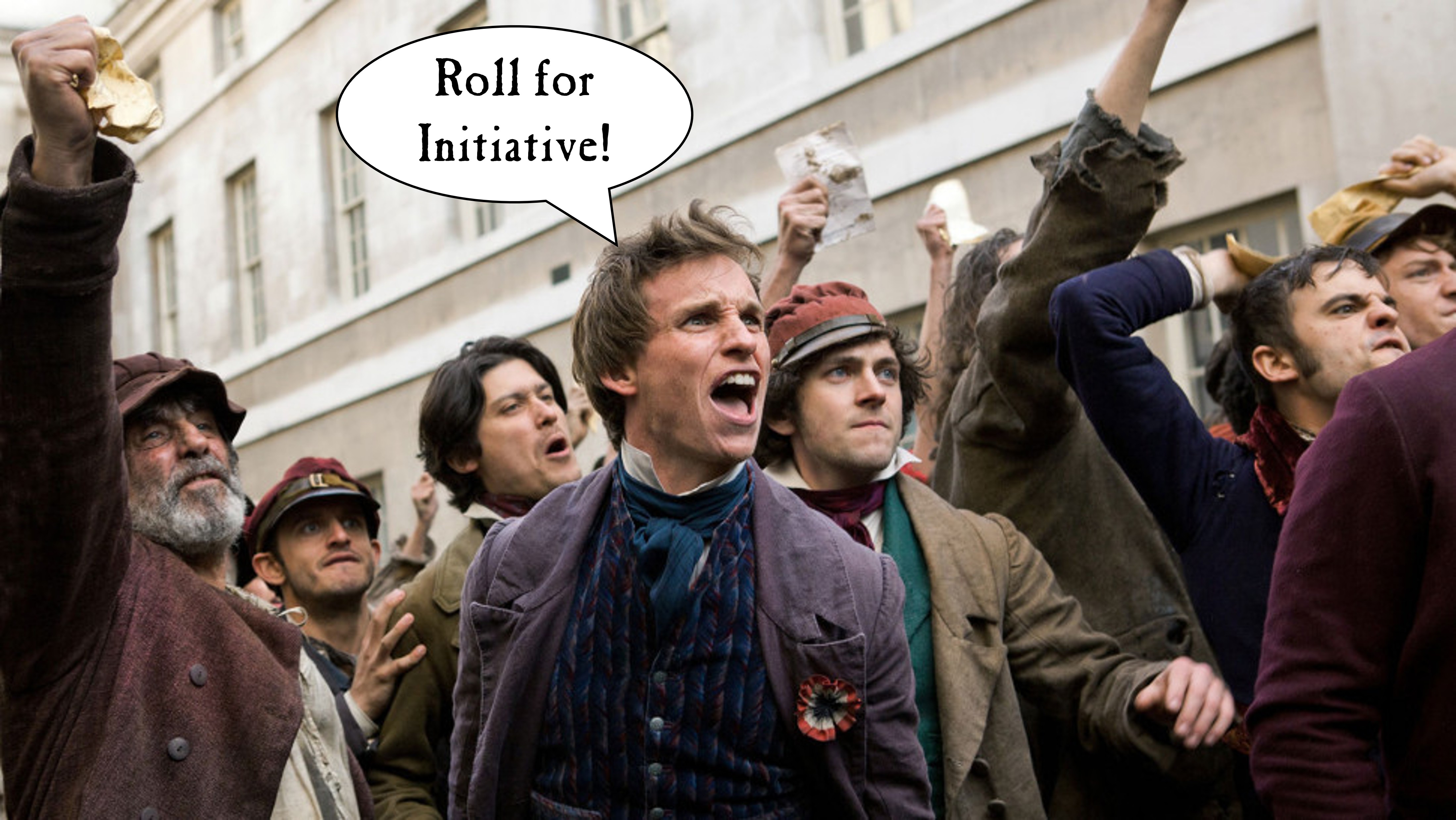
I will admit I have NEVER actually read Victor Hugo’s original novel. Every few years, I tell myself I will, but I haven’t gotten around to it yet. So, what fascinates me so much about the musical? It’s the struggle of the oppressed, the sweeping narrative, and the intense ideological conflict between the protagonist, Jean Valjean, and his antagonist, Javert.
Whenever I think about alignment in D&D, I almost always frame it in terms of these characters. If you search online, you’ll see I’m not the only one doing this! While I don’t agree with every single classification in the usual alignment memes floating around out there, it’s clear this is a shared touchstone for many gamers.
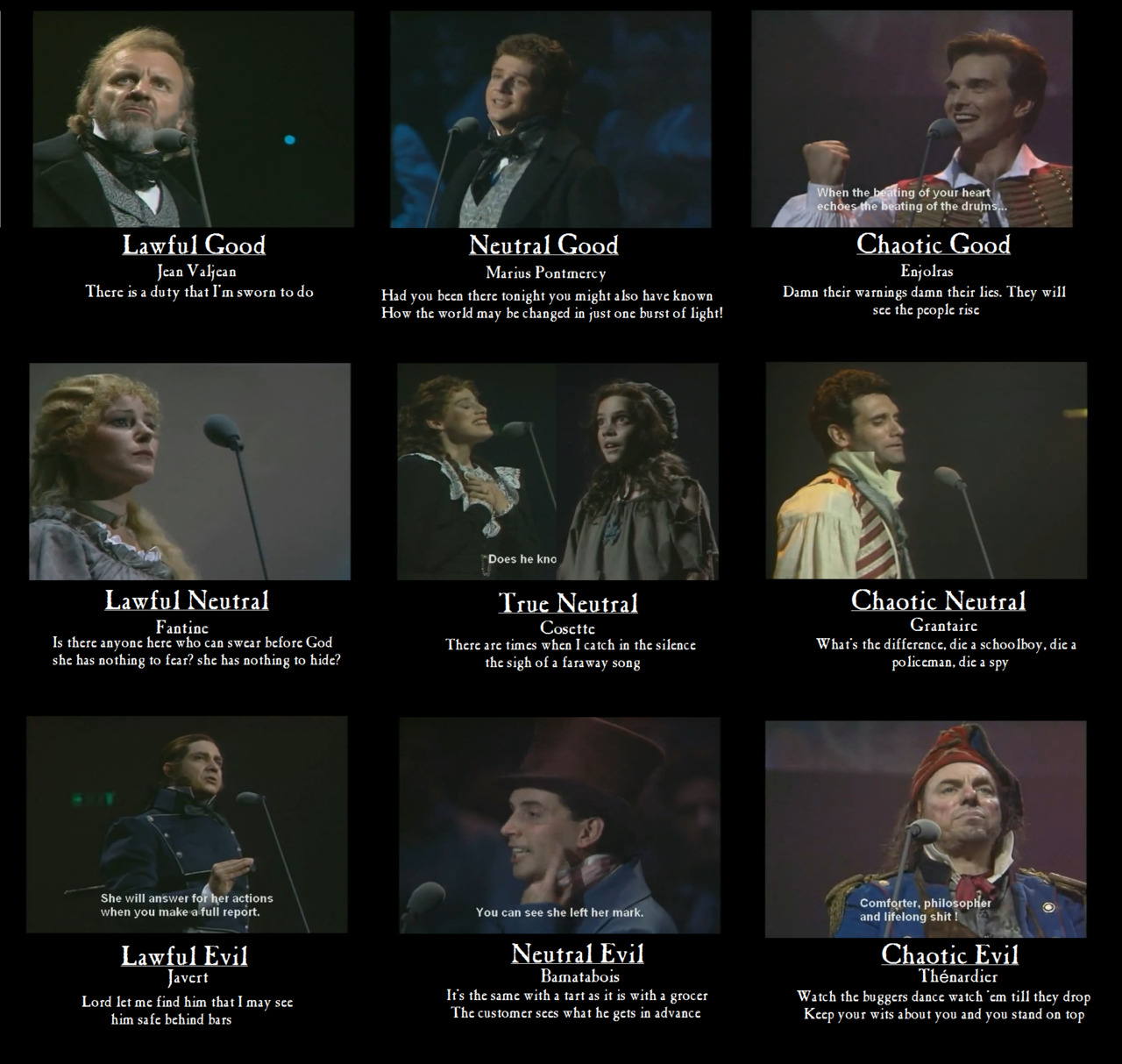
For instance, I don’t think Valjean is Lawful Good; I’ve always viewed him as more Neutral Good. As a teen, I thought Javert was the ultimate example of the unyielding, intransigent Paladin, but looking back, he obviously isn’t Lawful Good. I wouldn’t quite say he is Lawful Evil, either. To me, he is the absolute embodiment of Lawful Neutral.
I have even incorporated the musical’s lyrics directly into my games. In one campaign, I used a modified version of the lyrics to the song Stars to serve as a Paladin’s Oath.
I have also pulled bits and pieces from Red and Black and Empty Chairs at Empty Tables—I even played the latter in the background during a particularly poignant session.
Those last two clips are from the 2012 movie. I still prefer the Complete Symphonic Recording I mentioned above, but if you are curious to see it, I highly recommend the film!
See? Not all TTRPG inspiration must come from novels or movies! What non-traditional sources inspire your games?
Bonus Inspiration! As a final treat, here is something perfect for your Ravenloft games: Total Eclipse of the Heart from Dance of the Vampires.
In German:
In English:
Categories: Tabletop Gaming Blogs
40 Years a Gamer: A Decade of Community (2007 to 2017 – Part 2)
Welcome back to Part 2. In the previous post, I focused on how my life as a gamer blossomed over this decade, expanding from TTRPGs being a hobby I enjoyed with my close friends at home to stepping out into the larger gaming community—locally and online—and into a wider world. For this very reason, over those 10 years, I played TTRPGs with more people than I had before, or since.
These were the years of Geeknics and convention games. I can’t recall how many people I played with at those. I also played games at Gen Con with strangers and with old friends. I particularly remember playing a Psi*Run demo (one of my favorite pick-up games to this day!), and the Savage Worlds game David A. Miller ran for my friends, where the system first truly clicked for me! You can read about Gen Con 2011 and the friends I met there in this post from back then.
From left to right: David A Miller, PJ Deyo, Gaby and Yamir playing Savage Worlds, Gen Con 2011.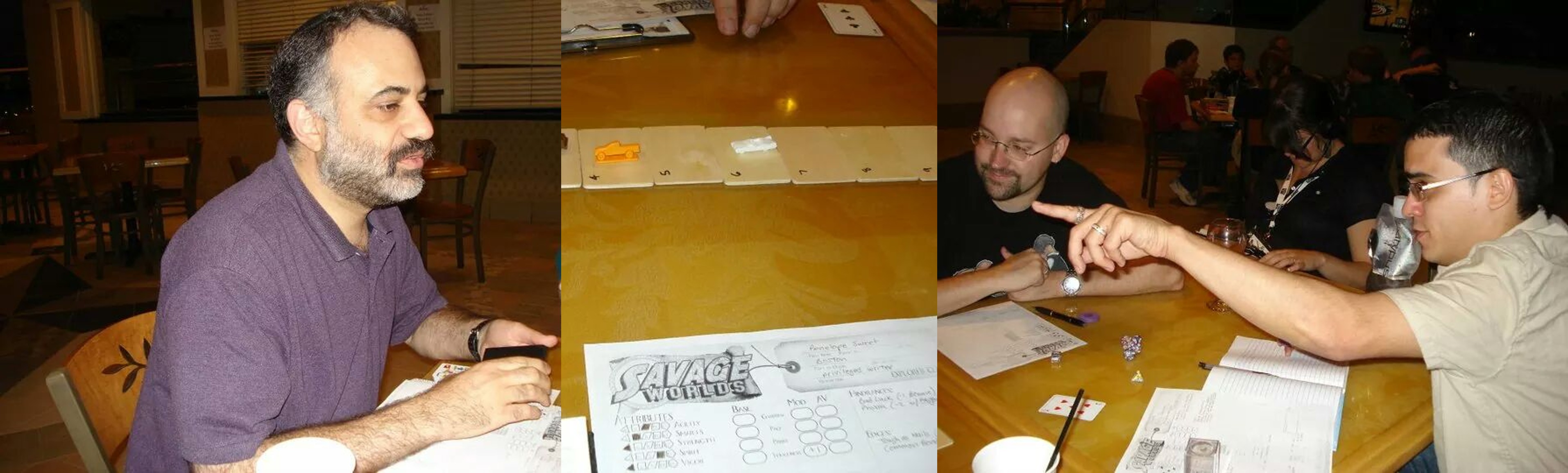
That energy eventually carried over into other local projects. Desde la Fosa was a smaller group where I made new friends and played with old ones, with whom I had never rolled dice before. For a while, Desde la Fosa was my second gaming group, and I had never had two regular groups running simultaneously before. The aftermath of Hurricane María eventually broke us up. We played a few times after—no streaming, just gaming—but it fizzled away. I am still in touch with AJ, Felipe, and José, the core team that started the project, even though two of them have moved off the island. José is currently a regular player in my weekly campaign. But near or far, they are family.
From left to right: AJ, Felipe, and José Garcia. The Desde La Fosa crew playing at TheGaming Pit.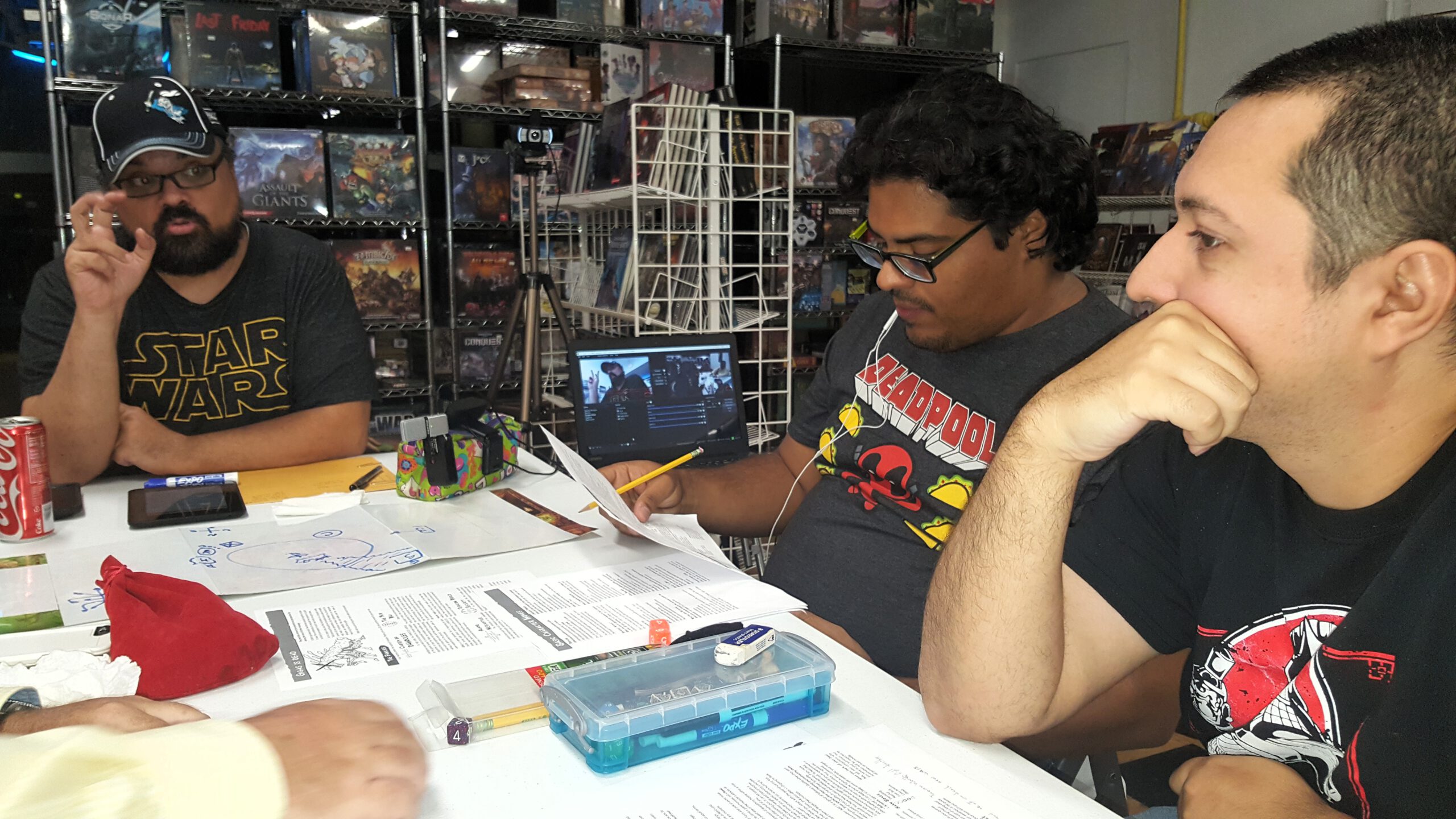
As this post focuses more on my regular gaming group, the closer, more intimate group of friends I sit with every week to play games, it is important to talk about family. Not wanting to sound too much like Dominic Toretto of Fast & Furious fame, the players at my table are, in many ways, my family. The family we choose. Close friends who are more than gaming buddies; they are an important part of my life.
So, who were these people? What did I play and who did I game with from 2007 to 2017?
The Hideout of the Mequetrefes (Again)
In 2007, I was running my weekly homebrewed campaign at Sammy’s house. Since Sammy had a dedicated game room, and I could not say no to someone who wanted to play, the number of players ballooned from six to nine at one point. I wish I had pictures of the group playing there.
The Histrionic GM! (Circa 2007)
José Fernando, Piwie, Karlo, Luis Alvardo, Luis Lao, Pierre, and Victor were the original players. Sammy and Carly eventually joined the campaign. It lasted over two years, so there was some ebb and flow in the player roster. Victor did not finish the campaign; Pierre and José, I think, were absent for some time, but at the final session, we had eight players at the table.
Sadly, as the campaign ended, Sammy and I had a falling out. We had very different personalities and senses of humor, as well as different boundaries around family outside the game. Sammy would relentlessly make fun of everyone, and I was not willing to have people in my life who were not part of the game made to feel uncomfortable. So, I packed my things and moved on.
This was very hard. Sammy was a close friend, but we could not reach an agreement, which created a schism. We remained friends, and I’d like to think we mended fences. We played on occasions two or three times more over the years, but we saw far less of each other. When he passed, he left a void that continues to be felt to this day.
I was planning a Star Wars Saga Edition game with some of the other players at Sammy’s house, including Tato and Peter, with whom I had traveled to Gen Con. Sadly, this was not to be.
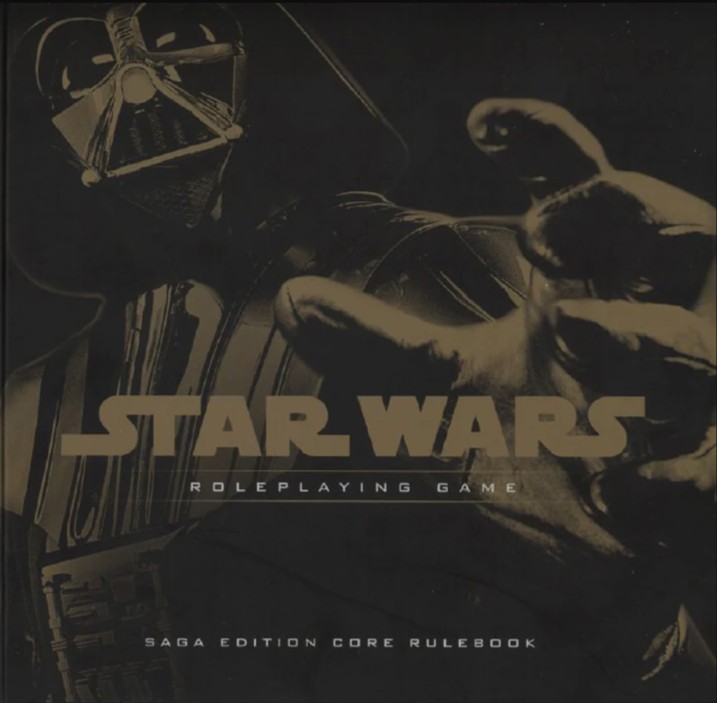
Back Home
We had not played in my apartment since 1999. I cleaned up the guest room and turned it into a sort of game room. This change splintered the group. Sammy, Carly, and Piwie no longer played with us. Other players emigrated, but one rejoined: Guaro returned to playing with us. For the first time in a long time, my core group of players was only five people: Guaro, José Fernando, Luis Alvarado, Luis Lao, and Pierre.
We played Star Wars Saga Edition, which was a LOT of fun. I wrote a series of posts about the game’s setting a while ago. You can find the first one here. Regardless of the split, the group slowly but surely began to grow again.
D&D 4th Edition and More
When D&D 4th Edition came out, we were alternating gaming locations, sometimes playing at Guaro’s house. His mother had dementia, and if he could not find someone to look after her, we’d play at his place. If memory serves, we played the first session of my Points of Light campaign, the Tenedal Valley, at his house.
Clockwise, from top left to bottom left: Guaro, Luis Lao, José Fernando, Pierre, playing at Guaro’s house.
Our group might not have loved the 4th Edition, but it grew. Fernando and Raul began playing with us. Raul would come and go, but Fernando has been a mainstay in the group since 2008. Also, the first player I met through Puerto Rico Role Players, Yamir, joined the group!
From left to right: Fernando, Raul, and Yamir
This was a wonderful time. Not only did we play D&D 4e for about 7 months, but we also played a secret TORG prequel using d20 Modern (I never told them it was a prequel to that game!). I was a player in Pierre’s d20 Modern Zombie game and Luis Lao’s Mutants & Masterminds game.
By 2009, things were changing again. I met my wife, and we moved in together. I gave up playing other games and settled back into my one-gaming-night-a-week routine. We were still playing in my apartment; we gave up on 4th Edition and began playing Pathfinder 1st edition with the Playtest rules.
This was the beginning of a long-running pirate-themed campaign that ran from 2009 to 2014.
Pirates and Lairs
The Jade Island campaign was the 6th campaign set in the current version of my long-running homebrewed world, created in 1987. In many ways, the weekly group meeting to play every Tuesday in 2026 coalesced in this campaign. Many players had been part of the regular gaming group before, but the current core of players really came together here. Of the current regular six players, four were part of this campaign.
Guaro had made a character to play with us, but he was a no-show when the campaign began. Sadly, we lost contact with him around 2010.
From left to right: Luis Lao, Luis Alvarado, Fernan, Pierre, Yamir, José Fernando, Carlos, and Luis Lao
Fernando, José Fernando, Luis Alvarado, Luis Lao, Pierre, and Yamir were the original players. Not long after, Carlos joined the group. I have known Carlos since the 90s, but he had never sat down to play with us. He originally played as a guest character and quickly joined as a regular player.
Yamir moved to the mainland US but joined a short-lived play-by-post version of the same campaign. He played only a few years with us, but his creativity and his character became part of the lore and history of the world. The play-by-post included friends from Puerto Rico Role Players, old gaming buddies from the 90s, and Sara, who would eventually transition from the virtual game to the regular in-person group.
By this time, the game had moved from my apartment to Fernan’s house. We were not the only gaming group playing there, and we affectionately called his house The Lair!
Playing Wanderers of the Outlands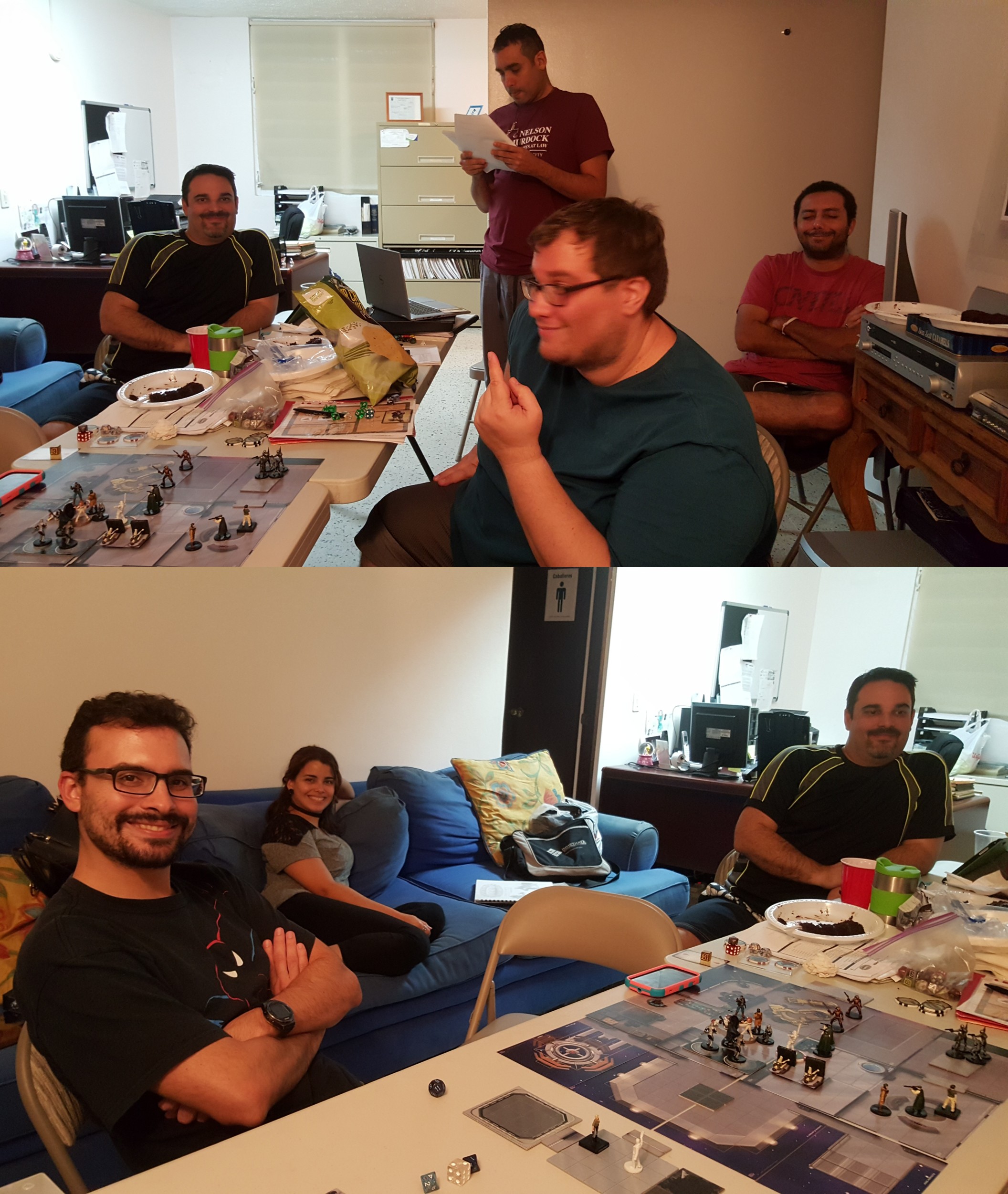
There, we played the Jade Islands campaign, a Mutants & Masterminds campaign as an interlude between the two halves of the pirate campaign, and when that ended in 2014, our first long Savage Worlds campaign: the Wanderers of the Outlands, which ran from 2014 to 2016. I wrote a series of posts about that campaign on this blog; you can read the first here.
Some friends stepped away from the group and have not played with us since. Luis Alvarado left during the Mutants & Masterminds game. Pierre also stopped playing; real-life responsibilities kept him busy. He is currently in the US, and we text every day. They are both well, but we still miss them at the table!
From left to right: Sara, Edgardo, Mariana, and Hector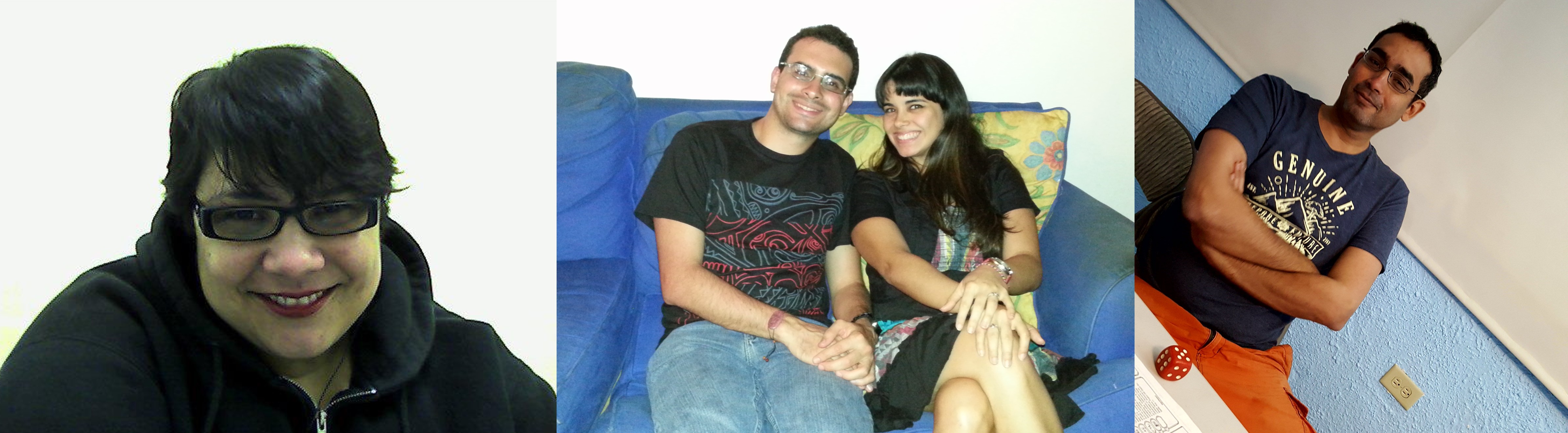
Other long-term friends came to sit at the table. Hector is another longtime friend who only sat to play with us years after we met. Our youngest players, Mariana and Edgardo, who we met through Puerto Rico Role Players, also joined our game, bringing in new blood, new ideas, and new friends to the table.
New Editions and Disasters (these two things are NOT related)
After D&D 5th Edition came out, we began a campaign using the system in 2016. The usual suspects were at the table: Carlos, Edgardo, Fernando, Hector, José Fernando, Luis Lao, Mariana, Sara, and Fernando’s wife, Naida. Richard, another friend met through Puerto Rico Role Players, joined when Sara and Hector had bowed out.
From left to right: Fernando, Naida, and Richard
In 2016, Tony, another legend in the TTRPG scene in Puerto Rico, visited from the mainland, and we had a get-together dubbed Tony Con at Jaime and Carmen’s house, where dead friends met via Puerto Rico Role Players. We played D&D 5th edition, which Tony still doesn’t like, being the Pathfinder diehard, he is! Along with Tony José Fernando, Tato, Angel, Luis Alvarado, and Sammy played that day. This was not the last time I played with Sammy, that would be in 2017 at The Gaming Pit, but it felt like a reunion with long-lost friends.
From left to right: Tato, José Fernando, Ángel, Sammy, Luis Alvarado, and Tony the Magnificent!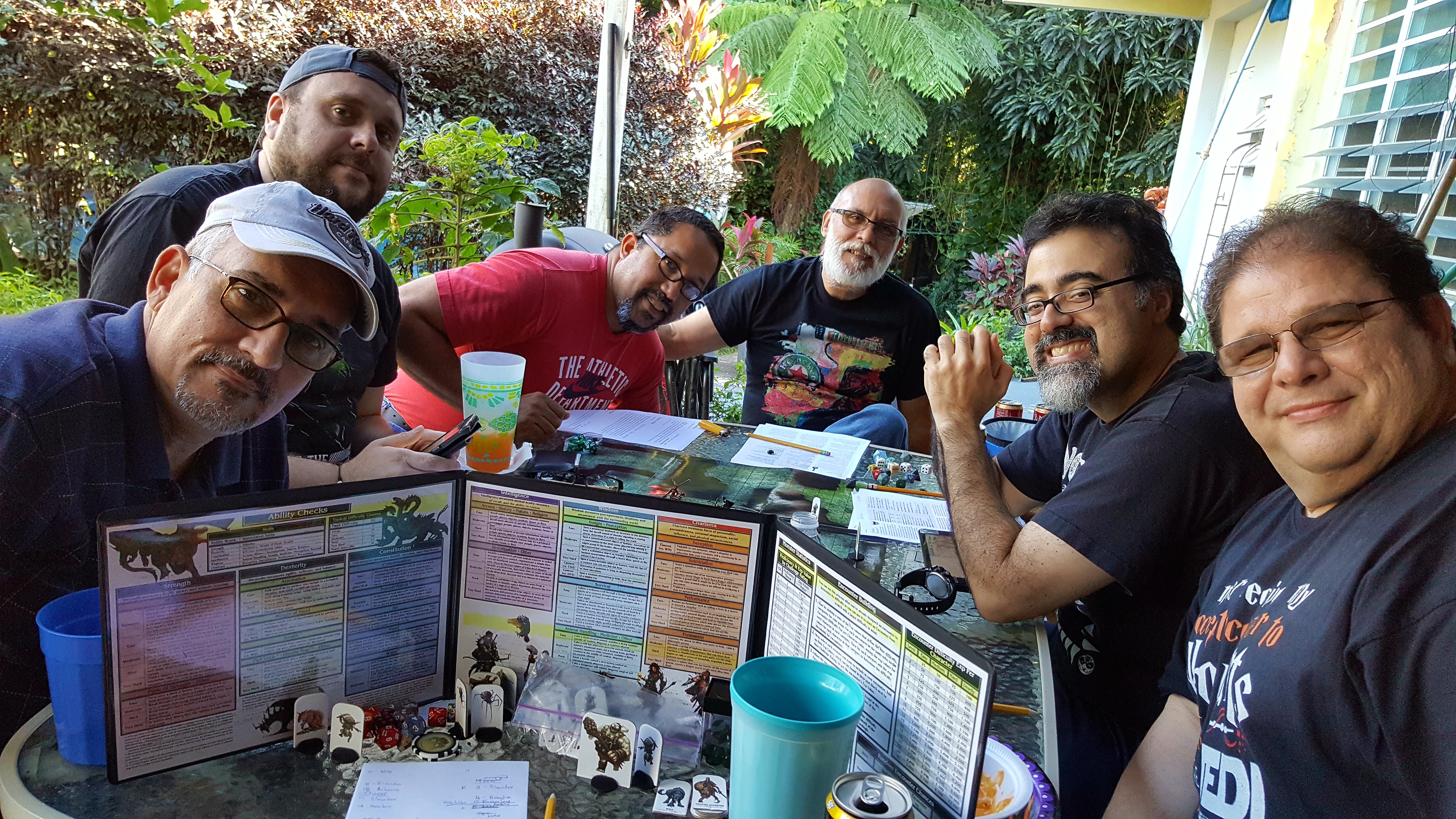
Also in 2016, I celebrated my 30 years as a gamer (like I am doing now at the 40-year mark!) with a game at Carlos Steffens’ house, where we played the D&D Mentzer Red Box adventure using The Black Hack rules. My TTRPG community organizing and my private enjoyment of the game had met, and this was a great time of gaming in my life.
2016, celebrating 30 Years a Gamer!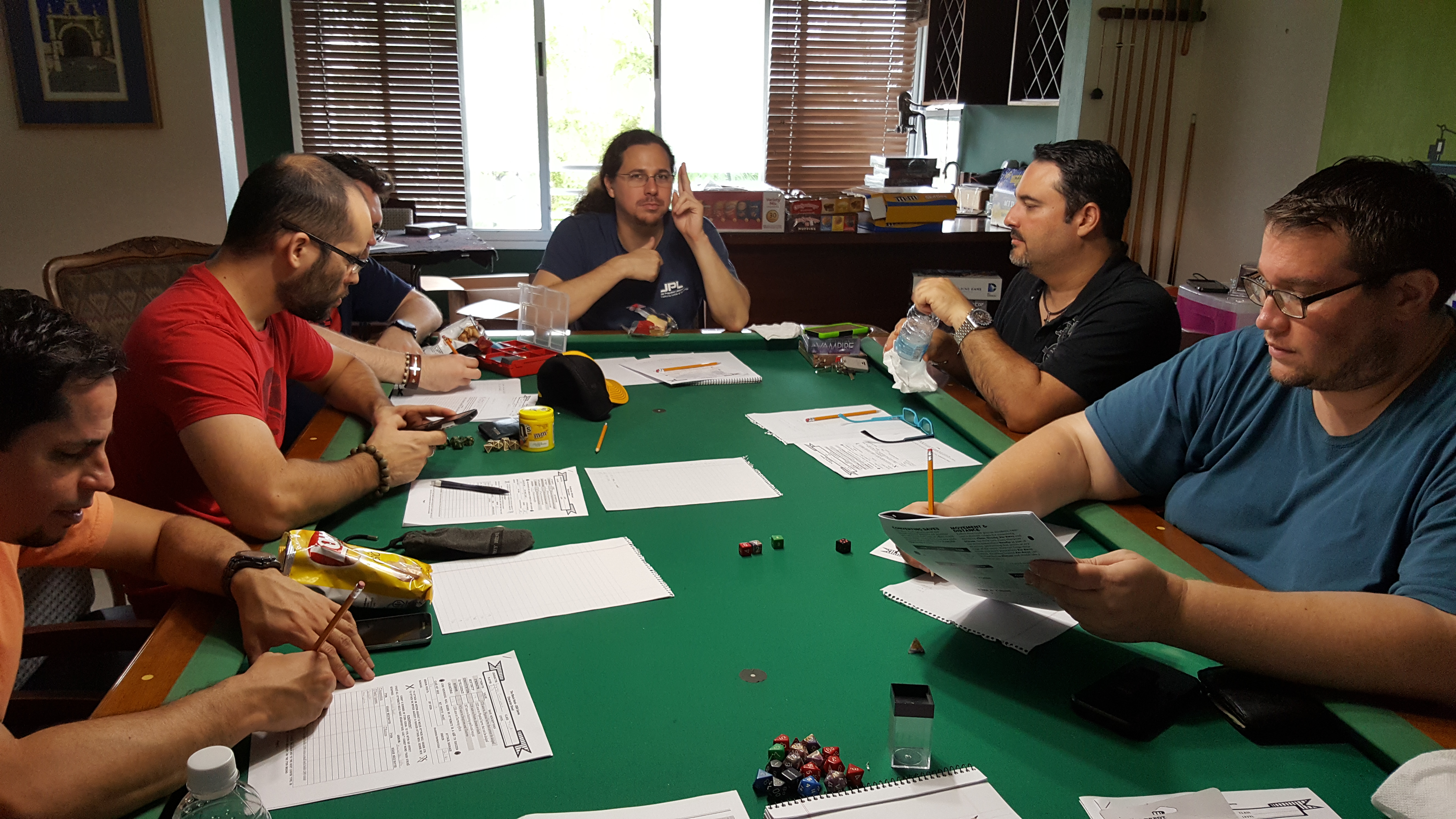
Throughout all these years, we had friends who visited and played guest characters, like PJ Deyo and Luis Miranda, who played in the pirate campaign (Luis came back for the 5th edition campaign as well). Javi Vidal joined us briefly for the campaign but had to move on shortly after. Mariana and Edgardo moved to the other side of the island and would connect to the game online to play with us.
Clockwise from top left to bottom left: Luis Miranda, Carlos, PJ Deyo, and Edgardo & Mariana playing remotely.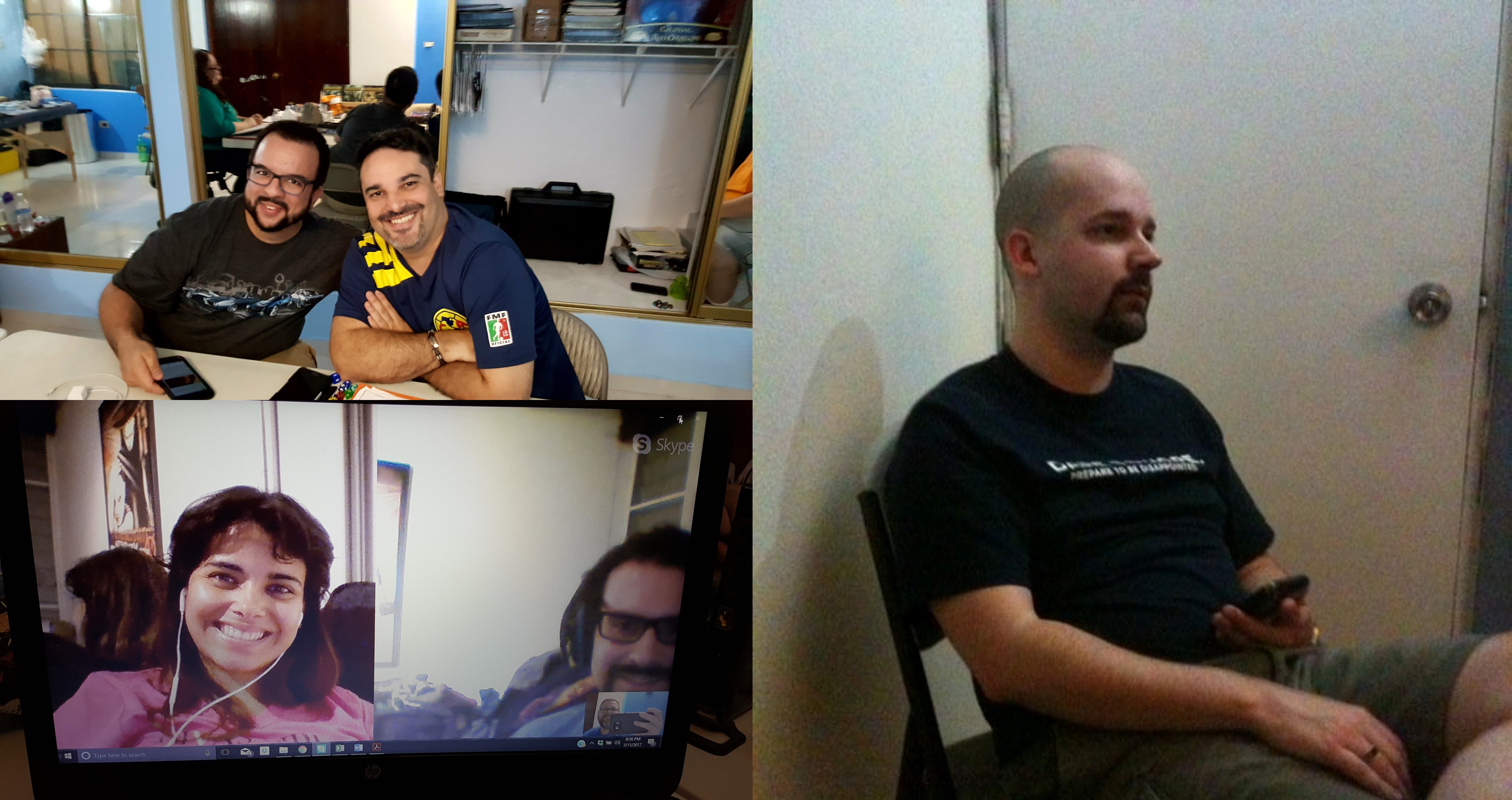
Despite the changes and new players, we had left behind the growing pains of a new system and finally found our game’s stride. I was really enjoying the campaign and playing a bi-weekly game at The Gaming Pit with the Desde la Fosa crew. What could go wrong?
Well, Hurricane Maria arrived in 2017. But that’s a topic for the next period in my 40 years as a gamer.
Final Thoughts
Despite the grim closing of this decade of gaming, the changes that María and other disasters would cause in Puerto Rico and in my life, this was a magical decade of growth, expanding circles of friends, and a wonderful feeling of community that continues to this day.
I am lucky this way. I started gaming with friends, and then the people I met through the TTRPG hobby became close friends—my extended family. I am grateful for each one of them. Thanks for being part of my life.
The Stats (2007-2017)
- Total Campaigns: 9
- Years Active: 30 (Consecutive play from 1986 to 2006)
- MVP Systems: D&D 3.5, 4th and 5th editions, Pathfinder, Mutants & Masterminds, and Savage Worlds
What about you? How has your gaming group evolved over the years, and have the people at your table become your chosen family, too? I’d love to hear your stories in the comments!
Categories: Tabletop Gaming Blogs
A Shoutout to Highmoon: The Spark Behind Puerto Rico Role Players
As I’ve been looking back at my last 40 years in the tabletop hobby, especially the transition from playing at home to getting involved in the wider community, this just wouldn’t have happened without Daniel Perez, known to many in the scene as Highmoon.
Daniel gave me this card at Gen Con 2011. I don’t think the contact information is current, but I keep the card!
I first crossed paths with Daniel back in the early 90s at Metro Comics. We had a lot of friends in common, though surprisingly, I don’t think we actually rolled dice at the same table back then.
Daniel eventually moved to the US, and we lost touch for a bit. But right around 2006, the internet did its thing. We reconnected while he was writing TTRPG supplements, posting about his games, and co-hosting a podcast about the origins of the Puerto Rico role-playing scene. He was always a key figure in supporting the island’s gaming scene in those days. Seeing him again at Gen Con in 2007, even just briefly, was fantastic.
Shortly after that, he invited me to join a group he had just created on Facebook in the early days: Puerto Rico Role Players.
That invitation completely changed the trajectory of my gaming life. Daniel brought me on as an administrator and relentlessly encouraged me to get online, connect with other gamers, and start blogging. He was the catalyst that pushed me out of my immediate circle and into the role of a community organizer. Without his initial push, my involvement with PR Role Players, my writing, and the connections I’ve made over the last couple of decades wouldn’t exist in the same way.
Daniel could not be with us at the first Geeknic in 2010, but we printed this.
Daniel is still pouring his creativity into his projects today. He has a fantastic collection of his own TTRPG games, zines, and supplements available online. If you appreciate indie creators who have been championing this hobby for decades, you absolutely need to check out his work.
You can find his games and zines over on his Gumroad page here: https://danielmperez.gumroad.com/
Take a look, grab a few PDFs, and support one of the foundational voices of the Boricua Gamers community!
Categories: Tabletop Gaming Blogs
40 Years a Gamer: A Decade of Community (2007 to 2017 Part 1)
By 2007, I had been playing at Sammy’s house for about two years. We were deep into my second D&D 3.5 run, having just wrapped a Tri-Stat dX sci-fi game—set in the same universe as an Alternity campaign we’d played years prior. But I wasn’t just there for my own sessions; I was constantly dropping in on other games at Sammy’s, too.
The Hideout of the Mequetrefes
To the best of my knowledge, Sammy’s house was the original location of the first FLGS in Puerto Rico: The Role-Playing Emporium. I’ve erroneously identified it as the Gaming Emporium in the past, but more on that later! Although the store had closed years before, Sammy kept the old shelves and some inventory in an apartment at the back of the house. It was anchored by a gaming table with a large, gridded, erasable board affixed right to the top.
Sammy and Tato at the Lair of the Mequetrefes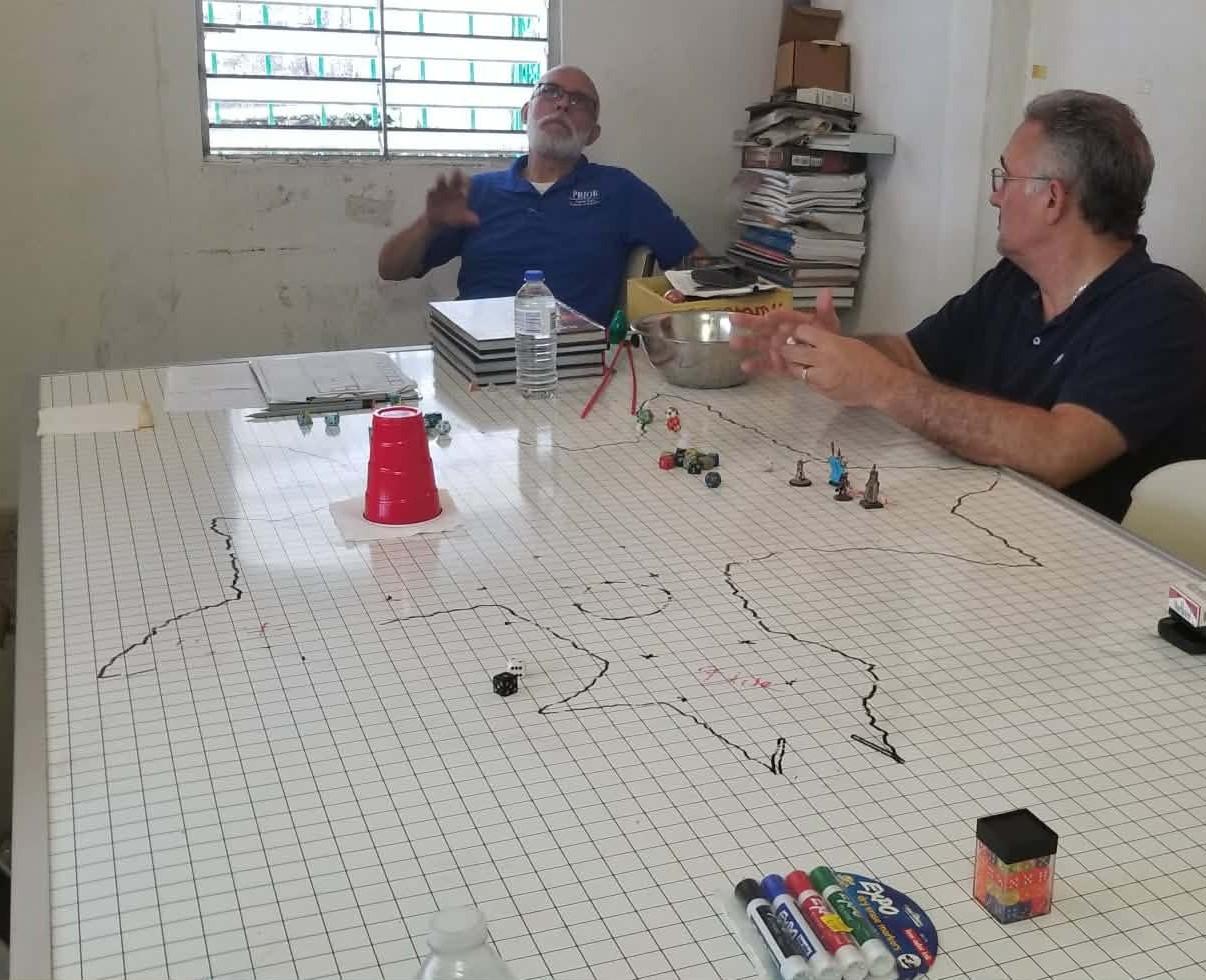
It was a mix of game room, man cave, and den of iniquity, with a rotating crew of gamers, young and old, sitting at that table. He called his crew the Mequetrefes (good-for-nothings or busybodies).
Peter, a longtime friend and former regular in our group, had moved on to other campaigns at Sammy’s. I believe he was the one who started organizing the trip to Gen Con 2007, though I heard about it from one of my players, Luis Alvarado.
I had always wanted to go to Gen Con, so I was immediately on board. In 2007, along with Sammy, Peter, Luis, Tato, and Piwie, we made the pilgrimage to the holy land of gaming in Indiana. It was a magical time, and honestly, it deserves its own separate post. Strangely enough, I didn’t meet many new gamers there; I mostly stuck to my pack and didn’t branch out much while in Indianapolis.
From left to right: Peter, Luis, Roberto (me), Piwie, Sammy, Tato, Roberto (me again!), Sammy, Piwie, Daniel, and Tato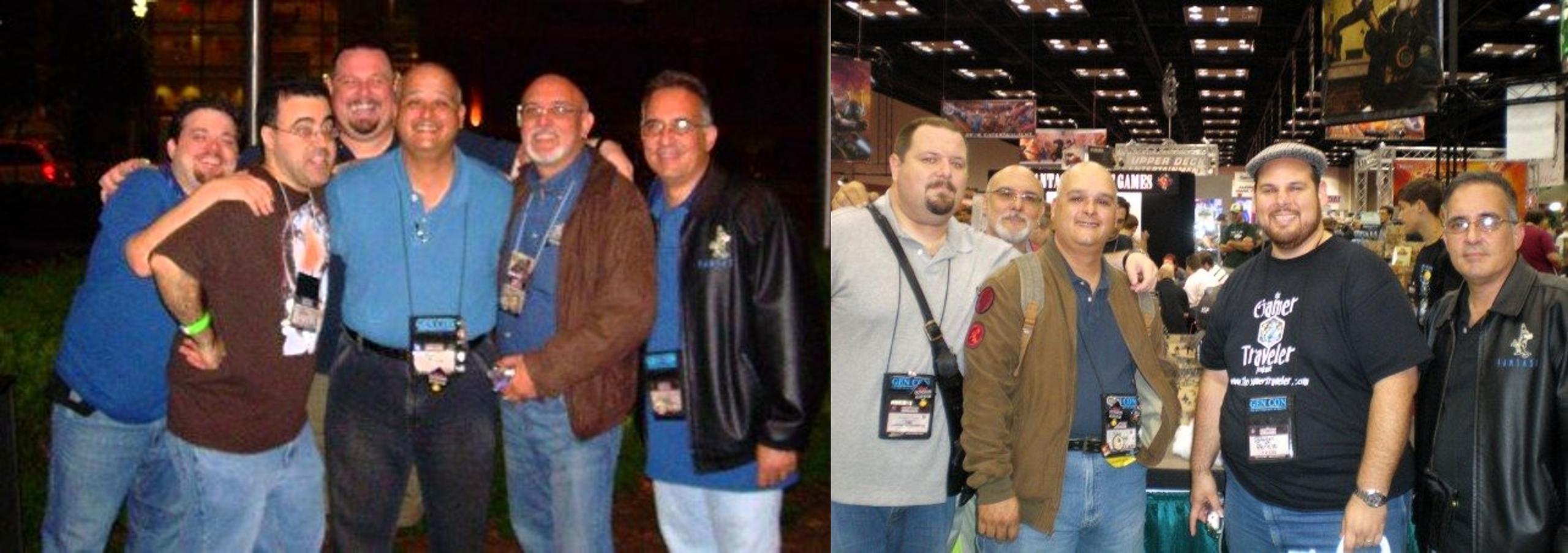
I did, however, run into a long-time friend: Daniel Perez, better known as Highmoon.
The Highmoon!
Let’s rewind. I met Daniel at Metro Comics in the early 90s. He came to my house a few times, and we had friends in common, though I don’t think we ever actually played together back then. He also spent a lot of time at the Role-Playing Emporium, so Sammy was another link between us.
He eventually moved to the US, and we lost touch for a while, but social media helped us reconnect. Daniel was a key figure in supporting the Puerto Rico gaming community in the early 2000s. By around 2006, he was writing TTRPG supplements, posting about his games, and hosting a podcast with our mutual friend, Braulio.
I listened to at least two episodes where they discussed the origins of the PR TTRPG scene. Braulio actually owned a store called Gaming Emporium—a tribute to Sammy’s Role-Playing Emporium. (And there lies the source of my confusion between the two names!) I remember talking to Daniel back then about wanting to do more for the island’s gaming community.
Seeing him at Gen Con in 2007, however briefly, was amazing. We stayed in contact, and in the early days of Facebook, he invited me to a group he had created: Puerto Rico Role Players.
Boricuas Roleros
That group was transformative for me. It connected me to a broader gaming community, some I knew, many I didn’t. Daniel made me an administrator and encouraged me to get online, connect with other gamers, and start blogging.
I wasn’t quite ready for the blogging part yet, so I poured my passion into growing Puerto Rico Role Players. Slowly but surely, the group expanded. Around 2008 or 2009, we tried to organize a Thanksgiving meet-up. I know Vincent (a fellow admin), Gilberto, and others made it, though I couldn’t attend. By 2009, members were meeting informally at small-genre cons on the island, and we decided it was time to organize an official event to promote the group and teach new players how to play.
While this was going on, I began reading blogs and leaving comments, which led me to another pivotal figure in my life.
Enter the Stargazer
Michael and I were talking the other day, and we think we started writing back and forth around 2008. It is strange to have such a dear friend whom I write to almost every day but have never met in person. Over the past 18 years, Michael has become someone I respect and care about deeply.
He invited me to collaborate on his blog. I was reluctant at first, but his and Daniel’s encouragement, combined with the work I was doing with Puerto Rico Role Players, finally pushed me to write my first post.
2010 Was a Great Year
Puerto Rico Role Players at Central Fan Fest 3, March 2nd, 2010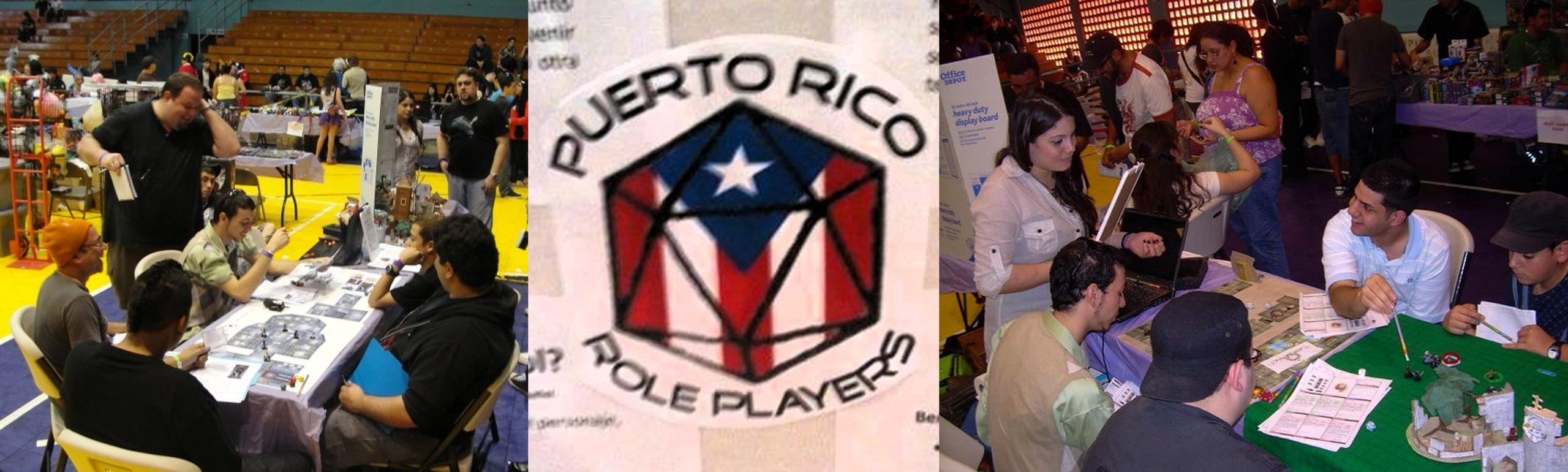
- February 19th: I wrote my first post for Stargazer’s World!
- March 2nd: We held the first official Puerto Rico Role Players event at Central Fan Fest 3 in Cidra, sharing our love for TTRPGs and running demos.
- April 11th: We hosted our first Geeknic—a picnic for geeks where we ate, played games, and bonded as a community.
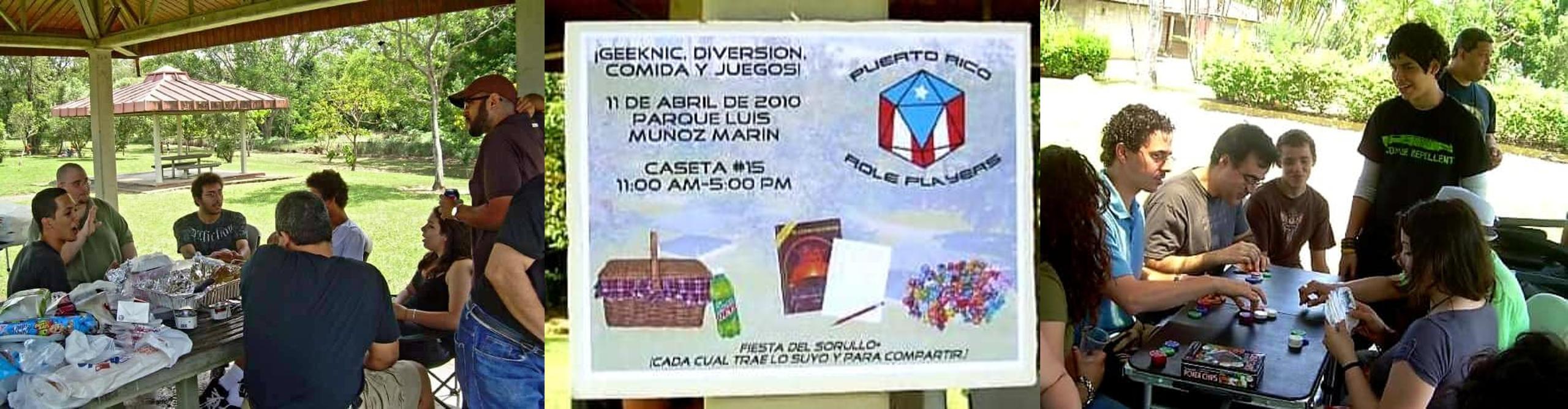
A year later, in 2011, after two more Geeknics, we held a “Geek Caucus” for volunteers and organized a group of admins to keep the momentum going.
Geek Caucus at Sizzler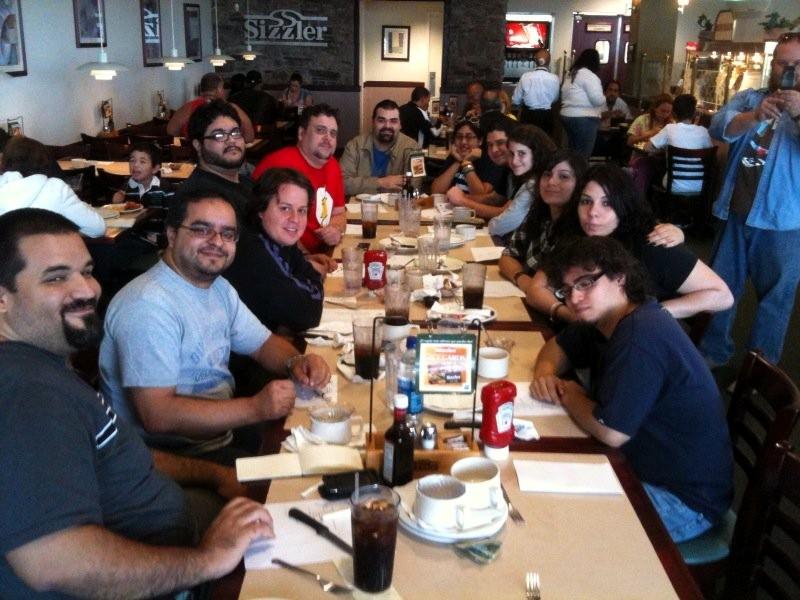
I continued posting regularly here at Stargazer’s World. In February of that same year, a local newspaper even interviewed me for a special section on hobbies (I’ve been interviewed twice since then for other articles and videos). I also returned to Gen Con in 2011, this time with press credentials, writing coverage for the blog.
Gen Con 2011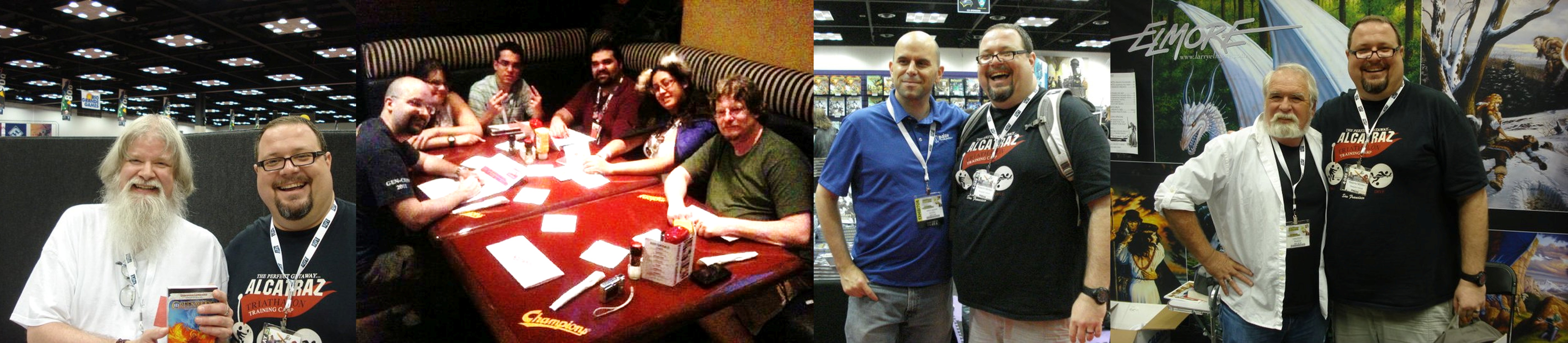
In the years since, Puerto Rico Role Players has organized 29 Geeknics, Painting Days, demos at local conventions, Halloween Spooktaculars, and holiday events. I jumped into #RPGChat and joined RPG a Day the year after it began, posting on the blog, social media, and eventually my YouTube channel.
From the Pit
By 2017, I was fully immersed. I was blogging intermittently, the admin for PR Role Players, running demos, and engaging with the online world. Then I had another crazy idea: Why not stream a game?
That year, my friend Carlos Steffens opened a new FLGS, The Gaming Pit. I wanted to playtest the new edition of Alternity, and I thought: what better way to support him and the new game than to stream the adventure live?
The Alternity playtesters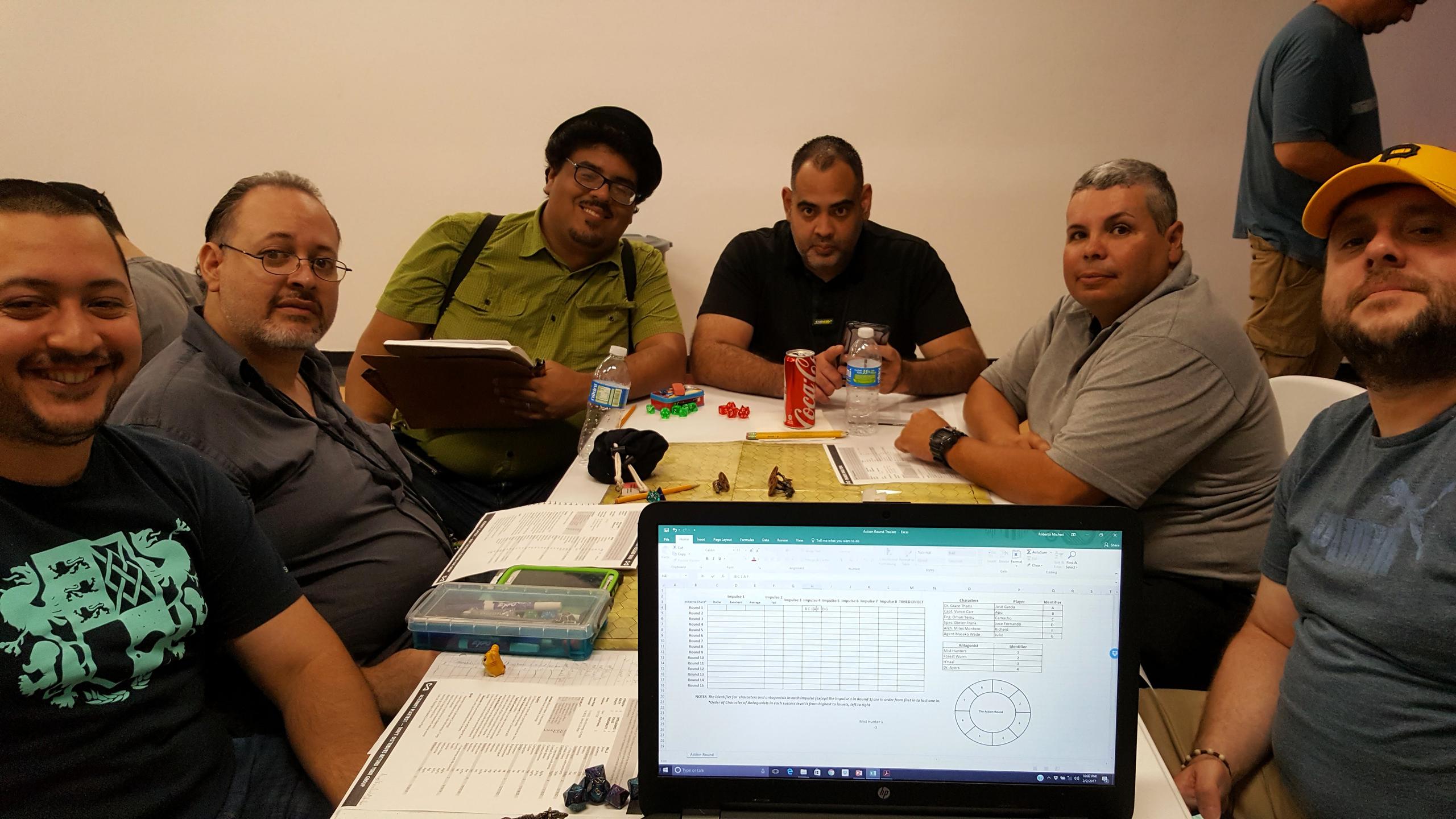
It was a very amateurish Facebook endeavor, full of silly mistakes—like starting the stream with the camera sideways. I only intended to do two sessions and be done, but the group got hooked. Through that game, I connected with two PR Role Players members, José García and Felipe, and reconnected with AJ, whom I knew from the old Metro Comics days.
We decided to keep the cameras rolling, and Desde La Fosa (literally From the Pit) was born.
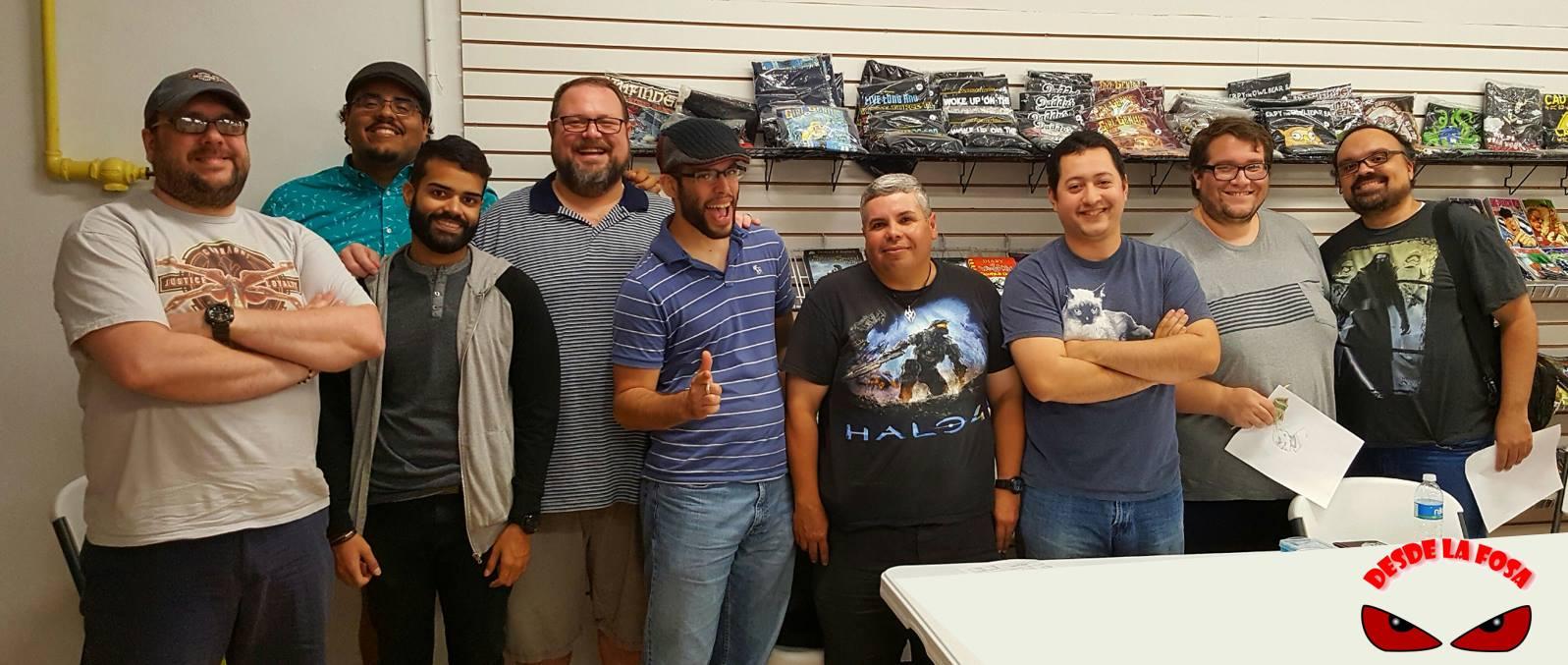
We played Star Frontiers, FrontierSpace, Silent Legions, the Free RPG Day Torg adventure, World Wide Wrestling, Legacy: Life Among the Ruins 2e, and I’m sure I’m forgetting others. You can see some of those games on the Desde la Fosa YouTube channel. It was never a professional studio production, but we had so much fun.
And then Hurricane María happened.
It changed everything. That is a subject for a future post, covering the next period in my gaming history.
“But wait!” you say. “This was all about community in the larger TTRPG context. What about your actual weekly game? The people you play with?”
Well, that’s the subject for the NEXT post. You did notice the title said, “Part 1,” right?
Categories: Tabletop Gaming Blogs
Was I REALLY in a “Bubble”? (An Addendum to the Middle Years)
After publishing my last post, I spent some time thinking about my statement that I was “gaming in a bubble.” After some reflection—and a few conversations with friends—I realized some nuance is in order.
I was writing about the period from 1993 to 2006. At the start of that era, I was still working at Metro Comics and meeting other gamers there. But after I graduated from college in 1995, my focus shifted heavily toward my career, my family, and my relationships. I never stopped gaming, but it happened entirely within a closed circle of close friends. I heard about other local groups and knew people who played TTRPGs, yet I didn’t actively interact with them for a long time.
As I got married and started my master’s degree, my general interests evolved. I felt burnt out on fantasy and sci-fi literature. Aside from being a huge fan of Babylon 5, my consumption of genre media shrank. Instead, I spent a few years diving deep into classic literature, history, biographies, and true crime.
During that time, role-playing games (and, to a lesser degree, comic books) became my sole outlet for fiction.
The Dial-Up Days
I got online relatively early in the 90s. My mother worked in the technology field, so we had a home computer when I was in middle school, and I was online before graduating high school. I can still hear the distinct chirp of the dial-up modem.
I had CompuServe, visited the forums, discovered the World Wide Web, and absolutely hunted for gaming content. I vividly remember discovering the legendary tale of Eric and the Dread Gazebo and reading through the Evil Overlord List. I scoured the web for conversions and rules for Palladium games, incessantly trying to hammer them into a cohesive, usable system (spoiler: I never did!).
But when I found useful information, I usually just printed it out and took it to the table. I even played a play-by-email game for over a year, and a play-by-post game on Yahoo Groups for over two!
Yet my internet use was highly targeted. I wasn’t active in online gaming forums and didn’t follow TTRPG message boards closely. I got most of my gaming news the old-fashioned way: from print sources like Dragon Magazine and Knights of the Dinner Table.
Bursting the Bubble
This bubble wasn’t a monolith, mind you. Things started to change gradually.
Sometime around 1999, I read A Game of Thrones, which reignited my interest in a different sort of fantasy literature. After Wizards of the Coast acquired TSR in 1987, and as rumors and information of a brand-new edition of D&D began to swirl, I found myself online constantly searching for information. In 1999, Eric Noah’s Unofficial D&D 3rd Edition News became mandatory daily reading.
After we transitioned to D&D 3rd Edition around 2003 or 2004, we moved our weekly game to Sammy’s house. Sammy was a true personality in Puerto Rico’s gaming community—I’ve written about him before. To the best of my knowledge, he operated the island’s first dedicated TTRPG store out of his house in the late 80s. He had a dedicated game room with a massive table where multiple groups played. Suddenly, I was regularly interacting with old acquaintances and people I had previously only known in passing.
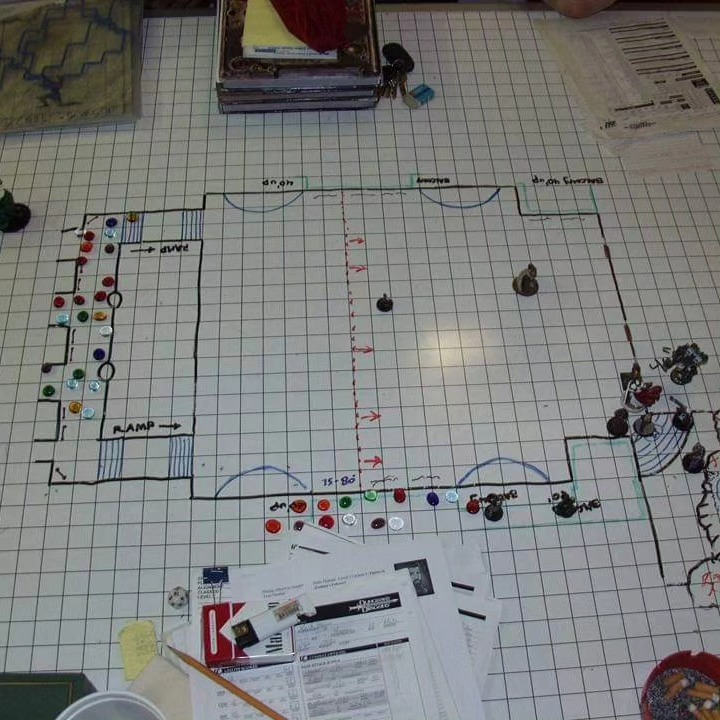
Other stores opened (and often closed) during those years, and we’d visit them. A friend of a friend opened a small FLGS, where I ordered a whole brick of all the early D&D miniatures released from WotC. Slowly but surely, I met and got to know other gamers on the island, many of them from the younger generation.
Plugging In
In 2005, I got divorced. With my life shifting again, I began spending much more time at Sammy’s house. I started dropping in on the other groups playing there and hanging out with fellow gamers away from the table. For the first time in a long time, I broke my strict “one-game-a-week” rule and joined a second weekly campaign as a player.
Online, I became an avid reader of The Order of the Stick. I loved their forums, as well as EN World, and started dipping my toes into the discussions, even if I felt a bit unsure about how to engage in those spaces at first.
By 2006, I was fully plugged into the TTRPG internet. I started reading blogs—Stargazer’s World caught my attention very early on. I also reconnected with Daniel Pérez (aka Highmoon), a friend who had moved to the mainland US and was actively creating TTRPGs and promoting the Puerto Rican gaming scene.
All this networking, reconnecting, and hanging out at Sammy’s house eventually led to a plan: a group trip to Gen Con in 2007.
That trip kicked off a markedly different era in my gaming life. But that is a story for the next post. See you then!
Categories: Tabletop Gaming Blogs
40 Years a Gamer: The Middle Years (1993 to 2006)
Welcome back to my 40-year retrospective as a gamer.
If the early years were defined by beautiful chaos, 1993 was the pivot. At that time, my gaming schedule was highly irregular. We’d get together whenever we could, play whatever game was popular at the time (with mainstays like Rifts and AD&D 2nd Edition), and rarely play longer than a few sessions before moving on and rolling up new characters.
I quickly realized I wasn’t enjoying this scattered approach.
I sat down and seriously considered what I loved most about tabletop role-playing games. I knew I preferred being the Game Master. I loved long-form campaign play where characters grow and weave a massive story together. I wanted a regular schedule—weekly, if possible—and to stick to one system to facilitate long-term play, rather than constantly chasing the hot new game.
Playing in a world of my own creation was key to this. Running a homebrew campaign was a form of creative expression that kept me deeply invested. I figured that if I set a firm date and time and stuck with it, people would show up. I also hoped it would naturally pare down the increasingly large, rotating crew of players I was managing.
The Metro Comics Crew
By 1993, I had been working at Metro Comics for two years. It was my part-time job while I went to college. Metro Comics in San Patricio Plaza is a comic and game store (and yes, it is still there!). Back then, they had a great game selection, carrying the big-name releases of the day: lots of TSR, White Wolf, Palladium, and a few smaller indie games.
Through Metro Comics, I made many new friends, and my close-knit table grew. Gamers I met through my work at the store—like Luis Alvarado, José Fernando, and Pierre Anthony—pulled up chairs alongside my high school classmates. (Fun fact: José is still a regular in my current weekly gaming group, 32 years later!)
Circa 1996 or 1997 (from L to R): Roberto (me), Gilberto, Luis Alvarado, José Fernando,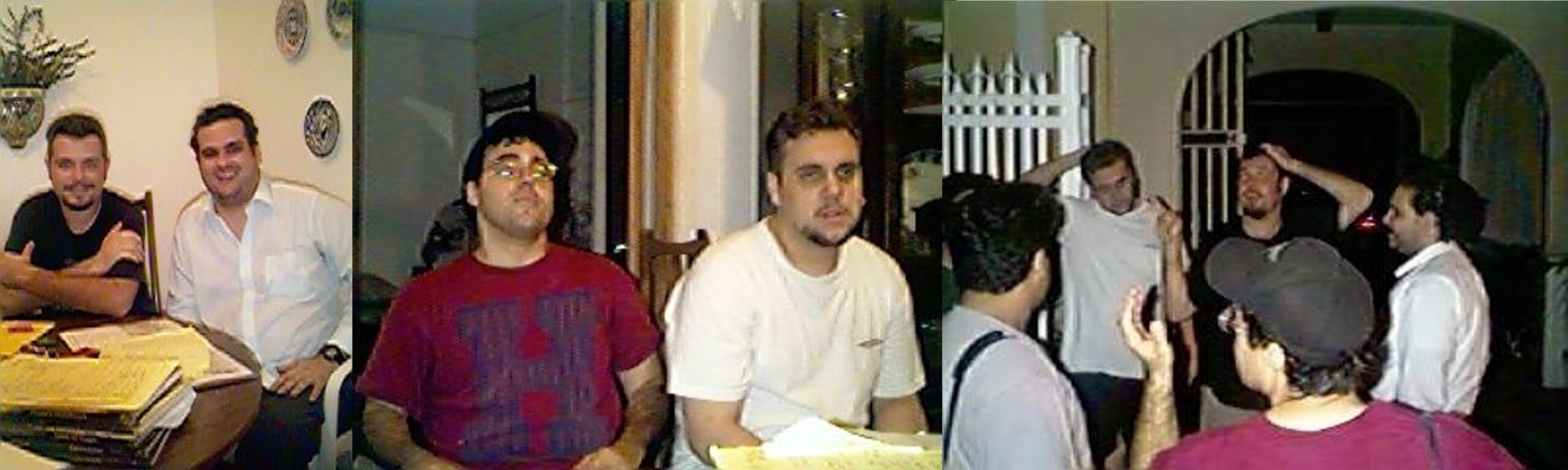
Luis Miranda, Pierre Anthony, and Misael
We also connected with friends of friends who played at the University of Puerto Rico. Because I’ve always had trouble saying “no” to people who want to play, I typically ran TTRPGs for groups of eight or more. To this day, I consider six players a “regular-sized” group; anything smaller feels too small.
Circa 2000 (from L to R): Karlo, Luis Alvarado, Roberto (me), Pierre Anthony, José Fernando, Piwie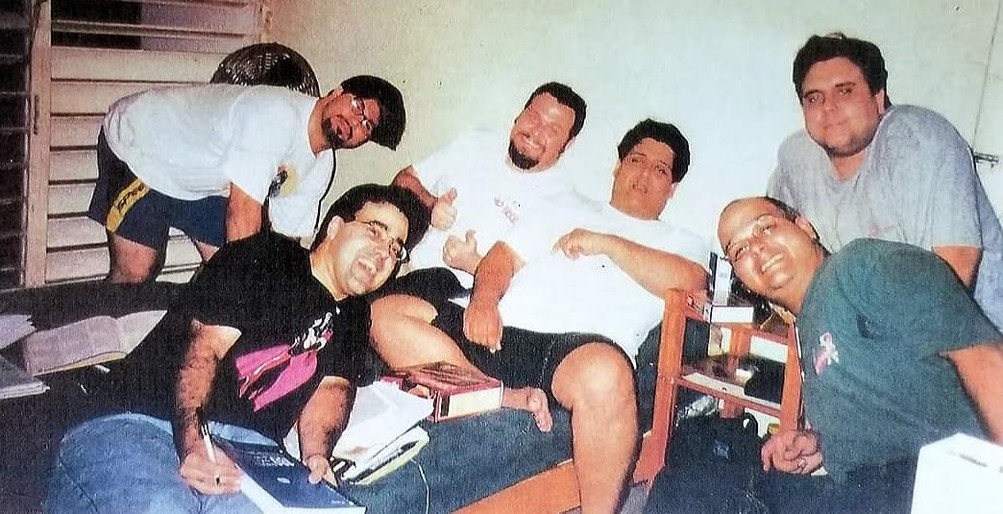
When I decided to put my new long-term campaign plan into practice, I invited the players I thought would best mesh with the style: a mix of high school friends, longtime players, and the Metro crew. It took a bit of shifting, but we found our rhythm. In no time, we established a core of six or seven long-term players, with a few others who came and went as real life demanded.
The Games We Played
The changes were a massive success. Over the next 13 years, I ran 12 distinct campaigns. Three of those were multi-year epics (averaging 2 years), with 8 shorter campaigns interspersed, ranging from 6 months to 1 year. We played all of these from beginning to end. (The only exception was a 9-month play-by-email campaign that fizzled out when work ate up my free time).
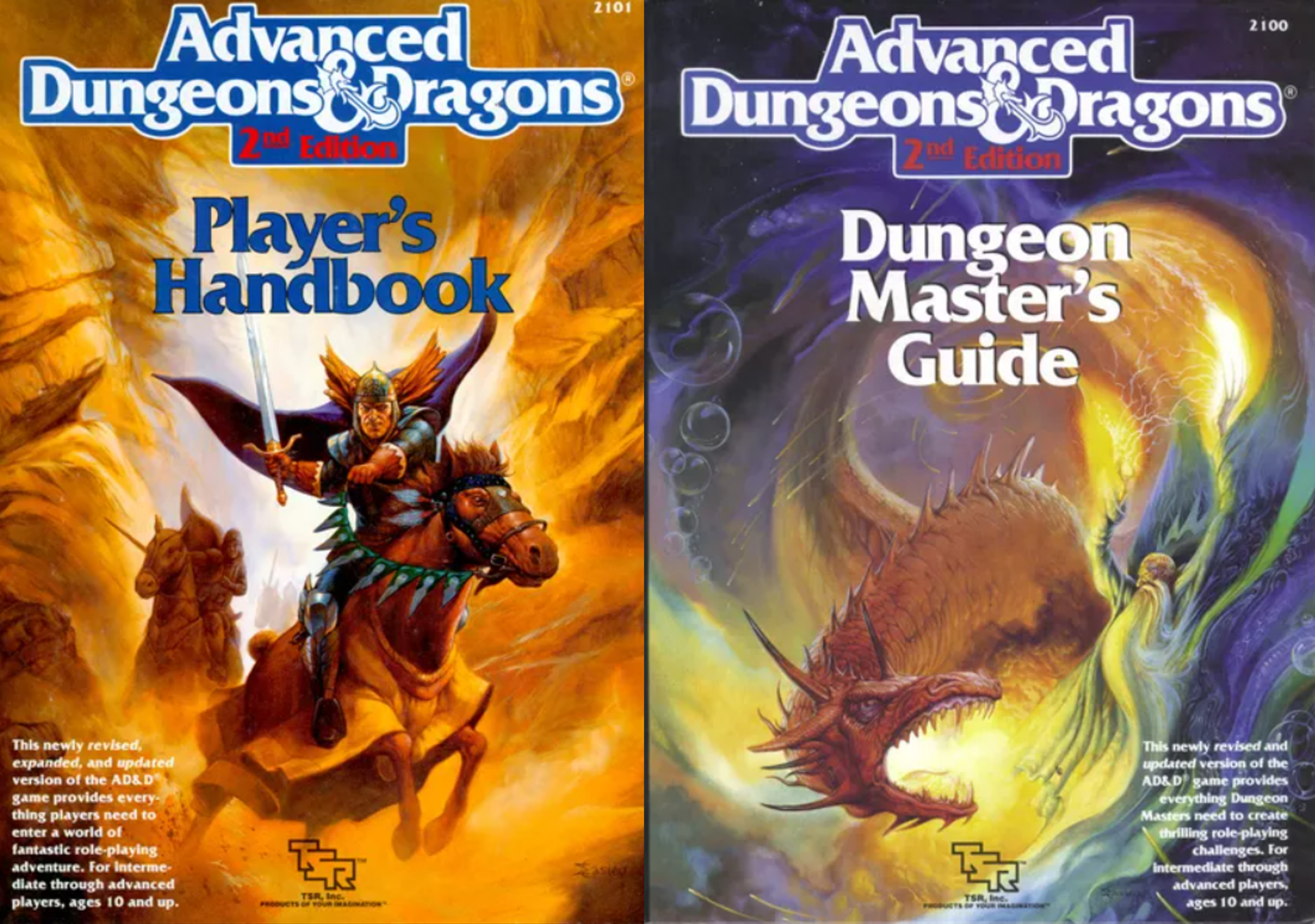
What did we play? Mostly D&D. While the rest of the world went all-in on the World of Darkness in the 90s, I stuck hard to D&D and fantasy. We played a lot of AD&D 2nd Edition, and when D&D 3rd Edition came out, we eventually made the change.
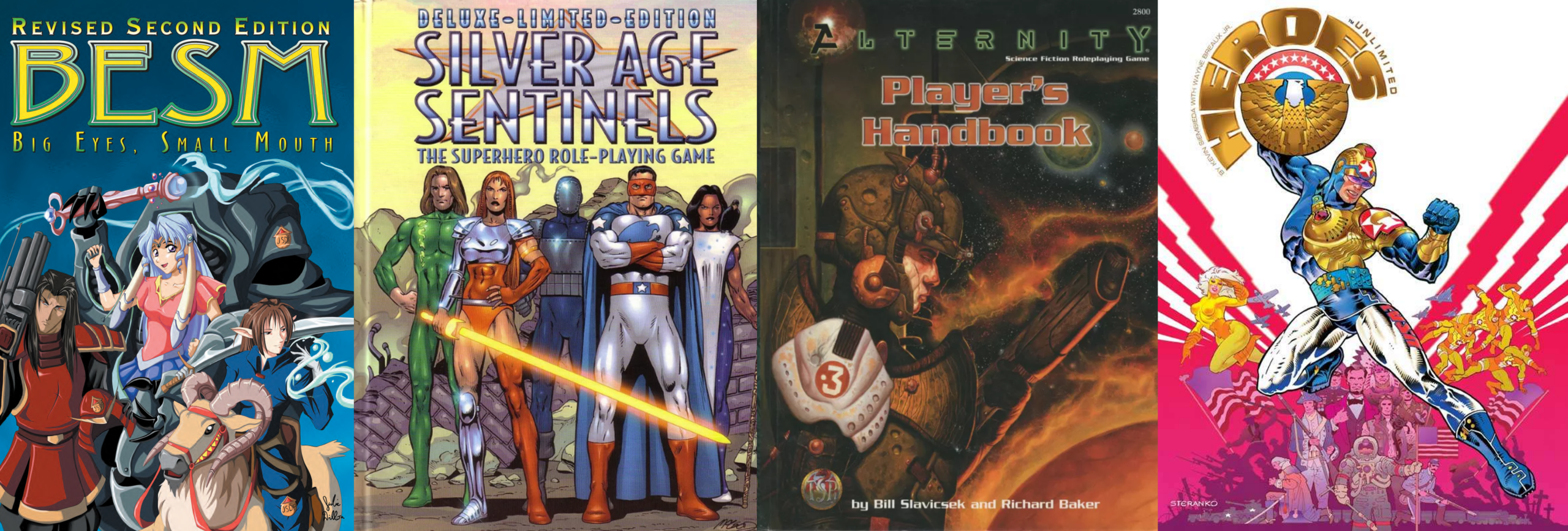
We also dabbled in variations of Big Eyes, Small Mouth, the Silver Age Sentinels system, and its Tri-Stat dX versions. Alternity was a short but incredibly important game for me during this era. I also kept going back to Palladium to try and make the system work for us; aside from Heroes Unlimited, I was growing weary of Rifts and their other titles.
Gaming in a Bubble
Because my group was so large—mostly friends and friends of friends—my gaming circle became incredibly insular. I left college, started working, got married, and essentially played in my own little bubble.
I was completely disconnected from the larger Puerto Rican gaming community. When Dragon magazine stopped publishing, and no new AD&D 2nd Edition books were coming out, I noticed, but it didn’t affect my table. We just kept playing with the books we had.
I wasn’t a recluse; I was online, but my internet use was focused elsewhere. I started my Master’s degree and wasn’t heavily involved in wider fandoms, TTRPG forums, or gaming news. I was perfectly content just creating maps, writing lore, and running my homebrew world.
Mind you, gaming was still a massive pillar of my life. The night before my first wedding in 1998, what did I do? I played a TTRPG session all about friendship with my regular players.
But life inevitably brings changes. This era saw me finish college, start a professional career, get married, and eventually go through separation and divorce.
After my divorce, things shifted again. I found myself with more free time, so I started playing with a more varied group of people, expanded my circle of regular gamers, and slowly began to reconnect with the wider gaming community around me.
Circa 2002 or 2003 (from L to R): José Fernando, Piwie, Luis Alvarado, Luis Lao, Roberto (me), Karlo, Pierre Anthony, Victor, Luis Lao, José Fernando, Karlo, Piwie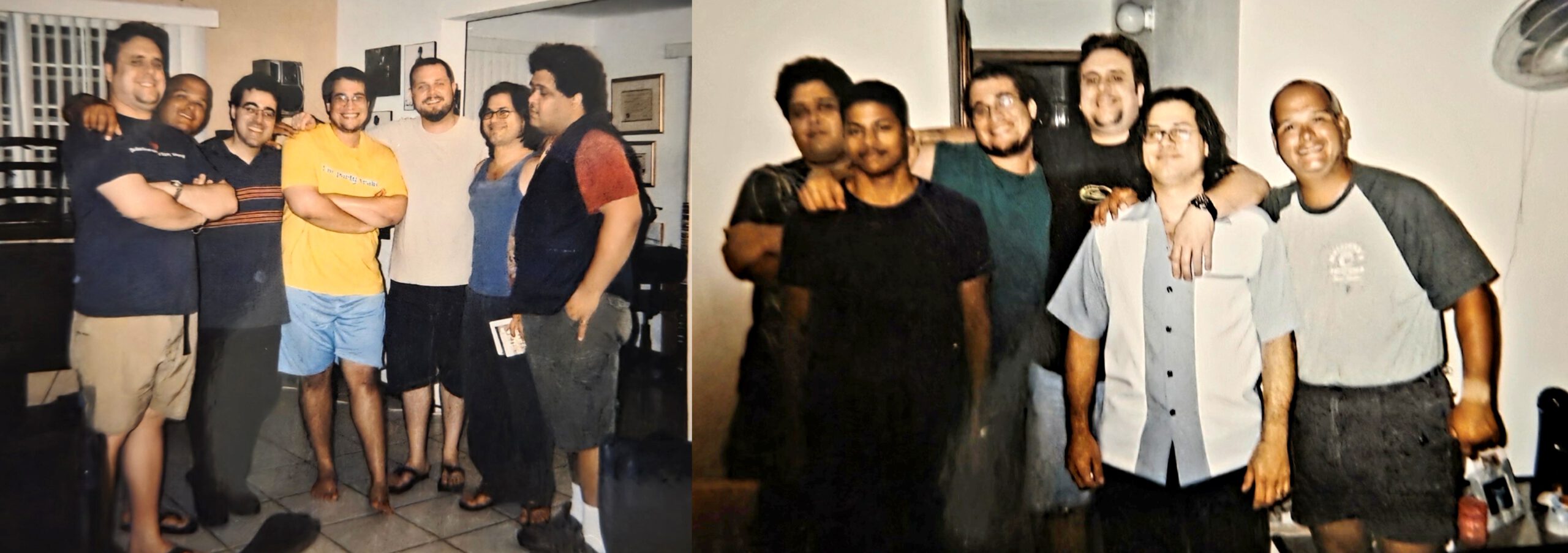
Then, in 2006, some friends mentioned they were heading to Gen Con the following year and invited me to tag along. I said yes.
But that is the beginning of a whole new era, and the subject of my next post.
The Stats (1993–2006)
- Total Campaigns: 12
- Years Active: 20 (Consecutive play from 186 to 2006)
- MVP Systems: AD&D 2nd Edition & D&D 3rd Edition / 3.5
How were these years for you? Did you ever go through a phase where you played in a “gaming bubble,” completely disconnected from the wider community or what was happening online? And during the 90s, were you a D&D loyalist like me, or did you get swept up in the World of Darkness craze?
Categories: Tabletop Gaming Blogs
What about Proteus Sector: A Gazetteer for Stars Without Number? A review.
A new Stars Without Number (SWN) supplement dropped five days ago, and I missed it!

How could I? It’s not like any important event happened this past weekend around February 14th, or that I’ve been sick since last week… okay, maybe I have excuses. But honestly? I feel like I should turn in my fan card.
If you’ve followed me here on the blog, on social media, or if you read Part 1 of my recent posts about my current favorite TTRPGs, you know that (quoting myself from somewhere online), “I worship at the altar of Kevin Crawford.”
I am a huge fan of his corpus. There are a few TTRPG authors whose works I support in crowdfunding or buy sight unseen as soon as they are out. Kevin Crawford of Sine Nomine Publishing is one of them.
(Bruce Heard is another such creator, by the way, and he recently announced his next project for the World of Calidar. I’ll be sure to share more information on that as it becomes available. But I digress.)
The new supplement for SWN is titled Proteus Sector: A Gazetteer for Stars Without Number.

This gazetteer and rule expansion was created as part of Mr. Crawford’s latest Kickstarter campaign for a reprint of the offset edition of Stars Without Number: Revised. His Kickstarters are a masterclass in running an effective campaign: he never overpromises, communicates clearly, and is always on time—if not early.
I’ve backed 12 of his 14 Kickstarter projects. I only missed Spears of Dawn (his first, which I eventually got!) and this latest one.
Here is why I missed it: When I read that the rewards would include the Proteus Sector, I was tempted. But I couldn’t bring myself to do it. I already own two offset copies of SWN, plus a POD copy I got for table use. Not to mention a POD copy of the original edition. I think I own every supplement Crawford has published in print or PDF.
I couldn’t justify buying a new core book just to get the PDF of the supplement. I contacted Mr. Crawford to see if there was a reward level for the Proteus Sector alone, and he told me the book would be available as a PDF and POD on DriveThruRPG later.
True to his word, the book is available now by clicking this link. It’s an 83-page PDF for $14.99 and a softcover POD for $24.99 (which includes the PDF).
Is it worth it? Oh yeah.
A Short, Spoiler-Free Review
The book is part gazetteer, part rule expansion, and another winning entry in the Stars Without Number line.
The layout follows the classic Sine Nomine style we know and love. This book feels denser with illustrations than the core book, and the interior art is excellent and fits the tone perfectly. It includes a detailed description of a very interesting sector of space, including government structures, and every planet described gets its own image.
Kevin Crawford is all about making books usable. He provides tools to make a GM’s life easier, and this is no exception. Besides an excellent setting that continues to flesh out the default SWN universe, it includes a one-page player’s guide to the sector, plus tools and ideas on how to connect this sector to your existing campaigns. Planets include all sorts of details, adventure hooks, and NPCs. It empowers the GM rather than constraining them.
The Mechanics (The Good Stuff)
While I love the content as a source of ideas, I am a homebrewer at heart. What I really want are the rules.
Crawford’s work is renowned as a toolbox that can technically be used for any system, but I really love his version of the classic D&D B/X engine. Proteus Sector adds some great new levers to pull:
- Smuggling & Trade: It includes a simple smuggling and trade system—much simpler than the one presented in Suns of Gold. This is likely the one I would use at the table going forward.
- Augmentations: There are very interesting rules for augmenting characters and abilities that feel a lot like proto-ideas for a superhero game. (We can hope for Capes Without Number someday, can’t we?)
- Genetics: There are rules for genetically modified beings. This might finally be the tool I need to make that Buck Rogers XXVc conversion I’ve been thinking about for almost 10 years now. (Gennies Without Number, anyone?)
- Cybernetics: There are new, more powerful, almost mythical cybernetic rules. The book discusses how these differ from the main rules and how to adapt the cybernetics from Ashes Without Number for use in SWN.
- Combat: New opponents appropriate for the sector, as well as new starship systems, weapons, and rules to accommodate them within the existing starship combat framework.

One Caveat
I will admit that the cover and title design for Proteus Sector seemed off at first. I wasn’t a fan at first glance, but after reading the book, I understood the choice. It is a very evocative, certainly OSR-looking cover, but it’s my least favorite of the SWN books’ covers.
Final Verdict
I said it before, but I’ll say it again: this book is worth your time and your money.
If you are a fan of Stars Without Number, you’ll find something to use. If you want a sector to drop into your game—even if it’s not SWN—you’ll find something you can use here. I know I certainly will get a lot of mileage out of it.
I wholeheartedly recommend it.
Categories: Tabletop Gaming Blogs